Connect with us
Anglostratits

Energy

Africa’s Critical Minerals and the Future of the Global Energy Transition

Published

on

Africa

Africa’s critical minerals – cobalt, lithium, copper and PGMs – are central to the global energy transition, powering clean technologies and EVs

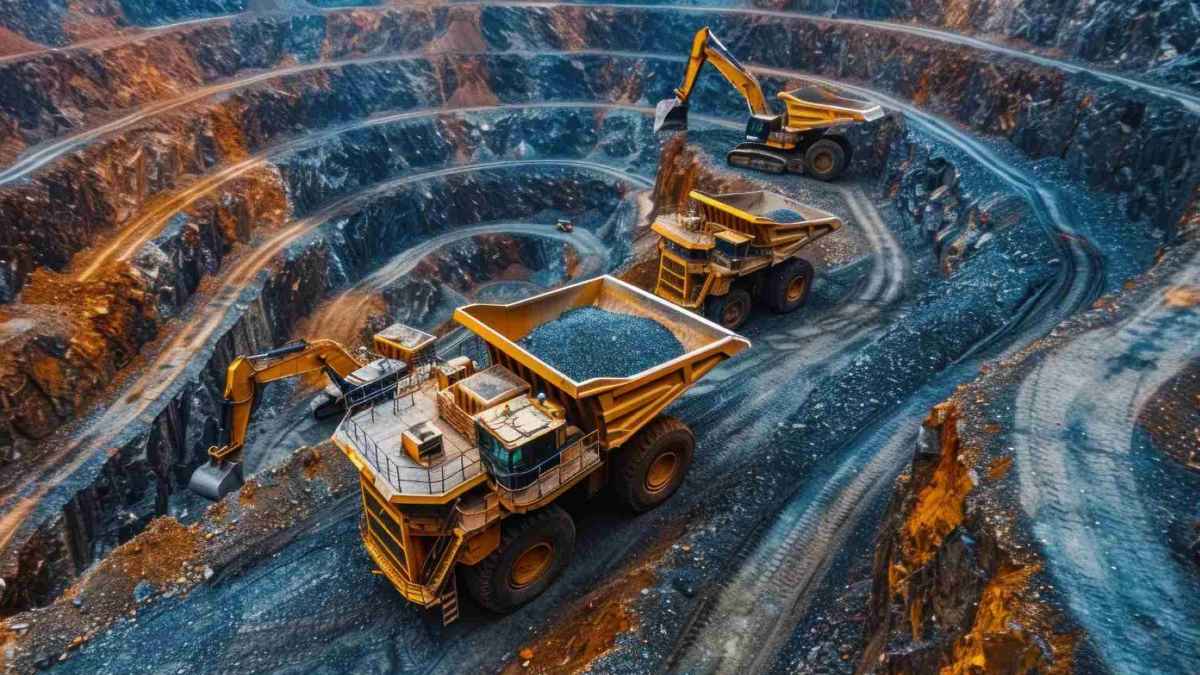
JOHANNESBURG, South Africa, January 13, 2026/APO Group/ –As the world accelerates its shift from fossil fuels to clean energy technologies, Africa is emerging as a central player in supplying the minerals that underpin this transformation. According to the African Energy Chamber’s (AEC) (https://EnergyChamber.orgState of African Energy 2026 Outlook, the continent’s abundant reserves of critical minerals – including cobalt, lithium, copper and platinum group metals (PGMs) – position it at the heart of global supply chains essential for renewable energy deployment and electric vehicle (EV) adoption.


Global Demand and Supply Dynamics

The energy transition is driving unprecedented demand for minerals critical to clean technologies. Solar panels, wind turbines, EV batteries and energy storage systems require significantly more cobalt, lithium and nickel than conventional energy systems. Forecasts indicate that global demand for these minerals could increase up to five-fold by 2035 compared to 2023 levels. Despite surging demand, global supply faces pressure from potential deficits toward the end of the decade. Questions around sourcing, sustainability and project development are intensifying as geopolitical tensions, concentrated refining capacities and supply chain vulnerabilities highlight the need for diversified and reliable sources of critical minerals.

Africa hosts some of the world’s richest deposits of critical minerals, making the continent indispensable to the energy transition. In 2024, Africa led global production of cobalt, copper, gold and PGMs, while rapidly expanding its lithium sector. The Democratic Republic of Congo (DRC), Zambia, Zimbabwe, Mali, Namibia, South Africa and Morocco are at the forefront of production. China has long been the largest foreign investor in Africa’s mining sector, leveraging government-backed initiatives such as the Belt and Road Initiative to secure resource access. More recently, the U.S. and EU have increased engagement, prioritizing strategic partnerships, infrastructure investments and cooperation agreements to secure mineral supply chains and support responsible mining practices.

Africa’s mineral wealth is not just a resource; it is a strategic asset for the global energy transition

Cobalt and Lithium: Africa’s Strategic Role

Cobalt remains a cornerstone of lithium-ion battery production. The DRC dominated global cobalt supply in 2024, with top mines including Kisanfu (51.92 kt, 19.95% of global production), Tenke Fungurume (48.08 kt), and Kamoto (27.2 kt). Together, these operations accounted for more than 50% of global cobalt output, highlighting Africa’s central position in this critical sector. The DRC is implementing strategies to capture more value domestically, developing refining capacity to convert cobalt hydroxide into higher-value cobalt metal. Ethical production, traceability and environmental standards are emphasized to position the country as a responsible supplier. Temporary cobalt export bans in 2025 helped stabilize global prices, and the government is now considering flexible export quotas to balance market stability with producer profitability.

Africa produced 124,230 tons of lithium carbonate equivalent (LCE) in 2024, primarily from hard rock spodumene deposits. Zimbabwe leads the continent’s output, with Mali, Namibia, South Africa, Ghana and the DRC ramping up production. The continent holds 26.7 million tons of identified lithium resources, representing 5% of the global total. Morocco currently hosts viable battery-grade chemical refining, while Zimbabwe is advancing a $450 million refinery at the Mapinga Industrial Park. African lithium production costs, ranging from $250 to $650 per ton of spodumene concentrate, remain competitive against the global benchmark of approximately $800 per ton in Australia. State participation is increasing, with Mali, Ghana and Zimbabwe mandating national equity stakes to retain economic benefits and ensure long-term strategic value from lithium development.

Africa’s Central Role in the Energy Transition

Securing African critical mineral supply chains is a global priority. The U.S., through the Development Finance Corporation (DFC) and the Minerals Security Partnership, has invested over $200 million in African mining projects. These initiatives focus on infrastructure development, responsible sourcing and local battery production in collaboration with the DRC and Zambia. Projects like the Lobito Corridor, a rail link connecting Zambia and Angola, aim to create a transcontinental trade route to facilitate mineral exports. Backed by a $553 million DFC loan and EU support, this corridor exemplifies how infrastructure investments are critical to connecting African mining hubs to global markets efficiently and sustainability.

“Africa’s mineral wealth is not just a resource; it is a strategic asset for the global energy transition. By fostering local beneficiation, ethical production, and sustainable supply chains, Africa can drive industrialization, create jobs, and secure its position at the heart of the clean energy economy,” states NJ Ayuk, Executive Chairman, AEC.

Africa’s critical mineral reserves are essential for global energy security and the clean energy transition. With ongoing exploration, investment in refining capacity, and strategic partnerships, the continent is poised to expand its role in supplying the minerals needed for a decarbonized future.

Distributed by APO Group on behalf of African Energy Chamber.

Energy

Rand Refinery Joins African Mining Week (AMW) as Silver Sponsor Amid Regional Market Expansion Strategy

Published

on

Energy Capital

African Mining Week 2026 will showcase lucrative investment, partnership, and knowledge-exchange opportunities across Africa’s gold downstream sector, as Rand Refinery intensifies its investment and expansion strategy across the continent

CAPE TOWN, South Africa, May 19, 2026/APO Group/ –Amid a strategy to expand from a South Africa-focused refiner into a pan-African downstream leader, Rand Refinery has joined African Mining Week (AMW), an Influential African Mining Conference, scheduled for October 14-16, 2026 in Cape Town, as a silver sponsor.

Rand Refinery’s participation reflects a broader strategic alignment between the company’s expansion agenda and AMW’s focus on supporting and enabling local beneficiation and promoting artisanal and small-scale mining (ASM) responsible sourcing frameworks.


In terms of volumes, the latest market information indicates that Africa produces 1000tpa of mined gold (more than any other continent), with large-scale mining (LSM) and ASM being almost evenly balanced (500tpa production each). On its current trajectory, African ASM volumes are expected to eclipse those of LSM.


The focus on ASM as a transformational imperative is valid, and Rand Refinery is an active participant in the precious metals supply chain, working alongside other upstream and downstream actors to ensure that the communities and countries with gold resources benefit in a sustainable manner.


Under the theme Mining the Future: Unearthing Africa’s Full Mineral Value Chain, AMW 2026 offers a critical interface between refiners, miners, regulators, and financial institutions, as African countries intensify efforts to capture more value from responsible mineral production.


A key pillar of Rand Refinery’s 2026 strategy is its expansion into high-growth gold markets beyond South Africa. In January 2026, the company partnered with Ghana’s Gold Coast Refinery (GCR) to support the Ghana Gold Board to locally refine artisanal and small-scale (ASM) gold and elevate responsible sourcing standards in West Africa. The partnership also positions Rand Refinery in a rapidly growing and historically fragmented supply segment: ASM operations, enabling the company to enhance traceability and strengthen compliance with global standards for ethical sourcing and anti-money laundering.


The partnership potentially allows the monetization of ASM supply streams in the formal gold ecosystem, complementing Rand Refinery’s established role in refining output from responsible large-scale producers. AMW 2026 represents a timely platform for the company to provide an update on its projects and contribution to Africa’s gold sector.


As demand for regional refining capacity expands, along with central bank buying programs, companies such as Rand Refinery will be crucial.


Central bank gold purchases are projected to average around 585 tons per quarter in 2026, underscoring sustained global demand. In Africa, gold now accounts for approximately 17% of total reserves – up from less than 10% in 2022–2023 – while physical holdings increased from 663 tons in 2022 to an estimated 738 tons in 2025.


This upward trajectory is driving demand for trusted refining and value addition services, positioning Rand Refinery as a key partner in the region. Against this backdrop, AMW provides a strategic platform for central banks and gold buyers to engage directly with one of the world’s largest integrated single-site precious metals refining and smelting complexes and strengthen regional beneficiation and national reserve strategies.


At AMW, Rand Refinery executives will participate in panel discussions and networking sessions, engaging stakeholders on partnership opportunities that support a more integrated, transparent and value-driven African gold ecosystem.

Distributed by APO Group on behalf of Energy Capital & Power.

Continue Reading

Energy

Mining Services Companies Drive Africa’s Next Phase of Industrial Mining Growth

Published

on

Energy Capital

African Mining Week will highlight how mining services companies are becoming central to transforming Africa’s vast mineral endowment into investment-ready projects

CAPE TOWN, South Africa, May 19, 2026/APO Group/ –African Mining Week (AMW) – taking place on October 14 to 16 in Cape Town – will highight the growing role of mining services companies as critical enablers of Africa’s transition from resource – rich to project – ready. As the continent works to unlock an estimated $8.5 trillion in untapped mineral wealth, these firms are emerging as key drivers of capital mobilization, technical delivery and accelerated project timelines.


A structural shift is underway. Mining services companies are no longer confined to contractor roles – they are evolving into integrated project partners, shaping how mines are financed, engineered, built and operated. Their influence now sits at the intersection of capital markets, infrastructure development, energy systems and industrial policy, positioning them as central players in Africa’s next phase of mining – led growth.

This evolution is already visible in project activity across the continent. In April 2026, Metso inaugurated a new regional hub in Cape Town, strengthening its bulk material handling and services capabilities across Africa. The facility enhances automation, logistics and lifecycle services across key commodity value chains – including coal, platinum group metals and manganese – directly supporting South Africa’s strategy to scale mineral exports and industrial output.

Geopolitics is further amplifying this trend. Major global economies are increasingly leveraging their EPC and mining services companies as strategic tools to secure supply chains and expand influence. Institutions such as the Export-Import Bank of the United States are backing American participation in African mining, while China, Europe, Canada and Australia continue to embed their services companies into financing and development frameworks across the continent.

Australia’s Lycopodium is advancing Namibia’s Twin Hills project, while China’s JCHX Mining Management is supporting copper production at Botswana’s Khoemacau Mine. In Guinea, XCMG Machinery is contributing to development at the Simandou iron ore project – one of the largest untapped deposits globally.

Across key mining jurisdictions, this shift is accelerating project pipelines. Countries such as the Democratic Republic of the Congo, Zambia, Ghana, Liberia and South Africa are increasingly relying on mining services firms to fast-track national geomapping exercises, exploration, scale production and advance beneficiation.

Against this backdrop, AMW will bring together global EPC firms, mining services providers, investors and African developers. The event is set to catalyze partnerships and deal-making, with a focus on strengthening execution capacity, unlocking financing and accelerating the delivery of mining projects that can anchor Africa’s industrial growth and global supply chain integration.

Distributed by APO Group on behalf of Energy Capital & Power.

Continue Reading

Energy

Offtake Agreements Reshape Africa’s Next Phase of Mining Investment

Published

on

Energy Capital

African Mining Week will highlight how offtake agreements are bridging Africa’s mineral wealth with global capital, turning geological potential into bankable mining projects

CAPE TOWN, South Africa, May 18, 2026/APO Group/ –Multinational commodities company Trafigura signed an offtake agreement in April 2026 with Ghana’s Heath Goldfields for the Bogoso-Prestea Gold Mine, committing to purchase around 700,000 ounces of gold. The deal provides immediate commercial certainty for the project while improving its financing profile by guaranteeing a long-term buyer, addressing one of the sector’s most persistent constraints: access to capital.

The move reflects a broader trend across Africa’s mineral sector whereby projects are turning to offtake agreements to secure capital and advance production. As Africa accelerates the development of its estimated $8.5 trillion in untapped mineral wealth, offtake agreements are emerging as an effective tool to unlock financing and de-risk projects.

This dual function – market assurance and capital enablement – is increasingly central to Africa’s mining financing landscape. By reducing demand risk, offtake agreements help unlock debt and equity financing that would otherwise be difficult to secure in early-stage or restart projects.

Similar structures are being replicated across the continent. In Sierra Leone, an offtake-backed arrangement involving Trafigura and FG Gold Limited helped unlock financing for the Baomahun Gold Project, marking a critical step in de-risking one of the country’s flagship mining developments and enabling financial close for large-scale gold production.

In the battery minerals space, NextSource Materials extended its offtake agreement in March 2026 with Mitsubishi Chemical Corporation to supply graphite from the Molo project in Madagascar. The arrangement provides predictable long-term demand for 9,000 tons per annum of graphite, while simultaneously supporting project financing and expansion plans tied to global battery supply chains.

Similarly, Bannerman Energy has secured offtake agreements with North American utilities for uranium from its Etango project, providing multi-year revenue visibility from 2029 to 2033 and strengthening the project’s long-term investment case.

These transactions reflect a broader structural shift in African mining finance: offtake agreements are no longer just sales contracts, but core instruments of project development, risk allocation and capital mobilization. For other markets seeking finance and long-term buyers, these examples demonstrate the viability of offtake contracts – not only for project commissioning phases but as tools for early-stage development.

Notably, in South Africa, where the government is targeting R2 trillion in investment to unlock its critical minerals potential, offtake structures could play a central role in de-risking projects. Similarly, in the Democratic Republic of Congo, which holds an estimated $24 trillion in untapped mineral wealth, offtake agreements could accelerate the monetization of its vast copper, cobalt and strategic mineral reserves.

Against this backdrop, the upcoming African Mining Week (AMW) Conference and Exhibition – taking place from October 14–16 in Cape Town – will showcase how offtake-driven financing models can be scaled to accelerate project delivery and strengthen Africa’s position in global minerals supply chain. Uniting stakeholders from across the entire African mineral value chain, the event offers a platform to examine strategic financing, mechanisms to accelerate production and positioning the continent at the forefront of global mining investment.

Distributed by APO Group on behalf of Energy Capital & Power.

Continue Reading

Trending