Connect with us

Energy

Africa’s Clean-Cooking Drive Hinges on Carbon-Credit Reform, Transport Upgrades

Published

on

G20

At the G20 Africa Energy Investment Forum, industry leaders said Africa cannot reach universal clean-cooking access without unlocking green finance, reforming carbon-credit rules and fixing transport bottlenecks – from rail links to LPG terminals – that continue to inflate costs

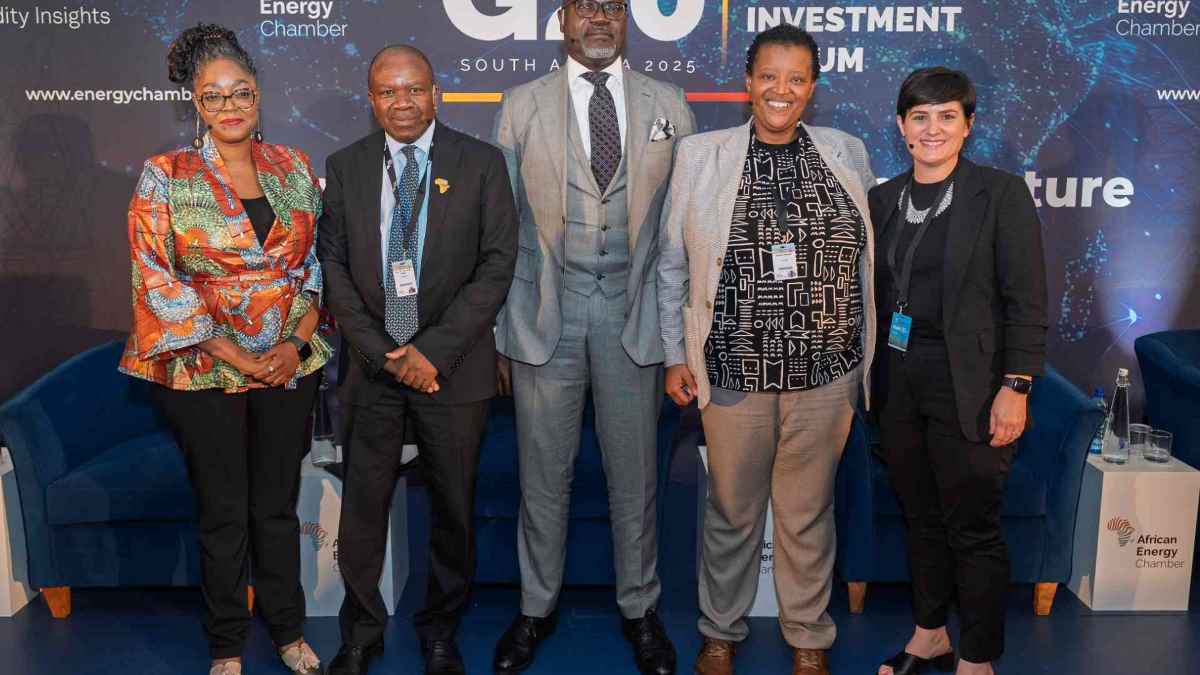
JOHANNESBURG, South Africa, November 22, 2025/APO Group/ –Africa’s long-delayed transition to clean cooking will fail without a serious overhaul of how the continent finances, transports and regulates LPG, senior executives said during a high-level panel on clean cooking and LPG at the G20 Africa Energy Investment Forum in Johannesburg on Friday.

Speakers pointed to a rare alignment of political support – following G20 endorsement of clean cooking as a priority area – but warned that critical infrastructure gaps and a broken financing ecosystem are slowing progress.

South Africa’s LPG demand sits “just below 500,000 metric tons,” yet supply remains constrained due to offline refineries and a fragmented transport network, said Sesakho Magadla, Acting CEO of PetroSA. Getting refineries operational again – including PetroSA’s Gas-to-Liquids refinery in Mossel Bay – is “a priority,” she noted, adding that the company aims to mobilize by 2026 to relieve pressure on the domestic market.

But infrastructure extends beyond production. PetroSA is now examining rail improvements – particularly linking Saldanha Bay to Mozambique – to ease congestion and move LPG at scale. It requires “collaboration beyond the energy sector,” Magadla noted, “so that when the rail is operational, you can connect the existing fragmented transportation network and move the product.”

Private-sector operators echoed the call for major transport reform. Tamsin Rankin Donaldson, Head of Marketing and Communications at Petredec, said poor logistics and limited terminal capacity add “a 10–20% premium” to LPG costs because companies are forced to “bring smaller parcels through smaller terminals.” Africa urgently needs “infrastructure that allows us to bring in higher volumes,” including terminals capable of receiving Very Large Gas Carriers (VLGCs), she said.

Petredec is currently constructing the Tanga LPG terminal in Tanzania and exploring a rail link from Richards Bay to inland markets in South Africa. Her biggest policy request was clear: governments must prioritize “streamlining permitting processes” to accelerate project timelines.

The parts of Africa like Kenya that have accelerated LPG uptake have used subsidies, but that is not sustainable

While infrastructure determines affordability, financing determines whether projects move from concept to construction. “The green finance mechanism is underused,” said Titus Mathe, CEO of the South African National Energy Development Institute, who said that investors lack the data they need to quantify emissions reductions and energy savings from clean-cooking interventions. “When you think of clean cooking and LPG, the biggest challenge is data.”

He called for a unified Africa-wide clean-cooking data platform and proposed creating an LPG clean-cooking financing facility backed by the AU, G20 and global institutions “so that LPG projects across Africa can be accelerated to reach last-mile users.”

The lack of emissions-credit pathways also dominated the discussion. According to the International Energy Agency, Africa requires $37 billion to achieve universal clean-cooking access by 2030, yet the current carbon-credit framework offers little support for LPG-based solutions.

“We have to put carbon credits as part of the LPG discussion,” said Anibor Kragha, Executive Secretary of the African Refiners & Distributors Association. Clean cookstoves qualify for credits, but LPG does not – disadvantaging the very solution most capable of rapid scale-up.

“The parts of Africa like Kenya that have accelerated LPG uptake have used subsidies, but that is not sustainable,” Kragha said. Unlocking climate finance for LPG could help replace subsidies with market-driven growth.

For financiers, regulatory clarity is paramount. “If I’m a financier, I want to see clarity of regulation and project preparation,” Kragha said, adding that Africa must also attract a competitive workforce to implement projects at the necessary pace.

Rankin Donaldson underscored the scale of the challenge: achieving universal clean-cooking access by 2040 requires 80 million new connections every year – “seven times the pace we’re currently doing.”

Without rapid investment in transport networks, permitting reform and a carbon-credit framework that recognizes LPG’s climate benefits, speakers warned that Africa risks missing a once-in-a-generation window to deliver clean, affordable cooking energy.

Distributed by APO Group on behalf of African Energy Chamber.

Home  Facebook

Business

Angola Strengthens Global Investment Drive Across Oil, Gas and Mineral Resources

Published

on

With sweeping reforms across the extractive sector, Angola is entering a new phase defined by transparency, regulatory modernisation, value addition, and international partnership

LONDON, United Kingdom, May 8, 2026/APO Group/ –At a defining moment in Angola’s economic transformation, the Critical Minerals Africa Group (CMAG) (https://CMAGAfrica.com), together with the Government of Angola and the Ministry of Mineral Resources, Petroleum and Gas of the Republic of Angola (MIREMPET), will convene global investors, policymakers, and industry leaders in London for the Angola Oil, Gas & Mining Investment Conference on 14 May 2026.


More than a conference, this gathering represents a strategic international engagement at a time when Angola is actively reshaping its economic future and positioning itself as one of Africa’s most compelling destinations for long-term investment in natural resources, infrastructure, and industrial development.

With sweeping reforms across the extractive sector, Angola is entering a new phase defined by transparency, regulatory modernisation, value addition, and international partnership. The country’s leadership is sending a clear message to global markets: Angola is open for investment and ready to build transformational partnerships that support sustainable growth and economic diversification.

This is not simply about resource development, it is about building long-term industrial growth, strengthening energy and mineral supply chains, and shaping Angola’s future

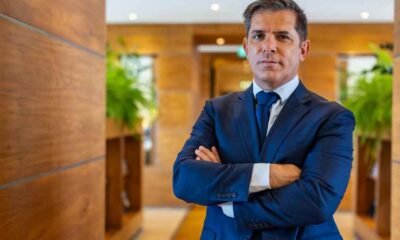
The event will be headlined by H.E. Diamantino Azevedo, Minister for Mineral Resources, Oil and Gas of Angola, whose leadership since 2017 has been central to advancing Angola’s mineral and hydrocarbons agenda. Under his stewardship, Angola has accelerated institutional reform, strengthened governance frameworks, promoted private sector participation, and prioritised sustainable resource development.

As global demand intensifies for critical minerals, energy security, and resilient supply chains, Angola is uniquely positioned to become a strategic partner to international investors and industrial economies. The country’s vast untapped mineral wealth, significant oil and gas reserves, expanding infrastructure ambitions, and commitment to economic diversification present a rare investment window for global stakeholders.

Speaking ahead of the event, Veronica Bolton Smith, CEO of the Critical Minerals Africa Group said:

“Angola stands at a pivotal point in its national development. The reforms taking place across the country’s extractive sectors are creating unprecedented opportunities for responsible international investment and strategic partnership. This is not simply about resource development, it is about building long-term industrial growth, strengthening energy and mineral supply chains, and shaping Angola’s future as a globally competitive investment destination. We believe this moment represents one of the most important opportunities for international partners to engage with Angola’s leadership and participate in the country’s next chapter of economic transformation.”

The event is expected to attract a distinguished international audience, including sovereign representatives, institutional investors, mining and energy executives, infrastructure developers, development finance institutions, and strategic partners seeking direct engagement with Angola’s leadership.

Distributed by APO Group on behalf of Critical Minerals Africa Group (CMAG).


Continue Reading

Business

African Union (AU) Commissioner Mataboge Joins African Energy Week (AEW) 2026 as Continent Scales Interconnected Energy Infrastructure

Published

on

Lerato Mataboge’s participation reflects the African Union’s commitment to transforming African energy systems, prioritizing African-led innovation and priorities

CAPE TOWN, South Africa, May 7, 2026/APO Group/ –Lerato D. Mataboge, Commissioner for Infrastructure and Energy at the African Union (AU), has joined the upcoming African Energy Week (AEW) Conference and Exhibition – taking place October 12-16 in Cape Town – as a speaker. Her participation puts the AU’s institutional voice at the center of the event at a moment when the continental body is moving from policy architecture to execution, and growing increasingly vocal about the conditions it will and will not accept from international partners.


Mataboge has been among the clearest African voices pushing back on the terms of the global energy transition debate. At the World Economic Forum in Davos in January 2026, she challenged the prevailing narrative, arguing that baseload power is a non-negotiable prerequisite for African industrialization and that the continent cannot be assessed by the same benchmarks applied to economies that already have reliable electricity. Africa holds around 20% of the world’s identified uranium resources yet accounts for less than 1% of global nuclear electricity consumption, a disparity she has cited as emblematic of a broader pattern of resource wealth that has yet to translate into energy sovereignty.

Commissioner Mataboge is the institutional link between Africa’s continental energy ambitions and the investors and developers who can make them real

Speaking in Cape Town in March, Mataboge noted that Africa has approximately 245 GW of installed generation capacity, while electricity consumption averages around 600 kWh per person per year, roughly five times below the global average. Closing the gap means connecting between 90 and 100 million additional people to electricity annually, requiring roughly $200 billion in annual investment by 2030 against a current annual investment level of approximately $45 billion.

Mataboge’s mandate at the AU is to build the institutional architecture that can begin to mobilize that capital at scale. She is overseeing the operationalization of the African Single Electricity Market (AfSEM), which aims to integrate the continent’s fragmented regional power pools into a unified electricity market, alongside the Continental Power Systems Masterplan and the Ten-Year Infrastructure Investment Plan for Cross-Border Connectivity, the AU’s master pipeline for transmission and generation projects. These frameworks have been in development for years, but the challenge has been turning them into bankable propositions that attract private capital. At AEW 2026, that case will be made to the investors and developers who can act on it.

“Commissioner Mataboge is the institutional link between Africa’s continental energy ambitions and the investors and developers who can make them real,” said NJ Ayuk, Executive Chairman of the African Energy Chamber. “Her message is clear – that Africa will not subordinate its development needs to external financing conditions that were never designed with this continent in mind. AEW is the right room to have that conversation, and the right moment.”

AEW 2026 – Africa’s premier energy event – convenes Africa’s foremost policymakers, financiers, developers and operators to advance the continent’s energy agenda. Commissioner Mataboge’s address will place the AU’s institutional framework, and the financing gap it is working to close, at center stage.

Distributed by APO Group on behalf of African Energy Chamber.

Continue Reading

Energy

InterOil’s Angola Oil & Gas (AOG) 2026 Silver Sponsorship Reflects Drive to Scale Logistics, Local Content

Published

on

Integrated logistics, local workforce development and offshore execution converge as Angola’s project pipeline expands

LUANDA, Angola, May 7, 2026/APO Group/ –Angolan oilfield services provider InterOil has joined the upcoming Angola Oil & Gas (AOG) Conference and Exhibition as a Silver Sponsor, taking place September 9-10 with a pre-conference on September 8. For over 21 years, InterOil has worked alongside international operators, playing a strategic role in maintaining stable and reliable offshore activities. It’s AOG sponsorship not only demonstrates a commitment to the growth of the industry, but positions the logistics and offshore support provider at the center of Angola’s next wave of deepwater and infrastructure-led projects.

InterOil’s sponsorship reflects a core reality in Angola’s hydrocarbon market: as projects become more complex and move into deeper waters, the ability to sustain operations through integrated logistics solutions is emerging as a defining constraint. The company’s model – combining onshore coordination with offshore execution – addresses this directly, ensuring continuity across high-intensity operations where downtime carries significant financial and technical risk.

Operating in a complex offshore environment, InterOil has built its track record around reliability and operational discipline. A key reference point is the Kaombo development in Block 32, operated by TotalEnergies. Since 2014, the company has supported the project through integrated onshore and offshore logistics, sustaining operations for both the FPSO Kaombo North and FPSO Kaombo South. The development remains one of Angola’s most technically complex offshore assets, and InterOil’s role in maintaining operational continuity underscores the importance of logistics providers in stabilizing production and ensuring efficiency at scale.

This operational focus is complemented by a long-term commitment to local content development. InterOil has prioritized the recruitment, training and advancement of Angolan professionals, embedding structured capacity-building and knowledge transfer into its operating model. In a market where local participation is both a regulatory requirement and a strategic imperative, this approach supports workforce development while reinforcing operational resilience.

As Angola seeks to sustain production above one million barrels per day by expanding infrastructure, accelerating offshore projects and deepening local participation across the value chain, the role of logistics providers is becoming more strategic. AOG 2026 provides a platform where these capabilities are integrated into broader project discussions, connecting operators, service providers and investors around execution as a core pillar of project success. InterOil’s participation underscores a broader industry shift: in Angola’s next phase of growth, operational delivery will carry as much weight as resource potential.

Distributed by APO Group on behalf of Energy Capital & Power.

Continue Reading

Trending

Exit mobile version