The Africana brand made significant statement of intent – that they are taking the lead in the movement to propagate African fashion on a global scale
ABIDJAN, Ivory Coast, September 23, 2022/APO Group/ —
The merry sound of clinking glasses, hearty laughter and afrobeats music permeated the cool September evening at Rue Marconi Zone 4, a posh business district in the Ivorien port city of Abidjan. The motley crowd of extremely well and colourfully dressed individuals gathered at the brilliantly lit venue were celebrating the grand opening of an Africana X (https://shopAfricana.co) flagship store – the first of its kind outside of Nigeria.
By establishing this new store in Abidjan, a city that widely reflects the culture of French speaking West Africa, the Africana (https://bit.ly/3R7Wv8m) brand made significant statement of intent – that they are taking the lead in the movement to propagate African fashion on a global scale.
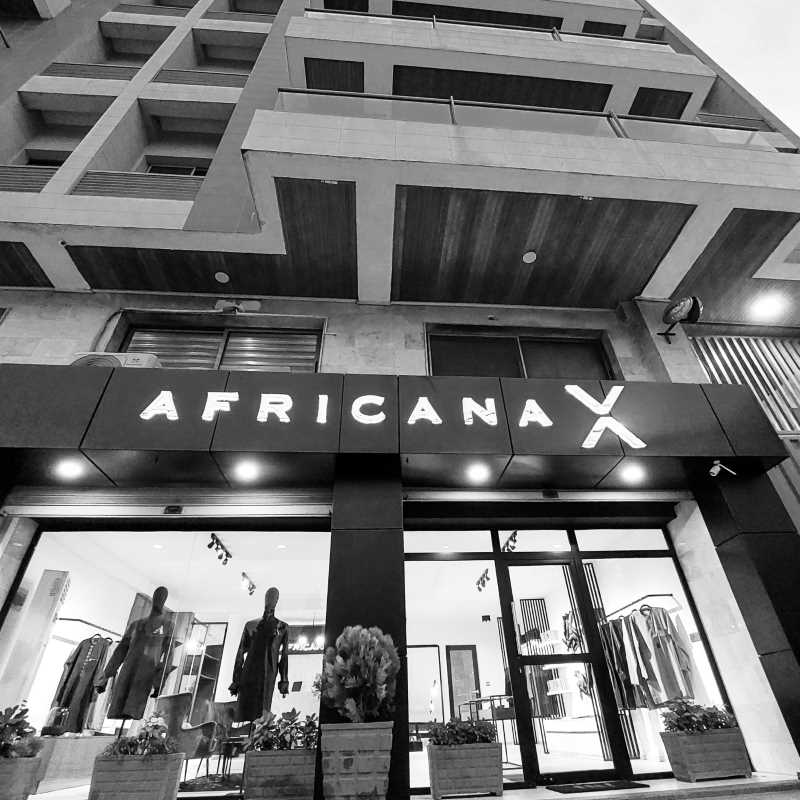
Perhaps, this explains the fanfare and overwhelming outpouring of goodwill that greeted the event by friends and the teeming fans of the brand, both at the venue and online, across the brand’s social media platforms. To many who follow, patronize, collaborate with, or look up to Africana Couture, this ceremony signified more than just expansion, this was a celebration of African excellence and a milestone in Africana Couture’s (https://bit.ly/3Rbw3KW) masterplan to redefine what African fashion is, and ultimately rebrand Africa.
The brand, Africana Couture
Birthed by a vision to put African fashion on the world map, Africana’s focus was to change the way traditional African attire was perceived locally and internationally. The strategy to do this was simple; fuse the uninhibited creativity of African design concepts with the very best in tailoring methods/technology and top it off with unwavering commitment to excellence in process execution and service delivery.
More than 10 years down the line, this strategy has proven extremely effective. This is evidenced by the fact that Africana Couture (https://AfricanaCouture.com), boasts amongst its clientele, a wide assortment of presidents, industry leaders, celebrities and expatriate connoisseurs of great fashion, who are enamoured with the brand’s consistent track record of distinctive excellence.

However, with inclusiveness as one of the core edicts of the Africana brand, it became essential to devise a means to involve more people whose tastes might defer from the usual bespoke traditional offerings and this necessitated the creation of Africana X.
Africana X, or Africana Xperience (https://shopAfricana.co), is a subdivision of the Africana corporation that disrupts the market place for bespoke fashion by offering ready-to-wear pieces, at affordable prices, at its physical boutiques and e-marketplace. Africana Xperience caters to the needs of sophisticated individuals who want to enjoy the sartorial standards offered by bespoke tailoring, without the wait time that is usually required.
Taking its maxim of inclusiveness even further, Africana X goes beyond its primary offering of traditional pieces. With the Africana Heritage collection (https://bit.ly/3LA00Dp), it offers streetwear that pay homage to Icons of African history; the Africana Traditional Bags and Clan Scarf collections offer premium ancillary items; and even sneaker heads are not left out as the store offers a range of specially crafted sneakers to satisfy even the most avid collector.
The Africana X (https://shopAfricana.co) store expands the range of the brand’s service delivery potential from just luxury fashion to luxurious lifestyle, and in service of the promise of the brand’s moniker, has become a curator of the luxurious side of the African experience.
The incredible journey and success of the Africana brand can be attributed to the passion, dedication and creativity of the over 150-man team, however, none of these would have been possible without the vision, leadership and design of Charles ‘Africana’ Oronsaye (https://bit.ly/3dIYDpc).

The Man, Charles Oronsaye
Despite a degree and a promising career in Law, Charles Oronsaye (https://bit.ly/3Spo5Ph), the founding creative director of Africana Couture (https://bit.ly/3xKVnAO), made up his mind pretty early to deviate from the beaten path and follow his own way. Possessing a fiercely independent mind and rebellious spirit, he knew acquiescing to the dictates of societal expectations would never suit him, and so, after brief detours in music and the entertainment industry, his journey brought him to fashion.
From humble beginnings in Benin city, Nigeria, Charles had a very clear idea of what it was he was building. Even as a fresh-faced university graduate in early 2010s, Charles was adept at spotting opportunities; which in this case was the social media following he had built during his time in the media. In the absence of financial capital, he leveraged on his social capital to build a network of clients, partners and staff.
Operating exclusively from his social media platform, Charles learnt the trade on the journey, calling upon all his tenacious resolve, creativity, affable personality and ability to adapt and evolve. One decade later, the daring young man who had big dreams has been replaced by a seasoned businessman, Forbes entrepreneur and inspiration to a generation of young African fashion professionals.
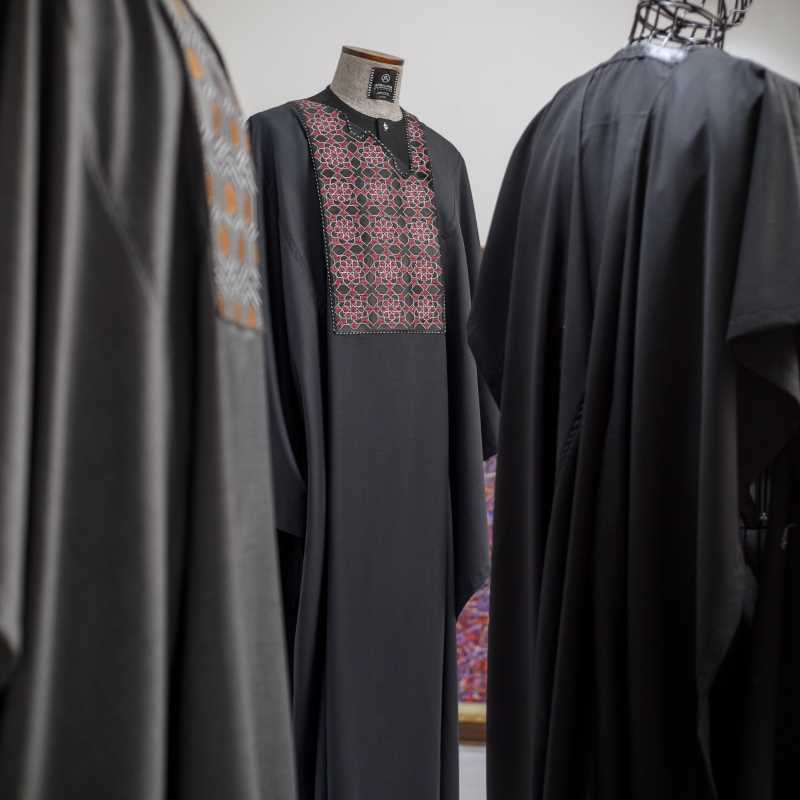
The Africana X store expands the range of the brand’s service delivery potential from just luxury fashion to luxurious lifestyle
According to him, one key element in the success of the brand is that he has never lost sight of the principles which informed the mission in the first place. This is illustrated by the fact that despite the fact that he has assembled some of the brightest minds to build this dream with him, he remains deeply entrenched in the process, ensuring that the vision maintains its heading.
The fact that the name, Africana is interchangeably used to identify the man and the brand is testament to Charles’ hands-on approach to doing business and his determination to ensure the brand stays true to its founding edicts.
Under his leadership and guidance, Africana Couture has transformed into more than just a fashion label selling men’s clothing. it is now widely viewed as a lifestyle and aspirational brand that curates one of the most exciting versions of the African experience- one of luxury, minimalist beauty and consistent excellence.

Abidjan today, Tomorrow the world (After Abidjan, What Is Next?) (https://bit.ly/3C5Bhnn)
Following the launch of African X in Abidjan, plans are underway to replicate the success of Africana’s private tailoring business model in Dakar, Senegal, the style capital of French West Africa, and an even more audacious campaign to plant seeds in the original concrete jungle, New York City by the end of the year.
The proliferation of the brand into New York City is strategic, as the Big Apple is not only an important fashion capital, but is also a nexus for global commerce. It therefore makes sense to first setup shop here and then spread its tendrils across the Americas, Europe and eventually Asia.

Over the course of the last decade, Africana has metamorphosed into an industry leader, credited with making definitive contributions to the African fashion ecosphere such as creating the first-ever African measurement template which takes into consideration, factors that are uniquely African in nature which were largely overlooked by the dimensions recommended by western fashion industry.
In its role as an industry gatekeeper, Africana is a standard against which other brands can measure progress and a beacon providing a guiding light to newcomers who seek direction.
In addition to these bold strides in the fashion industry, Africana has pivoted and branched into other economic sectors including Fin-Tech, with its foray into Blockchain technology and is making moves in real estate with its plan to launch Africana Smart HQ.
On the philanthropic/social awareness front, the brand also manages to combine industrial finesse with corporate responsibility with moves such as; ensuring it remains an equal opportunity employer, creating a fund dedicated to catering to the welfare of needy women and children and ensuring that the stringent Covid-19 rules are adhered to in all its dealings.
There is also Africana H2O, a brand of bottled water available in a handful of locations across the continent which exists to reiterate the importance of access to safe drinking water for everyone.

In conclusion
Africa is experiencing a renaissance which has mostly been championed by the creative industry within the continent. This afrocentric wave has increased the love for, and influence of most things afroculture. The world is paying attention and more people are looking to Africa; no longer just a destination for pity and charity, but as a veritable source of inspiration and ideas.
This paradigm shift is one that comes with far-reaching attendant benefits and with ambassadors such as Charles Oronsaye (https://bit.ly/3UuqRom) and his band of merry innovators at Africana Couture (https://bit.ly/3R5SBwH) leading this new movement, we can rest assured that the African story is getting a happy and beautiful ending.
Distributed by APO Group on behalf of AFRICANA COUTURE.

With PCS, ports can dynamically allocate resources, adjust workflows, and reprioritize cargo flows using real-time data and coordinated processes
DUBAI, United Arab Emirates, May 19, 2026/APO Group/ —By Alioune Ciss, Chief Executive Officer, Webb Fontaine (https://WebbFontaine.com).
When global trade flows normally, Port Community Systems (PCS) are often viewed as efficiency tools. They digitize paperwork, connect stakeholders, reduce delays, and improve visibility across port ecosystems. However, the true impact and strategic importance of PCS become most apparent when a crisis hits.
Whether caused by geopolitical conflict, canal restrictions, rerouted shipping lanes, cyber risk, labor disruption, or sudden regulatory shifts, modern supply chain shocks remind us that ports without strong digital coordination struggle to adapt, whereas ports with robust PCS infrastructure are better positioned to keep cargo moving. In today’s environment, PCS has become a critical infrastructure.
Disruption is not an exception anymore
Global maritime trade has entered a more volatile era where disruption is structural. Let’s review the recent events to understand the scale of impact:
Around 2,000 ships were reportedly stranded during the recent Strait of Hormuz (https://apo-opa.co/4dii0lb) crisis.
The Red Sea crisis (https://apo-opa.co/4dz5gFA) led to more than 190 attacks on vessels by late 2024, forcing widespread rerouting and increasing transit times by up to two weeks.
The Suez-linked corridor (https://apo-opa.co/4dz5gFA), which carries roughly 10–12% of global maritime trade, experienced sharp volume declines during the disruption.
Supply chains across the Middle East, Africa, and Europe faced cascading effects, including congestion, cost increases, and schedule instability.
At the same time, the global port industry itself is undergoing rapid transformation. According to the International Association of Ports and Harbors (IAPH), ports are accelerating digitalization and strengthening resilience capabilities in response to geopolitical and operational uncertainty. This is the new reality: routes shift, volumes spike, and conditions change faster than traditional systems can handle.
Why PCS matters most during a crisis
When vessel schedules collapse, or cargo volumes suddenly spike, physical infrastructure alone is not enough. Cranes, berths, gates and yards also need coordination. That is where PCS becomes the backbone of resilience.
A PCS is not just a digital tool; rather, it’s a shared operational layer. It connects shipping lines, terminals, customs, freight forwarders, transport operators, and authorities through a single data environment, enabling synchronized decision-making across the ecosystem.
Instead of exchanges through emails, phone calls, Excel files, or siloed systems that generate delays and errors, the PCS enables seamless and real-time coordination.
1. Real-time visibility across the ecosystem
When vessels are delayed or rerouted, fragmented communication becomes a liability.
PCS enables real-time visibility across:
vessel arrivals and berth planning
cargo status and documentation
customs readiness and inspections
gate operations and inland logistics
Instead of fragmented updates, stakeholders operate from a shared, trusted data environment.
When shipping lanes shift overnight, policies change, and when uncertainty increases, the strongest ports are the ones that are the most ‘connected’
In a crisis, the speed of information becomes the speed of recovery.
Without digital coordination, responses are reactive and slow.
With PCS, ports can dynamically allocate resources, adjust workflows, and reprioritize cargo flows using real-time data and coordinated processes.
3. Customs and border continuity
Cargo cannot move if border agencies cannot move.
According to joint guidance from the World Customs Organization (WCO) and International Association of Ports and Harbors (IAPH), interoperability between Customs systems and PCS is essential for coordinated border management, risk control, and secure data exchange (https://apo-opa.co/3PLcs9P).
In crisis conditions, this becomes critical. Governments must introduce new controls, risk filters, or emergency procedures quickly, without disrupting trade flows. PCS enables this balance.
4. Trust and transparency for the market
Importers, exporters, and carriers can tolerate disruption more than uncertainty. What they need is visibility.
PCS provides transparency across the supply chain, allowing stakeholders to track cargo status, anticipate delays, and plan accordingly. This transparency builds trust and reduces the systemic risk of panic-driven inefficiencies.
Operational resilience is the key
As we all know, the classic PCS discussions focus on key KPIs such as:
reduced turnaround time
fewer documents
lower administrative cost
faster truck processing
But today, the most important KPI is “readiness”: If a major trade corridor shifts tomorrow, can your port ecosystem adapt in real time?
To answer “Yes” to this question, a future-ready PCS should include:
real-time event management
integrated stakeholder communication
predictive congestion alerts
interoperability with customs and regulatory systems
scalable architecture for demand spikes
“For years, ‘efficiency’ was key when it comes to PCS. However, today, the key is ‘resilience’… When shipping lanes shift overnight, policies change, and when uncertainty increases, the strongest ports are the ones that are the most ‘connected’… Therefore, we should treat PCS as a crisis backbone of trade, not an IT efficiency initiative. [Alioune Ciss, CEO, Webb Fontaine]
The Next Evolution: Intelligent PCS
PCS is now entering a new phase. Next-generation systems are evolving into data-driven platforms that support predictive analytics, AI-enabled decision-making, and proactive risk management (https://apo-opa.co/4eQ93Rg).
In other words, today, ports need systems that help orchestrate responses. Solutions such as Webb Ports (https://apo-opa.co/42F3gqq) from Webb Fontaine reflect this shift. By connecting all port stakeholders through a unified platform, anticipating congestion before it happens, simulating operational scenarios, and optimizing resource allocation dynamically, we enable faster coordination, better visibility and more agile responses when disruptions occur.
Distributed by APO Group on behalf of Webb Fontaine.
African Mining Week 2026 will showcase lucrative investment, partnership, and knowledge-exchange opportunities across Africa’s gold downstream sector, as Rand Refinery intensifies its investment and expansion strategy across the continent
CAPE TOWN, South Africa, May 19, 2026/APO Group/ –Amid a strategy to expand from a South Africa-focused refiner into a pan-African downstream leader, Rand Refinery has joined African Mining Week (AMW), an Influential African Mining Conference, scheduled for October 14-16, 2026 in Cape Town, as a silver sponsor.
Rand Refinery’s participation reflects a broader strategic alignment between the company’s expansion agenda and AMW’s focus on supporting and enabling local beneficiation and promoting artisanal and small-scale mining (ASM) responsible sourcing frameworks.
In terms of volumes, the latest market information indicates that Africa produces 1000tpa of mined gold (more than any other continent), with large-scale mining (LSM) and ASM being almost evenly balanced (500tpa production each). On its current trajectory, African ASM volumes are expected to eclipse those of LSM.
The focus on ASM as a transformational imperative is valid, and Rand Refinery is an active participant in the precious metals supply chain, working alongside other upstream and downstream actors to ensure that the communities and countries with gold resources benefit in a sustainable manner.
Under the theme Mining the Future: Unearthing Africa’s Full Mineral Value Chain, AMW 2026 offers a critical interface between refiners, miners, regulators, and financial institutions, as African countries intensify efforts to capture more value from responsible mineral production.
A key pillar of Rand Refinery’s 2026 strategy is its expansion into high-growth gold markets beyond South Africa. In January 2026, the company partnered with Ghana’s Gold Coast Refinery (GCR) to support the Ghana Gold Board to locally refine artisanal and small-scale (ASM) gold and elevate responsible sourcing standards in West Africa. The partnership also positions Rand Refinery in a rapidly growing and historically fragmented supply segment: ASM operations, enabling the company to enhance traceability and strengthen compliance with global standards for ethical sourcing and anti-money laundering.
The partnership potentially allows the monetization of ASM supply streams in the formal gold ecosystem, complementing Rand Refinery’s established role in refining output from responsible large-scale producers. AMW 2026 represents a timely platform for the company to provide an update on its projects and contribution to Africa’s gold sector.
As demand for regional refining capacity expands, along with central bank buying programs, companies such as Rand Refinery will be crucial.
Central bank gold purchases are projected to average around 585 tons per quarter in 2026, underscoring sustained global demand. In Africa, gold now accounts for approximately 17% of total reserves – up from less than 10% in 2022–2023 – while physical holdings increased from 663 tons in 2022 to an estimated 738 tons in 2025.
This upward trajectory is driving demand for trusted refining and value addition services, positioning Rand Refinery as a key partner in the region. Against this backdrop, AMW provides a strategic platform for central banks and gold buyers to engage directly with one of the world’s largest integrated single-site precious metals refining and smelting complexes and strengthen regional beneficiation and national reserve strategies.
At AMW, Rand Refinery executives will participate in panel discussions and networking sessions, engaging stakeholders on partnership opportunities that support a more integrated, transparent and value-driven African gold ecosystem.
Distributed by APO Group on behalf of Energy Capital & Power.
ACCRA, Ghana, May 19, 2026/APO Group/ –The Meltwater Entrepreneurial School of Technology (MEST) (https://Meltwater.org), has opened applications for the second edition of the MEST AI Startup Program, a fully-funded, immersive experience designed to equip Africa’s most promising AI entrepreneurs with the technical, business, product, and leadership skills to build and scale globally competitive AI startups.
Over a seven-month training phase, the MEST AI Startup program will provide founders with hands-on instruction, technical mentorship, and business coaching from global experts to develop AI-powered solutions. The top startups will then advance to a four-month incubation period to refine products, sharpen go-to-market strategies, and secure market traction. At the end of incubation, startups have the opportunity to pitch for pre-seed investment of up to $100,000 and join the MEST Portfolio.
We are excited to support the next generation of African AI founders through training delivered by some of the most knowledgeable experts in the industry
The inaugural cohort brought together founders from seven African countries who are already building transformative AI solutions across industries. Building on the momentum of the first edition, the 2027 intake reflects MEST Africa’s continued commitment to ensuring African entrepreneurs play a defining role in the future of artificial intelligence.
According to Emily Fiagbedzi, AI Startup Program Director, the urgency of investing in African AI talent has never been greater.
“AI technology is advancing at an extraordinary pace, and meaningful participation in the global AI economy requires more than access to tools, it requires the ability to build,” she said. “This program is designed to help talented African founders develop solutions to real challenges while positioning them to compete globally. We are excited to support the next generation of African AI founders through training delivered by some of the most knowledgeable experts in the industry from organizations including OpenAI, Perplexity, Google, and Meltwater”
For the 2027 intake, the program is open to African founders based in Ghana, Nigeria, Senegal, and Kenya aged 21–35 with software development experience who want to start their own AI startup.
We use cookies on our website to give you the most relevant experience by remembering your preferences and repeat visits. By clicking “Accept”, you consent to the use of ALL the cookies.
This website uses cookies to improve your experience while you navigate through the website. Out of these, the cookies that are categorized as necessary are stored on your browser as they are essential for the working of basic functionalities of the website. We also use third-party cookies that help us analyze and understand how you use this website. These cookies will be stored in your browser only with your consent. You also have the option to opt-out of these cookies. But opting out of some of these cookies may affect your browsing experience.
Necessary cookies are absolutely essential for the website to function properly. These cookies ensure basic functionalities and security features of the website, anonymously.
Cookie
Duration
Description
cookielawinfo-checkbox-analytics
11 months
This cookie is set by GDPR Cookie Consent plugin. The cookie is used to store the user consent for the cookies in the category "Analytics".
cookielawinfo-checkbox-functional
11 months
The cookie is set by GDPR cookie consent to record the user consent for the cookies in the category "Functional".
cookielawinfo-checkbox-necessary
11 months
This cookie is set by GDPR Cookie Consent plugin. The cookies is used to store the user consent for the cookies in the category "Necessary".
cookielawinfo-checkbox-others
11 months
This cookie is set by GDPR Cookie Consent plugin. The cookie is used to store the user consent for the cookies in the category "Other.
cookielawinfo-checkbox-performance
11 months
This cookie is set by GDPR Cookie Consent plugin. The cookie is used to store the user consent for the cookies in the category "Performance".
viewed_cookie_policy
11 months
The cookie is set by the GDPR Cookie Consent plugin and is used to store whether or not user has consented to the use of cookies. It does not store any personal data.
Functional cookies help to perform certain functionalities like sharing the content of the website on social media platforms, collect feedbacks, and other third-party features.
Performance cookies are used to understand and analyze the key performance indexes of the website which helps in delivering a better user experience for the visitors.
Analytical cookies are used to understand how visitors interact with the website. These cookies help provide information on metrics the number of visitors, bounce rate, traffic source, etc.
Advertisement cookies are used to provide visitors with relevant ads and marketing campaigns. These cookies track visitors across websites and collect information to provide customized ads.