Connect with us
Anglostratits

Business

African National Oil Companies (NOCs) Boost Project Development with Innovative Financing Strategies

Published

on

African-National-Oil-Companies

Through privatization, joint ventures and development finance, Africa’s national oil companies are advancing oil and gas projects

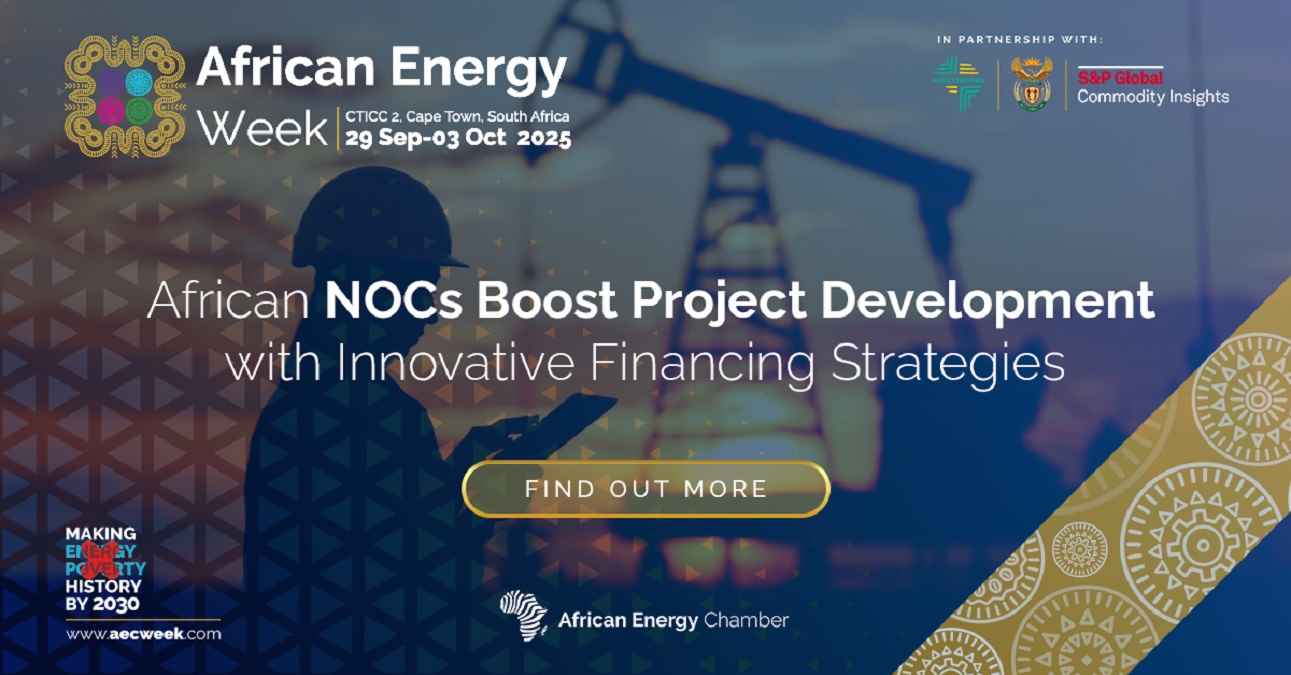
CAPE TOWN, South Africa, March 26, 2025/APO Group/ –African national oil companies (NOCs) are leveraging innovative financing strategies to advance oil and gas projects, ensuring continued investment despite shifting global energy markets. Through various innovative strategies such as privatization and divestment, bond issuances, development finance and resource-backed loans, NOCs are not only strengthening their financial capacity but positioning themselves at the forefront of African oil and gas development.

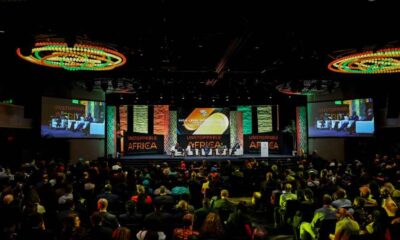
The African Energy Week: Invest in African Energies 2025 conference – taking place September 29 to October 3 in Cape Town – will explore the impact these strategies will have on the continent’s hydrocarbon landscape. Uniting global financiers, development institutions, foreign operators and NOCs, the event will unlock a new wave of finance in African energy.

Privatization and Divestment

Privatization and asset divestment have become crucial tools for African NOCs to streamline their operations and attract private capital. By selling stakes in non-core assets and partially-privatizing, NOCs are raising the much-needed capital to support oil and gas projects. Angola’s Sonangol, for example, has reaffirmed its plan to launch an Initial Public Offering (IPO), with 30% of the company’s shares expected to become available. The IPO falls under the broader Propiv initiative by the government – aimed at reforming the economy toward a free market. The initiative will make 11 of Sonangol’s processes public through public tenders, limited tenders and IPOs.

Bond Issuances and Capital Market Financing

African NOCs are deploying a diverse range of financing strategies to ensure continued investment in oil and gas projects

With the need for long-term project financing, governments and NOCs have turned to international capital markets, issuing bonds to raise funds for large-scale projects. Bond issues originating from Africa exceeded $14.8 billion in Q1, 2024, as African business and governments tap into the international bond market. The Africa Finance Corporation acted as Global Coordinator for the issuance of a domestic dollar bond from the Nigerian government in 2024, raising $900 million. The first-of-a-kind issuance closed with 180% oversubscription, highlighting strong domestic investor confidence. Nigeria also issued a $1.7 billion Eurobond in December 2024, which was oversubscribed five-fold.

Joint Ventures

Joint ventures (JV) have proven effective strategies for NOCs to raise capital, leverage foreign technical expertise while sharing financial risk across oil and gas projects. The Ghana National Petroleum Corporation (GNPC) has committed to pursuing innovative JVs with Eni in 2025 and beyond to fast-track oil and gas projects. The country’s biggest oilfields – Jubilee and TEN – were developed through a JV between GNPC, Kosmos Energy, Petro SA and Jubilee Oil Holdings. JVs have served as a vehicle for Libyan oil and gas development. Mellitah Oil & Gas – a JV between the NOC and Eni – produced 403,000 barrels per day (bpd) in 2024 while Akakus Oil Operations – a JV between the NOC and Repsol – achieved record production in 2025 with 306,000 bpd.

Development Finance and Resource-Backed Loans

Development finance and resource-backed loans have become vital financing mechanisms for NOCs, particularly as access to private capital for oil and gas projects becomes increasingly challenging. The Nigerian National Petroleum Corporation has leveraged oil-backed loans to increase its balance sheet over the years and is currently seeking a new $2-billion structure to support production growth. The first $1 billion tranche has already been concluded with a second tranche in the works. Mozambique’s ENH leveraged development finance to fund its gas projects. Notably, the $20 billion Mozambique LNG project is expecting a $4.7 billion loan from the U.S.-Export-Import Bank to be re-approved. The project has already secured $3 billion in financing from the Japan Bank for International Cooperation. Meanwhile, Uganda and Tanzania’s NOCs are seeking an additional $3 billion in debt financing from Chinese lenders, specifically the Export-Import Bank of China and China Export & Credit Insurance Corporation, to fund the East African Crude Oil Pipeline.

“African NOCs are deploying a diverse range of financing strategies to ensure continued investment in oil and gas projects. From privatization and asset sales to bond issuances, joint ventures and development finance, NOCs are adapting to evolving market conditions while securing the necessary capital to sustain exploration and production,” states Ore Onagbesan, Programming Director, African Energy Chamber.

AEW: Invest in African Energies is the platform of choice for project operators, financiers, technology providers and government, and has emerged as the official place to sign deals in African energy. Visit http://www.AECWeek.com for more information about this exciting event.

Distributed by APO Group on behalf of African Energy Chamber.

Business

Afreximbank Launches Inaugural Accelerator Programme Cohort to Scale Africa’s Digital Trade Ecosystem

Published

on

Afreximbank

The programme underscores Afreximbank’s growing role as a catalyst for Africa’s trade and innovation ecosystem, providing a structured platform to identify and scale high-impact ventures

Afreximbank is proud to be a partner, an enabler and a committed stakeholder in the success of the next generation of African trade champions

CAIRO, Egypt, March 26, 2026/APO Group/ –African Export-Import Bank (Afreximbank) (www.Afreximbank.com) has officially launched the inaugural cohort of its “Afreximbank Accelerator Programme,” bringing together eight high-potential startups from across Africa and the diaspora for an intensive kick-off week taking place in Cairo from 23-27 March 2026.


Selected from a highly competitive pool of over 1,600 applications, the cohort represents some of the most promising ventures building digital infrastructure for intra-African trade from across the continent. These startups operate across key sectors including cross-border payments, digital logistics, agri-export platforms, AI-powered enterprise solutions, supply chain finance and diaspora investment mobilisation.

Participating in the cohort are the startups Fincart.io of Egypt; OnePort 365, which operates in Nigeria, Ghana and Kenya; Timon, a pan-African entity active in 15 countries; Zowasel, also active in Nigeria, Kenya and Tanzania; Gebeya, which is both Ethiopian and pan-African; Fluna, also a pan-African startup active in 10 countries; Capsa Technologies of Nigeria; and Daba Finance whose operations cover Francophone Africa.

Under the programme, which has been conceptualised, designed, and operated by Afreximbank, qualifying startups will be supported with investment of up to US$250,000, subject to standard investment criteria and due diligence, complemented by mentorship, market access, and strategic partnerships designed to accelerate their expansion across Africa.

The Cairo kick-off week, that commenced at Afreximbank’s headquarters on March 24, 2026 features a series of high-level engagements with the Bank’s leadership, industry experts, mentors and ecosystem partners. The week will culminate in an exclusive Social Mixer at the Grand Egyptian Museum, symbolically linking Africa’s rich heritage with its rapidly evolving innovation future.

Driving Africa’s Digital Trade Future

Speaking during the kickoff meeting, Mr. Haytham Elmaayergi, Executive Vice President, Global Trade Bank at Afreximbank, highlighted the significance of the event: “Today, we move from promise to execution, because we understand a fundamental truth: trade does not happen within the pages of policy documents. Trade happens through businesses. It happens through entrepreneurs. It happens through builders. What excites me the most about this cohort is not only who you are, but what you represent. You are building the digital rails that will define how Africa trades in the 21st century.”

He added: “This Accelerator Programme is part of a much broader ambition: an Africa where start-ups scale across the continent as a matter of course, where businesses trade seamlessly across borders, and where the continent operates as a truly integrated economic force.  Afreximbank is proud to be a partner, an enabler and a committed stakeholder in the success of the next generation of African trade champions.”

In addition to the core sessions, the eight startups met with Afreximbank President, Dr. George Elombi and the senior leadership team for expert-led briefings on a variety of topics.

The Accelerator Programme offers a differentiated value proposition by combining:

  • Direct access to Afreximbank’s pan-African network of governments, financial institutions, corporates, and trade partners
  • Market access and deal facilitation opportunities across key African trade corridors
  • Regulatory and policy guidance, leveraging the Bank’s relationships with central banks and regulators
  • Integration pathways into the Bank’s digital trade ecosystem, including the Africa Trade Gateway (ATG) and the Pan-African Payments and Settlement System (PAPSS)

This approach positions Afreximbank as a strategic enabler of cross-border trade and continental scale, helping startups navigate licensing, compliance and market entry across multiple jurisdictions. Beyond this, the Bank plays a central role in shaping Africa’s digital trade ecosystem, combining market access, partnerships, and infrastructure to support the growth of scalable, continent-wide solutions.

The programme underscores Afreximbank’s growing role as a catalyst for Africa’s trade and innovation ecosystem, providing a structured platform to identify and scale high-impact ventures. Through this initiative, the Bank is actively enabling the development of the digital infrastructure underpinning the implementation of the African Continental Free Trade Area (AfCFTA) agreement, positioning itself at the forefront of efforts to drive intra-African trade, market integration and economic transformation across the continent.

Collectively, the eight start-ups operate across more than 15 African countries, spanning key trade corridors in West, East, North and Southern Africa. Their traction highlights the scale and potential of African innovation. Fluna has facilitated more than US$50 million in trade across 10 countries. Capsa has processed over NGN70 billion in supply chain finance. OnePort 365 connects the Nigeria-Ghana-Kenya trade corridors. Timon supports payments in 15 countries, with plans to expand to 40 countries, and Zowasel has connected more than 4,000 verified cooperatives and agribusinesses.

Together, these ventures are building the digital rails for intra-African trade, accelerating the implementation of the AfCFTA and unlocking new pathways for economic integration across the continent and the wider Global Africa network.

Distributed by APO Group on behalf of Afreximbank.

Continue Reading

Energy

ESI Africa 2026 Finance & Investment Insights: Charting the Path to Africa’s $4.2 Trillion Infrastructure and Energy Opportunity

Published

on

Investment

The report, Finance & Investment Industry Insights Volume 1 2026, provides a strategic roadmap for investors, utilities, and policymakers navigating funding of the continent’s infrastructure landscape

CAPE TOWN, South Africa, March 26, 2026/APO Group/ –ESI Africa releases the definitive 2026 Finance & Investment Industry Insights Volume to navigate Africa’s infrastructure transition and South Africa’s R4.2 trillion funding gap.

The report, Finance & Investment Industry Insights Volume 1 2026, provides a strategic roadmap for investors, utilities, and policymakers navigating funding of the continent’s infrastructure landscape.

As African economies face macroeconomic stress from global geopolitical volatility and rising energy prices, the need for structural investment is now more urgent than ever.

The publication arrives at a critical juncture, specifically addressing the R3.6 trillion to R4.2 trillion funding gap South Africa must bridge to achieve energy security and Net-Zero commitments by 2050.

“From the analysis in this Volume, there is no doubt that South Africa faces a critical capital ‘hump’ between 2025 and 2030,” notes Nicolette Pombo-van Zyl, Editor-in-Chief.

“Success here depends less on the global availability of money and more on the country’s internal ability to implement regulatory efficiency. However, regardless of closing the funding gap, end users must prepare themselves for higher electricity bills.”

Key Insights from Volume 1 2026:

From the analysis in this Volume, there is no doubt that South Africa faces a critical capital ‘hump’ between 2025 and 2030

Electricity market reform and tariffs
The volume provides a deep dive into how shifting to multi-market structures and wholesale trading is reshaping electricity bills. It explores the “tightrope” of achieving grid stability while moving toward cost-reflective tariffs, which in South Africa have already doubled in the last five years.

The evolution of sustainable finance
With the green debt market exceeding $800 billion globally, the publication distinguishes between “Green Finance,” for established solutions, and the emerging “Transition Finance” pillar for hard-to-abate sectors.

Carbon markets as an asset class
Driven by corporate net-zero commitments, the carbon credit market is projected to grow to nearly $24 billion by 2030. The magazine examines how “pricing the invisible” can make marginal projects bankable in emerging markets.

Venture capital & innovation
Despite an “AI shadow” that saw some non-specialist funds pivot away from energy, the report highlights the rise of “patient capital” and a 91% surge in venture debt value to $1.8 billion in 2025.

Critical minerals and “friend-shoring”
Following the 2026 Critical Minerals Ministerial in Washington, the report analyses how new tariffs and strategic supply-chain alliances are redrawing the map for African producers.

“The time of a single electricity provider is ending,” states the publication. “The new system is moving toward a market with more players, more pricing options, and clearer decisions about who pays and how.”

Next investable projects
The volume also features an Investable Project Pipeline, showcasing high-impact initiatives such as the 394,000-hectare Rubeho Mountains Carbon Project in Tanzania, forest restoration in Nigeria, and innovative mineshaft pumped hydro storage in South Africa.

“The common thread through all these insights is a move toward maturity. Whether it is through smarter revenue collection, more nuanced sustainable finance, or using minerals as leverage, Africa is increasingly positioning itself as a strategic, rather than just a reactive, player in the global energy transition,” says Pombo-van Zyl.

Finance & Investment Industry Insights, Volume 1 2026 is now available for download at https://apo-opa.co/4sCPZKi

Distributed by APO Group on behalf of VUKA Group.

Continue Reading

Energy

Delegations from Nigeria, Senegal, Zambia and Djibouti to Meet Investors at Invest in African Energy (IAE) 2026 in Paris

Published

on

Energy Capital

Senior delegations from Nigeria, Senegal, Djibouti and Zambia will attend IAE 2026 in Paris, offering investors insights into Africa’s growing oil, gas, power and renewable energy markets

PARIS, France, March 26, 2026/APO Group/ –With Africa’s energy landscape accelerating toward new frontiers in gas, power and renewables, the continent is drawing unprecedented investor attention. Senior delegations from Nigeria, Senegal, Djibouti and Zambia are confirmed to attend the Invest in African Energy (IAE) 2026 Forum in Paris, providing a unique platform for investors to engage directly with policymakers and project developers at a time of major energy expansion and infrastructure transition. Their participation highlights the continent’s drive to secure capital, scale domestic production and advance regional energy integration.


Nigeria: Gas Expansion and Export Growth
Nigeria’s energy sector continues to benefit from high-growth dynamics under the Petroleum Industry Act and its strategic pivot toward natural gas. The country’s Dangote Petroleum Refinery, with a 650,000-barrel-per-day capacity, reached full operation in February and has begun exports to countries including Ivory Coast, Ghana and Tanzania. Key infrastructure projects include the near-complete Ajaokuta-Kaduna-Kano gas pipeline and the Nigeria-Morocco Gas Pipeline. The 2025 Oil Licensing Round remains active, offering 50 blocks and attracting projected investment of $10 billion.

Senegal: Offshore Oil and LNG Growth
Senegal has achieved commercial production of offshore oil and LNG. The Sangomar field produced 36.1 million barrels in 2025, exceeding expectations, while the Greater Tortue Ahmeyim project’s Phase 1 delivered its first LNG cargo in April 2025. Senegal’s Karpowership LNG-to-power facility began supplying the domestic grid in mid-2025. Future developments include Sangomar Phase 2 and GTA Phase 2, alongside ongoing renewable energy projects under the Just Energy Transition Partnership.

Zambia: Diversifying Power Generation
Zambia is reducing reliance on hydropower, with solar, coal and petroleum projects scaling up. Notable initiatives include the $1.1 billion Ndola refinery, Chisamba and Itimpi II solar plants, and Maamba Collieries Phase II coal expansion. Reforms such as open access for independent power producers and fast-track approvals aim to unlock investment toward the government’s 10 GW generation capacity target by 2030.

Djibouti: Renewables and Regional Energy Hub
Djibouti imports most of its energy but is advancing renewable generation, including the 60 MW Ghoubet Wind Farm and the Grand Bara Solar Plant. Geothermal development at Lake Assal targets 50 MW of continuous power. Electrification currently covers roughly 65–70% of the population, with the government aiming for full access by 2030–2035. Djibouti also functions as a critical logistics hub for regional fossil fuel flows, particularly for Ethiopia.

The confirmed participation of these senior delegations reinforces the IAE 2026 Forum as a strategic platform for investors seeking verified, high-potential opportunities in Africa’s rapidly evolving energy sector, across oil, gas, power and renewable infrastructure. Their presence provides a direct line to key decision-makers and ongoing developments, offering insight into market dynamics, investment pipelines and regional energy growth.

IAE 2026 (www.Invest-Africa-Energy.com) is an exclusive forum designed to connect African energy markets with global investors, serving as a key platform for deal-making in the lead-up to African Energy Week. Scheduled for April 22–23, 2026, in Paris, the event will provide delegates with two days of in-depth engagement with industry experts, project developers, investors and policymakers. For more information, visit www.Invest-Africa-Energy.com. To sponsor or register as a delegate, please contact sales@energycapitalpower.com

Distributed by APO Group on behalf of Energy Capital & Power.

Continue Reading

Trending