Connect with us
Anglostratits

Business

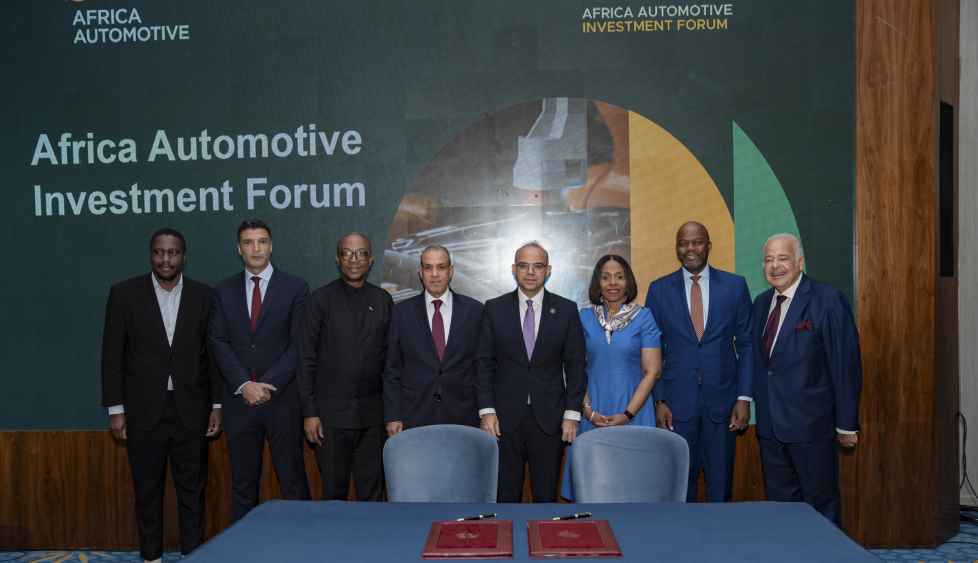
African Ministers to Tackle Energy Investment Gap at Invest in African Energy (IAE) 2025

Published

on

Energy Investment

Energy ministers from Nigeria, Guinea-Bissau, the DRC and Zimbabwe will convene to explore financing strategies and partnerships to advance Africa’s next wave of oil and gas development at the Invest in African Energy Forum in Paris next week

PARIS, France, May 13, 2025/APO Group/ –At Invest in African Energy 2025, a high-level ministerial panel will bring together energy ministers from Nigeria, Guinea-Bissau, the Democratic Republic of Congo (DRC) and Zimbabwe to examine the capital requirements and strategic partnerships needed to bring Africa’s next generation of energy projects online.

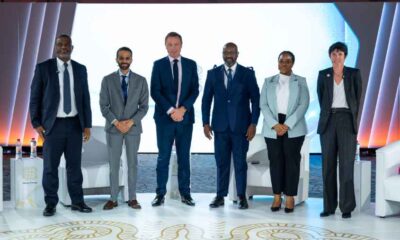
Set against a backdrop of evolving global energy dynamics and intensifying pressure to meet net-zero targets, the session – “Africa on the Global Energy Stage: Financing the Next Generation of Energy Projects” – will explore how African nations are navigating complex investment landscapes to drive sustainable hydrocarbon development. Moderated by NJ Ayuk, Executive Chairman of the African Energy Chamber, the discussion will feature Ekperikpe Ekpo, Minister of State for Petroleum Resources (Gas) of Nigeria; Malam Sambu, Minister of Energy of Guinea-Bissau; Wivine Moleka, Deputy Minister of Hydrocarbons of the DRC; and July Moyo, Minister of Energy & Power Development of Zimbabwe.

IAE 2025 (apo-opa.co/4iXGe3C) is an exclusive forum designed to facilitate investment between African energy markets and global investors. Taking place May 13-14, 2025 in Paris, the event offers delegates two days of intensive engagement with industry experts, project developers, investors and policymakers. For more information, please visit www.Invest-Africa-Energy.com. To sponsor or participate as a delegate, please contact sales@energycapitalpower.com.

Nigeria, which holds the largest natural gas reserves in Africa, is advancing its “Decade of Gas” agenda under a reform-oriented administration working to reposition the country as a global gas hub. The government is prioritizing infrastructure development, market liberalization and targeted policy incentives to draw large-scale investment into the sector, which has already led to major capital commitments from international players including Shell, Chevron and TotalEnergies, and the rollout of new LNG, FLNG and mini-LNG projects.

In Guinea-Bissau, the energy sector is entering a new phase of exploration and frontier investment. As one of the continent’s least developed hydrocarbon markets, the country is laying the institutional and regulatory foundations for future growth, with an emphasis on public-private collaboration and regional integration. Last September, Guinea-Bissau spudded a deep offshore exploration well near the neighboring Sangomar discovery in Senegal, marking a significant step toward unlocking its offshore potential.

The DRC, meanwhile, is pushing to unlock the potential of its underexplored hydrocarbon basins. With a renewed focus on exploration and development, the DRC is pursuing strategic licensing efforts and engaging international partners to accelerate activity, while also seeking to balance environmental considerations with its economic development goals.

Zimbabwe continues to prioritize energy diversification and regional power security. In recent years, the country has undertaken efforts to expand its generation capacity and foster investment through independent power producers and infrastructure partnerships. As southern Africa faces persistent energy shortfalls, Zimbabwe is positioning itself as a critical part of the regional solution. Together, Africa’s leading energy ministers will engage in a forward-looking dialogue on innovative partnership models, policy frameworks and the capital flows needed to ensure Africa’s energy projects not only get off the ground, but also deliver long-term value for both investors and local economies.

Distributed by APO Group on behalf of Energy Capital & Power

Business

First WATT Renewable Limited and MTN Nigeria Launch Renewable Energy Infrastructure Programme for Critical Operations and Electric Vehicle (EV) Charging Sites

Published

on

WATT Renewable Limited

The programme is expected to support the avoidance of an estimated 25,000 tonnes of carbon dioxide equivalent emissions (tCO ₂e) over five years, subject to operational performance and final emissions calculations

LAGOS, Nigeria, June 15, 2026/APO Group/ –First WATT Renewable Limited (www.WATTRenewables.com) and MTN Nigeria have announced a strategic renewable energy infrastructure partnership designed to reduce diesel dependence, improve operational resilience at MTN’s critical facilities and supply renewable energy systems to power electric vehicle charging infrastructure across selected MTN locations in Nigeria.


The programme comprises two major project components. The first is an Energy- as- a- Service deployment that will provide approximately 34 MWp of solar photovoltaic as a generation capacity and 40 MWh of battery energy storage across selected MTN facilities nationwide. These sites include data centres, switch facilities, cable landing stations, customer service centres and other network critical locations.

The second is the supply of renewable energy infrastructure to power 60 kW EV charging stations across eight MTN facilities located at Ikoyi, Matori, Ojota, Abuja, Port Harcourt, Asaba, Kano and Ibadan

Together, both components are designed to reduce dependence on diesel-based systems, lower operating emissions, support operational uptime, strengthen business continuity, and increase the contribution of renewable energy across MTN’s operational sites, including selected EV charging locations.

As digital demand continues to grow, reliable energy infrastructure remains critical to the performance of telecommunications networks and the wider digital economy. This partnership will support MTN Nigeria’s efforts to strengthen the resilience of critical operations while increasing the use of renewable energy across selected facilities.

This programme helps address one of the key requirements for wider EV adoption: reliable and cleaner energy supply

Based on current project assumptions, the programme is expected to support the avoidance of an estimated 25,000 tonnes of carbon dioxide equivalent emissions (tCO ₂e) over five years, subject to operational performance and final emissions calculations.

Commenting on the partnership, Oluwole Eweje, Chief Executive Officer of WATT Renewable Corporation, said:

“This partnership is a defining milestone for First WATT and an important step in strengthening the energy infrastructure that supports Nigeria’s digital economy. By deploying solar photovoltaic generation and battery energy storage across selected MTN facilities, we are helping to improve energy reliability at critical locations where uptime is essential.

“The EV charging component also demonstrates how renewable energy infrastructure can support Nigeria’s transition to lower-carbon mobility. By providing renewable power systems for EV charging sites, this programme helps address one of the key requirements for wider EV adoption: reliable and cleaner energy supply.”

Speaking on the initiative, Tobechukwu Okigbo, Chief Corporate Services and Sustainability Officer at MTN Nigeria, said:

“As Nigeria’s energy and mobility landscape evolves, renewable energy will play an important role in building cleaner and more reliable infrastructure. This partnership supports our efforts to reduce diesel dependence, improve operational efficiency, and strengthen the resilience of the systems that power connectivity.

“It is also aligned with Project Zero, under our Doing for Planet sustainability pillar, through which we are focused on reducing greenhouse gas emissions, improving energy efficiency, and increasing the use of renewable energy across our operations.”

Distributed by APO Group on behalf of WATT Renewable Corporation.


Continue Reading

Business

RusselSmith Formally Transitions to Arridex

Published

on

Nigeria

The change reflects the significant expansion of the organisation’s capabilities and the breadth of industries it now serves

LAGOS, Nigeria, June 12, 2026/APO Group/ –Arridex (www.Arridex.com), formerly RusselSmith, recently announced its formal change of name, registered with the Corporate Affairs Commission of Nigeria. The change reflects the significant expansion of the organisation’s capabilities and the breadth of industries it now serves, which extend well beyond the oil and gas services with which it began operations in the early 2000s.


Founded as an asset integrity company serving Nigeria’s oil and gas sector, the organisation has grown into a multi-sector industrial technology group operating across oil and gas, maritime, aerospace, defence, construction, and manufacturing. Its subsidiaries cover engineering and construction delivery, autonomous systems development, and advanced technology products, in addition to its industrial additive manufacturing and asset integrity operations.

Arridex is the name of the company built over two decades and raised intentionally to enable industrial resilience in Africa

The organisation holds Pioneer Status in additive manufacturing, granted by the Nigerian Investment Promotion Commission (NIPC), and is the first company qualified by the Nigerian Upstream Petroleum Regulatory Commission (NUPRC) for additive manufacturing deployment in the oil and gas sector. Both represent formal recognition of Arridex’s capabilities and its role in building indigenous industrial capacity at scale. With more than twenty years of continuous delivery, Arridex holds certification to ISO 9001:2015 and ISO 45001:2018, underpinning an integrated management system that governs its operations across all sectors, and has recorded zero lost time incidents across over seven million man hours of operations.

The name change coincides with a significant operational milestone. The Arridex Omnifactory, West Africa’s first multi-technology industrial additive manufacturing facility, has been commissioned in Lagos. The Omnifactory integrates multiple additive manufacturing technologies including Laser Powder Bed Fusion (L-PBF), Cold Spray, Fused Filament Fabrication (FFF), and Selective Laser Sintering (SLS) under one roof, enabling on-demand production of industrial components, spares, and improved part designs for critical industries. The Omnifactory’s large-format additive manufacturing capabilities also enable the production of large-scale structures, including full-size marine components. Its commissioning is the clearest measure of the distance that Arridex has travelled from its origins.

Africa’s critical industries have for decades depended on components and specialist expertise imported from outside the continent, with supply chains that routinely extend across multiple jurisdictions and lead times that affect operational continuity for asset owners when dealing with legacy parts. The Omnifactory manufactures industrial components and parts on demand in Lagos, helping to build operational resilience in critical industries.

Kayode Adeleke, Group Chief Executive Officer of Arridex, said: “The name RusselSmith defined what we were at the start. Arridex defines what we have built. The dependency of African industry on fragile supply chains is a structural problem that this continent has accepted for too long. The Omnifactory is a concrete answer to the challenge of manufacturing sovereignty. Arridex is the name of the company built over two decades and raised intentionally to enable industrial resilience in Africa.”

Arridex is a Designated Strategic Partner of the Commonwealth Enterprise and Investment Council (CWEIC) and serves clients across Nigeria and the wider African region. The organisation has a joint venture partnership with the Defence Industries Corporation of Nigeria (DICON) for military-grade additive manufacturing, is a member of the Manufacturers Association of Nigeria (MAN) and is also a member of the Defence Industries Association of Nigeria (DIAN). With the Omnifactory commissioning in June 2026, Arridex enters its next phase of operations under a name that reflects the full scope of what it has built.

Distributed by APO Group on behalf of Arridex.

Continue Reading

Events

New Quality, Shared Future – Beijing CBD Extends a Global Invitation for Cooperation

Published

on

Beijing

If there are only three days to understand China’s economic development, Beijing CBD is a good place to start.
BEIJING, CHINA – Media OutReach Newswire – 12 June 2026 – In mid-June this year, 2026 Beijing CBD Forum Annual Conference will be held as scheduled. Nearly ten thousand participants from five continents will gather here, with international speakers accounting for more than 50% of the lineup. Yet the Forum is but a window; the true landscape worth the world’s attention lies just outside – the central business district itself.

“International Density” on Seven Square Kilometers

In the core area of Beijing CBD – a mere seven square kilometers – nearly 16,000 foreign-funded institutions and 125 regional headquarters of multinational corporations (MNCs) are located. This represents half of all MNC headquarters resources in Beijing.

This is no coincidence. The district is one of China’s most internationally oriented, service-rich, and mature international business zones. From law firms and consultancies to financial institutions, the world’s top professional services firms have formed a complete ecosystem here.

What makes the area even more valuable for overseas companies and organizations is that policies here are not just written on paper – they are embedded in actual processes.

From pilot schemes on cross-border data flows, to facilitated access for foreign financial institutions, to one‑stop service desks for international talent – Beijing CBD has long served as a pilot zone for institutional opening‑up. Foreign enterprises find that issues they encounter here tend to be addressed and resolved more quickly.

During this year’s Beijing CBD Forum annual conference, the Ambassadors’ Roundtable Dialogue will establish a regular communication mechanism, and the “International Delegations’ China Tour” will allow overseas business representatives and zone managers to conduct in‑depth site visits and exchange experiences. What is even more noteworthy, however, is that such exchanges are not confined to the Forum – they continue year-round here.

Beijing CBD: A Sincere and Pragmatic Invitation

Artificial intelligence, the digital economy, green technologies – these areas, known as “new quality productive forces,” are not empty buzzwords here. The Forum includes dedicated sessions on technological innovation, financial opening‑up, law-business integration, cultural industries, and international consumption. Yet what truly deserves the attention of potential international partners is the industrial foundation behind these topics.

Beijing CBD is home to the densest concentration of foreign financial institutions and cross‑border capital in China. A large number of tech companies are engaged in cross‑sector collaboration with traditional industries here. High‑end professional services – international law, arbitration, compliance – are highly concentrated, providing support for both inbound and outbound business activities. Moreover, as the starting area of the city’s international demonstration zone for law-business integration, the district continues to focus on strengthening the rule of law in commercial affairs, improving its legal services framework, enhancing the resolution of international commercial disputes, and fostering a stable, transparent, predictable, and internationally competitive business environment. In the future, Beijing CBD will build a one‑stop legal and commercial service platform that integrates legal, auditing, intellectual property and other professional resources to precisely serve companies going global and managing cross‑border operations.

Here, you will find that its vitality derives mainly from genuine business judgments about market opportunities. For enterprises, the cooperation logic here is predictable, commercial, and sustainable.

Beijing CBD is not merely a striking poster – it is a real‑world district where hundreds of thousands of business people move every day, thousands of foreign‑funded institutions operate, and countless cross‑border transactions take place.

If you are looking for a stable gateway to the Chinese market, or a high-level hub to connect global resources with local applications, it deserves your consideration.

The Forum’s 2026 annual conference lasts only three days. But Beijing CBD is open all year round.


Continue Reading

Trending