Connect with us
Anglostratits

Business

African Leaders Join African Development Bank’s Call for Action to Reform the Global Financial Architecture at its 2024 Annual Meetings

Published

on

African Development Bank

The Annual Meetings bring together the Bank Group’s governors representing 54 African countries and 27 non-African shareholders

NAIROBI, Kenya, May 30, 2024/APO Group/ — 

Host country, Kenya contributes $20 million to Bank’s concessional financing window; pledges increased equity contribution; The African Development Bank: a Solutions Bank, at the heart of Africa’s transformation agenda.

With $200 billion invested in development projects across the continent since its establishment in 1964, the African Development Bank Group is leading the charge in transforming Africa’s development landscape, as a solutions bank.

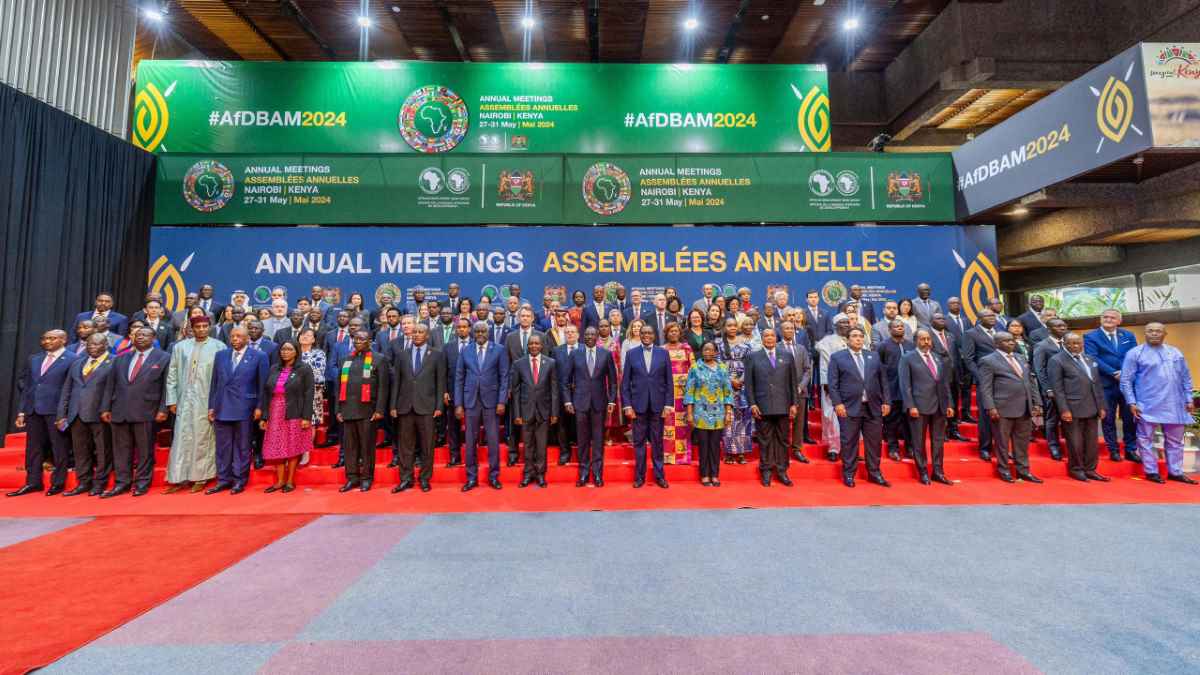
At the institution’s 2024 Annual Meetings in Nairobi, six African Presidents joined the Group’s President Dr. Akinwumi Adesina’s call for action to reform the global financial architecture to unlock more resources to scale up Africa’s economic transformation.

The Annual Meetings bring together the Bank Group’s governors representing 54 African countries and 27 non-African shareholders.

Kenya’s President William Samoei Ruto emphasized the need for change, saying, “Today, we assert that transforming the international financial architecture is imperative to give Africa a fair chance to turn its immense potential into opportunities to overcome multiple challenges and develop inclusively and sustainably.”

In a show of support for the Bank’s efforts, President Ruto announced that Kenya will spend $100 million over the next three years to increase its shareholding in the African Development Bank, Afreximbank and Trade Development Bank. Additionally, he announced a commitment of $20 million to the African Development Fund, the Bank Group’s concessional window, “as a demonstration of Kenya’s confidence [in the Fund].”

President Ruto praised the commitment of the Bank Group to infrastructure development in Kenya, saying, “Kenya is among the beneficiaries, in a very big way, of the African Development Bank’s financial might, and its innovative financing of projects.”

He cited four Bank Group-financed projects as testament to this commitment: the construction of the Nairobi–Thika Superhighway; the construction of the Thwake Multipurpose Dam, Kenya’s biggest; the completion of water and sanitation projects in 28 Kenyan cities, and a last-mile connectivity project that has provided electricity to more than 10 million households.

Vote of confidence

President Ruto also expressed Kenya’s support for the channeling of IMF Special Drawing Rights (SDRs) through multilateral development banks, a move that the African Development Bank together with the Inter-American Development Bank has championed, with success.

Several heads of state attended the opening ceremony of the Annual Meetings on Wednesday and participated in subsequent presidential dialogues. They included President Denis Sassou Nguesso of the Republic of Congo, Rwanda’s President Paul Kagame, Zimbabwe’s President Emmerson Dambudzo Mnangagwa, the President of the Presidency Council of the Government of National Unity of the State of Libya Mohamed Younis al-Menfi, Somali President, Hassan Sheikh Mohamoud, and African Union Commission Chairperson Moussa Faki Mahamat.

Close to 5,000 delegates are attending the Bank’s Annual Meetings, including heads of multilateral development banks, diplomats, development partners, representatives of civil society organizations and the private sector.

In his keynote address, Adesina highlighted the impact of the Bank’s investments across Africa through its High 5 priorities of Light up and Power Africa; Feed Africa; Integrate Africa; Industrialize Africa and Improve the quality of life for the people of Africa. Over the last eight years, the Bank’s investments have impacted more than 400 million people

Kenya is among the beneficiaries, in a very big way, of the African Development Bank’s financial might, and its innovative financing of projects

Record investments

“In 2023, our financing totalled over $10 billion, across all our High 5 priorities,” he said, adding, “In the past nine years, we have invested well over $50 billion in infrastructure projects on the continent, by far the largest investment of any multilateral development bank or institution.”

Adesina listed several innovative initiatives to demonstrate the Bank’s role as a catalyst for change, driving Africa’s transformation through record investments and partnerships. He highlighted the $10 billion Alliance for Green Infrastructure in Africa (AGIA), a groundbreaking partnership with Africa50 and the African Union, aimed at accelerating the development of sustainable infrastructure projects. This initiative is set to drive the continent’s transition towards a greener and more resilient future.

Adesina also emphasized the Bank’s commitment to supporting the digital economy, citing the $618 million i-DICE program in Nigeria, that will create 6 million jobs and add $6.4 billion to the economy.

Catalyzing Inclusive Development

The Bank’s Affirmative Finance Action for Women (AFAWA), in partnership with the Africa Guarantee Fund, has financed more than 18,000 women-owned businesses, providing them with the capital and support needed to thrive in their respective markets. “By the end of this year, AFAWA would have reached $2 billion in support for up to 30,000 women-owned small and medium sized enterprises,” Adesina said.

Last year, the Bank established Youth Entrepreneurship Investment Banks to provide financial and technical support to businesses owned by youth. The Bank’s Board of Directors has already approved $16 million for Liberia and $12 for Ethiopia to set up Youth Entrepreneurship Investment Banks. More countries have applied to join the initiative.

In eleven African countries—Côte d’Ivoire, Ethiopia, Guinea, Kenya, Mali, Mozambique, Nigeria, Senegal, Tanzania, Togo, and Zambia—the Bank, together with partners, is establishing Special Agro-Industrial Processing Zones (SAPZs), designed to transform Africa’s agricultural sector by creating value-addition hubs.

Mobilizing Financing, Deepening Reforms

Dr. Muhammad Sulaiman Al Jasser, Islamic Development Bank Group President, outlined the benefits of a longstanding cooperation with the African Development Bank. “Between 2017 and 2023, we achieved a record co-financing volume of $2.9 billion with the African Development Bank, enabling us to co-finance 22 operations across diverse sectors,” he said, adding that both banks have recently set new co-financing targets, to deliver greater impact.

African Development Bank Group Boards of Governors’ Chairperson and Cabinet Secretary of the National Treasury of Kenya, Prof. Njuguna Ndung’u urged Governors to “deepen discussions” on growing the Bank’s callable capital. “This will protect the Bank’s triple A rating on sustainable basis against recurrent external shocks, including downgrade of its triple A rated shareholders [and] enable the Bank maintain its lending trajectory and preserve its position as a strategic lender and the premier development finance institution in Africa.”

The African Union Commission Chairperson Moussa Faki Mahamat described the 2024 Annual Meetings as “an appropriate forum” for kickstarting “the process of formulating and working out the African common position on strategic issues” such as the reform of the Bretton Woods system, debt management, climate change financing, and the international tax system.

Leaders also stressed the urgency of mobilizing financing to build climate-resilient African economies. The Bank, Adesina said, “is well on its way to reaching its goal of mobilizing $25 billion in climate finance, and last year we devoted 45% of our total lending to climate finance.”

Strong financial position for greater impact

The only AAA-rated financial institution in Africa, the Bank’s financial records for 2023 put the Bank in an optimal position to better serve Africa and create more significant impact in the continent’s development. Its income from loans and treasury investments increased by 123% from $775 million in 2022 to $1.73 billion in 2023. The Bank also achieved its largest-ever net income before distributions, amounting to $545 million, and allocated a record-high $335 million to reserves.

Distributed by APO Group on behalf of African Development Bank Group (AfDB).

Business

MSGBC Gas Boom Puts Regional Infrastructure and Investment in Focus at African Energy Week (AEW) 2026

Published

on

African Energy Chamber

Sponsored by Technip Energies, the “Invest in the MSGBC Basin” session will examine how the region can translate its major gas resources into reliable domestic power, industrial development and integrated energy infrastructure

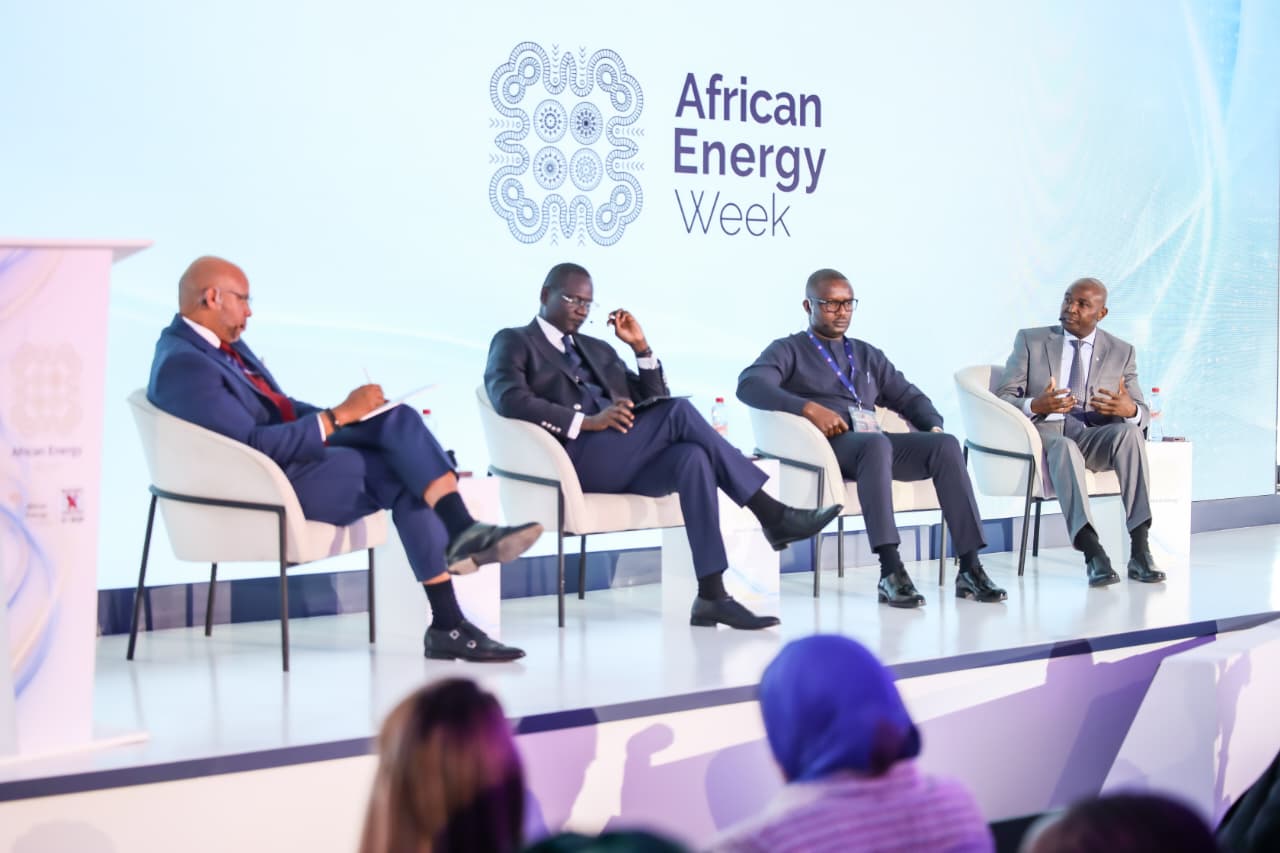
CAPE TOWN, South Africa, September 3, 2026/APO Group/ –The MSGBC Basin is moving from a story of world-class discoveries to one of project execution, with Senegal and Mauritania increasingly emerging as gas and LNG hubs for West Africa. At African Energy Week (AEW) 2026, taking place October 12–16 in Cape Town, the session Invest in the MSGBC Basin: Scaling Gas, LNG and Regional Infrastructure Across West Africa, sponsored by Technip Energies, will bring investors, governments and industry leaders together to examine what is needed to turn this resource base into a broader regional energy and industrial opportunity.


The region has already crossed a major threshold. The Greater Tortue Ahmeyim (GTA) project, spanning the maritime border between Mauritania and Senegal, achieved first gas in December 2024 and first LNG in February 2025, with its first LNG cargo exported in April 2025. The project is now providing a foundation for the two countries to develop both export revenues and domestic gas markets.

The MSGBC Basin has moved beyond the discovery phase; the priority now is execution

In Senegal, the Yakaar-Teranga gas project is advancing as a major domestic gas opportunity, with development costs estimated at around $7.5 billion. The project is expected to play a central role in reducing reliance on imported fuels and supporting power generation and industrial consumers. Mauritania, meanwhile, is advancing plans for the BirAllah gas development, adding another potentially significant source of gas supply to the basin’s growing project pipeline.

The infrastructure required to monetize these resources is becoming equally important. Senegal is prioritizing public-private partnerships to accelerate development of a planned 400-km domestic gas pipeline network connecting offshore resources with power plants and industrial users. The infrastructure is intended to help translate offshore gas production into more reliable domestic energy supply and wider economic activity.

The session comes as broader investment interest in African gas continues to grow. Africa is projected to attract substantial midstream gas investment over the coming decade, while LNG developments are increasingly being linked to domestic market obligations and gas-to-power strategies. In the MSGBC region, that dual-track model could allow gas exports to generate revenues while supporting affordable electricity and industrialization at home.

“The MSGBC Basin has moved beyond the discovery phase; the priority now is execution,” said NJ Ayuk, Executive Chairman of the African Energy Chamber. “The region has the resources to become a major gas and LNG hub, but that opportunity will only translate into lasting economic value if investment keeps pace with the infrastructure needed to deliver gas to markets, power industry and support regional integration.”

With major projects advancing across Senegal and Mauritania and exploration continuing elsewhere in the basin, the AEW 2026 session will provide a platform to examine the commercial, infrastructure and policy frameworks needed to unlock the next stage of MSGBC growth. For investors and technology providers, the discussion comes at a pivotal moment as the region moves from resource potential toward large-scale gas monetization and infrastructure development.

Distributed by APO Group on behalf of African Energy Chamber.


Continue Reading

Business

Asia’s premier flower hub sets new benchmarks in trading scale and logistics efficiency

Published

on

Dounan Flower Market

YUNNAN, CHINA – Media OutReach Newswire – 3 September 2026 – The Dounan Flower Market in Kunming, southwest China’s Yunnan Province, is strengthening its position as a leading flower trading hub in Asia, with record annual trading volumes, high-speed auction operations and increasingly efficient international logistics.

The Kunming International Flora Auction Trading Center, a key trading platform within Dounan, begins daily trading at 1:00 p.m. Buyers can complete bids within as little as 0.6 seconds as prices decrease on electronic auction screens, enabling large volumes of fresh-cut flowers to be traded rapidly.

The market experienced a significant increase in trading activity ahead of the Qixi Festival, widely regarded as China’s Valentine’s Day. Tens of millions of flower stems were sold to domestic and international markets during the peak trading period.


According to the Kunming International Flora Auction Trading Center, the average price of major fresh-cut flower categories reached 1.1 to 1.3 yuan per stem during the pre-festival period, approximately 15 percent higher than pre-festival levels. Premium flowers recorded substantially higher prices, with high-quality roses reaching nearly 15 yuan ($2.23) per stem.

In 2025, Dounan recorded a trading volume of 15.476 billion fresh-cut flowers, with total transaction value reaching 13.484 billion yuan (approximately $2 billion).

The market currently hosts 3,300 enterprises and more than 15,000 business entities and individual proprietors. Of Dounan’s approximately 70,000 permanent residents, 46,500 are employed in the flower industry.

Approximately seven out of every 10 fresh-cut flowers sold in China originate from Dounan. Its distribution network now reaches markets across China as well as more than 50 countries and regions worldwide.

High-Speed Auction System

Dounan’s auction system is designed to accommodate the highly time-sensitive nature of fresh-cut flowers.

“Field-grown ‘Purple Glow’ (75 percent maturity), 140 stems; field-grown ‘Beloved’ (80 percent maturity), 120 stems; ‘Beloved’ (75 percent maturity), 120 stems…” said Li Qian, a flower auctioneer at the Kunming International Flora Auction Trading Center.

The trading center uses a descending-price auction model, with prices continuously decreasing on electronic screens. Buyers must respond within approximately 0.6 seconds, allowing transactions to be completed rapidly and supporting the high turnover required by the fresh-cut flower industry.

“Since fresh flowers are perishable goods, we use a descending-price auction format. This helps facilitate rapid circulation,” Li said.

The auction process is integrated with sorting, packaging and transportation operations, reducing the time between trading and shipment.

Logistics Network Expands International Reach

Fresh-cut flowers require particularly efficient logistics because their quality is highly sensitive to transportation and storage time.

Tang Minghong, a client manager with the flower logistics division of SF Express Yunnan, said fresh flowers have among the most demanding logistics requirements in the fresh produce sector.

Trading begins in the afternoon, while pickup, packaging and dispatch can be completed as early as 3:00 a.m., allowing flowers to move quickly from auction facilities into domestic distribution networks.

For international shipments, Dounan has established logistics routes to destinations including Singapore, South Korea and Malaysia. Customers in these markets can receive shipments within two days, according to logistics operators.

Strengthening Yunnan’s Global Flower Trade

The combination of large-scale flower production, centralized trading, high-speed auctions and integrated logistics has enabled Dounan to develop a comprehensive supply and distribution network.

The market connects flower growers in Yunnan with buyers and consumers throughout China and overseas, while supporting the expansion of the province’s fresh-cut flower industry into international markets.

With billions of stems traded annually and distribution covering more than 50 countries and regions, Dounan is emerging as an important regional hub for fresh-cut flower trading and distribution, contributing to the international growth of China’s flower industry.


Continue Reading

Business

Unstoppable Africa 2026 to bring African and global Chief Executive Officers (CEOs) and leaders to New York to drive investment, ownership and growth across the continent

Published

on

The program will focus on how Africa can capture more value from its critical minerals, strengthen infrastructure and trade, mobilise capital at scale and build more integrated and competitive markets

NEW YORK, United States of America, September 2, 2026/APO Group/ –More than 2,000 African and global business leaders plus heads of state will gather in New York on September 20–21 for Unstoppable Africa, flagship event of the Global Africa Business Initiative (GABI) (https://www.GABI.biz/).


Convened by UN Secretary-General António Guterres and H.E. Mahmoud Ali Youssouf, Chairperson of the African Union Commission, and organized and coordinated by the UN Global Compact, the fifth edition of Unstoppable Africa will convene under the theme “Powering Business, Scaling Economies, Shaping the Future”.

Held on the sidelines of the opening of the 81st session of the United Nations General Assembly, Unstoppable Africa will feature leading  investors, policymakers, creatives, sports executives and decision-makers working to accelerate Africa’s business, trade and investment and amplify its role in shaping global markets.

Sanda Ojiambo, Assistant Secretary-General and CEO of the United Nations Global Compact, said: “This year, we are sharpening the focus on mobilising capital, forging partnerships, building businesses and turning Africa’s assets and opportunities into investable, scalable outcomes. The ambition is not simply to shape how the world sees Africa, but to shape where global capital flows, where value is created and how Africa can capture it.”

The ambition is not simply to shape how the world sees Africa, but to shape where global capital flows, where value is created and how Africa can capture it

The high-level convening comes at a time of global supply chains being redrawn by geopolitical tension, energy insecurity and shifting trade rules. For the African continent, these pressures  create an opportunity to leverage its critical minerals, renewable energy potential, expanding consumer markets and young workforce to attract long-term capital and capture more value from global shifts.

Unstoppable Africa 2026 will look at how the continent can turn these shifts into lasting economic opportunity.  The program will focus on how Africa can capture more value from its critical minerals, strengthen infrastructure and trade, mobilise capital at scale and build more integrated and competitive markets. Discussions will also explore Africa’s energy transition, the development and ownership of AI and digital infrastructure, the financing and global distribution of African creative industries, and how sport can become a stronger engine for investment, talent development and economic growth.

Other confirmed speakers include:

  • H.E. Julius Maada Bio, President, Republic of Sierra Leone
  • H.E. Duma Gideon Boko, President, Republic of Botswana
  • H.E. Paula Ingabire, Minister of ICT and Innovation, Rwanda
  • Samaila Zubairu, President and CEO, African Finance Corporation
  • Nolitha Fakude, Chairperson, Anglo American South Africa
  • Tidjane Thiam, General Partner, Allied Critical Minerals Fund
  • Phuthi Mahanyele-Dabengwa, CEO and Executive Director, Naspers
  • Olugbenga Agboola, CEO, Flutterwave
  • Cameron Bailey, CEO, Toronto International Film Festival
  • Wanuri Kahiu, filmmaker
  • Akunna Cook, Founder and CEO, Next Narrative Africa Fund
  • Luol Deng, former NBA All-Star and President, South Sudan Basketball Federation
  • Clare Akamanzi, CEO, NBA Africa
  • Amina J. Mohammed, Deputy Secretary-General, United Nations
  • Massad Boulos, Senior Advisor to the President of the United States on Arab and African Affairs
  • Damilola Ogunbiyi, CEO and Special Representative of the UN Secretary-General for Sustainable Energy for All

The five themes of GABI and Unstoppable Africa, namely Energy, Digital Transformation, Trade, Creative Industries, and Sport, will be supported by high-level plenaries, CEO and investor roundtables, ministerial dialogues, startup showcases, and GABI Solutions Labs. The 2026 edition will create opportunities to spark transactions, develop investment vehicles, and form cross-border alliances and partnerships. Full implementation of the African Continental Free Trade Area could create a $3.4 trillion market, according to UNCTAD’s 2024 Economic Development in Africa Report, highlighting the scale of the opportunity as regional integration deepens.

Once again, the event will be hosted by Folly Bah Thibault, Senior News Anchor at Al Jazeera Media Network, and Larry Madowo, International Correspondent at CNN, and will spotlight more than 500 nominees in the Unstoppable Africans campaign.

Media partners to date include African Business/New African; African Renewal; Afrique Media; AllAfrica; Arise News; Business Digest Magazine; Citizen TV; EIB Network; Envoy Magazine; The Kenyan Wall Street; News Central TV; SDG News; The Africa Report; The Nation Media Group; TIME Africa.

Unstoppable Africa 2026 will take place at the New York Marriott Marquis, Times Square, 1535 Broadway, New York City. Accredited media and other eligible communication professionals can register at https://apo-opa.co/4xvM3xh.

Distributed by APO Group on behalf of Global Africa Business Initiative.


Continue Reading

Trending