Connect with us

Energy

African Exploration and Production (E&P) Above-Ground Attractiveness Strengthens amid Policy and Licensing Reforms

Published

on

African Energy Chamber

The African Energy Chamber’s State of African Energy Outlook highlights the impact of above-ground reforms and licensing on Africa’s E&P investment landscape

JOHANNESBURG, South Africa, December 2, 2025/APO Group/ –With upstream capital expenditure set to reach $41 billion in 2026, Africa’s rising exploration and production (E&P) activity highlights the evolving landscape of above-ground attractiveness across the continent. According to the African Energy Chamber’s (AEC) (https://EnergyChamber.orgState of African Energy 2026 Outlook, African countries currently fall mostly in the mid-range of global attractiveness scores. However, a series of reforms, fiscal adjustments and strategic licensing initiatives are set to improve investor returns and deepen engagement across the continent.

Above-Ground Trends Shaping Investment

Political change, civil activism and shifting governance structures are creating new dynamics for African E&P. The waning of legacy European influence is being replaced by growing engagement from foreign powers, including China, Russia, the U.S. and Middle Eastern investors, impacting the diplomatic and investment landscape. Recent elections in South Africa, Senegal and Mozambique demonstrate how political flux can impact investor confidence and E&P operations.

Resource nationalism and local content requirements are also becoming more prominent. Governments are increasingly seeking to optimize national benefits from hydrocarbons through greater state participation, local ownership and employment measures. Countries such as Senegal, Mozambique, South Africa, Tanzania and Namibia are actively debating these policies. The evolving regulatory and social environment could empower civil society and labor unions, while environmental activities continue to scrutinize exploration in sensitive regions such as the Democratic Republic of Congo (DRC), Namibia and South Africa.

Strategic Licensing and Renewed Investor Interest

Amid renewed interest in deepwater exploration, sub-Saharan African producers are driving competitive licensing rounds to attract international operators and national oil companies (NOCs). Bid rounds are ongoing or planned in Angola, the Republic of Congo, the DRC, Nigeria and Tanzania, with host countries offering more attractive fiscal and contractual terms. African governments are also increasingly flexible in dealing with a diverse investor base, ranging from local independents to international NOCs and financiers such as Middle Eastern banks, Asian export credit agencies and global trading firms.

Countries including Angola and Nigeria have implemented institutional, regulatory and contractual reforms aimed at unlocking upstream investment. Streamlined mergers and acquisitions approvals, clearer legislation and transparent licensing frameworks are critical to attracting cross-border capital. Emerging markets such as Ivory Coast, Kenya, Namibia and Senegal/Mauritania are under investor scrutiny as potential sites for strategic acquisitions and greenfield projects.

Focus on Gas Regulation and Industrialization

The continent offers compelling opportunities for investors who are prepared to engage in a transparent, regulated, and increasingly competitive E&P landscape

African governments are also prioritizing gas regulation to unlock lower-carbon growth opportunities. Clear frameworks for the gas value chain are expected to stimulate domestic industrialization, power access and international supply diversification. While pioneering projects such as Congo Floating LNG have advanced, other initiatives in Nigeria, South Africa and Tanzania have been delayed due to contractual and offtake uncertainties. Pending gas master plans and legislation in Angola, the Republic of Congo, Nigeria and South Africa will be pivotal in determining how much of Africa’s undeveloped gas potential can be mobilized for export and domestic consumption.

Spotlight on Key Country Developments

Angola has emerged as a leading host country for E&P investment in Africa. Its above-ground risk score has steadily improved since 2017, reflecting extensive regulatory and institutional reforms. Angola’s fiscal incentives, including terms for gas, marginal fields, and incremental production, have successfully attracted upstream investment, consolidating its status as a continental leader.

Ivory Coast maintains a pragmatic approach to foreign investment. Regardless of the outcome of the 2025 presidential election, authorities are expected to continue supporting upstream investors while emphasizing adherence to local content requirements, particularly for offshore developments.

Mozambique is witnessing a cautious restart of onshore LNG projects following the stabilization of post-election political challenges and improved security in Cabo Delgado. TotalEnergies’ Mozambique LNG project is set to resume construction in the second half of 2025, while Eni’s Coral North FLNG project remains on track. Despite progress offshore, onshore development may remain gradual due to lingering security risks.

Namibia is transitioning toward full producer status under President Netumbo Nandi-Ndaitwah. The country has consolidated oil and gas oversight under the presidency and is establishing an independent hydrocarbon regulator. Proposed increases in NOC NAMCOR’s share and local content requirements aim to strengthen the sector but could slow project approvals during a critical development phase.

Nigeria is reinvigorating its licensing program with updated terms and incentives targeting specific terrains and resource types. The government plans its third licensing round in three years, signaling a departure from decades of limited acreage availability. Renewed interest in projects such as TotalEnergies’ Ubeta onshore gas development and Shell’s Bonga North deepwater FID highlights growing investor confidence in Nigeria’s upstream potential.

African Energy Week 2026

Africa’s E&P sector is at a pivotal moment. Strategic licensing, institutional reform and evolving fiscal frameworks are enhancing above-ground attractiveness, while political and social dynamics continue to shape the operating environment. As international investors seek opportunities across the continent’s hydrocarbon frontier, the upcoming African Energy Week conference – returning to Cape Town in 2026 – will explore how clear regulation, competitive fiscal terms and effective risk management will drive new investment and support Africa’s long-term energy ambitions.

“The continent offers compelling opportunities for investors who are prepared to engage in a transparent, regulated, and increasingly competitive E&P landscape,” states NJ Ayuk, Executive Chairman, AEC. “Governments and operators must continue to balance national priorities with investor confidence to unlock Africa’s vast hydrocarbon potential.”


Distributed by APO Group on behalf of African Energy Chamber.

Home  Facebook

Business

Sierra Leone’s PDSL to Host Strategic Investor Roundtable at Paris Energy Forum

Published

on

The Petroleum Directorate of Sierra Leone will lead a targeted roundtable at Invest in African Energy 2026, spotlighting upstream potential and cross-regional partnerships

PARIS, France, March 24, 2026/APO Group/ –The Petroleum Directorate of Sierra Leone (PDSL) is set to convene an investor roundtable at Invest in African Energy (IAE) Forum 2026 in Paris, underscoring growing interest in West and North African energy markets and the need for deeper capital engagement across exploration, renewable and offshore services. The session reflects a strategic effort by Sierra Leone to connect its emerging upstream prospects with established operators and project developers as the country moves to unlock the full potential of its emerging oil and gas industry.


Sierra Leone is increasingly positioning itself as a frontier oil and gas market with significant offshore potential, and part of the PDSL’s mandate is to catalyze investment interest in its offshore acreage through direct engagement with global capital. Recent data suggest the country holds estimated recoverable resources in the tens of billions of barrels, backed by discoveries and extensive multi‑client seismic datasets that prospective investors are evaluating. The PDSL is actively promoting licensing opportunities and drilling plans, emphasizing fiscal terms and exploration readiness to attract strategic partners.


A cornerstone of this strategy is the anticipated launch of the country’s sixth licensing round. Offering a rare early-entry opportunity into a largely untapped deepwater terrain with considerable upside, the upcoming bid round is backed by fresh 3D datasets which de-risk exploration and support new drilling campaigns. Just this month, GeoPartners announced that the final Pre-Stack Time Migration data for its recently acquired 3D multi-client seismic survey in the country was complete and is now available for licensing. The dataset provides a 3D window into the hydrocarbon potential of the underexplored northern Sierra Leone region.


Sierra Leone’s licensing drive comes as major operators advance exploration activities. In 2025, Eni signed a Reconnaissance Permit Agreement with the PDSL, securing rights to conduct reconnaissance and technical evaluation activities across offshore blocks G113, G129, G130, G131 and G132. The acreage covers 6,790 square kilometers within Sierra Leone’s territorial waters. Nigeria’s F.A. Oil Limited is pursuing drilling following its award of six offshore blocks through the country’s fifth licensing round in 2023. The company is currently seeking a farm-in partner to advance the project from exploration to production, offering a 40% stake in each of the G Blocks 53, 54, 55, 71, 72 and 73.


As these development unfold, the upcoming roundtable at IAE 2026 offers a unique opportunity for operators and policymakers to engage potential investors. The IAE 2026 Forum has become a strategic bridge between African upstream opportunities and global investors, with sessions like the PDSL roundtable designed to foster deeper dialogue and provide clarity on project pipelines and investment prerequisites. Discussions are expected to cover mechanisms for de‑risking exploration activity, optimizing fiscal and contractual frameworks and identifying synergies between hydrocarbon investment and renewable energy commitments.


For investors seeking differentiated exposure to African energy markets, the Sierra Leone roundtable represents both a focused exploration of frontier oil potential and a broader conversation about regional infrastructure, partnerships and the evolving demands of energy capital in the years ahead.


IAE 2026 (www.Invest-Africa-Energy.com) is an exclusive forum designed to connect African energy markets with global investors, serving as a key platform for deal-making in the lead-up to African Energy Week. Scheduled for April 22–23, 2026, in Paris, the event will provide delegates with two days of in-depth engagement with industry experts, project developers, investors and policymakers. For more information, visit www.Invest-Africa-Energy.com. To sponsor or register as a delegate, please contact sales@energycapitalpower.com


Distributed by APO Group on behalf of Energy Capital & Power.

Continue Reading

Energy

Cape Town Prepares for African Mining Week 2026 as Draft Program Reveals Continent’s Mineral Drive

Published

on

African Mining Week returns for its 2026 edition with an expanded three-day program, bringing together African mining leaders and global partners to shape the future of the continent’s mining sector

CAPE TOWN, South Africa, March 24, 2026/APO Group/ –Global economic trends – from record-breaking commodity prices to intensifying geopolitical competition for resources – are reshaping the strategic importance of Africa’s mineral wealth. As global countries race to secure supply chains for energy transition metals – which are expected to triple by 2030 – Africa is positioning its 30% share of the world’s critical minerals as a key pillar of economic growth. African governments are modernizing mining codes, developing industrial corridors and investing in mineral processing facilities to support local beneficiation, job creation, workforce development and regional mineral markets.


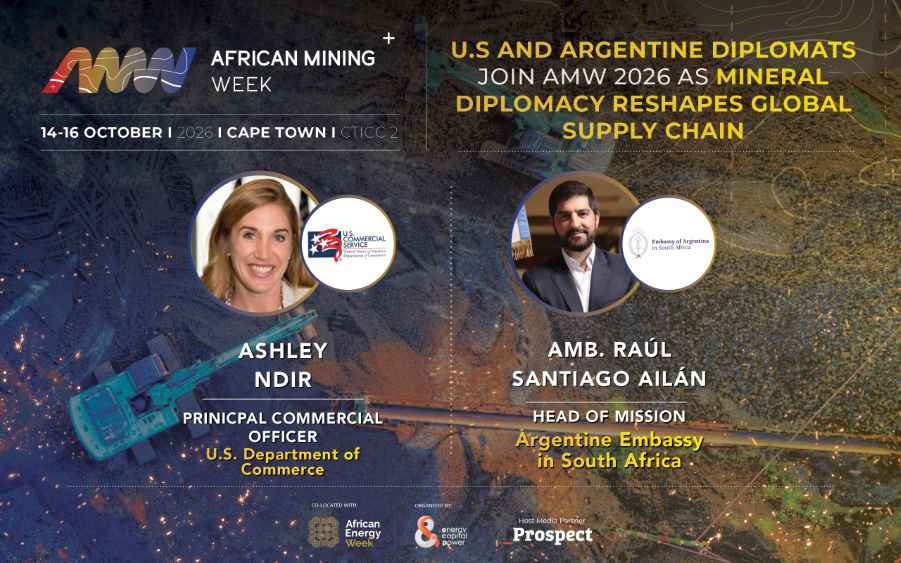
Against this backdrop, the upcoming African Mining Week (AMW) Conference & Exhibition – Africa’s premier gathering for mining stakeholders – has launched the draft program for its 2026 edition {https://apo-opa.co/3NneKLj}. Scheduled to take place October 14–16 in Cape Town, the event provides a platform where policymakers, global investors, project operators, technology providers, academia and mining service companies examine Africa’s mining opportunities, challenges and long-term strategic direction.

Under the theme ‘Mining the Future: Unearthing Africa’s Full Mineral Value’, the three-day, multi-track agenda reflects the growing urgency among African markets to strengthen value addition across the mining value chain.

Regional Cooperation and Policy Alignment in Focus

A key feature of the agenda is the Ministerial Forum, where African mining ministers will provide updates on regulatory reforms and policy alignment initiatives aimed at unlocking greater value from the continent’s mineral resources. Discussions will examine how harmonized regulatory frameworks and regional cooperation can accelerate investment flows and strengthen Africa’s position in global mineral supply chains.

The inclusion of regional policy integration reflects a growing continental push to leverage frameworks such as the African Continental Free Trade Area (AfCFTA) to enhance cross-border mineral cooperation and trade.

We are acting to enhance regional integration through frameworks such as the African Mining Vision and the Africa Mineral Strategy Group

“Africa’s integration is not only a political objective but a strategic economic vision,” stated Emmanuel Armah-Kofi Buah, Ghana’s Minister of Lands and Natural Resources, in remarks reported by Energy Capital & Power – organizers of AMW – in February 2026. “Our natural resources require coordinated policies. Isolated legal frameworks cannot fully unlock their value. Through integration and initiatives such as the ECOWAS [Economic Community of West African States] Mining Code and the African Mining Vision, we can build a stronger and more competitive mineral economy.”

Nigeria’s Minister of Solid Minerals Development, Henry Alake, echoed this emphasis on regional cooperation and beneficiation.

“We are acting to enhance regional integration through frameworks such as the African Mining Vision and the Africa Mineral Strategy Group,” he stated. “We must develop mineral corridors that connect resources, infrastructure and markets across the continent. Our goal is not to simply export raw materials, but to develop industrial hubs that create jobs and value across borders.”

Connecting Global Investors with African Opportunities

Strategic roundtables and Country Focus sessions form a key part of the AMW 2026 program, connecting African mining jurisdictions with international partners from the U.S, Europe, the Middle East and China. These sessions will provide African stakeholders with a platform to showcase exploration opportunities and project pipelines across the mining value chain.

Meanwhile, technical workshops and the exhibition floor at AMW 2026 will provide a platform for equipment manufacturers, technology providers and engineering firms to showcase innovations designed to enhance operational performance across mining operations.

By combining high-level policy dialogue with technical expertise and investment matchmaking, AMW 2026 positions itself as a critical marketplace where Africa’s mineral potential converges with global capital, technology and strategic partnerships – helping shape the next phase of growth for the continent’s mining sector.

AMW serves as a premier platform for exploring the full spectrum of mining opportunities across Africa. The event is held alongside the African Energy Week: Invest in African Energies 2026 conference from October 12-16 in Cape Town. Sponsors, exhibitors and delegates can learn more by contacting sales@energycapitalpower.com.

Distributed by APO Group on behalf of Energy Capital & Power.

Continue Reading

Business

African Petroleum Ministers Snub Africa Energies Summit, Citing Local Content as Priority for Africa

Published

on

The decision comes amid concerns over local content and inclusion by the summit’s organizer Frontier Energy Network, with African petroleum ministers reinforcing local content as a non-negotiable priority for the continent’s oil industry

JOHANNESBURG, South Africa, March 24, 2026/APO Group/ –African Petroleum Ministers have declined to participate in the upcoming Africa Energies Summit (AES) taking place on May 12–14, 2026 in London, citing serious concerns around local content, representation and the broader direction of the platform’s agenda. The decision sends a strong signal from the continent’s oil-producing nations that local content remains a core priority for Africa’s energy future and that industry platforms operating under the banner of African energy must reflect the continent’s values and development objectives.


“By boycotting AES in London, the African oil industry is showcasing that local content is a priority. The message is clear: if Gayle and Daniel Davidson change their policy to be more inclusive, many Africans will work with them. The exclusionary policies are not reflective of our values and that of the oil industry. Frontier has an incredible opportunity to do the right thing,” states NJ Ayuk, Executive Chairman, African Energy Chamber.

Across the oil and gas sectors, both emerging and established markets are integrating local content policies within their broader project fundamentals as a way to catalyze job creation, local participation and broader skills development. Regulation has served as a launchpad for local content development. Policies such as the Nigerian Oil and Gas Industry Content Development Act (NOGIC) and Angola’s Local Content Law have provided a strong foundation for local content implementation – and many projects are taking the lead.

A lot of Africans feel that all the progress and gains made by our oil industry on local content are constantly being stomped on by groups like Frontier

The Greater Tortue Ahmeyim (GTA) project in Senegal and Mauritania not only designates a portion of gas for each domestic market but features a multi-pronged local content strategy focusing on supply chain, workforce development and social investment. In the development stage, the project offered an online portal where local suppliers registered their interest and engagement opportunities with the procurement team, while over 47 trainees participated in a multi-year program in preparation for offshore work. The project partners engaged in extensive community outreach, including health, education, economic development and environmental awareness. GTA exported its first cargo in 2025 and is working toward full-scale operations in 2026.

Similarly, the EG LNG project in Equatorial Guinea is a major local content driver. Operating since 2007, the project has placed emphasis on local workforce development and integration through several initiatives that promote participation and broader economic support. In addition to prioritizing local vendors and contractors, the Punta Europa plant and associated infrastructure employs over 1,400 people, with the larger Gas Mega Hub project – of which EG LNG is a central part – set to increase this figure to 3,000 people. Nigeria’s LNG plant also actively promotes local content through policies on Nigerian manpower development, technology acquisition and utilizing local contractors. The implementation of the NOGIC saved the LNG project $2 billion across its EPC stage for the seventh train.

Emerging oil and gas producers such as Mozambique, with three large-scale LNG projects underway, Namibia, which eyes first oil production by 2029, and The Gambia have all integrated local content regulations within their energy frameworks. This approach demonstrates a commitment to Africa, making companies like Frontier that much more disappointing. The African oil industry – as well as companies operating in seismic, services and policy – must take the local content lead.

“A lot of Africans feel that all the progress and gains made by our oil industry on local content are constantly being stomped on by groups like Frontier. We believe in Drill Baby Drill and local content, and we’re being told that there’s something wrong with it, that we should be ashamed of it in some way and that it needs to be replaced with discrimination. Many people are just sick of it. We’ve had enough, and we don’t want our whole oil industry stripped down to where we have no semblance of that sort of nostalgic African oil and gas culture that we cherish,” Ayuk adds.

The recent boycott by these ministers reflects a broader belief by the continent that local content must be an integral part of oil and gas operations. This includes discussions on the current and future state of the continent’s hydrocarbon industry.

“Gayle and Daniel Davidson are essentially marketing to a clientele that doesn’t exist, Let’s be clear: the oil industry does not and will not defend discrimination against black professionals. It’s not who we are. They both need to come clear and denounce this. This virtue signaling to a certain crowd does not help our goals for an inclusive oil industry,” concludes Ayuk.

Distributed by APO Group on behalf of African Energy Chamber.

Continue Reading

Trending

Exit mobile version