Connect with us

Business

African Development Bank’s Climate Action Window channels $31m to boost climate resilience in four countries

Published

on

African Development Bank

The Climate Action Window of the Bank Group’s African Development Fund seeks to mobilize $4 billion by 2025 to provide rapid and coherent access to climate finance

ABIDJAN, Ivory Coast, February 11, 2025/APO Group/ –The Board of Directors of the African Development Bank Group (www.AfDB.org) has approved over $31 million in funding under its African Climate Action Window (CAW) to strengthen climate resilience in Sierra Leone, South Sudan, Djibouti, and Madagascar.

The Climate Action Window of the Bank Group’s African Development Fund seeks to mobilize $4 billion by 2025 to provide rapid and coherent access to climate finance, support co-financing, and prioritize the most vulnerable countries, fragile states, and those affected by conflict. The African Development Fund is the concessional arm of the Bank Group.

The funding, approved in November and December 2024,  will support innovative projects that respond to the CAW’s first call for project proposals. Forty-one pioneering climate adaptation projects valued at $321.75 million have been selected in the initial funding wave, with a focus on tackling climate change, bolstering livelihoods of vulnerable communities, including women and youth, and enhancing climate information systems.

The projects will also benefit from $28.13 million in climate co-financing from sources including the Green Climate Fund.

In Sierra Leone, the Freetown WASH and Aquatic Environment Revamping Project will receive $5 million to enhance access to sustainable water, sanitation, and hygiene (WASH) services and introduce modernized hydrometeorological observation networks and early warning systems, benefiting approximately 700,000 people. Another key component of the project is the creation of an interactive flood map for the Freetown Peninsula, a crucial tool for disaster risk reduction.

In South Sudan, the Climate Resilient Agri-Food Systems Transformation Programme has been allocated $9.4 million to expand climate-adaptive technologies that enhance agricultural productivity and food and nutritional security. The program also has a rehabilitation element focusing on 1200 hectares of land as well as rural infrastructure and will provide training to about 8,000 individuals.

The Climate Action Window is more than just a funding mechanism—it’s a lifeline for communities facing the harsh realities of climate change every day

Among expected benefits are a projected reduction of about 720,000 tonnes of CO2 emissions. and the creation of 180,000 direct jobs with a strong focus on women and youth; additionally, 90,000 farmers will learn about climate-smart farming practices.

In Djibouti, the Youth Entrepreneurship for Climate Change Adaptation Project will receive $7.5 million to strengthen the resilience of productivity of agricultural systems, particularly for horticulture and pastoralism, including increasing the self-sufficiency rate of selected market garden crops from 10% to 30%. It is also expected to generate about 3,500 permanent jobs, a significant share of these for youth and women, and create 200 new medium small and micro enterprises.

The Climate Resilience through Park Biodiversity Preservation Project, in Madagascar, has been allocated $9.4 million for investment in conserving biodiversity by protecting Lokobe, Nozy Hara, and Andringitra national parks.

The project will restore 100% of these protected areas, sequestering 10 million tonnes of CO2, and creating 1,500 green jobs, with 500 specifically reserved for women. In addition to environmental conservation, it will boost agricultural production in surrounding communities to add 24,000 tonnes of rice and 14,000 tonnes of cereals, legumes and other crops. Further, 24,000 farmers will receive irrigation training, and 12 women-led farmers’ groups will be provided with agricultural kits.

Dr. Kevin Kariuki, African Development Bank Vice President for Power, Energy, Climate Change and Green Growth, said: “The Climate Action Window is catalyzing transformative solutions in Africa’s most climate-vulnerable regions. From strengthening water security in Sierra Leone to advancing youth-led agribusiness in Djibouti and restoring biodiversity in Madagascar, these initiatives go beyond adaptation—they drive prosperity. Through investments, we are equipping communities to withstand climate shocks, create jobs, and accelerate inclusive economic growth.”

Prof Anthony Nyong, the Bank’s Director for Climate Change and Green Growth said, “These initiatives are not just about responding to climate change—they empower communities to take control of their own futures. They show that adaptation finance can and must be directed to those vulnerable communities that need it most. The Climate Action Window is more than just a funding mechanism—it’s a lifeline for communities facing the harsh realities of climate change every day.”

The CAW has since launched two further calls focusing on mitigation and on technical assistance, respectively.

For more information about the Climate Action Window, click here (http://apo-opa.co/3WUGQPo).

Distributed by APO Group on behalf of African Development Bank Group (AfDB)

Business

Carbon, water and grid investment move to the centre of Africa’s business resilience agenda

Published

on

A new series of VUKA Group webinars will bring industry experts together to examine these challenges and the practical decisions organisations need to make

JOHANNESBURG, South Africa, September 24, 2026/APO Group/ –Commercial and industrial businesses, utilities and investors across Africa are being forced to confront three increasingly connected challenges: credible decarbonisation, water security and the infrastructure required to support reliable power systems.

A new series of VUKA Group webinars will bring industry experts together to examine these challenges and the practical decisions organisations need to make.


Commercial and industrial compliance in the spotlight

On 29 September 2026 at 13:00 SAST, Carbon, compliance and credible energy claims: What C&I customers must get right will explore how commercial and industrial energy users can align renewable energy procurement with carbon accounting standards and evolving reporting obligations.

The discussion will examine the evidence required to substantiate renewable electricity claims, the role of Renewable Energy Certificates in Scope 2 reporting, the implications of mechanisms such as the EU Carbon Border Adjustment Mechanism and how organisations can reduce greenwashing risk while strengthening emissions reporting.

Speakers include Sanelisiwe Mdlalose, Hulamin; Hendrick Raedani, City of Ekurhuleni; and Duane Newman, EY.

Register for the carbon compliance webinar: https://apo-opa.co/4AtqRKf

These issues will continue at the C&I Energy + Storage Summit Johannesburg, 28–29 October 2026 at The Maslow Hotel, Sandton, where energy procurement, carbon taxes, renewable integration, storage, market reform and industrial resilience form part of the programme.

Find out more about the Summit: https://apo-opa.co/4xMkZsR

Strategy for African water resilience

Water resilience takes centre stage on 30 September 2026 at 14:00 SAST with From water risk to water resilience: How South Africa’s water-intensive industries are securing their future.

The webinar will examine how businesses are responding to ageing infrastructure, supply uncertainty, rising costs and sustainability pressures by improving efficiency, diversifying water sources and investing in reuse, recycling and smarter water management.

The webinar line-up includes Benoit Le Roy, South African Water Chamber NPC; Nsuku Chankira, Thungela; Molatelo Motau, Heineken Beverages; Marilyn Maduka, Credew Limited; and Philindile Mahlangu from Magalies Water as moderator.

Register for the water resilience webinar: https://apo-opa.co/4z0aJyx

The conversation continues at Water Security Africa Johannesburg, co-located with the C&I Energy + Storage Summit, where industrial water independence, infrastructure finance, digital water systems, reuse and business continuity will be explored across two days.

Read more here: https://apo-opa.co/4yfjlBj

Towards Africa’s scalable energy transition

Looking to the infrastructure enabling Africa’s energy transition, Scaling transmission infrastructure: Innovative financing models for emerging markets takes place on 14 October 2026 at 14:00 SAST, moderated by Tshegofatso Neeuwfan, Global Energy Alliance.

Using the Mozambique Temane Transmission Project and insights from Belgian transmission system operator Elia, the webinar will explore bankable project structures, risk allocation and investor engagement that can help move major transmission projects from planning to delivery.

Register for the transmission infrastructure webinar: https://apo-opa.co/4ycMnkS

Transmission investment, project delivery and financing will remain central to Enlit Africa, 11–13 May 2027 at the CTICC in Cape Town, bringing Africa’s power, energy and water sectors together around supply security, investment and infrastructure development.

Join the Enlit Africa 2027 programme waiting list: www.Enlit-Africa.com

Distributed by APO Group on behalf of VUKA Group.


Continue Reading

Events

Dongfeng Motor’s 10th Science and Technology Innovation Week and 1st User Lifestyle Festival Kick Off in Wuhan

Published

on

Over the course of ten editions spanning a decade, Dongfeng Motor’s Science and Technology Innovation Week has further strengthened the connection between technology and users

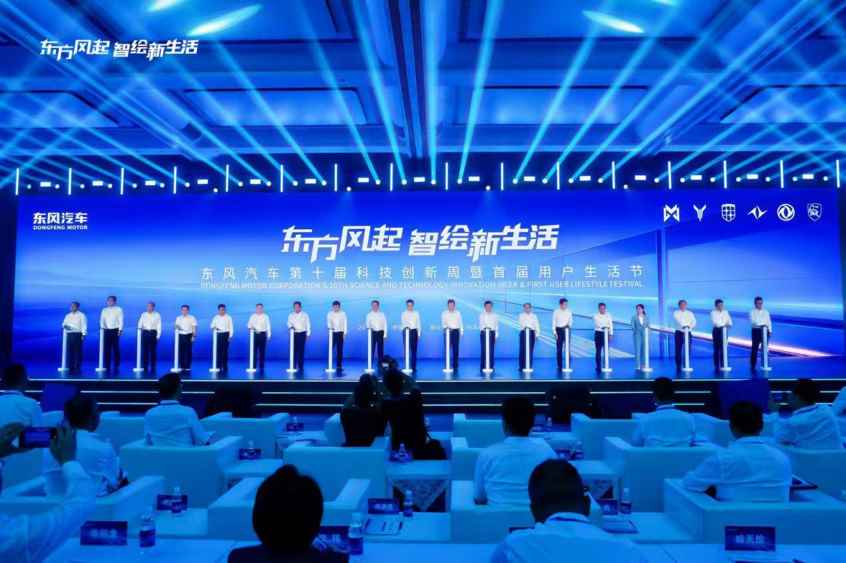
WUHAN, China, September 24, 2026/APO Group/ –On September 14, Dongfeng Motor’s (​http://www.Dongfeng-Global.com/) 10th Science and Technology Innovation Week and 1st User Lifestyle Festival kicked off in Wuhan. With the theme “ Wind from the East, Creating a Smart Life,” the event showcased the innovative achievements of a Chinese automaker in intelligent and green mobility, as well as its global expansion.


At the opening ceremony, Dongfeng Motor unveiled the “Sky-Clean Zero-Carbon” Plan, the Embodied Intelligent Vehicle All-Domain Protection Plan, and the “Sky Horizon Voyage” Plan. Among them, the “Sky-Clean Zero-Carbon” Plan leverages the “1331” framework to build an integrated vehicle-energy ecosystem, aiming to achieve more than 1 million tonnes of coordinated carbon reduction annually and promote the transformation of automobiles into mobile energy assets; the Embodied Intelligent Vehicle All-Domain Protection Plan adopts a “1+6+4” technology system to establish a new paradigm for all-domain vehicle safety in the era of embodied intelligence; the “Sky Horizon Voyage” Plan establishes a “125” global business strategy, with plans to invest RMB 50 billion and launch more than 50 vehicle models, while striving to achieve overseas sales of 1.5 million vehicles by 2030.


Over the course of ten editions spanning a decade, Dongfeng Motor’s Science and Technology Innovation Week has further strengthened the connection between technology and users. At Dongfeng Motor’s 1st User Lifestyle Festival, more than 240 owner representatives from its various brands gathered in Wuhan. Dongfeng also launched the “Dongfeng Youxin” service brand for its broad user base, establishing a full-lifecycle user service system.

On the same day, the 72nd International Commercial Vehicle and Parts Exhibition opened in Hannover, Germany. Three Dongfeng hydrogen-powered vehicles and a 400-kilowatt fuel cell making its global debut are on display at Booth C20 in Hall H12.

Distributed by APO Group on behalf of Dongfeng Motor Corporation.


Continue Reading

Events

Global Mayors Dialogue in Wuhan focuses on urban innovation and cooperation

Published

on

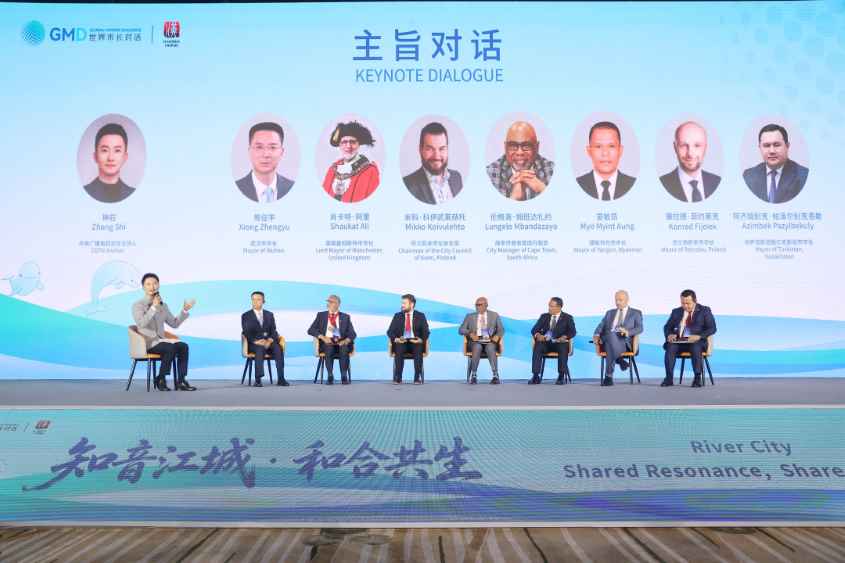
WUHAN, CHINA – Media OutReach Newswire – 23 September 2026 – The Global Mayors Dialogue · Wuhan and the 2026 Wuhan International Friendship Cities Cooperation Conference, held from Sept. 18 to 21, brought together 80 international guests from 24 cities across 22 countries, according to organizers.

At the event, mayors and city representatives from six international sister cities of Wuhan called for closer cooperation in technology, industry, education and culture.

Representatives from Manchester in Britain, Kemi in Finland, Cape Town in South Africa, Yangon in Myanmar, Rzeszów in Poland and Turkistan in Kazakhstan took part in discussions on urban innovation, industrial cooperation and cultural exchange.


Manchester: a new start after 40 years of friendship

This year marks the 40th anniversary of the sister-city relationship between Wuhan and Manchester.

Shaukat Ali, lord mayor of Manchester, said the city was ready to deepen cooperation with Wuhan in education, culture, youth affairs, innovation and industry.

“Manchester is committed to promoting urban transformation through open cooperation, sharing opportunities, and fostering common development with international sister cities like Wuhan,” he said.

Ali said Manchester had developed from a post-industrial city into an innovation-oriented economy, with a focus on advanced manufacturing, artificial intelligence, life sciences and green technologies.

He said the two cities could share experience in urban transformation, innovation districts, university-industry cooperation and low-carbon development, while encouraging links among universities, businesses and research institutions.

He also highlighted existing educational and cultural links, including cooperation between Hubei University and Manchester Metropolitan University and exchanges between the Royal Northern College of Music and Wuhan Conservatory of Music.

Kemi: balancing growth with environmental protection

Mikko Koivulehto, chairman of the City Council of Kemi, said the Finnish city sought to balance economic growth with environmental protection.

“We believe that protecting nature and building a prosperous city can go hand in hand,” he said.

Kemi, a port city in Finnish Lapland, has developed industries based on renewable raw materials, clean energy and the bioeconomy. The city is also seeking to expand tourism and improve livability.

This year marks the 10th anniversary of the friendly exchange relationship between Wuhan and Kemi. The two cities have cooperated in areas including trade, the circular economy, tourism and youth exchanges.

Cape Town: technology and jobs key to urban transformation

Lungelo Mbandazayo, city manager of Cape Town, said technological innovation, talent development, infrastructure and green renewal were key to Wuhan’s transformation.

Cape Town, a UNESCO City of Design, is seeking to expand its technology and digital sectors while promoting green technology and an inclusive economy.

Mbandazayo said youth unemployment remained a major challenge for Cape Town and that technological development needed to create jobs.

After visiting Wuhan companies and technology facilities, he said Cape Town hoped to deepen exchanges with Wuhan in technology and talent.

Yangon: seeking practical cooperation with Wuhan

Yangon Mayor Myo Myint Aung said the city was looking to Wuhan for experience in smart-city development, digital governance, intelligent transport and urban resilience.

Wuhan and Yangon signed a letter of intent on friendly exchanges and cooperation during the event.

Yangon is developing a long-term plan to accommodate population growth and expand its urban, industrial and transport infrastructure.

During a visit to Wuhan on Sept. 19, Myo toured the Optics Valley “Photon” suspended monorail, HGTECH and a Xiaomi smart home appliance factory.

“We came to Wuhan not just to observe, but to learn and cooperate,” he said, adding that Yangon hoped to develop smart manufacturing and strengthen cooperation in information technology.

Rzeszów: opportunities in aerospace and technology

Rzeszów Mayor Konrad Fijołek said the Polish city hoped to cooperate with Wuhan in aerospace, sensor technology, biodiversity and climate action.

Rzeszów is home to the “Aviation Valley,” a major aerospace cluster in Central Europe.

“Exploring cooperation with Wuhan is the reason I came here,” Fijołek said.

After visiting HGTECH and a Xiaomi smart home appliance factory, he said Wuhan’s automated manufacturing and technologies in sensors and satellite systems had impressed him.

He said cities could help connect universities, businesses and research institutions and promote international cooperation.

Turkistan: five areas for cooperation

Turkestan Mayor Azimbek Pazylbekuly said his city hoped to expand cooperation with Wuhan in tourism and culture, education and science, investment and entrepreneurship, digitalization and innovation, and transport and logistics.

Wuhan and Turkistan signed a memorandum of intent on friendly exchanges and cooperation during the event.

Turkistan, an ancient Silk Road city and a UNESCO World Heritage site, has been developing industries including food processing, textiles, furniture and construction materials.

Pazylbekuly said cooperation between governments, businesses, universities and research institutions could help turn the two cities’ exchanges into concrete projects.

The conference also included friendship-city anniversary celebrations and a signing ceremony for 10 cooperation projects. A digital list of cooperation opportunities and an initiative on international friendship-city cooperation were released.

During their stay, the visiting mayors toured Wuhan’s technology, manufacturing and ecological facilities, including the Optics Valley suspended monorail, a Yangtze finless porpoise conservation center, Xiaomi, HGTECH and Dongfeng Motor facilities.


Continue Reading

Trending

Exit mobile version