Connect with us
Anglostratits

Business

African Development Bank Group rallies Stock Exchanges to reinvent Africa’s financial future

Published

on

African Development Bank

The African Development Bank Group (www.AfDB.org) on Tuesday commenced a round of high-level meetings with African development finance institutions and private sector financial partners to forge a bold, historic blueprint for a New African Financial Architecture, designed to bridge the financing gap for the continent’s development needs.

Download Document: https://apo-opa.co/4r8E8Do

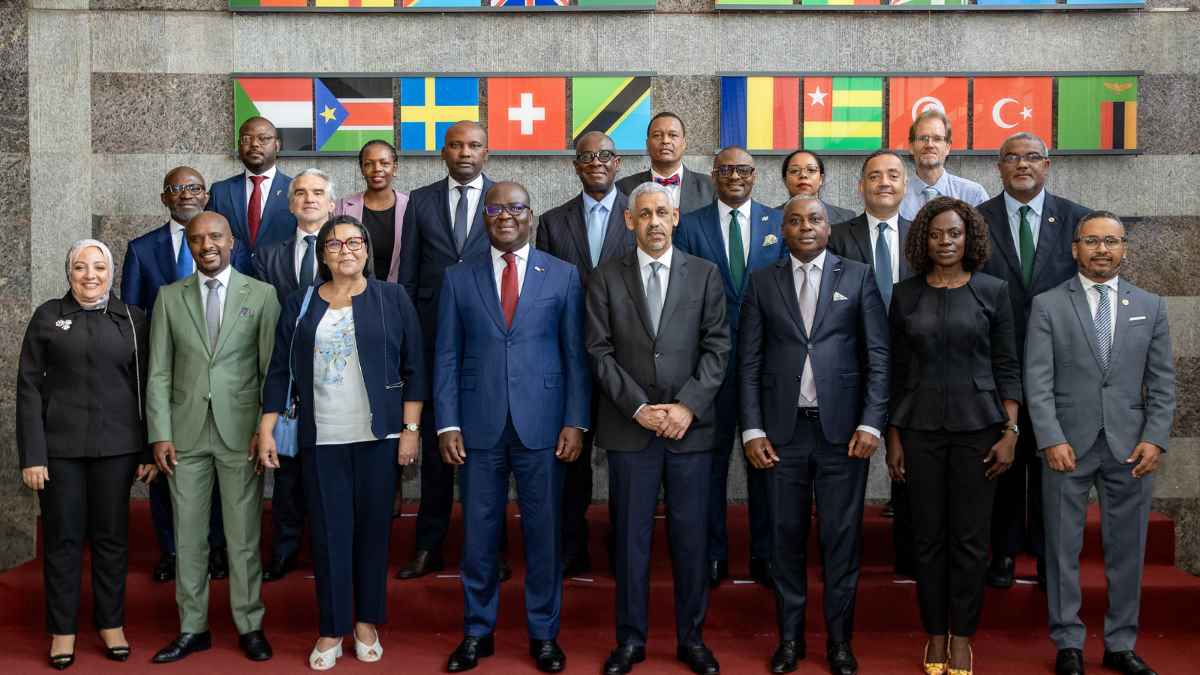
At the invitation of Bank Group president Dr Sidi Ould Tah, more than 50 representatives of regional and continental banks and development finance institutions are convening at African Development Bank Group headquarters in Abidjan over the next two days for talks Dr Ould Tah described as vital to the continent’s destiny.

“As the architects of Africa’s capital markets, you are custodians of financial institutions and catalysts of our continent’s future,” Dr Ould Tah said at the start of the first session with heads of African securities exchanges, private equity funds and venture capital funds.

The meeting, a first of its kind between the Bank and African stock exchanges, aims to explore their role in long-term financing, with a focus on reforming how Africa’s capital is mobilized. Dr Felix Edoh Kossi Amenounve, CEO of the West African Regional Stock Exchange (BRVM), welcomed the meeting, highlighting the need for fundamental change.

“There are gaps between financing needs and available resources, but we need to think about the reforms needed to achieve the capitalisation of African pension funds. Because these funds were originally created to finance governments,” Amenounve said.

The continent’s leading financial institutions represented at today’s meetings include the African Exchange Linkage Project (AELP), Rwanda Stock Exchange, Mozambique Stock exchange, Cabo Verde Stock Exchange, Nairobi Stock Exchange, Tunis Stock Exchange, West African Regional Stock Exchange (BRVM), the Central African Stock Exchange, Casablanca Stock Exchange and the Ghana Stock Exchange.

“The capital markets are the bedrock upon which long-term, sustainable economic growth is built,” Dr Ould Tah said, adding “by mobilizing patient capital, you provide our sovereigns and businesses with diversified funding sources, while offering investors, particularly institutional investors, a broader array of opportunities.”

Underpinning Dr Ould Tah’s Four Cardinal Points (https://apo-opa.co/43FpwRX) since taking over the helm of the institution in September is increasing access to predictable and affordable long-term financing.

A key objective of the consultations is to enable financial flows for private equity and venture capital by reinforcing existing African investment funds and expanding their capacity to finance small and medium-sized enterprises (SMEs), mid-market companies, and emerging industrial champions.

The capital markets are the bedrock upon which long-term, sustainable economic growth is built

SMEs which represent nearly 90% of businesses and over 60% of jobs on the continent continue to face limited access to risk capital.

The promotion of sustainable finance, the digitalisation of markets, attracting investment capital to Africa’s markets, and programmes tailored to SMEs were among the issues discussed during the meeting.

The development of financial education among young people was also highlighted as a key focus for the approach to be developed by the continent’s stock exchanges, as well as increasing the use of digitalisation tools and fintech to boost opportunities.

Donald Waweru Wangunyu, Non-Executive Director, Nairobi Stock Exchange, stressed the need for regional coordination in order to achieve “scaling up, policy coordination and implementation of reforms; we have good projects, but the obstacles are still there, ” he said.

Ms Sonia Ben Frej, Chairwoman of the Board, Tunis Stock Exchange, emphasised the problems of regulatory convergence and the need to update obsolete regulations.

Through engagement with fund managers, institutional investors, DFIs, and regulators, the goal of the two-day meetings will be to forge a path for financial institutions to mobilise additional financing for Africa, to enable countries to avoid the existing dependance on overseas development assistance.

Dr Ould Tah said the Bank Group would take a comprehensive approach to capital market development, focusing on three key pillars:

– Supporting capital market regulatory authorities, stock exchanges, and other intermediaries through technical assistance, institutional support projects, and policy-based operations.

– Diversifying savings mobilization and market participants to promote product liquidity and deeper markets for credit enhancement companies, institutional investors, and other financial institutions.

– Research, training, and policy dialogue to enhance the capacity of Africa’s capital market stakeholders.

Capital markets development across Africa is a key priority and woven into the fabric of the strategic priorities of the Four Cardinal Points. Development finance institutions especially have a catalytic role to play.

‘We will build it together, it requires a collective effort from each of us,” Dr Ould Tah explained.

The consultations will continue on Wednesday for a second day, with heads of African Development Financial Institutions.

Distributed by APO Group on behalf of African Development Bank Group (AfDB).

Home  Facebook

Energy

Gwede Mantashe Joins African Energy Week (AEW) 2026 as South Africa’s Petroleum Reforms Open the Orange Basin to Drilling

Published

on

African Energy Chamber

A new petroleum law and the prospect of fresh Orange Basin drilling is resetting South Africa’s upstream, and Minister Mantashe is taking the AEW host nation’s case to the global market

CAPE TOWN, South Africa, June 8, 2026/APO Group/ –Gwede Mantashe, Minister of Mineral and Petroleum Resources of the Republic of South Africa, has been confirmed as a featured speaker at the upcoming African Energy Week (AEW) 2026 Conference and Exhibition, where he is expected to lay out the reform agenda reshaping the country’s upstream oil and gas sector and its drive to convert long-stranded offshore gas into production.


South Africa is pursuing one of the most significant upstream overhauls in its history, anchored by a new law that gives oil and gas their own regulatory regime for the first time. The reforms position the host nation as both a destination for exploration capital and a future producer along an Atlantic margin that has drawn the world’s largest oil companies to the region.

At the center of the shift is the Upstream Petroleum Resources Development Act (UPRDA), which President Cyril Ramaphosa signed into law in October 2024. The Act separates petroleum from the mining statute that has long regulated both sectors. It also creates a single petroleum right covering exploration and production along with a 20% carried interest for the state. The UPRDA awaits a presidential proclamation to take effect, and implementing regulations that went through a further round of industry comment in early 2026 are now being finalized.

A clear petroleum framework and a credible state partner are what international capital needs to commit to the Orange Basin

Mantashe has emerged as the most forceful advocate for accelerating the sector. He has long-argued that South Africa must shift from importing refined products to producing its own, warning that dependence on foreign supply leaves the economy exposed to global price shocks. This shift becomes increasingly more importance in the current global climate, where supply security has become a major challenge – particularly for import-reliance economies such as South Africa. As such, Mantashe has repeatedly pressed for faster licensing and fewer legal delays to exploration. AEW 2026 is a key platform to bring this discussion to a global audience.

“South Africa has the geology for exploration. Now it is building the regulatory certainty it needs to turn discoveries into bankable projects,” said NJ Ayuk, Executive Chairman of the African Energy Chamber. “A clear petroleum framework and a credible state partner are what international capital needs to commit to the Orange Basin.”

Offshore, TotalEnergies – operator of Block 3B/4B in the Orange Basin – is preparing to begin drilling in South African waters in 2026 pending final regulatory approvals. The acreage sits on trend with the Venus discovery in neighboring Namibia, where TotalEnergies is developing the basin’s first oil project.

Onshore, momentum is building in Mpumalanga, where gas developer Kinetiko Energy’s Amersfoort project has logged sustained high-flow results and is advancing plans for an LNG pilot plant. Mantashe has also signaled that government is moving to lift the long-standing moratorium on shale gas development, with the Petroleum Agency of South Africa (PASA) estimating recoverable Karoo reserves at 209 tcf.

Mantashe is also expected to report on successes of the South African National Petroleum Company (SANPC), the state entity formed in May 2025 through the merger of PetroSA, iGas and the Strategic Fuel Fund. Positioned as the country’s petroleum champion, SANPC is intended to anchor state participation across the value chain as South Africa works toward 6 GW of gas-fired power by 2030.

As AEW 2026 prepares to convene policymakers, investors and operators at the Cape Town International Convention Centre from October 12-16, Mantashe’s address carries added weight as the host nation’s signal to the market. His message is expected to be direct: South Africa is open for upstream investment and ready to move from potential to production.

Distributed by APO Group on behalf of African Energy Chamber.

Continue Reading

Business

Mining Review Africa expands coverage to include global mining news

Published

on

vukagroup

The expanded editorial scope aligns with Vuka Group’s commitment to delivering timely, relevant and insightful content that supports informed decision-making across the mining value chain

CAPE TOWN, South Africa, June 8, 2026/APO Group/ –Vuka Group’s Mining Review Africa (https://WeAreVUKA.com), a leading source of mining industry news and insights, is expanding its editorial coverage to include major mining developments from around the world.


While Mining Review Africa remains firmly committed to reporting on the opportunities, challenges and successes shaping Africa’s mining sector, readers will now also benefit from coverage of international projects, investments, technologies, commodity markets and policy developments influencing the global mining industry.

The move reflects the increasingly interconnected nature of the mining sector, where developments in one region can have significant implications for investment decisions, supply chains, commodity markets, and mining operations worldwide.

Expanding our coverage enables us to deliver a more comprehensive view of the mining industry while maintaining our strong focus on Africa

“As the mining industry continues to evolve on a global scale, our readers are seeking greater context around international developments that impact Africa and the wider resources sector,” said Mining Review Africa Editor-in-Chief, Gerard Peter.

“Expanding our coverage enables us to deliver a more comprehensive view of the mining industry while maintaining our strong focus on Africa.”

Readers can expect enhanced reporting on major mining projects, mergers and acquisitions, sustainability initiatives, technological innovation, critical minerals, energy transition developments and regulatory changes from key mining jurisdictions worldwide.

The expanded editorial scope aligns with Vuka Group’s commitment to delivering timely, relevant and insightful content that supports informed decision-making across the mining value chain.

Mining Review Africa has established itself as a trusted voice within the African mining industry, providing news, analysis and thought leadership for mining professionals, investors, suppliers and policymakers. By broadening its coverage, the publication aims to give readers a deeper understanding of the global forces shaping the future of mining, while continuing to place African mining stories at the centre of its reporting.

For readers, this means access to a wider range of industry intelligence, bringing together African mining news and key international developments on a single trusted platform.

Distributed by APO Group on behalf of VUKA Group.

Continue Reading

Business

13,000 Hectare Wild Coast Conservation Property Comes to the Market in the Eastern Cape

Published

on

Coast Conservation

Tyityaba Nature Reserve, a proclaimed reserve covering roughly 13,000 hectares on the Wild Coast, has been listed at an indicative R145 million (about USD 8.9 million)

EAST LONDON, South Africa, June 8, 2026/APO Group/ –One of the largest privately held conservation properties in the Eastern Cape has been put up for sale. Tyityaba Nature Reserve, a proclaimed reserve covering roughly 13,000 hectares on the Wild Coast, has been listed at an indicative R145 million (about USD 8.9 million), according to the selling agent, Bass Property Group (www.BassPropertyGroup.co.za).

The property sits about 18 kilometres inland from Kei Mouth. Its status as a gazetted proclaimed reserve, a designation under South African law, ties the land to long-term conservation management and places it within a category of property that has drawn growing interest from investors looking for protected land. Listings of this scale are uncommon, and proclaimed reserves seldom change hands, making the sale a notable event in the regional market.

Scale and setting

Size is the reserve’s most distinguishing feature. It holds about 26 kilometres of frontage along the Kei River and a perimeter of roughly 81 kilometres, taking in rolling bushveld, riverine thicket and the open vistas typical of the Wild Coast, a region known for its biodiversity and its remoteness. The varied terrain supports a mix of habitats, from valley grassland to dense thicket, that sustains the reserve’s wildlife through the seasons.

That remoteness is relative. King Phalo Airport in East London, which has direct flights from Johannesburg and Cape Town, is about an hour away by road, placing the reserve within comfortable reach of major centres while preserving the seclusion that defines the Wild Coast.

Wildlife

The reserve carries buffalo, giraffe, leopard, zebra, blue wildebeest, eland and impala, along with a wide range of birdlife. Populations of spiral-horned antelope, such as nyala, kudu and bushbuck, are prolific and well established. Tyityaba has a long record of regulated, quota-based wildlife use carried out within South Africa’s conservation framework, and its established game populations would allow a new owner to continue managed conservation operations without a lengthy restocking period.

Twenty-six kilometres of river frontage and 13,000 hectares of established habitat take generations to form and cannot be recreated

Infrastructure

The main lodge has eight en-suite bedrooms and shared entertainment areas. The property also includes an abattoir and workshop, with several other farm dwellings spread across the holding that could house staff or be developed to accommodate guests. An airstrip on site would need upgrading before it could be used, though it raises the possibility of fly-in access alongside the road route from East London. Together, the existing buildings give a buyer a working base from which to operate or further develop the reserve.

How it can be bought

The land is made up of 26 portions across five titles. It can be bought as a single holding or, the agent says, divided among several owners as a development. That structure is part of what they expect will determine who comes forward.

“Tyityaba is a large landholding of a kind that rarely comes to the open market in South Africa,” said Hanlie Bassingthwaighte, a principal of Bass Property Group. “Its main strength is flexibility. It can work as a single-owner reserve or as the basis for a development shared among several owners.”

Price

The reserve is listed at an indicative R145 million (about USD 8.9 million). The agent attributes the figure to the property’s size, biodiversity and the range of ownership options it allows.

“Twenty-six kilometres of river frontage and 13,000 hectares of established habitat take generations to form and cannot be recreated,” said Joshua Bassingthwaighte, also a principal of the firm.

Distributed by APO Group on behalf of Bass Property Group.


Continue Reading

Trending