Connect with us
Anglostratits

Business

African Development Bank Approves $17 Million to Rebuild Conflict-Affected Northern Mozambique

Published

on

African Development Bank

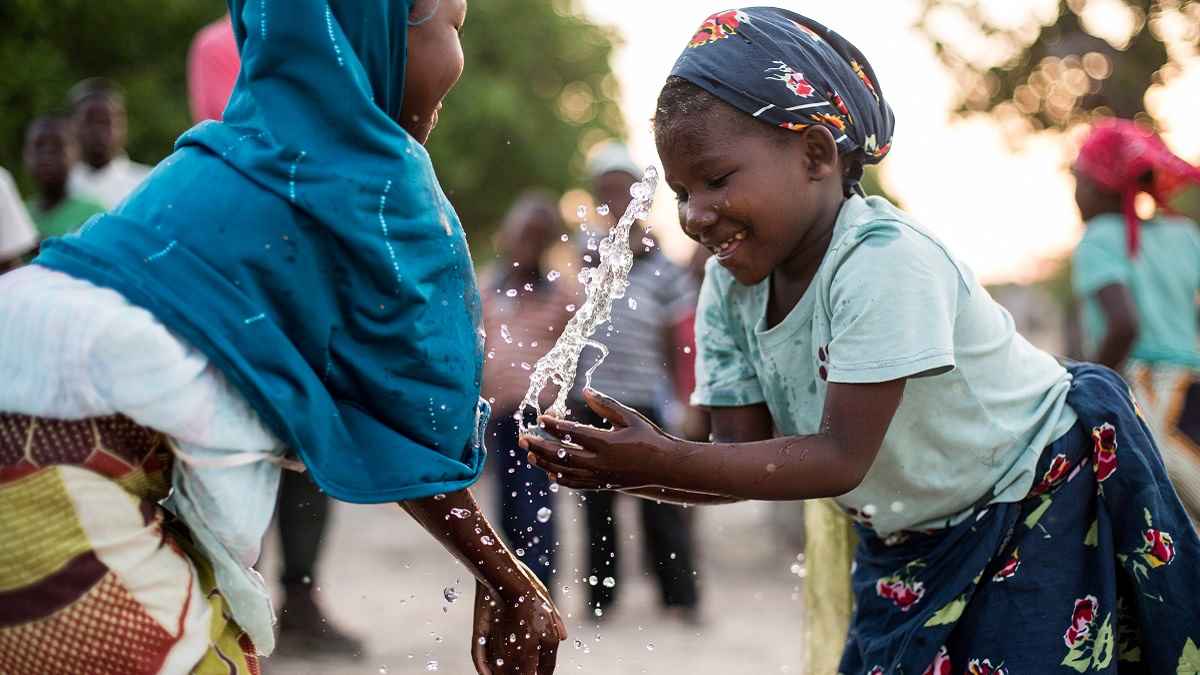
The Board of Directors of the African Development Bank (www.AfDB.org) has approved a $17 million grant to support recovery and resilient-building efforts in conflict-affected northern Mozambique’s Cabo Delgado province.

The funding will support the Resilient Investment for Socio-Economic Empowerment, Peace, and Security (RISE-PS) Project, a bold new initiative to tackle the root causes of fragility through targeted economic empowerment. It will directly create 24,000 jobs, with 60% of opportunities earmarked for young people aged 18 to 35, and 50% reserved for women. Cumulatively, over 100,000 people are expected to benefit from the initiative.

Since 2017, violent extremist attacks in Cabo Delgado have killed at least 4,500 people and displaced more than one million. Approximately 4,965 small businesses have been destroyed, leaving communities without livelihoods. Youth unemployment currently stands at 25% in the province, with 35% of young women neither employed nor enrolled in education or training.

“This is about more than economic recovery – it’s about giving young people a reason to believe in their future,” said Babatunde Omilola, Manager for Human Capital, Youth and Skill Development at the African Development Bank’s Regional Office for Southern Africa. “The project emphasizes  youth as peacebuilding agents, unlocking their potential through skills development, entrepreneurship, and decent work opportunities to drive economic stabilization efforts.”

A cornerstone of the RISE-PS project is the creation of a Peace and Security Investment Hub, coordinated by Mozambique’s Northern Integrated Development Agency (ADIN).

“This hub will coordinate development work across the region and create investment opportunities for both public and private partners,” said Macmillan Anyanwu, the Bank’s Acting Country Manager for Mozambique. “By including local communities in planning and implementing projects — such as letting them choose which infrastructure gets rebuilt — we ensure development truly serves those who need it most.”

Comprehensive Support for Vulnerable Populations

This is about more than economic recovery – it’s about giving young people a reason to believe in their future

  • Rehabilitation of 150 community facilities, including 30 schools, 45 youth centers, 14 health posts, 10 rural markets, and 33 water systems — providing immediate employment for 4,500 vulnerable youth and women
  • Training for over 9,200 individuals in market-oriented vocational skills, with 2,000 women and youth-led enterprises receiving grants to restart destroyed businesses, and 5,400 local micro-enterprises equipped to expand or consolidate operations.
  • Construction of a climate-smart SME village in the Afungi Industrial Hub, designed to accommodate 100 small and medium enterprises with modern facilities, including warehouses, workshops, and business incubation centers
  • Private sector partnerships, including TotalEnergies and ExxonMobil, to provide 1,055 youth with 6-month internships, targeting 70% permanent job placement


The total value of the project stands at $28 million, including the African Development Bank’s $17 million grant through its Transition Support Facility, $4.2 million from the United Nations Development Programme (UNDP), $2.4 million from Germany, $3.1 million in parallel financing from private sector partners, and $1.3 million counterpart contribution from the Government of Mozambique.

MozParks, the national developer of sustainable economic zones, will lead the SME village construction, drawing on 23 years of experience that has attracted $4 billion in investments and created over 12,000 jobs nationwide.

The project’s conflict-sensitive design specifically targets the drivers of violent extremism. Research shows that 40% of young men join rebel movements due to a lack of economic opportunities. At the same time, women face additional vulnerabilities, including limited education and high rates of gender-based violence.

Implementation begins on 1 September 2025, under the leadership of the Government, with UNDP as the implementing partner. The project will run until August 2029.

ADIN will serve as the executing agency, with enhanced institutional support to strengthen its coordination role across northern Mozambique, which is home to 11.6 million people.

Recent security improvements, and a reduction in the number of internally displaced persons from over one million to 635,000 present an opportunity for sustained development investments and renewed investor confidence.

The RISE-PS project aligns with Mozambique’s National Development Strategy (2025-2044) and the African Union’s Agenda 2063, contributing to Sustainable Development Goals (SDG 1 – No Poverty;  SDG 4 – Quality Education;  SDG 5 – Gender Equality; SDG 8 – Decent Work and Economic Growth).

It also aligns with the African Development Bank’s Strategy for Addressing Fragility and Building Resilience (2022-2026), the Bank’s Country Strategy Paper 2023-2028 for Mozambique, its Ten-Year Strategy 2024-2033, and many other strategies or action plans on jobs, gender, skills, private sector development and nutrition. In particular, the Bank’s Jobs for Youth in Africa strategy 2016-2025 aims to create 25 million jobs and positively impact 50 million African youth by 2025.

Distributed by APO Group on behalf of African Development Bank Group (AfDB).

Home  Facebook

Business

5 Investment Opportunities Putting Congo Energy & Investment Forum (CEIF) 2027 on the Map for Central Africa

Published

on

CEIF 2027 connects investors with Congo’s energy projects and local partners, while providing entry points for commercial opportunities across Central Africa

BRAZZAVILLE, Republic of the Congo, November 2, 2026/APO Group/ –The Republic of Congo’s expanding oil and gas developments are creating new opportunities for investment, engineering contracts and commercial partnerships across the energy value chain. With offshore discoveries, mature-field redevelopment and three million tons per year of LNG capacity, the country is entering a new phase of energy development that requires capital, technology and international partnerships.


The Congo Energy & Investment Forum (CEIF) 2027, taking place June 1-3 in Brazzaville, will serve as the official platform connecting Central African energy decision-makers, operators, investors and service companies. Organized by Energy Capital & Power in collaboration with the Ministry of Hydrocarbons, the forum will bring together public- and private-sector stakeholders to advance investment discussions, facilitate partnerships and connect companies with emerging opportunities across the region.

Connect With Central Africa’s Energy Decision-Makers

CEIF 2027 will provide a platform to engage directly with Congolese authorities, regulators, national energy companies and policymakers shaping the region’s energy investment landscape. Taking place in partnership with the Ministry of Hydrocarbons, the event offers a bridge between the country’s policymakers and public- and private-sector companies. Conversations with decision-makers can help investors understand national development priorities, gain insight into the regulatory environment and identify opportunities for market entry or expansion.

Capitalize on Congo’s Upstream Investment and Production Ambitions

As Congo targets production growth toward 500,000 barrels per day, operators are pursuing new exploration and mature-field redevelopment to increase output. TotalEnergies’ 2026 Moho G discovery could unlock an estimated 100 million barrels of recoverable resources alongside the existing Moho F development, illustrating the potential to connect new discoveries to established offshore infrastructure. Meanwhile, Perenco and Trident Energy are pursuing development and redevelopment opportunities across mature assets, including well reactivation and infrastructure upgrades.

These activities could create opportunities for drilling contractors, engineering firms and production technology providers. CEIF 2027 offers a platform to explore project requirements and investment opportunities across Congo’s upstream sector.

Unlock Opportunities Across LNG, Gas and Power Infrastructure

With LNG exports established and liquefaction capacity reaching three million tons per year in 2026, Congo is looking towards its next phase of gas development. This will depend on sustaining feedgas supplies, connecting additional resources and expanding infrastructure.

Beyond LNG, Congo’s plans to expand electricity generation and improve transmission and distribution infrastructure present opportunities for power developers, equipment suppliers and investors. These priorities create potential opportunities for upstream operators, engineering companies, technology providers and investors interested in gas processing, power generation and distribution. CEIF provides a platform to advance these priorities.

Showcase Solutions and Build Commercial Partnerships at the Exhibition

The CEIF 2027 exhibition will provide a platform for companies to showcase their technologies, equipment and services directly to energy operators, policymakers, investors and potential clients across Central Africa.

Exhibitors will have opportunities to demonstrate solutions, engage with local service providers and identify potential partnerships across drilling, engineering, infrastructure and energy technology. For companies seeking to enter or expand in the region, the exhibition offers a direct route to building commercial relationships, exploring procurement opportunities and positioning their services for upcoming projects.

Access New Projects and Financing Opportunities

Turning project opportunities into investments requires clarity on development priorities, infrastructure requirements and financing structures. CEIF’s discussions will give participants an opportunity to assess the projects shaping Congo’s energy sector and engage with potential commercial and institutional counterparts.

Investors, lenders and project developers can use these exchanges to identify areas where financing, technical expertise or new investment structures may help advance projects across oil and gas, power generation and downstream industries.

Organized by Energy Capital & Power in collaboration with the Ministry of Hydrocarbons, CEIF 2027 will enable candid dialogue, facilitating new investments and deals in the country’s energy sector. For more information, visit www.congoenergyinvestment.com.

Distributed by APO Group on behalf of Energy Capital & Power.


Continue Reading

Business

Afreximbank supports Veenocks’ US$145 million project for industrial expansion and regional growth

Published

on

Afreximbank

PPF-funded studies enabled Veenocks to broaden its medium-term regional growth plans, while a US$81.9 million senior loan supports an expansion expected to triple annual production capacity

CAIRO, Egypt, November 2, 2026/APO Group/ –African Export-Import Bank (Afreximbank) (www.Afreximbank.com) has supported the development and expansion of Veenocks Limited’s porcelain tile manufacturing plant in Sagamu, Ogun State, Nigeria, through its Project Preparation Facility (PPF) and a US$81.9 million senior term loan. The project has a total estimated cost of US$145 million.


Afreximbank and Veenocks signed a US$2 million project preparation facility agreement in August 2024 to finance technical, commercial, financial, legal, environmental and social studies needed to establish the project’s bankability.

The studies financed through the PPF, complemented by Afreximbank’s pan-African experience, enabled Veenocks to broaden its growth ambitions beyond its primary focus on the Nigerian market. This support informed the company’s plans to pursue regional opportunities over the medium term, with target markets including Togo, Benin, Burkina Faso, Niger, Cameroon, Ghana, Mauritania and Senegal.

The Bank’s US$81.9 million senior term loan supports implementation of the plant’s expansion, providing financing for investment in additional manufacturing capacity. The expansion is expected to increase the plant’s total annual production capacity from 3.3 million to 9.9 million square metres, creating a stronger production base to meet domestic demand and pursue regional opportunities.

Veenocks demonstrates how project preparation, commercial expertise and senior debt financing can support African industrial investment

The existing plant employs more than 200 people directly. The expansion is expected to create an additional 300 direct jobs, alongside indirect employment across raw material supply, logistics and distribution.

The preparation financing has been fully repaid from senior debt, completing the PPF’s funding cycle for Veenocks and replenishing capital to support further projects.

Mrs. Kanayo Awani, Executive Vice President, Intra-African Trade and Export Development, Afreximbank, said:

“Veenocks demonstrates how project preparation, commercial expertise and senior debt financing can support African industrial investment. The studies financed through Afreximbank’s Project Preparation Facility have helped strengthen the project’s bankability and broaden the company’s regional growth ambitions. Our senior debt financing supports the plant expansion needed to convert those ambitions into increased productive capacity, and stronger foundations for intra-African trade.”

Mrs. Awani added: “Full repayment of the preparation financing ensures capital is available to support more indigenous African investors and projects. This is the PPF’s revolving model in practice: the funds that have been repaid are used to support initiatives that add value to local resources and expand manufacturing.”

Mr. Adebisi Abidemi Adebutu, Group President of R28 Holdings, the parent company of Veenocks Limited, said:

“This investment represents an important step towards our ambition of building a globally competitive manufacturing business in Nigeria, producing world-class tiles to European quality standards and reducing Nigeria’s dependence on imported tiles. The PPF was instrumental in broadening our growth plans and positioning us to penetrate regional markets over the medium term. With Afreximbank’s financing, we can now deliver the expansion phase of this project. The facility will allow us to add value to Nigeria’s raw materials, create quality jobs and increase the supply of our porcelain tiles, manufactured here in Nigeria, to customers at home and across the region. Our vision is to set the global benchmark for quality in tile manufacturing and to become Africa’s first choice for porcelain tiles.”

Distributed by APO Group on behalf of Afreximbank.


Continue Reading

Energy

Energy costs, storage value and industrial competitiveness led Day 2 of C&I Energy + Storage Summit

Published

on

Energy

Energy security, industrial competitiveness and infrastructure readiness emerged as closely connected priorities, with discussions highlighting what businesses need to turn investment plans into operational gains

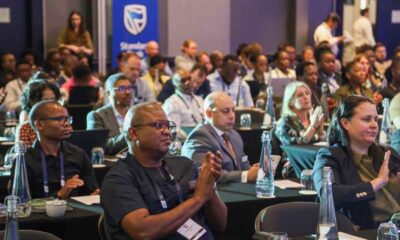
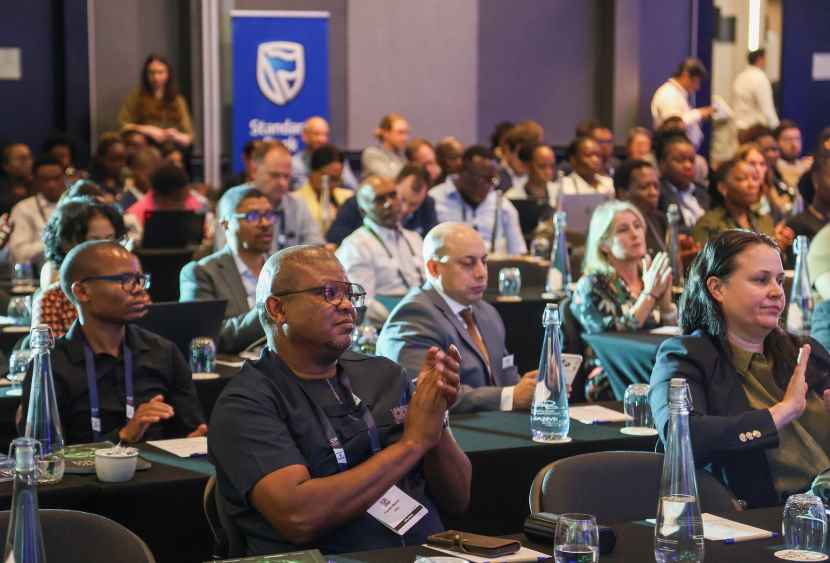
JOHANNESBURG, South Africa, November 2, 2026/APO Group/ –How can South African businesses turn energy investment into lower operating costs, stronger resilience and long-term competitiveness? This question drove the second day of VUKA Group’s (https://WeAreVUKA.com/) C&I Energy + Storage Summit in Johannesburg, with discussions examining the commercial value of storage, industrial energy strategies and the infrastructure needed to support Africa’s growing digital economy.


The programme brought together business leaders, energy specialists, financiers and public-sector representatives to address practical decisions facing commercial and industrial users, alongside the EIUG Conference, Water Security Africa and Data Centre Summit.

Energy security, industrial competitiveness and infrastructure readiness emerged as closely connected priorities, with discussions highlighting what businesses need to turn investment plans into operational gains.

Energy storage featured prominently, with panellists examining how tariff optimisation, peak shaving and renewable energy integration can strengthen its value beyond backup power. The investment case, however, needs to account for battery degradation, warranties and operational risk.

Addressing the attendees, Junaid Munshi, Group Executive: Distribution for Eskom told the audience: “For an industrial business, solar and storage can improve the energy cost position. But the opportunity extends beyond the customer’s electricity bill. Where network capacity is constrained, coordinated battery use may relieve pressure on the infrastructure serving that business and, where proven technically dependable, could defer or reduce grid investment. The asset behind your meter can therefore also become a resource beyond it.”

The asset behind your meter can therefore also become a resource beyond it

The EIUG session “Industrialisation under threat?” put changing electricity consumption under scrutiny, asking whether lower demand reflected efficiency gains or weakening industrial output. Tariffs, investment conditions and industrial growth remained central to the discussion, highlighting the need to assess energy trends against the health of the wider economy.

At the Data Centre Summit, Africa’s AI ambitions brought power availability and infrastructure readiness into focus. Discussions on grid access, wheeling and network investment highlighted the importance of planning digital growth alongside the electricity infrastructure needed to sustain it.

For businesses developing energy projects, public-private engagement sessions explored infrastructure co-investment, municipal coordination and workable wheeling agreements.

Water Security Africa reinforced the wider resource-security challenge through industrial resilience case studies, digital water technologies and lessons from case studies.

Across the discussions, the practical message was consistent: competitive businesses need more than access to technology and capital. They also need reliable infrastructure, workable commercial arrangements and coordinated delivery.

The afternoon programme translated these themes into business decisions. “The C&I energy playbook” drew together insights from across the summit, while the closing “decision clinic” addressed real project challenges, from choosing between onsite solar and wheeled power to sizing batteries and preparing projects for financing. Experts from DBSA, Standard Bank, SustainableDNA and the City of Tshwane contributed practical guidance.

Download the programme to review the full Day 2 agenda and participating speakers: https://apo-opa.co/4eEKq9a

Distributed by APO Group on behalf of VUKA Group.


Continue Reading

Trending