Energy
Africa G20 Declaration: Let African Fossil Fuels Power Our Industrial Future
Published
3 months agoon
Ahead of the G20 Summit in Johannesburg, the African Energy Chamber calls for renewed global investment in African oil and gas to drive industrialization, energy access and regional prosperity
Africa holds enormous upstream potential. The AEC’s 2026 Outlook projects oil and gas production to reach 11.4 million barrels per day (bpd) by 2026, growing toward 13.6 million bpd by 2030 as exploration gains momentum in frontier basins. Africa is expected to account for roughly $41 billion in global upstream capital expenditure by 2026, driven by major projects in Mozambique, Angola and Nigeria. Licensing rounds underway or planned into 2026 – across mature markets such as Angola, Nigeria, the Republic of Congo, Equatorial Guinea, Libya and Egypt, as well as emerging frontiers including Namibia, Sierra Leone, Tanzania and South Africa – continue to attract explorers seeking new opportunities.
With proven gas reserves exceeding 620 trillion cubic feet, Africa is a critical supplier for both global gas markets and domestic energy development. Mozambique hosts multiple major LNG projects in its offshore Rovuma Basin, Senegal is advancing Phase 2 of the Greater Tortue Ahmeyim project alongside Yaakar-Teranga, and Equatorial Guinea continues to develop its regional Gas Mega Hub, connecting stranded fields to onshore gas-processing infrastructure. Libya’s re-emergence as a stable and attractive upstream environment has attracted the return of major international players. Meanwhile, Uganda and Tanzania are progressing with the East African Crude Oil Pipeline, reflecting a regional commitment to integrated infrastructure and long-term production. In South Africa, coal remains central to energy security, even as the country pursues gas exploration and investment to complement industrial growth.
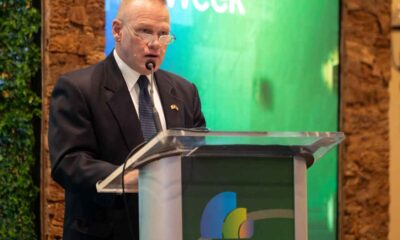
Speaking at the G20 Africa Energy Investment Forum in Johannesburg last Friday, South Africa’s Minister of Mineral and Petroleum Resources Gwede Mantashe emphasized the country’s approach: “Drill, baby, drill. We have no legal restriction on oil and gas exploration and exploitation in South Africa. If we make a breakthrough on oil and gas, our GDP will grow exponentially. Our people will never breathe fresh air in darkness.” His remarks underscore that unlocking South Africa’s fossil-fuel potential is critical not just for energy access, but for industrial development, job creation and national economic growth.
Yet despite this massive potential, restrictive global financing frameworks threaten to choke off investment where it is needed most. The World Bank’s fossil-fuel lending ban and risk-averse policies by many Western banks risk sidelining projects just as the continent requires them to support industrial clusters, domestic electrification and gas infrastructure. Restoring capital flows is a once‑in-a-generation opportunity: it will allow Africa to harness its natural resources to lift millions out of energy poverty, drive industrialization and secure its energy future, all while strengthening global energy security.
Exploration must accelerate, as it remains the cornerstone of Africa’s energy future. New upstream investment is essential for powering industrial growth, and natural gas must serve as the backbone of this transformation. The G20 should champion financing for exploration rather than penalize it, because neglecting gas condemns millions to continued energy poverty. Around 600 million Africans currently lack electricity, while 900 million have no access to clean cooking solutions. Gas is not merely a transitional fuel – it is a lifeline for industrialization, domestic energy access and economic development. Strategic investment in gas can unlock power for cities, factories and households alike, bridging the continent to a cleaner, more productive future.
If we make a breakthrough on oil and gas, our GDP will grow exponentially. Our people will never breathe fresh air in darkness
The Chamber applauds the United States for its landmark $4.5 billion financing commitment to Mozambique’s LNG project, demonstrating that G20 nations can invest in African fossil fuels responsibly and profitably. This investment proves that upstream and gas projects can deliver long-term economic growth, energy access and industrialization across Africa. Yet far more financing at this scale is urgently needed to unlock the continent’s full energy potential.
The International Energy Agency must reset its projections. Current forecasts undervalue Africa’s hydrocarbon resources and ignore the role gas can play in driving energy access, job creation and industrial capacity. The persistent stigmatization of fossil fuels must end. Transition rhetoric alone is insufficient: meaningful action requires aligned funding, supportive policy and genuine respect for Africa’s energy priorities.
The Chamber also applauds U.S. Secretary of Energy Chris Wright’s support for LPG and clean-cooking solutions as a practical, scalable method to improve energy access. The G20 has rightly recognized LPG as a key priority area for Africa, highlighting its potential to provide immediate, reliable energy for millions of households. But clean cooking is only one piece of the puzzle. Much more needs to be done to unlock Africa’s full energy potential. The continent deserves a comprehensive energy mix: LPG, gas-to-power, modular GTL, and large-scale natural gas development, all working together to drive industrialization, power cities and support sustainable economic growth.
African governments are ready. Countries from Angola to Egypt, Nigeria to Senegal, and Libya to Mozambique are implementing reforms to attract capital through licensing rounds, stable fiscal terms and pragmatic regulation. We stand prepared to deliver enabling environments: local content development, cross-border infrastructure, and strategic partnerships to support long-term growth. But we need capital; we need technology; and we need a global financial system that supports development, not punishes it.
We reject calls to phase out fossil fuels under the guise of climate virtue, which only threatens Africa’s prosperity and keeps millions locked in energy poverty. Instead, we demand a just energy future powered by African resources, built by African workers and delivering tangible benefits to communities. We call on the G20 to make fossil-fuel development a central pillar of its Africa policy, unlocking financing, dismantling ideological barriers, promoting exploration and investing in the gas infrastructure that will energize homes, industries and economies across the continent.

Distributed by APO Group on behalf of African Energy Chamber.
You may like
-
Marriott International Announces Robust Growth Momentum Across Europe, Middle East & Africa in 2025
-
U.S.-Africa Energy & Minerals Forum Expands to Critical Minerals and Supply Chain Security
-
Pesalink and Pan-African Payment and Settlement System (PAPSS) Unlock Cross-Border Payments in Local Currencies in Kenya
-
Africa Trade Conference Returns to Cape Town with Esteemed Speakers Driving Africa’s Trade Agenda
-
Cameroon’s 2026 Licensing Round: A Regulatory and Compliance Guide for Prospective Bidders
-
African Energy Chamber (AEC), Venezuelan Petroleum Leadership Forge Structured Hydrocarbon Partnership
Energy
U.S.-Africa Energy & Minerals Forum Expands to Critical Minerals and Supply Chain Security
Published
1 day agoon
February 27, 2026
This year’s U.S.-Africa Energy & Minerals Forum in Houston signals a strategic shift toward integrated energy and critical minerals investment, strengthening U.S. partnerships across Africa’s resource and industrial value chains
Scheduled for July 21–22, 2026, in Houston, Texas, USAEMF comes at a time of surging global demand for copper, cobalt, lithium, manganese and rare earth elements, driven by electrification, battery storage, AI infrastructure and advanced manufacturing. Africa is increasingly critical to securing these materials, highlighting how energy and minerals are now interconnected pillars of industrial growth, geopolitical stability and decarbonization.
The forum’s minerals mandate deepens engagement with African producers – particularly the Democratic Republic of Congo (DRC), home to some of the world’s largest copper and cobalt reserves. Momentum is building through the U.S.–DRC strategic minerals framework and the U.S.-backed Orion Critical Mineral Consortium, a major investment platform supported by the DFC and private partners. The consortium is pursuing a 40% stake in the Mutanda and Kamoto copper-cobalt operations in a $9 billion transaction, securing long-term supply for allied markets while reinforcing cooperation on infrastructure, security and supply-chain governance.
Placing critical minerals at the center while maintaining strong hydrocarbons engagement strengthens U.S.-Africa commercial ties
U.S. financing is also expanding across the region, with the DFC managing a continental portfolio exceeding $13 billion to support mining, processing and transport infrastructure for critical mineral supply chains. Recent commitments include rare earth, graphite and potash projects in Malawi, Mozambique and Gabon; broader investments in Uganda, Tanzania, Zambia and South Africa; and $553 million linked to the development of the Lobito Corridor. The DFC is also a major backer of TechMet, a U.S.-supported investment firm valued at over $1 billion, which is raising up to $200 million to expand copper, cobalt, lithium and rare earth assets and pursue new opportunities across the DRC and Zambia. Together, these initiatives underscore Washington’s push to diversify battery-mineral supply while positioning Africa as a long-term partner in clean energy and industrial value chains.
Houston’s role as host city reflects the alignment between American industrial capacity and African resource development. Long established as a global energy hub, the city is expanding into energy transition technologies, advanced materials, carbon management and industrial innovation. By convening African governments with U.S. private equity, development finance institutions, exporters, insurers and technical service providers, the forum creates a commercial platform capable of converting mineral potential into bankable projects.
“The evolution from USAEF to USAEMF reflects a broader shift toward integrated energy and mineral development,” states Nadine Levin, Portfolio Director at Energy Capital & Power, forum organizers. “Placing critical minerals at the center while maintaining strong hydrocarbons engagement strengthens U.S.-Africa commercial ties and advances projects that deliver long-term shared value.”
While critical minerals define the forum’s strategic expansion, the U.S.’ longstanding role in Africa’s energy sector remains central to the platform’s value proposition. American energy companies continue to advance exploration and development across key upstream markets, support gas monetization in the Gulf of Guinea and revitalize mature production in North Africa. U.S. export credit and development finance are also helping unlock large-scale LNG capacity in Mozambique while supporting optimization and expansion across existing gas infrastructure in West Africa – demonstrating how American capital, engineering expertise and risk-mitigation tools convert resource potential into delivered energy systems.
USAEMF is the leading platform connecting U.S. capital and technical expertise with Africa’s energy and minerals sectors. For more information or to participate at the upcoming forum, please contact sales@energycapitalpower.com
Distributed by APO Group on behalf of Energy Capital & Power.
Energy
Cameroon’s 2026 Licensing Round: A Regulatory and Compliance Guide for Prospective Bidders
Published
2 days agoon
February 26, 2026
Cameroon’s 2026 licensing round provides access to blocks located in established producing basins with available subsurface data
Cameroon’s 2026 licensing round represents one of the most structured and commercially compelling entry points into proven producing basins in Central Africa in recent years. Within its mandate to promote and valorise hydrocarbon resources in the national oil and gas domain of the Republic of Cameroon, the The Société Nationale des Hydrocarbures (SNH) has brought to market nine blocks located in the Rio del Rey and Douala/Kribi-Campo basins, all of which lie in close proximity to existing producing fields and are supported by 2D and 3D seismic coverage, drilled wells, discovery wells, identified leads and undrilled prospects. This is taking place in a country with approximately 200 million barrels of proven oil reserves (U.S Energy Information and Worldometer Data) and significant gas potential, governed by a modern legislative framework under Law No. 2019/008 of 25 April 2019 instituting the Petroleum Code, its enabling acts and and Decree n° 2023/232 of May 04, 2023.
For investors, the decisive question is whether their bid satisfies the legal and regulatory conditions for participation and evaluation. Entry into the round is determined at the submission stage by a number of mandatory parameters: the choice of petroleum contract under the Petroleum Code, the commitment to a minimum work programme within the exploration periods, the ability to meet the corporate, technical, financial, environmental and local content requirements set out in the Call for Expression of Interest. These are the criteria against which bids will be assessed.
This article sets out the legal and regulatory framework governing participation in Cameroon’s 2026 licensing round. It focuses on the mandatory requirements bidders must satisfy under the Petroleum Code and the SNH Call for Expression of Interest.
Key Milestones in the Bidding Process
Although the licensing round was launched on 1 August 2025, the process is now approaching its final stages. With the data consultation period closing on 15 March 2026 and the bid submission deadline fixed for 30 March 2026, prospective bidders are in the critical phase of finalising their technical evaluation, corporate structuring and financing arrangements. At this stage, the focus is on the preparation of a compliant and competitive proposal. The Call for Expression of Interest sets out the procedural timetable below.
| No | Milestone | Date | ||
| 1 | Launch of the licensing round | 1 August 2025 | ||
| 2 | Opening of data consultation period | 1 September 2025 | ||
| 3 | Close of data consultation period | 15 March 2026 | ||
| 4 | Deadline for submission of proposals | 30 March 2026 – 12:00 noon (local time) | ||
| 5 | Public opening of proposals in the presence of
all bidding companies or their representatives: |
30 March 2026- 13:00 (local time) | ||
| 6 | Publication of the results: |
|
Participation in the Licensing Round: Pre-Qualification and Eligibility
Participation in the licensing round is subject to the pre-qualification requirements of the Petroleum Code and the Call for Expression of Interest. Under Law No. 2019/008 of 25 April 2019 Sections 2 and 7, petroleum operations may be conducted only by a petroleum company, defined as a commercial company or public industrial and commercial establishment with the technical and financial capacity to carry out such operations in safe, hygienic and environmentally safe conditions, accordance with applicable laws and international standards.
The process is open to both Cameroonian and foreign petroleum companies and there is no nationality restriction. A foreign company must, prior to the signing of the petroleum contract, establish a locally registered subsidiary that will remain in place for the duration of the contract. Participation is therefore limited to legally constituted entities, and the corporate, financial and operational documentation required in the proposal effectively excludes individuals.
Bids may be submitted by a single company or by a consortium. In the case of a consortium, the legal structure of the bidding vehicle is examined prior to the technical evaluation of the proposal and, where only one petroleum company is involved, that company must act as operator and hold the majority participating interest.
The Call for Expression of Interest further provides that the State reserves the right, following evaluation of proposals and notification of the results, to enter into negotiations with several companies simultaneously for a given block with a view to securing the most favourable contractual terms. It also retains the discretionary power to accept or reject any proposal without assigning reasons. This underscores the competitive nature of the process and the importance of submitting a proposal that is not only technically and financially credible but also fully compliant with the legal and corporate requirements of the round.
Assets on Offer and Minimum Work Programme Commitments
The Call for Expression of Interest invites bids for nine exploration blocks located in the Rio del Rey and Douala/Kribi-Campo basins. Bids may be submitted for one or more blocks, subject to compliance with the proposal requirements.
Each block is associated with a defined minimum work obligation which must be reflected in the bidder’s technical and financial offer. These commitments constitute the baseline for the evaluation of the proposal and are summarised below.
| Work Obligation
|
Block(s) | Minimum Work Program Requirement |
| 3D Seismic Acquisition + 1 Exploration Well | Ntem, Tilapia, Etinde Exploration, Elombo | Drilling of at least one exploration well during the initial exploration period together with 3D seismic acquisition and geoscience studies |
| 2D/3D Seismic Acquisition + 1 Exploration Well | Kombe-Nsepe, Bomono | Drilling of at least one exploration well during the initial exploration period together with 2D and/or 3D seismic acquisition and geoscience studies |
| 3D Seismic Reprocessing + 1 Exploration Well | Bolongo Exploration | Drilling of at least one exploration well together with reprocessing of available 3D seismic data and geoscience studies |
| 2D/3D Infill Seismic + 1 Exploration Well | Ndian River, Bakassi | Drilling of at least one exploration well together with 2D/3D infill seismic acquisition |
Mandatory Selection of the Petroleum Contract
The Call for Expression of Interest requires each bidder to specify in its proposal the type of petroleum contract for which it is applying. The choice of contract is therefore a mandatory condition for participation in the licensing round and forms part of the admissibility of the bid.
In accordance with section 14 of Law No. 2019/008 of 25 April 2019 instituting the Petroleum Code, upstream petroleum operations in Cameroon are conducted under one of the following contractual models concluded with the State:
(a) Concession Contracts: where the holder shall be responsible for financing petroleum operations and, in accordance with the terms of the contract, dispose of the hydrocarbons extracted during the contract validity period, subject to the right of the State to collect royalties in kind.
(b) Production Sharing Contracts: where the holder shall be responsible for financing petroleum operations and, hydrocarbon production shall be shared between the State and the holder in accordance with the terms of such contract.
(c) Risk Service Contracts: where the holder shall be responsible for financing petroleum operations and, shall be remunerated in cash in accordance with the terms of such contract.
The legal and fiscal consequences of the choice of contract, shape the entire bid. From a financing perspective, it determines how reserves are booked, how lenders analyse the revenue stream and how the contractor’s return is structured. From a governance perspective, it determines the degree of operational control, the mechanisms for cost recovery and the conditions under which the State exercises its supervisory powers.
Consortium Structure and Operator Requirement
The Call for Expression of Interest permits bids to be submitted by a single company or by a consortium. In all cases, the bidding vehicle must satisfy the qualification requirements of the Petroleum Code.
In practical terms, this means that operational responsibility must rest with a petroleum company. Where a consortium includes only one petroleum company together with other investors, that company is required to act as operator and to hold the majority participating interest. This allows financial or strategic partners to participate in the project while ensuring that the entity responsible for petroleum operations has the technical and financial capacity required by law.
The legal and corporate structure of the consortium is examined before the technical and financial evaluation of the proposal. The composition of the consortium, the allocation of participating interests and the identification of the operator must therefore be established at the time of submission.
In practical terms, the legal architecture of the consortium is assessed before the geological interpretation of the block or the scale of the work programme. The bid therefore succeeds or fails first as a corporate structure and only subsequently as a technical proposal.
Training Budget as a Mandatory Financial Commitment
Beyond the technical work programme, the Call for Expression of Interest requires bidders to incorporate a defined training budget into their financial offer. The minimum amount is set at USD 100,000 per year during the exploration phase and USD 250,000 per year during the development and exploitation phase.
This obligation forms part of the financial parameters on which the proposal is evaluated and must therefore be reflected in the bid at the time of submission.
From a regulatory perspective, the training budget is one of the instruments through which the State implements the national capacity-building objectives of the Petroleum Code. It operates as a contractual commitment linked to the duration of petroleum operations and must be integrated into the overall project economics from the outset.
Environmental Protection and Local Content
The Petroleum Code integrates environmental protection and local content into the core obligations of the contractor. Sections 87, 88 and 89 require the promotion of employment and training of Cameroonian nationals, the use of local goods and services and the development of national technical capacity.
The SNH requires bidders to submit a specific note explaining how the proposed work programme will address environmental protection and how it will implement the local content obligations established by the Code. These elements are therefore part of the competitive assessment of the bid. Investors who integrate them into their operational model at the bid stage are structurally better positioned to move rapidly into the development phase.
Conclusion:
Cameroon’s 2026 licensing round provides access to blocks located in established producing basins with available subsurface data. At this stage of the process, the differentiating factor for bidders is the ability to submit a compliant proposal supported by demonstrable technical and financial capacity and a credible work programme.
Early and strategic engagement with experienced legal, technical and financial advisers is therefore imperative. The structure adopted for the bid must satisfy the requirements of the Petroleum Code and the SNH’s call for Expression of Interest while at the same time producing a project capable of attracting capital and moving to first production within the contractual timeframe.
*********
CLG advises investors throughout the licensing process, from the structuring of a compliant bidding vehicle to the preparation of the proposal and the negotiation of the petroleum contract. With an established presence in Cameroon and across the Central African energy market, CLG also supports the post-award phase, including regulatory approvals, joint venture arrangements and the implementation of the legal framework required to move from licence to first production.
Achare Takor
Senior Associate, CLG Cameroon
Distributed by APO Group on behalf of CLG.
Energy
African Energy Chamber (AEC), Venezuelan Petroleum Leadership Forge Structured Hydrocarbon Partnership
Published
2 days agoon
February 26, 2026
The African Energy Chamber and Venezuela’s top petroleum officials have agreed on a 12-month action plan to accelerate upstream rehabilitation, gas development, trade flows and cross-continental investment
This strategic direction was reinforced during high-level engagements between the African Energy Chamber (AEC) and Venezuela’s petroleum leadership. Part of a high-level working visit to Caracas this week, the Chamber met with Eduardo Antonio Ramirez Castro, Deputy Minister of Hydrocarbon Geopolitics, Luis González, Deputy Minister of Gas and Jovanny Martinez Executive Vice President at the state-owned oil corporation PDVSA. The parties agreed to draft a 12-month joint work plan covering upstream cooperation, refining rehabilitation, gas commercialization, finance structuring, trade flows and training implementation.
“This was not a symbolic engagement – it was a serious, high-level discussion where Africa was clearly recognized as a strategic partner. The fact that all ministers in charge of the petroleum sector were present, including Deputy Minister of Petroleum Eduardo Antonio Ramirez Castro, Deputy Minister of Gas Luis González and the highest executive of the PDVSA, is a strong signal that Venezuela is ready to drive its hydrocarbon sector forward,” stated NJ Ayuk, Executive Chairman of the AEC.
“There is a clear understanding within the Ministry and at PDVSA of what African companies have achieved across complex and mature hydrocarbon markets. They have an aggressive, structured plan to develop their fields and accelerate production, and they are ready to move,” he added.
Towards a Venezuelan Hydrocarbon Resurgence
Venezuela holds approximately 303 billion barrels of crude reserves – largely concentrated in the 54,000 km² Faja del Orinoco, home to 272 billion barrels – alongside 195 trillion cubic feet of gas. With 56,000 wells already drilled and over 100,000 additional wells targeted in the coming years, the scale of redevelopment potential is significant.
There is a clear understanding within the Ministry and at PDVSA of what African companies have achieved across complex and mature hydrocarbon markets
Considering this potential, discussions during the Caracas meetings centered on joint rehabilitation of priority PDVSA assets, including mature oil fields, Category 2 and 3 wells suitable for rapid workovers, offshore assets such as Perla and Mariscal Sucre and refinery upgrades at Paraguaná, El Palito and eastern facilities. These projects represent relatively low-capex entry points capable of delivering incremental barrels in the short term.
The country’s January 29 Hydrocarbons Law reform, alongside administrative simplification measures and optimized fiscal terms, is designed to attract new participation. Investment vehicles include Production Participation Contracts (CPPs), ATFs and Empresas Mixtas – a form of private-public partnership. Officials highlighted the success of existing CPP structures – including Petrozamora, which reportedly increased production from 23,000 bpd in 2024 to 100,000 bpd in 2026 – as evidence that the model can deliver growth.
The AEC will facilitate African participation in these structures, supporting evaluation of asset data, commercialization rights and export provisions. Majority shareholders retain export freedom, while minority partners may export under defined pricing conditions – clarity that enhances bankability. Finance will underpin execution. Premier Invest – also a participant at the meetings – is expected to structure trade finance backed by PDVSA barrels and inventory, alongside project and infrastructure finance for upstream and midstream rehabilitation. Capital mobilization discussions include Gulf partners, African national oil companies and private operators.
Strengthened South-South Energy Corridors
Gas development and Global South trade also emerged as strategic priorities. Venezuela aims to scale production from approximately 4,100 million cubic feet per day (mmcf/d) toward a 6,000–6,500 mmcf/d range, supporting domestic supply, industrial feedstock and future LNG and LPG exports. For Africa, this presents dual opportunity.
First, African firms with experience in offshore gas, LNG modularization and pipeline development can participate in infrastructure recovery and expansion. Second, commercial trade flows – particularly LPG and bitumen – offer immediate South–South cooperation pathways. The parties explored establishing long-term LPG supply channels to African markets to support clean cooking programs and reduce energy poverty. Structured bitumen agreements could also provide African infrastructure markets with more stable supply and lower import premiums.
Beyond hydrocarbons, education and technical exchange were identified as strategic pillars. Structured one-week technical programs for African executives at Venezuelan petroleum institutions, including the Bolivarian University of Hydrocarbons, will form part of a reciprocal exchange model covering petroleum engineering, geology, trading and energy law.
For the AEC, the engagement signals a shift toward deeper South–South hydrocarbon integration – positioning African companies not only as domestic operators, but as outward investors and strategic partners in one of the world’s largest resource bases.
Distributed by APO Group on behalf of African Energy Chamber.
Trending
-
Energy5 days agoAfrican Ministers Outline Industry Priorities Ahead of African Mining Week 2026
-
Business4 days agoSICPA secures major European award for United Kingdom (UK) Vaping Duty Stamps Program
-
Business3 days agoEmirates Expands Payment Flexibility in Kenya Through Cellulant’s Split-Payment Solution
-
Business5 days agoAfrica’s $29.5T Mineral Wealth Poised to Boost Mining Sector Jobs
-
Events3 days agoConverge Africa proudly announces Amazon South Africa as a Diamond partner
-
Business4 days agoStructural barriers are holding back effectiveness in APAC finds WARC in latest research
-
Business4 days agoHong Kong Tech Delegation Heading for Market Expansion at Mobile World Congress 2026
-
Energy3 days agoAfrica, Venezuela Move to Formalize Global South Energy Cooperation