Connect with us
Anglostratits

Business

Africa dominates list of the world’s 20 fastest-growing economies in 2024—African Development Bank says in macroeconomic report
Published

on

African Development Bank

The report shows that the medium-term growth outlook for the continent’s five regions is slowly improving, a pointer to the continued resilience of Africa’s economies

ADDIS ABABA, Ethiopia, February 18, 2024/APO Group/ — 

Report forecasts stronger growth for Africa in 2024, outpacing projected global average; Continent is second-fastest-growing region after Asia.

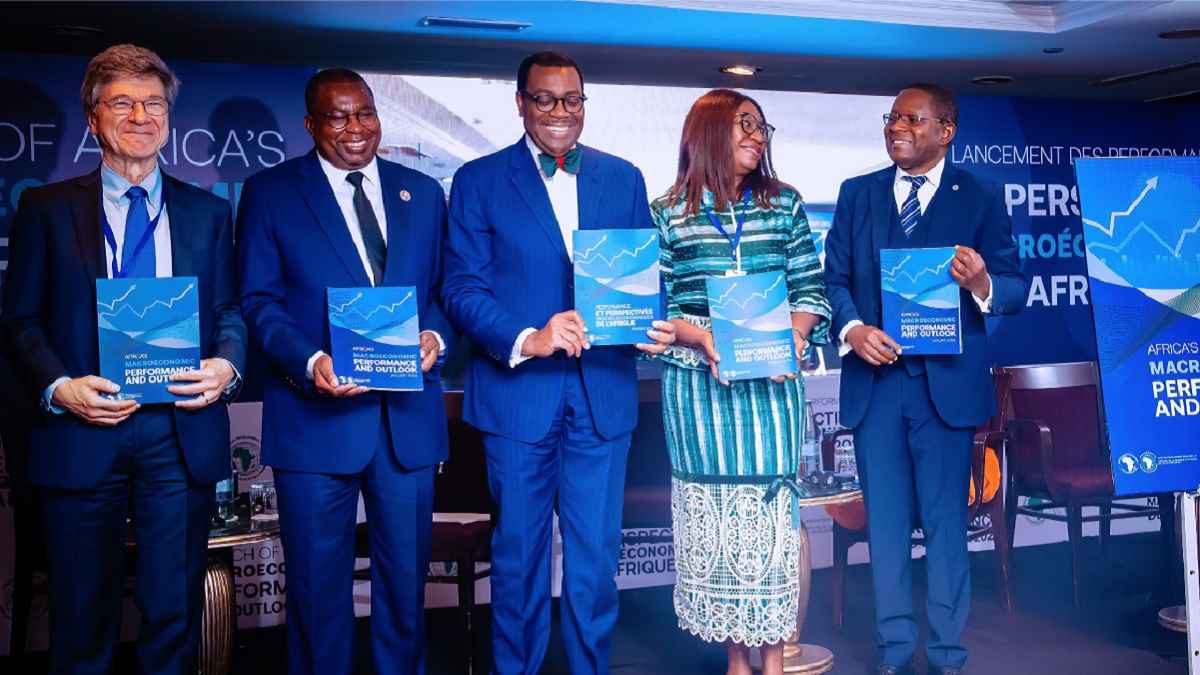
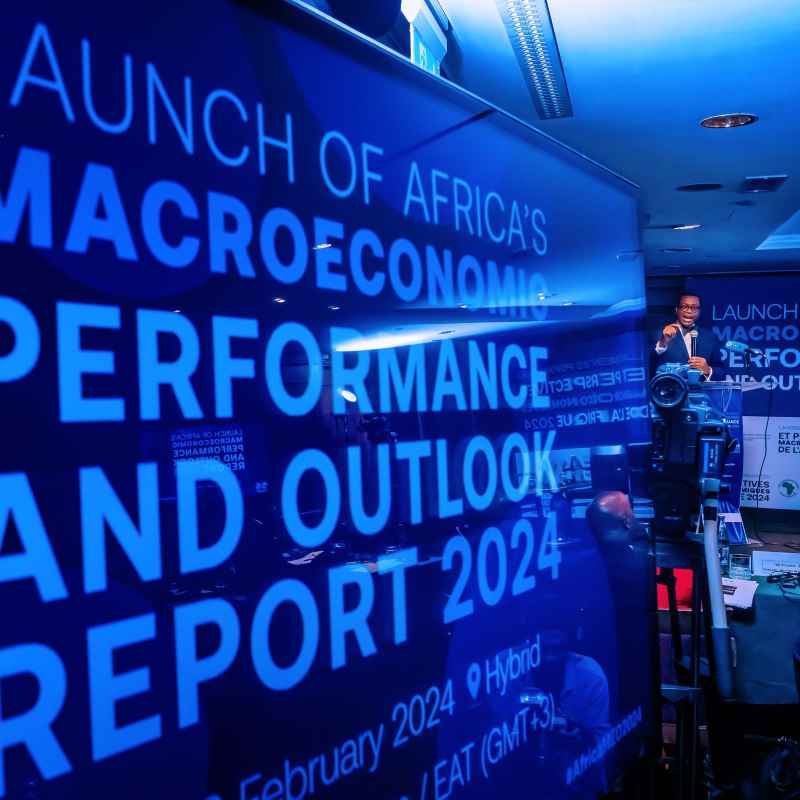
Africa will account for eleven of the world’s 20 fastest-growing economies in 2024, the African Development Bank Group said in its latest Macroeconomic Performance and Outlook (MEO) of the continent released on Friday.

Overall, real gross domestic product (GDP) growth for the continent is expected to average 3.8% and 4.2% in 2024 and 2025, respectively. This is higher than projected global averages of 2.9% and 3.2%, the report said.

The continent is set to remain the second-fastest-growing region after Asia.

The top 11 African countries projected to experience strong economic performance forecast are Niger (11.2%), Senegal (8.2%), Libya (7.9%), Rwanda (7.2%), Cote d’Ivoire (6.8%), Ethiopia (6.7%), Benin (6.4%), Djibouti (6.2%), Tanzania (6.1%), Togo (6%), and Uganda at 6%.

“Despite the challenging global and regional economic environment, 15 African countries have posted output expansions of more than 5%,” Bank Group President Dr Akinwumi Adesina said, calling for larger pools of financing and several policy interventions to further boost Africa’s growth.

Africa’s Macroeconomic Performance and Outlook, a biannual publication released in the first and third quarters of each year, complements the existing African Economic Outlook (AEO), which focuses on key emerging policy issues relevant to the continent’s development.

The MEO report provides an up-to-date evidence-based assessment of the continent’s recent macroeconomic performance and short-to-medium-term outlook amid dynamic global economic developments.

The latest report is calling for cautious optimism given the challenges posed by global and regional risks. These risks include rising geopolitical tensions, increased regional conflicts, and political instability—all of which could disrupt trade and investment flows, and perpetuate inflationary pressures.

President Adesina emphasised that fiscal deficits have improved, as faster-than-expected recovery from the pandemic helped shore up revenue.

He explained further: “This has led to a stabilisation of the average fiscal deficit at 4.9% in 2023, like 2022, but significantly less than the 6.9% average fiscal deficit of 2020. The stabilisation is also due to the fiscal consolidation measures, especially in countries with elevated risks of debt distress.”

He cautioned that with the global economy mired in uncertainty, the fiscal positions of the African continent will continue to be vulnerable to global shocks.

The report shows that the medium-term growth outlook for the continent’s five regions is slowly improving, a pointer to the continued resilience of Africa’s economies.

Presenting the key findings of the report, the African Development Bank’s Chief Economist and Vice President, Prof. Kevin Urama said: “Growth in Africa’s top-performing economies has benefitted from a range of factors, including declining commodity dependence through economic diversification, increasing stra­tegic investment in key growth sectors, and rising both public and private consumption, as well as positive developments in key export markets.”  

He added: “Africa’s economic growth is projected to regain moderate strength as long as the global economy remains resilient, disinflation continues, investment in infrastructure projects remains buoyant, and progress is sustained on debt restructuring and fiscal consolidation.”

Despite the challenging global and regional economic environment, 15 African countries have posted output expansions of more than 5%
“The future of Africa rests on economic integration. Our small economies are not competitive in the global market. A healthy internal African trade market can ensure value-added and intra-African production of manufactured goods,” said Commissioner for Economic Development, Trade, Tourism, Industry and Minerals, African Union Commission, Ambassador Albert Muchanga.

He assured that the MEO forecast, and recommendations will be made available to African heads of state and that the report will be useful when the African Union makes its proposals to the G20- an informal gathering of many of the world’s largest economies to which the African Union was admitted last year.

The improved growth figure for 2024 reflects concerted efforts by the continent’s policymakers to drive economic diversification strategies focused on increased investment in key growth sectors, as well as the implementation of domestic policies aimed at consolidating fiscal positions and reversing the increase in the cost of living and boosting private consumption.

Speaking remotely, Zimbabwe’s Minister of Finance and Economic Development, Prof Mthuli Ncube described the report as being “on point” and consistent with the reality in his country, describing it as useful for economic planning across Africa. He urged the African Development Bank to continue its thought leadership to help policymakers continue to build resilience to withstand shocks and drive growth.

Ncube said: “Zimbabwe expects slower growth due to climate shocks in the region. Southern African countries depend on agriculture for economic growth, so climate-proofing agriculture is key. We are in talks with creditors to restructure its debt, which is slowing economic growth. Internally, the country will focus on economic and governance reforms and reforms around property rights to increase agricultural production.”

Up to 41 countries across the continent will in 2024, achieve an economic growth rate of 3.8%, and in 13 of them, growth will be more than 1 percentage point higher than in 2023.

Director of the Center for Sustainable Development, Columbia University Prof Jeffrey Sachs noted that long-term affordable financing must be part of Africa’s strategy to achieve growth of 7% or more per year and warned that Africa is paying a very high-risk premium for debt financing. He called for this point to be made to the G20.

“Long-term development cannot be based on short-term loans. Loans to Africa should be at least 25 years or longer. Short-term borrowing is dangerous for long-term development. Africa must act as one, in scale,” he explained.

Sachs, who is also the UN Secretary-General António Guterres’ Advocate for Sustainable Development Goals also called for a much larger African Development Bank, better resourced to meet Africa’s financing needs.

Overview of economic outlook across regions

The confluence of shocks notwithstanding, the resilience of the continent’s economies remains strong, with positive growth projected for the continent’s five regions.

  • East Africa: East Africa will continue to lead Africa’s growth momentum, with growth projected to rise to 5.1% in 2024 and 5.7% in 2025, supported by strong strategic investments to improve internal connectivity and deepen intra-regional trade.
  • North Africa: Successive adverse weather conditions and macroeconomic challenges will hold the region’s growth steady at 3.9% in 2024 with a slight improvement to 4.1% in 2025.
  • Central Africa: Growth is forecast to moderate to 3.5% in 2024 but projected recovery in private consumption and increases in mining investment and exports could help push growth to 4.1% in 2025.
  • Southern Africa: Growth will remain sluggish at 2.2 and 2.6% in 2024 and 2025, respectively. This reflects continued economic weakness in South Africa, the region’s largest economy.
  • West Africa: Growth is projected to pick up to 4 and 4.4% in 2024 and 2025 respectively. Strong growth in most countries in the region is projected to offset slowdowns in Nigeria and Ghana. The announced withdrawal of Burkina Faso, Mali, and Niger from the Economic Community of West African States (ECOWAS) casts a shadow over the sustainability of gains amid growing uncertainty.

Driving faster and more sustainable economic growth

The 2024 MEO says in the short term, tackling persistent inflation will need a mix of restraining monetary policy coupled with fiscal consolidation and stable exchange rates.

The report identifies structural reforms and strategic industrial policies as key to accelerating economic diversification and strengthening the export sector.

It recommends that countries invest more in human capital and pursue a resource-based industrialisation and diversification strategy that allows the continent to exploit its comparative advantage and build resilience to shocks.

Distributed by APO Group on behalf of African Development Bank Group (AfDB).
Business

Sierra Leone’s PDSL to Host Strategic Investor Roundtable at Paris Energy Forum

Published

on

Energy Capital

The Petroleum Directorate of Sierra Leone will lead a targeted roundtable at Invest in African Energy 2026, spotlighting upstream potential and cross-regional partnerships

PARIS, France, March 24, 2026/APO Group/ –The Petroleum Directorate of Sierra Leone (PDSL) is set to convene an investor roundtable at Invest in African Energy (IAE) Forum 2026 in Paris, underscoring growing interest in West and North African energy markets and the need for deeper capital engagement across exploration, renewable and offshore services. The session reflects a strategic effort by Sierra Leone to connect its emerging upstream prospects with established operators and project developers as the country moves to unlock the full potential of its emerging oil and gas industry.


Sierra Leone is increasingly positioning itself as a frontier oil and gas market with significant offshore potential, and part of the PDSL’s mandate is to catalyze investment interest in its offshore acreage through direct engagement with global capital. Recent data suggest the country holds estimated recoverable resources in the tens of billions of barrels, backed by discoveries and extensive multi‑client seismic datasets that prospective investors are evaluating. The PDSL is actively promoting licensing opportunities and drilling plans, emphasizing fiscal terms and exploration readiness to attract strategic partners.


A cornerstone of this strategy is the anticipated launch of the country’s sixth licensing round. Offering a rare early-entry opportunity into a largely untapped deepwater terrain with considerable upside, the upcoming bid round is backed by fresh 3D datasets which de-risk exploration and support new drilling campaigns. Just this month, GeoPartners announced that the final Pre-Stack Time Migration data for its recently acquired 3D multi-client seismic survey in the country was complete and is now available for licensing. The dataset provides a 3D window into the hydrocarbon potential of the underexplored northern Sierra Leone region.


Sierra Leone’s licensing drive comes as major operators advance exploration activities. In 2025, Eni signed a Reconnaissance Permit Agreement with the PDSL, securing rights to conduct reconnaissance and technical evaluation activities across offshore blocks G113, G129, G130, G131 and G132. The acreage covers 6,790 square kilometers within Sierra Leone’s territorial waters. Nigeria’s F.A. Oil Limited is pursuing drilling following its award of six offshore blocks through the country’s fifth licensing round in 2023. The company is currently seeking a farm-in partner to advance the project from exploration to production, offering a 40% stake in each of the G Blocks 53, 54, 55, 71, 72 and 73.


As these development unfold, the upcoming roundtable at IAE 2026 offers a unique opportunity for operators and policymakers to engage potential investors. The IAE 2026 Forum has become a strategic bridge between African upstream opportunities and global investors, with sessions like the PDSL roundtable designed to foster deeper dialogue and provide clarity on project pipelines and investment prerequisites. Discussions are expected to cover mechanisms for de‑risking exploration activity, optimizing fiscal and contractual frameworks and identifying synergies between hydrocarbon investment and renewable energy commitments.


For investors seeking differentiated exposure to African energy markets, the Sierra Leone roundtable represents both a focused exploration of frontier oil potential and a broader conversation about regional infrastructure, partnerships and the evolving demands of energy capital in the years ahead.


IAE 2026 (www.Invest-Africa-Energy.com) is an exclusive forum designed to connect African energy markets with global investors, serving as a key platform for deal-making in the lead-up to African Energy Week. Scheduled for April 22–23, 2026, in Paris, the event will provide delegates with two days of in-depth engagement with industry experts, project developers, investors and policymakers. For more information, visit www.Invest-Africa-Energy.com. To sponsor or register as a delegate, please contact sales@energycapitalpower.com


Distributed by APO Group on behalf of Energy Capital & Power.

Continue Reading

Energy

Cape Town Prepares for African Mining Week 2026 as Draft Program Reveals Continent’s Mineral Drive

Published

on

Energy Capital

African Mining Week returns for its 2026 edition with an expanded three-day program, bringing together African mining leaders and global partners to shape the future of the continent’s mining sector

CAPE TOWN, South Africa, March 24, 2026/APO Group/ –Global economic trends – from record-breaking commodity prices to intensifying geopolitical competition for resources – are reshaping the strategic importance of Africa’s mineral wealth. As global countries race to secure supply chains for energy transition metals – which are expected to triple by 2030 – Africa is positioning its 30% share of the world’s critical minerals as a key pillar of economic growth. African governments are modernizing mining codes, developing industrial corridors and investing in mineral processing facilities to support local beneficiation, job creation, workforce development and regional mineral markets.


Against this backdrop, the upcoming African Mining Week (AMW) Conference & Exhibition – Africa’s premier gathering for mining stakeholders – has launched the draft program for its 2026 edition {https://apo-opa.co/3NneKLj}. Scheduled to take place October 14–16 in Cape Town, the event provides a platform where policymakers, global investors, project operators, technology providers, academia and mining service companies examine Africa’s mining opportunities, challenges and long-term strategic direction.

Under the theme ‘Mining the Future: Unearthing Africa’s Full Mineral Value’, the three-day, multi-track agenda reflects the growing urgency among African markets to strengthen value addition across the mining value chain.

Regional Cooperation and Policy Alignment in Focus

A key feature of the agenda is the Ministerial Forum, where African mining ministers will provide updates on regulatory reforms and policy alignment initiatives aimed at unlocking greater value from the continent’s mineral resources. Discussions will examine how harmonized regulatory frameworks and regional cooperation can accelerate investment flows and strengthen Africa’s position in global mineral supply chains.

The inclusion of regional policy integration reflects a growing continental push to leverage frameworks such as the African Continental Free Trade Area (AfCFTA) to enhance cross-border mineral cooperation and trade.

We are acting to enhance regional integration through frameworks such as the African Mining Vision and the Africa Mineral Strategy Group

“Africa’s integration is not only a political objective but a strategic economic vision,” stated Emmanuel Armah-Kofi Buah, Ghana’s Minister of Lands and Natural Resources, in remarks reported by Energy Capital & Power – organizers of AMW – in February 2026. “Our natural resources require coordinated policies. Isolated legal frameworks cannot fully unlock their value. Through integration and initiatives such as the ECOWAS [Economic Community of West African States] Mining Code and the African Mining Vision, we can build a stronger and more competitive mineral economy.”

Nigeria’s Minister of Solid Minerals Development, Henry Alake, echoed this emphasis on regional cooperation and beneficiation.

“We are acting to enhance regional integration through frameworks such as the African Mining Vision and the Africa Mineral Strategy Group,” he stated. “We must develop mineral corridors that connect resources, infrastructure and markets across the continent. Our goal is not to simply export raw materials, but to develop industrial hubs that create jobs and value across borders.”

Connecting Global Investors with African Opportunities

Strategic roundtables and Country Focus sessions form a key part of the AMW 2026 program, connecting African mining jurisdictions with international partners from the U.S, Europe, the Middle East and China. These sessions will provide African stakeholders with a platform to showcase exploration opportunities and project pipelines across the mining value chain.

Meanwhile, technical workshops and the exhibition floor at AMW 2026 will provide a platform for equipment manufacturers, technology providers and engineering firms to showcase innovations designed to enhance operational performance across mining operations.

By combining high-level policy dialogue with technical expertise and investment matchmaking, AMW 2026 positions itself as a critical marketplace where Africa’s mineral potential converges with global capital, technology and strategic partnerships – helping shape the next phase of growth for the continent’s mining sector.

AMW serves as a premier platform for exploring the full spectrum of mining opportunities across Africa. The event is held alongside the African Energy Week: Invest in African Energies 2026 conference from October 12-16 in Cape Town. Sponsors, exhibitors and delegates can learn more by contacting sales@energycapitalpower.com.

Distributed by APO Group on behalf of Energy Capital & Power.

Continue Reading

Business

Tony Elumelu Foundation Selects Seven North African Entrepreneurs in 2026 Cohort

Published

on

entrepreneurs

Seven North African entrepreneurs in technology, education, professional services and agriculture selected from 265,000 applications at historic Abuja ceremony

Hope is not just a feeling — it is a system we can build

ABUJA, Nigeria, March 24, 2026/APO Group/ —

  • 7 North African entrepreneurs selected from Morocco, Tunisia and Egypt
  • 51% of the 2026 cohort are women, all selected purely on merit, without any quota in place
  • 3,200 total entrepreneurs selected from 265,000+ applications across 54 African countries
  • USD 5,000 in non-refundable seed capital for each selected entrepreneur
  • Selection conducted independently by Ernst & Young


The Tony Elumelu Foundation (TEF) (www.TonyElumeluFoundation.org), the leading philanthropy empowering young African entrepreneurs, announced on Sunday, 22 March 2026 the 12th cohort of the TEF Entrepreneurship Programme at a ceremony held at the Transcorp Hilton, Abuja. The announcement was made by Founder Tony O. Elumelu, C.F.R.


Among the 3,200 entrepreneurs selected from 265,000 applications received from all 54 African countries: seven from North Africa. Three from Tunisia, two from Morocco, two from Egypt. Spanning technology, education, professional services and agribusiness, they represent a generation of North African founders building businesses that address the urgent needs of their communities. Their selection, which was conducted independently by Ernst & Young, places them among the most rigorously assessed young entrepreneurs on the continent.


This year’s cohort carries a historic signal: 51 percent of the 2026 entrepreneurs are women. They were selected purely on merit, without quota. Across hundreds of thousands of applications, women distinguished themselves through the strength of their ideas, the clarity of their business models and the ambition of their vision.


In 2026, the Foundation is empowering a total of 3,200 entrepreneurs across all its entrepreneurship programmes:


  • 1,751 entrepreneurs through Heirs Holdings Group: Heirs Energies, Transcorp Power, Transcorp Hotels, and United Capital;
  • 1,049 entrepreneurs in partnership with the European Commission, OACPS, BMZ and GIZ;
  • 100 entrepreneurs in partnership with Sèmè City Development Agency;
  • 100 entrepreneurs in partnership with DEG, the German Development Agency;
  • 100 entrepreneurs in partnership with the IKEA FoundationUNICEF’s Generation Unlimited and the Dutch Government; and
  • 100 entrepreneurs in partnership with UNDP and the Rwandan Ministry of Youth and Arts.


Each selected Tony Elumelu Entrepreneur will receive USD 5,000 in non-refundable seed capital, access to world-class business management training on TEFConnect, one-on-one mentorship, and entry into a powerful network of investors, partners and fellow entrepreneurs.


In his annual letter (https://apo-opa.co/4uOFepM), “A Story of Hope,” Tony O. Elumelu, C.F.R., Founder of the Tony Elumelu Foundation, shared a powerful message to the new cohort:


“For a long time, I believed luck was something that simply happened to you. Then I came to understand: luck can be engineered. Opportunity can be democratised. Hope is not just a feeling — it is a system we can build.” — Tony O. Elumelu, C.F.R., Founder, Tony Elumelu Foundation — 2026 Annual Letter


The Tony Elumelu Foundation has empowered over 2.5 million young Africans with access to business management training on TEFConnect (https://TEFConnect.com), and disbursed over USD 100 million in seed capital to more than 24,000 selected entrepreneurs.


Collectively, these entrepreneurs have generated USD 4.2 billion in revenue and created more than 1.5 million direct and indirect jobs. Through its support for African entrepreneurs, TEF has lifted 2.1 million Africans above the poverty line and positively impacted more than 4 million African households, with 46% of supported entrepreneurs being African women. Eighty percent of TEF-supported businesses survive and scale, against a global average of ten to twenty percent.


The announcement ceremony was broadcast live in English (https://apo-opa.co/3PWLiML), French (https://apo-opa.co/3PWLiML), Portuguese (https://apo-opa.co/4t4Y7Da) and Arabic (https://apo-opa.co/4bYHlQl).


Distributed by APO Group on behalf of The Tony Elumelu Foundation.


Continue Reading

Trending