Connect with us

Business

Afreximbank to Hold its 33rd Annual Meetings in El Alamein, Egypt, from 21–24 June 2026

Published

on

Afreximbank

The meetings will bring together Heads of State, government officials, policymakers, private sector leaders, financial institutions, academia and international partners from across Africa and beyond

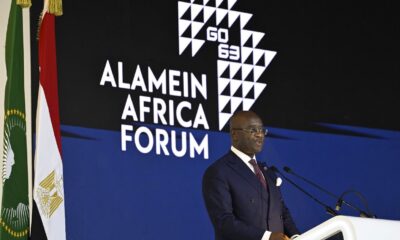
CAIRO, Egypt, March 27, 2026/APO Group/ –African Export-Import Bank (Afreximbank) (http://www.Afreximbank.com) has announced that it will hold its 33rd Annual Meetings (AAM2026) at El Alamein in Egypt, from 21 to 24 June 2026.

Against the backdrop of deepening geopolitical re-alignment and conflicts, Afreximbank will hold its 33rd Annual Meetings under the theme “Intra-African Trade and Industrialisation: Pathway to Economic Sovereignty”, underscoring the growing imperative for African countries to harness internal capacities, strengthen regional value chains, and accelerate industrial transformation as a foundation for sustainable and resilient growth.

The meetings will bring together Heads of State, government officials, policymakers, private sector leaders, financial institutions, academia and international partners from across Africa and beyond.

Through a series of strategic dialogues and engagements, Afreximbank aims to identify priority projects and actionable programmes that will advance the transformation of Africa’s trade structure, particularly in an era shaped by protectionism, shifting alliances, and economic self-interest.

As the host country of Afreximbank, Egypt is honoured to welcome distinguished delegates to attend the Bank’s 33rd Annual Meetings

Commenting on the AAM2026, Dr George Elombi, President and Chairman of the Board of Directors at Afreximbank, expressed his appreciation to the Government of Egypt for hosting the 2026 Annual Meetings. He said, “For the past decade, Afreximbank has laid a solid foundation for intra-African trade to take off. As we enter this new phase, we must prioritise the processing of goods to be traded under the Free Trade Agreement.”

“With the current global turmoil, marked by policy uncertainty and intensifying geopolitical tensions, Africans must look inwards for solutions relevant to their challenges. We must wean ourselves off trade in commodities, expand investment in processing, build regional value chains, and consume our products to realise the growth and shared prosperity we want.

H.E. Mr. Hassan Abdalla, Governor of the Central Bank of Egypt (CBE), affirmed: “As the host country of Afreximbank, Egypt is honoured to welcome distinguished delegates to attend the Bank’s 33rd Annual Meetings. At a time of increasing global uncertainty and shifting economic dynamics, Egypt’s strategic location and economic scale position it as a key driver of regional integration and advancing continental priorities. Hosting the AAM2026 in El Alamein, reflects Egypt’s continued commitment to supporting African institutions strengthening intra-African trade and advancing the continent’s industrialization and long-term economic transformation.”

The AAM2026 will provide a unique platform for delegates to engage with high-level decision-makers, connect with partners across the value chain, gain insights into trade finance and logistics, and access capital and close investment deals. The meetings will also serve as a platform to structure partnerships and advance bankable projects across the continent.

By convening a diverse range of stakeholders, AAM2026 will contribute to advancing a shared vision of an integrated, industrialised, and economically sovereign continent.

Further information about the AAM2026 can be found https://apo-opa.co/4dxAQFB

Distributed by APO Group on behalf of Afreximbank.

Energy

Nigeria’s Nigerian Content Development and Monitoring Board (NCDMB) Secures Key Local Content Role at African Energy Week (AEW) 2026

Published

on

NCDMB joins AEW 2026 as Local Content Partner, showcasing Nigeria’s capacity-building drive, industrial projects and funding initiatives aimed at boosting indigenous participation and investor confidence

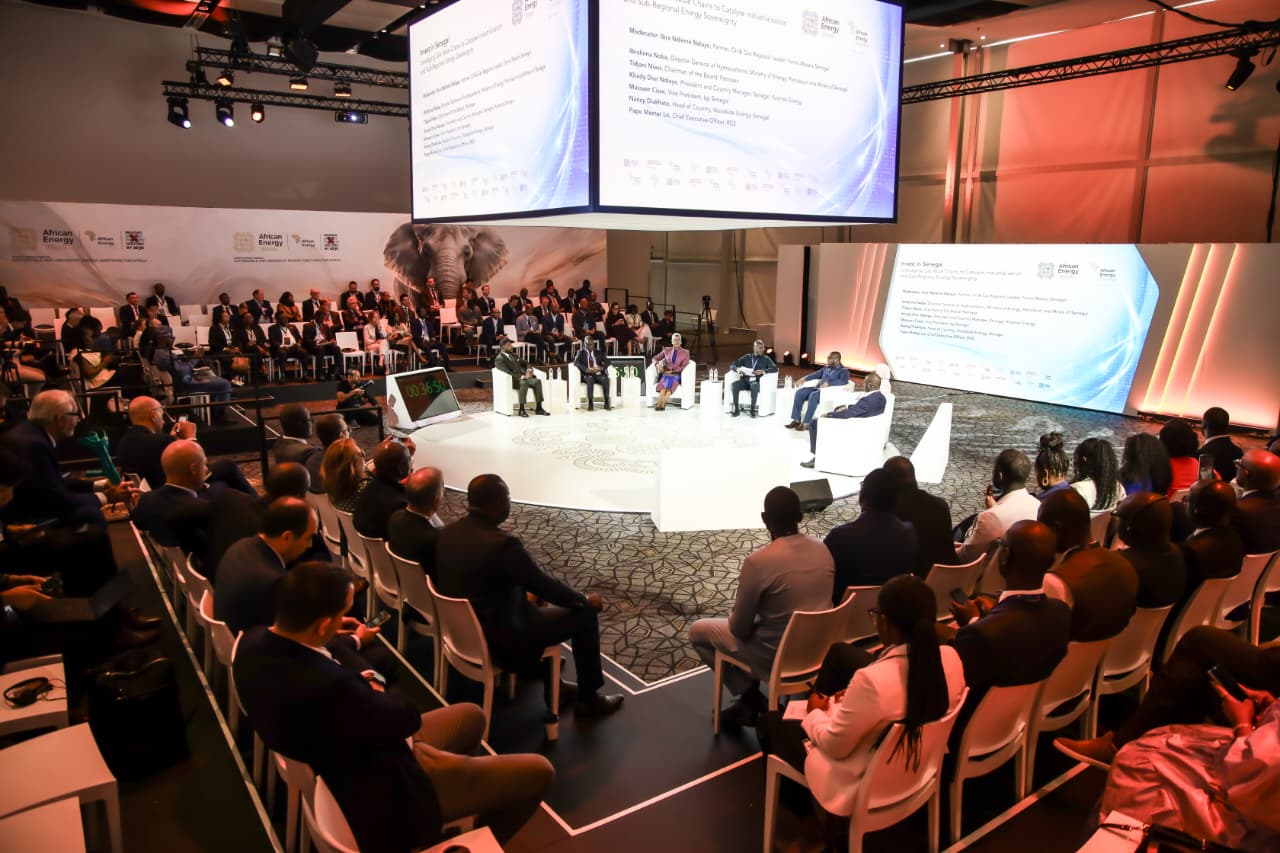
CAPE TOWN, South Africa, March 27, 2026/APO Group/ –Parastatal regulatory agency the Nigerian Content Development and Monitoring Board (NCDMB) will participate at this year’s African Energy Week (AEW) 2026 as an official Local Content Partner, reinforcing its leadership in advancing indigenous capacity across Africa’s energy sector. Taking place from October 12–16 in Cape Town, the event will provide a strategic platform for the NCDMB to showcase Nigeria’s evolving local content framework and investment opportunities.


In parallel, the NCDMB continues to strengthen its domestic capabilities, most recently launching a 12-month pipeline engineering training program in March 2026 for 33 young engineers in Port Harcourt. Delivered in partnership with Renaissance Africa Energy and MJD Oilfield Services, the initiative focuses on pipeline pigging, corrosion control and integrity management, aligning workforce development with major infrastructure projects like the Ajaokuta-Kaduna-Kano Gas Pipeline.


On the infrastructure front, the board is advancing construction of a 204-room Radisson-managed hotel and conference center in Yenagoa, scheduled for commissioning this December. Positioned adjacent to the Nigerian Content Tower, the facility is designed to support industry collaboration. Complementing this, the NCDMB has commissioned a Clinical Skills and Simulation Laboratory at Bayelsa Medical University, enhancing healthcare capacity in host communities through cutting-edge training technologies.


The participation of the NCDMB at AEW 2026 is a strong signal that Africa is serious about building its own capacity and retaining value within the continent

Industrial expansion remains a core pillar of the board’s strategy. Under the Nigerian Oil and Gas Parks Scheme, pilot parks in Odukpani and Emeyal-1 are nearing completion and are expected to generate around 2,000 jobs each. These shared-services industrial hubs are designed to localize manufacturing, reduce costs and enable indigenous firms to scale production across upstream and midstream value chains.


From a financial and policy standpoint, the NCDMB is deploying multiple funding mechanisms, including a $100 million equity investment scheme, a $500 million intervention fund and a $20 million women-focused initiative. Recent enforcement measures – such as stricter expatriate quota controls and mandatory compliance certification – further signal a shift toward deeper localization, transparency and long-term investor confidence in Nigeria’s oil and gas sector.


“The participation of the NCDMB at AEW 2026 is a strong signal that Africa is serious about building its own capacity and retaining value within the continent,” says NJ Ayuk, Executive Chairman, African Energy Chamber. “Local content is not just policy – it is the foundation for sustainable growth, job creation and energy security across African markets.”


As AEW 2026 convenes global investors, policymakers and operators, the inclusion of the NCDMB as a Local Content Partner underscores the growing importance of in-country value creation. With dedicated forums on skills development, technology transfer and industrialization, the event is set to drive actionable dialogue on how local content can unlock resilient, competitive and investment-ready energy ecosystems across Africa.

Distributed by APO Group on behalf of African Energy Chamber.

Continue Reading

Business

Africa’s Alumina Boom Signals Next Phase in Mining Value Creation

Published

on

As bauxite producers pivot from raw exports to high-value alumina, African Mining Week 2026 will showcase refinery projects driving industrialization, local beneficiation and new investor opportunities across the continent

CAPE TOWN, South Africa, March 27, 2026/APO Group/ –African bauxite producers are rapidly moving beyond commodity exports, investing in alumina refineries that convert raw ore into high-value products. While Africa holds nearly 30% of global bauxite reserves, it currently contributes less than 1% of alumina production – a gap that underscores both the continent’s industrial potential and a lucrative investment frontier. With the global alumina market projected to grow to $67 billion by 2032, Africa’s downstream sector is emerging as a strategic hub for long-term growth and local value creation.


African Mining Week 2026 (October 14–16, Cape Town) will serve as the key platform connecting investors, project developers and government regulators with these emerging opportunities. A dedicated panel on “Unlocking Refining Investments” will focus on strategies to scale refinery projects, address operational challenges and maximize local economic impact across the continent’s bauxite value chain.

Nigeria Leads With Gas-Powered Refining

Nigeria is fast-tracking its first large-scale alumina refinery, securing $1.3 billion in financing from the Africa Finance Corporation and the Solid Minerals Development Fund to support a one million-ton-per-annum facility. Expected to produce 19 million tons of alumina over 20 years, the refinery is projected to generate $1.2 billion in annual GDP contributions while advancing the government’s goal of growing mining’s economic contribution from 1% to 10%. Powered largely by local gas, the project aligns with Nigeria’s Decade of Gas initiative, combining energy security with industrialization and local beneficiation.

Speaking in February, Nigeria’s Minister of Solid Minerals, Henry Alake, stated: “We don’t want corridors exporting internationally; we want factories across borders to create jobs and generate value locally.”

We don’t want corridors exporting internationally; we want factories across borders to create jobs and generate value locally

Guinea and Ghana Scale Up Refining Capacity

Guinea is pursuing six alumina refineries by 2030, aiming for 7 million tons per year. Deals are in place with China’s State Power Investment Corporation, Chinalco and France’s Alteo and Alcoa. Construction is underway on the first facility in Boké, a $1.2 billion, 1.2 million-ton-per-annum refinery led by the Winning Consortium Alumina Guinea.

Ghana targets 4–6 million tons of annual alumina refining capacity through partnerships with Greek industrial group Mytilineos SA, enhancing local beneficiation of bauxite resources. Meanwhile, Australian company Canyon Resources is advancing a feasibility study for a refinery at its Minim Martap project in Cameroon, with results expected by Q3 2026.

Implications for Investors

These projects illustrate a broader push to capture downstream value in Africa’s mining sector. Alumina refineries not only increase export revenue but also generate high-skilled jobs, stimulate local supply chains and attract international investment. By linking energy infrastructure, industrial policy and mineral beneficiation, these facilities can transform bauxite-rich countries into regional manufacturing hubs.

African Mining Week 2026 will bring stakeholders together to accelerate deal-making, form partnerships and discuss operational strategies for refinery deployment. With governments and developers focused on turning reserves into industrial value, alumina refining is positioned as one of the continent’s most tangible opportunities for economic transformation and strategic investment.


Distributed by APO Group on behalf of Energy Capital & Power.

Continue Reading

Business

Coal Could Provide African Small to Medium-sized Enterprises (SMEs) Much-Needed Fiscal Relief Amid Escalating Fuel Prices

Published

on

With Brent crude escalating above $100 per barrel in March and diesel costs spiraling, coal is re-entering the conversation as a domestic, financeable power solution for small businesses under pressure

CAPE TOWN, South Africa, March 27, 2026/APO Group/ –Africa continues to face significant implications from the ongoing Gulf war, with Brent prices fluctuating from $81 per barrel on March 3 to $112 on March 12 and back down to $98 on March 25. But escalating crude prices bring challenges beyond imports, with African economies which rely heavily on diesel-fired power generation now faced with both unreliable supplies and heightened fuel costs. This challenge is most felt by small to medium-sized enterprises (SME), which now face a punishing rise in power costs at a time when margins are already under pressure.


In this environment, coal-fired power generation deserves renewed attention. With reserves estimated in the hundreds of billions of tons, Africa’s coal market stands to offer the fiscal relief many African SMEs require. As geopolitical tensions continue to mount across the Gulf and prices face even greater fluctuation in the near-term, the question is no longer whether coal-fired power generation is politically fashionable, but how African economies can utilize the resource to stabilize power costs, preserve foreign exchange and support business continuity.

Escalating Fuel Prices Pose Significant Challenge for African SMEs

Prices at the pump have escalated in recent weeks, leaving diesel-reliant businesses faced with even greater fiscal pressure. This comes as diesel generation has become a default for many SMEs operating across Africa, owing to unreliable grid infrastructure. Even the continent’s biggest economy South Africa has seen businesses move to diesel as constrained grid capacity and loadshedding impacts power access. Supply disruption at the Strait of Hormuz and escalating crude prices have placed further strain on the fuels so many African SMEs rely on.

Nigerian fuel prices have reached upwards of ₦1,000 per liter in March 2026, due to price hikes by the Dangote Refinery and fluctuations in international markets. This represents a 39.5% increase since February, the second highest increase globally. Zimbabwean fuel prices have surged to record highs, with diesel averaging $2.18 per liter and petrol also exceeding $2 per liter. The country currently features the highest fuel prices across all SADC nations. Botswana also faces potential fuel price increases, while Ugandan fuel prices continue to experience volatility, with prices varying by location and supplier.
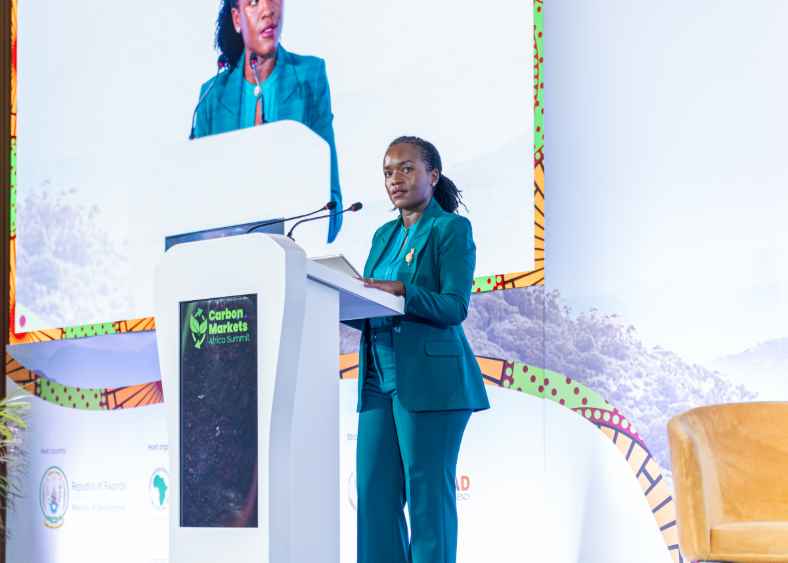
When African businesses are being crushed by imported fuel costs, using domestic coal to keep factories running and SMEs alive is not a step backward

Why Coal Matters for SME Competitiveness

Coal offers the lifeline so many African SMEs need. Countries such as Nigeria, Zimbabwe, Botswana and Uganda all possess significant coal reserves and the shift to coal-fired power generation can not only help reduce the dependence on imported fuels but create a more predictable electricity cost structure for local businesses. Nigeria holds 9.8 billion cubic meters (bcm) of coal reserves, Zimbabwe is home to 502 million cubic meters (mcm), Botswana has 1.6 bcm and Uganda possesses 800 mcm.

For African SMEs, affordable and reliable electricity is often the difference between expansion and stagnation. Coal-fired power can offer a lower-cost alternative that supports manufacturing and commercial growth. It also opens the door to more bankable long-term planning, while offering stability during times of global supply shocks. With many African countries already integrating coal within their broader energy systems, scaling up generation and distribution could directly impact sovereign resilience.

“When African businesses are being crushed by imported fuel costs, using domestic coal to keep factories running and SMEs alive is not a step backward – it is a rational act of economic self-defense,” states NJ Ayuk, Executive Chairman, African Energy Chamber.

AEW 2026 Puts Coal Back into the Conversation

This is precisely why African Energy Week (AEW): Invest in African Energies 2026 remains such an important platform. Over the past several years, the event has hosted discussions around coal, including the application of clean coal technologies and the role of coal in broader power generation strategies. At a time when energy security, industrialization and affordability are moving back to the center of policymaking, those conversations are becoming more urgent.

Rather than approaching coal through an ideological lens, AEW 2026 provides a venue to examine where and how it can fit into Africa’s power mix in practical terms. That includes discussions around cleaner technologies, efficiency gains, financing models and the role coal can play in supporting productive sectors that cannot function on intermittent or high-cost power alone. AEW 2026 returns to Cape Town from October 12-16, 2026.


Distributed by APO Group on behalf of African Energy Chamber.

Continue Reading

Trending

Exit mobile version