Connect with us
Anglostratits

Business

Afreximbank launches Intra-African Engineering, Procurement and Construction (EPC) Contract Promotion Programme

Published

on

IATF2023

Ms. Al-Mashat said that the launch of the programme would have a positive impact on Africa’s agenda for sustainable development

CAIRO, Egypt, November 15, 2023/APO Group/ — 

The African Export-Import Bank (Afreximbank) (Afreximbank.com) today in Cairo launched a new initiative that will open doors, allowing African contractors to capitalise on various infrastructure investments available across the continent. 

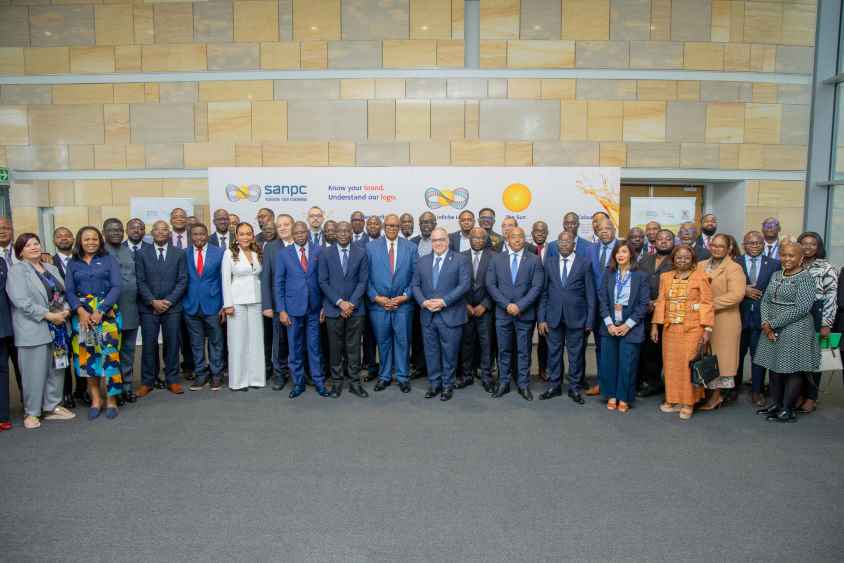
Prof. Benedict Oramah, President and Chairman of the Board of Directors of Afreximbank, joined by Rania Al-Mashat, Minister of International Cooperation of Egypt, launched the Afreximbank Intra-African Engineering, Procurement and Construction (EPC) Contract Promotion Programme during the Presidential Summit of the Intra-African Trade Fair 2023 (IATF2023). 

Prof. Oramah told guests that the programme was one of the Bank’s initiatives to support the implementation of the African Continental Free Trade Area (AfCFTA), saying that it aimed to enable African companies to successfully bid for, win and execute infrastructure contracts in Africa through capacity building, twinning, market access opportunities, financing, guarantees and technology solutions.

“The EPC initiative will help African contractors to participate in the US$60 billion annual infrastructure investments within Africa, unlike the current practice where most of the contracts go to non-African entities,” he said.

Ms. Al-Mashat said that the launch of the programme would have a positive impact on Africa’s agenda for sustainable development.

I have the honour to announce to you that the platform we are launching today will be linked to the Ministry of International Cooperation’s portal for private sector participation

“It enhances the participation of African companies in infrastructure projects, provides more investment opportunities and facilitates the exchange of information in order to expand partnerships and twinning agreements to drive growth in the engineering, construction and procurement sector,” she said.

Minister Al-Mashat described the platform as a strategic and effective solution to tackle three significant challenges preventing Africa from reaching its potential, including lack of funding, insufficient information and a skills gap. Addressing those challenges was especially crucial to tackling the infrastructure funding gap in the continent, estimated at US$170 billion annually, which could be fixed by promoting international cooperation and attracting investment in infrastructure. 

She recommended promoting transparent communication between governments and the private sector to bridge information gaps and tackling skills gaps by providing technical support, capacity building and skills development to build a skilled workforce.

The Minister said that Egypt was eager to boost private sector involvement in development endeavours and to link it to all funding and investment opportunities and technical support provided by multilateral and bilateral development partners, adding, “in order to promote these efforts, I have the honour to announce to you that the platform we are launching today will be linked to the Ministry of International Cooperation’s portal for private sector participation.”

She commended Afreximbank for leading the initiative and providing support to EPC companies in Africa through contracts worth over US$12 billion in the past five years and appealed to international development partners to do more in supporting African companies by providing affordable and low-cost development finance. They should also provide more innovative mechanisms and technical support necessary for implementing infrastructure and green projects in Africa.

Attending the Presidential Summit was host President Abdel Fatah El Sisi of Egypt who was joined by Presidents Emmerson Mnangagwa of Zimbabwe and Lazarus Chakwera of Malawi. Also present were Prime Minister Mostafa Madbouly of Egypt and former President Olusegun Obasanjo of Nigeria, along with several former African vice presidents, serving ministers, other political and business leaders.

IATF2023, Africa’s largest trade and investment fair, opened on November 9 and will run till November 15.

Distributed by APO Group on behalf of Afreximbank.

Media Contact:

Deborah Ross

Senior PR Account Director 

BrandComms

+44 (0) 759 3602 128

deborah.ross@brandcommsgroup.com 

Follow us on:
X (Twitter): https://apo-opa.info/41qI9VY
Facebook: https://apo-opa.info/3MGRNQi
LinkedIn: https://apo-opa.info/3KBxMYQ
Instagram: https://apo-opa.info/3UA1jH1

About the Intra-African Trade Fair:
Organised by the African Export-Import Bank (Afreximbank), in collaboration with the African Union Commission (AUC) and the African Continental Free Trade Area (AfCFTA) Secretariat, the Intra-African Trade Fair (IATF) is intended to provide a unique platform for facilitating trade and investment information exchange in support of increased intra-African trade and investment, especially in the context of implementing the African Continental Free Trade Agreement (AfCFTA). IATF brings together continental and global players to showcase and exhibit their goods and services and to explore business and investment opportunities in the continent. It also provides a platform to share trade, investment and market information with stakeholders and allows participants to discuss and identify solutions to the challenges confronting intra-African trade and investment. In addition to African participants, the Trade Fair is also open to businesses and investors from non-African countries interested in doing business in Africa and in supporting the continent’s transformation through industrialisation and export development.

For more information, please visit: www.IntrAfricanTradeFair.com.

Business

New outlook shows Gulf Crisis still threatens $94bn of incremental ad investment worldwide over next 18 months

Published

on

Gulf Crisis
  • Global ad growth uprated to +11.5% this year – to $1.39trn – but ongoing volatility could remove as much as 3.2 percentage points (pp) – or $39.6bn – from growth in 2026
  • Automotive, food, and travel & transport sectors among most susceptible to high oil prices and a prolonged disruption to shipping in Strait of Hormuz
  • There is an uneven impact on brand- and performance-led media spend, with TV suffering sharp falls as social and search remain largely unaffected
  • Ad market growth is expected to ease to 8.2% next year – to a total of $1.50trn – but a prolonged Gulf crisis could remove a further $54.1bn from growth prospects in 2027

WARC Media Global Ad Spend Forecast Q2 2026 update: Implications of the Gulf energy crisis

11 June 2026 – A new study from WARC, the experts in marketing effectiveness, has found that a prolonged conflict in the Gulf region could threaten $39.6bn of global advertising growth this year, and $93.7bn over the next 18 months.

James McDonald, Director of Data, Intelligence & Forecasting, WARC, and author of the research, says: “As the Gulf Crisis stretches into its fourth month, global markets are now in damage limitation mode as the blockade of the Strait of Hormuz acts like a tax on consumers, lifting prices and squeezing real spending power.

“If the conflict drags on – or further intensifies – these risks shift toward stagflation, with sectors such as travel, automotive, and food acutely exposed to higher production costs and weaker demand. The net effect is a grueling squeeze on margins that could put as much as $94bn of anticipated ad market growth at risk over the coming 18 months.”

WARC Media’s latest global projections are based on data aggregated from 100 markets worldwide and leverage a proprietary neural network which projects advertising investment trends based on over two million data points. The projections account for three scenarios of increasing severity to model the potential impacts of the ongoing Gulf Crisis.


The fallout from the conflict is being felt differently across regions

WARC’s baseline scenario is for 11.5% ad market growth in 2026, but if the Crisis were to become more severe, the growth rate could fall to +8.3%
Southeast Asia (+6.9%) and Latin America (+12.8%) are on course for healthy growth this year, but are most exposed to an increase in severity
The Gulf ad market could fall into recession (-0.2%) this year, as would the French ad market (-1.0%), in the most severe scenario
The US (+9.5%) is well insulated and benefits from the World Cup and Midterms; even in a severe scenario the ad market would lose just $10bn in growthThe baseline projection is for global ad market growth of 11.5% to $1.39trn this year, an upgrade from the 10.6% rise predicted in March owing to a strong first half for online platforms. The supply-side pressures caused by the Gulf Crisis, however, are expected to be felt by consumers and brands alike from the second half of the year.

Data shows that Southeast Asia will be among the hardest hit by the conflict, due to vulnerabilities in energy imports and trade flows. WARC’s baseline projects +6.9% ad spend growth for the region to $24.8bn in 2026; a moderate scenario, however, pulls that to +6.3%, and a severe scenario delivers +3.6% – a 3.3pp swing from best to worst outcome.

​China’s exposure is also distinct: imported energy and shipping costs compress industrial margins and export competitiveness. A baseline ad spend growth forecast of +7.9% (to $223.1bn) for 2026 falls to +5.3% in the severe scenario (-2.6pp), equivalent to $5.3bn in lost growth for the Chinese ad market should the situation deteriorate.

While the US isn’t immune to pressures from the situation in the Gulf, its relative insulation shows ​a clear contrast to the pressures war in the Middle East is placing on other markets. Even under the severe scenario, ​US ad spend growth is +7.2% in 2026, down 2.3pp from a baseline of +9.5% (to $452.6bn) and equivalent to a shortfall of $9.8bn.​

Conversely, the Latin American ad market is on the precipice. Led by Brazil and Mexico, Latin America posts the strongest baseline ad spend growth of any region in the forecast: +12.8% to $27.8bn in 2026. The severe scenario clips that to just +3.4%; a 9.4pp downgrade and the largest single swing in the data.

The markets in the Gulf Cooperation Council (GCC) – namely Saudi Arabia, United Arab Emirates, Kuwait, Oman, Qatar, and Bahrain – are already seeing weakened demand, particularly from global advertisers. Under the severe scenario, GCC ad spend tips into outright contraction at -0.2% in 2026, a swing of -11.9pp against the baseline expectation of +11.7% to $5.7bn.

Ad spend across the Eurozone, where major economies are already stagnating, is set to rise 5.6% to $109.0bn this year. This could, however, ease to just 1.8% growth if the severe scenario is realized. The UK (+6.3%), Germany (+6.7%) and France (+2.7%) are all expected to see ad market growth this year, but the severe scenario removes 3.1 percentage points on average, pushing France into recession should the worst case materialise.

Travel, automotive and food sectors among most susceptible to a prolonged disruption

Travel & Transport ad spend already forecast to decline (-3.5%) this year
Automotive ad spend is largely flat in Western Europe, though is still expected to be up globally (+6.7%) in 2026
Growth in the food sector remains steady this year (+10.3%), but the impacts of present supply chain disruption are expected to be felt more in 2027

Travel is the worst-hit major category and the only one already thought to be contracting at the global level, with ad spend forecast to be down -3.5% to $34.4bn in 2026. Airlines active in the Middle East are already reviewing budget allocations. The sector is expected to record a projected recovery of +13.0% in 2027, however.

The double squeeze of rising inputs on the manufacturer side and consumer credit sensitivity suppressing demand is clearly visible in the automotive sector. Germany – one of the world’s largest car manufacturers – is forecast to see automotive ad spend grow by just +1.9% in the 2026. If the Gulf Crisis were to become more severe, this would fall to a 4.2% contraction this year, a 6.0pp swing from a baseline that was already fragile.

While the food market looks steady – ad spend is projected to grow 10.3% to $99.8bn this year – the sector can be heavily impacted by a complex supply chain: fertiliser, grain, fuel, and packaging costs are rising before consumers feel it.

The full impacts on the food sector are expected to land in H2 2026 and into 2027, when the severe forecast scenario trails the baseline by 1.2pp, wider than the 2026 gap. Europe’s major markets are impacted significantly: UK food ad spend grows +4.9% in the baseline and contracts -0.2% in the severe scenario: a 5.0pp swing that tips the category negative.


There is an uneven impact on brand- and performance-led media spend

Linear TV’s decline likely to accelerate as the situation worsens, with advertisers favouring short-term, performance channels over brand-building
Social media growth remains strong, but cost pressures on small and medium-sized companies leave social platforms somewhat exposed
Paid search – including generative AI – remains stable in all scenarios

In the baseline scenario, the linear TV ad market is forecast to fall ​2.7% in 2026, and by the same margin again in 2027. TV’s total share of global ad investment – 12.7% in the baseline across linear and video on-demand combined – slips to 12.5% in the severe scenario. While the 2026 FIFA World Cup provides a cyclical boost in the baseline that partially offsets the decline. However, a severe scenario erodes that buffer.​

The headline numbers are robust for social media: 20.0% growth in the baseline forecast this year, falling back to 17.9% in the severe scenario ​(a 2.1pp gap). The severe scenario therefore costs social platforms $7.8bn, just 11% of incremental ad revenue this year. However, underneath these numbers may lie some vulnerability. Social’s advertiser base is heavily concentrated in SMEs. If smaller businesses are suffering because household spend is declining, then marketing budgets may be at risk. Paid search – including generative AI – provides the most stable picture. In the severe scenario, it still grows +11.0% in 2026 – only 3.3pp below a baseline of +14.3%.

Even under the most disruptive conditions modelled, search, social and retail media will retain two-thirds of global ad spend.​ The channels absorbing the losses are those already under pressure. Linear TV falls 7.3% this year in the severe scenario (compared to a 3.7% fall in the baseline forecast); publishing contracts ​8.5% (compared to a 0.8% baseline dip), and cinema drops 4.0% in the most severe case, versus a baseline forecast of 6.3% growth this year.

Cinema, alongside publishing, is the least resilient channel in the dataset. Cinema advertising is tied directly to leisure discretionary spending and theatrical attendance, both of which weaken sharply when consumer confidence falls and energy-linked transport costs rise.


WARC Media subscribers can read the full report available from Monday 15 June. A WARC podcast on the findings outlined in the report will be available from 18 June.

Continue Reading

Energy

Libya Energy & Economic Summit (LEES) 2027 to Host In-Country Value Forum on Youth, Women in Energy, Artificial Intelligence (AI) and Workforce Development

Published

on

LEES

LEES 2027 will host an In-Country Value Forum focused on youth training, capacity building, women in energy, AI enablement, and the nurturing of the next generation in oil, gas and energy

TRIPOLI, Libya, June 10, 2026/APO Group/ –The upcoming Libya Energy & Economic Summit (LEES) 2027 – taking place on January 23–25 in Tripoli – will host a dedicated In-Country Value Forum, featuring strategic sessions on human capital (including women and youth in the energy sector), AI-driven workforce transformation and education to drive Libya’s expanding energy sector.


The forum – set for January 24 – comes as Libya accelerates its upstream and downstream expansion agenda under the National Oil Corporation and Ministry of Oil and Gas, with output targets approaching 2 million barrels per day by 2030. Supported by international operators including TotalEnergies, Repsol, Eni, and OMV, LEES is positioned as a deal-making platform for investment, capacity building and digital transformation.


The session Youth in Energy – Next-Gen Strategic Human Capital Development, will focus on Libya’s expanding youth integration strategy. The state is mobilizing over 7,000 graduates across 50 cities through structured pipelines tied to exploration and production sharing agreements, with mandatory local hiring and training quotas embedded into new licensing rounds.


At LEES 2027, policymakers and operators will be positioned to assess how initiatives such as the Energy JEEL program are reshaping workforce entry points. With over 900 youth ambassadors already deployed, the framework connects technical institutes, field operators and policymakers, aligning human capital deployment with production hubs such as El Sharara and Mabruk.


The Digital Skills and AI: Modernizing the Local Energy Workforce session will examine the rapid digitization of Libya’s oil and gas operations. AI-enabled drilling systems deployed with SLB have already demonstrated autonomous reservoir navigation and doubled drilling rates in early 2026 pilot operations.


Discussions will also cover expanding digital infrastructure in remote basins, where telecom providers and service firms are addressing connectivity gaps. Platforms introduced under the National Strategy for Artificial Intelligence (2025–2030) are enabling predictive maintenance, real-time telemetry and automated production optimization across brownfield assets.


Meanwhile, the Energy Academy: From Classroom to Career session will focus on education-to-employment pipelines linking universities, vocational institutes and operators. Programs co-developed with international agencies including UNDP and GIZ are modernizing technical subsea curricula across petroleum institutes and regional training hubs.


The framework is designed to reduce youth unemployment while supplying a skilled workforce for both hydrocarbons and renewables. With Libya targeting a 20% renewable energy mix by 2035, graduates are being trained across solar PV systems, carbon accounting and grid integration, ensuring mobility across conventional and transition energy sectors.

Distributed by APO Group on behalf of Energy Capital & Power.

Continue Reading

Energy

SBM Offshore Confirmed as Silver Sponsor for African Energy Week (AEW) 2026 Amid Africa FPSO Expansion Push

Published

on

African Energy Chamber

SBM Offshore will participate as Silver Sponsor at African Energy Week 2026, where they are set to showcase FPSO expansion in Angola, Namibia and Guyana amid strong financials and a deepwater innovation strategy

CAPE TOWN, South Africa, June 9, 2026/APO Group/ –Multinational oil and gas services company SBM Offshore will participate at this year’s African Energy Week (AEW) 2026 Conference and Exhibition as a Silver Sponsor, reinforcing the company’s long-term commitment to Africa’s expanding deepwater oil and gas industry. Their participation comes as SBM Offshore accelerates brownfield optimization projects in Angola while aggressively positioning itself for new frontier developments in Namibia’s Orange Basin.


SBM Offshore’s return to AEW, which takes place from October 12–16 in Cape Town, is expected to draw significant industry attention as operators, financiers and EPC contractors evaluate the next wave of floating production infrastructure across the Atlantic Basin. With more than 20 years of experience in Africa and over $31 billion in contract backlog globally, the company remains one of the world’s most influential FPSO suppliers.

The Sponsorship follows several major milestones announced during 2025 and 2026. On May 26, the American Bureau of Shipping approved SBM Offshore’s seawater intake riser technology developed alongside Shell. The system pumps cold seawater from depths of 700m to FPSO topsides, reducing onboard cooling energy demand and improving emissions performance for future African and South American projects.

The company’s financial position strengthened considerably following the $2.32 billion sale of FPSO One Guyana to ExxonMobil in February 2026. The transaction helped drive a 216% year-on-year increase in Q1 2026 directional revenue to $3.5 billion while reducing SBM Offshore’s net debt from $5.7 billion to $3.2 billion by March 21, 2026.

SBM Offshore continues to demonstrate the technical expertise, operational scale and long-term investment approach needed to advance Africa’s next generation of energy projects

In March 2026, ExxonMobil awarded SBM Offshore front-end engineering and design contracts for the Longtail development in Guyana. The proposed FPSO is expected to feature the world’s highest gas-handling capacity ever deployed on a floating production vessel, processing 1.2 billion cubic feet of gas and 250,000 barrels of condensate daily.

Across Africa, SBM Offshore continues expanding its offshore footprint. In Angola, the company signed multi-year extensions in December 2025 with Esso Exploration Angola for FPSO Mondo and FPSO Saxi Batuque in Block 15, extending operations through 2032. Brownfield upgrades and life-extension works commenced in early 2026 to support declining reservoir pressure management and maintain environmental compliance standards.

The company also finalized a share purchase agreement with Equatorial Guinea’s national oil company GEPetrol in December 2025, restructuring regional asset ownership and supporting localized operational transitions. The FPSO Aseng formally exited SBM Offshore’s lease-and-operate fleet during the same period as management responsibilities shifted toward Equatoguinean entities.

Namibia retains a central focus of SBM Offshore’s African growth strategy. The company is actively competing for TotalEnergies’ Venus FPSO contract in the Orange Basin, one of Africa’s largest recent offshore discoveries with estimated resources of roughly 2 billion barrels. SBM Offshore has expanded its Cape Town commercial engineering workforce while positioning its standardized technologies for upcoming South Atlantic developments.

“SBM Offshore’s participation at this year’s event reflects the growing momentum behind Africa’s deepwater industry and the critical role FPSO technology will play in unlocking new production. From Angola’s mature offshore hubs to Namibia’s frontier discoveries, SBM Offshore continues to demonstrate the technical expertise, operational scale and long-term investment approach needed to advance Africa’s next generation of energy projects,” says NJ Ayuk, Executive Chairman, African Energy Chamber.

Looking ahead, SBM Offshore aims to combine frontier expansion with lower-emission offshore production systems. Through partnerships with SLB and Cognite, the company is integrating industrial AI platforms to its global fleet while scaling standardized hull construction to accelerate project delivery timelines across Africa and Latin America.

Distributed by APO Group on behalf of African Energy Chamber.

Continue Reading

Trending