Connect with us
Anglostratits

Health

A Signal Through the Mountains: Zhejiang Mobile’s 5G Brings Care to Rural China

Published

on

World Health Assembly

LISHUI, CHINA – Media OutReach Newswire – 29 October 2025 – At the 78th World Health Assembly in Geneva earlier this year, a rural healthcare project from eastern China drew global attention.

The mountain county of Jingning She Autonomous County in Zhejiang’s Lishui City introduced its “Smart Mobile Hospital + AI” model — an innovation that shows how digital transformation can bring quality medical services to remote regions.

Delegates said the project offers a glimpse into how technology can bridge healthcare gaps for mountain communities, where access to doctors has long been limited by geography.

For 81‑year‑old Liu Yuyu, those gaps used to mean several hours on steep mountain roads just to see a specialist in Hangzhou, the provincial capital. Now she simply visits her township clinic and meets doctors through a high‑definition screen. Her entire medical history, stored in Zhejiang’s cloud‑based health system, allows specialists hundreds of kilometers away to review her data and adjust treatment in real time.

Such changes are reshaping healthcare in Jingning She Autonomous County in Lishui City, Liu’s mountainous hometown in eastern Zhejiang. Powered by Zhejiang Mobile’s 5G network, artificial intelligence and big‑data tools, the “Smart Mobile Hospital + AI” program is bringing advanced care to even the most remote villages.

In Jingning, known as a land of “nine parts mountain, half part water and half part field,” visiting a doctor has long been a challenge. Some residents still spend an hour to reach a township clinic and more than two hours to the county hospital. With the new system, consultations and diagnostics once requiring a trip to the city can now happen almost instantly.

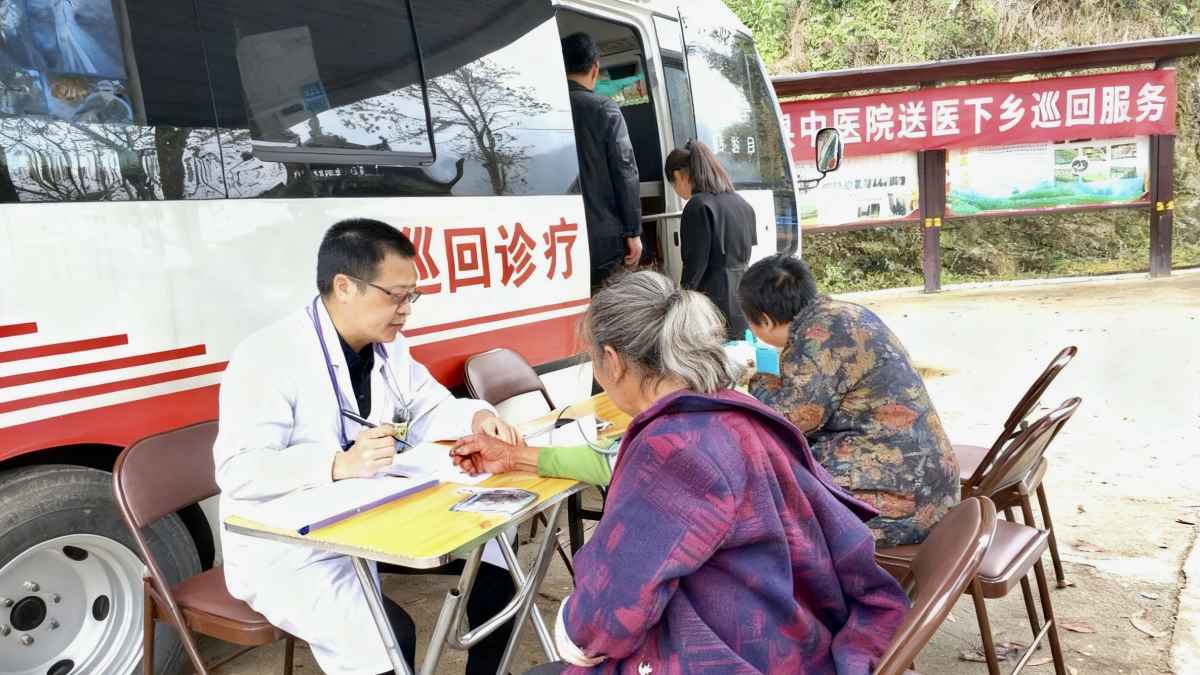
To overcome the region’s rugged geography, Zhejiang Mobile has transformed its service vehicles into 5G‑enabled mobile clinics. Each van maintains a stable signal on winding roads, transmitting high‑resolution images and test results to upper‑level hospitals. Inside, AI‑based software analyzes symptoms and supports local doctors in diagnosing patients and recommending treatments.

Each vehicle works as a mini hospital, equipped with more than 20 types of medical devices — from portable ultrasounds and ECG monitors to lung‑function analyzers. Township physicians can perform examinations, prescribe medication, and even provide emergency care on site. For complicated cases, they connect instantly with specialists in city or provincial hospitals through the same 5G network.

Local health authorities say Zhejiang Mobile’s platform helps automate the screening of chronic illnesses such as hypertension, coronary heart disease and cataracts, recommending drugs or further tests. This has significantly improved early detection and reduced serious cases among elderly residents.

To make the “Smart Mobile Hospital” serve not only daily clinical needs but also emergency response, Zhejiang Mobile worked with local authorities to connect data systems across public security, civil affairs and social‑insurance departments. The company helped build an integrated workflow that unites pre‑hospital emergency services with in‑hospital treatment.

When an emergency occurs in a remote mountain area, the system can automatically match and dispatch both a mobile hospital and an ambulance, ensuring rapid, coordinated rescue.

“When patients board the vehicle, facial‑recognition technology immediately confirms their identity and retrieves family and insurance information,” said Chen Lifeng, the director of the Dajun Township Health Center in Jingning County. “All registration and admission procedures are completed in advance, so the patient is effectively admitted upon boarding.”

Through a real‑time 5G link between the vehicle and the hospital, vital‑sign data is transmitted to emergency rooms as doctors provide remote guidance. This enables continuous treatment across the chain — from rescue site to vehicle to hospital.

Seven Zhejiang Mobile medical units now serve Jingning County, covering 67 villages and 78 regular stops. They have traveled more than 250,000 kilometers and delivered care to over 100,000 residents. For families once separated from modern healthcare by mountains, access is finally within reach.

Local doctors say 5G and AI are changing not only how patients are treated but how they think about medicine. Regular screenings catch illnesses earlier, and growing trust in remote consultations encourages people to seek help sooner.

As China continues modernizing its vast primary‑healthcare network, Jingning’s experiment is being closely watched. Zhejiang Mobile’s Smart Mobile Hospital may become a model for other remote regions seeking affordable, technology‑driven medical solutions.

Liu, who once dreaded the long trip to the city, now jokes that her doctors travel farther than she does. “They come here through the screen,” she says with a laugh. “And I don’t miss the bus anymore.”


Home  Facebook

Business

South Africa: African Development Bank and Biovac sign $15 million agreement to advance Africa’s first end-to-end cholera vaccine production

Published

on

African Development Bank

Financing will help triple Biovac’s annual production capacity up to 500 million doses, create 340 jobs, and strengthen South Africa’s role as a continental vaccine manufacturing hub

PRETORIA, South Africa, July 24, 2026/APO Group/ –The African Development Bank Group (www.AfDB.org) has finalised a loan of up to $15 million to the Biologicals and Vaccines Institute of South Africa Ltd (Biovac) (https://apo-opa.co/3RQJKp2) to support a new multi-vaccine manufacturing facility in Cape Town that will significantly expand Africa’s domestic capacity to produce vaccines.


The financing forms part of an expansion programme that will raise Biovac’s total annual manufacturing capacity up to 500 million doses. Once complete, Biovac is expected to become Africa’s first end-to-end producer of oral cholera vaccine and South Africa’s first locally produced inactivated polio vaccine, and the first on the continent to produce inactivated polio vaccine through technology-transfer partnerships with Sanofi, the International Vaccine Institute, Biological E Limited, EuBiologics, and Bharat Biotech. For more than two decades, Biovac has been South Africa’s primary vaccine supplier,

Africa currently imports more than 99 percent of the vaccines it uses, even though the continent carries a disproportionate share of the world’s vaccine-preventable disease burden. In response, the African Union aims to produce 60 percent of the continent’s vaccines locally by 2040. (https://apo-opa.co/4c0qcoV) Beyond vaccines, the project is projected to create around 340 full-time jobs, with an estimated 43 percent of these roles going to women and 30 percent going to youths. Biovac, which already employs more than 300 staff — half of them women — will also expand training in vaccine manufacturing, quality control, and regulatory science in partnership with local universities and other regional training institutions.

“This investment in Biovac is about much more than expanding vaccine production capacity. It is about building Africa’s health sovereignty, strengthening regional value chains, and creating industrial capabilities that will enable the continent to respond more effectively to future health emergencies,” said Solomon Quaynor, the Bank Group’s Vice President for Private Sector, Infrastructure and Industrialisation. “By supporting Africa’s first end-to-end oral cholera vaccine manufacturing facility and the continent’s first local production of inactivated polio vaccine, we are helping transform Africa from a consumer of imported vaccines into a producer of critical health solutions.”

The project will shift the narrative from majority-imported vaccines to majority-exported vaccines

“We welcome the African Development Bank as a partner in this landmark project and are proud that an institution so central to Africa’s development sees in Biovac the same opportunity we see, a chance to fundamentally shift the continent’s relationship with its own health security,” said Biovac Chief Executive Officer Morena Makhoana. “The project will shift the narrative from majority-imported vaccines to majority-exported vaccines. This is part of changing that reality permanently. This is what Africa’s health sovereignty looks like in practice, and we are honoured to be building it.”

The Bank Group’s support for Biovac aligns with its broader commitment to developing Africa’s pharmaceutical and vaccine manufacturing ecosystem, creating quality jobs, fostering innovation, and advancing African Union targets.

“This project allows one of Africa’s most experienced manufacturers to scale up exactly where the need is greatest: vaccines that protect children from cholera, polio, pneumonia and meningitis,” said Kennedy Mbekeani, the Bank Group’s Director General for Southern Africa, and Country Manager for South Africa.

The expansion project is also designed to plug directly into the continent’s emerging vaccine-financing architecture, including Gavi’s African Vaccine Manufacturing Accelerator (AVMA), (https://apo-opa.co/4c1QFT4) a $1.2 billion mechanism that rewards African manufacturers with milestone payments once they reach WHO prequalification, plus a per-dose top-up on vaccines supplied through UNICEF tenders.

Biovac’s new facility is expected to be completed by 2028 and will initially produce vaccines for cholera (oral) and subsequently for polio (IPV), pneumonia (PCV), and meningitis (MenX).

The Bank joins a syndicate of development finance institutions backing the project. The syndicate is led by the International Finance Corporation (IFC) and supported by a long-term quasi-equity facility from the Human Development Accelerator (HDX) programme, a European Union-backed initiative implemented by the European Investment Bank in partnership with the Gates Foundation. The package is complemented by grant funding and support from other global health partners for technology transfers that will bring new vaccines into Biovac’s portfolio.

Biovac is a South African biopharmaceutical company established in 2003 in partnership with the South African government to develop local vaccine manufacturing capability. Based in Cape Town, it currently manufactures and supplies much-needed routine paediatric vaccines and has delivered more than 450 million vaccine doses to countries across Southern Africa, including COVID-19 vaccines.

Distributed by APO Group on behalf of African Development Bank Group (AfDB).

Continue Reading

Health

Afreximbank President visits African Medical Centre of Excellence as the landmark health investment marks first year of transformative impact

Published

on

Afreximbank

In its first year of operation, AMCE has moved from vision to measurable impact, demonstrating how development finance can transform healthcare on the continent

ABUJA, Nigeria, July 6, 2026/APO Group/ –As part of his working tour of Nigeria and the wider region, Dr George Elombi, President and Chairman of the Board of Directors of African Export-Import Bank (Afreximbank) (www.Afreximbank.com), visited the African Medical Centre of Excellence (AMCE) in Abuja, reaffirming Afreximbank’s commitment to supporting the realisation of Africa’s health care sovereignty.


Developed by Afreximbank in partnership with King’s College Hospital, London, AMCE was established to help transform specialist healthcare delivery in Africa, by strengthening clinical capacity, advancing research and education, creating a sustainable ecosystem for world-class care on the continent and in turn, reducing dependence on medical travel abroad.

In its first year of operation, AMCE has moved from vision to measurable impact, demonstrating how development finance can transform healthcare on the continent.

The Centre has registered over 5,000 patients from more than 20 countries across four continents, underscoring its growing role as a regional and global referral centre for advanced specialist healthcare.

Beyond the numbers are lives already being transformed. During its first year, AMCE has achieved several important clinical milestones. The Centre delivered West Africa’s first Stereotactic Body Radiation Therapy (SBRT) for lung cancer, treating an octogenarian with a localised lung tumour using a highly precise, non-invasive technique that previously required many patients to travel abroad. The Centre also completed its first complex Triple Coronary Artery Bypass Grafting (CABG), demonstrating that advanced cardiac care can now be delivered to global standards within Africa. AMCE also successfully completed two Stem cell transplants.

The success of this Centre reflects the depth of talent assembled here and the pan-African spirit that underpins its service

Its advanced laboratory has processed more than 40,000 diagnostic tests and investigations, completed 10 open-heart surgeries and 11 cardiac surgical procedures under the cardiac programme, administered 99 catheterisation laboratory procedures, and 173 anaesthesia-supported procedures in just a year.

Additionally, the Centre has commenced Nuclear medicine services, with Single Photon Emission Computed Tomography/Computed Tomography (SPECT/CT) imaging now available for bone scans, renograms, and perfusion scans, while Positron Emission Tomography/Computed Tomography (PET/CT) imaging is scheduled to commence later in the year.

Speaking during the visit, Dr. Elombi applauded the remarkable progress recorded by the Centre within its first year of operation, describing it as a compelling demonstration of African excellence, institutional resolve, and shared purpose. He stated: “The success of this Centre reflects the depth of talent assembled here and the pan-African spirit that underpins its service. The vision that inspired the conception and construction of this facility is the same conviction now being carried forward by the medical professionals delivering care to the continent. The AMCE provides health services and advances Africa’s health sovereignty while affirming our collective capacity to take responsibility for our own lives and future. The AMCE is a world-class quaternary healthcare facility delivering medical services of a standard that many would previously have sought beyond the continent. Nigerians, and citizens across Africa, must take full advantage of this facility—built by African institutions with the steadfast support of our governments.”

AMCE Chief Executive Officer, Brian Deaver, said Dr. Elombi’s visit marks an important milestone in the Centre’s journey and provides an opportunity to reflect on the impact AMCE has made in just one year.

“Our progress, from pioneering clinical achievements to earning growing trust across the region, demonstrates that Africa can build and sustain world-class centres of excellence. With Afreximbank’s continued vision and support, we remain committed to advancing patient care, research, education and innovation to strengthen health systems across the continent”.  Deaver noted.

Dr Elombi also toured key clinical departments, interacted with healthcare professionals and staff, and received updates on the Centre’s operational performance, clinical achievements and long-term expansion plans. He thanked the facilities’ employees for their commitment to building a new benchmark for specialist healthcare in Africa, noting that the Centre’s early achievements reflect the dedication, professionalism and shared vision of its workforce.

Today, AMCE employs more than 600 clinical and non-clinical professionals, representing 12 nationalities, and reflecting its growing reputation as a destination for highly skilled healthcare professionals. Earlier this year, the Centre also earned Great Place to Work® Certification, with 90 percent of employees affirming it is a great place to work.

Distributed by APO Group on behalf of Afreximbank.

Continue Reading

Health

Taiwan entrepreneur Time Light Care brings smart elderly care to mainland as silver economy gains ground

Published

on

Time Light Care

TIANJIN, CHINA – Media OutReach Newswire – 29 June 2026 – A smart elderly care enterprise branded Time Light Care, based in north China’s Tianjin, has developed a proprietary smart elderly care management platform, drawing on Taiwan’s long-term care experience and riding the momentum of the mainland’s silver economy.

The nursing homes, positioned as “community-embedded, small-to-medium scale, high-quality care” facilities, allow the elderly to stay in familiar surroundings while remaining close to family members.

On the technology front, the company has introduced millimeter-wave radar monitors for completely bedridden residents to track breathing, pulse, and heartbeat in real time, with automatic alerts sent to caregivers’ phones in case of any abnormality.

The company has also introduced accessible vehicles equipped with detachable automatic wheelchairs that go directly to the bedside, helping “suspended seniors”—those who struggle to go downstairs due to the lack of elevators—to go out with dignity.

These industry efforts come as China’s elderly population aged 60 and above reached 320 million by the end of 2025, a figure projected to exceed 400 million by 2035, with the silver economy expected to surpass 30 trillion yuan (about 4.41 trillion U.S. dollars).

In February 2026, an executive meeting of the State Council proposed to promote the expansion and quality improvement of inclusive elderly care service supply, improving a tiered, categorized, inclusive, accessible, urban-rural covering, and sustainable elderly care service system. The series of measures outlined at the meeting charted the direction and identified priorities for better meeting the diverse and multi-level needs of hundreds of millions of elderly people.

“The mainland’s policy support and market scale have created immense opportunities for innovation in senior care,” said Jing Ran, the company’s representative, during an exclusive interview with China News Service. “Having succeeded in starting our business here, we now hope to encourage more young people from Taiwan to come, explore, and develop their careers on the mainland.”


Continue Reading

Trending