Connect with us
Anglostratits

Business

One integrated network for all your needs in production (By Zhang Ying)

Published

on

Huawei

Huawei offers an integrated O&G gas field network solution that uses critical technologies for a secure and stable integrated network to foster collaboration and intelligence in production

JOHANNESBURG, South Africa, November 25, 2022/APO Group/ — 

By Zhang Ying, Director of Southern Africa Enterprise Energy Key Account Dept, Huawei (www.Huawei.com)

Technology has become one of the key strategic enablers of competitive advantage, which is no different in the oil and gas (O&G) industry, says the online consulting platform Consultancy-me. It noted that companies in the O&G industry could navigate their position relative to their peers on various technologies, including robotics, artificial intelligence, blockchain, cloud and intelligent operations.

While the O&G industry is solution-focused rather than tech-focused, leading companies are integrating a wide range of technologies that can contribute to achieving solutions as efficiently as possible. These solutions help the firms to reduce costs, increase efficiency, improve training programs and create a safe and attractive work environment.

Huawei, which has over 20 years of footprint in the ME region, notes that embracing digital technologies creates a deep integration of technology, business operations and behaviours. It also creates continuous value for companies through improved production, security, safety, speed, and lower costs.

But most importantly, digital technologies improve experiences for both customers and employees, according to Huawei.

The global digital transformation market in the O&G industry is expected to grow by $41.25bn between 2020 and 2026, with a CAGR of 17% over the estimated period, according to a report by Market Data Forecast (https://bit.ly/3GT09Bg). It also notes that digital transformation has been one of the main trends in the global O&G industry even during the past decade.

Digitalisation pumps intelligence into oil and gas. Huawei’s new full-stack integrated communication system adapts to a range of complex scenarios in oil and gas fields.

Click here (https://bit.ly/3AKFZ8W) to learn more.

As such, Huawei’s report also states that key trends in O&G field services, including cost reduction, efficiency improvement, and security and reliability, place higher requirements on networks, leading to alternatives such as unstaffed/least staffed wellsites, automated and intensive production, and multi-service isolation, respectively.

What are the challenges to O&G fields having smart and intelligent networks?
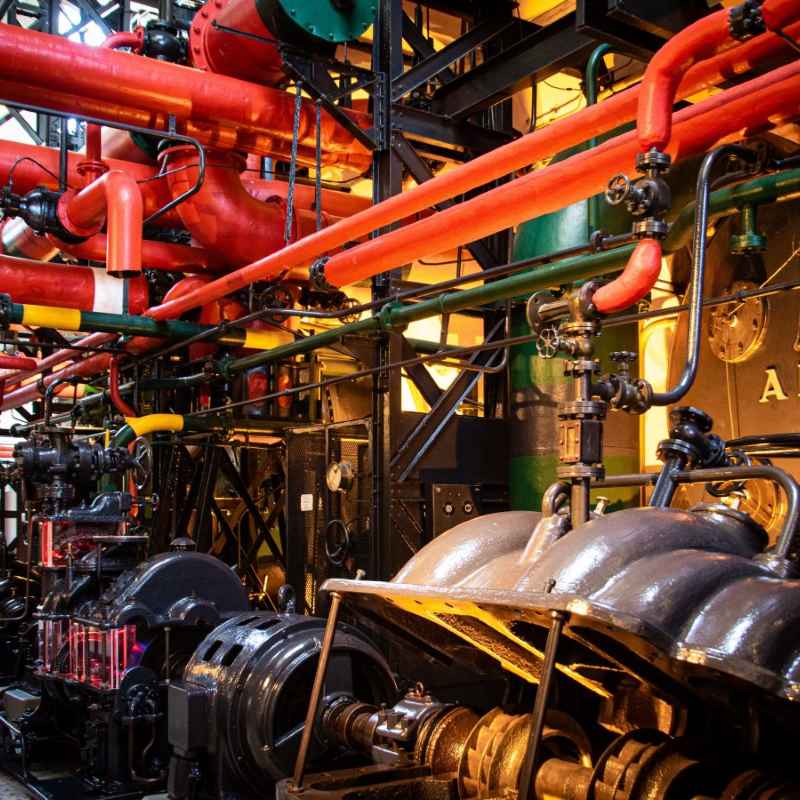
The global digital transformation market in the O&G industry is expected to grow by $41.25bn between 2020 and 2026

O&G fields cover vast areas and have long transmission lines, and as the business expands, companies need more storage and higher production capacity.

For years, Huawei has been working with O&G companies as a partner of digitalization. The company finds out that oilfield network systems face long-standing issues slowing down digital transformation.

Typically, multiple networks coexist alongside old and new technologies during oil and gas field network construction. Multiple layers and many fault points: 5 to 10-layer network structure, many active nodes, high device fault rate. 

Plus, there are too many network elements (NEs) and models built by different vendors at different times. The complex network management systems (NMSs) make manual O&M and live network management exponentially more difficult.

In this respect, Huawei points out that the prerequisite for building smart O&G fields is to build a network system with wide coverage, easy O&M, high bandwidth, and high stability. This is the basis for intelligent control and better decision-making – intelligent technologies for O&G fields can address these demands.

Building smart O&G fields with intensive production, centralised control, and fewer or no staff is virtually impossible without secure, reliable, intelligent, and efficient networks. As such, an integrated network will be essential.

Benefits of Huawei’s Integrated O&G solution

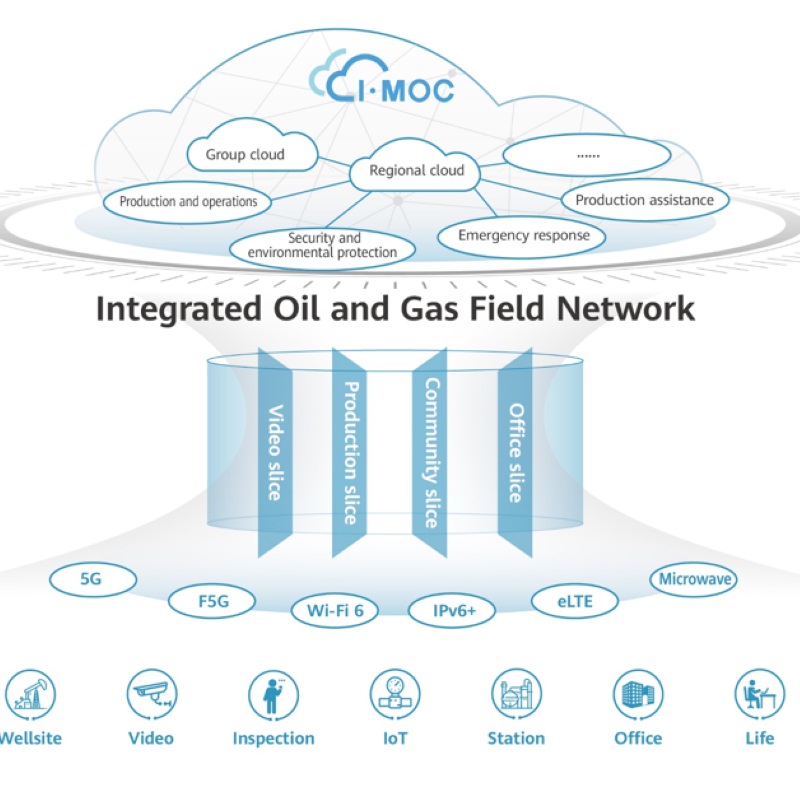
More specifically, Huawei offers an integrated O&G gas field network solution (https://bit.ly/3XtDzoX) that uses critical technologies such as edge computing, AI, hard pipe isolation, and IPv6+ – serving as an interconnected network.

Hence, Huawei’s integrated O&G field network solution includes the following:

  • Wellsite backhaul network – Used for backhaul of production, video, and inspection data in O&G wellsites.
  • Station campus network – Network solution for medium- and large-sized comprehensive stations, such as joint stations, processing plants, purification plants, and central stations.
  • Oilfield bearer network – Includes the branch backbone network and factory-level aggregation network, which are used for interconnection between the factory and stations.
  • Unified O&M – Huawei’s IMOC is a core intelligent O&M platform that integrates various O&M monitoring content, such as equipment room infrastructure, networks, systems, security, applications, and virtual resources.

Li Yangming, Chief Representative of the Oil and Gas Sector, Huawei Enterprise BG, says: “Huawei has been focusing on the application of intelligent technologies as it reconstructs oil and gas field network facilities. With cloud and AI, Huawei works with partners to deliver smart station and smart platform solutions for oil and gas enterprises, making the oil and gas industry more digital and intelligent.”
Distributed by APO Group on behalf of Huawei Enterprise.
Business

Hong Kong rises to No.2 globally in competitiveness

Published

on

Hong Kong

HONG KONG SAR – Media OutReach Newswire – 18 June 2026 – Hong Kong jumped one place to become the world’s second most competitive economy, according to the 2026 World Competitiveness Ranking published today (June 18) by the Swiss-based International Institute for Management Development (IMD). It is Hong Kong’s highest ranking since 2019, and builds on three consecutive years of improvement.

Welcoming the report, a spokesperson for the Hong Kong Special Administrative Region (HKSAR) Government said, “The World Competitiveness Yearbook (WCY) 2026 reaffirms Hong Kong as one of the most competitive economies in the world, and notes that Hong Kong’s rise to second sustains the strong upward trajectory from 2024 and 2025.”
In announcing the results, the IMD noted that, amid rising geopolitical tensions, competitive advantage hinges on credible institutions, predictable rules, enforceable commitments and public trust.

According to WCY 2026, Hong Kong’s rise reflects sustained performance across the four competitiveness factors measured. Among these factors, Hong Kong ranks second in “Government efficiency” and third in “Business efficiency”. “Infrastructure” and “Economic performance” rank eighth and 11th respectively.

As regards the various competitiveness sub-factors, Hong Kong tops the rankings in “Tax policy” and “Business legislation”, ranks second in “Finance”, third in “International trade”, “International investment”, “Management practices” and “Education”, and fourth in “Public finance” and “Basic infrastructure”.

“In the competitiveness factor ‘Government efficiency’, Hong Kong continues to rank second globally, reflecting the HKSAR Government’s ongoing efforts to promote free and open, stable, predictable and business-friendly economic policies, as well as the international community’s trust in Hong Kong’s legal and regulatory environment,” the spokesperson said.

“Hong Kong’s ‘Business efficiency’ is ranked third globally, reflecting the strong support for industry development rendered by our robust financial ecosystem, as well as the seamless alignment of the city’s business practices and environment with international best standards.”

Amid rapidly evolving geopolitical dynamics, Hong Kong, with its close connectivity to both the Chinese Mainland and the world under the “one country, two systems” principle, and its sound institutions, open markets and sustained investments in innovation, has become a “value hub” that offers both security and growth opportunities.

In fact, Hong Kong continues to excel in various international rankings including those for economy, finance, and talent. The International Monetary Fund has also given positive recognition to Hong Kong in recent months, and major credit rating agencies have successively reaffirmed Hong Kong’s credit ratings and ‘stable’ outlook.

“All these echo the WCY 2026 results,” the spokesperson said.

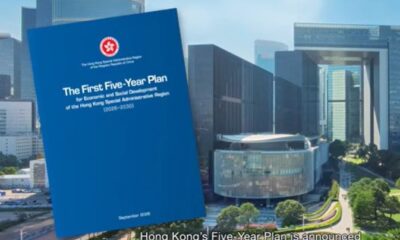
Currently, Hong Kong is formulating at full speed its first Five-Year Plan, to proactively align with the National 15th Five-Year Plan.

“With the staunch support of our country, the HKSAR Government will work together with all sectors of society to strengthen our role and function as a ‘super connector’ and ‘super value-adder’, with a view to better integrating into and serving the overall national development, achieving our own high-quality development, creating more new room for development for our people and businesses, as well as opening up new opportunities for global investors and enterprises,” the spokesperson said.

Continue Reading

Events

2026 Hainan Cultural and Tourism Promotion Events Held in Hong Kong

Published

on

Hong Kong

HONG KONG SAR – Media OutReach Newswire – 18 June 2026 – On June 16, the 2026 Hainan Cultural and Tourism Promotion Events, under the theme of “Sunny Hainan · Heart’s Desire,” were held in Hong Kong. Leaders from Hong Kong’s cultural and tourism authorities, heads of industry associations, and representatives of key cultural and tourism enterprises from home and abroad gathered to explore new opportunities for cooperation and draw up a blueprint for the industry’s future.

Liu Xiaoming, Governor of the People’s Government of Hainan Province, and Cheuk Wing-hing, Deputy Chief Secretary for Administration of the Government of the Hong Kong Special Administrative Region, attended the events and delivered speeches. During the promotional session, Chen Tiejun, Director of the Department of Tourism, Culture, Radio, Television and Sports of Hainan Province, unveiled the “Top Ten Calling Cards of Hainan Tourism,” which received enthusiastic responses and positive feedback from various sectors in Hong Kong. Attendees from Hong Kong unanimously agreed that Hong Kong and Hainan boast highly complementary cultural and tourism resources and immense potential for cooperation.

Since the launch of special customs operations of the Hainan Free Trade Port, its distinctive opening-up advantages, such as “zero tariffs, low tax rates, a simplified tax system” and “tariff exemption for value-added processing,” have become increasingly prominent. These policies have continuously made Hainan more attractive to businesses and opened up broader opportunities for Hong Kong investors and entrepreneurs.

On the same day, at the “Invest in the Free Trade Port, Share New Opportunities” Symposium for Hong Kong Enterprises held in Hong Kong, four cooperation agreements were formally signed, covering high-end commerce, cultural and tourism integration, and regional industrial coordination. Hong Kong business representatives expressed strong interest in deepening their presence in Hainan.

Hainan and Hong Kong share a long history of cooperation, and in recent years, a steady stream of favorable policies has been introduced. Since the signing of the Hainan-Hong Kong Memorandum of Cooperation in March 2025, bilateral cooperation has accelerated across the board. In 2025, goods trade between the two sides reached RMB 9.35 billion, increasing by more than two times from 2020. A total of 793 new Hong Kong-funded enterprises were established in Hainan, a year-on-year increase of 21.5%. Hainan has also issued offshore RMB bonds in Hong Kong for four consecutive years, with a cumulative total of RMB 18 billion. Currently, an average of four direct flights operate daily between Hong Kong and Hainan, with the fastest travel time under two hours, facilitating the rapid emergence of the “Hainan-Hong Kong Living Circle.”

Continue Reading

Business

Hong Kong universities scale global heights, cementing education hub status

Published

on

Hong Kong

HONG KONG SAR – Media OutReach Newswire – 19 June 2026 – Hong Kong universities continue to excel on the international stage with five institutions ranked among the world’s top 100 and, for the first time, two in the top 20 of the 2027 World University Rankings published by Quacquarelli Symonds (QS) on June 18.

A spokesman for Hong Kong’s Education Bureau (EDB) said that with the Hong Kong Special Administrative Region (HKSAR) Government’s full commitment to developing Hong Kong into an education hub, coupled with the support of a series of policy measures, the city’s higher education system has again excelled.

Announcing the results, QS said in a press release that Hong Kong “emerges as Asia’s most improved higher education system for the second consecutive year, and the second most improved globally among systems with three or more ranked universities”.

The University of Hong Kong (HKU) maintained its position at 11th in the world; The Chinese University of Hong Kong (CUHK) rose 14 places to 18th; The Hong Kong University of Science and Technology rose 11 places to 33rd; and The Hong Kong Polytechnic University climbed four places to 50th, entering the world’s top 50 for the first time. Also among the top 100 is City University of Hong Kong, which improved 11 places to 52nd.

In the latest Best Global Universities Rankings published by the U.S. News & World Report just days ago, multiple Hong Kong universities also demonstrated exceptional international competitiveness, with 20 subjects placing in the global top 10. Notably, CUHK, HKU, and The Education University of Hong Kong swept the global top three spots for the Best Global Universities for “Education and Educational Research”, underscoring the city’s prowess in cultivating talents and conducting academic research.

“These achievements fully affirm the effectiveness of the HKSAR Government’s steadfast investment in education and its full support through the University Grants Committee (UGC) for institutions to continuously innovate, optimise, expand capacity, and enhance quality. The significant year-on-year rise in the overall rankings of our institutions further validates Hong Kong’s strong appeal as a premier hub for international high-end talent,” the EDB spokesman said.

“The stellar performance of UGC-funded universities in the international rankings is by no means accidental. On one hand, it relies on the tireless efforts of all institutions to actively recruit world-class scholars and invest in infrastructure. On the other hand, the HKSAR Government’s stable resource investment, clear and supportive policy guidance, as well as the rigorous quality assurance implemented through the University Accountability Agreements, are also of paramount importance.”

The Government will continue to promote the internationalisation and diversification of post-secondary education, which aims to not only enhance Hong Kong’s development momentum but also make proactive contributions to the nation’s development, the spokesman said.

The strength demonstrated by Hong Kong’s higher education system aligns perfectly with the strategic goals set out in the National 15th Five-Year Plan to build a leading nation in education, technology, and talent.

To support the post-secondary education sector to grow bigger and stronger, the Government has raised the admission ceiling for non-local students in taught programmes at funded post-secondary institutions to 50 per cent, and increased the over-enrolment ceiling for self-financing places in funded research postgraduate programmes to 120 per cent, among other measures.

Meanwhile, the Government is promoting the “Study in Hong Kong” brand. The Task Force on Study in Hong Kong, in collaboration with major institutions, is stepping up promotion of Hong Kong’s excellent academic, research, and international collaboration resources on the Chinese Mainland and overseas. It also aims to attract outstanding talent from all over the world through initiatives such as expanding the Belt and Road Scholarship.


Continue Reading

Trending