

Business
Canon expands MAXIFY range with new MegaTank models – low total cost of ownership, for home offices and small businesses

Equipped with MegaTank refillable ink tank technology, both models have low total cost of ownership and low cost per page
DUBAI, United Arab Emirates, November 17, 2022/APO Group/ —
Canon (www.Canon-CNA.com) today announces the expansion of its MAXIFY range for those working at home, or in small businesses, with the MAXIFY GX3040 and MAXIFY GX4040. Built with collaboration, efficiency and productivity in mind, the expanded series is ideal for a reaching a wide range of needs within different workspaces – whether its hybrid working from home or running a small business.
Space saving and cost-efficient
Equipped with MegaTank refillable ink tank technology, both models have low total cost of ownership and low cost per page. They are easy to maintain and easy to use – saving time to focus on other business matters. Downtime is kept to a minimum with high volume printing of up to 14,000 pages from a set of colour ink bottles[i] – or up to 21,000 pages when used in the economy print mode[ii] – while large paper capacity of up to 350 sheets (250-sheet cassette and 100-sheet rear feed) and a user replaceable maintenance cartridge reduces the need to send the printer away for servicing.
With small business needs and home working at the heart, both the MAXIFY GX3040 and MAXIFY GX4040 feature fast copying and scanning alongside professional quality prints with the 4-colour pigment-based refillable ink tank system. Both models are housed in a compact desktop design, the footprint is kept to a minimum, fitting easily into tight home office spaces.
High productivity and collaboration
When hybrid working between the home and office – or in a shared small business environment – high-speed printing means users don’t need to wait to print documents – both models deliver fast printing speeds of 18.0 ipm for black (mono) printing and 13.0 ipm for colour.
Featuring 4-colour pigment ink, both models are ideal for high-quality business prints on a variety of media types. Canon exclusively developed pigment inks to print with crisp and easily readable black text, with highly visible colour text and graphics – alongside colour reproduction contrast improvements over previous MAXIFY GX models. The all-pigment inks also resist bleeding and blurring, so documents can be highlighted and shared with confidence that they’ll be smudge-free and professional looking.
The high-capacity cassette equipped with a window can store 250 sheets of plain paper as well as a 100 sheet rear tray, so there is no need to keep refilling. The printers also feature a flat rear paper tray, supporting a variety of media types and sizes, along with a rear flat tray for paperboard feeding – covering a wide range of business needs with a single printer.
Additionally, the new MAXIFY GX models support Chromebook – with direct printing and scanning from Chrome OS supported. The printers also include support for a wide range of operating systems, including Mac, Windows, iOS and Android support.
Easy maintenance
Both the MAXIFY GX3040 and MAXIFY GX4040 are easy to use and maintain thanks to improved hardware design, touchscreens (MAXIFY GX4040 only) and sleek interfaces. Refilling the printers is easier than before – with spring-loaded colour-coded ink caps, users can refill the tank with a gentle lift of the finger, all without spilling ink. What’s more, the user-replaceable maintenance cartridge is now positioned at the front for easy access and usability.
Seamless connectivity within the workplace
Offering smart connectivity, MAXIFY users can print, scan, copy and connect to the cloud all via the Canon PRINT app, benefitting from compatibility with existing software and technology platforms including AirPrint and Mopria®. When connected to Wi-Fi, the printers determine the strength of the signal and security – when there are multiple access points, they will automatically connect to the one with the best security and data condition, ensuring smooth connections at all times. With various countermeasures – including WPA3-SAE, WPA3-EAP(AES) and TLS 1.3 encryption – the MAXIFY GX3040 / MAXIFY GX4040 mitigate the risk of unauthorised access and data leakage through increased security.
Featuring 4-colour pigment ink, both models are ideal for high-quality business prints on a variety of media types

Diverse media support for printing
Posters, POS and other paperboard prints that would have traditionally been outsourced can now be produced via the MAXIFY GX3040 and MAXIFY GX4040, reducing overall costs of promotional materials for small businesses. To support in-house business printing, both devices are now compatible with diverse media applications, including paperboard printing via the brand new rear flat tray. PosterArtist Web (https://PosterArtist.Canon) can be used to create attractive posters, with no professional design skills required – templates, auto-design and free stock photos help create attractive end-results. It is available via a web browser online, so editing can be done anytime, anywhere.
Today, alongside MAXIFY GX3040 and MAXIFY GX4040, Canon expands its MegaTank range further with the expanded PIXMA MegaTank range – featuring four new fast, high-quality, refillable ink tank printers, ideal for families wanting to make savings on home printing.
For more information the MAXIFY GX3040 and MAXIFY GX4040, please visit: http://bit.ly/3Eh6mEe
Joint Key Features:
- 18.9 ipm / 13.0 ipm – fast print speeds iii
- High page yield: 6,000 black ink or up to 14,000 from a set of colour inksi
- Economy mode boosting yields by up to 50%ii
- 4-colour pigment ink
- Rear tray with 100-sheet capacity
- 250-sheet cassette
- Rear flat tray
MAXIFY GX3040 Key Features:
- 3-in-1 printer – print, copy and scan
- 1.35” mono square LCD
- Wi-Fi
MAXIFY GX4040 Key Features:
- 4-in-1 printer – print, copy, scan and fax
- 35 Sheet ADF
- 2.7” colour touch screen
- Wi-Fi & Ethernet
[i] Page Yield is the estimated value based on Canon individual test method using the ISO/IEC 24712 chart and continuous printing simulation with the replacement after initial setup.
[ii] The economy mode reduces the ink consumption by lowering the density, 50% more pages than the standard mode can be printed.
[iii] A4 document print speed on plain paper is measured based on average of ESAT in Office Category Test of ISO/IEC 24734 standard.
Distributed by APO Group on behalf of Canon Central and North Africa (CCNA).












Business
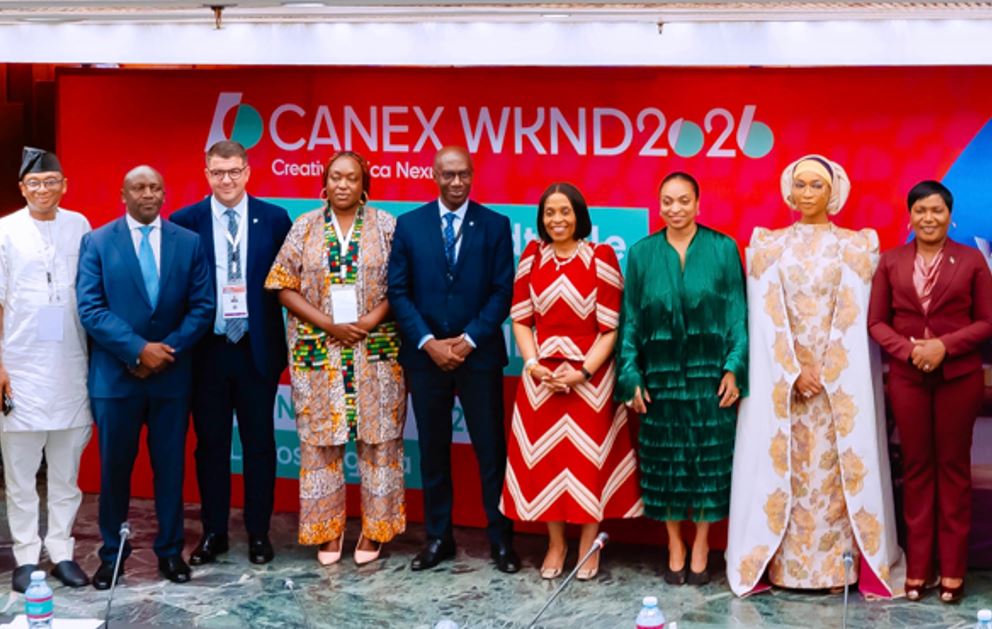
Creative Africa Nexus (CANEX) WKND 2026 opens in Lagos, bringing together leading African and diaspora creatives, investors and policymakers
Business
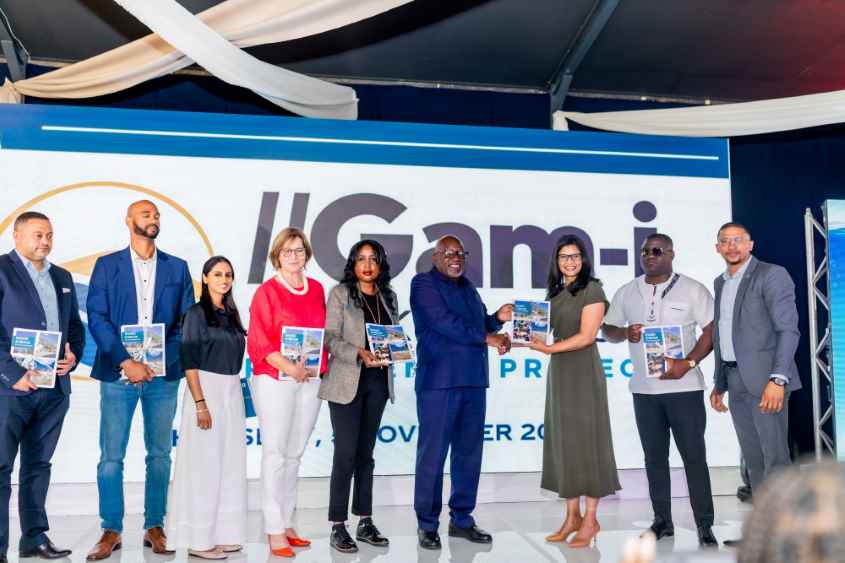
Coca-Cola system invests USD 1.22 million to strengthen water security in Namibia
Business
‘Power, Protect, Purchase’: Africa Made It unveils blueprint to capture USD 34B in GDP and accelerate African industrial sovereignty
Africa Practice research shows that Africa exports up to 98% of its raw cotton overseas and captures only 2% of its total value while incurring a USD 35 billion annual trade deficit

African culture, design, and storytelling influence global fashion, music, and media like never before
Africa Made It is driven by a consortium of leading pan-African organisations, advocacy groups, and media organisations who are positioning Africa as a global investment hub. Its flagship campaign, spotlighting the fibre-to-fashion value chain, presents a clear roadmap for continental industrialisation: securing competitive energy power for local industrial mills, enacting policy measures to protect emerging domestic manufacturers from unfair foreign imports, and rallying African consumers to purchase locally manufactured apparel. Together, these three pillars ensure that value created from African resources remains on African soil.
Africa Practice research shows that Africa exports up to 98% of its raw cotton overseas and captures only 2% of its total value while incurring a USD 35 billion annual trade deficit. Building the continent’s domestic processing capacity in spinning, weaving, and sewing locally produced cotton will sustain nearly two million permanent industrial jobs and inject approximately USD 33 billion directly into domestic household incomes every year, in addition to a recurring contribution of USD 34 billion to the continent’s GDP.
While these figures reveal the immense macro-economic potential of the value chain, the true heart of this transformation lies in its human impact. Industrial wages and local lint purchases leading to increased capital circulation in rural communities can drive community micro-economic vitality and contribute to rural poverty reduction. Additionally, formal employment opportunities can expand drastically for women, as they currently make up between 70-90% of garment factory workers on the continent.
Realising this vision and changing the lives of millions of people requires a deliberate combination of targeted investments, supportive trade policies, and consumer mobilisation. A USD 1.8 billion capital allocation toward critical structural enablers for garment transformation is the foundation for bridging Africa’s missing middle in the fibre-to-fashion value chain.
Marie Wilke, editor-in-chief of the Africa Made It magazine, said, “African culture, design, and storytelling influence global fashion, music, and media like never before. Yet, without domestic manufacturing infrastructure, Africa’s creative authority yields very little economic return. Linking raw cotton harvest directly to local processing ensures that the intellectual property, commercial margins, and industrial jobs remain on the continent. It is time to wear our power.”
To learn more about the potential of Africa’s fibre to fashion value chain, watch the campaign video (https://apo-opa.co/4BKAIvY) or read the Africa Made it (https://apo-opa.co/4zvA5VF)magazine (https://apo-opa.co/4zvA5VF). Access the campaign website and resources in English (https://apo-opa.co/4zvA5VF) and French (https://apo-opa.co/4zrK8e2).
Distributed by APO Group on behalf of Africa Made It.
-

 Business4 days ago
Afreximbank supports Veenocks’ US$145 million project for industrial expansion and regional growth
-

 Business4 days ago
Visa and Senegal join forces to accelerate digital transformation and the development of digital payments
-
Business4 days ago
Afreximbank Country Brief Explores Gabon’s Reform Momentum and Diversification Drive
-

 Business4 days ago
Oando Production Hits 42,985 boepd as Revenue Grows 9% in 9M 2026
-
 Business4 days ago
5 Investment Opportunities Putting Congo Energy & Investment Forum (CEIF) 2027 on the Map for Central Africa
-

 Energy4 days ago
Energy costs, storage value and industrial competitiveness led Day 2 of C&I Energy + Storage Summit
-
Business4 days ago
Afreximbank Country Brief Charts Côte d’Ivoire’s Rise as a Regional Growth Leader in West Africa
-

 Business4 days ago
Smarter power systems bring new demands for integration, security and infrastructure