Connect with us
Anglostratits

Business

Canon Central and North Africa held a successful and insightful Partner Conference 2022

Published

on

Canon Central

The event gathered participants and partners from 40 different countries across the African region

DUBAI, United Arab Emirates, November 10, 2022/APO Group/ — 

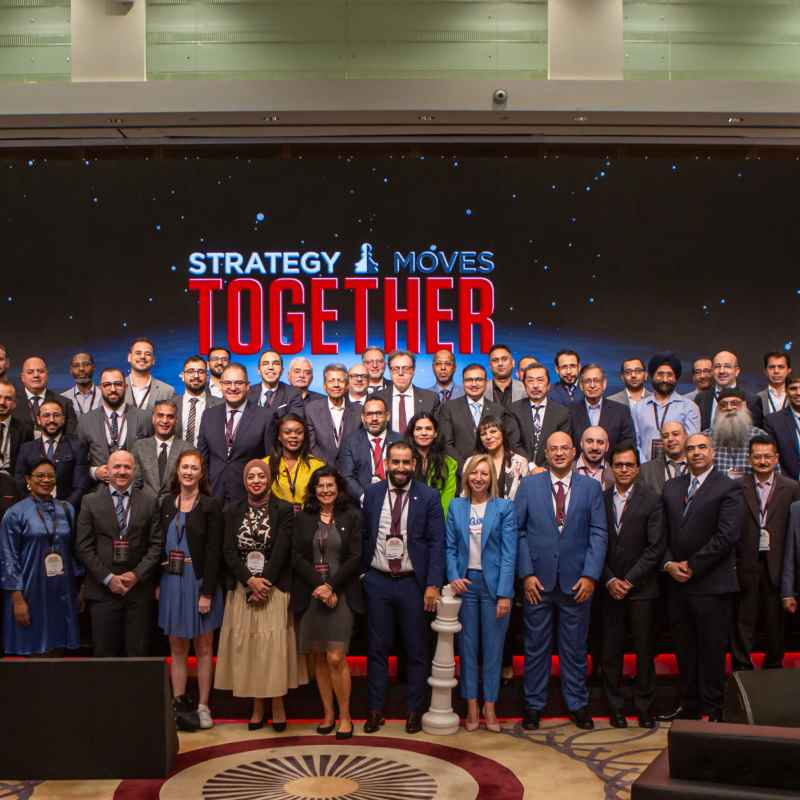
CCNA’s (Canon-CNA.com) theme ‘Strategy & Moves Together,’ saw Canon bringing its partners together to unveil its strategy and outlook to accelerate its footprint across African markets for 2023; Maximising opportunities and adapting to new emerging trends collectively with partners to accelerate the business and reaffirm its position as a pivotal industry leader.

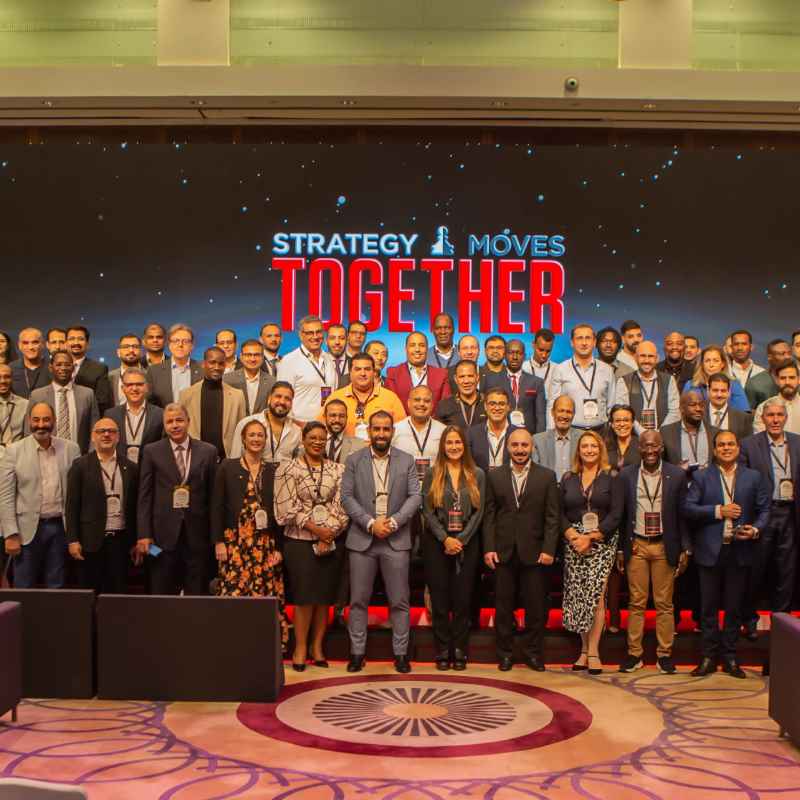
Canon Central and North Africa (CCNA), the leading provider of printing and imaging solutions, held its annual Partner Conference at the renowned Jumeirah Emirates Towers in Dubai on 8th & 9th November 2022. The event gathered participants and partners from 40 different countries across the African region which is a testament of Canon’s commitment to the Africa markets and partners’ support. In light of the shifting market trends and dynamics, Canon extended this year’s partner conference to two days for the first-time, to adequately meet the needs of market feedback and extended the invitation to include channel partners and dealers on the second day of the annual partner conference.

This year’s conference reflected the optimism Canon sees for the coming year in the market, launching the theme of 2023 as “Strategy & Moves Together”. Like a strategic game of chess, Canon is focused on adapting to a changing environment, turning challenges into opportunities, and reaffirming its position as a pivotal industry leader. It unveiled its growth plans and strategy to grow the business together with its partners through a committed approach of adaptability, resilience, and openness for future sustainable business prospects.
Closer-To-Customer

The world has adapted to a new normal, and Canon is focused on expansion throughout the region by staying committed to ensuring consistent growth with value business Partners, while simultaneously broadening the scope by increasing partnerships, value propositions to customer, and service benefits. Centring its vision of getting closer to its customers, Canon had set up various experiential booths to facilitate audiences in getting a first had imaging technology experience showcasing wide range of Canon’s consumer & business   products, solutions, and services. One of the goals highlighted in the conference was to continue building strong business resiliency not just for Canon but also for all its channel partners. Emphasizing on driving business value and growth through a three-pronged approach of ‘Flexibility Adaptability & Innovation for 2023.

2022 – A Healthy Performance

Canon is optimistic about the future. It showed a strong performance, with healthy growth projected until the end of the year. The company is aiming to close the year 2022 with remarkable sales achievement registering a double-digit growth over 2021. Canon extended its appreciation to all partners for helping to support its direction and strategy. Mutual growth with partners in Africa through Canon technology is a key priority to ensure that customers can make a living by learning new skills.

“The dialogue with our partners was extremely useful and thought-provoking. We intend moving into 2023 with a smart outlook to that we put customers at the forefront. We want to ensure that the growth for Canon and our partners is bolstered across Africa. Our approach is simple – we are focusing on remaining agile while constantly planning to seize new opportunities to ensure sustainable success. We are pleased with all the input received at the conference and the mapping out of our dynamic route. We look forward to starting 2023 with a fresh and unique outlook for our business, our partner engagements, and our plans to expand our presence across Africa,” said Somesh Adukia, Managing Director for Canon Central and North Africa.
The company is aiming to close the year 2022 with remarkable sales achievement registering a double-digit growth over 2021

Recognition of Accomplishments

At the conference, Canon CNA also recognised accomplishments of its valued partners and dealers through a set of strategic business awards for the 2022 period. Awards comprised of below categories:

Business to Consumer Awards:

  • President Award: Disway S.A
  • B2C Special Recognition Award: Sabi Systems
  • DRBG Special Recognition Award: Sabi Systems
  • Best Performance Award for Mirrorless: Navtan International
  • Best Performance Award for Pro-Video: UNOMAT International
  • Best Performance Award for G-Series: Raya Distribution

Business to Business Awards:

  • B2B Best Performance Award: Hiperdist

Business to Consumer Dealer Awards: 

  • Best Sub-Distributor for overall B2C Business: BCS Trading 
  • Best Channel Re-Seller for overall B2C Business: Al Habiib Electronics Limited
  • Best System Integrator for Laser Tender Business: Infodis  
  • Best Channel Re-Seller for Print: Elissa Distribution Computer Trading Limited  
  • Best Channel Re-Seller for Pro-Imaging: Universal Gift Centre  

Business to Business Dealer Awards:  

  • President Award: Copy Cat Group
  • DRBG Special Recognition Award: Canocity Ltd
  • Best Special Recognition Award LFP Best Performance: Burma  
  • Best Special Recognition Award process for closing tenders: GSM Al Magreb 
  • Best Special Recognition Award for Print: Proxitec Solutions & Infogerance 
  • Best Special Recognition Award Value Proposition: Click Group Information Technology Solutions   

Best Special Recognition Award Value Proposition: Best Buy Group

Distributed by APO Group on behalf of Canon Central and North Africa (CCNA).
Business

Forget Energy Transition, Produce Oil Like Nothing Before

Published

on

African Energy Chamber

The future requires more oil and gas production – not less

BUENOS AIRES, Argentina, June 9, 2026/APO Group/ –The world does not have an energy problem. It has an energy supply problem. As demand rises, populations grow, and billions of people continue to live without reliable access to electricity and clean cooking technologies, the case for producing more energy has never been stronger. From Africa to Latin America, governments and operators are responding with renewed investments in exploration, production and infrastructure, signaling a shift away from energy subtraction and toward energy addition.

Speaking during the ARPEL Conference 2026 in Buenos Aires, Argentina, NJ Ayuk, Executive Chairman of the African Energy Chamber (AEC) – the voice of the African energy sector – delivered a direct message to policymakers, investors and industry leaders: “Forget transition. Let’s talk about addition. Let’s give people what they need.”

The numbers support the argument. Energy poverty remains one of the greatest barriers to economic development globally. In Africa alone, more than 600 million people remain without access to electricity, with nearly one billion people living without access to clean cooking technologies – the most disproportionately affected of which are women. Asking developing economies to produce less energy while these realities persist is fundamentally disconnected from the needs of billions of people.

“For far too long, we have been told to build less, produce less and pay more for energy,” Ayuk stated. “In Africa, we believe this is a moment for energy addition, not energy subtraction. Drill, baby, drill. It’s more important today than ever before.”

Africa offers the clearest justification for increasing oil and gas production. Despite holding more than 125 billion barrels of crude oil reserves and 620 trillion cubic feet of proven gas reserves, the continent relies heavily on imported petroleum products to sustain its economies. Inadequate investment flows across the energy value chain have impacted development and industrialization, leaving millions in the dark.

The global energy transition further compounds this challenge. Opposition by environmental groups, a shift toward aid rather than commercial business structures and diminishing investment for oil and gas projects have brought significant implications to the continent. While developed economies are pursuing a shift towards alternative energy sources, Africa needs its oil and gas – now more than ever before.

For far too long, we have been told to build less, produce less and pay more for energy

Efforts are being made across the continent to produce more oil and gas. Leading producers such as Nigeria and Angola strive to increase output, targeting brownfield development, accelerated exploration and enhanced recovery. Emerging producers such as Namibia are fast-approaching first oil, while discoveries made in Ivory Coast, investments made in the Republic of Congo, and new LNG builds in Mozambique and Tanzania are supporting greater production continent-wide.

“We must remain resolute. We must commit to an industry that builds more, produces more and never apologizes for oil. Many people in Africa are not ashamed of oil. We believe oil has a major role to play in our energy future,” Ayuk said.

Latin America offers a powerful demonstration of what sustained exploration and production can achieve. Brazil’s pre-salt developments remain among the most successful offshore projects in the world, delivering large volumes of low-cost production while attracting continued investment. Guyana continues to expand output at one of the fastest rates globally, while Argentina’s Vaca Muerta shale play is strengthening the country’s position as a major energy producer. Pan American Energy also recently announced plans to invest $680 million to revitalize Argentina’s Cerro Dragon field in the mature Golfo San Jorge basin, reflecting global interest in optimizing South American oil production.

The region’s success reflects a commitment to developing resources rather than restricting them. “Our friends in Latin America have been strong stewards for our industry,” Ayuk said, adding, “Be proud of your energy industry.”

That message extends far beyond Latin America. As governments reassess energy policy, supply security and economic growth priorities, oil and gas continue to provide the foundation upon which modern economies are built. The choice facing both emerging and producing nations is increasingly clear: either create the conditions necessary for investment, exploration and development, or risk falling behind in a world that continues to demand more energy.

“We do not have anywhere to transition to. Where are we going to transition to? From the dark to the dark?” Ayuk asked. “We want to ensure that we have energy that drives development.”

For billions of people still seeking access to affordable, reliable energy, the priority is not producing less. It is producing more.

“Don’t ever apologize for producing energy that drives human flourishing,” Ayuk concluded. “Keep building, keep producing and don’t be scared to say, ‘drill, baby, drill’ whenever you have the chance.”

Distributed by APO Group on behalf of African Energy Chamber.

Continue Reading

Business

Heirs Energies’ US$750 Million Financing Named Best Oil & Gas Deal of the Year

Published

on

Heirs Energies Limited

The award was presented on 3 June 2026, in London, and recognises one of the largest financings secured by an indigenous African energy company

LONDON, United Kingdom, June 9, 2026/APO Group/ –Heirs Energies Limited, Africa’s leading indigenous-owned integrated energy company, has been recognised on the global stage after its landmark US$750 million dual-tranche Senior Secured Reserve-Based Lending (RBL) facility was named Best Oil & Gas Deal of the Year at the EMEA Finance Project Finance Awards 2026.


The award was presented on 3 June 2026, in London, and recognises one of the largest financings secured by an indigenous African energy company. The transaction highlights the growing role of African capital in supporting strategic investments that advance energy security, economic development, and long-term value creation across the continent.

Executed with the African Export-Import Bank (Afreximbank), the US$750 million financing was structured to accelerate field development, optimise production, and support Heirs Energies’ long-term growth ambitions, while maintaining disciplined capital management.

Commenting on the recognition, Osa Igiehon, Chief Executive Officer of Heirs Energies, said: “This recognition reflects the confidence that African and international financial institutions continue to place in Heirs Energies, our strategy, and our long-term vision.

“The transaction demonstrates that indigenous African energy companies can successfully structure and execute world-class financing solutions that support investment, growth, and value creation. We are proud to receive this award and grateful to our financing partners, advisers, and stakeholders whose support made it possible.”

We are proud to receive this award and grateful to our financing partners, advisers, and stakeholders whose support made it possible

Mr. Haytham ElMaayergi, Executive Vice President, Global Trade Bank at Afreximbank, said: “We are truly honoured that the US$750 million dual-tranche Senior Secured Reserve-Based Lending facility for Heirs Energies has been recognised as Best Oil & Gas Deal of the Year by the EMEA Finance Project Finance Awards.

“This recognition underscores the importance of well-structured, Africa-focused financing in supporting indigenous energy companies with strong governance, high-quality assets and clear long-term growth plans. Afreximbank was proud to support this landmark transaction, which demonstrates how African financial institutions can help mobilise capital for strategic businesses that advance energy security, production capacity and sustainable value creation across the continent.

“We congratulate Heirs Energies and all the partners involved in the transaction and are pleased to see this important financing recognised on such a respected international platform.”

Samuel Nwanze, Executive Director and Chief Financial Officer of Heirs Energies, added: “This award validates the strength of the transaction and the confidence our financing partners placed in Heirs Energies.

“The facility was designed to support our long-term growth strategy, enabling continued investment in field development, production optimisation, and sustainable value creation. We are pleased to see the transaction recognised on such a respected global platform.”

The financing represented a major milestone in Heirs Energies’ evolution from acquisition-led financing to a capital structure aligned with the long-term development profile of its reserves. It further reinforced the Company’s position as a leading indigenous energy producer and demonstrated the ability of African institutions to finance transformational African businesses.

The EMEA Finance Project Finance Awards recognise outstanding transactions across Europe, the Middle East, and Africa, celebrating excellence, innovation, and impact in project and structured finance.

Distributed by APO Group on behalf of Afreximbank.

Continue Reading

Business

What Human Resource (HR) Professionals Gain from Automation

Published

on

HR

Four examples of automation supporting HR staff

JOHANNESBURG, South Africa, June 9, 2026/APO Group/ –Human resource people are concerned. As automation becomes more featured in modern digital technologies, many HR staff are asking the same question: will automation replace me?


Their fears are not unfounded. According to surveys conducted by Gartner (https://apo-opa.co/4uo4fGQ), some companies are using AI as an excuse to reduce HR headcounts, and 79% of Chief HR Officers told AMS (https://apo-opa.co/4xj8Qg9) that they see notable concerns about job security among their teams.


Supporting human abilities


However, a report published last year by the International Labour Organisation (https://apo-opa.co/3SaBQGM) found that AI and automation are unlikely to replace HR staff. Instead, automation is producing significant productivity improvements for HR staff, says Mignon Wolmarans, HR Product Manager at Deel Local Payroll.


“HR jobs require people with complex problem-solving, creativity, and strong interpersonal skills. These are not abilities that a machine or software can replace. But HR people spend most of their time on manual tasks that actually reduce their ability to focus on priorities where their skills are needed the most.”


This observation comes from working with clients who adopt automation in their HR environments, she adds.


“We sometimes encounter reluctance when we bring up automation, and the resistance is usually around a comfort with manual processes or gaps in training and skills that reduce people’s confidence in technology. But when we work with them to overcome those concerns, they love what automation does and how it gives them more autonomy and focus.”


How automation supports HR


Modern HR platforms, cloud software, can automate many routine HR tasks, either as processes designed by HR teams or as ready-to-use native features. These latter features match frequent HR tasks that would otherwise require significant manual processing, input from multiple people, or both.

People are most reluctant to adopt automation because of skills gaps, which feeds into fears that the technology will replace them


Some examples include:


  • Leave management: Automate accruals based on length of service, salary grade, or a combination of the two. Automation applies forfeiture rules automatically, and if an employee’s tenure ends, leave encashment is calculated and processed in a single automated action.


  • Claims: Self-service custom forms and document attachments streamline overtime and travel claims. These are processed through established rules and approvals, pushed to the responsible managers or heads of departments. As soon as a claim is approved, it automatically updates payslip information.


  • E-onboarding: Instead of HR practitioners capturing new employee information manually, ‌newcomers use online forms to complete their basic profile and address information, and attach key documents, all of which are loaded onto their profile and only require approval from HR.


  • Performance management: Set up different performance review layouts, forms, and templates for various roles, objectives, and indicators. Participants can attach supporting documents, while reviewers, managers, and other staff can submit their contributions. All the performance data feeds into central dashboards for complete control and visibility of the company’s performance.


These automations reduce manual workloads and errors while extending features to other stakeholders in different departments. Crucially, they don’t replace HR staff and instead give them the capacity to focus on intricate and human-centric activities that require more than capturing data and compiling reports. As mentioned, HR teams can also create automated processes and customised forms.


Creating digital confidence


The best HR software vendors offer training and skills honing for customers. For example, Deel Local Payroll provides training staff and extensive learning resources for its customers, helping them take charge of automation.


“People are most reluctant to adopt automation because of skills gaps, which feeds into fears that the technology will replace them. That’s why we have a dedicated training department, one-to-one training, and e-learning courses that help fill those gaps,” says Wolmarans.


The fear that automation will replace HR people is overstated, even if some company leaders consider it an option. Software cannot compare to what skilled HR professionals do best. But those same professionals focus overwhelmingly on manual tasks, taking time better spent on more complex and strategic priorities.


Automation doesn’t replace HR professionals. When the right platform and vendor support them, it makes them better at their jobs.

Distributed by APO Group on behalf of Deel Local Payroll, powered by PaySpace.


Continue Reading

Trending