

Business
Kenyan HealthTech AfyaRekod launches Universal Patient Portal for worldwide health data mobility management

The subscription-driven Universal Patient Portal is a blockchain solution, with a consolidated mobile data health passport that allows patients consistent access to their health-records
NAIROBI, Kenya, July 8, 2022/APO Group/ —
Kenya based HealthTech company AfyaRekod launched a fully automated first of its kind Universal Patient Portal, built on the block-chain technology that will transform the face of patient care across Africa and the World. Through a secured centralized platform (www.MyRekod.com) patients and the medical professionals treating them will have real-time access to their health data and medical history not only ensuring effective ongoing medical management, but critical timely access to information in an emergency.
The brain-child of CEO John Kamara, AfyaRekod was founded in 2019 as an Adanian Lab start-up with seed funding from Mac Venture Capital and Next Chymia. Kamara saw first-hand how the lack of medical records and static data could lead to poor medical management when a friend died having received the wrong medical intervention in an emergency. Kamara built an AI platform that would track health data, aimed at bridging the gap between health care and treatment, anywhere, anytime for patients, medical professionals, providers and organisations.
Medical records are a vital tool in managing health, notifying healthcare professionals of medications, chronic illnesses, past problems and procedures and ultimately allowing them to determine the most accurate course of treatment. Misdiagnosis is serious and can lead to a delay in treatment of the real condition. An IOM report released in 2015 indicated that around 12 million instances of patient misdiagnosis occur annually in the USA, a country with a well-developed healthcare sector. Misdiagnosis is preventable, but only if health records are accurate and mobile.
“We identified the capture and storage of accurate data across every possible level of health infrastructure as a core problem. Bringing real time access to data that captures the mobility of health records was the solution. Our tool now allows patients to create a portal with all their health data and most importantly gives patients sovereign rights of ownership of their data. The patient logs in and sees all their information, from every healthcare provider they have interacted with. The power of patients owning their health records and having real time access to their information is lifesaving, and it is their right to have access to it”, said Kamara.
The pandemic has pressed the fast-forward button, bringing an urgency into health data accessibility and analytics. This is a global problem that is being addressed by a patient-centred health care innovation – AfyaRekod.
The subscription-driven Universal Patient Portal is a blockchain solution, with a consolidated mobile data health passport that allows patients consistent access to their health-records, as well as access to a marketplace of various services within the healthcare ecosystem in real-time.

Our tool now allows patients to create a portal with all their health data and most importantly gives patients sovereign rights of ownership of their data
Over and above patients securely managing their health records, including health diaries, prescriptions and hospital visit summaries, the AfyaRekod Universal Patient Portal offers a secure decentralised, intelligent telehealth solution, healthcare resources, symptom trackers, reminders and notifications, as well as the mobility of the record across multiple channels and devices. Though any patient should use these tools, it is especially useful for patients with chronic illness, parents, pregnant women, and patients with hereditary diseases.
The AfyaRekod platform extends to include doctors and healthcare providers, offering an electronic health management system with digital tools to manage all key aspects of hospital services and clinics. The system has multiple functionalities such as hospital management, patient management, knowledge management and inventory management, as well as an AI driven reporting tool that allows organisations to make data driven decisions, predictions and early disease identification. NGO’s and other related organizations can register and manage their beneficiary groups on the platform.
AfyaRekod is part of the NVIDIA AI program via AICE Africa and has over 150,000 users in Kenya alone and over 50 hospitals as its expanding in Nigeria, SA, Tanzania and Zambia. AfyaRekod is accessed via an app (android and iOS) and web portal via www.MyRekod.com.
AfyaRekod’s key partnerships include The Association of Sisterhoods of Kenya (AOSK), Healthy Mind Foundation (Nigeria), AURA (South Africa), GE Healthcare, Telkom, The Africa Block-Chain Center, The AI Center of Excellence, Adanian Labs and Lishe Living among others.
Distributed by APO Group on behalf of Afya Rekod.









Business
AFRICLOUD Opens Lagos Region and Local-Currency Payments in African Markets
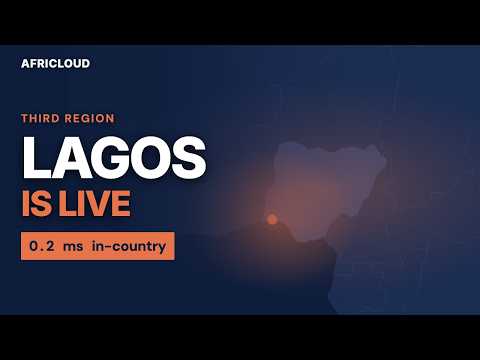
The company’s third African region keeps Nigerian workloads in Nigeria, and customers from Abidjan to Nairobi can now pay in the currency they earn, without an international card
Download document (1): https://apo-opa.co/4Ardfz9
Download document (2): https://apo-opa.co/46FWH8Y
Buying cloud infrastructure in Africa has meant living with three compromises: traffic that leaves the continent and comes back, payment in dollars behind a card many businesses do not hold, and data sitting under somebody else’s law.
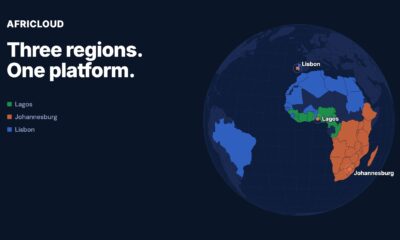
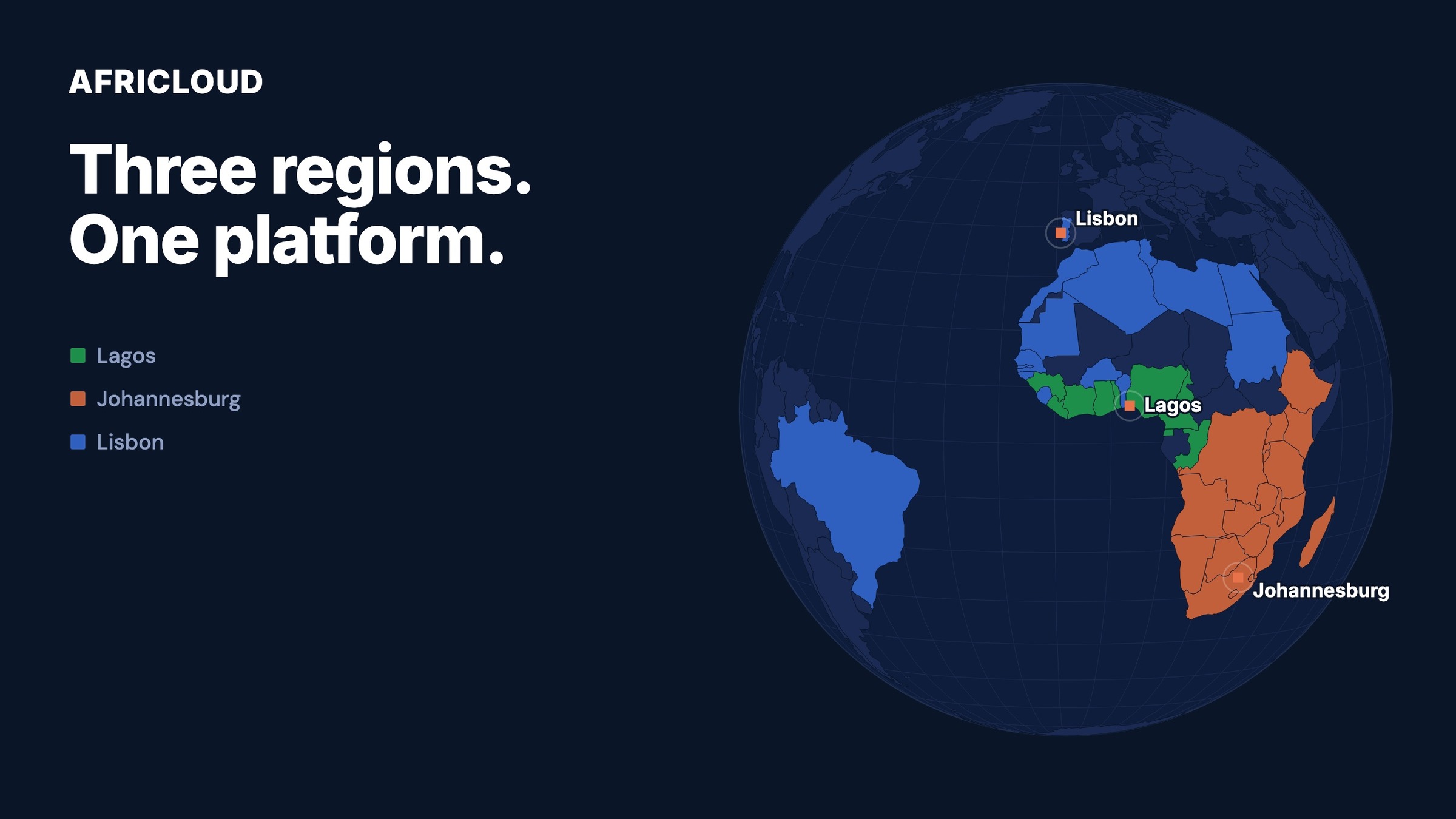
Lagos answers the first. Compute and storage for Nigerian customers stay in Nigeria, and the region also serves Accra, Abidjan, Lome, Douala and Ouagadougou. Traffic from landlocked West Africa that once reached comparable infrastructure by way of Europe now stays on terrestrial West African fibre. Johannesburg serves Southern and East Africa. Lisbon serves North Africa and Europe, and reaches Brazil over a direct subsea route. Across the three regions, AFRICLOUD’s own continent-wide measurements place 42 of the 53 African countries measured within a best-case round trip of 70 milliseconds, countries home to about 1.28 billion people.
A company in Accra or Abidjan now reaches West African infrastructure without leaving the region, and pays for it in the currency it earns
Payment answers the second. Customers across West, Central, East and Southern Africa pay in their own currency, including the naira, the cedi, the shilling and the CFA francs, by local card, bank transfer, USSD or mobile money, with no international card needed. Mobile money is live in twelve African countries, and cards, PayPal and more than 300 cryptocurrencies are accepted everywhere. The GSMA reports that 74 per cent of the world’s mobile money activity by transaction count took place in Africa in 2024.
Residency answers the third. Nigerian data runs under the Nigeria Data Protection Act, South African data under POPIA and European workloads under EU law, chosen server by server from the same dashboard.
“African businesses have been asked to choose between infrastructure that is close, infrastructure they can actually pay for, and infrastructure that keeps their data under their own law,” said Oluniyi Ajao, Founder of AFRICLOUD. “Removing that choice is the reason we built this.”
“Lagos is the piece that completes the map,” he said. “A company in Accra or Abidjan now reaches West African infrastructure without leaving the region, and pays for it in the currency it earns.”
All three regions run the same platform: AMD EPYC processors with all-NVMe storage, IPv4 and IPv6 on every server, and a new server online in about two minutes. Dedicated Servers are built to order in all three regions. Support is available around the clock by chat and email.
Cloud Servers are available now at https://AFRICLOUD.com.
Distributed by APO Group on behalf of AFRICLOUD LLC.
Business
Hong Kong outlines strategies for deepening development of the Guangdong-Hong Kong-Macao Greater Bay Area and enhancing green transformation

Business
Alamein Africa Forum to bring together key political and business leaders

-

 Business3 days ago
Afreximbank, Ghana Infrastructure Investment Fund (GIIF) and Ghana’s 24-Hour Economy Authority launch project preparation partnership to accelerate 24H+ projects
-

 Events3 days ago
Huawei Cloud Rolls Out Enterprise AI Products Across the Board, Building an Open Agentic Cloud
-
 Business2 days ago
Hong Kong sets out strategies to enhance the appeal and add value to the city’s tourism industry
-

 Business2 days ago
Former DAMAC Senior Vice President Paulo J. Cruz Appointed Founding CEO of African Collaboration Group (ACG) to Spearhead Sports and Entertainment District Development Across Africa
-

 Energy3 days ago
Deals, Drilling and New Entrants Define Angola Oil & Gas 2026
-

 Business3 days ago
Hong Kong sets out initiatives to secure long-term development of pillar industries
-

 Business2 days ago
Africa Makes its Case for a Bigger Role on the Global Stage
-

 Business2 days ago
South Africa’s water challenges are reshaping how businesses plan for resilience