Connect with us
Anglostratits

Events

Beyond the carbon credit: Who sets the terms for Africa’s carbon markets?

Published

on

From project ownership and verification to pricing and benefit-sharing, CMAS 2026 will bring African market leaders and global decision-makers together to examine who creates and captures value

KIGALI, Rwanda, September 22, 2026/APO Group/ –A carbon credit may be traded as a single unit, but its value is shaped long before it reaches a buyer. Decisions about project ownership, finance, data, verification and benefit-sharing determine who participates, who carries the risk and who ultimately benefits. As new regulations and international partnerships expand market access, these questions are becoming increasingly important across Africa.


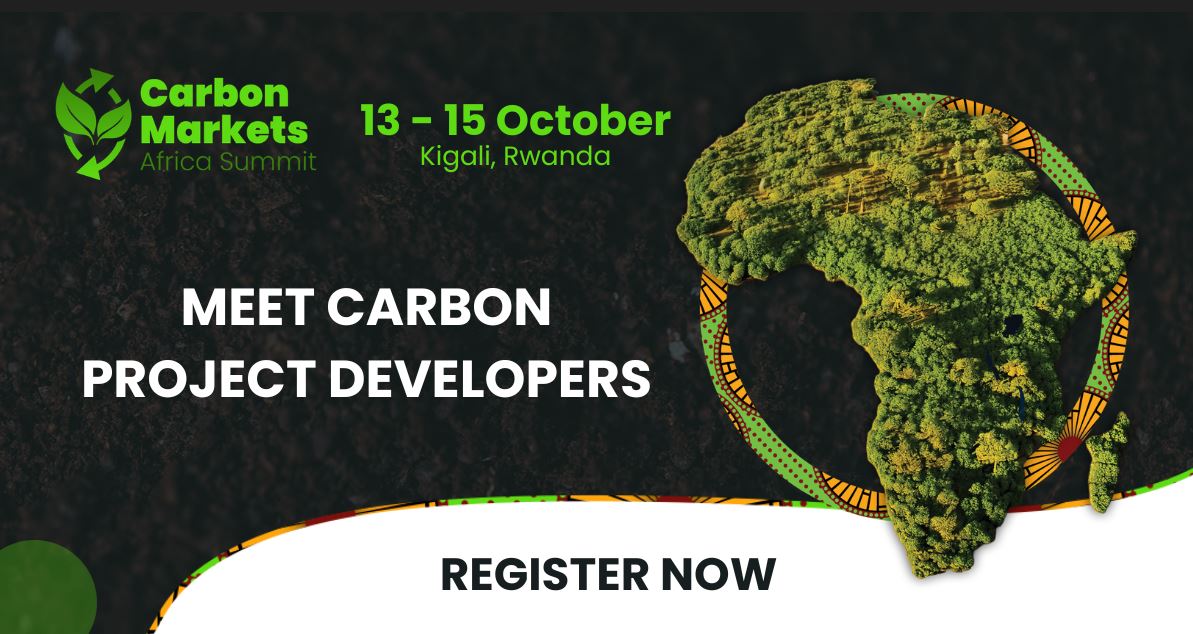
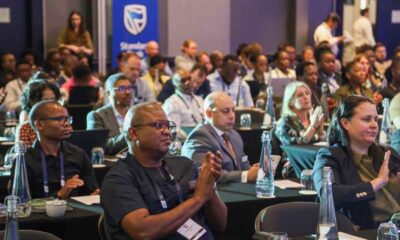
They will be central to the Carbon Markets Africa Summit (CMAS) 2026, taking place from 13 to 15 October at the Kigali Convention Centre in Rwanda. The summit will convene African governments, project developers, investors, buyers and technical experts involved in decisions across the carbon-market value chain.

Countries are approaching these decisions from different regulatory, economic and environmental positions. While recent developments in East Africa demonstrate growing market activity, questions concerning international requirements, technical capacity, investment and benefit-sharing are relevant across Africa.

Ousmane Fall SARR, Coordinator of the West African Alliance on Carbon Markets and Climate Finance, says:

“African countries are developing carbon markets from different starting points. Stronger African expertise and regional cooperation will be important if the continent is to contribute to the standards and market practices that determine how its projects compete, attract investment and create value.”

Against this continental backdrop, East Africa provides a timely example of how the market is developing. In January 2026, Rwanda and Singapore invited applications for carbon-credit projects under their bilateral Implementation Agreement, aligned with Article 6 of the Paris Agreement. Credits from authorised projects may be used by eligible Singapore-based carbon tax-liable companies to offset up to 5% of their taxable emissions, subject to both governments’ requirements.

African countries are developing carbon markets from different starting points

Across the continent, carbon market frameworks are rapidly taking shape. Kenya and Uganda are strengthening regulatory oversight, regional partnerships are helping governments build market capacity and infrastructure, and South Africa is advancing reforms to modernise its carbon-credit ecosystem and attract investment. Together, these developments are bringing greater focus to questions of authorisation, project ownership, verification, pricing and access to international buyers, while also raising expectations that carbon finance should deliver sustainable economic and development value beyond the credit itself.

Emmanuelle Nicholls, Portfolio Director for CMAS, says:

“A carbon credit may be the final product, but behind it are decisions about ownership, data, risk, pricing and who ultimately benefits. The conversations in Kigali will examine what credible participation looks like across the full carbon-market value chain.”

These decisions have consequences beyond individual transactions. Carbon finance is increasingly connected to conservation, agriculture, soil restoration, food security, clean energy and waste management. Its success will therefore also be judged by whether projects produce credible environmental outcomes and lasting benefits for African economies and communities.

A practical example comes from the Chinko Conservation Area in the Central African Republic, where revenue from the Chinko Carbon Project is channelled through a community fund that supports locally selected initiatives, including the expansion of a medical centre in Agoumar. At CMAS 2026, African Parks and Welthungerhilfe, both Bronze Sponsors, will share perspectives on how carbon finance can support conservation, climate resilience, food systems and community development, while highlighting broader questions around project governance, impact and the distribution of value.

From project-level impact to market-wide structures, these questions will underpin discussions at CMAS 2026. The programme will address government authorisation, buyer requirements, pricing and offtake, investment risk, early-stage finance, registries and African measurement, reporting and verification capacity. It will connect the question of who sets the terms with the practical requirements for building credible, investment-ready projects and transactions.

CMAS 2026 is hosted by the Ministry of Environment of Rwanda, with UNDP and the African Development Bank as host organisations, the Development Bank of Southern Africa as host partner and AUDA-NEPAD as strategic institutional partner.

Taking place ahead of COP31, CMAS will focus attention on the decisions behind every carbon credit and what they mean for African governments, projects, investors and communities.

Distributed by APO Group on behalf of VUKA Group.


Energy

International Energy Forum (IEF) Chief to Bring Global Energy Perspective to Libya Energy & Economic Summit (LEES) 2027

Published

on

Etu Energias

Secretary General of the International Energy Forum (IEF) Jassim Alshirawi is set to bring international energy policy expertise to discussions on Libya’s multi-billion-dollar investment pipeline and production expansion strategy

TRIPOLI, Libya, November 5, 2026/APO Group/ –International Energy Forum (IEF) Secretary General Jassim Alshirawi will participate as a speaker at the Libya Energy & Economic Summit (LEES) 2027, taking place in Tripoli on January 23–25. His participation will bring international energy policy expertise to discussions on Libya’s production ambitions, infrastructure development and integration into global energy markets.


Libya is pursuing a $36 billion energy investment program to expand production, develop infrastructure and attract international capital. The country aims to increase oil output to two million barrels per day by 2030–31, creating investment opportunities across upstream operations, gas development and downstream infrastructure. Delivering these ambitions will require financing, technical expertise and sustained cooperation between domestic institutions and international energy companies.

Alshirawi’s experience in international energy cooperation offers relevant perspectives as Libya works to strengthen its position in global markets. The IEF brings together energy-producing and consuming countries to facilitate dialogue on market stability, security of supply and investment. These priorities intersect with Libya’s efforts to mobilize capital, develop its hydrocarbon resources and establish the infrastructure required to support long-term production growth.

Appointed the IEF’s sixth Secretary General, Alshirawi assumed office on January 1, 2025, following his election on June 25, 2024. He brings more than 40 years of experience across the public and private energy sectors, including senior executive positions at Bahrain Petroleum Company and Bahrain’s Ministry of Oil, alongside advisory responsibilities to Bahrain’s oil and gas minister.

His professional background also includes contributions to Bahrain’s renewable energy and energy efficiency planning. Before becoming Secretary General, Alshirawi served seven years on the IEF Executive Board and nine years in its International Support Group, building extensive experience in institutional cooperation and international energy policy.

Libya became the IEF’s 72nd member country in January 2023, strengthening its participation in international energy dialogue and the Joint Organisations Data Initiative. Membership provides a platform for engagement on energy data transparency and market developments, supporting Libya’s efforts to deepen international cooperation as it pursues investment and production targets.

LEES 2027 will bring government representatives, national oil companies, international operators, investors and financial institutions to Tripoli to examine commercial opportunities across Libya’s energy sector. Alshirawi’s participation will contribute an international policy perspective to discussions on financing, infrastructure integration and the partnerships required to advance the country’s energy development objectives.

For more information about LEES 2027, visit www.LibyaSummit.com. To sponsor or participate as a delegate, contact sales@energycapitalpower.com.

Distributed by APO Group on behalf of Energy Capital & Power.


Continue Reading

Education

Global Higher Education Forum Highlights Hong Kong’s Strategic Vision as International Talent Hub

Published

on

Hong Kong

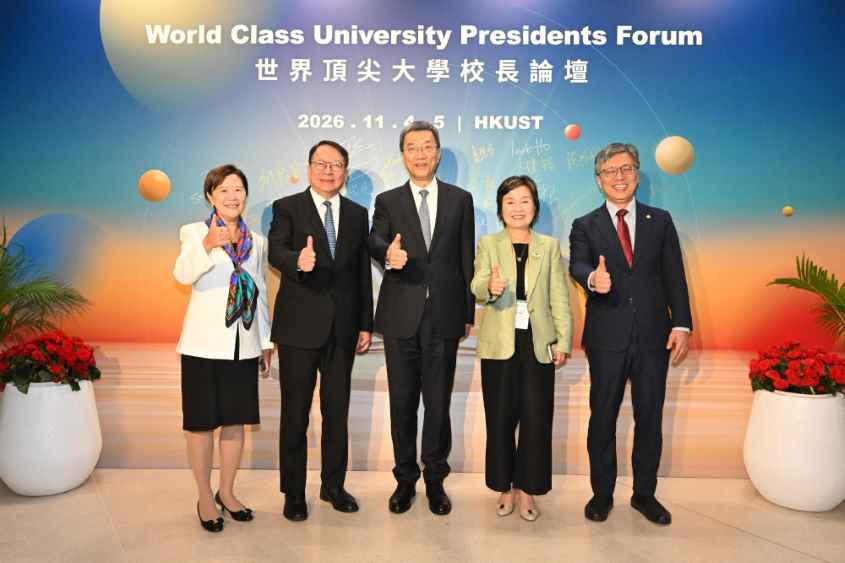
HONG KONG SAR – Media OutReach Newswire – 5 November 2026 – Education leaders from around the world gathered in Hong Kong for the World Class University Presidents Forum 2026 (November 4-5), further enhancing the city’s prestige as a global hub for higher education and promoting academic collaboration and exchanges.

University presidents, renowned scholars and international education leaders representing more than one-third of the world’s top 50 universities joined the Forum, which was held at the Hong Kong University of Science and Technology (HKUST). They discussed key issues such as talent cultivation in the intelligent age, technology and innovation driving the future economy, and universities’ response to major global challenges.


Speaking at the opening ceremony (November 4), Chan Kwok-ki, Acting Chief Executive of the Hong Kong Special Administrative Region (HKSAR), said the Forum’s theme, “Higher Education Reimagined: Innovating for the Future” reflects the current global environment.

“We live in an age of rapid technological change, systemic economic shifts, and unprecedented global challenges,” Mr Chan said. “In this transformative landscape, universities are no longer just communities of learning and skills development. They are engines of innovation, guardians of truth, and architects of our collective future.”

Mr Chan noted that higher education has always been a vital pillar of Hong Kong’s success, with the city being home to five universities that are ranked among the world’s top 100. Also, the latest QS World University Rankings: Asia 2027 (November 3), listed five Hong Kong universities in Asia’s top 10, and three in Asia’s top five, further demonstrating the strength of Hong Kong’s higher education system.

“This is not by chance,” Mr Chan said. “It is the result of sustained government investment, clear policy direction and the hard work of our universities.”

Serving as a bridge between East and West, Hong Kong offers a fertile ecosystem characterised by internationalisation and diversification, which brings global talent together to address shared global challenges.

“Alongside signature international events such as the Asia-Pacific Association for International Education (APAIE) Conference and Exhibition held in February, the World Class University Presidents Forum 2026 forms part of a strategic series of signature initiatives promoting the ‘Study in Hong Kong’ brand worldwide, underscoring the city’s role as a key driver shaping the future of global higher education,” said Dr Choi Yuk-lin, the Secretary for Education of the HKSAR.

Dr Choi stressed that Hong Kong’s educational future is taking concrete physical shape through the development of the Northern Metropolis University Town.

Under the “One town, Five elements” framework, the HKSAR Government is building a holistic campus ecosystem integrating higher education, advanced research, market innovation, vibrant living spaces, and top-tier talent.

“Positioned at the gateway to the Chinese Mainland, the University Town will foster deep Industry-Academia-Research integration, linking academic research directly with industry capabilities to serve national development under the 15th Five-Year Plan,” Dr Choi said.

Several heavyweight interuniversity co-operation signing ceremonies were also held during the Forum. These included a Memorandum of Understanding (MOU) on deepening collaboration between Central South University and Monash University; an MOU between Zhejiang University and the HKUST on the establishment of a joint innovation centre; a Trilateral Joint Seed Fund agreement among the University of Warwick, Nanyang Technological University, and Shanghai Jiao Tong University; as well as a student exchange agreement between Trinity College Dublin and Nanjing University, marking a new milestone in global higher education and research collaborative innovation.

“Assembling such a distinguished constellation of global academic leadership strongly reaffirms Hong Kong’s standing as an international education hub and significantly enhances the city’s discourse power in the global educational arena,” Dr Choi said. 


Continue Reading

Events

2026 Tropical Rainforest Ecosystem Partners Conference: Global Gathering to Protect Earth’s Green Lungs

Published

on

Rainforest Ecosystem

HAIKOU, CHINA – Media OutReach Newswire – 3 November 2026 – From Nov. 18 to 22, 2026, a global gathering dedicated to protecting the Earth’s “green lungs” will take place in Haikou, Hainan Province, China: the 2026 Tropical Rainforest Ecosystem Partners Conference.

From the vast Amazon rainforest to the dense forests of the Congo Basin and the diverse landscapes of the Malay Archipelago, representative rainforests from around the world will come together with the National Park of Hainan Tropical Rainforest for dialogue and exchange. Under the theme “Global Treasures · Shared Future,” the conference embodies humanity’s shared commitment to protecting rainforests and pursuing sustainable development.


Tropical rainforests cover less than one-tenth of the Earth’s land area, yet they are home to more than half of the world’s plant and animal species. Hainan, China’s only tropical island province, is home to the country’s largest, most concentrated and best-preserved contiguous tropical rainforest on a continental island. Established in 2021, the National Park of Hainan Tropical Rainforest covers more than 4,269 square kilometers and protects over 95 percent of Hainan Island’s primary forests. Its forest coverage rate remains stable at 95.9 percent, while both its water and air quality excellence rates stand at 100 percent.

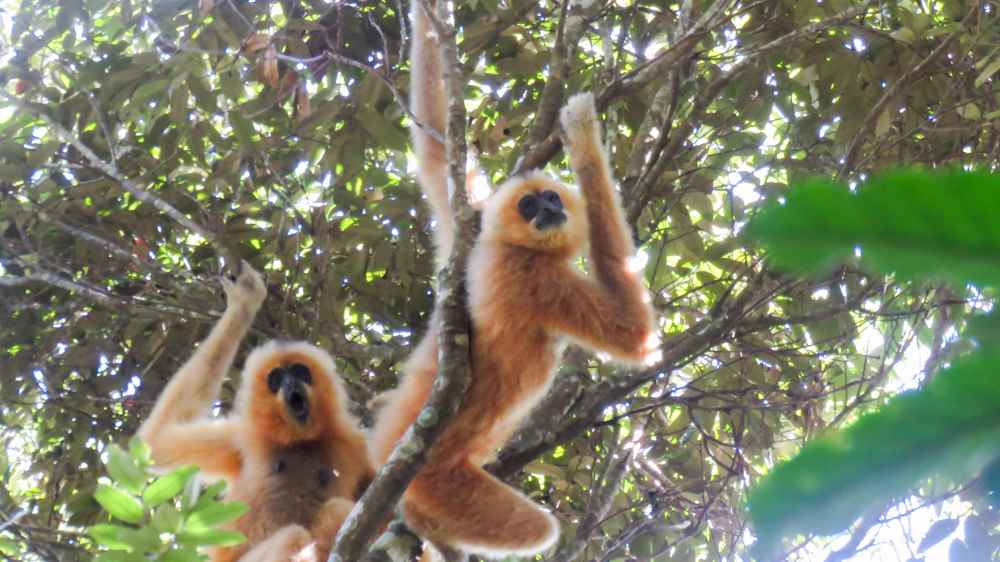
Over the past five years, this rainforest has continued to witness remarkable ecological achievements. The Hainan gibbon population has grown to 44 individuals across seven groups, making it the only gibbon population in the world to have shown sustained growth.

In addition, 91 previously undocumented wild plant and animal species have been recorded in the park. An integrated space-air-ground ecological monitoring system now provides round-the-clock, comprehensive monitoring and protection of the rainforest ecosystem. The “Bawangling Model” for Hainan gibbon conservation has also been recognized by the International Union for Conservation of Nature (IUCN) as a global model for protecting rare species.

The conference will explore how forests can serve as reservoirs of water, sources of food, generators of economic value and carbon sinks. Two keynote forums and four parallel forums will be held, bringing together participants for in-depth discussions on key topics, including water conservation and aquatic ecological security, the sustainable use of forest food resources, ways to unlock the value of ecological products, and carbon management in rainforests. The discussions will foster exchanges of ideas and the sharing of experience.

The conference will also focus on Hainan’s efforts to seek dual World Heritage recognition for its natural and cultural heritage. It will bring together global expertise to support the nomination of the Hainan Tropical Rainforest and the Traditional Settlement of Li Ethnic Group for inscription on the UNESCO World Heritage List as a mixed natural and cultural heritage property. The initiative will explore new approaches to rainforest governance that uphold ecological protection as a firm priority while bringing tangible benefits to local communities.

In addition to the conference sessions, a series of supporting events will be held. “Rainforest Night,” a showcase of Hainan’s intangible cultural heritage, will offer an immersive audiovisual experience showcasing the distinctive traditions of the Li and Miao ethnic groups. The “Hidden Realms · Shared Life” Hainan Tropical Rainforest Photography Exhibition and the “Gifts of Nature” Ecological Products Market will showcase the rainforest’s natural beauty and innovative ways of turning ecological resources into tangible benefits. Field expeditions into the Hainan Tropical Rainforest, media tours, and the public-interest initiative “Breathe Deep in the Rainforest · Protect Our Shared Habitat” will take participants deep into the rainforest to experience the vitality of its ecosystems.

As the Hainan Free Trade Port approaches the first anniversary of the launch of island-wide special customs operations and the National Park of Hainan Tropical Rainforest marks its fifth anniversary, this conference will serve as China’s green calling card to the world and provide a platform for international dialogue and cooperation on rainforest conservation.


Continue Reading

Trending