Connect with us
Anglostratits

Business

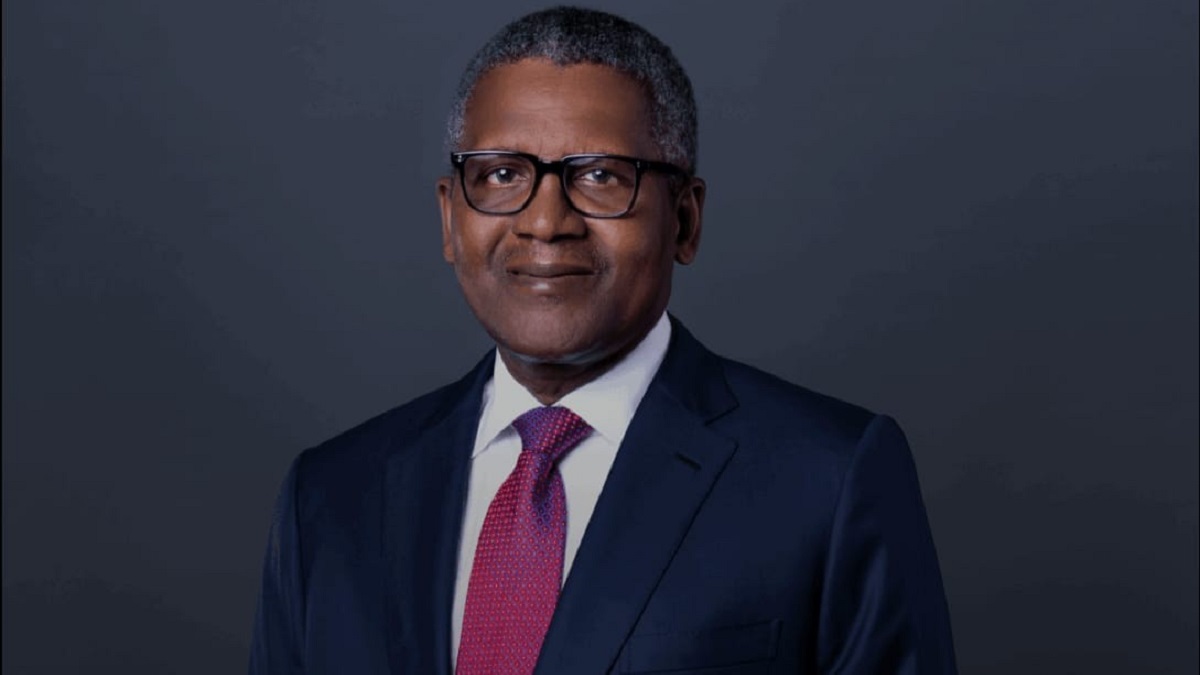
Aliko Dangote: African Energy Person of the Year 2026

Published

on

Aliko Dangote

Aliko Dangote is a visionary who has invested his time, resources, and unwavering belief in Africa’s potential to build industries, strengthen energy security, and create lasting economic opportunity across the continent

JOHANNESBURG, South Africa, May 18, 2026/APO Group/ –Each year, the African Energy Industry’s “African Energy Person of the Year” award celebrates individuals who have positively influenced Africa’s energy sector by facilitating projects that strengthen energy security, African development, energy additions, free markets, limited government, economic resilience, the prosperity of families, local content and improve African energy infrastructure. Previous awardees include Frank Fannon, former United States Assistant Secretary of State for Energy Resources; Mohammad Sanusi Barkindo, former OPEC Secretary General; Hage Geingob, former President of Namibia; Meg O’Neill, CEO of Woodside Energy; Benedict Oramah, President and Chairman of the Board of Directors of African Export-Import Bank; and João Lourenço, President of Angola.


The African Energy Chamber is pleased to present the 2026 award to Aliko Dangote.

This is a fitting honor for the Nigerian businessman and industrialist who has invested billions in Africa to strengthen energy security, build infrastructure, create jobs, reduce import dependence, support regional development, and promote African-led solutions to energy poverty.

A Career Devoted to African Growth

After his studies in business at Al-Azhar University in Cairo, Dangote ventured into a wide variety of industries, with enterprises in cement, sugar, salt, flour, and fertilizer. From a small trading business, he has built one of Africa’s largest conglomerates: Dangote Group, a multinational industrial powerhouse that develops African technical expertise, enhances domestic supply chains, and boosts industrial capacity — all resulting in greater opportunities for economic diversification.

Dangote has long recognized one of Africa’s biggest economic challenges: the need among African countries to export raw materials and import finished products. He adopted a long-term mission to help solve this dilemma by building manufacturing capacity, logistics systems, energy infrastructure, raw material processing, and transportation networks that will move more production and value creation inside Africa.

Under the direction of this transformative business leader, the Dangote Group is one of the most ambitious industrial conglomerates ever built in Africa. What makes the organization unique is not just its size, but its strategy: Instead of focusing on trading or resource extraction, Dangote has invested heavily in the physical infrastructure needed for industrialization across Africa.

But it’s when he turned his sights to hydrocarbons that Aliko Dangote’s story really comes alive.

Breaking the Import Dependence Cycle

In recent years, he gained global attention for the Dangote Refinery in Lekki near Lagos, Nigeria. This is one of the world’s biggest oil refineries (and the world’s largest single-train refinery), with a planned refining capacity of about 650,000 barrels per day. It includes a petrochemical complex and fertilizer facilities. The refinery produces gasoline, diesel, aviation fuel, and other refined petroleum products at a scale capable of transforming regional and international fuel markets.

This is not simply a refinery. It is a macroeconomic game-changer for Nigeria and a transformative project for African energy security.

For years, Nigeria’s dependence on imported refined products created fuel shortages, subsidy burdens, foreign exchange pressures, and opportunities for corruption tied to import systems and arbitrage networks. The Dangote Refinery has fundamentally altered that trajectory by enabling domestic refining at unprecedented scale while helping strengthen Nigeria’s energy sovereignty. At a time of global energy volatility, the refinery is a primary reason African economies remain resilient in the face of external fuel shocks.

The refinery also represents something even bigger for Africa: proof that the continent can build and operate world-scale industrial infrastructure.

At a time when geopolitical instability involving Iran and growing uncertainty around the Strait of Hormuz continue to threaten global shipping lanes and fuel supply chains, the Dangote Refinery has emerged as a strategic stabilizing force for both Nigerian and international energy markets. As supply disruptions intensify, the refinery actively helps fill fuel supply gaps beyond its borders. Today, refined products from Dangote are supplying markets across the continent, including Ghana, Cameroon, and Côte d’Ivoire. The refinery is already supplying fuel products to the United Kingdom, Europe, and the United States, and in June 2026, the refinery is expected to load its first major gasoline shipment to Asia.

Many critics doubted that the refinery would ever be completed.

Dangote faced skepticism from international observers, financing challenges, infrastructure bottlenecks, technical complexity, political uncertainty, and currency volatility. Despite these, and many other hurdles, Dangote’s steadfast determination and visionary leadership persisted to bring the project to fruition.

Today, the refinery stands as a symbol of African industrial ambition and confidence.

Its impact on Nigeria’s economy has been profound. According to S&P Global Ratings, Nigeria’s refining capacity is increasing significantly thanks to the Dangote Refinery. By reducing the nation’s need for refined fuel imports, the refinery played a key role in boosting the Nigerian gross foreign exchange reserves from $33 billion in 2023 to $50 billion by early March 2026.

And Dangote is not stopping there. In early 2026, plans for feasibility studies indicated the interest in expanding its current refining capacity to 1.4 million barrels per day. This move could position Nigeria among the world’s most significant refining hubs by the end of the decade, potentially rivaling refining centers in India and Asia by 2027 or 2028.

At the same time, the Dangote Group is expanding fuel storage and logistics infrastructure beyond Nigeria’s borders, with plans for new storage tank projects in Namibia and the potential development of a second refinery in East Africa. These efforts will undoubtedly further strengthening regional industrialization, supply reliability, and energy integration across the continent.

Sharing the Wealth

Dangote’s positive influence on African industry and economic development cannot be overstated. But he is more than a businessman or industrialist. He is also dedicated to helping his country and uplifting his fellow Nigerians. Among his philanthropic efforts, he leads the Aliko Dangote Foundation (ADF), which supports health initiatives, education, disaster relief, poverty reduction, and nutrition programs across Africa.

Established with the mission of reducing poverty and improving quality of life through strategic philanthropy and sustainable development initiatives, ADF is one of the largest private charitable foundations in Africa. Dangote himself has publicly committed a large portion of his wealth to philanthropy, including signing the Giving Pledge that encourages billionaires to donate most of their fortunes.

ADF became internationally known for supporting Nigeria’s campaign to eradicate polio. It partnered with the Bill & Melinda Gates Foundation, UNICEF, the World Health Organization, and various Nigerian government agencies in this work. It’s no coincidence that Nigeria was declared free of wild polio in 2020, after years of vaccination campaigns.

The foundation also supports nutrition initiatives targeting children, pregnant women, and vulnerable communities. Agricultural programs to strengthen poverty reduction and employment have included farmer support, fertilizer access, agricultural training, and rural development efforts.

ADF regularly donates large sums and relief materials to affected communities across Nigeria to provide emergency assistance during crises such as flooding, food shortages, displacement, and disease outbreaks. For instance, the foundation helped coordinate private-sector responses through the Coalition Against COVID-19 (CACOVID), contributing emergency funding for medical supplies, isolation centers, and food assistance.

The foundation, under Dangote’s leadership, also promotes programs designed to create sustainable livelihoods, including small business support, agricultural initiatives, women’s empowerment projects, and entrepreneurship development. Programs focus on helping communities move from aid dependency toward long-term economic participation. By collaborating with universities and educational institutions to strengthen research and learning capacity, Dangote is improving educational access and workforce readiness, especially for young Nigerians, through scholarships, school infrastructure, university programs, and vocational training.

ADF often works with African governments, international NGOs, UN agencies, community organizations, and global philanthropic institutions. Its partnership model is crucial because many African development challenges require coordination between public and private sectors. Its influence extends beyond charity into public health, economic policy, and development strategy across the region.

Aliko Dangote is a visionary who has invested his time, resources, and unwavering belief in Africa’s potential to build industries, strengthen energy security, and create lasting economic opportunity across the continent. The African Energy Chamber looks forward to seeing the impact of his efforts continue to unfold in the years ahead.

Distributed by APO Group on behalf of African Energy Chamber.

Business

Global retail ad market to hit $200bn milestone this year as growth momentum slows

Published

on

WARC
WARC Media releases The Future of Commerce Media 2026 examining the intersection of commerce and advertising
19 August 2026 – The global retail media market continues to grow and evolve, with ad investment projected to surpass $200bn this year and reach $223bn by 2027, per WARC Media. However, growth is slowing towards single digits, and there are dangers of ‘enshittifying’ the shopper experience, which in turn may have a negative impact on campaign effectiveness, as retail media networks look to meet ambitious targets.

Alex Brownsell, Head of Content, WARC Media, says: “The retail media landscape is maturing and

consolidating, forcing marketers to rethink their approach. While retail media excels at converting existing demand, it underperforms on long-term brand building. Retailers face a delicate balancing act: growing ad revenue to boost margins without overwhelming shoppers with too many ad interruptions that compromise both shopper experience and campaign effectiveness. Success now depends on smart integration with other channels and finding the optimal path to sustainable results.”

The Future of Commerce Media 2026 examines key trends and analyses fresh research about the intersection of commerce and advertising.

Global retail media ad market to reach $200.4bn in 2026 and $223.4bn in 2027, but growth slows

On course to reach $200.4bn in 2026, worldwide retail media investment is forecast to grow by 11.5% year-on-year in 2027 to $223.4bn, according to WARC Media’s latest forecasts. By then, retail media will account for 15.2% of total worldwide ad investment.

However, growth is slowing towards single digits. When excluding industry leader Amazon, the global retail media market is set to dip to 9.8% in 2027 – the lowest year-on-year rate of growth since WARC Media began monitoring spend.

US retail media remains resilient as European growth slows

While European retail media spend growth decelerates to single digits, the US market shows stronger momentum. WARC Media forecasts US retail media network spending will grow 13.6% in 2028 to reach $74.9bn.

But concentration of ad spend remains a challenge. In 2025, Amazon captured 78.0% of all US retail media expenditure, with Walmart taking 7.5%, leaving just 14.5% for all other networks combined, according to Walrus Intelligence. In Europe, more than two-thirds of overall retail media spend went to Amazon in France, Germany, Italy, Spain, and the UK.

Retail media takes more than half of CPG ad budgets

Retail media dominates endemic CPG category budgets. In 2027, retail media will account for 55.8% of all media investment by alcoholic drinks brands globally, and 54.9% of the overall food category spend. However, in fast-growing categories like technology and electronics, retail media is set to only take 15.0% of total spend in 2027 – down from 16.2% in 2025.

Many retail media networks are over-reliant on a small number of core advertisers. Nearly three-quarters (73.9%) of UK brands spend with three or fewer RMNs. WARC Media’s analysis found that among eight of the UK’s largest domestic RMNs, none achieves a third of revenue from the long tail – i.e. the bottom 50% of brands by spend.

Amazon’s non-retail advertising business – spanning Prime Video and Twitch – is projected to generate $6.7bn in 2027, surpassing Walmart’s total 2025 ad spend. As a standalone entity, it would be the world’s second-largest commerce media operation outside China, highlighting Amazon’s expanding dominance beyond traditional retail media.

Retail media can help bring SMEs into the TV ad market

Video on-demand is poised to overtake retail media’s global advertising investment by 2028, according to WARC Media forecasts, with connected TV already representing 23% of retail media spend.

Walmart’s acquisition of Vibe.co points towards a clear growth opportunity for retail media networks, by encouraging smaller brands, which until now focused on performance, to begin exploring channels like CTV.

‘Enshittification’ a risk as retail media networks try to meet ambitious targets

As commerce media enters a phase of slower growth and consolidation, it risks what tech author Cory Doctorow has called “enshittification”, where the digital experience declines as platforms look to fuel monetisation at the expense of users and business customers.

With consumer spending under pressure, it may be tempting for RMNs to dial up ad loads. Amazon, The Home Depot, Macy’s and Walmart each serves 20+ ads per page on average, research has found.

To avoid commerce media ‘enshittification’, brands are advised to build a frictionless on-platform experience that prioritises serving users, maximises ad relevance and minimises irrelevant ad clutter. Standardised measurement and arming AI tools with robust datasets and deep consumer understanding can also help.

Retail media creative must work harder than other channels

Retail media creative must work significantly harder just to register with audiences. A study of simulated shopping experiences on Walmart and Amazon by Ipsos found that memory encoding drops by 47% for ads run on retailer platforms, as opposed to those appearing on generic offsite environments.

For undecided shoppers, high creative quality drives a 12% lift in short-term brand choice. For those not in the market, superior creative quality produces a 21% performance advantage over low-quality ads.

More than half (62%) of US grocery buyers claim to have purchased a product directly after seeing it on an in-store screen, yet in-store remains one of the most underdeveloped creative opportunities in retail media.

Additionally, WARC research suggests that retail media ads are good at converting existing demand, but bad at generating long-term outcomes. Brand-side organisational dysfunction and a poor understanding of the contextual requirements of commerce ad formats has led to creative shortcomings the industry must overcome to ensure the effectiveness of retail media campaigns.

Retail media’s most creative potential may exist in the space where channels meet – for instance, through partnerships with creators, and campaigns that span physical and digital touchpoints.

The Future of Commerce Media 2026 is based on data and insights from WARC and external research. WARC members can read the full report.


Continue Reading

Business

Mukuru Wallet Empowers Botswana Customers with Everyday Cashless Spending Power

Published

on

Mukuru

For consumers in Botswana, this means fewer trips to cash-out points and greater access to cashless payment options

GABORONE, Botswana , August 19, 2026/APO Group/ –Mukuru (www.Mukuru.com), a leading financial services provider, has launched its Visa-branded Companion Card in Botswana. Linked to the Mukuru Wallet, this new offering expands its functionality and enables customers to make secure, cashless payments for everyday purchases directly from their Wallet balance.

With the Mukuru Wallet, customers already manage their money from their phones. Now, the Companion Card extends that convenience to in-person spending. Because the Card is linked directly to the Mukuru Wallet, there is no need to transfer funds between accounts before making a purchase. This means no traditional bank account is required, and both the Wallet and Companion Card work across all mobile networks.

For consumers in Botswana, this means fewer trips to cash-out points and greater access to cashless payment options. Customers can now pay for groceries, transport, utilities, school fees, and online shopping wherever Visa is accepted, bringing digital transactions into daily life.

The launch is timely because it addresses a critical gap in a market where digital infrastructure is robust but financial exclusion persists. Botswana has one of Africa’s highest mobile penetration rates at 166%, with approximately 4.21 million connections in a population of 2.54 million. (https://apo-opa.co/3U5Rowx) Despite this, access to formal banking has not kept pace, with current estimates suggesting that 38% of adults remain unbanked.

Security Customers can Trust

Security is a key feature of the Companion Card. A customer PIN protects every transaction, and online purchases benefit from Visa’s 3D Secure authentication. If a card is lost or misplaced, customers can instantly block or stop it from their phone. In addition, as a registered Electronic Payment Service Provider in Botswana, Mukuru ensures that its services are secure and regulated, helping improve everyday financial access.

Our customers already trust the Mukuru Wallet to manage their money

Thembani Moyo, Country Manager for Mukuru Botswana, commented, “Our customers already trust the Mukuru Wallet to manage their money. The Companion Card gives them a new, practical way to use it; so paying for groceries or topping up airtime is as easy as swiping a card, without ever needing to visit a branch or carry cash.”

The Companion Card is part of Mukuru’s broader ambition to be a complete financial services partner for its customers. As Botswana’s economy digitises and consumers increasingly expect cashless, card-based ways to pay, the Wallet ecosystem is designed to evolve alongside these needs.

Andy Jury, Group CEO of Mukuru, added, “This is about strengthening what the Mukuru Wallet can do for our customers. We’re building a financial services brand around real, everyday needs, helping customers manage, move, and spend their money securely, and on their own terms.”

For many Botswana households, the Wallet and Card together offer a practical alternative to traditional banking, giving customers control over their money without the barriers that formal banking can present.

Amon Magunje, Country Manager for Visa, Botswana added, “Visa is committed to expanding access to the digital economy through secure and innovative payment solutions. For us, the launch of the Mukuru Companion Card in Botswana marks an important step in advancing financial inclusion, connecting more consumers to the security, convenience and global reach of the Visa network. This collaboration combines Visa’s global capabilities with Mukuru’s deep local presence to deliver greater value and choice to consumers across Botswana.”

Shathiso Choto, Head of Retail Banking, Access Bank added, “At Access Bank, we are proud to champion initiatives that expand access to safe and reliable financial services. Supporting the Mukuru Companion Card allows us to empower more customers to actively and confidently engage in Botswana’s digital economy.”

Getting Started

Customers can sign up for a Mukuru Wallet via WhatsApp on +267 7718 4600, at any Mukuru booth, branch or accredited agent across Botswana. Once their Wallet is funded with a minimum of P50, they will be issued with a Mukuru Card. The physical card extends the functionality of the digital Wallet, giving customers a simple way to use their Wallet balance for everyday payments wherever Visa is accepted.

Distributed by APO Group on behalf of Mukuru.


Continue Reading

Business

How a Regional Company Beat a Global Competitor to a USD 170 Million Kenyan Contract (By Sharon Cheramboss)

Published

on

The proposal wasn’t better and the price wasn’t lower; the difference had been building before the tender was published

JOHANNESBURG, South Africa, August 19, 2026/APO Group/ —By Sharon Cheramboss, Senior Growth Director, APO Group (https://APO-opa.com).

In 2014, I watched a global technology company lose a government digital infrastructure tender in Kenya. The project was valued at about USD 170 million and attracted strong international and regional competitors. On paper, the global company looked like the obvious winner. It had delivered similar initiatives across multiple continents, had deep technical expertise, substantial implementation capacity, and an international reputation.

The contract went to a regional technology company with a fraction of the global company’s footprint.

My first assumption was that the technical evaluation or commercial proposal must have favoured the regional bidder. But nothing that emerged afterwards supported that. There was no indication the proposal had been weaker, no suggestion the pricing was uncompetitive, and no flaw in the procurement process to point to.

In the weeks that followed, I spoke with people involved in East Africa’s tech ecosystem and looked more closely at the two organisations’ presence in the market. A pattern emerged. The regional company had spent years becoming part of the market it wanted to serve. Its executives regularly shared perspectives on issues decision-makers faced, from digital identity and data governance to the practical realities of implementing public sector technology in East Africa. They spoke at regional forums alongside regulators, development finance institutions, and government agencies. They wrote for The EastAfrican and Business Daily, which policymakers and senior executives read.

By the time procurement began, it was no longer simply another bidder. It had become recognised as an organisation that understood how the sector worked.

What the Questions Reveal

Over more than 14 years working with technology, telecommunications, and innovation organisations across East Africa, I’ve seen the same pattern emerge repeatedly. Companies often assume opportunities are won or lost on pricing, product features, or proposal quality. Those factors matter, but they rarely explain why one organisation consistently wins while another, equally capable, falls short.

Over time, I noticed an early indicator.

Long before organisations submit a proposal or begin serious commercial discussions, they reveal how prepared they are by the way they talk about growth. So, I listen for how they speak. The questions they ask in those early conversations reveal more than leaders realise. Some want to know how quickly they can generate leads, who the largest customers are, or how soon they can begin selling.

Others ask different questions.

Who influences this sector? Which ministries, regulators, or industry associations shape decisions? Which publications do policymakers and business leaders read? Which conferences matter? Which conversations should we be contributing to before we have something to sell?

Those questions tell me an organisation is preparing to participate in a market, not transact in it.

Organisations looking to grow into new markets must understand the market, identify the stakeholders who matter, and build credibility with them over time

It becomes clearer still when they describe their strategy.

If they simply say they are expanding into “Africa” or even “Sub-Saharan Africa”, it usually tells me their presence is organisational rather than commercial. They may have established a regional office, but they haven’t yet developed a market position.

The conversation changes when leaders begin naming countries, sectors, institutions, publications, and stakeholders. They understand that credibility is built market by market. What builds trust in Nairobi isn’t necessarily what builds confidence in Dakar. That’s exactly what the regional company had spent years doing before the tender was ever announced. I’ve also seen the reverse play out.

A private education company with a technology-enabled model for reaching underserved communities entered several African markets, believing its global reputation would open doors.  It had a proven model, technology built for the market, and funding behind it. What it never built was local visibility. Its coverage, interviews, and public statements were aimed at donors and international financiers. The story it told was about global scale and capital, not local relevance. Its own impact report, the document that should have built confidence in the market, was never published in local media. It existed for an international audience and never made it home.

Before organisations commit millions of dollars or award strategically important contracts, they rarely rely on proposals and presentations alone. They look for evidence that a company understands the market, has invested consistently in the sector, and has earned credibility with the people and institutions that shape it.

This isn’t about private networks or knowing the right people. It’s about building a public track record of expertise over time. Publishing informed perspectives. Speaking at respected industry events. Contributing to policy discussions. Demonstrating an understanding of local priorities before asking anyone to buy.

Any organisation can do this. But very few do, because this kind of investment is slow. It costs for two or three years before it produces anything a finance team can point to. It cannot be attributed to any specific contract, because by design it happens before the contract exists. And it usually must be approved by a head office that sets budgets against near-term pipeline.

The people who understand this best are often the ones least able to fund it. The country director who knows exactly which forums matter and which relationships take years to build is asking a global CFO to spend against a return that will show up in someone else’s reporting period.

That’s the real barrier. Not conviction. Structure.

When Growth is Fragmented

Budget isn’t the only obstacle. The work of building credibility is also spread across different parts of the organisation.

Market understanding sits with one team. Stakeholder engagement with another. Communications is responsible for visibility. Business development is expected to convert opportunities into revenue. Each has different budgets, different leaders, and different performance measures. Individually, they’re doing exactly what they’ve been asked to do.

Clients don’t experience them separately. They experience a single organisation and form a single judgement: does this company understand the market it wants to serve?

When these activities aren’t connected, credibility is built in fragments rather than over time. The organisations that consistently succeed treat these as one discipline, not four. They’re different expressions of the same growth strategy.

Communications is usually the thread that holds them together, though it’s rarely described that way. One company won because it published, spoke, and contributed to the debates its buyers cared about. The other lost because the document that could have earned it local confidence never reached a local newsroom. We see this almost daily at APO Group. Organisations looking to grow into new markets must understand the market, identify the stakeholders who matter, and build credibility with them over time.

Growth isn’t built at the point of sale. It’s built in the years beforehand. The question worth asking is not whether your next proposal will be strong enough. It’s whether the market will already know who you are when it lands.

Distributed by APO Group on behalf of APO Group Insights.


Continue Reading

Trending