Connect with us
Anglostratits

Business

Daqo examines moving renewable power reliably from source to load

Published

on

Daqo

Renewable projects are often located far from load centres, and the continued growth of distributed energy is changing system behaviour in ways that require earlier and more careful planning

CAPE TOWN, South Africa, May 5, 2026/APO Group/ –As reported by ESI Africa, Southern Africa is seeing major infrastructure development. Renewable energy capacity is expanding, industrial demand is rising, and electrification is reaching areas that previously had limited grid access.

However, as generation capacity grows, attention is increasingly turning to another part of the equation: how to move that power reliably from source to load.

Daqo tells ESI Africa that, for developers and EPC contractors, the distribution network is no longer simply a downstream consideration. It is becoming an increasingly important part of how projects are planned, coordinated and delivered.

Why distribution is gaining importance

Grid access, system integration and multi-party coordination are increasingly converging at the distribution level.

Renewable projects are often located far from load centres, and the continued growth of distributed energy is changing system behaviour in ways that require earlier and more careful planning.

As a result, distribution infrastructure is increasingly something projects need to design around from the outset, rather than address later in the delivery process.

A growing focus on coordination and supply

One practical consequence of this shift is greater scrutiny of how electrical equipment is sourced and coordinated.

Traditional multi-supplier models introduce multiple technical and logistical interfaces that may cause delays during installation and commissioning, particularly as project complexity increases.

With a portfolio covering medium- and low-voltage switchgear, transformers, power module systems and busbar solutions, Daqo supports a more integrated approach across the electrical distribution chain.

This can help reduce interface risk and improve alignment from design through to commissioning.

Daqo’s global footprint includes more than 10,000 customers and 32 manufacturing companies, with project engagement across Africa, the Middle East, Europe, the Americas and APAC, enabling coordinated engineering and production at scale.

Prefabricated solutions can help reduce on-site complexity and improve schedule certainty.

Prefabrication and lead time matter more than ever

On fast-track projects, delivery speed and installation efficiency are becoming increasingly decisive.


Prefabricated electrical solutions (including prefabricated substations, E-Houses and containerised medium-voltage systems) move engineering, assembly and testing into controlled factory environments.

These prefabricated solutions can help reduce on-site complexity and improve schedule certainty.

At the same time, supply timelines remain under pressure due to sustained demand growth and broader supply chain constraints.

Daqo addresses this through manufacturing lead times of four to seven weeks, integrated production across group companies, and strong vertical integration in key materials and components, all of which support delivery stability and cost control.

Performance in the field remains critical

Equipment that meets the specification on paper must also perform in the field.

Large-scale renewable integration can introduce challenges, including voltage fluctuation and reduced system inertia.

Real-world site conditions, including high temperatures, dust, corrosive industrial environments and long transport distances, place further demands on equipment durability and maintainability.

Daqo’s system-level approach incorporates intelligent monitoring, protection functions and environmental resilience into the design, helping support stable operation under variable grid conditions and compliance with IEC and project-specific standards.

Daqo looking ahead

The projects being developed across Southern Africa today will help define the region’s energy infrastructure for decades to come. Adding generation capacity is essential, but the ability to deliver, integrate and sustain electrical systems in the field will play an equally important role in determining long-term project success.

This shift in focus is already influencing how experienced developers and EPCs approach project planning, and how suppliers are expected to respond.

Enlit Africa returns to the CTICC from 19 to 21 May in 2026

Daqo will be present at Enlit Africa (Stand A5), where the team will engage with project stakeholders on distribution system design and delivery across the region. Meet us at Enlit Africa on 19-21 May 2026 at the CTICC in Cape Town, South Africa. ESI Africa, part of VUKA Group, is the Host Media Partner for the event.  More about Enlit Africa: https://apo-opa.co/4tV6HFt

Distributed by APO Group on behalf of VUKA Group.

Business

African Teams Are Winning the World Cup’s Battle for Attention (By Libby Allen)

Published

on

World Cup

From airport arrivals to performances that disrupt expectations, the teams have turned this World Cup into a lesson in branding: know who you are, and the world pays attention

JOHANNESBURG, South Africa, June 22, 2026/APO Group/ —By Libby Allen, Vice President: Brand & Creative, APO Group (https://APO-opa.com).

I spend my working life thinking about how brands build a name for themselves across borders. One of the standout lessons I’ve seen this year hasn’t come from a company, but from African teams at the World Cup.

Branding is usually seen as aesthetics: a logo, a colour palette. But the brands that perform do harder work. They find exactly what is theirs, and they have the confidence to put it forward without borrowing or hedging. This World Cup is full of teams doing just that.

The walk from the plane

Look at DR Congo. When the squad landed in Houston, the players walked through the airport in black suits with leopard-print details, leopard brooches, and matching bags, designed by Congolese designer Alvin Junior Mak, of JMAKxPARIS. The collection is a tribute to the 1974 Léopards, the first team from sub-Saharan Africa to reach a World Cup, and to La Sape, Congo’s tradition of dress as resistance, expression, dignity. This is the country’s first World Cup in 52 years, and the squad arrived under strain, with some quarantined during the ongoing Ebola outbreak at home, and many supporters unable to travel. That could have been the dominant narrative, but Congo used one of the world’s biggest stages to lead with creativity and heritage, not hardship.

Côte d’Ivoire arrived in Philadelphia in saffron tie-dye blazers by the Ivorian designer Ibrahim Fernandez, their elephant motifs framing the squad as an expression of Ivorian craft. Sénégal came in forest-green tailoring by Xakeb, with shoes by the Dakar maker Cheikh Mbacké Thiam. In each case, the designer came from the country represented.

Countries have used arrivals and ceremonies to project who they are for as long as global events have existed. The tradition is old. What’s newer is the confidence behind it, the scale it now reaches, and the global appetite that rewards it.

Africa’s business, culture, and sport shape how the continent is seen, and they do it together, which carries real commercial weight

Stories that move markets

An enormous national branding moment came from Nigeria in 2018, when its World Cup shirt with Nike became a global phenomenon. Drawn from the Super Eagles’ famous 1994 kit, it took three million pre-orders before it arrived in stores – a record for an African team – and sold out within minutes of launch. It was later shortlisted for the Design Museum’s Beazley Design of the Year, alongside Gucci and Burberry. The identity was unmistakably Nigerian. The reach was Nike’s. Neither side could have produced that result alone. The story must be genuinely yours, and the right partner can help it travel. The challenge is making sure the value comes home too.

The story is the brand

On the pitch, the most powerful story, for me, comes from Cabo Verde. On their World Cup debut, the Blue Sharks held Spain, the reigning European champions, to a goalless draw. Their 40-year-old goalkeeper, Vozinha, produced the performance of his life and left the field in tears. By the next morning, millions of people who had never heard his name knew it. His social media following had grown from tens of thousands into millions, with no campaign behind it and no ad budget. Reputation grew because the story was true and people wanted to share it. The best piece of brand-building in football this month was a real story, told at the right moment. You can buy attention. You can’t buy authenticity.

Making the moment last

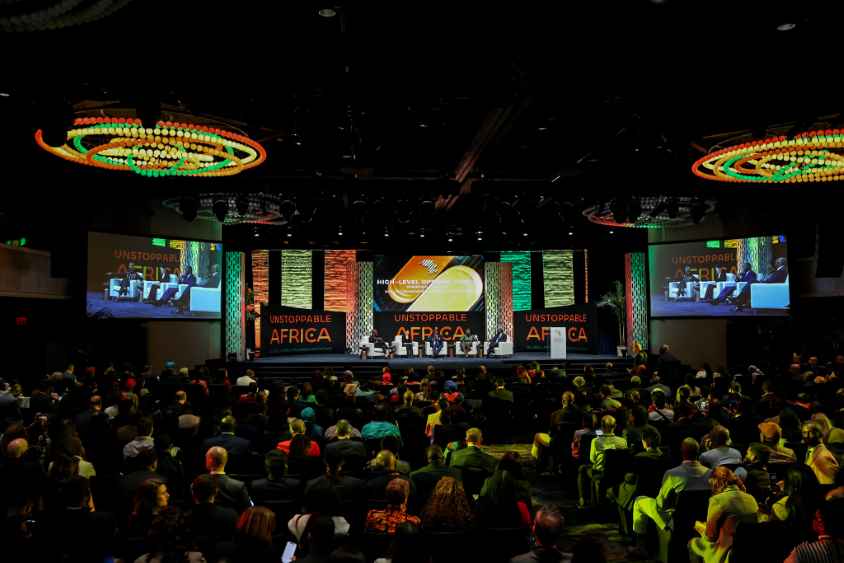
These are all major moments, but growing and sustaining a reputation takes infrastructure. I’ve seen this through APO Group’s work with the Global Africa Business Initiative (GABI) and its Unstoppable Africa platform, held each year alongside the UN General Assembly in New York. Convened by the United Nations Global Compact, GABI brings African founders and investors, from sectors including sport and the creative economy, into the same room as global partners, so that ideas and investment can move in both directions, on African terms.

It rests on the same truth the World Cup is showing. Africa’s business, culture, and sport shape how the continent is seen, and they do it together, which carries real commercial weight: people invest in and travel to the places they feel they understand.

The teams making the strongest impression have not been the biggest or the richest. They have been the clearest about who they are. Some do that through design. Some move us. Some work because they partner to scale.

The question isn’t whether African brands can command global attention. They already do. The opportunity is to keep building the platforms and partnerships that let those stories travel, without losing what makes them worth telling. Know who you are, and the world becomes your audience, not your author.

Libby Allen is Vice President: Brand & Creative at APO Group. Based in Cape Town, South Africa, she leads marketing and creative services for the consultancy and its clients across African markets.

Distributed by APO Group on behalf of APO Group Insights.


Continue Reading

Business

African Electric Vehicle (EV) platform Spiro secures $55M additional backing from Chinese investor NewTrails Capital to boost electric mobility and energy infrastructure in Africa

Published

on

NewTrails Capital

This capital injection positions Spiro among the continent’s most heavily backed Africa’s e-mobility and energy ecosystem

DUBAI, United Arab Emirates, June 22, 2026/APO Group/ —

  • With a fresh $55M million investment from Chinese growth-stage fund NewTrails Capital, Spiro consolidates backing from a powerful consortium of global institutional and impact investors and closes its last funding round to $270M.
  • As African economies push to reduce dependence on imported fuel, reinforce energy and industrial sovereignty and modernize urban transport systems, the record closing of this last round confirms global investors are increasingly turning to scalable EV infrastructure platforms and Spiro’s strong ambitions for the year to come.
  • Already operating across seven of Africa’s fastest-growing urban markets, Spiro will further accelerate the expansion of Spiro’s battery-swapping network, industrial footprint and next-generation electric vehicles (EV) infrastructure across high-growth African markets.​


Spiro (https://www.Spironet.com), Africa’s leading electric vehicle (EV) and clean energy infrastructure platform, today announced the successful closing of its latest funding round at $270 million.


This milestone follows a newly finalized $55 million investment from NewTrails Capital, a prominent Chinese growth-stage investment fund focusing on emerging markets with strategic locations in Shanghai, Shenzhen and Nigeria.


Scaling Africa’s next-generation mobility and energy ecosystem


This capital injection positions Spiro among the continent’s most heavily backed Africa’s e-mobility and energy ecosystem.

We believe Spiro is driving a profound “energy revolution” across mobility use cases in Africa


Building on the support of long-standing institutional partners such as FEDA, Spiro’s latest equity round also draws global capital from Europe and Africa, Impact Fund Denmark, Equitane and FEDA, on top of the recent backing from Nithio and the Africa Go Green Fund.


“I would like to thank NewTrails Capital for believing in Spiro’s model and supporting our unique tech, energy and innovation journey. Having deployed 100,000 electric vehicles and 2,500 smart-swap stations across seven active markets, Spiro has firmly moved past the proof-of-concept phase. Partnering with NewTrail Capital’s deeply experienced team marks a powerful new chapter for Spiro as we prepare for the next steps of our pan-African and international expansion”, stated Gagan Gupta, Founder of Spiro and Chairman of Equitane.


Yufan Zhang, Founding Partner of NewTrails Capital, added:

“We believe Spiro is driving a profound “energy revolution” across mobility use cases in Africa. This represents not only a vast and highly imaginative market opportunity, but also the potential to grow into an infrastructure-like business that creates meaningful commercial, social, and environmental value.

In our view, Spiro’s core strengths lie in its deeply localized operating capabilities, vertically integrated supply chain, digitally enabled ecosystem, sound unit economics, and strong ability to scale rapidly. More importantly, Spiro has systematically integrated vehicles, batteries, energy replenishment, payments, and service networks into a solution that is truly tailored to the needs of African users, effectively addressing long-standing structural pain points in the local market.

As a Chinese fund committed to investing in Africa’s energy transition and green technology, we are also very encouraged to see Chinese supply chains and financing playing an increasingly important role in this process. Spiro is still a young company, and everything today is only the beginning. We look forward to continuing to fulfill our role as a long-term investor, contributing our resources and experience, growing together with Spiro, and helping accelerate Africa’s new energy transition.”,


This partnership will be instrumental to support Spiro’s current manufacturing and supply chain localisation effort on the continent in particular with Chinese suppliers.

Distributed by APO Group on behalf of Spiro.


Continue Reading

Business

President of the Republic of Azerbaijan Receives Delegation of Heads of Member Institutions of the Arab Coordination Group

Published

on

President

The two sides reviewed the broad opportunities available to further expand the partnership between Azerbaijan and ACG member institutions

BAKU, Azerbaijan, June 21, 2026/APO Group/ –President of the Republic of Azerbaijan H.E. Ilham Aliyev received, on June 18, a delegation comprising the heads of member institutions of the Arab Coordination Group (ACG) (https://TheACG.org), as well as Arab Ministers of Finance and senior officials participating in the 2026 Annual Meetings of the Islamic Development Bank Group in Baku.


The delegation included H.E. Dr. Muhammad Sulaiman Al Jasser, Chairman of the Islamic Development Bank (IsDB) Group; Dr. Abdulhamid Alkhalifa, President of the OPEC Fund for International Development; Mr. Abdullah Khalil Al-Musaibeeh, President of the Arab Bank for Economic Development in Africa; Dr. Fahad Alturki, Director General and Chairman of the Board of the Arab Monetary Fund; Mr. Sultan Abdulrahman Al-Marshad, Chief Executive Officer of the Saudi Fund for Development; Mr. Hammam bin Nasser bin Juraied, Executive Director of the Arab Gulf Programme for Development; and Mr. Thamer Al-Failakawi, Director of Operations at the Kuwait Fund for Arab Economic Development.

The delegation also included H.E. Mr. Mohammed bin Abdullah Al-Jadaan, Minister of Finance of the Kingdom of Saudi Arabia; H.E. Mr. Yaqoub Al-Rifai, Minister of Finance of the State of Kuwait; H.E. Mr. Ali bin Ahmed Al Kuwari, Minister of Finance of the State of Qatar; and Mr. Ali Abdullah Sharafi, Assistant Undersecretary for International Financial Relations at the Ministry of Finance of the United Arab Emirates.

During the meeting, President Ilham Aliyev underscored the importance of the participation of the heads of ACG member institutions and Arab Ministers of Finance in the 2026 Annual Meetings of the Islamic Development Bank Group. He also highlighted the strong and active cooperation between Azerbaijan and the member institutions of the Arab Coordination Group, noting that several projects are currently under implementation and stressing the importance of the documents to be signed in this regard.

Expressing gratitude for the gracious welcome extended in Azerbaijan, H.E. Dr. Muhammad Sulaiman Al Jasser conveyed the delegation’s appreciation to President Ilham Aliyev for the reception. He also expressed his high appreciation for the President’s continued support for strengthening cooperation between Azerbaijan and the Arab Coordination Group.

The two sides reviewed the broad opportunities available to further expand the partnership between Azerbaijan and ACG member institutions. They also underlined the importance of Azerbaijan’s favorable investment climate in supporting the implementation of joint projects with the member institutions of the Arab Coordination Group.

Following the meeting, and in the presence of the President of Azerbaijan, a loan agreement was signed for the “Construction of the Sumgayit New Wastewater Treatment Facility” project. In addition, a Memorandum of Understanding was exchanged to expand cooperation between the Ministry of Economy of the Republic of Azerbaijan, the Azerbaijan State Water Resources Agency, and members of the Arab Coordination Group on the “Construction of Water Supply and Sewerage Systems for 33 Residential Settlements in the Absheron Peninsula” project.

At the conclusion of the meeting, President Ilham Aliyev presented the “Dostlug” — Friendship — Order to H.E. Dr. Muhammad Sulaiman Al Jasser, in recognition of his contribution to the development of cooperation between Azerbaijan and the Islamic Development Bank.

H.E. Dr. Muhammad Sulaiman Al Jasser expressed his sincere gratitude to the President of the Republic of Azerbaijan for this high distinction and for the appreciation shown for his efforts to strengthen cooperation between Azerbaijan and the IsDB Group.

Distributed by APO Group on behalf of Arab Coordination Group (ACG).


Continue Reading

Trending