Connect with us
Anglostratits

Politics

Gulf crisis threatens up to $94bn of global ad spend growth over next two years

Published

on

Gulf crisis
  • Global ad growth uprated to +10.4% this year – to $1.32trn – but volatile outlook could remove as much as 4.2 percentage points (pp) – or $49.9bn – from growth in 2026
  • Food, travel & transport and technology & electronics sectors among most susceptible to high oil prices and a prolonged disruption to shipping in Strait of Hormuz
  • Ad market growth is expected to ease to 8.2% next year – to a total of $1.43trn – but a prolonged Gulf crisis removes a further $44.0bn from growth prospects in 2027
  • A wider tech sector slowdown is already set to hinder social media momentum, but growth expected across the board

WARC Global Ad Spend Forecast Q1 2026 update: Implications of the Gulf energy crisis

26 March 2026 – A new study from WARC, the experts in marketing effectiveness, has found that a prolonged conflict in the Middle East could threaten $49.9bn of global advertising growth this year, and $93.9bn over the next two years. A milder crisis still risks $19.0bn this year, with residual impacts lasting well into 2027.


James McDonald, Director of Data, Intelligence & Forecasting, WARC, and author of the research, says: “Even in a contained scenario, an oil shock of this nature acts like a tax on consumers – pushing up prices while eroding real spending power. In a more prolonged or severe disruption, we move into stagflation territory, where sectors like travel, automotive, food and consumer electronics take a direct hit from both rising costs and falling demand.


“The net effect is a meaningful squeeze on discretionary spend that puts up to $50bn of anticipated ad market growth at risk this year, as brands pare back their media investment in a bid to preserve thinning margins.”


WARC’s latest global projections are based on data aggregated from 100 markets worldwide and leverage a proprietary neural network which projects advertising investment trends based on over two million data points.

Scenario A: Short-lived, contained shock; temporary oil spike, Hormuz disruption avoided


WARC’s baseline scenario, which results in 10.4% ad market growth in 2026
Risks 0.2pp of global economic growth, adds 0.5pp to inflation, and dampens real household spend by 0.3pp
Travel & transport sector decreases ad spend by 3.5%, though the impact is more muted on other categories

Our baseline scenario predicts global ad market growth of 10.4% to a total of $1.32trn this year, an upgrade of 1.3pp from our last forecast in December owing to strong performances from the major online platforms carrying into the start of the new year.


This scenario assumes an oil price holding around $100 per barrel for up to six months, before normalising in the fourth quarter. Second-order inflation is limited in this scenario, and central banks, mindful of economic fragility, do not tighten fiscal policy. The effect on household incomes is relatively modest, with the main impact felt through higher energy bills in importing markets.


In this scenario, the product categories identified as being most susceptible to the shock – automotive (+6.8%), food (+10.3%), leisure & entertainment (+11.4%) and technology & electronics (+13.7%) – are mostly expected to record ad spend growth in line with the global rate.


The outlier is travel & transport, where spend is set to fall by 3.5% – equivalent to a net cut of $1.3bn. WARC understands that global airlines and tourism firms active in the Middle East are already holding back media budgets, and while these may be reallocated later in the year, high fuel prices and a squeeze on family incomes present serious headwinds for the sector.


Scenario B: An extended shock; oil elevated for 1-3 years, partial supply disruption


Cuts 1.6pp from ad market growth this year, equivalent to $19.0bn dollars
Sustains into 2027, removing a further $13.3bn from ad market growth – resulting in the erosion of up to $32.3bn from global growth over the next two years
Removes 0.5pp from global GDP and adds 1.1pp to inflation resulting in modest real household spend

While this scenario is at the more severe end of those proposed by central banks, it is consistent with economic and advertising trends recorded during the 1991 Gulf War. It assumes that an oil price above $100 per barrel sustains over the two-year forecast period, resulting in monetary tightening by central banks in a bid to combat stagflation.


Real household spend is muted in this scenario, and the pass-through from the supply side shock hits the consumer-packaged goods (CPG) sector – particularly among products with supply chains dependent on grain and fertiliser – much harder than in our baseline scenario.


Scenario B presents a greater risk to the advertising and media industry, as consumer purchasing power is limited and businesses act to protect margins in a challenging trading environment. Here, we foresee ad growth in the food sector halving compared to our baseline, with consumer technology and leisure & entertainment spend growing behind the total market.


Scenario C: A severe, systemic shock; prolonged closure of Strait of Hormuz, oil reaching $150 per barrel


A prolonged Gulf crisis removes 7.3pp and $93.9bn from ad market growth over the next two years
Cuts 2.0pp from global economic expansion, adds 3.0pp to inflation, and real household spend falls year-on-year
Ad spend growth flat or falling among over-exposed product categories

The prolonged Gulf crisis scenario assumes a persistent supply shock with strong second-round inflation, comparable to the 1973 oil crisis. This results in aggressive monetary tightening across key markets as central banks attempt to prevent mounting recessionary risks.


Consumer confidence collapses in this scenario, and real household spend falls year-on-year. As a result, ad spend growth is either flat – food (+0.7%), leisure & entertainment (+0.2%) – or falling; travel & transport could cut budgets by 5.8%.


Taken together, the global ad market would still grow 6.2% this year, but this is 4.2pp behind our baseline, equivalent to a cut of $49.9bn. The impacts of this severe market shock would carry into 2027, resulting in a further $44.0bn of lost growth versus our baseline.

Tech slowdown hinders social media momentum, but growth expected across the board


New, platform-level spend data in 20 key markets shows tech sector set to ease social spend over the forecast period
Instagram (+26.9%), Facebook (+19.2%), and TikTok (+24.9%) all expected to record healthy gains this year
Social spend among the US tech sector set to cool as AI boom eases
X expected to record growth of 5.6% this year, buoyed by heightened user and advertiser activity around the US midterms in November

Social media trends update


Working with Omdia, WARC Media is for the first time publishing quarterly, category-level ad spend data for eight social media platforms – Facebook, Instagram, LinkedIn, Pinterest, Reddit, Snap, TikTok, and X – across 20 key markets.


Analysis of the social media industry’s growth prospects show that Meta has seen investment with its properties soar since 2023, driven by advances in AI-enhanced campaign management tools such as Advantage+ and gains from cross-border advertisers based in markets like China.


This momentum will continue into 2026, with annual ad revenue forecast to reach $101.6bn for Instagram (+26.9% year-on-year) and $137.8bn for Facebook (+19.2%). However, WARC Media anticipates more measured gains in 2027, with Instagram’s year-on-year growth slipping below 20% for the first time (+15.5%) and Facebook returning to single-digit gains (+9.6%).


TikTok is forecast to maintain global ad spend growth in excess of 20% over the next two years, driven in part by a wave of investment from UK advertisers (+54.8%) this year. Total revenue is expected to reach $43.1bn next year, but the rate of growth is set to ease by more than 16pp between 2025 and 2027.


TikTok ad revenue from technology & electronics advertisers worldwide was up 83.5% year-on-year to $5.0bn in 2025. This year, in contrast, increases in tech spend with the platform will drop to single digits – caused in large part by growth of only 5.4% in the all-important US market as a cooldown in the AI market carries through to ad budgets.


Reddit’s global ad business continues to grow rapidly and is forecast to double from $2.1bn in 2025 to $4.1bn in 2027. The US accounts for more than three-quarters of that revenue, but the platform is making swift gains elsewhere: ad spend by UK brands is forecast to rise 86.9% year-on-year in 2026, and grow 2.5x in Australia.


The tech category is vital to Reddit’s performance and is forecast to account for more than a quarter (25.3%) of total worldwide ad revenue in 2027. It has benefitted from marketers targeting Reddit’s role in product research, as well as the use of conversations on the platform to inform large language model (LLM) responses.


After four consecutive years of ad revenue decline following the acquisition by Elon Musk, X’s ad business finally returned to growth in 2025 – rising 1.6% to $1.8bn. The platform’s continued overtures to marketers are forecast to bear further fruit in the coming years, with ad revenue set to grow to nearly $2.0bn in 2027.


This sum remains some way short of the $4.5bn earned by Twitter in 2021, with many brands still eschewing X over concerns about brand suitability – compounded by use of its Grok AI tool to non-consensually alter images of individuals, including children. An anticipated increase in activity around the US midterms is expected to lift X’s ad revenue this year, however.



Politics

Budget sets out strategies to propel Hong Kong’s innovation and technology development

Published

on

Paul Chan

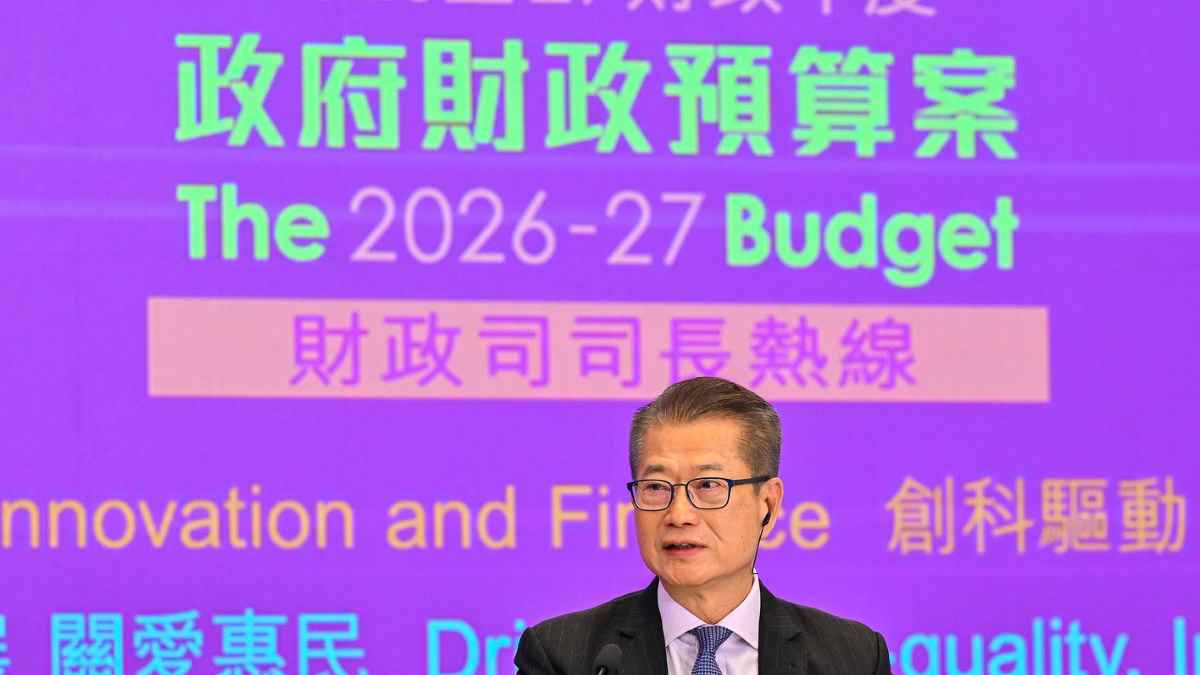
HONG KONG SAR – Media OutReach Newswire – 26 February 2026 – Fast-tracking innovation and technology (I&T) development is a core feature of the 2026-27 Budget, unveiled yesterday (February 25) by Paul Chan, Financial Secretary of the Hong Kong Special Administrative Region (HKSAR).

Mr Chan said Hong Kong would be stepping up support measures such as computing power, land and capital, to enhance the city’s influence as a global source of original innovation.”Hong Kong’s strengths in innovative scientific research and commercialisation of research outcomes lie in our internationalised qualities, strong research capabilities, support of financial sector and a rich pool of high-calibre talents,” Mr Chan said.

He added that the Government is pressing ahead with the industrialisation of artificial intelligence (AI) and deepening its integration across various industries, while encouraging wider AI application, referred to as AI+, with an initial focus on life and health technology and embodied AI.

“I will establish and chair the Committee on AI+ and Industry Development Strategy to formulate strategies and create favourable conditions for AI to empower the transformation and development of industries,” Mr Chan said.

“We are making proactive efforts to align with the National AI+ Initiative by promoting ‘industries for AI’ and ‘AI for industries’ through application.”

The Financial Secretary highlighted that the Hong Kong Artificial Intelligence Research and Development Institute Company Limited will come into operation in the second half of this year, to promote AI+ development and transformation of R&D outcomes and advise the Government on relevant matters.

Professor Sun Dong, Secretary for Innovation, Technology and Industry, echoed the need for holistic development of AI+ development. “When you talk about AI, you cannot just talk about AI research, or just talk about the infrastructure, we have to do it together. Actually, that is what we have been doing in the past three years. Everything is very important.”

Central to the Government’s efforts in promoting I&T is the San Tin Technopole area in the Northern Metropolis development.

“The San Tin Technopole will provide a large piece of land which can help accelerate the commercialisation of R&D results and provide industrial space for prototyping, pilot and mass production,” Mr Chan said. He proposed injecting $10 billion (US$1.28 billion) as initial capital to take forward the development, while leveraging market resources to accelerate the progress.

Mr Chan also earmarked $10 billion (US$1.28 billion) to accelerate the development of the Hetao Hong Kong Park by engaging the market to speed up the disposal of the remaining land parcels under Phase 1 development, providing key infrastructure, further strengthening support to start-ups and establishing a venture fund.

Mr Chan set aside about $220 million (US$28 million) to establish in Hong Kong the first national manufacturing innovation centre outside the Chinese Mainland. This, he said, reflects the Government’s commitment to implementing the Co-operation Agreement on the Development of New Quality Productive Forces and the Promotion of New Industrialisation signed with the Ministry of Industry and Information Technology to promote industrial collaboration.

The Budget also sets out support measures for various technology-related emerging industries. Among them is the aerospace industry. The Office for Attracting Strategic Enterprises will take the lead to identify aerospace enterprises to develop in Hong Kong. Also, the Hong Kong Exchanges and Clearing Limited would review the relevant listing requirements to facilitate and attract the listing of aerospace enterprises in Hong Kong.

Noting that low earth orbit satellites can support the development of high-end industries, Mr Chan said the Government would proactively expand telecommunications infrastructure, streamline the relevant licensing regime and promote future 6G applications.

Meanwhile, the $10 billion (US$1.28 billion) Innovation and Technology Industry-Oriented Fund, introduced by the Government to channel market capital to invest in emerging fields of strategic importance, such as life and health technology, AI and robotics, as well as future industries, is expected to commence operation within this year.

“The key is to popularise the understanding and use of AI by all levels of society,” Mr Chan said.

Continue Reading

Business

Pangea-Risk publishes white paper on “The Politics of African Debt Restructuring”

Published

on

African Debt Restructuring

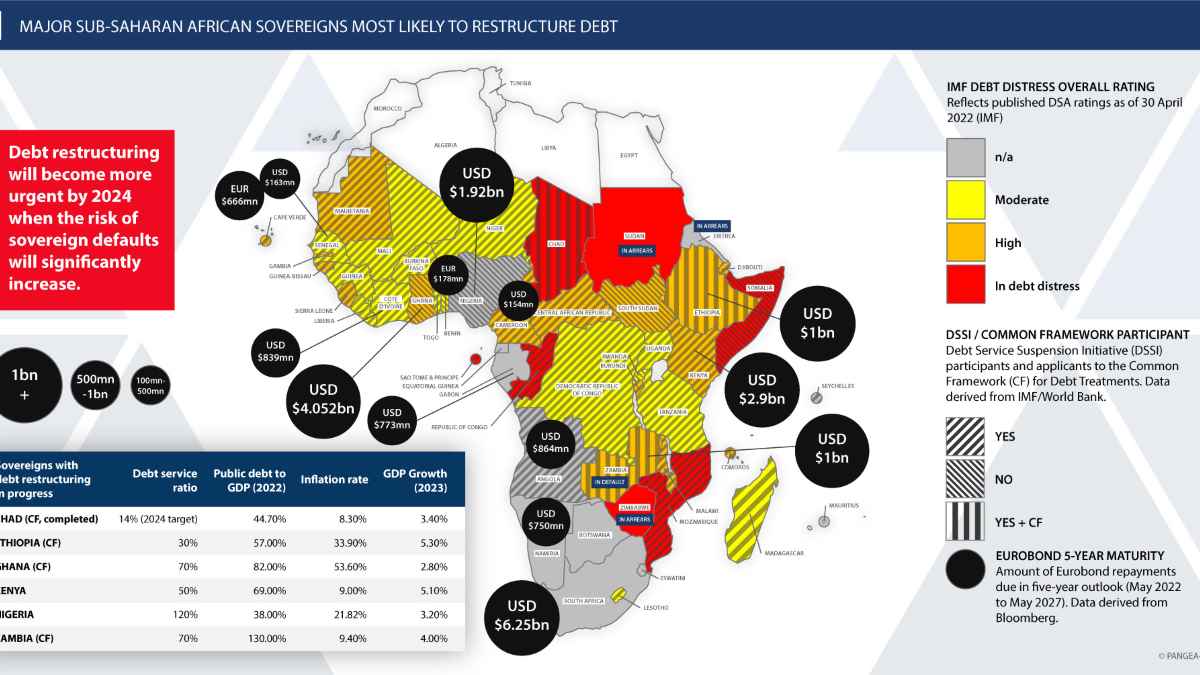
By 2024, many of Africa’s debt-distressed sovereigns will have successfully restructured their most unaffordable loans

LONDON, United Kingdom, April 25, 2023/APO Group/ — 

PANGEA-RISK (www.PANGEA-RISK.com) jointly published a white paper on THE POLITICS OF AFRICAN DEBT RESTRUCTURING, with Acre Impact Capital, on the need to prepare Africa’s distressed sovereigns for a new wave of sustainability capital.

Debt transparency, sound fiscal and monetary governance, and candid bilateral relations with creditors are the primary political indicators of effective debt treatments

The report finds that by 2024, many of Africa’s debt-distressed sovereigns will have successfully restructured their most unaffordable loans, whether domestic or external obligations, placing these countries in much better stead to attract private investment, in particular from sustainability-focused and impact investors to address the USD 100 billion annual infrastructure financing gap.

This forecast differs from the often-prohibitive credit ratings imposed on many distressed sovereigns, which restricts climate financing activities and other development funding in these countries.

Debt transparency, sound fiscal and monetary governance, and candid bilateral relations with creditors are the primary political indicators of effective debt treatments, even while multilateral debt relief initiatives, such as the G-20’s Common Framework, flounder. By the end of 2023, heavily indebted African states like Kenya and Ghana, should have implemented successful debt restructurings through extended maturities on foreign currency obligations, domestic loan swaps in exchange for concessional finance, and limited haircuts for some bondholders.

Chinese creditors and international bond holders are most exposed to defaults, while the shock of debt restructurings for local banks and domestic bondholders will often be cushioned. In well-managed debt treatments, concessional and private sector creditors will be least exposed to arbitrary haircuts and other losses, which will enhance sovereigns’ creditworthiness and improve their position to attract record flows of climate finance and other impact investment in coming years. For the full report, see https://apo-opa.info/3L3Qmco

Distributed by APO Group on behalf of PANGEA-RISK.

Continue Reading

Business

Egypt: President El-Sisi Meets with Minister of Justice

Published

on

El-Sisi

President El-Sisi was updated on the comprehensive development of the litigation system and efforts made to enhance the performance of courts across Egypt

CAIRO, Egypt, November 17, 2022/APO Group/ — 

Today, President Abdel Fattah El-Sisi met with Minister of Justice Counselor Omar Marwan.

The Spokesman for the Egyptian Presidency stated that the meeting discussed the efforts made by the Ministry of Justice regarding the comprehensive development of the State’s litigation system and the speedy disposition of cases.

The meeting discussed the efforts of developing the Real Estate Registration Authority

President El-Sisi was updated on the comprehensive development of the litigation system and efforts made to enhance the performance of courts across Egypt to help reduce case backlogs, particularly family court cases. About 309,000 family court cases have been tried before 2021, only 100 of which are currently pending in courts. The President also expressed his appreciation for the efforts made by the judges to complete cases.

Counselor Marwan also reviewed the work of the Supreme Committee for Legislative Reform, which lasted for two years, to issue a national legislative database. This database classifies laws, presidential decrees, cabinet decisions, as well as international agreements. As a result of these efforts, the State’s laws have become 618 laws of the total of 17049 and international agreements have become 1997 of the total of 4366, with a flexible framework allowing immediate amendments when a legislation is passed or repealed.

The Minister of Justice briefed the President on the most prominent axes in the development process of the litigation system, particularly the efforts made to raise the efficiency of the courts’ headquarters and buildings in all governorates. President El-Sisi directed that these efforts be kept under close review and the development of Galaa Courts Complex be expeditiously completed. He also directed that an engineering committee be formed to inspect Bab Al-Khalq Court, a historical building, and prepare a report on its condition. Furthermore, President El-Sisi directed that the Ministry of Justice and the Ministry of Communications and IT cooperate to rapidly automate courts of first instance and courts of appeal.

President El-Sisi also followed-up on the efforts made by the Ministry of Justice to prepare a group of experts from the Ministry of Awqaf, Al-Azhar and Dar al-Iftaa to seek their help in cases of defamation of religions. They will also be legally qualified to identify the elements and circumstances of the crime.

The meeting discussed the efforts of developing the Real Estate Registration Authority. The President confirmed the need to continue opening new branches providing documentation services with night shifts to meet the needs of all citizens across Egypt.

Distributed by APO Group on behalf of The Presidency, The Arab Republic of Egypt.

Continue Reading

Trending