Connect with us
Anglostratits

Energy

South Africa’s Cheaper Petrol Masks a Looming Gas Gap – and a Critical Investment Opportunity

Published

on

African Energy Chamber

A stronger rand and softer global fuel prices have pushed South African petrol to a four-year low – but without domestic gas development and LNG infrastructure, the country remains exposed to imports, currency swings and a fast-approaching supply shortfall

CAPE TOWN, South Africa, February 10, 2026/APO Group/ –South Africans are once again seeing relief at the pump, with the latest fuel price cuts delivering the cheapest petrol in roughly four years. The reductions – around 65 cents per liter for petrol and more than 50 cents for diesel – continue a downward trend that began earlier in 2026, when falling crude prices and currency strength combined to lower pump prices nationwide.

While the immediate benefits are tangible – cheaper transport, easing inflationary pressure and support for businesses – the underlying drivers reveal a more fragile reality. South Africa’s fuel costs remain shaped primarily by global oil markets and exchange-rate movements rather than domestic energy resilience.

Currency dynamics are particularly influential. The rand strengthened sharply through 2025, gaining nearly 13% against the U.S. dollar – its best annual performance in more than a decade – supported by improved fiscal sentiment and rising commodity prices. This momentum has continued into 2026 with periodic surges in precious-metal prices and global risk appetite. These shifts can lower refined-fuel import costs, but they also highlight South Africa’s continued dependence on external forces.

Structural weaknesses across the country’s fuel supply chain reinforce this reliance. Refining capacity has declined significantly, leaving only a handful of operational crude refineries and forcing South Africa to import roughly three-quarters of its liquid fuel needs. Strategic reserves remain limited to less than a month of supply. In this context, price relief at the pump reflects favorable global conditions rather than meaningful progress toward energy self-sufficiency.

Natural gas – affordable, reliable and abundant across Africa – can transform economies by powering industry, creating jobs and delivering the energy security our people deserve

The longer-term risk becomes clearer when viewed alongside South Africa’s evolving gas outlook. Without new domestic production or import capacity, South Africa is projected to face a ‘gas cliff’ as early as 2026. Existing Mozambican pipeline gas is depleting, while interim extensions from Sasol serve only as a temporary bridge to future LNG imports. Without new domestic production, import terminals or pipeline expansion, the country could confront tightening supply just as demand for flexible, lower-carbon power grows.

“Natural gas – affordable, reliable and abundant across Africa – can transform economies by powering industry, creating jobs and delivering the energy security our people deserve,” states NJ Ayuk, Executive Chairman of the African Energy Chamber. “But this transformation requires urgent investment in domestic production, LNG infrastructure and regional partnerships. South Africa has the resources and the market demand; what matters now is turning opportunity into action.”

Recognizing this urgency, the government is fast-tracking LNG import infrastructure, including a floating storage and regasification unit in Mozambique expected by mid-2026 and a planned LNG terminal at Richards Bay targeted for 2027, alongside efforts to unlock offshore gas in the Orange Basin. Today, roughly 90% of South Africa’s natural gas is still imported via a single pipeline from Mozambique – an exposure that underscores the need for diversification and domestic development.

The regional context reinforces the opportunity. Major LNG projects such as Mozambique’s $20 billion development – now moving forward again with production targeted before the end of the decade – signal growing momentum for African gas as a pillar of energy security and industrial growth. For South Africa, connecting to this wave through infrastructure, investment and regulatory clarity could reduce currency risk, stabilize fuel costs and support a more resilient transition pathway.

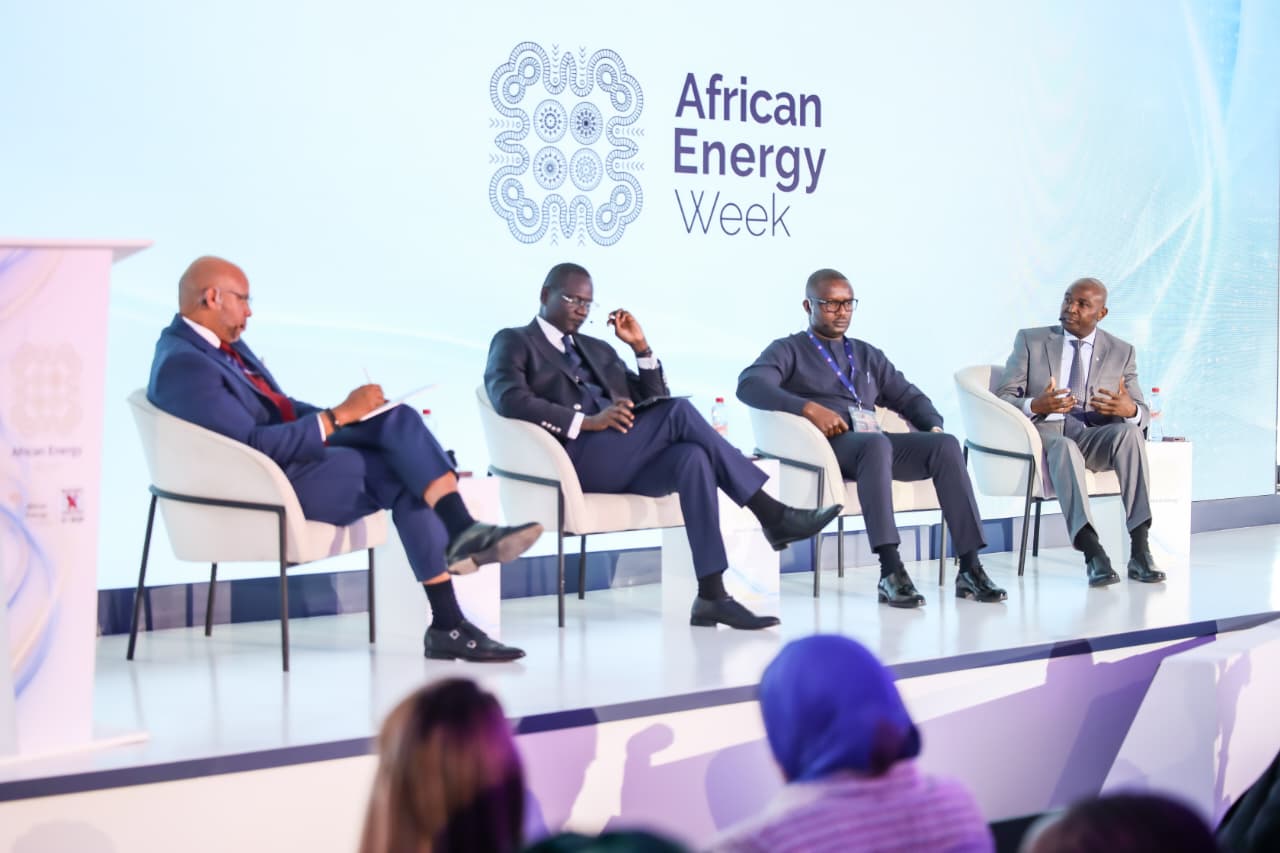
African Energy Week (AEW) 2026 in Cape Town is expected to spotlight precisely this: energy security, infrastructure investment and pragmatic transition pathways that balance hydrocarbons with emerging low-carbon systems. The event serves as a continental platform for LNG financing, infrastructure partnerships and upstream gas development capable of closing supply gaps and accelerating practical energy transitions.

Fuel price volatility now exposes South Africa’s structural energy weaknesses, underscoring why short-term relief cannot substitute for long-term strategy. Cheaper petrol may ease pressure today, but without decisive progress on domestic gas production and LNG infrastructure, the country risks repeating the same cycle – relief when currencies strengthen, strain when they weaken and continued vulnerability in between.

Distributed by APO Group on behalf of African Energy Chamber.

Energy

Mining, manufacturing and property leaders to share how they are cutting water demand through reuse and closed-loop systems at Water Security Africa

Published

on

Industry accounts for up to 20% of global water withdrawals, and as municipal supply reliability and tariff pressure increase, more organisations are treating water security as a board-level risk

CAPE TOWN, South Africa, March 27, 2026/APO Group/ –Water Security Africa, co-located with Enlit Africa (19–21 May 2026, CTICC), has released its full programme, featuring commercial and industrial leaders demonstrating how organisations are reducing water demand through reuse, recycling and closed-loop systems.


Industry accounts for up to 20% of global water withdrawals, and as municipal supply reliability and tariff pressure increase, more organisations are treating water security as a board-level risk.

The SAICE CPD-accredited programme will showcase practical approaches to reducing demand, improving water governance and building resilient water systems on-site and across supply chains.

Sector case studies and stewardship sessions include:

Mining: closed-loop tailings systems, high recycling rates and pathways towards zero-liquid-discharge approaches

Many organisations have already proven that major reductions in water demand are possible without compromising operations

Agro-processing: recovering water from production processes, condensate capture and fit-for-purpose reuse

Hospitality and healthcare: greywater recycling, rainwater systems and demand reduction programmes that can be adapted across portfolios

Property: on-site treatment and reuse solutions designed to reduce exposure to supply unreliability across commercial building portfolios

The programme also connects corporate water stewardship to municipal and catchment realities, including how loss reduction and better network performance improve supply stability and reduce system-wide costs.

“Many organisations have already proven that major reductions in water demand are possible without compromising operations,” said Claire Volkwyn, Head of Content, VUKA Group.. “At Water Security Africa, leaders will share the systems, governance and investment cases behind those results so others can replicate them.”

Confirmed speakers include Darshana Myronidis (Virgin Group UK), Petrus Swanepoel (Mediclinic), Molatelo Motau (Heineken), John van Wyk (Harmony Gold), Zomakahle Ndlovu (Inkomathi Usuthu Catchment Management Agency), Desiree Moima (Gauteng Department of Co-operative Governance and Traditional Affairs)  and Martjie Cloete (Growthpoint Properties), alongside municipal and utility leaders addressing the broader system context.

Download the programme: https://apo-opa.co/4sIOBGc

Register: https://apo-opa.co/4dNJ10h

Distributed by APO Group on behalf of VUKA Group.

Continue Reading

Energy

Investment, Fuel Security and Strategy to Take Center Stage Across Angola Oil & Gas (AOG) 2026 Multi-Track Program

Published

on

Energy Capital

With strategic, technical and roundtable discussions, AOG 2026 strengthens its position as Angola’s premier platform for industry dialogue, investment and project development

LUANDA, Angola, March 27, 2026/APO Group/ –The Angola Oil & Gas (AOG) Conference and Exhibition returns to Luanda this September as a bridge connecting global investors and project developers with Angolan projects and partners. At a time when global supply disruptions and geopolitics are sharpening consumer focus on Africa, Angola offers the stability, resource base and investment appeal needed to support long-term security. Reflecting this focus, AOG will once again feature a multi-track program designed to showcase Angolan opportunities to a global audience.

Across three primary tracks – the Strategic, Technical and Roundtables Track – AOG 2026 will bring together policymakers, operators, financiers and technology providers to address challenges and opportunities across the full investment value chain. The expanded program structure underscores the event’s commitment to facilitating targeted discussions that support project development, strengthen partnerships and address the most pressing challenges facing Angola’s oil and gas sector today.

Strategic Track

As Angola continues to position itself as a leading African investment destination, the AOG 2026 Strategic Track will provide a platform for high-level dialogue between government, operators and investors, focusing on the policies, partnerships and capital frameworks required to sustain production and drive new exploration. Taking place across the two-day main conference, the Strategic Track will address the macro and investment-driven themes shaping Angola’s oil and gas industry.

Sessions will cover investment trends, Angola’s upstream competitiveness, advancing deepwater frontier momentum and opportunities in building an Angolan gas economy. Additional discussions will examine oil trade and the impacts of geopolitics, financing solutions for independents, fuel supply security and refining and the economics of local content success.

Technical Track

Running alongside the Strategic Track, the Technical Track will feature a series of presentations and discussions addressing critical operational and technical challenges across Angola’s oil and gas sector. This track will focus on practical solutions and emerging technologies that are shaping the future of the industry.

Topics will include M&A trends and asset transactions, accelerating AI adoption in oil and gas operations, building the next generation workforce and developing decommissioning frameworks for ageing assets. By focusing on operational efficiency, technology deployment and workforce development, the Technical Track will provide valuable insights for companies looking to optimize performance and extend the life of Angola’s producing assets while preparing for the next generation of projects.

Roundtables Track

A strategic feature at AOG, the Roundtables Track will introduce a more interactive discussion format focused on some of the industry’s most complex and strategic issues. These sessions will bring together small groups of stakeholders for targeted discussions on ensuring global compliance, Angola’s licensing landscape, partnerships and the future of upstream development.

Additional topics will include resolving the dollar/kwanza conundrum, the role of local financial institutions in the oil and gas sector and strategies to strengthen collaboration between international investors and local companies. The introduction of the Roundtables Track reflects growing demand for more focused, solution-driven discussions that move beyond traditional conference formats and toward practical problem-solving and partnership building.

Additional Features: Pre-Conference

In addition to the main conference program, AOG 2026 will include a dedicated pre-conference agenda on September 8, setting the tone ahead of the main conference discussions. Pre-conference sessions will cover subsurface imaging and structural analysis, Angola’s fiscals in a global context and strategies for strengthening Angolan institutions.

Several industry-led workshops will also take place, with companies offering insights into the technologies, solutions and tools that are transforming Angola’s oil and gas sector. These sessions are designed to provide practical knowledge sharing while highlighting the role of technology and innovation in improving efficiency and supporting new project development.

With an expanded multi-track program and the introduction of the Roundtables Track, AOG 2026 continues to evolve into a platform designed to drive investment, strengthen partnerships and support the next phase of Angola’s oil and gas growth.

Distributed by APO Group on behalf of Energy Capital & Power.

Continue Reading

Energy

Minister Ernesto Kesar Joins Caribbean Energy Week (CEW) 2026 as Trinidad and Tobago Accelerates Upstream Momentum

Published

on

Energy Capital

The participation of Minister Ernesto Kesar at Caribbean Energy Week comes as the country advances new upstream projects, gas developments and regional energy cooperation

PARAMARIBO, Suriname, March 27, 2026/APO Group/ –Ernesto Kesar, Minister in the Ministry of Energy and Energy Industries of Trinidad and Tobago, has officially joined the upcoming Caribbean Energy Week (CEW), reinforcing the country’s commitment to upstream growth at a time of renewed momentum in the oil and gas sector.


As the twin-island country advances new gas supply projects, encourages exploration and strengthens regional energy ties, Minister Kesar’s participation at CEW 2026 is expected to serve as a launchpad for strengthened regional ties.

Minister Kesar’s participation comes amid a multi-billion-dollar investment surge in Trinidad and Tobago as operators advance projects, regional energy ties and strategic partnerships. At the helm of these efforts, the Ministry of Energy and Energy Industries continues to prioritize upstream investment, deepwater exploration and cross-border gas projects, positioning the country as a regional hub for natural gas production and LNG exports.

Recent milestones reflect this momentum, with several projects starting production and exploration kicking off across key basins. The bpTT-led Cypre gas project achieved first gas in April 2025, with peak production estimated at 45,000 barrels per day (bpd) – translating to around 250 million standard cubic feet of gas. The project comprised seven wells and will enhance the country’s overall export capacity. In partnership with EOG Resources, the company also started production at the Mento field in 2025, featuring a 12-slot, attended facility.

Looking ahead, bp’s Ginger gas development is on track for first gas production in 2027 following FID reached in 2025. With an expected capacity of 62,000 bpd, the project will feature four subsea wells tied back to the company’s existing Mahogany B platform. The company is also evaluating development options for its Frangipani exploration well which identified multiple stacked gas reservoirs in 2025. These initiatives will not only bring additional volumes online to support LNG exports and domestic capacity, but strengthen the country’s position as a regional hub for oil and gas.

Beyond projects, Trinidad and Tobago is advancing exploration efforts with a view to strengthen its reserves. The company awarded an ultra-deepwater exploration block to ExxonMobil in 2025, signaling the company’s return to the market after nearly two decades. The milestone not only paves the way for the development of Block TTUD-1, but opens the door to nearly $20 billion in potential investment. The move follows a 2025 licensing round launched by the Ministry of Energy and Energy Industries in 2025, aligning with national goals of revitalizing exploration across deepwater margins.

On a regional front, Trinidad and Tobago is streamlining cross-border collaboration. The country recently secured a license from the United States authorizing oil and gas activities with Venezuela. The approval allows Trinidad-based companies to pursue cross-border gas developments, paving the way for Venezuela to feed new gas volumes into Trinidad and Tobago’s existing LNG and processing infrastructure. The move will not only sustain gas exports but accelerate long-delayed projects such as the Dragon gas field – situated near the maritime border of the two countries.

Trinidad and Tobago is also assessing options to restart the Pointe-a-Pierre refinery, which has been closed since 2018 following the restructuring of state-owned Petrotrin. The government is currently in talks with various partners as well as Guyana to reopen the facility. If brought back online successfully, the facility would support regional energy security efforts, highlighting a strategic opportunity for global and regional investors.

As upstream momentum continues to build, the upcoming CEW 2026 offers a strategic platform to advance dialogue on regional gas monetization, energy security and investment opportunities. Minister Kesar’s participation reflects Trinidad and Tobago’s commitment to strengthening Caribbean energy ties, paving the way for new collaborations and sustained investment.

Distributed by APO Group on behalf of Energy Capital & Power.

Continue Reading

Trending