Connect with us
Anglostratits

Events

As global power structures shift, Invest Africa convenes The Africa Debate 2026 to redefine partnership in a changing world
Published

on

Debate

The Africa Debate 2026 will provide a platform for this essential, era-defining discussion, convening leaders to explore how Africa and its partners can build more balanced, resilient and sustainable models of cooperation
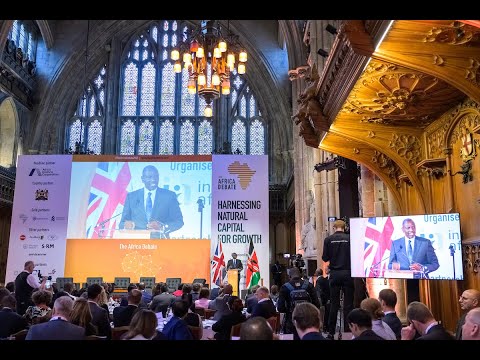
LONDON, United Kingdom, February 5, 2026/APO Group/ –As African economies assert greater agency in a rapidly evolving global order, Invest Africa (www.InvestAfrica.com) is delighted to announce The Africa Debate 2026, its flagship investment forum, taking place at the historic Guildhall in London on 3 June 2026.

Now in its 12th year, The Africa Debate has established itself as London’s premier platform for African investment dialogue since launching in 2014, convening over 800 global decision-makers annually to shape the future of trade, finance, investment, and development across the continent.

Under the theme “Redefining Partnership: Navigating a World in Transition”, this year’s forum will focus on Africa’s response to global economic realignment with greater agency, ambition and economic sovereignty.

The Africa Debate puts Africa’s priorities at the centre of the conversation, moving beyond traditional narratives to focus on ownership, resilience and long-term value creation.

“Volatility is not new to Africa. What is changing is the opportunity to respond with greater agency and ambition,” says Invest Africa CEO Chantelé Carrington.

“This year’s edition of The Africa Debate asks how we strengthen economic sovereignty — from access to capital and investment to financial and industrial policy — so African economies can take greater ownership of their growth. Success will be defined by how effectively we turn disruption into leverage and partnership into shared value.”

The Africa Debate 2026 will provide a platform for this essential, era-defining discussion, convening leaders to explore how Africa and its partners can build more balanced, resilient and sustainable models of cooperation.

Key challenges driving the debate

Core focus areas for this year’s edition of The Africa Debate include:

This year’s edition of The Africa Debate asks how we strengthen economic sovereignty — from access to capital and investment to financial and industrial policy

Global Realignment & New Partnerships

How shifting geopolitical and economic power structures are reshaping Africa’s global partnerships, trade dynamics and investment landscape.

Financing Africa’s Future

The growing need to reform the global financial architecture, new approaches to development finance, as well as the strengthening of market access and financial resilience of African economies in a changing global system.

Strategic Value Chains

Moving beyond primary exports to build local value chains in critical minerals for the green economy. Also addressing Africa’s energy access gap and mobilising investment in renewable and transitional energy systems.

Digital Transformation & Technology

Unlocking growth in fintech, AI and digital infrastructure to drive productivity, inclusion, and the next phase of Africa’s economic transformation.

The Africa Debate 2026 offers a unique platform for high-level dialogue, deal-making, and strategic engagement. Attendees will gain actionable insights from leading policymakers, investors and business leaders shaping Africa’s economic future, while building strategic partnerships that define the continent’s next growth phase.

Registration is now open (http://apo-opa.co/46b19gj).

Distributed by APO Group on behalf of Invest Africa.
Business

Alamein Africa Forum to bring together key political and business leaders

Published

on

Alamein

The forum is to become the continent’s premier gathering where political power meets entrepreneurial prowess, bridging the established engines of African growth with the new sectors defining its future

CAIRO, Egypt, September 22, 2026/APO Group/ –The inaugural Alamein Africa Forum (https://AlameinForum.com/) will take place from October 2-4 in the historic city of Alamein on Egypt’s Mediterranean coast in parallel with the 2026 African Union mid-year summit.

Established in response to a mandate from the African Union, which called for a permanent African Business Forum to convene biennially in Egypt, the inaugural edition will bring together Heads of State and official delegations as well as some key actors in business and finance.


The forum is to become the continent’s premier gathering where political power meets entrepreneurial prowess, bridging the established engines of African growth with the new sectors defining its future.

The Alamein Africa Forum will serve as a pan-African platform bringing together the private sector, investment and financial institutions

The Presidents of Algeria, Angola, Burundi, Chad, Equatorial Guinea, Ghana, Libya, Senegal, Somalia, and South Africa are expected in Alamein as well as President Al Sisi, President of the Arab Republic of Egypt who is the host of this year’s AU Mid-Year Summit. Business leaders from across the continent have confirmed their participation including Ralph Mupita, MTN; Idrissa Nassa, Coris Bank; Mohamed El Ketani, Attijariwafa Bank; Hichem Eloumi, Groupe Shakira; Wale Tinubu, Oando; and many more. Aliko Dangote, Africa’s biggest industrialist is also expected to attend, with the organisers hoping to set up a Business Advisory Council to help advance private sector priorities and investment throughout the continent.

Bringing together leaders in politics, business and policy from across the continent, the Alamein Africa Forum will provide a unique opportunity to shape Africa’s growth agenda by aligning policy and investment priorities, mobilising partnerships for implementation and strengthening financing and investment pathways. The private sector must become an integral part of Agenda 2063, the AU’s strategic 50 year masterplan to transform the continent.

Co-organised by the Government of Egypt, Afreximbank, the African Union and AUDA-NEPAD, the Forum brings together Africa’s most influential decision-makers in an unprecedented alliance of public and private sector leadership.

Speaking on the imperative of the summit at a joint press conference by the government of Egypt and Afreximbank on Thursday, September 17 2026, Dr. Badr Abdelatty, Minister of Foreign Affairs, International Cooperation, and Expatriates Abroad said (https://apo-opa.co/4ygiQag): “The Alamein Africa Forum will serve as a pan-African platform bringing together the private sector, investment and financial institutions, and representatives of various productive and service sectors, to strengthen direct links between companies and markets and decision making at the highest level.”

Continuing, he noted that the Alamein Africa Forum is part of a series of high-level African events that Egypt will host in early October, stressing that holding the forum reflects Egypt’s commitment to advancing continental economic cooperation

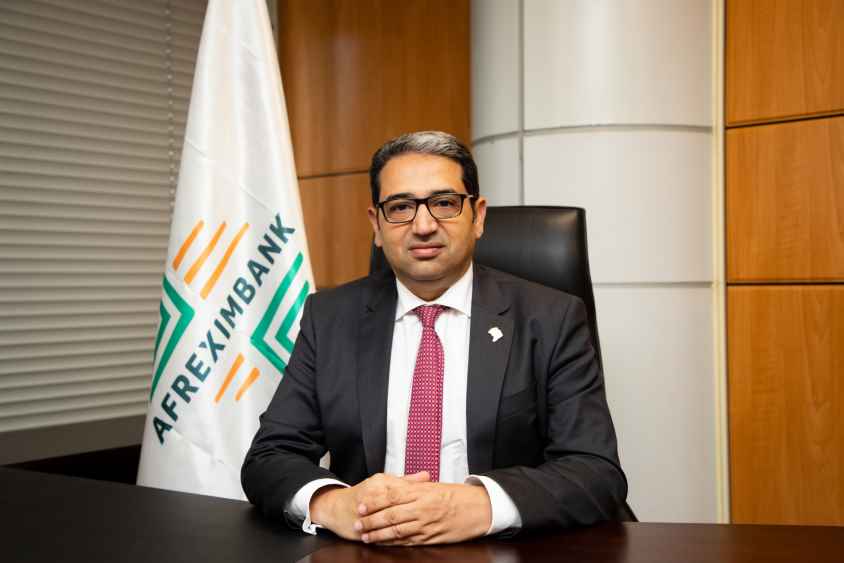
In his own comments, Dr. George Elombi, President and Chairman of the Board of Directors of Afreximbank described (https://apo-opa.co/4ygiQag) the Alamein Africa Forum as a pan-African platform for promoting intra-African trade and investment and connecting the business community and financial institutions with priority projects and investment opportunities in the continent.

Distributed by APO Group on behalf of Alamein Africa Forum.


Continue Reading

Business

Afreximbank to hold first combined Trade Finance Seminar and Compliance Forum in Gaborone, Botswana

Published

on

Afreximbank

Organised in partnership with the Botswana Investment and Trade Centre (BITC), the combined programme will take place at the Gaborone International Convention Centre in Botswana from 16 to 18 November 2026

CAIRO, Egypt, September 22, 2026/APO Group/ —

  • Landmark joint programme will connect trade finance and compliance expertise to advance intra-African trade.
  • The Compliance Forum will explore how stronger, more coordinated frameworks can deepen African economic integration and facilitate international trade.
  • The Trade Finance Seminar will bring together leading trade finance practitioners to explore solutions that can strengthen regional value chains, close Africa’s trade finance gap and support AfCFTA implementation.

For the first time, Afreximbank (https://www.Afreximbank.com/) will bring together two of its flagship annual knowledge-sharing and capacity-building programmes – the 2026 Afreximbank Trade Finance Seminar and the Afreximbank Compliance Forum, uniting industry leaders, policymakers and experts to strengthen trade finance, compliance and Africa’s economic transformation.


Organised in partnership with the Botswana Investment and Trade Centre (BITC), the combined programme will take place at the Gaborone International Convention Centre in Botswana from 16 to 18 November 2026.

The joint Trade Finance Seminar and Compliance Forum will bring together Global Africa’s financial, regulatory, and trade communities to exchange knowledge, share perspectives, and explore how stronger trade finance and compliance frameworks can support trade, investment, industrialisation, and economic integration.

The Factoring Workshop on 19 November will extend the discussions to the role of factoring and other alternative trade finance solutions in supporting businesses and expanding access to finance.

Botswana is proud to partner with Afreximbank to host the Compliance Forum, Trade Finance Seminar and Factoring Workshop

The Afreximbank Trade Finance Seminar 2026 (ATFS2026) will be held under the theme “Trade Financing in the AfCFTA Era: Resilient Value Chains, Infrastructure and Market Integration.” It will examine how trade finance can support the implementation of the African Continental Free Trade Area (AfCFTA), strengthen regional value chains, finance trade-enabling infrastructure and accelerate economic integration across the continent.

Mr Haytham El Maayergi, Executive Vice President, Global Trade Bank at Afreximbank, said: “ATFS2026 comes at a critical time for African trade. The AfCFTA is creating a larger and more integrated market, but its success will depend on our ability to finance the trade, value chains and infrastructure that connect African economies. By bringing together trade finance, compliance and market practitioners, we aim to turn that opportunity into more bankable transactions, stronger regional value chains and increased intra-African trade.”

Mr Keletsositse Olebile, Chief Executive Officer of the Botswana Investment and Trade Centre, said:

“This is an important opportunity for Botswana to welcome delegates from across Africa and beyond while showcasing our country’s warmth and hospitality.

“Botswana is proud to partner with Afreximbank to host the Compliance Forum, Trade Finance Seminar and Factoring Workshop. These events will highlight Botswana’s growing role as a regional trade and investment hub, as well as its commitment to advancing economic development and continental cooperation.”

The Afreximbank Compliance Forum 2026 (ACF2026) will be held under the theme “Better Compliance, Better Trade: Leveraging Compliance to Promote African Regulations that Advance Intra-African Economic and Trade Integration.”

Mr Idrissa Diop, Compliance Director at Afreximbank, said: “Compliance must be recognised not simply as a regulatory obligation, but as an essential enabler of trusted, resilient and sustainable trade.

“Through ACF2026, we aim to bring together the institutions shaping Africa’s financial and trade architecture to identify practical ways of aligning compliance standards, managing emerging risks and reducing unnecessary barriers to intra-African trade and business growth.

Further information about ACF2026 and ATFS2026 and registration can be found on the site https://apo-opa.co/4AsLd6p

Distributed by APO Group on behalf of Afreximbank.


Continue Reading

Events

Beyond the carbon credit: Who sets the terms for Africa’s carbon markets?

Published

on

From project ownership and verification to pricing and benefit-sharing, CMAS 2026 will bring African market leaders and global decision-makers together to examine who creates and captures value

KIGALI, Rwanda, September 22, 2026/APO Group/ –A carbon credit may be traded as a single unit, but its value is shaped long before it reaches a buyer. Decisions about project ownership, finance, data, verification and benefit-sharing determine who participates, who carries the risk and who ultimately benefits. As new regulations and international partnerships expand market access, these questions are becoming increasingly important across Africa.


They will be central to the Carbon Markets Africa Summit (CMAS) 2026, taking place from 13 to 15 October at the Kigali Convention Centre in Rwanda. The summit will convene African governments, project developers, investors, buyers and technical experts involved in decisions across the carbon-market value chain.

Countries are approaching these decisions from different regulatory, economic and environmental positions. While recent developments in East Africa demonstrate growing market activity, questions concerning international requirements, technical capacity, investment and benefit-sharing are relevant across Africa.

Ousmane Fall SARR, Coordinator of the West African Alliance on Carbon Markets and Climate Finance, says:

“African countries are developing carbon markets from different starting points. Stronger African expertise and regional cooperation will be important if the continent is to contribute to the standards and market practices that determine how its projects compete, attract investment and create value.”

Against this continental backdrop, East Africa provides a timely example of how the market is developing. In January 2026, Rwanda and Singapore invited applications for carbon-credit projects under their bilateral Implementation Agreement, aligned with Article 6 of the Paris Agreement. Credits from authorised projects may be used by eligible Singapore-based carbon tax-liable companies to offset up to 5% of their taxable emissions, subject to both governments’ requirements.

African countries are developing carbon markets from different starting points

Across the continent, carbon market frameworks are rapidly taking shape. Kenya and Uganda are strengthening regulatory oversight, regional partnerships are helping governments build market capacity and infrastructure, and South Africa is advancing reforms to modernise its carbon-credit ecosystem and attract investment. Together, these developments are bringing greater focus to questions of authorisation, project ownership, verification, pricing and access to international buyers, while also raising expectations that carbon finance should deliver sustainable economic and development value beyond the credit itself.

Emmanuelle Nicholls, Portfolio Director for CMAS, says:

“A carbon credit may be the final product, but behind it are decisions about ownership, data, risk, pricing and who ultimately benefits. The conversations in Kigali will examine what credible participation looks like across the full carbon-market value chain.”

These decisions have consequences beyond individual transactions. Carbon finance is increasingly connected to conservation, agriculture, soil restoration, food security, clean energy and waste management. Its success will therefore also be judged by whether projects produce credible environmental outcomes and lasting benefits for African economies and communities.

A practical example comes from the Chinko Conservation Area in the Central African Republic, where revenue from the Chinko Carbon Project is channelled through a community fund that supports locally selected initiatives, including the expansion of a medical centre in Agoumar. At CMAS 2026, African Parks and Welthungerhilfe, both Bronze Sponsors, will share perspectives on how carbon finance can support conservation, climate resilience, food systems and community development, while highlighting broader questions around project governance, impact and the distribution of value.

From project-level impact to market-wide structures, these questions will underpin discussions at CMAS 2026. The programme will address government authorisation, buyer requirements, pricing and offtake, investment risk, early-stage finance, registries and African measurement, reporting and verification capacity. It will connect the question of who sets the terms with the practical requirements for building credible, investment-ready projects and transactions.

CMAS 2026 is hosted by the Ministry of Environment of Rwanda, with UNDP and the African Development Bank as host organisations, the Development Bank of Southern Africa as host partner and AUDA-NEPAD as strategic institutional partner.

Taking place ahead of COP31, CMAS will focus attention on the decisions behind every carbon credit and what they mean for African governments, projects, investors and communities.

Distributed by APO Group on behalf of VUKA Group.


Continue Reading

Trending