Connect with us
Anglostratits

Energy

Africa’s Critical Minerals and the Future of the Global Energy Transition

Published

on

Africa

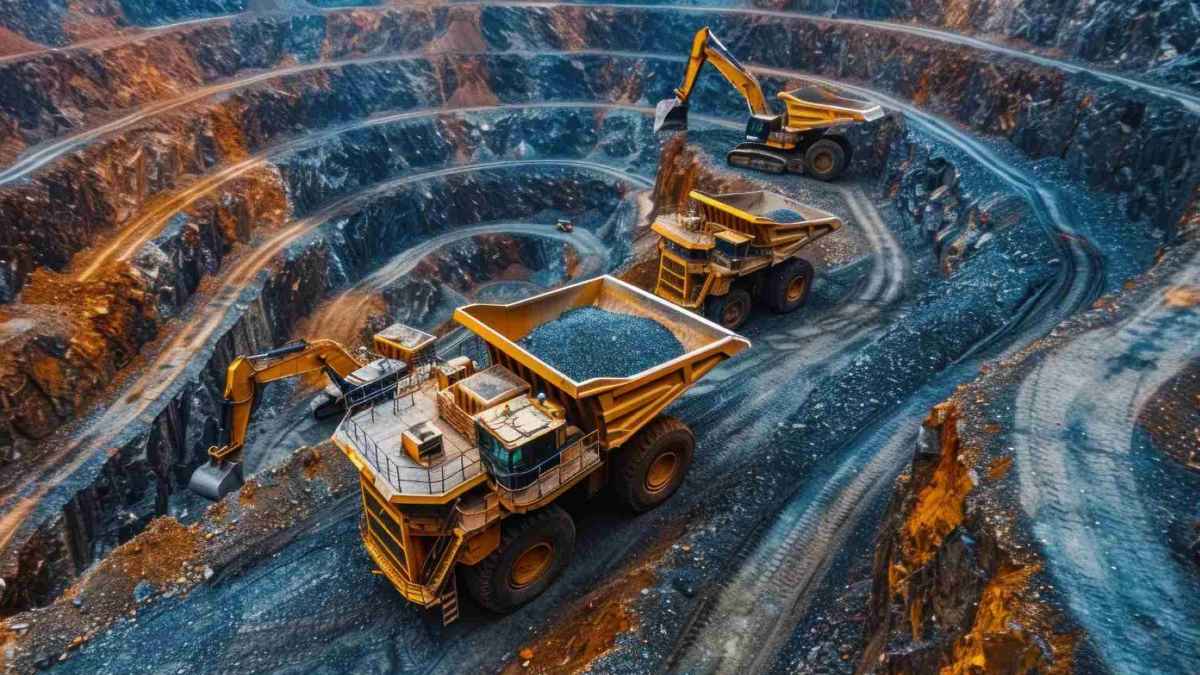
Africa’s critical minerals – cobalt, lithium, copper and PGMs – are central to the global energy transition, powering clean technologies and EVs

JOHANNESBURG, South Africa, January 13, 2026/APO Group/ –As the world accelerates its shift from fossil fuels to clean energy technologies, Africa is emerging as a central player in supplying the minerals that underpin this transformation. According to the African Energy Chamber’s (AEC) (https://EnergyChamber.orgState of African Energy 2026 Outlook, the continent’s abundant reserves of critical minerals – including cobalt, lithium, copper and platinum group metals (PGMs) – position it at the heart of global supply chains essential for renewable energy deployment and electric vehicle (EV) adoption.


Global Demand and Supply Dynamics

The energy transition is driving unprecedented demand for minerals critical to clean technologies. Solar panels, wind turbines, EV batteries and energy storage systems require significantly more cobalt, lithium and nickel than conventional energy systems. Forecasts indicate that global demand for these minerals could increase up to five-fold by 2035 compared to 2023 levels. Despite surging demand, global supply faces pressure from potential deficits toward the end of the decade. Questions around sourcing, sustainability and project development are intensifying as geopolitical tensions, concentrated refining capacities and supply chain vulnerabilities highlight the need for diversified and reliable sources of critical minerals.

Africa hosts some of the world’s richest deposits of critical minerals, making the continent indispensable to the energy transition. In 2024, Africa led global production of cobalt, copper, gold and PGMs, while rapidly expanding its lithium sector. The Democratic Republic of Congo (DRC), Zambia, Zimbabwe, Mali, Namibia, South Africa and Morocco are at the forefront of production. China has long been the largest foreign investor in Africa’s mining sector, leveraging government-backed initiatives such as the Belt and Road Initiative to secure resource access. More recently, the U.S. and EU have increased engagement, prioritizing strategic partnerships, infrastructure investments and cooperation agreements to secure mineral supply chains and support responsible mining practices.

Africa’s mineral wealth is not just a resource; it is a strategic asset for the global energy transition

Cobalt and Lithium: Africa’s Strategic Role

Cobalt remains a cornerstone of lithium-ion battery production. The DRC dominated global cobalt supply in 2024, with top mines including Kisanfu (51.92 kt, 19.95% of global production), Tenke Fungurume (48.08 kt), and Kamoto (27.2 kt). Together, these operations accounted for more than 50% of global cobalt output, highlighting Africa’s central position in this critical sector. The DRC is implementing strategies to capture more value domestically, developing refining capacity to convert cobalt hydroxide into higher-value cobalt metal. Ethical production, traceability and environmental standards are emphasized to position the country as a responsible supplier. Temporary cobalt export bans in 2025 helped stabilize global prices, and the government is now considering flexible export quotas to balance market stability with producer profitability.

Africa produced 124,230 tons of lithium carbonate equivalent (LCE) in 2024, primarily from hard rock spodumene deposits. Zimbabwe leads the continent’s output, with Mali, Namibia, South Africa, Ghana and the DRC ramping up production. The continent holds 26.7 million tons of identified lithium resources, representing 5% of the global total. Morocco currently hosts viable battery-grade chemical refining, while Zimbabwe is advancing a $450 million refinery at the Mapinga Industrial Park. African lithium production costs, ranging from $250 to $650 per ton of spodumene concentrate, remain competitive against the global benchmark of approximately $800 per ton in Australia. State participation is increasing, with Mali, Ghana and Zimbabwe mandating national equity stakes to retain economic benefits and ensure long-term strategic value from lithium development.

Africa’s Central Role in the Energy Transition

Securing African critical mineral supply chains is a global priority. The U.S., through the Development Finance Corporation (DFC) and the Minerals Security Partnership, has invested over $200 million in African mining projects. These initiatives focus on infrastructure development, responsible sourcing and local battery production in collaboration with the DRC and Zambia. Projects like the Lobito Corridor, a rail link connecting Zambia and Angola, aim to create a transcontinental trade route to facilitate mineral exports. Backed by a $553 million DFC loan and EU support, this corridor exemplifies how infrastructure investments are critical to connecting African mining hubs to global markets efficiently and sustainability.

“Africa’s mineral wealth is not just a resource; it is a strategic asset for the global energy transition. By fostering local beneficiation, ethical production, and sustainable supply chains, Africa can drive industrialization, create jobs, and secure its position at the heart of the clean energy economy,” states NJ Ayuk, Executive Chairman, AEC.

Africa’s critical mineral reserves are essential for global energy security and the clean energy transition. With ongoing exploration, investment in refining capacity, and strategic partnerships, the continent is poised to expand its role in supplying the minerals needed for a decarbonized future.

Distributed by APO Group on behalf of African Energy Chamber.

Energy

Egypt’s Mineral Resources Authority Chair Joins African Mining Week (AMW) Advisory Board

Published

on

Etu Energias

Eng. Yasser Ramadan, Chairman of the Egyptian Mineral Resources Authority has joined the 2026 edition of African Mining Week – scheduled for October 14–16 in Cape Town – as an advisory board member

CAPE TOWN, South Africa, June 23, 2026/APO Group/ –Eng. Yasser Ramadan, Chairman of the Egyptian Mineral Resources Authority (EMRA) has been appointed as an Advisory Board Member of African Mining Week (AMW) – The Most Influential Mining Conference in Africa – reinforcing the event’s engagement with key regulatory institutions shaping the continent’s mining sector.


In his role, Ramadan will provide strategic guidance on core themes and agenda priorities for AMW, ensuring alignment with Egypt’s mining sector vision, including regulatory reform, investment facilitation and value-added mineral development.

His appointment strengthens AMW’s position as a direct engagement platform for global investors seeking exposure to Egypt’s mining industry. It also supports Egypt’s broader national agenda to attract foreign direct investment into key mineral segments including phosphate, gold, copper and industrial minerals, which are central to the country’s industrialization and resource monetization strategy.

Under the theme Mining the Future: Unearthing Africa’s Full Mineral Value Chain, AMW 2026 will convene African regulators, including EMRA, alongside global investors and project developers for partnerships formation aimed at unlocking investment flows across the continent’s mining sector.

AMW 2026 comes at a time when Egypt is accelerating reforms and strategic initiatives across its mining sector. These include enhanced collaboration on mineral value chains, such as the Afreximbank-Central Bank of Egypt initiative to establish the African Gold Bank, aimed at financing gold mining and beneficiation projects. Additionally, Egypt’s Suez Canal Economic Zone-based Futurefert project recently secured $20 million in financing from the European Bank for Reconstruction and Development to develop fertilizer production facilities, further supporting the country’s phosphate beneficiation ambitions and regional food security objectives.

Meanwhile, regulatory reforms are also underway, including the development of a modern mining cadastre system designed to streamline licensing processes and improve transparency for investors, led by EMRA.

Through his role on the AMW Advisory Board, Ramadan will position Egypt as a key mining investment destination within Africa’s evolving resource landscape.

https://apo-opa.co/4ai4FYa

Distributed by APO Group on behalf of Energy Capital & Power.

Continue Reading

Energy

Africa’s Data-First Energy Workforce is the Key to Unlocking Future Exploration

Published

on

African Energy Chamber

Africa’s energy sector is undergoing a massive digital transformation, leveraging AI and analytics to enhance transparency and production while prioritizing essential workforce development and innovation

CAPE TOWN, South Africa, June 22, 2026/APO Group/ –Africa’s energy future will be shaped not only by the resources beneath the ground, but by the ability of its workforce to interpret, manage and act on increasingly complex datasets. As exploration targets become more technically challenging and investors demand greater certainty, energy companies across the continent are turning to artificial intelligence, advanced analytics and digital platforms to improve decision-making. Building a data-first workforce capable of leveraging these technologies is emerging as a strategic priority, enabling operators to reduce exploration risk, optimize production and accelerate project development.


As digital innovation becomes increasingly critical to streamlining operations across exploration and production, this year’s African Energy Week (AEW) 2026 – taking place in Cape Town from October 12–16 – is set to highlight how these shifts impact regional competitiveness. These industry-wide advancements are set to take center stage during Renegade Intel, the event’s premier track dedicated to AI and data centers.

For Africa’s exploration sector, digitalization is becoming a prerequisite for success. As operators pursue frontier acreage, deeper reservoirs and more complex geological plays, the ability to process and interpret large volumes of seismic, subsurface and operational data is critical. However, technology alone is not enough. Scaling exploration activity will require a workforce equipped with advanced digital skills, capable of applying AI-driven insights to geological modeling, prospect evaluation and resource development.

In the exploration sector, the BHP Xplore Bootcamp – designed to fast-track early-stage mineral exploration – launched in South Africa on February 3. The intensive program provides junior explorers with $500,000 grants and access to proprietary data analytics, specifically targeting deeper copper and zinc systems in the Northern Cape province through advance mineral modeling.

Harnessing digitalization is no longer an option but a necessity to ensure Africa remains globally competitive

Further boosting upstream efficiency, global technology company SLB inaugurated its Africa Performance Center in Luanda, Angola in late 2025. The facility provides regional operators with high-fidelity digital twins and AI-driven workflows for enhanced oil recovery. These tools allow companies to analyze massive datasets, extending the life of mature fields in Angola and Algeria.

AI is increasingly being adopted across Africa’s energy management systems. Leading the charge in modern grid management, South Africa’s state utility Eskom announced on March 3 that it is leveraging AI to build a self-healing power grid. This ambitious project aims to utilize predictive analytics to minimize outages and optimize integration of renewable energy sources across its national transmission network. This was followed by the signing of an agreement between Eskom, the University of Pretoria and the South African National Energy Development Institute, aimed at harnessing the power of AI to address critical energy challenges across the country.

Similar moves are taking place in Nigeria. In a landmark move for regulatory transparency, the Nigerian Upstream Petroleum Regulatory Commission (NUPRC) launched a 60-day digitalization program in early 2026. NUPRC Commission Chief Executive Oritsemeyiwa Eyesan announced the initiative following a visit from the Nigeria Extractive Industries Transparency Initiative’s Executive Secretary Musa Sarkin Adar, pledging to eliminate paper trails to enhance speed and royalty enforcement.

Sustaining this momentum requires robust talent pipelines and university partnerships. Workforce reform is essential to bridge the technical gap, as African institutions must evolve into dynamic innovation hubs. Investing in local skills development ensures that the digital transition remains Africa-led, creating high-value jobs for the continent’s growing youth population.

“Transforming Africa’s economic potential into reality requires that we empower those who make growth possible – our SMEs, our women entrepreneurs and our youth,” says NJ Ayuk, Executive Chairman, African Energy Chamber. “Harnessing digitalization is no longer an option but a necessity to ensure Africa remains globally competitive.”

Ultimately, digitalization and skills development are the dual engines driving Africa toward an era of energy abundance. By fostering a tech-savvy workforce and adopting cutting-edge analytics, the continent can de-risk projects and attract long-term capital. These critical advancements are set to form the cornerstone of discussions at the Renegade Intel track at AEW 2026 this October.

Distributed by APO Group on behalf of African Energy Chamber.

Continue Reading

Energy

Cabship Expands Artificial Intelligence (AI)-Driven Logistics, Workforce Development Strategy Ahead of Angola Oil & Gas (AOG) 2026 Sponsorship

Published

on

Etu Energias

As Angola’s oil and gas sector evolves, Cabship is expanding its service offering through digital innovation, workforce development and integrated logistics solutions designed to support the next phase of industry growth

LUANDA, Angola, June 22, 2026/APO Group/ –Angolan logistics and maritime services provider Cabship is strengthening its service portfolio to better support the country’s evolving oil and gas sector, while leveraging digital technologies, workforce development and local partnerships to meet growing industry demand. Reflecting its expanding role across Angola’s oil and gas value chain, the company has joined the Angola Oil & Gas (AOG) 2026 conference and exhibition as an Elite Sponsor.


Over the years, Cabship has developed into a strategic integrated logistics and support service providers for Angola’s oil and gas industry. The company offers a broad range of solutions spanning shipping, customs clearance, procurement, warehousing, material management, pipe yard operations, freight forwarding, transportation and offshore support services. Building on this foundation, Cabship continues to diversify its capabilities to support increasingly complex upstream and offshore developments across Angola.

The company’s growth strategy has been underpinned by continuous investment in technology and operational efficiency. As Angola’s oil and gas industry embraces digital transformation, Cabship has integrated artificial intelligence and advanced digital tools into its logistics and supply chain operations. These technologies are helping optimize cargo tracking, improve operational planning and enhance the efficiency of project execution, enabling operators and service providers to reduce costs while maintaining reliability across the supply chain.

Alongside technology adoption, Cabship has placed local content development at the center of its long-term strategy. The company signed a partnership agreement with Angola’s National Petroleum Institute (INP), aimed at strengthening training initiatives to prepare young Angolan professionals for careers in the energy sector. The partnership initially benefits 15 individuals from the provinces of Cabinda, Zaire, Bengo and Luanda, with recipients undergoing specialized training in industrial electricity in renewable energies and international welding.

The company has also continued to expand its offshore and marine support capabilities through strategic partnerships, strengthening its ability to provide integrated services for both shallow-water and deepwater operations. These efforts align with Angola’s broader objectives of increasing local participation across the oil and gas value chain while supporting new exploration, development and production projects.

As an Elite Sponsor of AOG 2026 – taking place September 9-10 in Luanda, with a pre-conference day on September 8 – Cabship will join industry leaders, policymakers and investors to discuss the future of Angola’s oil and gas sector. The company’s participation highlights the increasingly important role that logistics, digital innovation and workforce development play in supporting Angola’s next phase of oil and gas growth.


Distributed by APO Group on behalf of Energy Capital & Power.

Continue Reading

Trending