Connect with us
Anglostratits

Events

Sanlam Investments Renews Sponsorship of Africa’s Green Economy Summit 2026

Published

on

investment

To date, the summit has showcased more than 90 investment-ready initiatives valued at over US$8.7 billion, spanning entrepreneurial start-ups to national-scale infrastructure projects

CAPE TOWN, South Africa, October 16, 2025/APO Group/ –Sanlam Investments (www.SanlamInvestments.com) has confirmed its third sponsorship of Africa’s Green Economy Summit (AGES), taking place in February 2026, reaffirming its commitment to financing Africa’s sustainable future through innovation in renewable energy, water security, waste reduction, ocean and climate finance.

Since its inception in 2023, AGES has become a key platform for connecting global capital with African green projects. To date, the summit has showcased more than 90 investment-ready initiatives valued at over US$8.7 billion, spanning entrepreneurial start-ups to national-scale infrastructure projects. The event bridges the gap between investors and project owners, accelerating Africa’s transition to a just and inclusive green economy.

“Africa stands at the frontline of climate change, and on the frontier of opportunity,” said Carl Roothman, CEO of Sanlam Investments. “From renewable energy to the blue economy and circular industries, the continent is leading a new era of sustainable growth; one defined by innovation, inclusion, and long-term value creation.

“We recognise that meaningful change requires collective action through strategic partnerships, which is why we are supporting Africa’s Green Economy Summit for the third year. Every investment, every solution we implement, creates lasting returns for ecosystems, communities and investors. Now is our moment to invest in the future we need.”

Thanks to the vision and leadership of partners like Sanlam Investments, Africa’s Green Economy Summit has become an unmatched platform for changemakers, investors and entrepreneur

Roothman added that Sanlam’s investment philosophy of ‘holistic return’ reflects the company’s goal to pair measurable financial returns with regenerative impact for people and the planet. “We have consistent evidence that investing for impact yields outperforming returns – financial, social and environmental. Doing good is good investing.”

Emmanuelle Nicholls, Project Lead for the event said: “Thanks to the vision and leadership of partners like Sanlam Investments, Africa’s Green Economy Summit has become an unmatched platform for changemakers, investors and entrepreneurs shaping a sustainable future for Africa.

She added that the 2026 Summit will once again explore the full scope of the green and blue economy – from energy, transport, water and agriculture to waste management, green buildings and clean technology.

“This year’s programme will feature dedicated pitch stages, investor roundtables, deal rooms and curated matchmaking with DFIs, venture capital funds, banks and asset managers. Nature and biodiversity finance will also take centre stage, highlighting the emerging markets for biodiversity credits and nature-based finance.”

Nicholls emphasised that each edition of the summit strengthens its impact: “Every year, we reinforce the urgency of addressing Africa’s climate finance gap and taking actionable steps toward sustainable development.”

AGES takes please at the Century City Conference Centre in Cape Town from 24-27 February. Register via the AGES website (https://apo-opa.co/4nNVNOF).

Distributed by APO Group on behalf of VUKA Group.

Home  Facebook

Events

Beyond the carbon credit: Who sets the terms for Africa’s carbon markets?

Published

on

From project ownership and verification to pricing and benefit-sharing, CMAS 2026 will bring African market leaders and global decision-makers together to examine who creates and captures value

KIGALI, Rwanda, September 22, 2026/APO Group/ –A carbon credit may be traded as a single unit, but its value is shaped long before it reaches a buyer. Decisions about project ownership, finance, data, verification and benefit-sharing determine who participates, who carries the risk and who ultimately benefits. As new regulations and international partnerships expand market access, these questions are becoming increasingly important across Africa.


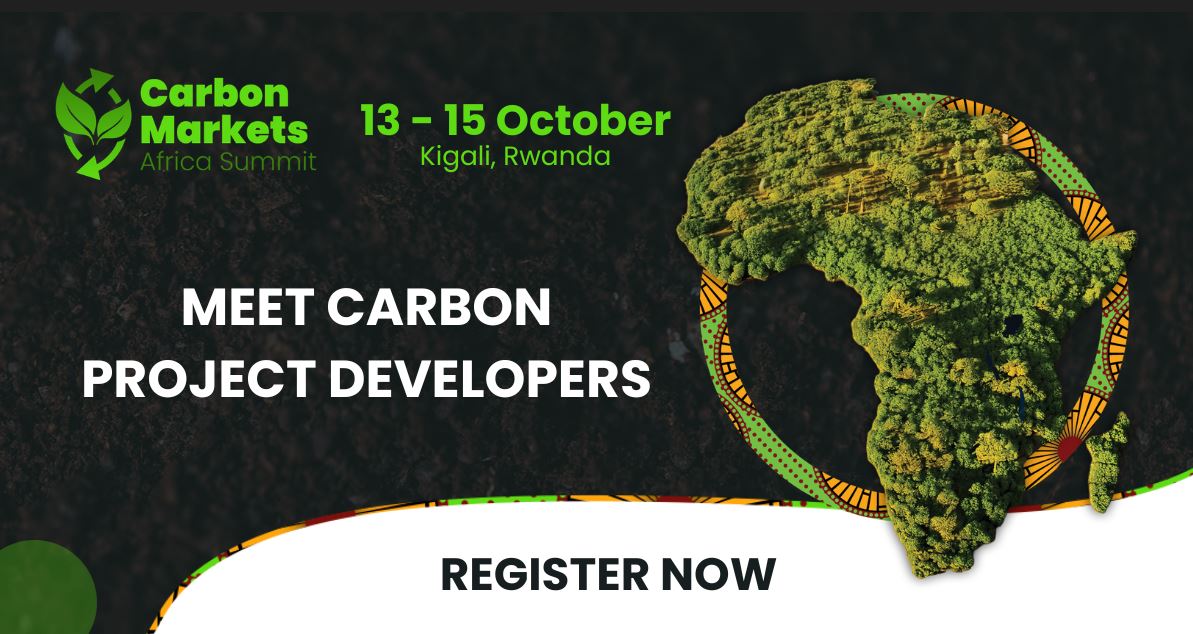
They will be central to the Carbon Markets Africa Summit (CMAS) 2026, taking place from 13 to 15 October at the Kigali Convention Centre in Rwanda. The summit will convene African governments, project developers, investors, buyers and technical experts involved in decisions across the carbon-market value chain.

Countries are approaching these decisions from different regulatory, economic and environmental positions. While recent developments in East Africa demonstrate growing market activity, questions concerning international requirements, technical capacity, investment and benefit-sharing are relevant across Africa.

Ousmane Fall SARR, Coordinator of the West African Alliance on Carbon Markets and Climate Finance, says:

“African countries are developing carbon markets from different starting points. Stronger African expertise and regional cooperation will be important if the continent is to contribute to the standards and market practices that determine how its projects compete, attract investment and create value.”

Against this continental backdrop, East Africa provides a timely example of how the market is developing. In January 2026, Rwanda and Singapore invited applications for carbon-credit projects under their bilateral Implementation Agreement, aligned with Article 6 of the Paris Agreement. Credits from authorised projects may be used by eligible Singapore-based carbon tax-liable companies to offset up to 5% of their taxable emissions, subject to both governments’ requirements.

African countries are developing carbon markets from different starting points

Across the continent, carbon market frameworks are rapidly taking shape. Kenya and Uganda are strengthening regulatory oversight, regional partnerships are helping governments build market capacity and infrastructure, and South Africa is advancing reforms to modernise its carbon-credit ecosystem and attract investment. Together, these developments are bringing greater focus to questions of authorisation, project ownership, verification, pricing and access to international buyers, while also raising expectations that carbon finance should deliver sustainable economic and development value beyond the credit itself.

Emmanuelle Nicholls, Portfolio Director for CMAS, says:

“A carbon credit may be the final product, but behind it are decisions about ownership, data, risk, pricing and who ultimately benefits. The conversations in Kigali will examine what credible participation looks like across the full carbon-market value chain.”

These decisions have consequences beyond individual transactions. Carbon finance is increasingly connected to conservation, agriculture, soil restoration, food security, clean energy and waste management. Its success will therefore also be judged by whether projects produce credible environmental outcomes and lasting benefits for African economies and communities.

A practical example comes from the Chinko Conservation Area in the Central African Republic, where revenue from the Chinko Carbon Project is channelled through a community fund that supports locally selected initiatives, including the expansion of a medical centre in Agoumar. At CMAS 2026, African Parks and Welthungerhilfe, both Bronze Sponsors, will share perspectives on how carbon finance can support conservation, climate resilience, food systems and community development, while highlighting broader questions around project governance, impact and the distribution of value.

From project-level impact to market-wide structures, these questions will underpin discussions at CMAS 2026. The programme will address government authorisation, buyer requirements, pricing and offtake, investment risk, early-stage finance, registries and African measurement, reporting and verification capacity. It will connect the question of who sets the terms with the practical requirements for building credible, investment-ready projects and transactions.

CMAS 2026 is hosted by the Ministry of Environment of Rwanda, with UNDP and the African Development Bank as host organisations, the Development Bank of Southern Africa as host partner and AUDA-NEPAD as strategic institutional partner.

Taking place ahead of COP31, CMAS will focus attention on the decisions behind every carbon credit and what they mean for African governments, projects, investors and communities.

Distributed by APO Group on behalf of VUKA Group.


Continue Reading

Energy

Building a Knowledge Hub for China-ASEAN Energy Cooperation

Published

on

ASEAN

NANNING, CHINA – Media OutReach Newswire – 21 September 2026 – During the 23rd China-ASEAN Expo and the China-ASEAN Business and Investment Summit, China Southern Power Grid showcased a range of innovations designed to support energy cooperation between China and ASEAN. These included the DaWatt – Lao Language Large Language Model (LLM) for the Energy and Power Sector V2.0 and the Flexible Grayscale Intelligent Monitoring & Analysis Platform for power system cybersecurity, highlighting expanding opportunities for cooperation in digitalization, intelligent technologies and green energy.

The Lao-language LLM has been deployed at Electricité du Laos Transmission Company Limited (EDL-T), where it can automatically analyze thousands of inspection images within a short period of time. After its algorithms were optimized for Laos’ mountainous and rainforest terrain, the model completed intelligent inspection analysis for four transmission lines, processing 26,000 drone inspection images and identifying more than 3,600 equipment defects.


Liu Ying, general manager of the Digitalization Department at Guangxi Power Grid Co., Ltd., said the company has been building multilingual professional corpora for the power sector, covering ASEAN countries including Laos, Vietnam and Malaysia. Drawing on the capabilities of the DaWatt foundation model, the company is developing energy and power models tailored to ASEAN languages and real-world power industry applications.

Talent development is another focus of the cooperation. The China-ASEAN Institute of Energy, jointly established by Guangxi Power Grid Co., Ltd. and Guangxi University, is exploring an industry-university training model with a strong emphasis on practical experience. So far, two cohorts totaling 53 students from ASEAN countries have enrolled.

Cooperation is also evolving from one-way training toward joint innovation. Guangxi Power Grid Co., Ltd. and the Royal Academy of Cambodia have jointly established a laboratory for artificial intelligence and safety equipment, while the company has also launched peer-to-peer exchanges with Electricité du Laos on improving power supply reliability.

To address language barriers in cross-border technical exchanges, Guangxi Power Grid Co., Ltd. has developed an AI-powered translation platform backed by a specialized database containing terminology for more than 1,800 types of power equipment. The platform supports accurate translation between Chinese and English, Chinese and Lao, and Chinese and Vietnamese.

At a recent training program for Chinese and overseas engineers, the system supported one-click generation of bilingual course materials and real-time speech translation, helping participants navigate highly specialized power-sector terminology.

To support regular international exchanges, Guangxi Power Grid Co., Ltd. has also established an international talent pool covering management, technical and skilled personnel. It has developed 24 hours of courses on international affairs as well as 20 short-form video courses.

“This year, we will also explore joint postgraduate programs with universities in ASEAN countries,” said Sun Xiaohua, deputy director of the Human Resources Department at Guangxi Power Grid Co., Ltd.

Looking ahead, Guangxi Power Grid Co., Ltd. plans to further advance a development model featuring “R&D in Beijing, Shanghai and Guangdong, integration in Guangxi, and application in ASEAN.” The company will continue expanding its multilingual power-sector corpora and explore a “Token Goes Global” model for power-sector AI, with computing resources and models based in Guangxi while knowledge services are delivered overseas. The effort is aimed at creating new forms of China-ASEAN energy cooperation and supporting the green development of the China-ASEAN Free Trade Area 3.0.


Continue Reading

Events

24th Sichuan Guangwu Mountain International Red Leaf Festival to Showcase Asia’s Spectacular Autumn Colors

Published

on

Red Leaf Festival

BAZHONG, CHINA – Media OutReach Newswire – 21 September 2026 – The 24th Sichuan Guangwu Mountain International Red Leaf Festival will run from October 1 to November 18 at the Guangwu Mountain Tourism Area in Bazhong, Sichuan Province, China.

Located in southwest China, Guangwu Mountain boasts a forest coverage rate of 97%, earning its reputation as a “natural oxygen bar.” Each autumn, 680 square kilometers of mountain forests burst into a dazzling palette. Over 40 tree species, including Fagus pashanica, maples and lindens, weave the mountains into a stunning autumn landscape.

Known as “Asia’s longest natural red carpet,” the Mountain has become a top autumn destination for backpackers, photographers and travelers seeking immersive cultural and nature experiences, and is widely recognized as one of western China’s signature autumn attractions.


The tourism area caters to international visitors who prefer slower-paced, in-depth, off-the-beaten-path travel. The new Yanziling Loop Boardwalk, launched in May 2026, winds along mountain cliffs, with a sea of clouds rolling beneath visitors’ feet and brilliant foliage unfolding alongside the trail, creating the feeling of “stepping into a painting.”

Guangwu Mountain offers a wealth of outdoor attractions. Highlights include the 1,888-meter Red Leaf Coaster and a glass water slide certified by Guinness World Record, combining thrilling experiences with stunning natural scenery.

The large-scale immersive production “New Dream of Guangwu Mountain” integrates cutting-edge light and visual technology with Bashan folklore and traditions, transforming the forest into an atmospheric nighttime experience. Visitors can also enjoy welcome performances and interactive robot activities, which offer more ways to discover the mountain’s late-autumn charm.

A major highlight of this year’s festival is the newly completed Micang Avenue. Stretching 85 kilometers, the route connects seven core scenic spots, including Guangwu Mountain, Micang Mountain, and Nuoshui River, reducing a four-hour drive to just one hour. Lined with continuous stretches of colorful forest and layered peaks, the avenue brings brand-new travel experiences for autumn foliage enthusiasts.

The festival will also feature cultural, sports and international exchange activities, including the third season of the “Sending You a Red Leaf” campaign, the China Micang Avenue International Road Cycling Race, and the “World Red Leaf Landmark” global collection campaign.

In addition, 31 scenic attractions and 18 museums and cultural venues across Bazhong will provide special ticket offers and visitor benefits during the festival.

Across mountains and seas, Guangwu Mountain invites visitors from around the world to witness one of China’s most vibrant red-and-gold autumn displays.
The issuer is solely responsible for the content of this announcement.


Continue Reading

Trending