Connect with us
Anglostratits

Tech

Creating Infinite Possibilities with Limited Wireless Resources

Published

on

Huawei

Huawei AgenticRAN Redefines the Value of Wireless Networks
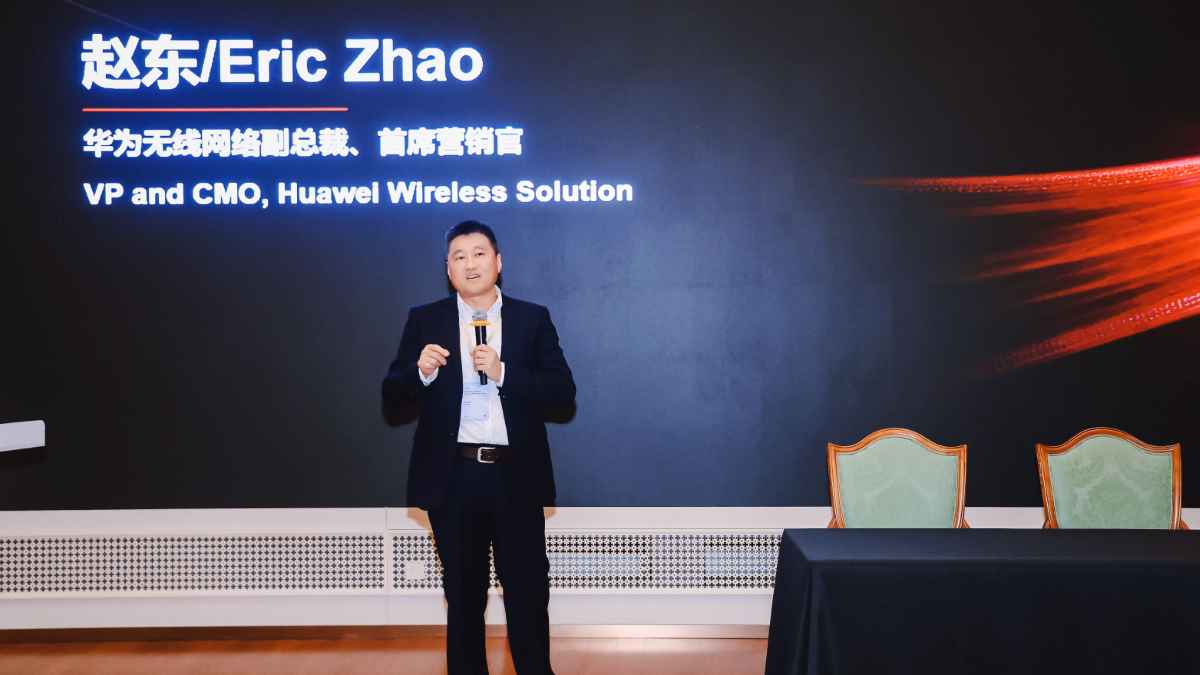
SHANGHAI, CHINA – Media OutReach Newswire – 26 September 2025 – As global 5G-A commercialization picks up speed, Eric Zhao, Vice President and Chief Marketing Officer of Huawei’s Wireless Solution, delivered a speech titled “AgenticRAN: Create Unlimited with Limited”. This was the first in-depth explanation of the AgenticRAN architecture: Based on the Three Critical Factors of “Effectiveness, Reliability, and Cost”, Huawei has introduced AI into wireless networks layer by layer to generate greater network value and deliver unparalleled user experience.
Eric Zhao delivering a speech

Introducing AI into wireless networks layer by layer to unlock network potential

To address the dual challenges of a 100-fold increase in mobile AI traffic and green development, Huawei has proposed Three Critical Factors regarding AI adoption in wireless networks:
Effectiveness: Focusing on the multi-scenario generalization capabilities of AI, Huawei has continuously explored and innovated in AI models and algorithms based on specific scenarios and business needs, overcoming the limitations of single-scenario AI and achieving widespread applicability across different scenarios.
Reliability: This is to ensure long-term, stable, and trustworthy operation of AI in wireless networks, avoid unpredictable anomalies or hallucinations, and strictly control parameter setting, data privacy protection, and network security.
Cost: Considering the need to prioritize efficiency for wireless networks, Huawei has continuously optimized the allocation of computing power and operators, introducing AI capabilities into wireless networks layer by layer to achieve the optimal balance between performance and cost.

Three directions of innovation for AgenticRAN: Using AI where it matters most

· Agentic Service: Opening up and monetizing network capabilities​
By leveraging agentic AI, Huawei has transformed traditional complex API calls into an intent-as-a-service model. This enables carriers to flexibly orchestrate multi-dimensional network capabilities using natural language, to adapt to diverse scenarios and experience requirements. Compared with conventional methods, the new model is easier to deploy and more responsive, and can significantly reduce time-to-market for new services, allowing carriers to efficiently monetize their network capabilities.

· Agentic AN: Intent-driven intelligent collaborative networks
Huawei has launched the multi-agent collaborative interface AGLink to achieve efficient coordination among multiple Executor Agents under the management of a Leader Agent. AGLink places emphasis on high reliability, high security, and privacy protection. Network optimization intentions can be directly described in natural language and then automatically translated for network deployment, significantly boosting operational efficiency. Huawei will work alongside carriers to define standards for intent interfaces and promote the standardization of A2A-T interfaces within the TM Forum (TMF) and the 3rd Generation Partnership Project (3GPP).

· Huawei adopts an adaptive approach to introducing AI and algorithms into wireless networks, continuously improving the spectral efficiency and energy efficiency of wireless communications, and flexibly utilizing time, frequency, space, and power resources to achieve the optimal balance between performance and efficiency.

Opening a new chapter in the mobile AI era

AgenticRAN will unleash the full potential of AI in scenarios where it can truly add value, delivering superior user experience and significantly increasing spectral efficiency, energy efficiency, and operational efficiency to minimize TCO. Huawei firmly believes this is just the beginning. Moving forward, Huawei will collaborate with carriers and other industry partners to transform limited wireless resources into unlimited innovation possibilities, to jointly open a new chapter for autonomous networks in the mobile AI era.


Home  Facebook

Tech

Meta to earn $240bn from advertising in 2026 outpacing global social media ad growth

Published

on

WARC
  • Meta’s AI-orientated CapEx is growing fast, but worrying investors
  • Facebook remains the largest Meta platform by ad revenue
  • Over 3.5bn people worldwide use one of its apps every day
  • AI is helping campaigns on Meta to become more efficient
  • Instagram and Facebook outperform as a driver of brand awareness

WARC Media’s Platform Insights: Meta

13 May 2026 – In recent years, Meta has transformed its proposition to advertisers through AI-driven automation, leading its advertising business to grow a forecasted 22.3% to $240bn this year, according to WARC Media.

Serving ads across its mass reach ‘family of apps’ remains the foundation of its monetisation strategy. Its fast-growing ad business funds an aggressive AI innovation programme – which, in turn, fuels the flywheel through further increases in ad revenue.

WARC Media’s latest Platform Insights report explores Meta’s hyper-efficient advertising business, evaluates usage across its apps, and assesses the performance of campaigns on Meta.

Alex Brownsell, Head of Content, WARC Media, and co-author of the report, said: “Meta’s flywheel is spinning faster than ever. The company’s AI-driven automation is transforming how brands connect with audiences, driving rapid growth in advertising spend with Facebook and Instagram. This is enabling further record-breaking levels of investment in AI innovation.

“Yet investors appear concerned that the flywheel is at risk of spinning out of control, in light of

plateauing user growth and mounting pressure to better monetise existing audiences. In this report, we explore the latest evidence-based insights to better understand Meta’s ad model and consider what might come next.”

Investment: WARC forecasts Meta’s advertising business to grow 22.3% to $240bn in 2026

In 2025, Meta’s ad business grew 22% to $196bn. It is expected to grow a further 22.3% to reach $240bn this year, according to WARC Media forecasts, with a more modest growth of 12.1% anticipated for 2027.

Prior to 2023, Meta’s annual ad revenue growth had lagged the total global social media market, and its share of total social spend was in decline. Following sizeable AI investments post-pandemic, it is

now focused on optimising monetisation efficiency rather than simply increasing overall ad load. By deploying unified AI and automated campaign tools, it aims to enhance advertiser conversions and increase ad revenue without degrading user experience.

Facebook is forecast to account for 60% of Meta’s ad revenue in 2026, compared with 40% for Instagram. A unified AI architecture is helping to maintain double-digital growth across both platforms.

In its latest earnings call, Meta announced a $125bn-$145bn increase in annual capital expenditure on AI, funded almost exclusively through its ad business. This relative lack of revenue diversification compared with Alphabet and Amazon is proving a concern for investors, resulting in a 10% drop in the company’s stock.

The US is Meta’s largest market for ad investment (42.2% share on Facebook and 40.5% on Instagram) followed by the UK (4.0% on each platform) and Australia (1.7% and 2.1% respectively), according to WARC Media and Omdia data. However, more than half (55%) of global marketers plan to boost investment in Instagram this year, versus only 25% for Facebook, according to WARC’s annual Voice of the Marketer survey.

Consumption: Over 3.5bn people worldwide use at least one Meta app every day

Meta reports that over 3.5 billion people worldwide use at least one of its apps every day, although restrictions in Russia and Iran caused its first ever decline in total daily active users in Q1 this year.

Facebook’s scale means the age profile of its audience tallies with the total internet population, while Instagram skews younger. Millennials and GenX make up more than 70% of wealthy global Facebook and Instagram users, per analysis by Ipsos.

Latin America, followed by Sub-Saharan Africa, leads in high-net-worth individual (HNWI) engagement on Facebook and Instagram—yet generates far less revenue per user than North America and Europe. Meta is now unlocking this monetisation opportunity through strategic expansions, including rolling out Threads ads in Brazil, seen as a key market.

Short-form video is becoming the content default across Meta. Its vertical video format Reels accounts for 45% of all engagement on Instagram, and 29% on Facebook – with time spent watching video content on Facebook globally up 8% quarter-on-quarter.

Meta heavily invests in LLMs to develop a “deeper intuition about user interests” to help with ad targeting.

Performance: AI is helping Meta campaigns to become more efficient; cost-per-purchase has improved by 4.5% year-on-year

Meta’s advanced AI capabilities are transforming campaign performance across its platforms. The company’s Q4 2025 model rollout drove a 24% increase in incremental conversions through improved attribution, while analysis by Fospha found that its cost-per-purchase (CPP) has improved by 4.5% year-on-year. Brands using Advantage+ have seen a 41% higher blended ROAS and 17% lower new customer acquisition cost versus those running manual campaigns.

Partnership Ads are emerging as a game-changer, with 71% of consumers making purchases within days of seeing creator content across Meta’s apps.

Kantar analysis found that an average campaign allocates 4% of budget to Instagram and 5% to Facebook – but that both platforms deliver relatively higher shares of brand awareness, association and motivation to buy.

Instagram ranks as global marketers’ second most preferred media brand after YouTube, and more than 40% of marketers globally believe that Instagram is among the top four platforms that deliver the highest attention. Both Instagram and Facebook feature advertising that consuers perceive to be “fun” and “entertaining”.

Continue Reading

Business

Liquid Intelligent Technologies revitalises access to cloud and cyber security services in support of improved national digital resilience

Published

on

Liquid Intelligent Technologies

These services will be available to existing and potential customers in Botswana, and at the centre of the new offering is Secure360, the company’s integrated security framework

GABORONE, Botswana, May 13, 2026/APO Group/ –Liquid Intelligent Technologies (https://Liquid.Tech), a business of Cassava Technologies, a global technology leader, brings cloud and cyber security solutions and services to businesses and enterprises of all sizes in Botswana. The announcement comes as Liquid celebrates a decade of operations in the country.


These services will be available to existing and potential customers in Botswana, and at the centre of the new offering is Secure360, the company’s integrated security framework that enables organisations to move beyond reactive breach response towards proactive intelligence, protection and assurance. The solution combines local delivery with continental-scale infrastructure and global technology partnerships to provide organisations with enterprise-grade digital security and cloud capabilities aligned with national digital priorities.

When organisations engage with Liquid Intelligent Technologies in Botswana, they are connecting to the strength of Cassava’s integrated digital ecosystem

“Over the last decade, Liquid has deployed over 1174.08 km of fibre, bringing multi-terabit capacity and unmatched resilience to the region. By establishing a 730km backbone along the A1 road, we’ve positioned Botswana as a critical hub, linking networks from Zimbabwe, South Africa, Kenya, Zambia, the Democratic Republic of Congo, and Sudan,” said Odirile Tamajobe, Managing Director of Liquid Intelligent Technologies Botswana. “Now, by bringing the cloud and cyber security services into the country, we are empowering local businesses with world-class digital solutions, ensuring they can compete and win on the global stage.”

The expansion of Liquid’s offerings in the market reflects the broader Cassava strategy to deliver integrated digital infrastructure and platforms through its One Cassava approach.

“When organisations engage with Liquid Intelligent Technologies in Botswana, they are connecting to the strength of Cassava’s integrated digital ecosystem,” said Ziaad Suleman, CEO of Cassava Technologies SA and Botswana. “Beyond cloud and cyber security, customers can access data centres, AI readiness reviews, and tailored technology journey roadmaps, all within a unified platform designed to support secure innovation and long-term digital resilience”.

As Botswana advances on its Vision 2036 ambitions to expand digital services across government, financial services, telecommunications, and critical infrastructure sectors, Cassava’s digital services aim to strengthen national digital resilience, fostering pride and confidence in the country’s progress.

Distributed by APO Group on behalf of Liquid Intelligent Technologies.


Continue Reading

Business

Gas Supply in the Age of Artificial Intelligence (AI): Can Africa’s Natural Gas Power the Continent’s Digital Future?

Published

on

African Energy Chamber

As AI-driven data demand accelerates, Africa’s vast natural gas reserves are emerging as a critical enabler of data center growth – placing gas at the center of discussions at African Energy Week 2026’s AI and Data Center Track

CAPE TOWN, South Africa, May 8, 2026/APO Group/ –As artificial intelligence (AI) drives an unprecedented surge in data processing, one constraint is becoming increasingly clear: power. Data centers – the backbone of AI – require vast, stable and continuous energy supply. For Africa, this challenge intersects with an opportunity. The continent’s abundant natural gas resources could position it as a future hub for AI infrastructure – if supply can be effectively mobilized.


Africa holds over 600 trillion cubic feet of proven natural gas reserves, representing a significant share of global supply. Yet despite this abundance, the continent consumes only a fraction domestically, with much of production historically geared toward exports.


At the same time, Africa’s digital infrastructure remains underdeveloped. The continent accounts for just 0.6% of global data center capacity – despite representing nearly 20% of the world’s population. Total installed capacity stands at roughly 1.2 GW across active, planned and pipeline projects, with only about 360 MW currently operational.


Demand, however, is accelerating rapidly. Africa’s data center needs are expected to increase 3.5 to 5.5 times by 2030, requiring up to $10–20 billion in investment. Power demand is rising in parallel, growing at 20–25% annually and projected to reach 8,000 GWh in the coming years.


This is where natural gas becomes critical. Unlike intermittent renewables, gas-fired power offers dispatchable, baseload energy – making it particularly suited to the always-on requirements of data centers. Globally, data centers already consume around 1.5% of total electricity, with demand growing at roughly 12% annually, far outpacing overall electricity consumption. In emerging markets, where grid reliability is inconsistent, this reliability advantage becomes even more important.

AI data centers require constant, reliable power at scale, and natural gas is the only resource Africa has today that can deliver that immediately


Major gas projects across Africa underscore the scale of potential supply. Mozambique’s offshore developments – among the largest globally – are expected to produce over 13 million tons per year of LNG, while Nigeria continues expanding its gas monetization strategy around its 200+ trillion cubic feet of reserves. Meanwhile, new producers such as Senegal and Mauritania are entering the market with large-scale LNG developments.


The opportunity is not simply about exporting gas, but about using it domestically to power industrialization and digital infrastructure. Today, Africa exports energy while still facing chronic power shortages, creating a disconnect between resource wealth and economic development.


Bridging this gap could redefine the continent’s trajectory. Gas-to-power projects, integrated with data center development, offer a pathway to anchor digital infrastructure in energy-rich regions. Countries such as Nigeria, Egypt and Algeria are particularly well positioned, while emerging producers like Mozambique and Senegal could embed domestic supply into new industrial and digital hubs from the outset.

This convergence is now moving to the forefront of industry discussions. At African Energy Week 2026, the AI and Data Center Track will focus on how power – particularly natural gas – can underpin the continent’s digital expansion. As AI infrastructure scales, the track highlights a central reality: without reliable, scalable energy, Africa risks missing out on the next wave of global digital investment.

“This is not just an energy discussion – it’s an economic strategy,” says NJ Ayuk, Executive Chairman of the African Energy Chamber. “AI data centers require constant, reliable power at scale, and natural gas is the only resource Africa has today that can deliver that immediately. If we align gas development with digital infrastructure, we can industrialize, create jobs and position Africa as a serious player in the global AI economy.”

Still, challenges remain. Infrastructure gaps, pricing constraints and regulatory uncertainty continue to limit domestic gas utilization. Without coordinated investment in pipelines, power plants and digital infrastructure, the continent risks continuing its role as an energy exporter while importing digital services.

As AI drives a new wave of energy demand, natural gas is emerging as a critical enabler of digital infrastructure. For Africa, the challenge – and opportunity – is to turn that advantage into global competitiveness.

Distributed by APO Group on behalf of African Energy Chamber.

Continue Reading

Trending