Connect with us
Anglostratits

Business

Global ad market prospects further downgraded as retailers, automakers cut ad budgets and Chinese brands redirect spend due to US trade tariffs

Published

on

Global ad market

Growth forecasts for advertising spend have been downgraded further this year (-0.5pp to +6.2%) following an initial $20bn cut in March

Key sectors such as retail (-6.1%) and automotive (-4.0%) are expected to cut ad budgets in the wake of mounting tariff pressures on supply chains

Alphabet, Amazon and Meta are set to take a combined market share of 54.7% excluding China this year – equivalent to $524.4bn – rising to 56.2% in 2026

US ad market prospects cut by half a point to +5.2% as Chinese retailers such as Temu and Shein redirect spend to Canada, Australia and Europe

Global ad market growth is expected to accelerate to 6.5% next year, with a total of $1.23trn equivalent to almost $150 per capita

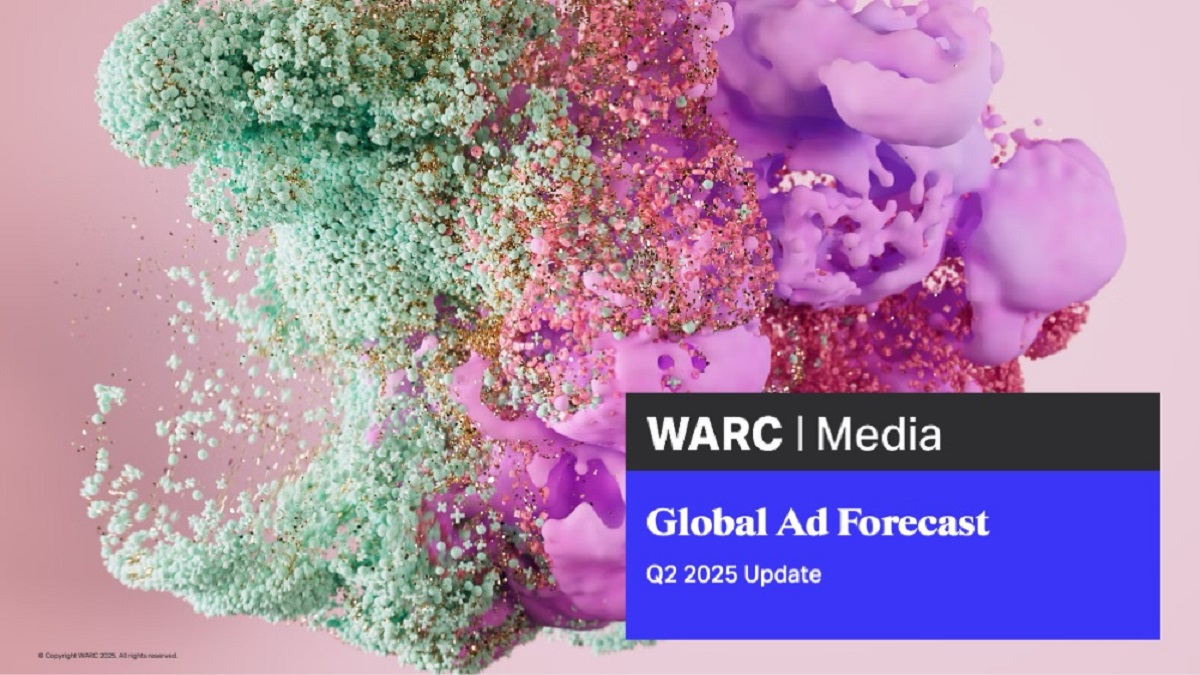
WARC Global Ad Forecast Q2 2025 update: Growth cut amid trade trepidations

12 June 2025 – A new study from WARC, the experts in marketing effectiveness, has found that global advertising spend is now on course to grow 6.2% this year to $1.16trn, a downgrade of half a percentage point (pp) from WARC’s March forecast due to growing market volatility. Key sectors such as retail (-6.1%) and automotive (-4.0%) are set to cut ad spend this year, while ad spend growth across technology and CPG brands is muted compared to previous rates.

James McDonald, Director of Data, Intelligence & Forecasting, WARC, and author of the research, says: “The latest downgrade is attributable to a reticence to commit ad budgets across key markets in the second quarter. This cooling is underpinned by tariff trepidations and ebbing business and consumer confidence, prompting advertisers to front-load budgets and reallocate spend geographically, particularly towards Canada, Australia, and Europe.

“Trade tensions are forcing major sectors to rethink their ad strategies. Automakers are cutting back amid rising costs and a pivot to performance media, while retailers tighten budgets as tariffs squeeze margins. Tech firms face growing uncertainty despite continued investment, and CPG brands are leaning into retail media as supply chains come under pressure. Across the board, agility is the new imperative.”

WARC’s latest global projections are based on data aggregated from 100 markets worldwide, and leverage a proprietary neural network which projects advertising investment patterns based on over two million data points.

Key media outlook: AI propels Alphabet, Amazon and Meta to 54.7% market share outside of China

Search to account for more than a fifth (21.5%) of the ad market this year, with spend rising 7.4% to $248.6bn despite regulatory threats
Social media – the largest single advertising medium globally – is poised to account for a quarter (25.8%) of all ad spend this year, at a total of $298.3bn
Retail media set to be fastest growing advertising medium this year (+14.4%), though trade disruption threatens ad receipts from consumer packaged goods (CPG) brands

Pure play internet – encompassing social media, retail media, online display, online classified and paid search – grew 11.5% in the first quarter of 2025 to $195.2bn, equivalent to 70.8% of all global ad spend. The growth rate is expected to ease to 9.9% during the second quarter and 8.9% over the second half of the year – to an annual total of $829.2bn (+9.8% vs. 2024).

The pure play internet sector is on course to top $1trn in ad revenue in 2028, by when it would account for almost 80% of all advertising spend. Alphabet, Meta and Amazon’s combined share of advertising spend outside of China is expected to reach 54.7% this year (+1.8pp vs. 2024) with an aggregated total of $524.4bn. This share is set to rise further – to 56.2% – next year.

Within the pure play internet total, search advertising spend is forecast to rise 7.4% this year and 6.8% next, by when the market would be worth $265.5bn – equivalent to 21.5% of all spend, up from 21.2% in 2024.

Within the paid search total, Google’s expected $213.3bn take would account for 85.8% of the market this year. The embedding of artificial intelligence into the search journey stands to disrupt ad revenue models, but Google’s dominance in search advertising will likely persist in the near term, aided by SMEs.

Social media is now set to account for over a quarter of all ad spend this year. A strong first quarter rise of 14.9% precedes an expected slowdown, with growth averaging 11.2% over the coming three quarters as tariffs begin to impact Asian brands disproportionally. The social market is still on track to grow 12.0% to $298.3bn this year.

​​Meta last month outlined plans for an end-to-end AI solution covering the generation of creative, ad placement and performance optimisation – primarily for its long tail of small advertisers rather than large brands. Meta’s ad business is forecast to grow 12.6% to $142.1bn this year, a cooling from the 18.4% rise recorded in 2024.

Retail media is expected to be the fastest-growing medium tracked by WARC this year, with an anticipated rise of 14.4% to a total value of $176.2bn. This represents a 15.2% share of global ad spend this year.

Amazon’s retail media ad business grew 21.0% to $13.3bn during the first quarter, accounting for a third (33.4%) of the global retail media market. WARC projects Amazon’s ad income will grow by 16.1% to $60.6bn this year. A further rise, of 14.9%, is forecast next year, giving Amazon a 35.4% of global retail media spend and 5.7% of all advertising spend worldwide. Like other online retailers, Amazon is exposed to tariffs imposed on its Chinese sellers, thought to be well over half of all vendors on the platform.

Global video advertising spend is forecast to decline by 2.6% in 2025 to $183.9bn, equating to 15.9% of all spend this year. The contraction is driven by a continued decline in linear TV, which still represents over three-quarters of the total video market.

Linear TV spend is expected to fall by 6.3% this year – a drop exacerbated by 2024 major sporting and political events. Notably, 2025 marks the first year that retail media will command a greater share of global ad spend than linear TV.

Video-on-demand (VOD) advertising is forecast to rise by 13.2% to $39.9bn, a downgrade from the 15.4% projected in March. Within this, Netflix is due to see ad billings double this year (from a small base) due to the relative resilience of its ad tier during economic downturns.

Key product sector trends: Tariff trepidations hit retailers and automakers

Automotive ad spend down 4.0% this year as manufacturing stalls and key players pare back on brand building
Retailers set to reduce ad spend by 6.1% as margins tighten; US retailers are vulnerable to disruption among Chinese suppliers
Ad growth set to slow markedly among tech & electronic and consumer packaged goods (CPG) brands as barriers to trade impair access to components

The automotive industry invested $56.8bn in advertising last year with almost a quarter (22.9%) going to premium video formats. However, budgets are shifting from video towards digital platforms, with automotive spend on social ads surpassing linear TV for the first time in 2025.

Despite WARC’s projected 4.0% cut in automotive advertising spend this year (an improvement on the 7.3% originally projected in March), the sector should rebound next year with a 7.5% rise pushing spend to a total of $58.6bn.

Retail, with projected ad spend of $166.1bn this year (14.3% of the global ad market), faces a fall of 6.1% from 2024 levels. This largely reflects impending US trade tariffs on key goods and raw materials, which are poised to increase costs for global retailers, particularly those heavily reliant on Chinese imports such as Amazon and Walmart.

Retailers are set to accelerate shifts in marketing strategies in response to changing cost structures and consumer behaviour. As predicted in March, large Chinese retailers targeting US consumers – including Temu and Shein – have reallocated advertising spend to other markets such as Canada, Australia and Europe.

The tech and electronics sector is expected to spend $90.3bn on advertising this year. This year-on-year rise of 5.5% represents a cut from our +6.2% forecast in March, and is a sharp slowdown from the 24.3% rise recorded last year. Tariffs are driving the sector to adjust go-to-market strategies, shifting investments toward less-affected regions or different product lines to buffer against hardware margin erosion.

Consumer Packaged Goods (CPG) companies experienced their weakest first quarter sales revenues since the pandemic. Further, with tariffs reaching as high as 145% for Chinese imports and additional tariffs on goods from Canada and Mexico, CPG companies are facing major disruption to their established supply chains.

WARC expects core CPG sectors, such as soft drinks (+7.1%), toiletries & cosmetics (+7.2%) and household & domestic (+4.2%) to record growth in advertising spend at a global level this year, though all see a significant slowdown from 2024. Taken together, the CPG sector is expected to increase advertising spend by 6.7% this year to a total of $200.5bn.

Key market outlook: US growth prospects cut as Chinese brands look elsewhere

US ad market expected to post a +5.2% rise this year, less than half that recorded in 2024 (+13.5%) and has been cut by half a point since March
Canadian ad spend growth set to ease to 3.5% this year despite some Chinese advertisers redirecting spend from the US
The Chinese ad market continues to struggle with weak domestic demand; growth is set to slow to 7.2% this year
The UK, German, French and Japanese economies are all stalling and present a severe risk of stagflation over the forecast period

WARC’s latest forecast suggests the US ad market will grow 5.2% this year to $451.6bn, half the growth rate recorded in 2024 (+13.5%) and representing a 0.5 point downgrade from our March forecast. The US ad market – the largest worldwide with a 39.0% share – faces major headwinds including tariff uncertainty, disrupted supply chains, lower consumer demand and stagflation.

Despite a strong first quarter performance – +7.6% to $105.7bn, boosted by Chinese brands accelerating spend ahead of the anticipated tariff changes – US ad market growth is expected to slow significantly through to year-end.

Chinese brands appear to be redirecting ad spend to Canada to negate US market barriers, yet Canadian ad growth is expected to slow to 3.2% this year amid deteriorating economic conditions. The IMF had downgraded Canada’s GDP growth forecast by 0.6pp to 1.4%, with the Bank of Canada projecting growth rate to approximately +0.5% in 2025.

Digital platforms dominate Canada’s media landscape, projected to capture 77.6% of the total market this year. This digital transformation stems from granular targeting capabilities drawing advertisers away from traditional media, with retail media now fuelling additional growth.

China is experiencing significant structural shifts, characterised by increasingly price-conscious consumers and a digital ecosystem dominated by major players including ByteDance (Douyin), Alibaba, and Tencent, creating challenges for smaller platforms. Short-form video has become instrumental in brand promotion in China, while marketers are prioritising performance marketing over brand building initiatives.

Projected US tariffs are expected to dull China’s economic growth by 0.2 points in 2025, creating economic uncertainty and prompting a downward revision of our 2025 advertising growth expectations to 7.2% (from 8.3% in March). The outlook for 2026 has been upgraded to 7.9% growth (from 6.9%), reflecting the online sector’s resilience.

The AA/WARC Expenditure Report forecast for the UK ad market stands at +6.5% in 2025, to a total of £44.3bn ($54.7bn). The highly digitalised UK market sees online ads accounting for over four in five (84.6%) dollars this year, with social (+13.1% this year) and search (+8.2%) fuelling growth despite weak economic prospects.

Germany’s economy is also struggling, at just +0.4% expected growth by the OECD this year following a cut of 0.3pp from its last outlook. WARC forecasts a modest 2.9% rise in German advertising spend to €26.4bn ($29.5bn). Growth in France’s ad market is also set to be muted this year, at +2.7% to €18.8bn ($20.3bn). Japan faces a challenging outlook, too, with advertising spend expected to rise by 3.3% to ¥5.8trn ($39.0bn) this year.


Home  Facebook

Events

As global power structures shift, Invest Africa convenes The Africa Debate 2026 to redefine partnership in a changing world

Published

on

Debate

The Africa Debate 2026 will provide a platform for this essential, era-defining discussion, convening leaders to explore how Africa and its partners can build more balanced, resilient and sustainable models of cooperation

LONDON, United Kingdom, February 5, 2026/APO Group/ –As African economies assert greater agency in a rapidly evolving global order, Invest Africa (www.InvestAfrica.com) is delighted to announce The Africa Debate 2026, its flagship investment forum, taking place at the historic Guildhall in London on 3 June 2026.

Now in its 12th year, The Africa Debate has established itself as London’s premier platform for African investment dialogue since launching in 2014, convening over 800 global decision-makers annually to shape the future of trade, finance, investment, and development across the continent.

Under the theme “Redefining Partnership: Navigating a World in Transition”, this year’s forum will focus on Africa’s response to global economic realignment with greater agency, ambition and economic sovereignty.

The Africa Debate puts Africa’s priorities at the centre of the conversation, moving beyond traditional narratives to focus on ownership, resilience and long-term value creation.

“Volatility is not new to Africa. What is changing is the opportunity to respond with greater agency and ambition,” says Invest Africa CEO Chantelé Carrington.

“This year’s edition of The Africa Debate asks how we strengthen economic sovereignty — from access to capital and investment to financial and industrial policy — so African economies can take greater ownership of their growth. Success will be defined by how effectively we turn disruption into leverage and partnership into shared value.”

The Africa Debate 2026 will provide a platform for this essential, era-defining discussion, convening leaders to explore how Africa and its partners can build more balanced, resilient and sustainable models of cooperation.

Key challenges driving the debate

Core focus areas for this year’s edition of The Africa Debate include:

This year’s edition of The Africa Debate asks how we strengthen economic sovereignty — from access to capital and investment to financial and industrial policy

Global Realignment & New Partnerships

How shifting geopolitical and economic power structures are reshaping Africa’s global partnerships, trade dynamics and investment landscape.

Financing Africa’s Future

The growing need to reform the global financial architecture, new approaches to development finance, as well as the strengthening of market access and financial resilience of African economies in a changing global system.

Strategic Value Chains

Moving beyond primary exports to build local value chains in critical minerals for the green economy. Also addressing Africa’s energy access gap and mobilising investment in renewable and transitional energy systems.

Digital Transformation & Technology

Unlocking growth in fintech, AI and digital infrastructure to drive productivity, inclusion, and the next phase of Africa’s economic transformation.

The Africa Debate 2026 offers a unique platform for high-level dialogue, deal-making, and strategic engagement. Attendees will gain actionable insights from leading policymakers, investors and business leaders shaping Africa’s economic future, while building strategic partnerships that define the continent’s next growth phase.

Registration is now open (http://apo-opa.co/46b19gj).

Distributed by APO Group on behalf of Invest Africa.

Continue Reading

Business

Zion Adeoye terminated as Chief Executive Officer (CEO) of CLG due to serious personal and professional conduct violations

Published

on

CLG

After a thorough internal and external investigation, along with a disciplinary hearing chaired by Sbongiseni Dube, CLG (https://CLGglobal.com) has made the decision to terminate Zion Adeoye due to serious personal and professional conduct violations. This process adhered to the Code of Good Practice of the Labour Relations Act, ensuring fairness, transparency, and compliance with South African law.

Mr. Adeoye has been held accountable for several serious offenses, including:

  • Making malicious and defamatory statements against colleagues
  • Extortion
  • Intimidation
  • Fraud
  • Misuse of company funds
  • Theft and misappropriation of funds
  • Breach of fiduciary duty
  • Mismanagement

His actions are in direct contradiction to our firm’s core values. We do not approve of attorneys spending time in a Gentleman’s Club. CLG deeply regrets the impact this situation has had on our colleagues and continues to provide full support to those affected.

We want to express our gratitude to those who spoke up and to reassure everyone at the firm of our unwavering commitment to maintaining a respectful workplace. Misconduct of any kind is unacceptable and will be addressed decisively.

We recognize the seriousness of this matter and have referred it to the appropriate law enforcement, regulatory, and legal authorities in Nigeria, Mauritius, and South Africa. We kindly ask that the privacy of the third party involved be respected.

Distributed by APO Group on behalf of CLG.


Continue Reading

Business

The International Islamic Trade Finance Corporation (ITFC) Strengthens Partnership with the Republic of Djibouti through US$35 Million Financing Facility

Published

on

ITFC

This facility forms part of the US$600 million, three-year Framework Agreement signed in May 2023 between ITFC and the Republic of Djibouti, reflecting the strong and growing partnership between both parties

JEDDAH, Saudi Arabia, February 5, 2026/APO Group/ –The International Islamic Trade Finance Corporation (ITFC) (https://www.ITFC-IDB.org), a member of the Islamic Development Bank (IsDB) Group, has signed a US$35 million sovereign financing facility with the Republic of Djibouti to support the development of the country’s bunkering services sector and strengthen its position as a strategic regional maritime and trade hub.

The facility was signed at the ITFC Headquarters in Jeddah by Eng. Adeeb Yousuf Al-Aama, Chief Executive Officer of ITFC, and H.E. Ilyas Moussa Dawaleh, Minister of Economy and Finance in charge of Industry of the Republic of Djibouti.

The financing facility is expected to contribute to Djibouti’s economic growth and revenue diversification by reinforcing the competitiveness and attractiveness of the Djibouti Port as a “one-stop port” offering comprehensive vessel-related services. With Red Sea Bunkering (RSB) as the Executing Agency, the facility will support the procurement of refined petroleum products, thus boosting RSB’s bunkering operations, enhancing revenue diversification, and consolidating Djibouti’s role as a key logistics and trading hub in the Horn of Africa and the wider region.

We look forward to deepening this partnership, creating new opportunities, and leveraging collaborative programs to advance key sectors and drive sustainable economic growth

Commenting on the signing, Eng. Adeeb Yousuf Al-Aama, CEO of ITFC, stated:

“This financing reflects ITFC’s continued commitment to supporting Djibouti’s strategic development priorities, particularly in strengthening energy security, port competitiveness, and trade facilitation. We are proud to deepen our partnership with the Republic of Djibouti and contribute to sustainable economic growth and regional integration.”

H.E. Ilyas Moussa Dawaleh, Minister of Economy and Finance in charge of Industry of the Republic of Djibouti, commented: “Today’s signing marks an important milestone in the development of Djibouti’s bunkering services and reflects our strong and valued partnership with ITFC, particularly in the oil and gas sector. This collaboration supports our ambition to position Djibouti as a regional hub for integrated maritime and logistics services. We look forward to deepening this partnership, creating new opportunities, and leveraging collaborative programs to advance key sectors and drive sustainable economic growth.”

This facility forms part of the US$600 million, three-year Framework Agreement signed in May 2023 between ITFC and the Republic of Djibouti, reflecting the strong and growing partnership between both parties.

Since its inception in 2008, ITFC and the Republic of Djibouti have maintained a strong partnership, with a total of US$1.8 billion approved primarily supporting the country’s energy sector and trade development objectives.

Distributed by APO Group on behalf of International Islamic Trade Finance Corporation (ITFC).

Continue Reading

Trending