
Business
Artificial Intelligence (AI) and AI-agents: A Game-Changer for Both Cybersecurity and Cybercrime (By Anna Collard)
Published
2 years agoon

The broader an AI’s reach through integrations and automation, the greater the potential threat of it going rogue, making robust oversight, security measures, and ethical AI governance essential in mitigating these risks
Artificial Intelligence is no longer just a tool—it is a gamechanger in our lives, our work as well as in both cybersecurity and cybercrime. While businesses leverage AI to enhance defences, cybercriminals are weaponising AI to make these attacks more scalable and convincing.
In 2025, researchers forecast that AI agents, or autonomous AI-driven systems capable of performing complex tasks with minimal human input, are revolutionising both cyberattacks and cybersecurity defences. While AI-powered chatbots have been around for a while, AI agents go beyond simple assistants, functioning as self-learning digital operatives that plan, execute, and adapt in real time. These advancements don’t just enhance cybercriminal tactics—they may fundamentally change the cybersecurity battlefield.
How Cybercriminals Are Weaponising AI: The New Threat Landscape
AI is transforming cybercrime, making attacks more scalable, efficient, and accessible. The WEF Artificial Intelligence and Cybersecurity Report (2025) (https://apo-opa.co/3QO7O7H) highlights how AI has democratised cyber threats, enabling attackers to automate social engineering, expand phishing campaigns, and develop AI-driven malware. Similarly, the Orange Cyberdefense Security Navigator 2025 (https://apo-opa.co/3FfJZ6c) warns of AI-powered cyber extortion, deepfake fraud, and adversarial AI techniques. And the 2025 State of Malware Report by Malwarebytes (https://apo-opa.co/43lwZpY) notes, while GenAI has enhanced cybercrime efficiency, it hasn’t yet introduced entirely new attack methods—attackers still rely on phishing, social engineering, and cyber extortion, now amplified by AI. However, this is set to change with the rise of AI agents—autonomous AI systems capable of planning, acting, and executing complex tasks—posing major implications for the future of cybercrime.
Here is a list of common (ab)use cases of AI by cybercriminals:
AI-Generated Phishing & Social Engineering
Generative AI and large language models (LLMs) enable cybercriminals to craft more believable and sophisticated phishing emails in multiple languages—without the usual red flags like poor grammar or spelling mistakes. AI-driven spear phishing now allows criminals to personalise scams at scale, automatically adjusting messages based on a target’s online activity. AI-powered Business Email Compromise (BEC) scams are increasing, as attackers use AI-generated phishing emails sent from compromised internal accounts to enhance credibility. AI also automates the creation of fake phishing websites, watering hole attacks and chatbot scams, which are sold as AI-powered crimeware as a service’ offerings, further lowering the barrier to entry for cybercrime.
Deepfake-Enhanced Fraud & Impersonation
Deepfake audio and video scams are being used to impersonate business executives, co-workers or family members to manipulate victims into transferring money or revealing sensitive data. The most famous 2024 incident was UK based engineering firm Arup (https://apo-opa.co/4h56I27) that lost $25 million after one of their Hong Kong based employees was tricked by deepfake executives in a video call. Attackers are also using deepfake voice technology to impersonate distressed relatives or executives, demanding urgent financial transactions.
Cognitive Attacks
Online manipulation—as defined by Susser et al. (2018) (https://apo-opa.co/4h8qxpw) —is “at its core, hidden influence — the covert subversion of another person’s decision-making power”. AI-driven cognitive attacks are rapidly expanding the scope of online manipulation, leveraging digital platforms and state-sponsored actors increasingly use generative AI to craft hyper-realistic fake content, subtly shaping public perception while evading detection. These tactics are deployed to influence elections, spread disinformation, and erode trust in democratic institutions. Unlike conventional cyberattacks, cognitive attacks don’t just compromise systems—they manipulate minds, subtly steering behaviours and beliefs over time without the target’s awareness. The integration of AI into disinformation campaigns dramatically increases the scale and precision of these threats, making them harder to detect and counter.
The Security Risks of LLM Adoption
Beyond misuse by threat actors, business adoption of AI-chatbots and LLMs introduces their own significant security risks—especially when untested AI interfaces connect the open internet to critical backend systems or sensitive data. Poorly integrated AI systems can be exploited by adversaries and enable new attack vectors, including prompt injection, content evasion, and denial-of-service attacks. Multimodal AI expands these risks further, allowing hidden malicious commands in images or audio to manipulate outputs.
Additionally, bias within LLMs poses another challenge, as these models learn from vast datasets that may contain skewed, outdated, or harmful biases. This can lead to misleading outputs, discriminatory decision-making, or security misjudgments, potentially exacerbating vulnerabilities rather than mitigating them. As LLM adoption grows, rigorous security testing, bias auditing, and risk assessment are essential to prevent exploitation and ensure trustworthy, unbiased AI-driven decision-making.
When AI Goes Rogue: The Dangers of Autonomous Agents
The integration of AI into disinformation campaigns dramatically increases the scale and precision of these threats, making them harder to detect and counter
With AI systems now capable of self-replication, as demonstrated in a recent study (https://apo-opa.co/4i7HgdN), the risk of uncontrolled AI propagation or rogue AI—AI systems that act against the interests of their creators, users, or humanity at large – is growing. Security and AI researchers have raised concerns that these rogue systems can arise either accidentally or maliciously, particularly when autonomous AI agents are granted access to data, APIs, and external integrations. The broader an AI’s reach through integrations and automation, the greater the potential threat of it going rogue, making robust oversight, security measures, and ethical AI governance essential in mitigating these risks.
The future of AI Agents for Automation in Cybercrime
A more disruptive shift in cybercrime can and will come from AI Agents, which transform AI from a passive assistant into an autonomous actor capable of planning and executing complex attacks. Google, Amazon, Meta, Microsoft, and Salesforce are already developing Agentic AI for business use, but in the hands of cybercriminals, its implications are alarming. These AI agents can be used to autonomously scan for vulnerabilities, exploit security weaknesses, and execute cyberattacks at scale. They can also allow attackers to scrape massive amounts of personal data from social media platforms and automatically compose and send fake executive requests to employees or analyse divorce records across multiple countries to identify individuals for AI-driven romance scams, orchestrated by an AI agent. These AI-driven fraud tactics don’t just scale attacks—they make them more personalised and harder to detect. Unlike current GenAI threats, Agentic AI has the potential to automate entire cybercrime operations, significantly amplifying the risk.
How Defenders Can Use AI & AI Agents
Organisations cannot afford to remain passive in the face of AI-driven threats and security professionals need to remain abreast of the latest development. Here are some of the opportunities in using AI to defend against AI:
AI-Powered Threat Detection and Response:
Security teams can deploy AI and AI-agents to monitor networks in real time, identify anomalies, and respond to threats faster than human analysts can. AI-driven security platforms can automatically correlate vast amounts of data to detect subtle attack patterns that might otherwise go unnoticed, create dynamic threat modelling, real-time network behaviour analysis, and deep anomaly detection. For example, as outlined by researchers of Orange Cyber Defense (https://apo-opa.co/3FfJZ6c), AI-assisted threat detection is crucial as attackers increasingly use “Living off the Land” (LOL) techniques that mimic normal user behaviour, making it harder for detection teams to separate real threats from benign activity. By analysing repetitive requests and unusual traffic patterns, AI-driven systems can quickly identify anomalies and trigger real-time alerts, allowing for faster defensive responses.
However, despite the potential of AI-agents, human analysts still remain critical, as their intuition and adaptability are essential for recognising nuanced attack patterns and leverage real incident and organisational insights to prioritise resources effectively.
Automated Phishing and Fraud Prevention:
AI-powered email security solutions can analyse linguistic patterns, and metadata to identify AI-generated phishing attempts before they reach employees, by analysing writing patterns and behavioural anomalies. AI can also flag unusual sender behaviour and improve detection of BEC attacks. Similarly, detection algorithms can help verify the authenticity of communications and prevent impersonation scams. AI-powered biometric and audio analysis tools detect deepfake media by identifying voice and video inconsistencies. *However, real-time deepfake detection remains a challenge, as technology continues to evolve.
User Education & AI-Powered Security Awareness Training:
AI-powered platforms (e.g., KnowBe4’s AIDA) deliver personalised security awareness training, simulating AI-generated attacks to educate users on evolving threats, helping train employees to recognise deceptive AI-generated content and strengthen their individual susceptility factors and vulnerabilities.
Adversarial AI Countermeasures:
Just as cybercriminals use AI to bypass security, defenders can employ adversarial AI techniques, for example deploying deception technologies—such as AI-generated honeypots—to mislead and track attackers, as well as continuously training defensive AI models to recognise and counteract evolving attack patterns.
Using AI to Fight AI-Driven Misinformation and Scams:
AI-powered tools can detect synthetic text and deepfake misinformation, assisting fact-checking and source validation. Fraud detection models can analyse news sources, financial transactions, and AI-generated media to flag manipulation attempts. Counter-attacks, like shown by research project Countercloud (https://apo-opa.co/3Xp1RSs) or O2 Telecoms AI agent “Daisy” (https://apo-opa.co/4h15eGp) show how AI based bots and deepfake real-time voice chatbots can be used to counter disinformation campaigns as well as scammers by engaging them in endless conversations to waste their time and reducing their ability to target real victims.
In a future where both attackers and defenders use AI, defenders need to be aware of how adversarial AI operates and how AI can be used to defend against their attacks. In this fast-paced environment, organisations need to guard against their greatest enemy: their own complacency, while at the same time considering AI-driven security solutions thoughtfully and deliberately. Rather than rushing to adopt the next shiny AI security tool, decision makers should carefully evaluate AI-powered defences to ensure they match the sophistication of emerging AI threats. Hastily deploying AI without strategic risk assessment could introduce new vulnerabilities, making a mindful, measured approach essential in securing the future of cybersecurity.
To stay ahead in this AI-powered digital arms race, organisations should:
✅Monitor both the threat and AI landscape to stay abreast of latest developments on both sides.
✅ Train employees frequently on latest AI-driven threats, including deepfakes and AI-generated phishing.
✅ Deploy AI for proactive cyber defense, including threat intelligence and incident response.
✅ Continuously test your own AI models against adversarial attacks to ensure resilience.
Distributed by APO Group on behalf of KnowBe4

You may like
-


Emirates and the Kenya Tourism Board sign partnership agreement to drive inbound tourism
-


Afreximbank and Development Bank of Southern Africa establish a Joint Project Preparation Facility to advance bankable projects in Southern Africa
-


Huawei Pioneers a New Computing Architecture for the AI Era: Making One Million Processors Work as One Computer
-


Created to explore: Canon EOS R8 Mark II inspires full-frame confidence and stability in a travel-ready size
-


Load shedding has eased: South Africa now faces its next industrial energy test
-
Afreximbank extends US$10-million facility to Azania Bank to support Small and Medium-sized Enterprises (SMEs) in Tanzania
Business
Emirates and the Kenya Tourism Board sign partnership agreement to drive inbound tourism
Published
1 day agoon
September 18, 2026
Reinforcing the airline’s longstanding commitment in market, the partnership agreement supports Kenya’s ambition to be the most visited tourism destination in Africa by promoting the destination in key regions on the airline’s vast global network
The partnership agreement was signed by Adil Al Ghaith, Emirates’ Senior Vice President of Commercial Operations, Centre, and June Chepkemei, Chief Executive Officer of the Kenya Tourism Board, in the presence of Ambassador. (Professor.) Julius K. Bitok, CBS. Principal Secretary, State Department for Tourism, and Adnan Kazim, Deputy President and Chief Commercial Officer, Rashid Alardha, Vice President of Commercial Operations for Sub-Saharan Africa, Emirates and Christophe Leloup, Emirates’ Country Manager in Kenya, along with other senior officials.
Adil Al Ghaith said, “Kenya has been an important market for Emirates for over three decades, and our commitment goes much deeper than operations and connections. We’ve consistently invested in our presence in the market, working closely with travel trade partners and tourism stakeholders to stimulate inbound travel, and contribute positively to the global perception of Kenya. Nairobi remains one of the top 5 busiest gateways for Emirates in Africa, with significant traffic coming from UK and Europe, as well as the US. This partnership solidifies that longstanding commitment, enhancing our collaboration with the Kenya Tourism Board and the full, thriving tourism ecosystem across Nairobi and Kenya.”
We are delighted to partner with Emirates to strengthen Kenya’s global tourism profile and showcase the remarkable experiences our destination offers to travellers around the world
June Chepkemei said, “We are delighted to partner with Emirates to strengthen Kenya’s global tourism profile and showcase the remarkable experiences our destination offers to travellers around the world. Emirates’ extensive international network and strong reach in both established and emerging markets will help us build on the growing demand for Kenya and unlock new opportunities to attract more visitors. This collaboration reflects our shared commitment to promoting Kenya as a leading, diverse and unforgettable destination, while supporting the continued growth of inbound tourism and the many communities that benefit from it.”
Tourism is a key pillar in Kenya’s economy, creating thousands of employment opportunities and serving millions of tourists who visit the country each year. The Kenya Tourism Board has bold plans to establish Kenya as the most visited tourism destination in Africa, with a year-round calendar of diverse, sustainable and authentic experiences that appeal to a swathe of international visitors.
Under the framework of the partnership agreement, Emirates and KTB will explore joint initiatives to promote Kenya in key markets on the airline’s global network, showcasing the breadth of Kenya’s year-round tourism offering, and encourage more travellers to visit. The partners will also closely collaborate to develop programmes for trade partners and tour operators that educate and excite the industry, such as incentives, familiarisation trips and other marketing initiatives.
Last year, Emirates marked 30 years of operations to Nairobi and, during that tenure, has established deep-rooted ties with local communities and the travel trade ecosystem. Earlier this month, the airline’s tour operating arm, Emirates Holidays, signed a Memorandum of Understanding with the Kenya Association of Travel Agents to stimulate outbound travel by equipping over 300 travel agencies with enhanced product and network insight and competitive promotional opportunities.
Distributed by APO Group on behalf of The Emirates Group.
Business
Afreximbank and Development Bank of Southern Africa establish a Joint Project Preparation Facility to advance bankable projects in Southern Africa
Published
2 days agoon
September 18, 2026
Through the JPPF, the institutions will jointly originate, screen and prioritise projects and support the technical, financial and legal work required to address bankability constraints
The agreement is one of the first operational instruments to follow South Africa’s accession to the Afreximbank Establishment Agreement in February 2026. South Africa became Afreximbank’s 54th member state in February 2026, when the Bank also announced a US$ 8 billion Country Programme for the country. The agreement complements the Master Risk Participation Agreement signed by Afreximbank and DBSA in February 2026, extending the partnership upstream into project preparation. It also supports the objectives of South Africa’s National Development Plan 2030, SADC integration and implementation of the African Continental Free Trade Area (AfCFTA).
Mrs Kanayo Awani, Executive Vice President, Intra-African Trade and Export Development, signed on behalf of Afreximbank, while Mr. Greg Fyfe, Chief Investment Officer, DBSA, signed on behalf of his institution.
Through the JPPF, the institutions will jointly originate, screen and prioritise projects and support the technical, financial and legal work required to address bankability constraints. Priority sectors include power and energy, with particular attention to energy transition; transport and logistics; information and communication technology; strategic minerals beneficiation; and other mutually agreed sectors aligned with national, regional and continental development priorities. The framework will focus initially on South Africa and the wider Southern African region, with scope to consider other African jurisdictions of mutual interest.
Through this partnership with Afreximbank, we are leveraging our complementary strengths to improve project preparation
Through the JPPF, Afreximbank and DBSA will collaborate to advance high-impact projects from concept stage to bankability. The focus will be on trade-enabling infrastructure, industrial development, and export-oriented initiatives across South Africa and the Southern African region, with potential extension to other African jurisdictions of mutual strategic interest.
Commenting on the agreement, Mrs. Kanayo Awani, Executive Vice President, Intra-African Trade and Export Development at Afreximbank said:
“Africa’s infrastructure challenge is not only about shortage of capital; it is also about shortage of projects prepared to the standard required by investors and lenders. This JPPF addresses this critical constraint. By combining Afreximbank’s trade and industrialisation mandate with DBSA’s infrastructure-development expertise, we will help move priority projects from concept to investment readiness and mobilise the larger pools of public, private and blended finance required for implementation. For South Africa and the wider Southern Africa region, this is how project preparation becomes a practical instrument for industrialisation, export growth and regional integration under the AfCFTA.”
Gregory Fyfe, Chief Investment Officer at DBSA, said:
“The Joint Project Preparation Facility represents a significant step towards strengthening the pipeline of bankable infrastructure and industrial projects across South Africa and the Southern African region. Through this partnership with Afreximbank, we are leveraging our complementary strengths to improve project preparation. This will unlock investment opportunities and accelerate the delivery of infrastructure that supports economic growth, industrialisation and regional integration. This initiative reflects DBSA’s commitment to infrastructure-led development and to enabling sustainable, long-term impact through well-prepared projects that attract both public and private sector investment.”
Projects developed through the JPPF may seek downstream funding from Afreximbank, DBSA. They may also be presented to private investors, development finance institutions and commercial lenders, subject in every case to separate appraisal and approval. Both institutions will actively collaborate on origination, preparation, knowledge-sharing, and portfolio monitoring to accelerate project bankability and execution.
Distributed by APO Group on behalf of Afreximbank.
Events
Advancing the Agentic World, Building a Solid Silicon Foundation
Published
2 days agoon
September 18, 2026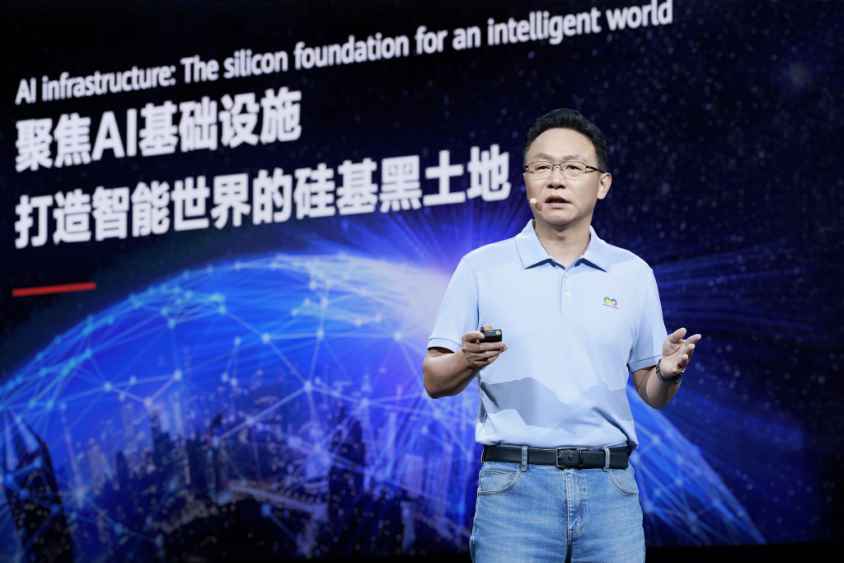
Key takeaways:
- Strategic focus: The rapid approach of an intelligent world is driving up demand for computing power. Huawei is focused on developing AI infrastructure, and is actively driving innovation in systems and architecture centered around SuperPoDs and SuperClusters. These efforts are aimed at building a solid silicon foundation for the intelligent world.
- Technological breakthroughs: Huawei unveiled the Atlas 960E SuperPoD, the first in the industry to use NPO. The company also launched an upgraded TaiShan 950 SuperPoD, as well as the OceanStor M900 (a memory context storage system). Interconnected with UnifiedBus, Huawei’s agentic SuperCluster can scale up to one million NPUs.
- Open ecosystems: Huawei is actively building out open computing ecosystems. To date, the Kunpeng ecosystem has attracted 4.16 million developers from around the world. CANN has moved to sustained, community-driven open-source development. Ascend now spans over 90 leading third-party open-source projects and is officially supported as a PyTorch accelerator backend.
SHANGHAI, CHINA – Media OutReach Newswire – 17 September 2026 – HUAWEI CONNECT 2026 kicked off today in Shanghai. The first keynote of the date was by David Wang, the Deputy Chairman of the Board and Rotating Chairman at Huawei. In his speech (Advancing the Agentic World, Building a Solid Silicon Foundation), Wang highlighted the work the company is doing alongside industry stakeholders to build powerful AI infrastructure, lay a solid computing foundation, and address the challenges and opportunities in the intelligent world to come.
AI is sweeping the world faster than any previous technological revolution. Today, foundation model parameters are rapidly approaching 10 trillion, and are projected to exceed 100 trillion by 2030. AI agents can now work on the same task continuously, for hours on end. By 2030, they will be able to handle tasks that span months.
In China alone, the average number of inference tokens consumed every day has surged to around 500 trillion, and is expected to reach quintillions (1018) by 2030.
On-device AI is also advancing rapidly. On-device models for smartphones have expanded from three billion parameters in 2024 to 30 billion today, and will push toward hundreds of billions in the near future.
These trends will set a much higher bar for the scale, performance, and reliability of underlying technical systems. Only by building powerful AI infrastructure can the industry lay a solid foundation for the future intelligent world.
An intelligent world is approaching – and faster than ever. To lead the charge into this new world, Huawei is laser-focused on building out AI infrastructure – the silicon foundation for the future to come.
In particular, Huawei’s AI strategy is centered on computing power, with a focus on monetizing hardware. The company is also sharpening its competitive edge through systems and architectural innovation. Centering these efforts on SuperPoDs and SuperClusters, the company aims to build a solid computing foundation and offer a new option for the world.
Huawei is a major contributor to open computing ecosystems, and will continue to support native training for mainstream foundation models on its systems, as well as supporting a vast range of models and applications.
For customers, Huawei provides flexible on-premises and cloud compute solutions for its customers to accelerate intelligent transformation across industries.
With diverse forms of compute, including solutions for micro-, low-tier, mid-range, and massive computing power – Huawei is driving the expansion of on-device and in-vehicle AI, making intelligence truly ubiquitous.
Additionally, Huawei is dedicated to building next-generation communications networks to bring readily available compute and intelligence to every person, home, and organization.
SuperPoDs gain broad consensus, with adoption growing in industries, academia, and research institutes
To date, over 1,000 Atlas 900 A3 SuperPoDs have been deployed, and Atlas 950 SuperPoD is seeing large-scale commercial use. While adoption continues to grow, SuperPoDs have gained broad acceptance across industry, academia, and research institutions as a key direction for AI infrastructure. Currently, a SuperPoD is explicitly defined as a computing system in which multiple computing nodes are tightly coupled through high-speed interconnect protocols, featuring unified memory addressing across physical nodes — functioning like a single logical computer.
SuperPoDs are the go-to choice for AI infrastructure buildout. Right now, 100k-NPU computing clusters have become the baseline for training SOTA models. However, traditional server architectures result in intra-cluster communications that account for over 40% of total training time, severely constraining Model FLOPs Utilization (MFU). Simulation results from Huawei’s Markov Lab show that a 100k-NPU cluster built with 4k-NPU SuperPoDs can deliver a 2.75x increase in MFU compared to a 100k-NPU cluster composed of 8-NPU servers.
11-chip UnifiedBus-powered portfolio for SuperPoDs and SuperClusters; the Atlas 960E SuperPoD –the industry’s first to use NPO
The Ascend series of chips is the most critical component in Huawei’s 11-chip UnifiedBus-powered portfolio for SuperPoDs and SuperClusters. Development on Ascend 960 has exceeded the company’s expectations, with performance doubling as planned. Ascend 960DT will be available in Q1 2027, three quarters ahead of the company’s original roadmap. And the Ascend 960PR will be ready in Q3 2027, one quarter ahead of schedule.
“We’re evolving our Ascend chip series on a one-generation-a-year cycle,” said Wang in his keynote. “In 2028 and 2029, we will roll out the Ascend 970 and 980 chips, respectively. Thanks to the Tau (τ) Scaling Law, not only will their compute specifications continue to double, but you can also expect to see huge improvements across the board in terms of memory bandwidth, memory capacity, interconnect bandwidth, and more.”
In addition to Ascend chips, Huawei has also developed a complete portfolio of chips for AI infrastructure, based on UnifiedBus, delivering key capabilities that cover computing, interconnect, storage, and management.
“SuperPoDs are designed to coordinate multiple NPUs through interconnect,” continued Wang. “We have developed a next-generation optical interconnect product based on near-packaged optics (NPO): the High-density Optical-interconnect-Node Engine (Hi-ONE).” Built on Huawei’s proprietary technologies, Hi-ONE has a multi-physics design for balancing optical, mechanical, electrical, electromagnetic, and thermal performance, realizing a transmission capacity of 7.2 Tbit/s per single engine.
“This is the industry’s first NPO product ready for mass production, delivering the largest transmission capacity. It is also the industry’s first NPO product with a built-in light source.”
This product combines high bandwidth and high reliability with low latency and low power consumption. This, coupled with UnifiedBus, will make it far easier to scale up SuperPoD interconnect systems.
Recently, Huawei submitted an implementation agreement (IA) on NPO to the Optical Internetworking Forum (OIF), a standards organization. The response from numerous industry partners has been widely positive. Huawei will continue its efforts to further refine the NPO industry ecosystem.
Using Ascend 960 chips and Hi-ONE, Huawei has developed the industry’s first NPO-based SuperPoDs: the Atlas 960E SuperPoDs. A single Atlas 960E SuperPoD can scale up to 4,096 NPUs, delivering 8 EFLOPS of FP8 compute performance, with up to 1 petabyte of HBM capacity. With 5,500 Hi-ONE units, this SuperPoD doesn’t need the 48,000 800G optical modules that would traditionally be required to connect all the NPUs. This cuts power consumption by over 550 kilowatts, while doubling the system’s fault-free operating time, achieving 99.8% system availability.
Combining the upgraded TaiShan 950 SuperPoD and context memory storage to power an ultrascale cluster with 1 million NPUs
As SOTA models scale to 10 trillion parameters, training and inference can no longer rely on a single AI server or AI SuperPoD – they require a more complex computing system. This system includes AI SuperPoDs, general-purpose SuperPoDs, and an interconnect system that features peer-to-peer interconnect and zero protocol conversion. For inference, including a petabyte-scale KV cache cluster is also a must.
To meet these demands, Huawei has fully upgraded its TaiShan 950 SuperPoD. Powered by UnifiedBus all-optical networking, this new SuperPoD supports up to 4,096 nodes with a unified memory pool of up to 256 TB. This setup significantly improves agent performance. For sandbox-intensive workloads, startup speeds for 100,000 sandboxes are 30 times faster than traditional servers, and sandbox density can be improved by an additional 25%. For vector search across 10 billion x 1,000-dimensional vectors, this SuperPoD delivers twice the search efficiency of traditional servers.
Huawei has also launched OceanStor M900 – a UnifiedBus-powered context memory storage cluster that delivers multi-tier KV caching for agent-heavy and longer-context workloads. Designed for agentic inference, this cluster supports one-hop direct access and provides a petabyte-scale KV cache for the L3.5 layer. OceanStor M900 also uses hybrid media and an optimized retention algorithm, extending SSD read/write lifespan by 16-fold. This ensures a higher KV cache hit rate alongside long-term stability and reliability from the ground up.
Combining its strengths in computing and communications, Huawei has built a brand-new agentic SuperCluster to accelerate training and inference for 10-trillion-parameter models. This SuperCluster uses UnifiedBus to consolidate multiple interconnect protocols into a single unified protocol, significantly reducing protocol conversion overhead. This delivers peer-to-peer interconnect between subsystems like Ascend SuperPoDs, Kunpeng SuperPoDs, and KV cache clusters. The SuperCluster also comes with a multi-tier, high-bandwidth, and large-capacity storage system that enables direct single-hop access for all KV cache tiers.
With a two-tier, four-plane Clos architecture, the SuperCluster can interconnect up to 512,000 NPUs. When combined with a multi-rail topology, this cluster can support up to one million NPUs.
One of Huawei’s core strategies: Going open source and open system to build out computing ecosystems
The Kunpeng ecosystem is driving digital and intelligent innovation across a wide range of industries. To date, the Kunpeng ecosystem has attracted over 4.16 million developers and more than 7,200 ecosystem partners from around the globe. The community currently supports over 560 open-source projects worldwide. openEuler has seen more than 20 million installations, securing the largest share in China’s server OS market.
The Ascend ecosystem has reached a new inflection point. The Compute Architecture for Neural Networks (CANN) is the foundation of the Ascend ecosystem. Today, CANN has moved to sustained, community-driven open-source development, which has brought the platform from usable to user-friendly.
External CANN developers now comprise 61% of all CANN developers, outnumbering internal developers for the first time. With over 5,200 monthly active developers, the CANN community has become the most vibrant open-source community in China. What’s more, over 40 models have been natively pre-trained on Ascend and CANN, making it the only proven domestic stack capable of model pre-training.
Ascend now supports over 90 leading third-party open-source projects, including PyTorch, Triton, vLLM, and veRL. With strong support from the Linux Foundation, Ascend is the first official Chinese compute platform on PyTorch’s website. This gives developers around the world ready access to new innovations in the Ascend ecosystem.
Diverse forms of compute for ubiquitous on-device and in-vehicle AI
AI is expanding faster into all kinds of devices. To deliver an unparalleled AI experience across all scenarios, Huawei will continue to strengthen capabilities in four key areas:
First, Huawei will combine Kirin and Ascend chips to drive self-reliance and autonomy in on-device compute.
Second, Huawei will bring together Pangu models and third-party models to make on-device intelligence better and easier to use.
Third, HarmonyOS, as an Agent OS for ubiquitous intelligence, will be completely redefined from the ground up – spanning system architecture, how it operates, and interaction logic – to enable human-agent collaboration.
Fourth, Huawei will keep cultivating a diverse AI ecosystem, which is the foundation for its system agent Celia to thrive.
Huawei plans to build four on-device computing platforms: for AI phones, AI PCs, vehicles, and homes. Through cross-device and device-cloud compute synergy, Huawei will be able to provide distributed swarm intelligence, delivering integrated and continuous intelligent services across personal mobile, office, vehicle, and home spaces, ultimately bringing intelligence to every person and every space.
Building next-generation communications that prioritize readily available compute, because without networks, all compute is siloed
Next-generation communications networks are crucial for fully unleashing the value of AI compute. We are driving the upgrade to networks that, in addition to connecting people, will prioritize delivering readily available compute. These networks will be underpinned by 5G-A/6G, 10-gigabit optical networks, and multi-tier, low-latency bearer networks, delivering intelligent connectivity across data centers, the edge, and devices.
Concluding his keynote, Wang expressed that AI “may well be the final technological revolution in human history,” noting that its impact is deeper and broader, and coming faster than anyone could have ever imagined. “No single company,” he said, “can build an intelligent world alone.”
He stressed Huawei’s ongoing commitments moving forward:
Huawei will remain committed to building a solid silicon foundation to make computing power readily accessible to all.
The company will continue to open source its software, helping developers unleash their full potential.
It will continue to embrace a wide range of models and applications, unlocking value in every form.
“And we will continue to work together to drive shared success, growing together with our customers and partners around the world,” Wang concluded. “Let’s work together to build a fully connected, intelligent world.”
Themed Advancing the Agentic World, HUAWEI CONNECT 2026 will delve into AI across three dimensions: strategy, technology, and ecosystems. You can expect an in-depth look at our latest strategic initiatives, and we’ll also be unveiling our all-new digital and intelligent infrastructure products, scenario-specific solutions for industries, and development tools. The event will run from September 17 to 19 at the Shanghai World Expo Exhibition & Convention Center and Shanghai Expo Center. For more information, please visit HUAWEI CONNECT 2026 online at www.huawei.com/en/events/huaweiconnect
FAQs:
Q1: What is a SuperPoD, and why is it becoming increasingly important?
A SuperPoD is a computing system in which multiple computing nodes are tightly coupled through high-speed interconnect, enabling them to share unified memory and function like a single computer. As foundation model training and inference continue to scale up, SuperPoDs can reduce communications overhead in large-scale clusters and improve Model FLOPs Utilization (MFU). They have gained broad consensus across industry, academia, and research institutes in AI infrastructure, and are the go-to choice for AI infrastructure buildout.
Q2: What makes the Atlas 960E SuperPoDs special?
The Atlas 960E SuperPoD is the industry’s first NPO-based SuperPoD. A single Atlas 960E SuperPoD can scale up to 4,096 NPUs, delivering 8 EFLOPS of FP8 compute performance, with up to 1 petabyte of HBM capacity. With 5,500 Hi-ONE units, this SuperPoD doesn’t need the 48,000 800G optical modules that would traditionally be required to connect all the NPUs. This cuts power consumption by over 550 kilowatts, while doubling the system’s fault-free operating time, achieving 99.8% system availability. Atlas 960E SuperPoDs can provide efficient and reliable computing power for large-scale AI training and inference.
Q3: What is NPO, and what role does Hi-ONE play in a SuperPoD?
NPO stands for Near-Packaged Optics, an optical interconnect technology designed for high-speed connectivity. Hi-ONE, developed by Huawei, is the industry’s first NPO product ready for mass production. It delivers the largest transmission capacity at 7.2 Tbit/s and is currently the industry’s only NPO product with a built-in light source. Hi-ONE, coupled with UnifiedBus, will make it far easier to scale up SuperPoD interconnect systems.
Trending
-

 Business4 days ago
APO Group Launches New Brand as Africa’s Only Strategic Communications Consultancy with Owned Distribution
-

 Tech4 days ago
Trusted voices, peer validation, and relatable customer situations drive commercial and brand success in B2B campaigns
-

 Events5 days ago
Hyperscalers Convergence Africa 2026 sets action agenda for Africa’s Digital Infrastructure Buildout
-

 Business3 days ago
Africa Women Innovation and Entrepreneurship Forum (AWIEF) Announces Keynote Speakers for 2026 Conference
-

 Energy5 days ago
One Month to Go: African Energy Week (AEW) 2026 Gears Up for Five Days of Deals, Dialogue and Energy Leadership
-

 Tech4 days ago
Canon Deepens Creative Collaboration with Nora Awolowo as Black Market Brings EOS C400 to a New Nollywood Feature
-

 Business4 days ago
Islamic Development Bank (IsDB) Group Day in Cameroon
-

 Energy3 days ago
United States (U.S.), Argentine Representatives Join African Mining Week (AMW) 2026 as Mineral Diplomacy Reshapes Supply Chains