Connect with us
Anglostratits

Business

United States, Zambia, Africa Finance Corporation (AFC) Host Partnership for Global Infrastructure and Investment (PGI) Forum to Strengthen Investment in Lobito Corridor

Published

on

PGI

The corridor will integrate the African continent and enhance connections with global markets

LUSAKA, Zambia, February 8, 2024/APO Group/ — 

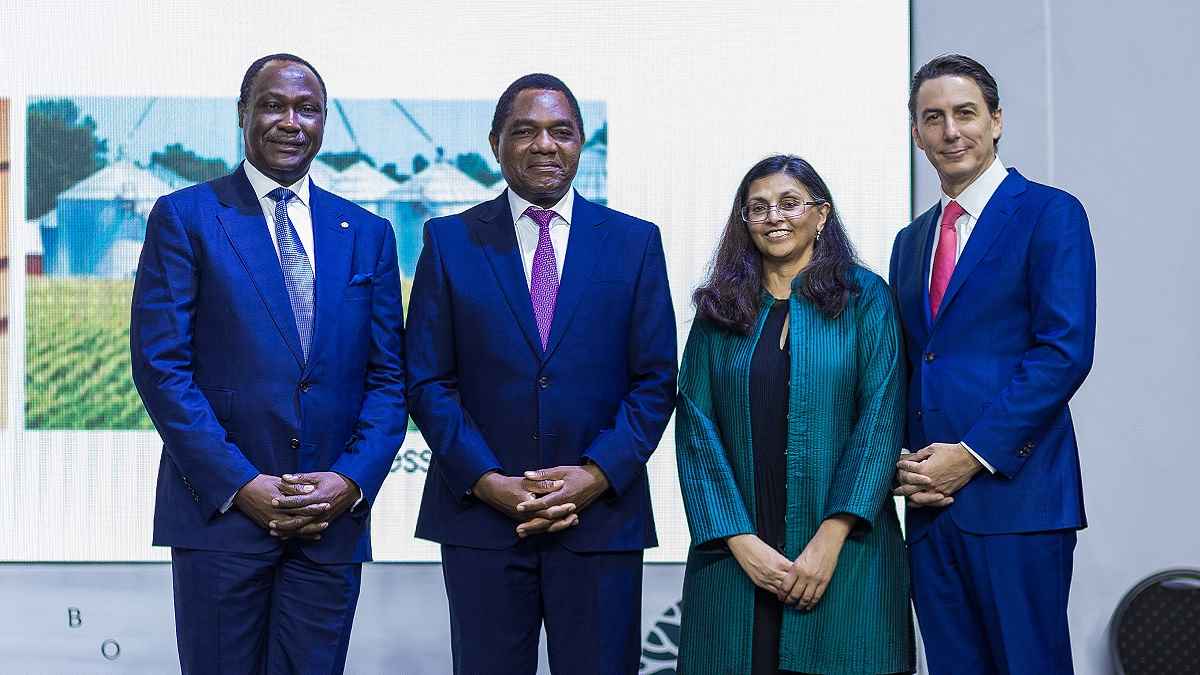
His Excellency Hakainde Hichilema, President of the Republic of Zambia, Amos Hochstein, Senior Advisor to President Biden, and Samaila Zubairu, President and CEO of the Africa Finance Corporation (AFC) (www.AfricaFC.org) convened the Partnership for Global Infrastructure and Investment (PGI) Lobito Corridor Private Sector Investor Forum in Lusaka today. This is the first PGI Investor Forum outside the United States, bringing together over 250 business and government leaders from Angola, the Democratic Republic of Congo (DRC), the European Union, the United States, and Zambia, as well as international investors and industry leaders to accelerate private sector investment in the Lobito Corridor, which will connect the DRC and Zambia with global markets through Angola. 

The Lobito Corridor is the first strategic PGI economic corridor launched by President Biden at the G7 Summit in Japan in May 2023 under the flagship G7 Partnership for Global Infrastructure and Investment initiative. The corridor will integrate the African continent and enhance connections with global markets by expanding export possibilities, boosting regional trade, and growing key market segments, all while creating decent jobs and improving lives.

PGI’s efforts to upgrade and build new railway will result in the first trans-African rail line, stretching from the Atlantic Ocean to the Indian Ocean. A U.S. Development Finance Corporation (DFC) $250 million investment, currently in due diligence, would support the Lobito Atlantic Railway (LAR) consortium that is upgrading and operating a 1,200 km Benguela rail line across Angola with advisory support from the Africa Finance Corporation (AFC).  The LAR upgrade will dramatically reduce transport time, better connect critical mineral-rich regions in the DRC with the global markets and lower the carbon emissions footprint of goods currently moved by road. By lowering costs for businesses along the corridor, it will also open new markets, including agribusiness. 

The Investor Forum follows the signing of a Memorandum of Understanding (MOU) in October 2023 in which the African Development Bank, the AFC, the governments of Angola, DRC, Zambia and the United States, and the European Commission underscored their shared commitment to developing the Lobito Corridor.  The MOU named AFC as lead developer on the new Zambia-Lobito rail line extending from the Benguela line into northwest Zambia.  In addition to rail, PGI is investing catalytic public funds alongside G7 and African partners in various sectors, demonstrating a new model of holistic private-sector led infrastructure development while maintaining strong labor and environmental standards, and promoting trade and investment on the African continent.

The PGI Forum marks the partners coming together to further mobilize private sector investment across the Lobito Corridor and unlock the enormous potential of this region. During the forum in Lusaka, the U.S. Government and partners announced additional commitments to the corridor:

  • DFC announced that its Board of Directors just approved a new $250 million debt facility to the AFC that would support their efforts to develop high-quality and high-standards infrastructure across the continent. That potential project is now pending congressional review. DFC also marked its commitment to provide a $10 million loan to Seba Foods Zambia, the first U.S. food and agriculture investment along the Lobito Corridor.
  • Additionally, the United States Trade and Development Agency (USTDA) announced a feasibility study grant to REV-UP Solar Ventures Zambia to develop an estimated 200-megawatt solar power plant and battery energy storage system in Solwezi, Zambia.   The project will supply clean, stable electricity to Zambian industry and households and has the potential to provide power for two critical mineral mines in the DRC.
  • This week LAR announced a six-year export shipment term-sheet with Canadian mining company Ivanhoe that will advance the rail line’s ambitions to become the leading rail transport link in sub-Saharan Africa and support clean energy supply chain diversification.
  • Supporting efforts to unlock the potential of the Copperbelt region, AFC has entered into an MOU with Congolese commodity trading and mining company La Générale des Carrières et des Mines (Gécamines) to undertake the development of critical minerals in the DRC. AFC has also signed an expression of interest with Kobaloni Energy to provide $100 million in financing for a cobalt refinery in Chingola, Zambia, with the objective of building the first electric vehicle battery grade cobalt sulphate plant on the African continent.

These announcements build on the more than $1 billion of U.S. government investments made in Angola in the past year. This includes an Export-Import Bank of the United States (EXIM) authorization of a more than $900 million loan supporting construction of two solar energy power plants that will generate over 500 megawatts of renewable energy, and an additional $363 million EXIM loan guarantee to support financing and construction of over 180 bridges connecting rural Angolan communities. Further, two USAID grants are enabling Africell’s recent mobile money launch to reach more underserved populations, and to expand an existing program supporting women farmers to communities around the Lobito Atlantic rail line.

Today’s milestone underlines the importance of the Lobito Corridor initiative. The corridor is a vital logistics hub that connects the region to international markets while demonstrating that strategic public infrastructure investment can mobilize private investment across multiple sectors to promote economic growth that transforms the region.

Distributed by APO Group on behalf of Africa Finance Corporation (AFC).

Business

Congo Is Turning Reserves into Bankable Projects – and the Investment Window Is Opening

Published

on

Etu Energias

Eni-led LNG expansion and ongoing deepwater investment are pushing the Republic of Congo’s energy sector toward more bankable projects ahead of the Congo Energy & Investment Forum 2027

BRAZZAVILLE, Congo (Republic of the), June 23, 2026/APO Group/ –With LNG exports set to triple to 3 mtpa, upstream oil production targeting 500,000 bpd and a renewed push on local content, the Republic of Congo is positioning itself as one of Central Africa’s most investable hydrocarbon markets. Under the leadership of the newly-appointed Minister of Hydrocarbons, Stev Simplice Onanga, the country is prioritizing industry growth by balancing local content with reserve replacement and project advancement.


What sets Congo apart is not the scale of its reserves, but the pace at which those reserves are being turned into commercially viable projects. From Eni’s LNG expansion and TotalEnergies’ deepwater developments to brownfield optimization by Trident Energy and output growth at Ammat Global Resources, capital is flowing into projects with clearer monetization pathways and nearer-term returns.

Ahead of the Congo Energy & Investment Forum (CEIF) 2027 – the country’s leading platform for energy investment and partnerships – the story is shifting away from frontier potential toward bankable projects already under development.

Policy Reform Is De-Risking Investment

Congo’s investment case is being reshaped by the alignment of resource base, regulatory reform and project delivery. Established oil production, expanding LNG capacity and fiscal adjustments are gradually reducing above-ground risk.

Recent reforms led by the Ministry of Hydrocarbons and Société Nationale des Pétroles du Congo have added structure to the sector. The Gas Code, introduced in October 2025, formalizes fiscal terms for gas commercialization, while the Gas Master Plan prioritizes flaring reduction and gas-to-power deployment, targeting 1,500 MW by 2030.

A new upstream licensing round is also under consideration, aimed at attracting fresh capital into both mature and frontier acreage. Together, these measures are improving visibility across upstream, midstream and downstream segments, with recent project activity reinforcing the shift.

The Projects Driving the Next Cycle

Deepwater oil remains central to Congo’s production outlook, with operators progressing both new developments and brownfield optimization. TotalEnergies is advancing work at the Moho licence following the April 2026 Moho G discovery, backed by a $500–$600 million infill drilling program targeting about 40,000 bpd in incremental output.

Local independent Ammat Global Resources is targeting 70% production growth from its Loango and Zatchi fields, where reactivated wells and upgraded platforms have already lifted output by 75%. Perenco continues steady gains, adding roughly 6,000 bpd through its 2025–2026 drilling program.

Trident Energy, after acquiring an 85% working interest in the Nkossa and Nsoko II assets in 2025, is focused on extending field life through subsea optimization and redevelopment work.

While oil continues to anchor revenues, gas is rapidly emerging as Congo’s fastest-growing segment. Eni’s Congo LNG project delivered its first cargo from Phase 2 in February 2026, following the startup of the Nguya FLNG unit in December 2025. Together with Tango FLNG, capacity has risen from 0.6 mtpa to 3 mtpa. Trident Energy has also proposed an FLNG project aimed at adding further capacity across the country’s gas market. The project is expected to operate as shared infrastructure, allowing multiple operators to process gas from their respective fields. This creates an outlet for associated gas that might otherwise be stranded, supporting the country’s broader diversification goals.

Local Content Is Reshaping Investment Terms

Beyond upstream policy, Minister Onanga has positioned local content as a central pillar of Congo’s investment framework, and a key determinant of how capital is structured and deployed.

Decrees 2019-342, 343, 344 and 345 set requirements around subcontracting, workforce localization and training commitments, with the effect being a gradual shift in how projects are structured and how partnerships are formed. Operators are increasingly assessed not only on technical delivery but on in-country value creation, including partnerships with local firms and skills development. Logistics, maintenance and other service areas are increasingly channeled through domestic providers.

At CEIF 2027 – taking place June 1–3 in Brazzaville – attention will shift to what is moving forward and to the investors positioned to take part in that pipeline. Congo’s energy sector is no longer defined by potential alone: projects are moving, capital is being committed and policy is starting to catch up with activity on the ground.

As the Republic of Congo moves from reserves to revenue, the signal to investors is clear: this is already unfolding, not a future opportunity.

Distributed by APO Group on behalf of Energy Capital & Power.


Continue Reading

Business

Afreximbank secures double honours at the 2026 International Association of Business Communicators (IABC) Gold Quill Awards for excellence in strategic communications

Published

on

Afreximbank

The Award of Excellence for IATF2025 recognises the successful communications and stakeholder engagement programme delivered around the fourth edition of the Intra-African Trade Fair, Africa’s premier trade and investment event

CAIRO, Egypt, June 23, 2026/APO Group/ –African Export-Import Bank (Afreximbank) (www.Afreximbank.com) has been recognised with two prestigious honours at the 2026 International Association of Business Communicators (IABC) Gold Quill Awards, one of the world’s most prestigious awards programmes for strategic communications.


The Bank received an Award of Excellence in Special and Experiential Events category for the Intra-African Trade Fair 2025 (IATF2025) held in Algiers, Algeria and an Award of Merit in the Social Media category for its Afreximbank Social Media Campaigns, reaffirming Afreximbank’s commitment to delivering impactful communications that advance its mandate of promoting trade, investment and industrialisation across Africa and the Caribbean.

We are delighted to receive these two awards, which attest to the expertise, creativity and efficiency of Afreximbank’s communication

The Award of Excellence for IATF2025 recognises the successful communications and stakeholder engagement programme delivered around the fourth edition of the Intra-African Trade Fair, Africa’s premier trade and investment event. IATF2025 brought together governments, businesses, investors, buyers, sellers and entrepreneurs from across Africa and beyond, creating a platform for trade and investment opportunities while advancing the objectives of the African Continental Free Trade Area (AfCFTA). The communications campaign played a pivotal role in driving global awareness, stakeholder participation, media visibility and engagement before, during and after the event, while showcasing the scale, ambition and dynamism of African enterprise and reinforcing a positive narrative about Africa’s capacity to trade, industrialise and compete on the global stage. Over 120,000 delegates attended IATF2025 in person and virtually, with deals worth over US$50 billion recorded.

The Award of Merit for Afreximbank Social Media Campaigns recognises the Bank’s strategic use of digital platforms to engage stakeholders, amplify its developmental impact and elevate conversations around trade, industrialisation, economic integration and investment opportunities across Africa and the Caribbean. Through a combination of compelling storytelling, thought leadership content, executive advocacy, multimedia production and real-time event coverage, Afreximbank’s social media platforms have continued to expand their reach and influence among policymakers, businesses, investors, development partners and the wider public. Among these platforms is the Afreximbank TV, a digital TV channel that is wholly owned and managed by Afreximbank, whose fifth edition was celebrated with dedicated coverage of IATF2025, providing live coverage of the activities to both pan African and global audiences.

Anne Ezeh, Director & Global Head, Communications and Events at Afreximbank commented: “We are delighted to receive these two awards, which attest to the expertise, creativity and efficiency of Afreximbank’s communications. As a pan African multilateral financial institution, we see storytelling as a powerful tool for advancing our mission — ensuring our initiatives, events, programmes and key announcements not only inform, but also inspire confidence, deepen engagement and amplify Africa’s transformation. These awards reinforce our resolve to continue delivering world-class communications that elevate African voices and projects a bold and authoritative narrative of the continent.”

Ms. Ezeh added that through innovative storytelling, digital engagement and integrated campaigns, the Bank will continue to amplify the impact of its programmes and partnerships  to project a more authentic narrative of Africa, one defined by opportunity, innovation, resilience and growing influence in the global economy.

For more than five decades, the IABC Gold Quill Awards have recognised excellence in strategic communications globally, celebrating programmes and campaigns that demonstrate measurable impact, innovation, creativity and outstanding execution. Widely regarded as the pinnacle of achievement in the communications profession, the awards are judged through a rigorous and independent evaluation process conducted by experienced communication leaders from around the world.

Distributed by APO Group on behalf of Afreximbank.


Continue Reading

Business

Islamic Development Bank (IsDB) Institute Unveils 2025 Annual Report During Group Annual Meetings in Baku

Published

on

IsDBI

In 2025, IsDBI significantly expanded its footprint in Islamic finance transformation, approving 25 new technical assistance projects valued at US$4.14 million and completing 19 projects worth US$3 million

The Islamic Development Bank Institute (IsDBI) (https://IsDBInstitute.org) has released its 2025 Annual Report during the 2026 IsDB Group Annual Meetings held in Baku, Azerbaijan, showcasing a year of expanded impact in Islamic finance transformation, innovative solutions, and capacity development.


The report highlights how IsDBI strengthened its role as a global knowledge leader by advancing innovative solutions and scaling support to Member Countries through knowledge-based interventions, Islamic finance grants, and strategic partnerships.

In 2025, IsDBI significantly expanded its footprint in Islamic finance transformation, approving 25 new technical assistance projects valued at US$4.14 million and completing 19 projects worth US$3 million, supporting countries in strengthening regulatory frameworks and promoting inclusive financial systems.

Since 2013, the Institute’s interventions in this regard have reached over US$27.57 million across 181 projects benefiting more than 34 countries, underlining its sustained contribution to development outcomes across the Islamic world.

I am pleased to note that the Institute has continued to strengthen its unique role in the global development ecosystem

The Annual Report highlights major progress in IsDBI’s three flagship transformative projects, namely Awqāf Free Zones, Digital Postal Islamic Financial Services, and Smart Countertrade System, which have all advanced to pilot-ready stages. These initiatives aim to address global challenges such as financial inclusion, food and energy security, and trade resilience.

Furthermore, the Institute accelerated its focus on digital innovation in Islamic finance, enhancing its Islamic Finance Artificial Intelligence Assistant (IFAA) and hosting its first AI Hackathon on Islamic Finance, engaging more than 40 teams in developing cutting-edge solutions aligned with industry standards.

Human capital development in Islamic finance also remained a cornerstone of IsDBI’s work in 2025, with the delivery of over 20 training programs reaching around 500 professionals across Member Countries. A key achievement in this area was the Entrepreneurial Mindset Development Program, a flagship initiative equipping emerging leaders from 20 countries with innovation-driven and values-based entrepreneurship skills. The program was designed and implemented in collaboration with Prince Mohammed Bin Salman College of Business and Entrepreneurship, Saudi Arabia.

The Institute also strengthened its thought leadership through flagship publications, global partnerships, and digital engagement, reinforcing its position as a leading voice in Islamic economics and finance.

Commenting on the issuance of the Annual Report, Dr. Sami Al-Suwailem, Acting Director General of IsDBI, said: “I am pleased to note that the Institute has continued to strengthen its unique role in the global development ecosystem by bridging knowledge creation, building human capital, and designing innovative solutions to address economic challenges.”

The 2025 Annual Report is accessible on IsDBI website here (https://isdbinstitute.org/product/isdbi-annual-report-2025/).

Distributed by APO Group on behalf of Islamic Development Bank Institute (IsDBI).


Continue Reading

Trending