Connect with us
Anglostratits

Business

11 Disruptive Startups Selected for Cohort 3 of the Africa Startup Initiative Program (ASIP) Accelerator Program
Published

on

ASIP

The program will take place in Dakar, Senegal and startups will be hosted at the D-hub, – a space commissioned by DER/FJ

DAKAR, Senegal, January 23, 2023/APO Group/ — 

Africa’s leading tech Accelerator, Startupbootcamp AfriTech (www.Startupbootcamp.org), together with founding partner and leading telecom giant, Telecel Group (https://TelecelGroup.com) have selected the participants of the much-coveted Accelerator Program, the Africa Startup Initiative Program (ASIP) (https://ASIProgram.com).

The intrinsic value of startups in Africa lies in their ability to build fast and effective solutions to pressing challenges. Over the years another key aspect has come to the fray; scaling across borders. The ASIP Accelerator has managed to help founders fine-tune their business models while also facilitating entry into new markets such as Senegal.

This has been possible through a historic partnership with DER/FJ (https://DER.sn), which was established to advance Entrepreneurship for Women and Youth in Senegal by the President of the Republic, His Excellency Macky Sall. Giving a keynote at the event, Senior Innovation Lead Adrien Schwarz said;

“We are impressed with the work that the ASIP and Startupbootcamp AfriTech are doing and are excited that there were three times more Francophone founders compared to the previous years. This validates the caliber of startups in Francophone countries and shows that their exposure to acceleration has improved. It is also wonderful to see the progress that the past Senegalese startups namely Proxalys, Parcsmart, and Yobante have made”

Founded by telecom giant Telecel, the Africa Startup Initiative Program (ASIP) aims to support the next generation of early-stage African tech startups that are disrupting key industry verticals that include FinTech, InsureTech, AgriTech, Climate-tech, eCommerce, Digital Health, and CleanTech, Mobility, Micro-leasing, and digitizing the informal economy.

Eleanor Azar, Executive Deputy of the Group and ASIP Director said:” we are very proud of the great effort that was put into this cohort 3 of the ASIP Accelerator Program powered by SBC AfriTech – we have exceptional startups with innovative and positively disruptive ways of treating the African challenges that they have set out to solve and build their Startups around. We are also exceptionally proud that the number of female founders has increased. And to those who did not make it into the top 10, we wish you all the luck, you should be very proud that you have come out on top of more than 2,000 applications received into the program in cohort 3.

Other partners include the Dutch Entrepreneurial Development Bank (FMO) (https://www.FMO.nl), AWS (https://go.AWS/3J40ZMX), Freshworks (https://bit.ly/3HmRsPu), Google (https://startup.Google.com), and Firstbase (https://www.Firstbase.io).

Participants will receive an intensive three-month coaching and support program to accelerate their growth and benefits worth $750,000 USD. Startups will also have access to the global Accelerator Squared (https://www.AcceleratorSquared.com) platform which has a complete library of content, group workshops, 1:1 mentoring, collaborative sessions with Entrepreneurs in Residence, and invite-only discussion forums with founders from around the globe.

The program will take place in Dakar, Senegal and startups will be hosted at the D-hub, – a space commissioned by DER/FJ.

“We’re excited by the quality of startups in this cohort,” commented Program Director Henry Ojour. ”About 30% of them have applied before, 60% applied on the recommendations of an alumni founder and 50% of them have monthly revenues above $50,000.00. Cohort 3 companies are building in over 12 verticals we have a 30% female-founder ratio. It’s going to be 13 weeks of far-reaching progress & impact.” He added.

Participants will receive an intensive three-month coaching and support program to accelerate their growth and benefits worth $750,000 USD

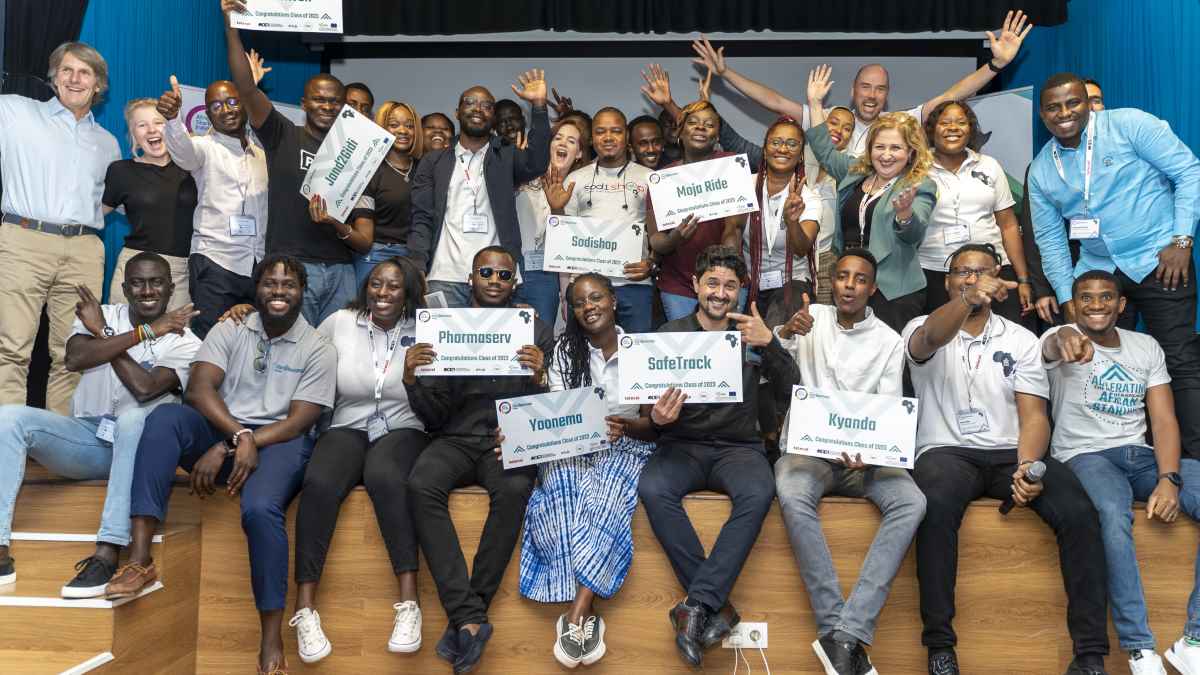
We are honored to announce that the following startups will be joining the 2023 ASIP cohort 3:

Kyanda Africa (https://Kyanda.co.ke) is a revolutionary Kenyan fintech platform that provides businesses and individuals with convenient and reliable money transfer solutions. The startup has a network of agents, API gateway, and various access channels such as USSD, Mobile App & WhatsApp Chatbots making the services customizable dependent on the users’ needs

PharmaServ (http://www.PharmaServ.ng) is a Nigerian SaaS product, which automates the process of sales orders, tracking sales team performance, and reconciling incoming purchase orders, payments, and invoices for health brands. This is a labor-intensive process that is still predominantly manual for most local companies in emerging markets.

Sodishop (https://www.Sodishop.com) is a Malian marketplace, an online sales and purchase platform, present in 4 countries in West Africa, we deliver thousands of orders per month across Mali, Senegal, Guinea, and Côte d’Ivoire.

BD Waste (https://bit.ly/3iQ0hrY) is a Ghanaian GreenTech startup that combines fintech and sustainability to recover Plastic waste from communities. Their Digicycle product allows customers to directly deposit plastic waste into their digital wallets and receive credit for it. This credit can be used to purchase data packages, airtime, food items, stationery, and health insurance.

Limawa (https://bit.ly/3XOQAZk), whose Senegalese founder operates in Côte d’Ivoire (https://bit.ly/3RaJwVb) aims to tackle the issues of food conservation and transportation through solar-powered split air conditioners that can reach -2°C (designed in CI by our team). Limawa offers an innovative and cost-efficient alternative to industrial compressors for the cold chain industry. This solution is suitable for trucks, containers, and trailers.

Parkwell (https://www.Parkwell.ng) is a Nigerian online sharing platform that matches drivers with available, safe parking spaces and helps property owners list their parking spaces for optimum use. The digital parking platform integrates parking facilities and connects it to mobile for a seamless experience.

Jand2Gidi (https://www.Jand2Gidi.com.ng), also from Nigeria, offers ‘Logistics As A Service’ to B2B and B2B2C customers whose users are engaged in cross-border trade. They have built shipping APIs to provide the same hassle-free, transparent, and trackable shipping services to their B2B merchants to enable them grow faster after nearly a decade of building robust, cutting-edge freight forwarding and last mile delivery services

Moja Ride (https://MojaRide.net) from Côte d’Ivoire (https://bit.ly/3QUdUme) has made its mission to enable better and cleaner mobility services to African cities by making financing easy and accessible for all transportation professionals. Drivers and transport companies can easily qualify for new car loans and car repairs by simply working with Moja Ride’s advanced digital fare payment and booking technologies.

SafeTrack (http://www.SafeTrack.ma) is a Moroccan technology startup that allows a 75% reduction in water consumption for irrigation at 20% of the price of its competitors. Their IoT solution of geolocation and monitoring is 100% mobile, has simple maintenance and does not require any IT infrastructure. Composed of revalued smartphones and sensors and other affordable devices, and a cloud software platform developed internally.”

Chestify AI Labs (https://www.ChestifyAI.com) from Ghana provides an AI platform that gives a highly accurate algorithm for diagnosing chest X-Ray pathologies. Two-thirds of the world’s population of over 5 billion people with no access to a radiologist and radiologic diagnostic support tools and Chestify’s mission is to aggressively tackle the socio-economic and health distress created by inadequate radiology Infrastructure and the presence of fewer radiologists in Africa.

Yoonema (https://sn.Yoonema.com/fr) is a Senegalese social e-commerce platform that offers a frictionless, unique, and simplified experience to e-buyers who desire quality products and B2B players who offer a full global e-commerce experience to their clients.

The ASIP Accelerator powered by SBC AfriTech will culminate in a Demo Day on 25 May 2023 where startup founders will pitch their disruptive solutions to a broad audience of media, investors, corporate partners, and industry stakeholders.

Distributed by APO Group on behalf of Startupbootcamp AfriTech.
Business

Emirates and the Kenya Tourism Board sign partnership agreement to drive inbound tourism

Published

on

Emirates

Reinforcing the airline’s longstanding commitment in market, the partnership agreement supports Kenya’s ambition to be the most visited tourism destination in Africa by promoting the destination in key regions on the airline’s vast global network

DUBAI, United Arab Emirates, September 18, 2026/APO Group/ –Emirates (www.Emirates.com) and the Kenya Tourism Board (KTB) have signed a partnership agreement at the 2026 Arabian Travel Market, to strengthen collaboration and support the growth of inbound tourism to Kenya. Already one of the most consistently in-demand destinations on the airline’s Africa network, the partnership will build on this strong demand and help unlock new opportunities for Kenya to attract visitors from emerging and established markets around the world.


The partnership agreement was signed by Adil Al Ghaith, Emirates’ Senior Vice President of Commercial Operations, Centre, and June Chepkemei, Chief Executive Officer of the Kenya Tourism Board, in the presence of Ambassador. (Professor.) Julius K. Bitok, CBS. Principal Secretary, State Department for Tourism, and Adnan Kazim, Deputy President and Chief Commercial Officer, Rashid Alardha, Vice President of Commercial Operations for Sub-Saharan Africa, Emirates and Christophe Leloup, Emirates’ Country Manager in Kenya, along with other senior officials.


Adil Al Ghaith said, “Kenya has been an important market for Emirates for over three decades, and our commitment goes much deeper than operations and connections. We’ve consistently invested in our presence in the market, working closely with travel trade partners and tourism stakeholders to stimulate inbound travel, and contribute positively to the global perception of Kenya. Nairobi remains one of the top 5 busiest gateways for Emirates in Africa, with significant traffic coming from UK and Europe, as well as the US. This partnership solidifies that longstanding commitment, enhancing our collaboration with the Kenya Tourism Board and the full, thriving tourism ecosystem across Nairobi and Kenya.”


We are delighted to partner with Emirates to strengthen Kenya’s global tourism profile and showcase the remarkable experiences our destination offers to travellers around the world

June Chepkemei said, “We are delighted to partner with Emirates to strengthen Kenya’s global tourism profile and showcase the remarkable experiences our destination offers to travellers around the world. Emirates’ extensive international network and strong reach in both established and emerging markets will help us build on the growing demand for Kenya and unlock new opportunities to attract more visitors. This collaboration reflects our shared commitment to promoting Kenya as a leading, diverse and unforgettable destination, while supporting the continued growth of inbound tourism and the many communities that benefit from it.”


Tourism is a key pillar in Kenya’s economy, creating thousands of employment opportunities and serving millions of tourists who visit the country each year. The Kenya Tourism Board has bold plans to establish Kenya as the most visited tourism destination in Africa, with a year-round calendar of diverse, sustainable and authentic experiences that appeal to a swathe of international visitors.


Under the framework of the partnership agreement, Emirates and KTB will explore joint initiatives to promote Kenya in key markets on the airline’s global network, showcasing the breadth of Kenya’s year-round tourism offering, and encourage more travellers to visit. The partners will also closely collaborate to develop programmes for trade partners and tour operators that educate and excite the industry, such as incentives, familiarisation trips and other marketing initiatives.


Last year, Emirates marked 30 years of operations to Nairobi and, during that tenure, has established deep-rooted ties with local communities and the travel trade ecosystem. Earlier this month, the airline’s tour operating arm, Emirates Holidays, signed a Memorandum of Understanding with the Kenya Association of Travel Agents to stimulate outbound travel by equipping over 300 travel agencies with enhanced product and network insight and competitive promotional opportunities.

Distributed by APO Group on behalf of The Emirates Group.


Continue Reading

Business

Afreximbank and Development Bank of Southern Africa establish a Joint Project Preparation Facility to advance bankable projects in Southern Africa

Published

on

Afreximbank

Through the JPPF, the institutions will jointly originate, screen and prioritise projects and support the technical, financial and legal work required to address bankability constraints

CAIRO, Egypt, September 18, 2026/APO Group/ –African Export-Import Bank (Afreximbank) (www.Afreximbank.com) and the Development Bank of Southern Africa (DBSA) have signed a Joint Project Preparation Facility (JPPF) Framework Agreement. Under the agreement, each institution will be able to contribute up to US$10 million to prepare high-impact, trade-enabling infrastructure and industrial projects in South Africa and the wider region.


The agreement is one of the first operational instruments to follow South Africa’s accession to the Afreximbank Establishment Agreement in February 2026. South Africa became Afreximbank’s 54th member state in February 2026, when the Bank also announced a US$ 8 billion Country Programme for the country. The agreement complements the Master Risk Participation Agreement signed by Afreximbank and DBSA in February 2026, extending the partnership upstream into project preparation. It also supports the objectives of South Africa’s National Development Plan 2030, SADC integration and implementation of the African Continental Free Trade Area (AfCFTA).

Mrs Kanayo Awani, Executive Vice President, Intra-African Trade and Export Development, signed on behalf of Afreximbank, while Mr. Greg Fyfe, Chief Investment Officer, DBSA, signed on behalf of his institution.

Through the JPPF, the institutions will jointly originate, screen and prioritise projects and support the technical, financial and legal work required to address bankability constraints. Priority sectors include power and energy, with particular attention to energy transition; transport and logistics; information and communication technology; strategic minerals beneficiation; and other mutually agreed sectors aligned with national, regional and continental development priorities. The framework will focus initially on South Africa and the wider Southern African region, with scope to consider other African jurisdictions of mutual interest.

Through this partnership with Afreximbank, we are leveraging our complementary strengths to improve project preparation

Through the JPPF, Afreximbank and DBSA will collaborate to advance high-impact projects from concept stage to bankability. The focus will be on trade-enabling infrastructure, industrial development, and export-oriented initiatives across South Africa and the Southern African region, with potential extension to other African jurisdictions of mutual strategic interest.

Commenting on the agreement, Mrs. Kanayo Awani, Executive Vice President, Intra-African Trade and Export Development at Afreximbank said:

“Africa’s infrastructure challenge is not only about shortage of capital; it is also about shortage of projects prepared to the standard required by investors and lenders. This JPPF addresses this critical constraint. By combining Afreximbank’s trade and industrialisation mandate with DBSA’s infrastructure-development expertise, we will help move priority projects from concept to investment readiness and mobilise the larger pools of public, private and blended finance required for implementation. For South Africa and the wider Southern Africa region, this is how project preparation becomes a practical instrument for industrialisation, export growth and regional integration under the AfCFTA.”

Gregory Fyfe, Chief Investment Officer at DBSA, said:

“The Joint Project Preparation Facility represents a significant step towards strengthening the pipeline of bankable infrastructure and industrial projects across South Africa and the Southern African region. Through this partnership with Afreximbank, we are leveraging our complementary strengths to improve project preparation. This will unlock investment opportunities and accelerate the delivery of infrastructure that supports economic growth, industrialisation and regional integration. This initiative reflects DBSA’s commitment to infrastructure-led development and to enabling sustainable, long-term impact through well-prepared projects that attract both public and private sector investment.”

Projects developed through the JPPF may seek downstream funding from Afreximbank, DBSA. They may also be presented to private investors, development finance institutions and commercial lenders, subject in every case to separate appraisal and approval. Both institutions will actively collaborate on origination, preparation, knowledge-sharing, and portfolio monitoring to accelerate project bankability and execution.

Distributed by APO Group on behalf of Afreximbank.


Continue Reading

Events

Advancing the Agentic World, Building a Solid Silicon Foundation

Published

on

HUAWEI

Key takeaways:

  • Strategic focus: The rapid approach of an intelligent world is driving up demand for computing power. Huawei is focused on developing AI infrastructure, and is actively driving innovation in systems and architecture centered around SuperPoDs and SuperClusters. These efforts are aimed at building a solid silicon foundation for the intelligent world.
  • Technological breakthroughs: Huawei unveiled the Atlas 960E SuperPoD, the first in the industry to use NPO. The company also launched an upgraded TaiShan 950 SuperPoD, as well as the OceanStor M900 (a memory context storage system). Interconnected with UnifiedBus, Huawei’s agentic SuperCluster can scale up to one million NPUs.
  • Open ecosystems: Huawei is actively building out open computing ecosystems. To date, the Kunpeng ecosystem has attracted 4.16 million developers from around the world. CANN has moved to sustained, community-driven open-source development. Ascend now spans over 90 leading third-party open-source projects and is officially supported as a PyTorch accelerator backend.

SHANGHAI, CHINA – Media OutReach Newswire – 17 September 2026 – HUAWEI CONNECT 2026 kicked off today in Shanghai. The first keynote of the date was by David Wang, the Deputy Chairman of the Board and Rotating Chairman at Huawei. In his speech (Advancing the Agentic World, Building a Solid Silicon Foundation), Wang highlighted the work the company is doing alongside industry stakeholders to build powerful AI infrastructure, lay a solid computing foundation, and address the challenges and opportunities in the intelligent world to come.


AI is sweeping the world faster than any previous technological revolution. Today, foundation model parameters are rapidly approaching 10 trillion, and are projected to exceed 100 trillion by 2030. AI agents can now work on the same task continuously, for hours on end. By 2030, they will be able to handle tasks that span months.

In China alone, the average number of inference tokens consumed every day has surged to around 500 trillion, and is expected to reach quintillions (1018) by 2030.

On-device AI is also advancing rapidly. On-device models for smartphones have expanded from three billion parameters in 2024 to 30 billion today, and will push toward hundreds of billions in the near future.

These trends will set a much higher bar for the scale, performance, and reliability of underlying technical systems. Only by building powerful AI infrastructure can the industry lay a solid foundation for the future intelligent world.

An intelligent world is approaching – and faster than ever. To lead the charge into this new world, Huawei is laser-focused on building out AI infrastructure – the silicon foundation for the future to come.

In particular, Huawei’s AI strategy is centered on computing power, with a focus on monetizing hardware. The company is also sharpening its competitive edge through systems and architectural innovation. Centering these efforts on SuperPoDs and SuperClusters, the company aims to build a solid computing foundation and offer a new option for the world.

Huawei is a major contributor to open computing ecosystems, and will continue to support native training for mainstream foundation models on its systems, as well as supporting a vast range of models and applications.

For customers, Huawei provides flexible on-premises and cloud compute solutions for its customers to accelerate intelligent transformation across industries.

With diverse forms of compute, including solutions for micro-, low-tier, mid-range, and massive computing power – Huawei is driving the expansion of on-device and in-vehicle AI, making intelligence truly ubiquitous.

Additionally, Huawei is dedicated to building next-generation communications networks to bring readily available compute and intelligence to every person, home, and organization.

SuperPoDs gain broad consensus, with adoption growing in industries, academia, and research institutes

To date, over 1,000 Atlas 900 A3 SuperPoDs have been deployed, and Atlas 950 SuperPoD is seeing large-scale commercial use. While adoption continues to grow, SuperPoDs have gained broad acceptance across industry, academia, and research institutions as a key direction for AI infrastructure. Currently, a SuperPoD is explicitly defined as a computing system in which multiple computing nodes are tightly coupled through high-speed interconnect protocols, featuring unified memory addressing across physical nodes — functioning like a single logical computer.

SuperPoDs are the go-to choice for AI infrastructure buildout. Right now, 100k-NPU computing clusters have become the baseline for training SOTA models. However, traditional server architectures result in intra-cluster communications that account for over 40% of total training time, severely constraining Model FLOPs Utilization (MFU). Simulation results from Huawei’s Markov Lab show that a 100k-NPU cluster built with 4k-NPU SuperPoDs can deliver a 2.75x increase in MFU compared to a 100k-NPU cluster composed of 8-NPU servers.

11-chip UnifiedBus-powered portfolio for SuperPoDs and SuperClusters; the Atlas 960E SuperPoD –the industry’s first to use NPO

The Ascend series of chips is the most critical component in Huawei’s 11-chip UnifiedBus-powered portfolio for SuperPoDs and SuperClusters. Development on Ascend 960 has exceeded the company’s expectations, with performance doubling as planned. Ascend 960DT will be available in Q1 2027, three quarters ahead of the company’s original roadmap. And the Ascend 960PR will be ready in Q3 2027, one quarter ahead of schedule.

“We’re evolving our Ascend chip series on a one-generation-a-year cycle,” said Wang in his keynote. “In 2028 and 2029, we will roll out the Ascend 970 and 980 chips, respectively. Thanks to the Tau (τ) Scaling Law, not only will their compute specifications continue to double, but you can also expect to see huge improvements across the board in terms of memory bandwidth, memory capacity, interconnect bandwidth, and more.”

In addition to Ascend chips, Huawei has also developed a complete portfolio of chips for AI infrastructure, based on UnifiedBus, delivering key capabilities that cover computing, interconnect, storage, and management.

“SuperPoDs are designed to coordinate multiple NPUs through interconnect,” continued Wang. “We have developed a next-generation optical interconnect product based on near-packaged optics (NPO): the High-density Optical-interconnect-Node Engine (Hi-ONE).” Built on Huawei’s proprietary technologies, Hi-ONE has a multi-physics design for balancing optical, mechanical, electrical, electromagnetic, and thermal performance, realizing a transmission capacity of 7.2 Tbit/s per single engine.

“This is the industry’s first NPO product ready for mass production, delivering the largest transmission capacity. It is also the industry’s first NPO product with a built-in light source.”

This product combines high bandwidth and high reliability with low latency and low power consumption. This, coupled with UnifiedBus, will make it far easier to scale up SuperPoD interconnect systems.

Recently, Huawei submitted an implementation agreement (IA) on NPO to the Optical Internetworking Forum (OIF), a standards organization. The response from numerous industry partners has been widely positive. Huawei will continue its efforts to further refine the NPO industry ecosystem.

Using Ascend 960 chips and Hi-ONE, Huawei has developed the industry’s first NPO-based SuperPoDs: the Atlas 960E SuperPoDs. A single Atlas 960E SuperPoD can scale up to 4,096 NPUs, delivering 8 EFLOPS of FP8 compute performance, with up to 1 petabyte of HBM capacity. With 5,500 Hi-ONE units, this SuperPoD doesn’t need the 48,000 800G optical modules that would traditionally be required to connect all the NPUs. This cuts power consumption by over 550 kilowatts, while doubling the system’s fault-free operating time, achieving 99.8% system availability.

Combining the upgraded TaiShan 950 SuperPoD and context memory storage to power an ultrascale cluster with 1 million NPUs

As SOTA models scale to 10 trillion parameters, training and inference can no longer rely on a single AI server or AI SuperPoD – they require a more complex computing system. This system includes AI SuperPoDs, general-purpose SuperPoDs, and an interconnect system that features peer-to-peer interconnect and zero protocol conversion. For inference, including a petabyte-scale KV cache cluster is also a must.

To meet these demands, Huawei has fully upgraded its TaiShan 950 SuperPoD. Powered by UnifiedBus all-optical networking, this new SuperPoD supports up to 4,096 nodes with a unified memory pool of up to 256 TB. This setup significantly improves agent performance. For sandbox-intensive workloads, startup speeds for 100,000 sandboxes are 30 times faster than traditional servers, and sandbox density can be improved by an additional 25%. For vector search across 10 billion x 1,000-dimensional vectors, this SuperPoD delivers twice the search efficiency of traditional servers.

Huawei has also launched OceanStor M900 – a UnifiedBus-powered context memory storage cluster that delivers multi-tier KV caching for agent-heavy and longer-context workloads. Designed for agentic inference, this cluster supports one-hop direct access and provides a petabyte-scale KV cache for the L3.5 layer. OceanStor M900 also uses hybrid media and an optimized retention algorithm, extending SSD read/write lifespan by 16-fold. This ensures a higher KV cache hit rate alongside long-term stability and reliability from the ground up.

Combining its strengths in computing and communications, Huawei has built a brand-new agentic SuperCluster to accelerate training and inference for 10-trillion-parameter models. This SuperCluster uses UnifiedBus to consolidate multiple interconnect protocols into a single unified protocol, significantly reducing protocol conversion overhead. This delivers peer-to-peer interconnect between subsystems like Ascend SuperPoDs, Kunpeng SuperPoDs, and KV cache clusters. The SuperCluster also comes with a multi-tier, high-bandwidth, and large-capacity storage system that enables direct single-hop access for all KV cache tiers.

With a two-tier, four-plane Clos architecture, the SuperCluster can interconnect up to 512,000 NPUs. When combined with a multi-rail topology, this cluster can support up to one million NPUs.

One of Huawei’s core strategies: Going open source and open system to build out computing ecosystems

The Kunpeng ecosystem is driving digital and intelligent innovation across a wide range of industries. To date, the Kunpeng ecosystem has attracted over 4.16 million developers and more than 7,200 ecosystem partners from around the globe. The community currently supports over 560 open-source projects worldwide. openEuler has seen more than 20 million installations, securing the largest share in China’s server OS market.

The Ascend ecosystem has reached a new inflection point. The Compute Architecture for Neural Networks (CANN) is the foundation of the Ascend ecosystem. Today, CANN has moved to sustained, community-driven open-source development, which has brought the platform from usable to user-friendly.

External CANN developers now comprise 61% of all CANN developers, outnumbering internal developers for the first time. With over 5,200 monthly active developers, the CANN community has become the most vibrant open-source community in China. What’s more, over 40 models have been natively pre-trained on Ascend and CANN, making it the only proven domestic stack capable of model pre-training.

Ascend now supports over 90 leading third-party open-source projects, including PyTorch, Triton, vLLM, and veRL. With strong support from the Linux Foundation, Ascend is the first official Chinese compute platform on PyTorch’s website. This gives developers around the world ready access to new innovations in the Ascend ecosystem.

Diverse forms of compute for ubiquitous on-device and in-vehicle AI

AI is expanding faster into all kinds of devices. To deliver an unparalleled AI experience across all scenarios, Huawei will continue to strengthen capabilities in four key areas:

First, Huawei will combine Kirin and Ascend chips to drive self-reliance and autonomy in on-device compute.

Second, Huawei will bring together Pangu models and third-party models to make on-device intelligence better and easier to use.

Third, HarmonyOS, as an Agent OS for ubiquitous intelligence, will be completely redefined from the ground up – spanning system architecture, how it operates, and interaction logic – to enable human-agent collaboration.

Fourth, Huawei will keep cultivating a diverse AI ecosystem, which is the foundation for its system agent Celia to thrive.

Huawei plans to build four on-device computing platforms: for AI phones, AI PCs, vehicles, and homes. Through cross-device and device-cloud compute synergy, Huawei will be able to provide distributed swarm intelligence, delivering integrated and continuous intelligent services across personal mobile, office, vehicle, and home spaces, ultimately bringing intelligence to every person and every space.

Building next-generation communications that prioritize readily available compute, because without networks, all compute is siloed

Next-generation communications networks are crucial for fully unleashing the value of AI compute. We are driving the upgrade to networks that, in addition to connecting people, will prioritize delivering readily available compute. These networks will be underpinned by 5G-A/6G, 10-gigabit optical networks, and multi-tier, low-latency bearer networks, delivering intelligent connectivity across data centers, the edge, and devices.

Concluding his keynote, Wang expressed that AI “may well be the final technological revolution in human history,” noting that its impact is deeper and broader, and coming faster than anyone could have ever imagined. “No single company,” he said, “can build an intelligent world alone.”

He stressed Huawei’s ongoing commitments moving forward:
Huawei will remain committed to building a solid silicon foundation to make computing power readily accessible to all.
The company will continue to open source its software, helping developers unleash their full potential.
It will continue to embrace a wide range of models and applications, unlocking value in every form.

“And we will continue to work together to drive shared success, growing together with our customers and partners around the world,” Wang concluded. “Let’s work together to build a fully connected, intelligent world.”

Themed Advancing the Agentic World, HUAWEI CONNECT 2026 will delve into AI across three dimensions: strategy, technology, and ecosystems. You can expect an in-depth look at our latest strategic initiatives, and we’ll also be unveiling our all-new digital and intelligent infrastructure products, scenario-specific solutions for industries, and development tools. The event will run from September 17 to 19 at the Shanghai World Expo Exhibition & Convention Center and Shanghai Expo Center. For more information, please visit HUAWEI CONNECT 2026 online at www.huawei.com/en/events/huaweiconnect

FAQs:

Q1: What is a SuperPoD, and why is it becoming increasingly important?

A SuperPoD is a computing system in which multiple computing nodes are tightly coupled through high-speed interconnect, enabling them to share unified memory and function like a single computer. As foundation model training and inference continue to scale up, SuperPoDs can reduce communications overhead in large-scale clusters and improve Model FLOPs Utilization (MFU). They have gained broad consensus across industry, academia, and research institutes in AI infrastructure, and are the go-to choice for AI infrastructure buildout.

Q2: What makes the Atlas 960E SuperPoDs special?

The Atlas 960E SuperPoD is the industry’s first NPO-based SuperPoD. A single Atlas 960E SuperPoD can scale up to 4,096 NPUs, delivering 8 EFLOPS of FP8 compute performance, with up to 1 petabyte of HBM capacity. With 5,500 Hi-ONE units, this SuperPoD doesn’t need the 48,000 800G optical modules that would traditionally be required to connect all the NPUs. This cuts power consumption by over 550 kilowatts, while doubling the system’s fault-free operating time, achieving 99.8% system availability. Atlas 960E SuperPoDs can provide efficient and reliable computing power for large-scale AI training and inference.

Q3: What is NPO, and what role does Hi-ONE play in a SuperPoD?

NPO stands for Near-Packaged Optics, an optical interconnect technology designed for high-speed connectivity. Hi-ONE, developed by Huawei, is the industry’s first NPO product ready for mass production. It delivers the largest transmission capacity at 7.2 Tbit/s and is currently the industry’s only NPO product with a built-in light source. Hi-ONE, coupled with UnifiedBus, will make it far easier to scale up SuperPoD interconnect systems.


Continue Reading

Trending