Connect with us
Anglostratits

Business

Which Pre-Crisis African Liquefied Natural Gas (LNG) Projects Could Provide Critical Supply for Europe

Published

on

Energy Capital

Projects sanctioned before today’s geopolitical shocks are coming online just as Europe seeks flexible Liquefied Natural Gas (LNG) volumes – positioning Africa as a key source in a volatile gas market ahead of the Invest in African Energy Forum (IAE 2026) in Paris

PARIS, France, March 23, 2026/APO Group/ —

Europe’s gas strategy is under renewed pressure. Rising geopolitical risk and tightening global LNG markets have refocused attention on African projects that were approved years ago – but are only now becoming operational. At the Invest in African Energy Forum (IAE) in Paris next month, these pre-crisis LNG developments are expected to dominate discussions as buyers and investors reassess near-term, flexible supply options.

The advantage is timing. Projects sanctioned before today’s disruptions are delivering – or approaching first gas – providing Europe with volumes without waiting for the next multi-year investment cycle. In a market where new greenfield LNG supply can take 5–7 years to reach the market, African LNG increasingly functions as ready-to-deploy capacity, capable of meeting demand spikes, offsetting supply shortfalls and reducing reliance on concentrated geopolitical sources.


Mozambique LNG: Scale Delayed, But Strategic


Mozambique remains Africa’s largest long-term LNG play, with more than 30 mtpa of planned additional capacity across developments led by TotalEnergies and ExxonMobil. While TotalEnergies’ 12.9 mtpa Mozambique LNG project remains paused due to security concerns, momentum toward a restart is building.


In today’s market, that scale is highly relevant. European buyers seeking to diversify away from concentrated supply sources are increasingly willing to engage with projects that offer long-term volumes – even if timelines remain uncertain. In a tighter global market, previously “high-risk” projects are being reassessed as strategic supply anchors.


Senegal–Mauritania GTA: From Frontier to First Gas


The Greater Tortue Ahmeyim LNG Project (GTA), operated by bp and Kosmos Energy, is moving into production just as Europe looks to expand Atlantic Basin supply. The project will deliver around 2.3 mtpa in its first phase, with expansion potential up to 10 mtpa.


GTA’s strategic advantage lies not only in scale but in design and timing. Floating LNG units allow faster deployment and flexible cargo delivery, while its West African location shortens shipping times to Europe compared with U.S. Gulf exports. As Europe seeks to balance winter demand peaks, GTA provides mid-scale, redirectable supply that the market currently lacks.


Nigeria LNG Expansion: Incremental Capacity, Immediate Impact


Nigeria LNG Train 7 will add roughly 8 mtpa to the country’s existing 22 mtpa capacity, making it one of the most significant near-term additions globally. Unlike greenfield projects, Train 7 leverages existing infrastructure, reducing cost and development time. For Europe, incremental expansions like this offer faster access to contracted volumes, helping utilities manage seasonal volatility and limit exposure to spot-market price swings.


Angola LNG: Underutilized, Now Repositioned


Angola’s Angola LNG plant has a nameplate capacity of 5.2 mtpa but has historically operated below potential due to feedgas constraints. With upstream investment improving and gas supply stabilizing, the project now represents “quick-win” capacity – volumes that can be ramped up without the long lead times of new developments. For European buyers, this latent supply is increasingly valuable as a buffer against short-term disruptions.


Republic of Congo LNG: Fast-Track Development


The Congo LNG Project, led by Eni, targets around 3 mtpa through a phased, modular approach, with first exports already underway. By leveraging existing offshore assets and floating LNG units, the project has moved from concept to production faster than traditional developments. In a market where timing is critical, rapid deployment offers a clear competitive advantage.


Paris as the Deal-Making Interface


As these dynamics converge, the IAE 2026 Forum in Paris is emerging as a key platform for turning market demand into project momentum. With European buyers seeking long-term supply and African producers looking to advance both new and delayed LNG projects, the forum provides direct engagement with decision-makers, investors and technical teams.


Africa’s pre-crisis LNG projects were not designed for today’s market – but in a world of tight supply and high volatility, their readiness is becoming indispensable.

IAE 2026 (www.Invest-Africa-Energy.comis an exclusive forum designed to connect African energy markets with global investors, serving as a key platform for deal-making in the lead-up to African Energy Week. Scheduled for April 22–23, 2026, in Paris, the event will provide delegates with two days of in-depth engagement with industry experts, project developers, investors and policymakers. For more information, visit www.Invest-Africa-Energy.com. To sponsor or register as a delegate, please contact sales@energycapitalpower.com

Distributed by APO Group on behalf of Energy Capital & Power.

Business

ITFC Opens 2026 Islamic Development Bank (IsDB) Group Annual Meetings with Focus on Trade Finance, Private Sector Growth, and Regional Cooperation

Published

on

ITFC

Successful Start in Baku Sees ITFC Sign Agreements with The Gambia, Tajikistan, and IFC on the First Day

BAKU, Azerbaijan, June 16, 2026/APO Group/ –The International Islamic Trade Finance Corporation (ITFC) (www.ITFC-IDB.org), a member of the Islamic Development Bank (IsDB) Group, opened its participation at the 2026 IsDB Group Annual Meetings in Baku with three strategic agreements signed and a full day of high-level engagements focused on promoting cooperation in the areas of trade finance, trade development, private sector growth, and regional economic cooperation.


Eng. Adeeb Yousuf Al Aama, Chief Executive Officer of ITFC, led the Corporation’s delegation in bilateral meetings with governors and delegations from member countries, including Bangladesh, The Gambia, Guinea, Maldives, Senegal, Somalia, and Tajikistan, as well as with partners, including Vakif Katilim Bank and Turk Eximbank. Discussions focused on expanding trade finance cooperation, strengthening access to Shariah-compliant financing, and identifying practical ways to align ITFC’s interventions with national development priorities.

ITFC also participated in the Halal Economy Leadership Forum 2026, where Mr. Nazeem Noordali, ITFC Chief Operating Officer, joined the Strategic Leadership Dialogue on Ethical Halal Business Models and Risk-Resilient Financing. The session explored how halal economy models, Islamic finance, and risk-sharing mechanisms can support regional integration, MSME participation, and cross-border trade across member countries.

Key Signings

The Gambia: US$250 Million Framework Agreement to Support the Vital Sectors of the Economy

ITFC signed a three-year US$250 million Framework Agreement with the Republic of The Gambia to guide the next phase of cooperation between the two parties. The agreement follows the full utilization of the previous five-year US$250 million Framework Agreement signed in January 2021.

The new agreement will provide a platform for ITFC to support priority sectors in The Gambia, including energy supply, food security, healthcare, agricultural value chains, and private sector financing through local financial institutions.

The agreement was signed by Hon. Seedy K.M. Keita, Minister of Finance and Economic Affairs of the Republic of The Gambia, and Eng. Adeeb Yousuf Al Aama, Chief Executive Officer of ITFC.


Tajikistan: US$10 Million Direct Murabaha Facility to Support Cotton Trade

The International Islamic Trade Finance Corporation (ITFC) signed a US$10 million Direct Murabaha Financing Facility with the Republic of Tajikistan to support the purchase and trade of cotton and cotton-related products. The agreement was signed by Eng. Adeeb Yousuf Al Aama, CEO ITFC and HE. Mr Hokim Holiqzoda, the First Deputy Prime Minister of the Republic of Tajikistan.

The pilot facility will provide working capital to the cotton sector stakeholders, enabling Agency for Export under the Government of the Republic of Tajikistan through processing companies to procure cotton from farmers during the harvest season for further exporting, thus supporting a sector that contributes significantly to export activity, agricultural value chains, and rural livelihoods.

With approximately 37,000 cotton-producing farms and entities engaging an estimated 680,000 people across the country, the financing is expected to strengthen market linkages and sustain income-generating activities. The agreement builds on ITFC’s ongoing support for strategic sectors in Tajikistan and reflects its commitment to delivering Shariah-compliant trade finance solutions that address the development priorities of its member countries.

Regional: Confirming Bank Agreement with IFC to Expand Trade Finance Access

ITFC signed a Confirming Bank Agreement with the International Finance Corporation (IFC), marking a new step in strengthening collaboration between the two institutions to support trade finance across common OIC member countries. The agreement was signed by Mr. Nazeem Noordali, Chief Operating Officer of ITFC, and Mr. Abdullah Jefri, IFC’s GCC Division Director, and witnessed by Eng. Adeeb Yousuf Al Aama, Chief Executive Officer of ITFC.

Through the partnership, ITFC will be able to expand its trade finance operations by leveraging IFC’s risk-sharing framework and guarantees covering the payment obligations of issuing banks. The collaboration is expected to enhance access to trade finance for importers and exporters in OIC member countries, facilitate critical cross-border trade transactions, and support greater trade connectivity and economic growth across member countries.


Held in Baku, Azerbaijan, the opening day of ITFC’s Annual Meetings program placed trade finance, trade development, and Islamic finance at the center of its agenda. Further agreements and high-level engagements are expected throughout the week as ITFC continues to work with member countries and partners to finance essential trade, expand private sector participation, and strengthen regional connectivity.

Distributed by APO Group on behalf of International Islamic Trade Finance Corporation (ITFC).

Continue Reading

Business

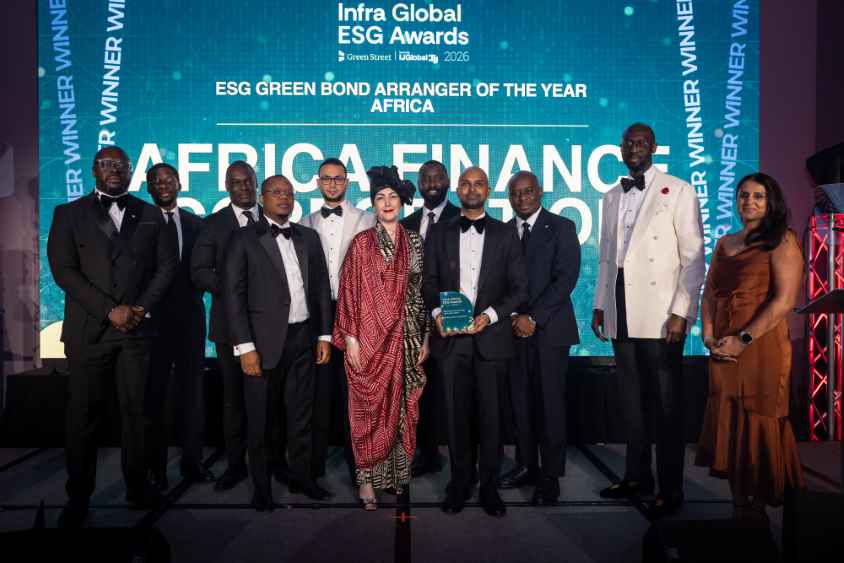
Africa Finance Corporation Maintains its Top-Tier AAA Ratings with Stable Outlook from China Chengxin International Credit Rating Co. Ltd (CCXI) and from S&P Global (China) Ratings

Published

on

Africa Finance Corporation

These renewals underscore continued confidence in AFC’s resilient balance sheet, disciplined capital management, robust liquidity position, and consistent execution of its mandate to accelerate infrastructure-led industrialisation across Africa

LAGOS, Nigeria, June 16, 2026/APO Group/ –Africa Finance Corporation (AFC) (www.AfricaFC.org), the continent’s leading infrastructure solutions provider, has received renewed top-tier credit ratings with stable outlooks from China Chengxin International Credit Rating Co. Ltd (CCXI) and S&P Ratings (China) Co., Ltd. (S&P Global (China) Ratings), reaffirming the Corporation’s strong financial profile, prudent risk management framework, and growing strategic relevance within global capital markets.


CCXI affirmed AFC’s AAA domestic issuer credit rating with a stable outlook, while S&P Global (China) Ratings also affirmed AFC’s AAAspc issuer credit rating with a stable outlook. These renewals underscore continued confidence in AFC’s resilient balance sheet, disciplined capital management, robust liquidity position, and consistent execution of its mandate to accelerate infrastructure-led industrialisation across Africa.

The renewed credit ratings further strengthen AFC’s position within China’s domestic debt capital markets and support the Corporation’s strategy to diversify funding sources, broaden investor access, and mobilise long-term capital for transformative infrastructure projects across the continent.

“AFC has established sound risk management processes and governance mechanisms to proactively and systemically address asset deterioration and challenges arising from market and economic fluctuations. Its comprehensive risk management framework is supported by a professional management team, including the Board Risk and Investment Committee… These entities work in concert to monitor key risk areas, including credit risk, market risk, operational risk, asset and liability management risk, and environmental and social risk”, CCXI analysts concluded in their report. “AFC adopts a prudent risk appetite and enforces strict risk exposure limits to ensure portfolio diversification. Industry exposure is capped at 35% of the total investable funds.”

S&P Global (China) Ratings noted AFC’s strong liquidity profile, robust governance standards, resilient asset quality, and sufficient capital buffers, even under challenging market conditions. ”AFC’s issuer credit rating of AAAspc is mainly based on its stand-alone credit profile in terms of high policy importance, disciplined capital management and sufficient liquidity buffer,…” S&P Global (China) Ratings wrote. ”AFC adheres to a highly conservative approach to liquidity management. It employs the Minimum Liquidity Level (MLL) and the Liquidity Coverage Ratio (LCR), among other critical indicators and triggers, to mitigate liquidity risks. Both the MLL and LCR are determined based on  an 18-month business-as-usual (BAU) scenario and a 12-month stressed scenario. As of the end of 2025, the LCR stood at 203% under BAU assumptions (year-end 2024, 194%) and 207% under a stressed scenario (year-end 2024, 191%),” they added.

The dual reaffirmations build on AFC’s successful expansion into China’s financial markets and reflect growing international recognition of the Corporation’s role

Commenting on the affirmations, Banji Fehintola, Executive Board Member & Head, Financial Services at AFC, said, ”The dual reaffirmations build on AFC’s successful expansion into China’s financial markets and reflect growing international recognition of the Corporation’s role as a trusted infrastructure financier for Africa. It recognises our financial resilience, robust governance, and global reach, and will enable stronger ties with Asian markets to drive critical investment in economic development, high-value job creation, and Africa’s prosperity.”

AFC has continued to deepen its strategic partnership with China’s foremost financial institutions, advancing a relationship that has grown steadily in scale, sophistication and ambition. In 2025, AFC and the Export-Import Bank of China (CEXIM) signed a landmark partnership agreement to promote Chinese-African trade through catalytic infrastructure projects in priority sectors across AFC’s member countries. The collaboration builds on a relationship of considerable standing. CEXIM had earlier extended AFC a five-year loan facility designed to enhance trade finance and bolster private -sector initiatives, an early engagement that established the foundation of trust on which subsequent transactions have been built.

In 2024, AFC finalised a US$1.16 billion syndicated loan facility co-led by Bank of China and the Industrial and Commercial Bank of China (ICBC), London Branch, in conjunction with other global banks. The momentum carried into 2025, when AFC secured a US$1.5 billion syndicated facility from a consortium of leading Asian and Middle Eastern banks, with Bank of China serving as Initial Mandated Lead Arranger and Bookrunner. The transaction notably broadened AFC’s base of Chinese partners, attracting first-time lenders including Bank of Communications and Hua Nan Commercial Bank.

This trajectory culminated in AFC’s largest syndicated loan facility to date — a US$2 billion syndicated transaction with Bank of China and ICBC acting as Initial Mandated Lead Arrangers and Bookrunners, and CEXIM, Hua Nan Commercial Bank and China Construction Bank, among others, participating as lenders. The facility stands as a powerful endorsement of AFC’s credit standing and the strength of its relationships across the Chinese banking sector.

Together, these strategic collaborations with China’s leading financial institutions exemplify AFC’s commitment to diversifying its funding sources, broadening its investor base and forging enduring global partnerships in the service of Africa’s economic development.


Read the full ratings report by CCXI here: CCXI 2026 Credit Rating Report (https://apo-opa.co/3StHp3b) and by S&P Global (China) Ratings here: S&P Global (China) 2026 Credit Rating Report (https://apo-opa.co/3ScXxGi).

Distributed by APO Group on behalf of Africa Finance Corporation (AFC).

Continue Reading

Business

Afreximbank Trade and Development Finance Brief highlights urgent need to strengthen Africa’s trade and investment resilience

Published

on

Afreximbank

According to the brief, the African Continental Free Trade Area (AfCFTA) remains central to efforts aimed at diversifying the continent’s trade base, strengthening regional value chains and increasing intra-African trade

CAIRO, Egypt, June 16, 2026/APO Group/ –African Export-Import Bank (Afreximbank) (www.Afreximbank.com) has released Volume 10, Issue 1 of its Trade and Development Finance Brief, titled “Africa’s Trade and Investment Landscape”, which examines the structural challenges shaping Africa’s trade performance and investment outlook in an increasingly uncertain global environment.


The current edition highlights that Africa’s trade landscape remains heavily dominated by export of raw materials, including agricultural products, oil, gas and minerals, while imports continue to be heavily skewed towards manufactured goods and machinery. The Brief notes that the existing export-import configuration leaves many African economies overly exposed to unfavourable terms of trade shock on account of external headwinds, including commodity price volatility, geopolitical tensions and associated global supply chain disruptions.

According to the brief, the African Continental Free Trade Area (AfCFTA) remains central to efforts aimed at diversifying the continent’s trade base, strengthening regional value chains and increasing intra-African trade. The publication notes that, alongside the African Union’s Agenda 2063, the AfCFTA provides a practical framework for integrating fragmented markets, expanding industrial production and boosting productivity, with intra-African exports projected to increase by more than 20 percent within a decade as implementation advances.

Additionally, the brief further highlights the importance of scaling investment in trade-enabling infrastructure, including energy, transport, communications networks, ports and logistics systems, to reduce the cost of doing business and improve cross-border trade flows. It notes that targeted infrastructure investment can support industrialisation, strengthen regional specialisation, and improve Africa’s competitiveness as an investment destination.

Regional development finance institutions, including the African Export-Import Bank, are playing an increasing role in supporting intra-African trade

The edition also points to a broader set of priorities for strengthening Africa’s trade and investment ecosystem, including regulatory coherence, institutional strengthening, economic diversification, improved access to finance for small and medium-sized enterprises, and greater use of digital financial technologies. The Brief notes that domestic and foreign investment are increasing across many African economies, while fintech is contributing to growth in domestic investment, underscoring the opportunity to build a more resilient, diversified and investment-ready trade landscape.

It also notes that domestic and foreign investment are increasing across many African economies, notwithstanding the observed dominance of foreign investment. It further highlights that the direction of investment flows remains uneven across sub-regions, with Eastern and Southern Africa receiving a larger share of foreign direct investment compared to Western and Central Africa.

Afreximbank said the findings reinforce the need for coordinated action to expand trade finance, improve trade-enabling infrastructure, deepen regional integration and accelerate value addition across the continent.

Dr. Yemi Kale, Group Chief Economist and Managing Director, Research says “Regional development finance institutions, including the African Export-Import Bank, are playing an increasing role in supporting intra-African trade through trade finance and related initiatives. The Brief points to Afreximbank initiatives such as the Intra-African Trade Fair, the Pan-African Payment and Settlement System, the AfCFTA Adjustment Fund, the Border Markets Initiative and the Collaborative Transit Guarantee Scheme as part of the wider effort to strengthen Africa’s trade and investment ecosystem.

The report concludes that while progress is being made, significant gaps remain. Addressing these gaps will be essential to increasing financing, strengthening competitiveness and unlocking Africa’s full trade and investment potential.”

Read more about the Afreximbank Trade and Development Finance Brief Highlights here: https://apo-opa.co/3QGrGgN

Distributed by APO Group on behalf of Afreximbank.

Continue Reading

Trending