Connect with us
Anglostratits

Business

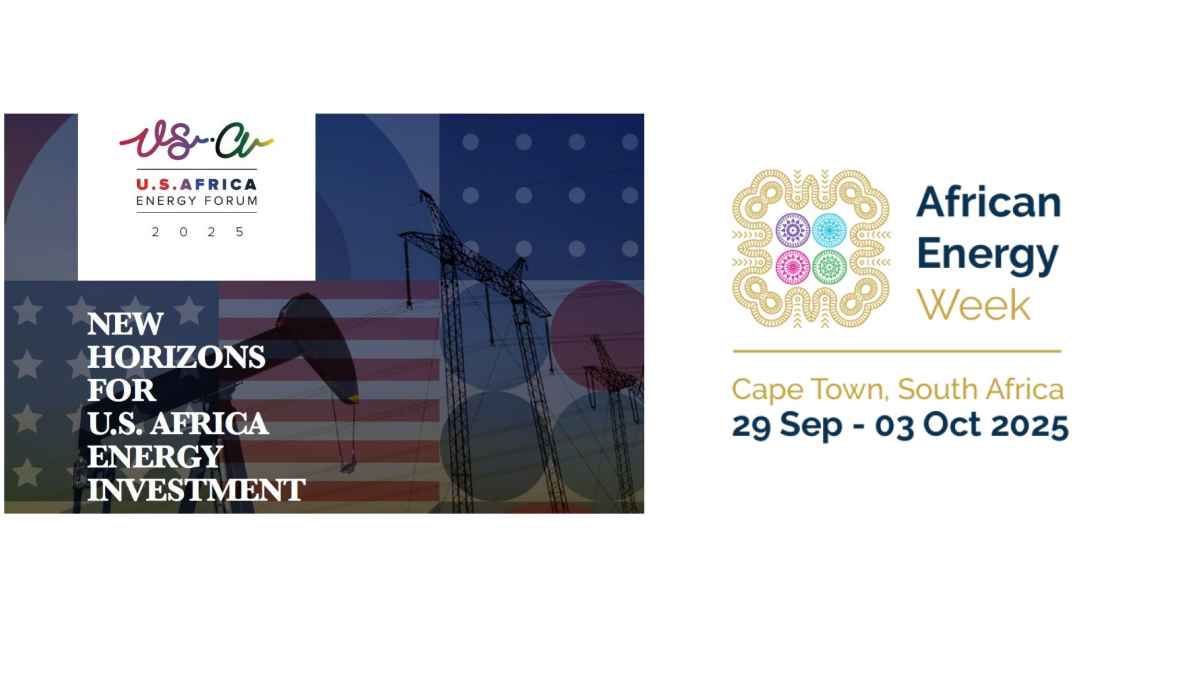
The U.S.-Africa Energy Forum (USAEF) Partners with African Energy Chamber, African Energy Week 2025

Published

on

USAEF

The U.S.-Africa Energy Forum in Houston has partnered with the African Energy Chamber and African Energy Week: Invest in African Energies to connect U.S. investors with Africa’s leading energy opportunities

CAPE TOWN, South Africa, March 17, 2025/APO Group/ –The U.S.-Africa Energy Forum (USAEF) is proud to announce its strategic partnership with the African Energy Chamber (AEC) and African Energy Week (AEW): Invest in African Energies. This collaboration strengthens USAEF’s mission to connect U.S. investors with Africa’s most promising energy opportunities, facilitating high-value engagements between American stakeholders and African energy leaders.

Taking place in Houston, Texas, on August 6-7, 2025, USAEF serves as the leading platform for fostering U.S.-Africa energy investment, offering direct access to key markets and project opportunities across the continent. Its partnership with the AEC and AEW ensures that U.S. investors not only gain critical market insights, but also establish meaningful connections that will be further developed at the AEW: Invest in African Energies conference in Cape Town on September 29-October 3, 2025.

This partnership will help drive capital flows into Africa’s energy sector, supporting not only economic growth but also energy access and sustainable development

USAEF provides American investors with a direct gateway into Africa’s energy sector, featuring high-profile discussions on licensing rounds, LNG developments, deepwater exploration and large-scale renewable projects. With Africa’s energy sector witnessing record-breaking capital expenditure – projected at $43 billion in 2025 – this collaboration ensures that U.S. companies can tap into the continent’s expanding oil, gas and renewables industries.

“Africa’s energy sector is primed for investment and we’re excited to partner with the U.S.-Africa Energy Forum to connect American investors with the continent’s most promising energy opportunities. This partnership will help drive capital flows into Africa’s energy sector, supporting not only economic growth but also energy access and sustainable development,” notes NJ Ayuk, Executive Chairman, African Energy Chamber

As global energy strategies evolve, recent shifts in U.S. policy reflect a more balanced approach to fossil fuel investments, recognizing the critical role of natural gas and oil in securing global energy stability. USAEF provides a timely opportunity for U.S. investors to navigate this evolving landscape while aligning with Africa’s energy priorities. Through curated investor roundtables, private equity sessions and ministerial discussions, USAEF will position U.S. companies at the forefront of Africa’s energy growth. With AEW serving as Africa’s premier energy investment platform, USAEF acts as a strategic prelude, ensuring U.S. stakeholders are equipped with the insights, relationships and opportunities needed to maximize their impact on the continent.

“Africa presents an unparalleled opportunity for American investors seeking access to high-growth energy markets. By partnering with the AEC and AEW, USAEF strengthens its role as the premier U.S. platform for connecting capital with Africa’s energy potential. This partnership creates a seamless bridge from Houston to Cape Town, enabling U.S. stakeholders to engage in substantive dealmaking at AEW,” says James Chester, CEO of Energy Capital & Power.

For tickets, sponsorship opportunities and more information, please contact sales@energycapitalpower.com. Join us in Houston this August to connect with the leaders shaping Africa’s energy landscape and experience the momentum that drives ECP’s events worldwide.

Distributed by APO Group on behalf of Energy Capital & Power.

Business

Under Mission 300, A New Way of Doing Business Connects Over 50 Million People to Electricity Across Africa

Published

on

Electricity

Mission 300 is now delivering electricity access at nearly double the pace recorded at the initiative’s launch — proof that coordinated action can drive large-scale change

CAPE TOWN, South Africa, June 17, 2026/APO Group/ –The World Bank Group and the African Development Bank Group (www.AfDB.org) announced today that Mission 300 has connected over 50 million people to electricity across 40 countries — a major milestone toward the initiative’s goal of reaching an additional 300 million people by 2030.

Mission 300 is now delivering electricity access at nearly double the pace recorded at the start of the initiative. By investing across the full energy value chain — from generation and transmission to last-mile distribution — it has driven gains in both on-grid and off-grid access, connecting households, businesses, and institutions to power faster than before.

In Tanzania, for example, 7.5 million people have gained access to electricity under Mission 300 — a five-fold increase in the average annual pace of electrification prior to the initiative — driven by increased financing and growing policy momentum. In Ethiopia, 4.6 million people have been connected, supported by reforms that made grid connections more affordable.

Where past efforts often worked in parallel, Mission 300 aligns governments, partners, and private sector investors around a single shared agenda. That coordination is what is driving faster results: stronger political commitment, deeper policy reform, and the mobilization of resources needed to accelerate electrification and deliver impact on the ground.

To date, the African Development Bank Group and the World Bank Group have committed nearly $15 billion in financing and attracted about $4.5 billion in co-financing for Mission 300-related projects, while additional development partners have pledged more than $7 billion in support of Africa’s energy sector.

Mission 300’s unique approach is also changing the conditions under which private investors participate in African energy markets. By combining government reforms with layered public financing — including grants, guarantees, and concessional loans — the platform is mitigating risks for private providers to serve communities that were previously too costly or difficult to serve.

Mission 300 is helping countries move faster, connect more people, and build a platform that will last well beyond this effort

In Nigeria, more than 4.5 million people have been connected through private sector-led initiatives, demonstrating how well-designed public support and partner financing can help create commercially viable markets.

To date, 30 countries have launched National Energy Compacts, country-led plans to strengthen energy systems, expand affordable power generation, scale renewable energy solutions, promote regional integration, and increase private sector participation. Additional compacts are expected to be launched by Burkina Faso, the Central African Republic, Djibouti, Gabon, Rwanda and Uganda at the Africa Energy Forum this week.

“Fifty million people connected is a milestone — but the bigger story is the pace and the partnership behind it. Mission 300 is helping countries move faster, connect more people, and build a platform that will last well beyond this effort — one others can use, build on, and scale for years to come. At the end of the day, electricity is not just about power. It is about what it enables: jobs, business, health care, education, and opportunity,” said Ajay Banga, President of the World Bank Group.

“The 50 million milestone is indeed commendable. This must become the launchpad for faster electrification to enhance food security on account of affordable irrigation; increase capacity to store medicines for better health outcomes, and spur more inclusive economic and social empowerment,” said Sidi Ould Tah, President of the African Development Bank Group. “Governments, partners, private sector, and others who comprise what has evolved into an M300 movement must double down to achieve access for 300 million people by 2030. We need all hands on deck – literally!

Partners are leaning into Mission 300

“Connecting over 50 million to electricity is a major milestone for Mission 300. It proves that African-led big bets, empowered by bold investment and partnership, can deliver results quickly and at scale,” said Rajiv J. Shah, President of The Rockefeller Foundation. “The Rockefeller Foundation, along with the Global Energy Alliance, has committed more than $100 million to Mission 300 because we know that every new connection means a family with new access to the jobs, education, and the dignity they deserve.”

“The 50 million milestone shows that Mission 300 is moving beyond ambition and delivering real results for people across Africa. These achievements reflect the strong political commitment and implementation capacity of African governments,” said Damilola Ogunbiyi, CEO and Special Representative of the UN Secretary-General for Sustainable Energy for All. “Together with our partners, Sustainable Energy for All will continue to support governments in implementing their National Energy Compacts and accelerating progress towards universal energy access by 2030.”

“Achieving electricity connections for 50 million people proves that we can move faster when public, private and philanthropic partners align behind country-led solutions,” said Woochong Um, CEO of Global Energy Alliance for People and Planet. “As Africa becomes home to the world’s largest young workforce, Mission 300 is the engine that will help power the jobs and economic growth the continent urgently needs.”

Launched in 2024, Mission 300 is a joint initiative of the World Bank Group and the African Development Bank Group supported by The Rockefeller Foundation, the Global Energy Alliance for People and Planet and Sustainable Energy for All, and a broad coalition of governments, development institutions, and private sector partners.

Distributed by APO Group on behalf of African Development Bank Group (AfDB).

Continue Reading

Business

ITFC Opens 2026 Islamic Development Bank (IsDB) Group Annual Meetings with Focus on Trade Finance, Private Sector Growth, and Regional Cooperation

Published

on

ITFC

Successful Start in Baku Sees ITFC Sign Agreements with The Gambia, Tajikistan, and IFC on the First Day

BAKU, Azerbaijan, June 16, 2026/APO Group/ –The International Islamic Trade Finance Corporation (ITFC) (www.ITFC-IDB.org), a member of the Islamic Development Bank (IsDB) Group, opened its participation at the 2026 IsDB Group Annual Meetings in Baku with three strategic agreements signed and a full day of high-level engagements focused on promoting cooperation in the areas of trade finance, trade development, private sector growth, and regional economic cooperation.


Eng. Adeeb Yousuf Al Aama, Chief Executive Officer of ITFC, led the Corporation’s delegation in bilateral meetings with governors and delegations from member countries, including Bangladesh, The Gambia, Guinea, Maldives, Senegal, Somalia, and Tajikistan, as well as with partners, including Vakif Katilim Bank and Turk Eximbank. Discussions focused on expanding trade finance cooperation, strengthening access to Shariah-compliant financing, and identifying practical ways to align ITFC’s interventions with national development priorities.

ITFC also participated in the Halal Economy Leadership Forum 2026, where Mr. Nazeem Noordali, ITFC Chief Operating Officer, joined the Strategic Leadership Dialogue on Ethical Halal Business Models and Risk-Resilient Financing. The session explored how halal economy models, Islamic finance, and risk-sharing mechanisms can support regional integration, MSME participation, and cross-border trade across member countries.

Key Signings

The Gambia: US$250 Million Framework Agreement to Support the Vital Sectors of the Economy

ITFC signed a three-year US$250 million Framework Agreement with the Republic of The Gambia to guide the next phase of cooperation between the two parties. The agreement follows the full utilization of the previous five-year US$250 million Framework Agreement signed in January 2021.

The new agreement will provide a platform for ITFC to support priority sectors in The Gambia, including energy supply, food security, healthcare, agricultural value chains, and private sector financing through local financial institutions.

The agreement was signed by Hon. Seedy K.M. Keita, Minister of Finance and Economic Affairs of the Republic of The Gambia, and Eng. Adeeb Yousuf Al Aama, Chief Executive Officer of ITFC.


Tajikistan: US$10 Million Direct Murabaha Facility to Support Cotton Trade

The International Islamic Trade Finance Corporation (ITFC) signed a US$10 million Direct Murabaha Financing Facility with the Republic of Tajikistan to support the purchase and trade of cotton and cotton-related products. The agreement was signed by Eng. Adeeb Yousuf Al Aama, CEO ITFC and HE. Mr Hokim Holiqzoda, the First Deputy Prime Minister of the Republic of Tajikistan.

The pilot facility will provide working capital to the cotton sector stakeholders, enabling Agency for Export under the Government of the Republic of Tajikistan through processing companies to procure cotton from farmers during the harvest season for further exporting, thus supporting a sector that contributes significantly to export activity, agricultural value chains, and rural livelihoods.

With approximately 37,000 cotton-producing farms and entities engaging an estimated 680,000 people across the country, the financing is expected to strengthen market linkages and sustain income-generating activities. The agreement builds on ITFC’s ongoing support for strategic sectors in Tajikistan and reflects its commitment to delivering Shariah-compliant trade finance solutions that address the development priorities of its member countries.

Regional: Confirming Bank Agreement with IFC to Expand Trade Finance Access

ITFC signed a Confirming Bank Agreement with the International Finance Corporation (IFC), marking a new step in strengthening collaboration between the two institutions to support trade finance across common OIC member countries. The agreement was signed by Mr. Nazeem Noordali, Chief Operating Officer of ITFC, and Mr. Abdullah Jefri, IFC’s GCC Division Director, and witnessed by Eng. Adeeb Yousuf Al Aama, Chief Executive Officer of ITFC.

Through the partnership, ITFC will be able to expand its trade finance operations by leveraging IFC’s risk-sharing framework and guarantees covering the payment obligations of issuing banks. The collaboration is expected to enhance access to trade finance for importers and exporters in OIC member countries, facilitate critical cross-border trade transactions, and support greater trade connectivity and economic growth across member countries.


Held in Baku, Azerbaijan, the opening day of ITFC’s Annual Meetings program placed trade finance, trade development, and Islamic finance at the center of its agenda. Further agreements and high-level engagements are expected throughout the week as ITFC continues to work with member countries and partners to finance essential trade, expand private sector participation, and strengthen regional connectivity.

Distributed by APO Group on behalf of International Islamic Trade Finance Corporation (ITFC).

Continue Reading

Business

Africa Finance Corporation Maintains its Top-Tier AAA Ratings with Stable Outlook from China Chengxin International Credit Rating Co. Ltd (CCXI) and from S&P Global (China) Ratings

Published

on

Africa Finance Corporation

These renewals underscore continued confidence in AFC’s resilient balance sheet, disciplined capital management, robust liquidity position, and consistent execution of its mandate to accelerate infrastructure-led industrialisation across Africa

LAGOS, Nigeria, June 16, 2026/APO Group/ –Africa Finance Corporation (AFC) (www.AfricaFC.org), the continent’s leading infrastructure solutions provider, has received renewed top-tier credit ratings with stable outlooks from China Chengxin International Credit Rating Co. Ltd (CCXI) and S&P Ratings (China) Co., Ltd. (S&P Global (China) Ratings), reaffirming the Corporation’s strong financial profile, prudent risk management framework, and growing strategic relevance within global capital markets.


CCXI affirmed AFC’s AAA domestic issuer credit rating with a stable outlook, while S&P Global (China) Ratings also affirmed AFC’s AAAspc issuer credit rating with a stable outlook. These renewals underscore continued confidence in AFC’s resilient balance sheet, disciplined capital management, robust liquidity position, and consistent execution of its mandate to accelerate infrastructure-led industrialisation across Africa.

The renewed credit ratings further strengthen AFC’s position within China’s domestic debt capital markets and support the Corporation’s strategy to diversify funding sources, broaden investor access, and mobilise long-term capital for transformative infrastructure projects across the continent.

“AFC has established sound risk management processes and governance mechanisms to proactively and systemically address asset deterioration and challenges arising from market and economic fluctuations. Its comprehensive risk management framework is supported by a professional management team, including the Board Risk and Investment Committee… These entities work in concert to monitor key risk areas, including credit risk, market risk, operational risk, asset and liability management risk, and environmental and social risk”, CCXI analysts concluded in their report. “AFC adopts a prudent risk appetite and enforces strict risk exposure limits to ensure portfolio diversification. Industry exposure is capped at 35% of the total investable funds.”

S&P Global (China) Ratings noted AFC’s strong liquidity profile, robust governance standards, resilient asset quality, and sufficient capital buffers, even under challenging market conditions. ”AFC’s issuer credit rating of AAAspc is mainly based on its stand-alone credit profile in terms of high policy importance, disciplined capital management and sufficient liquidity buffer,…” S&P Global (China) Ratings wrote. ”AFC adheres to a highly conservative approach to liquidity management. It employs the Minimum Liquidity Level (MLL) and the Liquidity Coverage Ratio (LCR), among other critical indicators and triggers, to mitigate liquidity risks. Both the MLL and LCR are determined based on  an 18-month business-as-usual (BAU) scenario and a 12-month stressed scenario. As of the end of 2025, the LCR stood at 203% under BAU assumptions (year-end 2024, 194%) and 207% under a stressed scenario (year-end 2024, 191%),” they added.

The dual reaffirmations build on AFC’s successful expansion into China’s financial markets and reflect growing international recognition of the Corporation’s role

Commenting on the affirmations, Banji Fehintola, Executive Board Member & Head, Financial Services at AFC, said, ”The dual reaffirmations build on AFC’s successful expansion into China’s financial markets and reflect growing international recognition of the Corporation’s role as a trusted infrastructure financier for Africa. It recognises our financial resilience, robust governance, and global reach, and will enable stronger ties with Asian markets to drive critical investment in economic development, high-value job creation, and Africa’s prosperity.”

AFC has continued to deepen its strategic partnership with China’s foremost financial institutions, advancing a relationship that has grown steadily in scale, sophistication and ambition. In 2025, AFC and the Export-Import Bank of China (CEXIM) signed a landmark partnership agreement to promote Chinese-African trade through catalytic infrastructure projects in priority sectors across AFC’s member countries. The collaboration builds on a relationship of considerable standing. CEXIM had earlier extended AFC a five-year loan facility designed to enhance trade finance and bolster private -sector initiatives, an early engagement that established the foundation of trust on which subsequent transactions have been built.

In 2024, AFC finalised a US$1.16 billion syndicated loan facility co-led by Bank of China and the Industrial and Commercial Bank of China (ICBC), London Branch, in conjunction with other global banks. The momentum carried into 2025, when AFC secured a US$1.5 billion syndicated facility from a consortium of leading Asian and Middle Eastern banks, with Bank of China serving as Initial Mandated Lead Arranger and Bookrunner. The transaction notably broadened AFC’s base of Chinese partners, attracting first-time lenders including Bank of Communications and Hua Nan Commercial Bank.

This trajectory culminated in AFC’s largest syndicated loan facility to date — a US$2 billion syndicated transaction with Bank of China and ICBC acting as Initial Mandated Lead Arrangers and Bookrunners, and CEXIM, Hua Nan Commercial Bank and China Construction Bank, among others, participating as lenders. The facility stands as a powerful endorsement of AFC’s credit standing and the strength of its relationships across the Chinese banking sector.

Together, these strategic collaborations with China’s leading financial institutions exemplify AFC’s commitment to diversifying its funding sources, broadening its investor base and forging enduring global partnerships in the service of Africa’s economic development.


Read the full ratings report by CCXI here: CCXI 2026 Credit Rating Report (https://apo-opa.co/3StHp3b) and by S&P Global (China) Ratings here: S&P Global (China) 2026 Credit Rating Report (https://apo-opa.co/3ScXxGi).

Distributed by APO Group on behalf of Africa Finance Corporation (AFC).

Continue Reading

Trending