Connect with us
Anglostratits

Energy

The Clean Cooking Quest: It’s Time for the International Energy Agency (IEA) to Fight for Africa – Not Against it

Published

on

African Energy Chamber

The IEA should be at the forefront of Africa’s clean cooking development

JOHANNESBURG, South Africa, February 19, 2026/APO Group/ –The U.S. has intensified pressure on the International Energy Agency (IEA) – signaling that it could withdraw from the institution unless it refocuses on its founding mandate of safeguarding global energy security.

U.S. Secretary of Energy Chris Wright said Washington is not satisfied with the Paris-based agency’s current direction, arguing that its modelling and outlooks have become overly shaped by climate ideology at the expense of practical energy realities. He was direct in his messaging when he said that the IEA must return to prioritizing energy access and solvable clean cooking solutions.

For years, African leaders and private-sector stakeholders have argued that the IEA drifted from its original purpose – becoming increasingly politicized in its outlooks and instrumental in shaping restrictive financing narratives around oil and gas. The African Energy Chamber (AEC) has consistently maintained that this shift has had real consequences for developing economies, contributing to capital flight from African hydrocarbons and slowing the continent’s ability to tackle widespread energy poverty. If the IEA is now reassessing its position, the question is whether this represents genuine reform – or political expediency under mounting global pressure.

A History of Weaponizing Energy Outlooks  

The IEA has politicized its outlooks and adopted an anti-oil and gas agenda that directly undermined African development ambitions for years. Its 2021 net-zero roadmap – updated in 2025 – became a weapon used by financiers and multilateral institutions to restrict capital flows into Africa’s energy sector. Some of the objectives include no new investment for fossil fuel supply after 2021 and sales of fossil fuel boilers after 2025. It also condemns international combustion engine car sales after 2035, targeting 60% electric car sales and 50% electric heavy trucks from 2035.

These steps assume a lot about the state of the world – assumptions that are faulty, especially for Africa. For one, it will require universal energy access by 2030 – including electricity and clean cooking. With approximately 592 million Africans currently without this access, the continent is going to be hard-pressed to flip that switch in less than 10 years.

The IEA’s roadmap also relies on unprecedented investments in renewables – a substantial boost in clean energy investments from the $1 trillion made over the last five years all the way up to $5 trillion annually by 2030 – and cooperation from policymakers who are unified in their efforts. In this idyllic partnership, Africa’s Western counterparts talk a good game. But the fact is, to date, these same Western countries have invested little to no funding into Africa’s renewables space. To our dismay even the international oil companies that have tried to accept the IEA’s publicity stunt have little or no renewable projects in Africa.

OPEC wrote in response to IEA’s roadmap release that “For many developing countries, the pathway to net zero without international assistance is not clear. Technical and financial support is needed to ensure deployment of key technologies and infrastructure. Without greater international co‐operation, global CO2 emissions will not fall to net zero by 2050.”

The damage of the roadmap has been profound. Global financiers such as BNP Paribas and HSBC halted all new oil and gas financing while institutions such as Barclays, Nedbank and Deutsche Bank moved to selectively finance projects. In 2019, the World Bank also announced that it will stop direct investments in upstream oil and gas. When African countries were fighting for the development of strategic gas resources, one of the continent’s biggest institutional opponents was the IEA.

Oil and gas are not the problem – underdevelopment is

“A bank should evaluate investment in an African oil field based on a project’s viability and associated risk, just as it would for a Norwegian, British or American project. Yet they don’t. This is precisely why the AEC plans to hold several banks legally accountable for promoting financial apartheid in the energy sector,” states NJ Ayuk, Executive Chairman, AEC.

The Clean Cooking Challenge

With over 900 million people in Africa living without access to clean cooking solutions, addressing the problem of energy security is no longer an isolated challenge – it’s a strategic imperative. If Africa were to listen to the IEA, there would be no investment to address this challenge. Europe would not gain access to African gas supplies, making projects such as Angola LNG, Congo LNG, Greater Tortue Ahmeyim in Senegal/Mauritania, Equatorial Guinea’s Gas Mega Hub and Algerian production facilities obsolete. At a time when Mozambique LNG is resuming and Libya, Egypt and Nigeria are looking to produce more, IEA recommendations could prove catastrophic for Africa’s clean cooking quest.

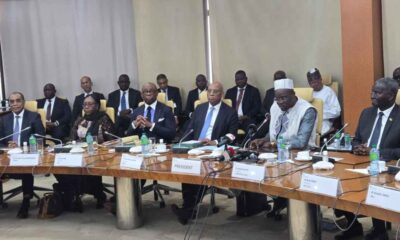
Delivering remarks during the IEA’s 2026 Ministerial this week, Secretary Wright underscored that with $4 billion invested annually, the world can accelerate the rollout of clean cooking solutions and lift nearly two billion people out of energy poverty. While the IEA should be at the forefront of this drive, Secretary Wright highlighted how a focus on climate change has redirected critical financing away from hydrocarbons.

“The world today spends $1 trillion in the name of fighting climate change – collectively over $10 trillion in the last 20 years. What has been the upside of that? Only 2.6% of global energy comes from solar, wind, batteries and the increased transmission lines to promote them. This has only had meaningful penetration in rich countries,” he said.

A 2024 report by U.S. Senator John Barrasso further condemns the IEA for its renewable approach, arguing that the organization is increasingly responsible for feeding the unrealistic view that emerging economies can develop using only renewables. This shift began in 2020 when the IEA ceased creating energy market forecasts based on actual demand and decided to focus exclusively on hypothetical scenarios aligned with extreme emissions reduction targets.

This goes against the very mandate by which the IEA was established. Following an oil crisis and spike in prices in 1974, the IEA was established to ensure reliable, affordable and secure energy supplies worldwide. The organization’s recent history has contradicted this mandate.

“Africa will not make energy poverty history by abandoning the very resources that can fund its development. Oil and gas are not the problem – underdevelopment is. Organizations such as the IEA have played a central role in restricting financing, politicizing fossil fuels and impacting African energy development. That needs to stop,” adds Ayuk.

A Step in the Right Direction

Despite its history of inaction, the IEA seems to be moving in the right direction, announcing that it will host the Clean Cooking Alliance (CCA) – launched in 2010 – to tackle the global clean cooking crisis. The IEA will partner with governments and industry to accelerate universal clean cooking access, integrating the CCA within the IEA. The U.S. is also ramping-up its clean cooking support. Secretary Wright announced the launch of a Clean Cooking Accelerator Program to help build infrastructure to enable faster deployment of clean cooking solutions – focusing primarily on Africa. While these efforts are notable, much more needs to be done.

“Reform at the IEA must go beyond press releases. It must include a recalibration of outlooks to reflect differentiated development pathways, a rejection of blanket investment bans and an acknowledgment that African hydrocarbons are compatible with global climate goals,” Ayuk stated. “The AEC believes that Secretary Wright needs to put more teeth on his clean cooking and energy poverty plan. The African private sector will fund it. We don’t want aid – we want partnerships.”

Distributed by APO Group on behalf of African Energy Chamber.

Energy

Copia Group’s Platinum Angola Oil & Gas (AOG) 2026 Sponsorship Highlights Commitment to Angola’s Oilfield Growth

Published

on

Energy Capital

Angola Oil & Gas 2026 provides a strategic platform for Copia Group to strengthen partnerships and showcase its technical capabilities at the forefront of Angola’s expanding hydrocarbon portfolio

LUANDA, Angola, March 16, 2026/APO Group/ –Angolan service provider Copia Group of Companies has joined the 2026 edition of the Angola Oil & Gas (AOG) Conference and Exhibition as a Platinum Sponsor. The company’s participation at the event  – Angola’s premier oil and gas forum – signals a broader commitment to developing the national hydrocarbon value chain as leading operators scale production. By joining AOG 2026, Copia Group strengthens its visibility within Angola’s evolving energy ecosystem while supporting exploration, development and infrastructure growth across the sector.

As Angola intensifies efforts to sustain crude production above one million barrels per day while accelerating new exploration campaigns and redevelopment programs, demand for high-quality infrastructure, fabrication, logistics and technical services is expanding. From deepwater developments and shallow water revitalization projects to non-associated gas monetization and refining enhancements, the country’s hydrocarbon value chain is entering a capital-intensive phase requiring experienced local and regional service providers capable of delivering at scale.

Within this context, Copia Group has positioned itself as a multidisciplinary provider supporting oil, gas and industrial operations. With capabilities spanning engineering services, construction support, project management and technical solutions, the company facilitates collaboration between operators, contractors and project stakeholders. Its Platinum Sponsorship at AOG 2026 reinforces this positioning at a time when Angola’s project pipeline is expanding across upstream and downstream segments.

In a 2025 interview with Energy Capital & Power, Adilson Mangueira Nelumba, Copia Group’s Chairman, and Grildo José Francisco, the company’s Project Director for Oil, Gas & Biofuels, highlighted that the company has “established itself as a strategic partner in Angola’s energy transformation, thanks to a solid combination of international partnerships, multidisciplinary technical expertise and a commitment to sustainable and local development.”

Beyond oil and gas services, Copia Group is playing a central role in expanding Angola’s hydropower portfolio. The company is leading the consortium developing the Caculo Cabaça Hydroelectric Project, set to produce 2,172 MW once completed. The first turbine is scheduled to operate in October 2026, with subsequent phases coming online through the end of 2028. As the project nears operation, Copia Group’s participation at AOG 2026 is expected to open new avenues for international collaboration, supporting accelerated project development.

Copia’s Platinum-level involvement underscores the importance of strong service sector collaboration in achieving Angola’s production and infrastructure targets. As the country aligns upstream expansion with downstream and midstream development, companies delivering engineering and construction solutions will remain critical to translating policy ambition into operational reality.

Distributed by APO Group on behalf of Energy Capital & Power.

Continue Reading

Energy

Caribbean Shallow-Water Plays Move into Focus as Guyana–Suriname Basin Expands

Published

on

Energy Capital

This month’s Caribbean Energy Week will host a technical workshop on shallow-water drilling as new licensing rounds, exploration wells and infrastructure investment drive growing interest across the region

PARAMARIBO, Suriname, March 16, 2026/APO Group/ –While deepwater discoveries have dominated the Caribbean’s upstream narrative, shallow-water blocks across Guyana, Suriname and Trinidad & Tobago are emerging as a parallel opportunity as operators seek lower-cost exploration prospects in the expanding Guyana–Suriname Basin. Governments across the region are advancing licensing frameworks, seismic programs and drilling campaigns aimed at unlocking offshore resources closer to shore, while improved geological data and drilling technology are strengthening the commercial case for shallow-water development.


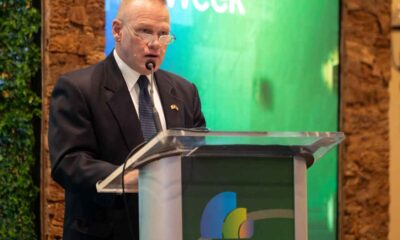
These opportunities will be in focus during a dedicated technical workshop – “Operational Challenges in Shallow Water Drilling” – at Caribbean Energy Week (CEW) 2026. The session will focus on mitigating operational risk while leveraging new technologies to optimize cost and performance across the region’s mature and emerging basins.


Guyana Expands Beyond Deepwater Core


Guyana’s global oil story has been dominated by the deepwater Stabroek Block, but policymakers are increasingly focused on expanding exploration into adjacent shallow-water acreage. Following its offshore licensing round, the government finalized agreements for multiple shallow-water blocks under a standardized production sharing framework designed to attract a broader range of operators.


One example is the S7 block, awarded to Cybele Energy, covering approximately 200 square-kilometers offshore. The fiscal terms – 10% royalty, a 10% corporate tax and a cost-recovery cap – aim to balance investor incentives with higher state revenue, while lowering barriers to entry for mid-size explorers.


Geological studies across Guyana’s shallow-water acreage have identified roughly 90 exploration leads across 11 blocks, containing an estimated 90 billion barrels of oil in place, suggesting the petroleum system extends well beyond the basin’s deepwater fairway.


For investors, the appeal is straightforward: shallower wells typically require smaller capital commitments and shorter development timelines, offering an entry point into one of the world’s most prolific emerging hydrocarbon provinces.


Suriname’s Offshore Momentum Builds


Just across the maritime border, Suriname is experiencing similar momentum. In late 2025, Chevron and Petronas secured exploration rights for shallow offshore Blocks 9 and 10 alongside QatarEnergy and the state-backed Paradise Oil Company, marking one of the largest recent commitments to Suriname’s upstream sector.


Meanwhile, Chevron recently drilled the Korikori-1 exploration well in Block 5 in water depths of roughly 40 meters – demonstrating continued confidence in the shallow-water potential of the basin. These exploration activities complement major deepwater developments such as the $10.5 billion GranMorgu project led by TotalEnergies, which is moving toward production later this decade and strengthening the broader investment case for the basin.


The result is a layered offshore ecosystem where deepwater megaprojects anchor regional infrastructure, while shallow-water exploration expands the opportunity set for new entrants.


Trinidad’s Mature Basins Offer Redevelopment Potential


Trinidad & Tobago provides a different but equally important opportunity: redevelopment of mature shallow-water basins. Decades of production have left the country with a significant network of offshore infrastructure, pipelines and service capacity. For operators, this existing ecosystem creates opportunities for smaller discoveries that can be tied back quickly and economically. In a market increasingly focused on capital discipline, such infrastructure-led developments are gaining renewed attention as companies seek projects that balance resource potential with manageable costs.


Despite their advantages, shallow-water projects come with technical and operational challenges. Complex geology, environmental sensitivities and aging infrastructure can complicate drilling campaigns. Addressing these issues will be a key focus of the workshop at CEW 2026, where operators, engineers and service providers will examine strategies to improve well design, reduce drilling risk and deploy new technologies in the region’s offshore environment.


As the Guyana–Suriname Basin continues to mature and regional governments seek to diversify their upstream portfolios, shallow-water exploration may represent the Caribbean’s next wave of opportunity.


Join us in shaping the future of Caribbean energy. To participate in this landmark event, please contact sales@energycapitalpower.com.

Distributed by APO Group on behalf of Energy Capital & Power.

Continue Reading

Energy

African Liquefied natural gas (LNG) Could Be Europe’s Lifeline as Middle East, Russia Crises Escalate

Published

on

Energy Capital

Ministers from Africa’s LNG-exporting countries including Senegal, Equatorial Guinea, Nigeria and the Republic of Congo will gather in Paris for the Invest in African Energy Forum, showcasing the continent’s LNG as a reliable solution to Europe’s urgent energy needs

As tensions flare in the Middle East and Russian supply remains volatile, European buyers are urgently seeking stable alternative sources of gas – and Africa is emerging as a critical solution. Next month, energy ministers from Senegal, Equatorial Guinea, Nigeria and the Republic of Congo will convene in Paris at the Invest in African Energy (IAE) Forum, spotlighting the continent’s LNG capacity and its emerging role in European energy security.

Following the dramatic disruption of Russian pipeline flows, Europe has increasingly turned to LNG to fill supply gaps – contracting cargoes from the U.S., Qatar and, increasingly, African exporters. While African cargoes still represent a smaller share of total imports, their relevance is growing as utilities factor in insurance costs, geopolitical risk and supply diversification. And now, with the Middle East in turmoil and the Strait of Hormuz effectively at risk, African LNG offers European buyers a geographically insulated, lower-risk alternative that can be delivered quickly to key regasification hubs.

Nigeria remains Africa’s LNG backbone, with its volumes historically flowing into Europe’s Mediterranean and Atlantic terminals through a mix of long-term contracts and spot cargoes. As Russian pipeline volumes have declined, Nigerian LNG has become a significant component of LNG deliveries into Iberian terminals, with Portugal sourcing over half of its LNG from Nigeria and Spain among the key European destinations for Nigerian cargoes.

Continued expansion – including the Nigeria LNG Train 7 project – is expected to boost export capacity toward the mid-2020s, adding new volumes that European buyers could secure through multiyear supply agreements. This positions Nigeria not just as a major producer, but as a durable contender for Europe’s long-term LNG demand.

Equatorial Guinea’s LNG exports via the Punta Europa facility have also found consistent markets in Europe and across the Atlantic Basin. Recent upstream developments, including the Chevron Aseng Gas Project, aim to secure additional gas feedstock, reinforcing LNG supply and supporting both domestic gas use and exports. European utilities have shown particular interest in shorter-route shipments from West Africa, as cargoes from Equatorial Guinea reach European terminals faster and with lower freight and insurance costs than many Middle Eastern shipments.

The Republic of Congo has rapidly expanded its LNG ambitions through the Congo LNG project, where Phase 2 – anchored by floating LNG technology – is expected to lift export capacity to roughly 3 million tons per year. Floating LNG’s advantages, including faster deployment, modular expansion and lower upfront capital requirements, position Congo as a flexible supplier for Europe’s evolving gas portfolio. Increasingly, European traders and utilities are factoring in speed to market and supply flexibility alongside price when structuring procurement strategies.

Senegal’s Greater Tortue Ahmeyim project – developed jointly with Mauritania – represents West Africa’s newest entry into global LNG markets. First gas and initial cargoes began in 2025, marking a major milestone for the region’s gas export ambitions. Planned expansions could add several million tons per year of additional capacity as the project ramps up production.

African LNG’s appeal lies not only in rising volumes but in geostrategic positioning. Compared with cargoes that must pass through conflict-prone routes like the Strait of Hormuz or rely on Russian pipeline networks, African exports are less exposed to direct conflict or geopolitical disruption. This relative “risk discount,” combined with competitive pricing and expanding production capacity, could increasingly shape procurement strategies among European utilities and gas traders.

The ministers gathering in Paris – representing Africa’s leading LNG-exporting countries – will be tasked with converting this growing European interest into concrete investment decisions, offtake agreements and long-term supply partnerships, reinforcing Africa’s role as a stable and reliable energy partner at a time when Europe urgently needs alternatives.

African producers will not replace Russian or Gulf supplies overnight. But with operational LNG capacity already flowing and new projects coming online, the continent’s role in strengthening European gas security is steadily expanding – and the discussions in Paris will reflect that shift in the global energy landscape.

IAE 2026 (https://apo-opa.co/4bp66Um) is an exclusive forum designed to connect African energy markets with global investors, serving as a key platform for deal-making in the lead-up to African Energy Week. Scheduled for April 22–23, 2026, in Paris, the event will provide delegates with two days of in-depth engagement with industry experts, project developers, investors and policymakers. For more information, visit www.Invest-Africa-Energy.com. To sponsor or register as a delegate, please contact sales@energycapitalpower.com

Distributed by APO Group on behalf of Energy Capital & Power.

Continue Reading

Trending