Connect with us
Anglostratits

Business

The Arab Africa Trade Bridges Program (AATB) Fosters Trade Development in Africa with the Signing of Two Key Agreements at Intra Africa Trade Fair (IATF) 2023
Published

on

AATB

Agreements aim to accelerate Economic Growth and Establish a Platform for the Exchange of Knowledge and Capacity-building in Africa

CAIRO, Egypt, November 24, 2023/APO Group/ — 

The Arab Africa Trade Bridges Program, a multi-donor, inter-regional program, has signed two agreements aimed at fostering sustainable growth and development on the sidelines of the Intra Africa Trade Fair 2023 in Cairo, Egypt.

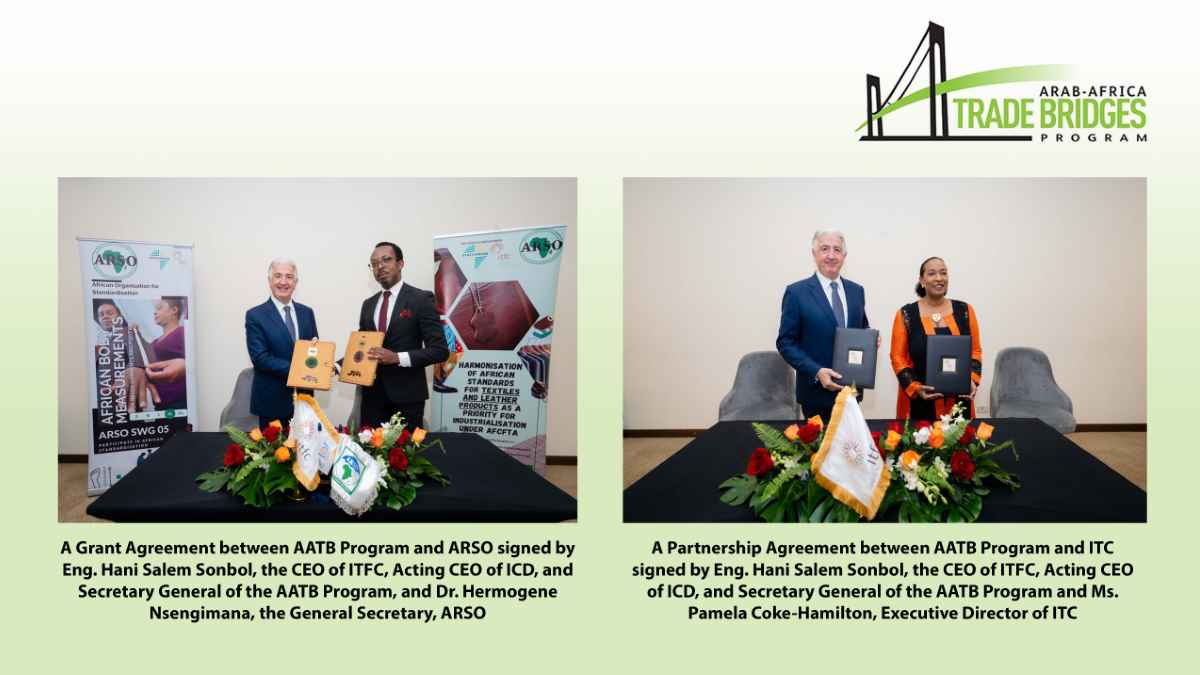
Eng. Hani Salem Sonbol, the CEO of ITFC, Acting CEO of ICD, and Secretary General of the AATB Program, along with Dr. Hermogene Nsengimana, the General Secretary of ARSO, signed a Grant Agreement within the framework of the Arab-Africa Trade Bridges (AATB) Program. This pivotal agreement aimed at harmonizing African standards for textiles and leather products, ensuring a transformative change in the African Fashion Industry. It further reinforces AATB’s commitment to fostering trade development and quality enhancement in Africa, building on the success of the recent harmonization of pharmaceutical and medical device standards initiative.  Both harmonization initiatives are aligned with the objectives of the African Continental Free Trade Area (AfCFTA) agreement.

The program’s primary objective is to raise awareness regarding the technical aspects and potential opportunities arising from the AfCFTA agreement

Also, a Partnership Agreement was signed between ITFC and the International Trade Centre (ITC), under the umbrella of the AATB program to mark the initiation of Phase Two for the transformative “How to Export with the AfCFTA” Program, developed collaboratively with Afreximbank. The training program, which is set to directly benefit several African countries, namely Benin, Cameroon, Senegal, and Togo, will share the fundamentals of exporting within the framework of intra-African trade.   

The program’s primary objective is to raise awareness regarding the technical aspects and potential opportunities arising from the AfCFTA agreement. By participating in this training, enterprises will learn to evaluate their standing concerning new trading opportunities. Moreover, they will be equipped to strategize and make informed decisions on how best to leverage the benefits presented by the AfCFTA agreement. This partnership agreement was signed by Hani Salem Sonbol, the CEO of ITFC, Acting CEO of ICD, and Secretary General of the AATB Program, and Ms. Pamela Coke-Hamilton, Executive Director of ITC.

As large and small businesses are pivotal to Africa’s economic growth structural transformation, these agreements play a strategic role in bolstering the AATB program’s influence in promoting trade and investment development to drive positive economic impact across the continent.

Distributed by APO Group on behalf of International Islamic Trade Finance Corporation (ITFC).

Business

Nedbank and Africa Women Innovation and Entrepreneurship Forum (AWIEF) Partner to Launch Women Enterprise Growth and Export Programme in South Africa
Published

on

AWIEF

It will support 75 women-owned SMMEs over three years, with 25 businesses selected for each annual cohort

CAPE TOWN, South Africa, August 13, 2026/APO Group/ –The Africa Women Innovation and Entrepreneurship Forum (AWIEF) (www.AWIEForum.org) has partnered with Nedbank to launch a new programme – Women Enterprise Growth and Export. This new initiative builds on Nedbank and AWIEF’s long-term relationship and partnership since 2018, implementing the AWIEF Growth Accelerator and investment readiness programme in South Africa.

The Nedbank – AWIEF Women Enterprise Growth and Export is a 12-month business and enterprise supplier development programme for established South African Exempted Micro Enterprises (EME) or Qualifying Small Enterprises (QSE) that are at least 51% owned by black women.

The programme is intended for product-based businesses and is designed to help participants strengthen their operations, improve their finance, market and export readiness, and access larger domestic, regional, African, and international markets.

It forms part of a three-year partnership between Nedbank and AWIEF that will support 75 women-owned SMMEs, with 25 businesses selected for each annual cohort.

The programme targets growth-stage businesses that are already operating, generating revenue, and looking to scale and expand. Participating businesses should have the potential to strengthen their systems, increase production, fulfilment or distribution capacity, supply larger buyers, enter new markets, and progress towards regional or international expansion.

It will support 75 women-owned SMMEs over three years, with 25 businesses selected for each annual cohort.

The official and in-person launch of the programme will take place at the AWIEF2026 Conference and Exhibition on 10 – 11 November 2026 at the Cape Town International Convention Centre (CTICC), Cape Town.
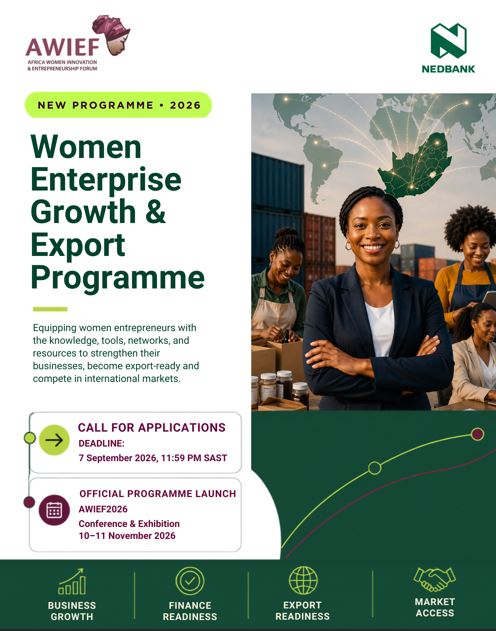
Call for Applications for 2026 Cohort of 25 Businesses

Applications are invited from qualifying businesses for the 2026 Cohort of 25 participants.

Eligibility & Who Can Apply

To qualify for the Nedbank – AWIEF Women Enterprise Growth and Export Programme, businesses must meet the following requirements:

  • Be legally registered and operating in South Africa
  • Be at least 51% owned by black women, as defined under the B-BBEE Act
  • Qualify as an Exempted Micro Enterprise (EME) or Qualifying Small Enterprise (QSE) under the B-BBEE code applicable to their main business activities
  • Be post-revenue, currently trading, and serving paying customers
  • Looking to expand their market access nationally, regionally, intra-Africa, and internationally
  • Be product-based and produce, manufacture, process, assemble, package, formulate, or distribute physical products
  • Operate in one of the priority sectors
  • Founder commits to a 12-month programme

Priority Sectors

The programme is open to businesses in the following sectors:

  • Agriculture and Agro-processing
  • Manufacturing
  • Building and Construction
  • Green Economy and Renewable Energy
  • Personal Protective Equipment (PPE)
  • Cleaning and Hygiene
  • Textile, Apparel and Accessories
  • Beauty, Wellness, and Personal Care
  • Hospitality and Tourism
  • Design and Craft
  • Circular Economy

Programme Timeline

7 September 2026
Applications Close

September – October 2026
Application screening and selection of 25 participating businesses

10 – 11 November 2026
Official Programme Launch and in-person 2-day bootcamp at AWIEF2026 Conference and Exhibition, CTICC, Cape Town

November 2026 – October 2027
Programme Implementation

Programme Benefits

Selected businesses will receive 12 months of tailored, practical support to strengthen their operations and products, prepare for larger markets and pursue sustainable growth.

  • Business growth support
  • Individual diagnostic and development plan
  • Coaching and technical mentoring
  • Product, supplier and retail readiness
  • Market access support
  • Finance and investment readiness
  • Export readiness support
  • Regional trade and partnership opportunities – support to explore AfCFTA-related opportunities, including B2B contracts, joint ventures, and co-production arrangements
  • Networking and buyer linkages – opportunities to connect with mentors, buyers, institutions, finance providers, and other women entrepreneurs.
  • AWIEF2026 Conference participation – free access to the AWIEF2026 Conference in Cape Town, including selected programme-related travel and accommodation support.
  • Ongoing progress tracking – regular reviews to monitor implementation, business growth, job creation, market access, and progress against the Individual Development Plan.

Application Submission

Applications are submitted online until 7 September 2026, 11:59 SAST, only through this official link: https://apo-opa.co/4woMRTe

Distributed by APO Group on behalf of Africa Women Innovation and Entrepreneurship Forum (AWIEF).


Continue Reading

Business

Mercuria Deepens African Critical Minerals Play Ahead of African Energy Week (AEW) 2026 Bronze Partnership

Published

on

African Energy Chamber

Mercuria joins AEW 2026 as a Bronze Partner, showcasing its expanding investment strategy across Africa’s critical minerals, mining finance and energy sectors

CAPE TOWN, South Africa, August 12, 2026/APO Group/ –As commodity markets enter a new era defined by a rising demand for critical minerals, Mercuria Energy Group is rapidly expanding its global footprint through major acquisitions, strategic joint ventures and infrastructure investments. Against this backdrop, the company will participate as a Bronze Partner at African Energy Week (AEW) 2026, taking place in Cape Town from October 12–16, where it will engage African governments, national oil companies and industry leaders on the next generation of energy investment opportunities.

Mercuria’s latest expansion reflects a strategy centered on controlling physical assets alongside its global trading operations. In June 2026, the company signed a marketing agreement and inventory prepayment facility with Lotus Resources. The agreement will support the commercialization of approximately 1.3 million kg of uranium from Malawi’s Kayelekera Mine over 30 months, strengthening the country’s role in global nuclear fuel supply while demonstrating growing investor confidence in African mining assets.

The company is also deepening its presence in the Democratic Republic of Congo (DRC), one of the world’s most strategic critical mineral producers. In February, Mercuria completed its first purchases of responsibly sourced copper and cobalt from Enterprise Générale du Cobalt following a strategic agreement to strengthen traceability across artisanal mining supply chains. The partnership supports greater transparency while expanding international market access for Congolese minerals.

Access to innovative financing and global commodity markets will be essential to unlocking Africa’s full energy and mining potential

Mercuria continues to increase its financial commitment to Africa’s mining sector through large-scale prepayment financing that provides producers with development capital in exchange for long-term supply agreements. This approach is helping miners secure financing outside traditional banking channels while supporting new production across minerals essential to electrification, battery manufacturing and advanced technologies.

The company has also been linked to discussions surrounding the proposed development of Western critical mineral supply chains anchored by the DRC’s Kipushi Mine. By supporting financing structures for copper, zinc and other strategic minerals, Mercuria is reinforcing Africa’s role as a long-term supplier of resources required for global industrial growth and the energy transition.

These investments are supported by a significantly strengthened financial position. Mercuria reported an 88% increase in first-half 2026 profit and subsequently retained earnings to expand its equity base rather than distribute dividends. In June 2026, the company further enhanced its capacity to finance large-scale investments by securing a $3.84 billion multicurrency revolving credit facility, providing additional liquidity to support future projects, including across African markets.

“Access to innovative financing and global commodity markets will be essential to unlocking Africa’s full energy and mining potential,” says NJ Ayuk, Executive Chairman, African Energy Chamber. “Mercuria’s growing investment across African critical minerals and resource value chains makes the company a valuable addition to AEW 2026, where industry leaders will shape the partnerships needed to drive the continent’s next phase of growth.”

Mercuria’s participation at AEW 2026 comes as African producers seek greater access to capital, trading expertise and commercial partnerships capable of accelerating resource development. As countries pursue new investment across hydrocarbons, critical minerals and associated infrastructure, the company’s integrated approach to financing, marketing and commodity trading offers a relevant model for unlocking large-scale projects across the continent.

Distributed by APO Group on behalf of African Energy Chamber.

Continue Reading

Business

Mauritius Country Focus Report 2026: Mauritius Must Mobilise Development Financing at Scale to Achieve High-Income Ambition
Published

on

Mauritius

The report projects that economic growth in Mauritius will slow to 3% in 2026 before recovering to 3.8% in 2027, supported by financial services, wholesale and retail trade, and tourism on the supply side, and by household consumption on the demand side

PORT LOUIS, Mauritius, August 12, 2026/APO Group/ –Mauritius must mobilise development financing at scale to deepen structural transformation, drive sustainable and inclusive growth, and realise its vision of becoming a high-income economy, according to the African Development Bank’s (www.AfDB.org) 2026 Country Focus Report (CFR) (https://apo-opa.co/4woGEqE) and the Bank-commissioned Mauritius Productivity Study, both released on 29 July 2026.


The CFR, titled Mobilising Mauritius’ Development Financing at Scale in a Fragmented World, reviews the country’s recent macroeconomic performance and outlook, quantifies its development financing gap, and proposes reforms to strengthen financial systems in a rapidly changing global environment.

The report projects that economic growth in Mauritius will slow to 3% in 2026 before recovering to 3.8% in 2027, supported by financial services, wholesale and retail trade, and tourism on the supply side, and by household consumption on the demand side.

Key growth drivers in 2025 included financial services, wholesale and retail trade, and tourism—with tourist arrivals reaching an all-time high of 1.44 million—while final consumption expenditure was the main contributor on the demand side.

However, the report cautions that structural bottlenecks are hindering deeper economic transformation and long-term economic growth. These include labour market rigidities, skills mismatches and an ageing population; infrastructure deficits in the water and energy supply and in port logistics; and gaps in information and communications technology (ICT).

Inflation is projected to accelerate to 5.7% in 2026 — breaching the central bank’s monetary policy target range of 2-5% — due to the impact of the conflict in the Middle East, before easing to 3.9% in 2027 as global commodity prices ease.

The recommendations presented are a call for collective action

Despite the government’s strong commitment to fiscal consolidation, public debt remains elevated, constraining fiscal space. Nevertheless, the fiscal deficit is projected to narrow to 6% of GDP in 2026 and 3.7% in 2027 on the back of growth-friendly consolidation measures, with public debt projected to fall below 80% of GDP in 2029.

In his opening remarks, Prof. Kevin Urama, Chief Economist and Vice President for Economic Governance and Knowledge Management, said: “By adopting good practices in domestic revenue mobilisation, improving efficiency in public expenditure planning, public finance and debt management, mobilising investment from Africa’s institutional investors, the African diaspora and high-net-worth individuals, and addressing informality, the continent can mobilise capital at scale to finance its development.”

In her welcoming remarks, Moono Mupotola, the Bank’s Deputy Director General for Southern Africa and Country Manager for Mauritius, said the Country Focus Report and the Mauritius Productivity Study are more than analytical publications: together, they provide an evidence-based roadmap for strengthening Mauritius’ resilience, enhancing productivity, and mobilising the resources needed to achieve the country’s long-term development ambitions.

“The recommendations presented are a call for collective action. Real progress will require continued collaboration between the public and private sectors, development partners, academia, civil society, and financial institutions to translate these ideas into concrete reforms, investments, and lasting results. By building on its strong institutional foundations and embracing the reforms outlined in these studies, Mauritius is well positioned to strengthen its competitiveness and secure economic transformation,” Mupotola said.

The Bank also presented the key findings of the Mauritius Productivity Study, commissioned to inform the preparation of the Mauritius Vision 2050 and the Ten-Year National Development Plan. The study assesses the causes of productivity slowdown and challenges hindering deeper structural transformation, and how to boost digitalisation, Industry 4.0 adoption and competitiveness. It identifies emerging growth pillars, including the ocean economy, the digital and knowledge economy, the circular economy, and the creative and cultural industries.

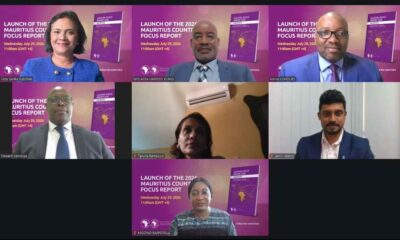
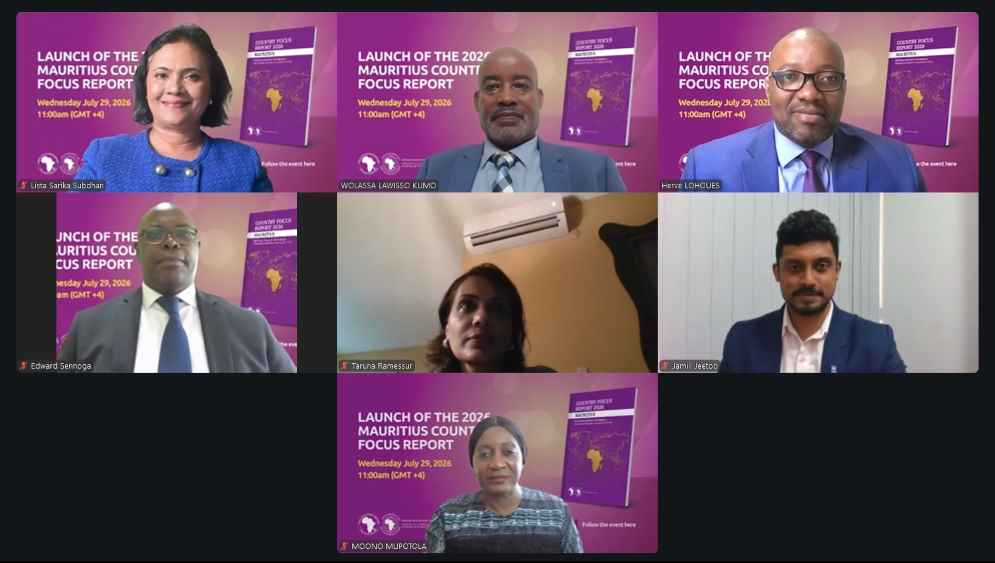
The Mauritius CFR 2026 report (https://apo-opa.co/4woGEqE) was presented by Wolassa Kumo, African Development Bank’s Principal Country Economist for Mauritius. Taruna Ramessur, Consultant and Associate Professor at the University of Mauritius, presented the key findings of the Mauritius Productivity Study.

The virtual launch brought together senior officials from the Ministry of Finance, other government officials, development partners, private sector representatives, civil society, and senior officials from the Bank Group. They offered strategic insights on both reports.

Jamiil Jeetoo, UNDP National Economist for Mauritius and Seychelles, stressed that development finance should be assessed not only by the volume mobilised, but by the productivity and resilience it generates.

Distributed by APO Group on behalf of African Development Bank Group (AfDB).

Continue Reading

Trending