

Events
The 3rd Liangzhu Forum to Open in China’s Hangzhou to Highlight Harmonious Civilization Interplay
Published
12 months agoon
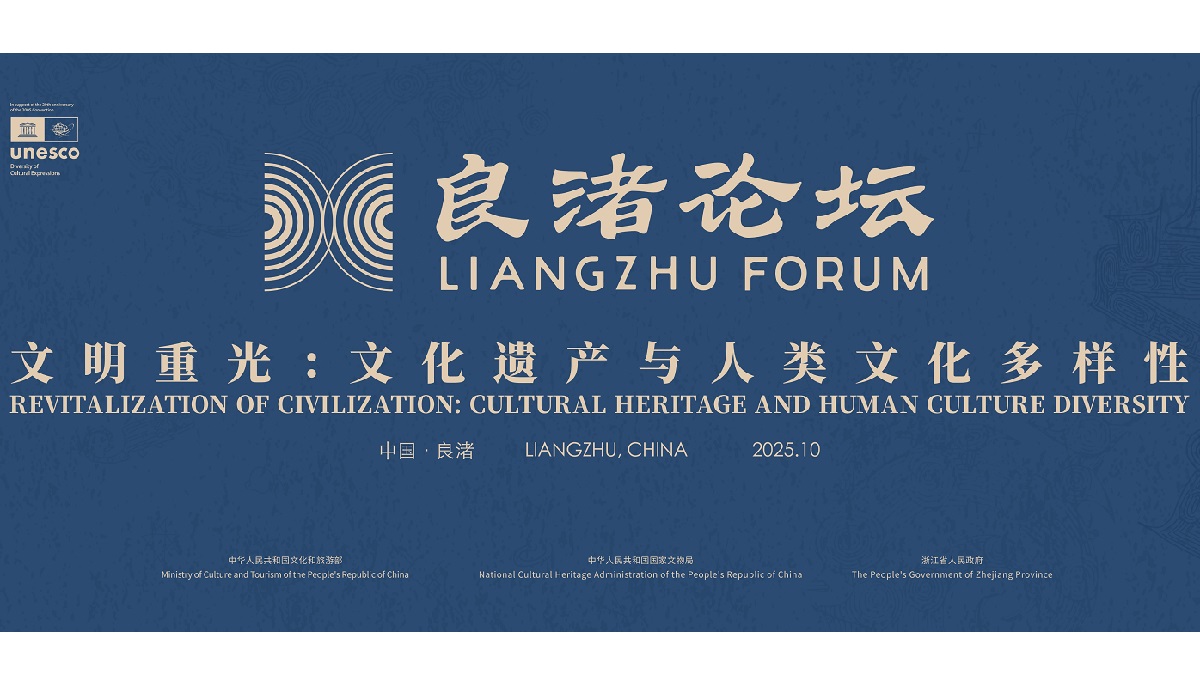
HANGZHOU, CHINA – Media OutReach Newswire – 16 October 2025 – From October 18 to 20, the 3rd Liangzhu Forum will be held in Hangzhou, capital city of east China’s Zhejiang Province, when the profound legacy of the archaeological ruins of Liangzhu will embrace the vibrancy of global civilizations.
Some 400 guests from nearly 60 countries will bring with them fresh research findings on various civilizations and innovative models for preserving diverse cultures, making the forum a profound dialogue on cultural exchange — one that transcends time and celebrates the beauty of shared humanity.
Liangzhu, literally meaning “a beautiful islet amid waters,” lies in the river-interlaced plains of Yuhang District, Hangzhou. The Liangzhu Site stand as a testament to China’s magnificent prehistoric rice-farming civilization over 5,000 years ago.
In 2019, the site earned a well-deserved spot on the World Heritage List. The inaugural Liangzhu Forum, held in 2023, emerged as a high-caliber national event that embodied a global vision, Chinese grandeur, Zhejiang charm, and a focus on exploring civilizations.
Today, Liangzhu’s international network spans 123 countries and regions worldwide, and the forum has evolved into a pivotal platform for advancing global cultural dialogue, facilitating exchanges under the Belt and Road Initiative, and showcasing the richness of Chinese civilization.
This grand cultural gathering, co-hosted by the Ministry of Culture and Tourism, the National Cultural Heritage Administration, and the People’s Government of Zhejiang Province, with support from UNESCO and the World Tourism Organization, is packed with compelling highlights.
The forum’s theme this year — “Revitalization of Civilization: Cultural Heritage and Human Culture Diversity” — has maintained a consistent thread with the previous editions, all advancing a common goal: fostering exchange and mutual learning, moving in step with the times, and illuminating the path ahead.
Human cultural diversity is what makes the world so rich and vibrant, as it allows the world to connect, live in harmony, learn from each other’s strengths, and drive innovation through cultural integration. The focus on discovering the beauty of diversity through dialogue and exploring innovation rooted in heritage is fully reflected in the forum’s sub-forums.
Curious about ancient civilizations? The sub-forum “Cultural Roots: Timeless Wisdom and Contemporary Value of Ancient Civilizations” will draw comparisons between civilizations such as those along the Yellow River and Yangtze River, the Mediterranean, and the Maya.
For those interested in heritage protection practices, the sub-forum “Innovation in Practice: Urban Archaeology, Heritage Site Conservation and Coordinated Urban-Rural Development” will showcase new archaeological discoveries from Liangzhu and Maya settlements.
At “Sustained Legacy: Expansion of Museum Functions and Utilization of Cultural Relics,” the Silk Road International Museum Alliance will welcome new members from Qatar and Tunisia, and release a declaration of the Silk Road International Museum Alliance.
Marking the 40th anniversary of China’s accession to the World Heritage Convention, the sub-forum “Future Vision: World Cultural Heritage and A New Model for Human Advancement” will share insights and practices in world cultural heritage protection and management, alongside an exhibition reviewing China’s innovative efforts over the past four decades.
In Liangzhu, a millennium-old Chinese heritage site converges with the world’s colorful cultures, and tradition is revitalized through advanced technology. The Liangzhu Forum is more than an innovative showcase of the world’s rich and diverse cultures — it is a bridge for deepened mutual learning between civilizations. The 3rd Liangzhu Forum is sure to leave a warm, inspiring cultural mark on the journey toward building a community with a shared future for humanity.
You may like
-


Afreximbank welcomes launch of Africa Credit Rating Agency as an important step in strengthening Africa’s financial architecture
-


Investors Back Platinum Credit Uganda: First Tranche Subscribed Nearly 2.5 Times
-

African Entrepreneurs Win $400,000 in Catalytic Funding to Scale High-Impact Startups
-

Global Youth Powerhouse Summit 2026 Concludes Successfully
-

Afreximbank and East African Business Council (EABC) Expand Digital Trade Access for East African Businesses through Africa Trade Gateway
-


Cautious optimism returns to agency-side strategy as influence with clients grows
Energy
Nigeria Mining Week 2026 sets the agenda for the sector’s next decade
Published
18 hours agoon
October 9, 2026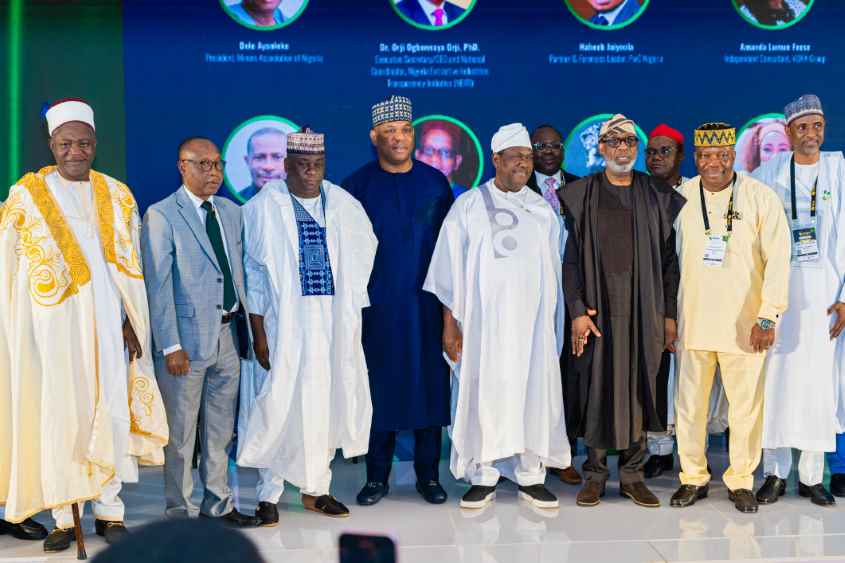
International Lithium Association and Mercuria Energy Trading NG join Nigeria Mining Week 2026 ahead of its opening in Abuja on 12 October
Nigeria has the mineral endowment to play a growing role in global supply chains, including critical minerals
With less than a week to go, Nigeria Mining Week 2026 has added a global commodity trader and the world’s lithium trade association to its programme. Mercuria Energy Trading NG has signed as a Gold Sponsor, and the International Lithium Association (ILiA) has joined as a Supporting Association.
They join Nigeria’s mining leaders, investors and operators in Abuja from 12 to 14 October for three days on the questions that will define the sector’s next decade: who finances Nigerian projects, who buys their output, and how much of it is processed in Nigeria.
Now in its 11th edition, the event takes place at the Abuja Continental Hotel under the theme “Unlocking Investment and Growth through Partnerships”. More than 3,080 attendees and more than 90 sponsors and exhibitors are expected across seven strategic forums.
The decisions made on processing, financing and market access over the next few years will shape Nigerian mining for the decade ahead. Nigeria Mining Week puts the people making those decisions in the same room.
On the agenda
The programme follows six content pillars: exploration and geological data; financing and investment; industrialisation and processing; infrastructure and power; ESG, transparency and community development; and international and regional collaboration.
- 12 October: pre-conference and roundtables on geological data, financing for junior miners, compliance and enforcement, and power and infrastructure.
Available to conference attendees only.
- 13 October: conference and exhibition opening, the new Critical Minerals Forum, the Women in Extractive Industries Forum and technical workshops
- 14 October: Gold Day, sessions on steel and industrial minerals, the Deal Room and further technical workshops
The Deal Room is a curated space for one-on-one meetings between mining projects and financiers, off-takers and strategic partners. Projects seeking offtake or financing can apply to take part.
International Lithium Association joins as Supporting Association
ILiA, the global trade association for the lithium industry, will take part in the Critical Minerals Forum on 13 October. Astrid Karamira, EMEA Representative Director at ILiA, joins the panel “Building Reliable Pathways from Nigeria to Global Battery, Magnet & EV Markets”.
The session looks at what Nigerian projects must do to reach international battery markets: technical and quality standards, traceability and responsible sourcing, export readiness, and the step from exploration success to commercial operation.
“Global buyers are asking more of their suppliers on quality, traceability and responsible sourcing than ever before. Nigeria Mining Week is an opportunity to discuss openly what those expectations mean in practice, and how Nigerian projects can meet them.”
Mercuria Energy Trading NG signs as Gold Sponsor
Mercuria Energy Trading NG is the Nigerian subsidiary of Mercuria, one of the world’s leading independent energy and commodity groups. It brings a buyer and offtaker perspective to the programme.
For many Nigerian projects, a credible buyer is the gap between a promising deposit and a financed mine. Mercuria will contribute to discussions on commodity trading and offtake partnerships, critical minerals supply chains, and infrastructure and logistics.
“Nigeria has the mineral endowment to play a growing role in global supply chains, including critical minerals. We look forward to sharing how trading, offtake and logistics partnerships can help Nigerian projects reach global markets.”
Event details
- Dates: 13 to 14 October 2026
- Venue: Abuja Continental Hotel, Abuja, Nigeria
- Exhibition: 13 and 14 October 2026, with free visitor entry
- Programme and delegate passes: www.NigeriaMiningWeek.com
- Free visitor pass: https://apo-opa.co/4yEkumc
The programme is subject to change.
Distributed by APO Group on behalf of Nigeria Mining Week.
Events
Global Youth Powerhouse Summit 2026 Concludes Successfully
Published
3 days agoon
October 7, 2026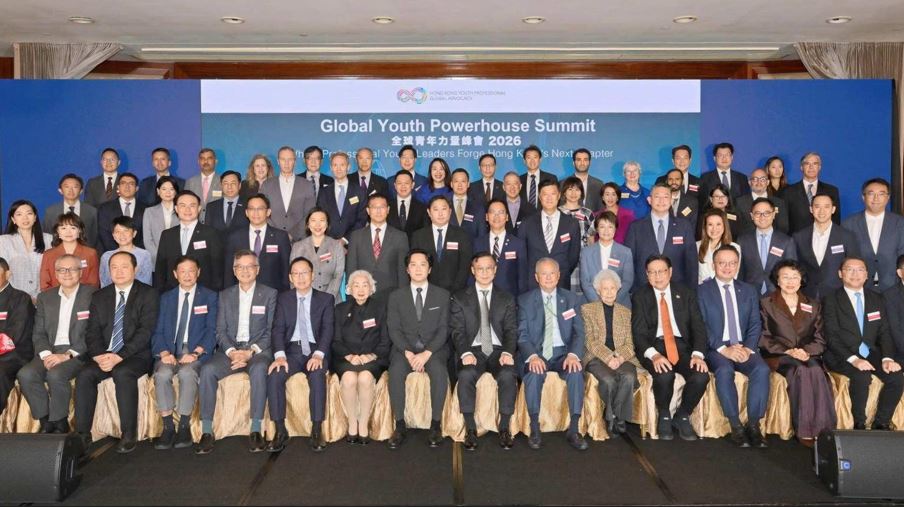
|
US$10 Billion in Venture Capital Convenes to Meet Hong Kong Start-ups; Government, Business and Young Professionals Explore Opportunities in the New Economy |
||||||||||||||||||||||||||||||||||||||||||||||||||||||||||||||||||||||||||||||||||||||||||||||||||||||||||||||||||||||||||||||||||||||||||||||||||||||||||||||||||||||||||||||||||||||||||||||||||||||||||||||||||
| HONG KONG SAR – Media OutReach Newswire – 7 October 2026 – The Global Youth Powerhouse Summit 2026, organised by Hong Kong Youth Professional Global Advocacy, was held on 5 October at the Conrad Hong Kong. Now in its third edition, the Summit coincides with the release of the Hong Kong Special Administrative Region’s First Five-Year Plan for Economic and Social Development (2026–2030) and the latest Policy Address, which together set a clear blueprint for the city’s future. Anchored on these core themes and conducted entirely in English, the full-day programme focused on artificial intelligence, geopolitics, Hong Kong as an education hub, capital markets, life and health technology, and start-up financing. Government and business leaders, corporate representatives and young professionals were invited to examine Hong Kong’s strategic opportunities in the new economic landscape.
The Summit aims to connect young professionals with international resources, enabling participants to engage directly with industry leaders, grasp developments at the frontier of industry, and look ahead to the opportunities and challenges arising from artificial intelligence and Greater Bay Area integration. Previous editions have drawn a strong response. Across three editions, the Summit has attracted more than thousands of in-person participants and about 17,000 online participants from over 30 countries and regions, with social media reach exceeding 50 million. This year’s Summit was the largest yet, bringing together more than 600 young professionals, government and business leaders and corporate representatives. Participants from over 60 countries and regions joined online. More than 30 distinguished speakers and moderators were invited, including officials of the Hong Kong Special Administrative Region Government and representatives of leading local and international organisations such as Huawei, the Alibaba Hong Kong Entrepreneurs Fund, Hong Kong Exchanges and Clearing Limited, Bullish and Endowus. In addition, consular representatives from up to 20 countries attended the Summit. The Chief Executive of the Hong Kong Special Administrative Region, Mr John Lee, GBM, SBS, PDSM, PMSM, delivered a pre-recorded video speech, encouraging young professionals to seize the opportunities of the times and inject fresh momentum into Hong Kong’s high-quality development. He said: “For our young people, I firmly believe that your opportunities ahead outweigh the difficulties. The HKSAR Government will join hands with all sectors to build platforms for you to thrive in Hong Kong, in our country, and in the global arena.” The Deputy Secretary for Justice of the Hong Kong Special Administrative Region, Dr Cheung Kwok-kwan, SBS, JP, delivered an opening keynote entitled “Opportunities for the Professional Development of Young People”, and stressed: “As the saying goes, ‘Change is the only constant’—or as our Cantopop classic famously put it, ‘變幻原是永恆’. Today, we no longer measure change in years or decades, but in months and days. For our young professionals, this fast-paced era unlocks unprecedented career horizons. By accelerating Greater Bay Area integration through our new GBA Task Force and empowering you to act as the ultimate ‘super-connectors’ and ‘super value-adders’ helping Mainland enterprises go global, we are turning rapid change into your greatest professional advantage.” Dr Kevin Lau, MH, Founding Convenor of Hong Kong Youth Professional Global Advocacy, said: “This is more than a high-level forum. It marks a milestone in the maturing of our network of young professionals. This afternoon, venture funds managing an estimated US$10 billion in assets gathered in the room — and what they are looking at is Hong Kong’s next generation. In life and health technology, our core belief is clear: artificial intelligence can assist imaging and diagnosis, but a physician’s care, and the warmth of a human hand, can never be replaced by technology.” Other distinguished guests included Mr Kevin Choi, JP, Permanent Secretary for Innovation, Technology and Industry; Professor Frederick Ma, GBS, JP, Chairman of the Hong Kong Trade Development Council; Ms Bonnie Y Chan, JP, Chief Executive Officer of Hong Kong Exchanges and Clearing Limited; and Mr James Chau, President of the China-United States Exchange Foundation and World Health Organization Goodwill Ambassador for Sustainable Development Goals. Mr Bryan Che, Chief Strategy Officer of Huawei, and Ms Cindy Chow, Executive Director and Chief Executive Officer of the Alibaba Hong Kong Entrepreneurs Fund, also attended in person to exchange views with young professionals. Panel discussions
Artificial intelligence: from first-time users to advanced users Mr Kevin Choi, JP mentioned: “Every major technology shift brings uncertainty. Our theme today from entry-level shock to AI-powered users building the next talent leader.” Ms Stephaine Chan said: “Every AI conversation ends in the same place, right? More investment, better people, better models and stronger policy.” Ms Ilaria Chan said: “These days, Al is so powerful that they can scan the Internet and social media and find vulnerable young people or old people. They can find it instantly and have a very sophisticated way to trick them and fraud them from scamming.” Mr Bryan Che: “One of the opportunities of Al is because the interface is much more natural for most people to interact with. On one sense, it’s a lot easier for everyone to get started.” Ms Cindy Chow said: “So I guess some of the most damaging thing is not allowing people to use or not, you know, really have the attitude to embrace all this new technology, what this new technology has to bring to you.” Geopolitics: the super-connector Mr James Chau said: “Against this backdrop, we often hear Hong Kong described as a super connector, typically framed in terms of trade volumes, capital markets and logistics but I think that these connections that we’re speaking of really only become very valuable and we understand and recognize the human bonds that pin these together.” Professor Frederick Ma , GBS, JP said: “We are part of China. And yet we are under one country 2 systems connected to the rest of the world. That is the power of Hong Kong.” Ms Ellana Lee said: “We made a very strategic decision when the times were tough to stay and remain in Hong Kong. I think that has and you know, we make these decisions not just out of a whim, but we are very calculative on why we need to stay. I have 8 cities across Asia Pacific. Hong Kong happens to be the hub for Asia Pacific. And there’s it boils down to four major reasons.” Ms IIaria Chan: “Simple of how tech is helping people, there is an organization, WHO care for children that was founded 20 years ago that helps orphans in developing China back then Vietnam, Thailand now in Africa, Middle East to find loving permanent homes. But their bottleneck is how they train social workers and governments on how to take care of orphan welfare. Now this year we’ve actually been launching an online product that is able to scale these bottlenecks, especially in areas that are underfunded. This is a great example of Al tech.” Education: Hong Kong as Asia’s education hub Mrs Jennifer Yu Cheng, JP said: “An education hub is more than a place with excellent institutions. It is a place that students and families choose, where young people flourish, and connects education with research, innovation, careers and a wider community.” Professor Charles Ng said: “With our national policy. And I think we should do better to support this great initiatives and thinking back actually 2023 and home government already in in the government policy in October, if I remember correctly to start to increase the local student quota from 20% to 40%.” Ms Jennifer Ma said: “As a consultant we need demand to meet supply and we are definitely seeing the demand for Hong Kong education at K12 level…….The advocacy for Hong Kong to be the gateway for China Resources and talents to leave China and go into international arenas. But at the same time, we also see a lot of international people interested in what’s happening in mainland, and therefore Hong Kong is a great gateway. So, with that global education, global education philosophy, that means they really appreciate Hong Kong trilingual education by cultural mindset.” Mr Dion CHEN, MH mentioned: “In 2026, a lot of DSS schools will work very hard to try to welcome and also promote welcome to Hong Kong and also promote Hong Kong’s education to the students in different countries.” Ms Maggie Chau said: “Maggie: I can see that all the universities are actually implementing AI in their curriculum. Talking about teacher education, the programs we offer, I mean, not just The Education University of Hong Kong, the programs we offer in all universities implement Al in the curriculum in a way that we draw attention to the use of Al is it has to be ethical.” Capital markets: AI listings, asset tokenisation and the new economy Ms Clara CHAN Ka Chai said: “We always say that from zero to 1 is the most challenging part. So, the patients in terms of having staying power is the core, but it has to go in hand with other qualities like being proactive, being professional.” Mr Michael Lau said: “I think it’s an interesting proposition to consider that these types of companies that are so capital. I would start looking beyond the current horizon of where we are to see where it could go next. And so I do think that there is a demand looking to that future where this idea of a tokenized capital market could be quite interesting.” Mr Samuel RHEE mentioned: “First of all, maybe we just take a step back and just try to understand all of the capital markets, not just equities.” Ms Bonnie Y Chan, JP said: “I want to point out one thing. I mean, we are operating a stock exchange and I think capital markets at the end of the day, the basic function is to match capital with opportunity. So what I’m very focused on is that I’m not just focused on technology or AI.” Ms Emily CHAN Tan said: “We are not just witnessing a cyclical recovery, but also some would call this the threshold of a capital markets renaissance.” Life and health technology: building a health-industry hub Professor Lo Yuk-lam, BBS said: “Building HK’s holistic wellness hub, this year marks a defining moment for HK. With the release of our first ever five year plan and their chief executive policy address just a few weeks ago, our city’s road map for healthcare and biotechnology knowledge has never been clearer or more ambitious.” Professor Anthony Wu Ting-yuk, GBS, JP said: “Every country every city is trying to recruit more talent and I think Hong Kong is an ideal position to attract talents.” Professor LI King-Chuen said: “Our education system will be individualized. And we will do the factual knowledge transfer through mostly self-directed learning. So we guide them, we build an AI system with prescribed information.” Dr Sarah SALVILLA said: “Prevention for sure in terms of how do we educate people to be much more proactive in their everyday lives, yes you know, kind of the lifestyle things.” Start-up pitching: connecting with capital Ms Elaine Yu said: “We have 15 startups and I think a group of students as well, very precocious students WHO are already thinking of ideas, real businesses with commercial viability at the cutting edge of science, research, healthcare and so forth. So, this should be a fun dynamic session.” Mr LU Chin Yung pointed out: “Hong Kong is great in a lot of rankings in the world and this is not given, this is hard earned by your parents, by some of you sitting here. But as a young founder in Hong Kong, if you come to Hong Kong, you get to enjoy all this very safe environment. You have efficiency and then you also have a very clean government. This one I can say for sure. Yeah. And and all this, it helps the the founders to focus on your business, focus on grow, growing instead of you have to deal with many, many things.” The Summit closed amid lively exchange. Hong Kong Youth Professional Global Advocacy said it will continue to build the Summit into a platform for dialogue between young professionals and leading figures in government and business, helping Hong Kong’s young talent seize the opportunities of the new economy. Photos and video: Selected materials can be downloaded here: https://drive.google.com/drive/folders/1XowvT4PLTkLo-Vx6k8UJ_YyuM0O0wSlQ?usp=sharing . Annex 1: Participating venture funds (in no particular order)
Hong Kong Youth Professional Global Advocacy |
Events
HKCEC Hosted 25 New Exhibitions and Conferences, Successfully Hosts Multiple Hong Kong and Asian Debuts Set to Return Next Year
Published
3 days agoon
October 7, 2026
Totals 786 Events in FY 2025–2026; Reinforcing Hong Kong’s Position as the “International Convention and Exhibition Hub”
HONG KONG SAR – Media OutReach Newswire – 6 October 2026 – The Hong Kong Convention and Exhibition Centre (“HKCEC”) has reaffirmed its standing as the venue of choice for leading global and Chinese Mainland organisers. Throughout the financial year 2025–2026 (July 2025 to June 2026), the HKCEC hosted 786 events, including 128 exhibitions, 81 international and local conferences, and hundreds of corporate meetings, banquets and entertainment events. This year was highlighted by 25 new conferences and exhibitions, including several Hong Kong and Asian debuts, drawing an impressive total attendance of over 7.7 million.
Ms Monica Lee-Müller, Managing Director of Hong Kong Convention and Exhibition Centre (Management) Limited (“HML”), commented, “Leveraging Hong Kong’s unique advantage as a gateway between Chinese Mainland and the rest of the world, HML has exemplified Hong Kong’s role as a ‘Super Connector’ and ‘Super Value-Adder’ by strategically aligning our business development focus on four key sectors—Medical, Innovation and Technology, Finance, and Education, and secured some landmark debuts. We are thrilled that these inaugural events were met with resounding success and have already confirmed their return to the HKCEC next year. Looking forward, we will continue to provide a world-class platform that empowers Mainland enterprises to go global while attracting international investment, creating a powerful engine for Hong Kong’s long-term economic growth.”
Several landmark events made their debuts at the HKCEC during the year. Notably, the inaugural Hong Kong Comic Con 2026 demonstrated the immense appeal of launching major international IPs in the city, achieving unprecedented success, generating substantial economic value and business opportunities. Following this resounding debut, the organisers have confirmed that the event will return to the HKCEC in 2027.
Highlighting Hong Kong’s position as an international health and medical innovation hub, multiple international medical conferences were held in the city and at the HKCEC for the first time this year. Among them, the 9th World Congress of Pediatric Cardiology & Cardiac Surgery brought together leading experts and more than 3,000 global participants, underscoring Hong Kong’s professional standing in medical. Additionally, the HKCEC welcomed the 15th China Chest Pain Centers Congress, marking the first time ever this national medical association convention has been held in Hong Kong. The HKCEC serves as a two-way platform to showcase national healthcare standards and support Mainland enterprises in their global expansion.
These milestones further demonstrate Hong Kong’s vital role as a regional hub connecting Chinese Mainland and the world, while continuing to reinforce city’s leading position in the medical sector.
In addition, Asia’s flagship events have reaffirmed Hong Kong as their long-term host city, confirming their return to the HKCEC in 2027. Art Basel Hong Kong, which has been held annually at the HKCEC since 2013, has reached an agreement with the Culture, Sports and Tourism Bureau to designate Hong Kong as the sole Asian venue over the next four years. Meanwhile, Vinexpo Asia—one of the region’s premier wine and spirits trade events since 1998—is ending its rotation with Singapore. Organiser Vinexposium announced that Vinexpo Asia will officially make Hong Kong its home starting in 2027.
Looking ahead, HML will continue to actively secure prestigious exhibitions and conferences, generating high-value business and international exchange opportunities for Hong Kong. Recent additions include the inaugural LEAP East—the Asian edition of the Middle East’s flagship tech fair in July, the inaugural Global Unicorn Summit in August, and the World Cancer Congress 2026 in September. Later this year, the HKCEC will also host the city’s premier art toy exhibition—Amazing Toy Show Hong Kong 2026 for the first time in December.
By continuously introducing high-profile global events, HML will enrich Hong Kong’s vibrant events landscape and further cement its status as a leading convention and exhibition hub.
About the Hong Kong Convention and Exhibition Centre
This award–winning 306,000–sqm building, first opened in 1988, offers 91,500 sqm of rentable space. An iconic Hong Kong landmark, the Hong Kong Convention and Exhibition Centre (‘HKCEC’) is located on a prime waterfront site in the central business district of Hong Kong. It is owned by the Hong Kong SAR Government and the Hong Kong Trade Development Council.
About Hong Kong Convention and Exhibition Centre (Management) Limited
Hong Kong Convention and Exhibition Centre (Management) Limited (‘HML’) is a professional private management and operating company responsible for providing day–to–day management for the HKCEC, where it oversees administration, marketing, booking, scheduling, event co–ordination, maintenance and security. It also manages food and beverage operations at the HKCEC, including restaurants and catering services. HML provides world–class services for users, visitors and guests of the HKCEC, a venue which has been consistently awarded the title of ‘Best Convention and Exhibition Centre in Asia’ by leading industry professionals. Events at the HKCEC, including exhibitions, conferences, corporate meetings, entertainment events, seminars and banquets, contribute significant economic benefits to the city and help raise the international image of Hong Kong.
HML is a member of CTF Services Limited. Listed on The Stock Exchange of Hong Kong Limited, CTF Services Limited (Hong Kong Stock Code: 659) is a conglomerate with a diversified portfolio of market-leading businesses, predominantly in Hong Kong and Chinese Mainland. The Group’s businesses include financial services, toll roads, logistics, construction, and facilities management. Through the Group’s sustainable business model, it is committed to creating more value for all stakeholders and the community.
Trending
-
 Business5 days ago
Huawei and Qualcomm Announce Broad Patent License Agreement
-
Business4 days ago
Cautious optimism returns to agency-side strategy as influence with clients grows
-

 Energy5 days ago
Malawi, Kenya, Eswatini Bring State Ambitions to African Mining Week (AMW) 2026’s National Mining Companies Forum
-

 Business5 days ago
African Energy Chamber (AEC), Ground State Market Solutions Sign Memorandum of Understanding (MoU) to Advance Canadian LNG, LPG Supply to Africa
-
Business5 days ago
Liberia Petroleum Regulatory Authority (LPRA) to Showcase Liberia’s 2026 Offshore Licensing Round in Cape Town
-
Business4 days ago
Africa’s Biggest Energy Movement Returns to Cape Town Next Week
-
 Events4 days ago
“Future Resonance — ShanghaiEye Night” Brings Shanghai to Washington, Fosters People-to-People Exchange Across the Pacific
-
Energy4 days ago
Kosmos Energy Chief Executive Officer (CEO) Andrew Inglis to Receive Mohammed S. Barkindo Lifetime Achievement Award at African Energy Week (AEW) 2026