Connect with us
Anglostratits

Business

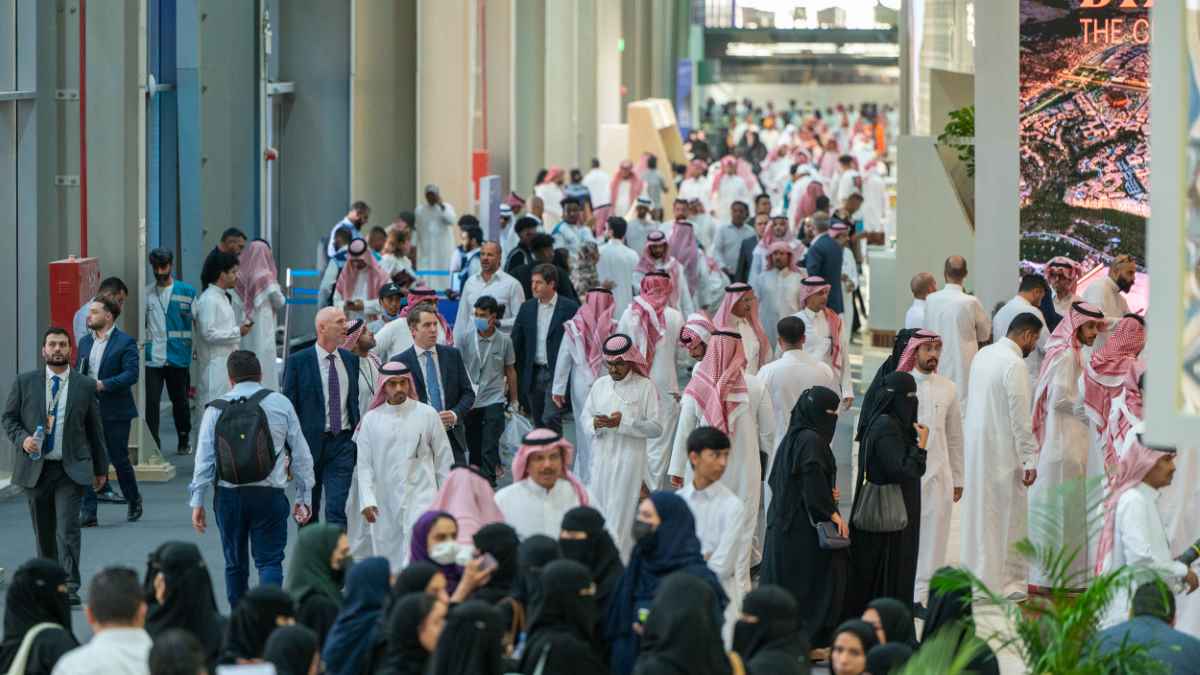
Tahaluf Launches CPHI Middle East As Region’s Premier Pharma Event

Published

on

Set to take place at the Riyadh Front Exhibition & Convention Center from December 10-12, 2024, this landmark event has garnered the support of the Saudi Ministry of Health and is held in partnership with the Events Investment Fund

RIYADH, Kingdom of Saudi Arabia, September 20, 2024/APO Group/ — 

Saudi Ministry of Health supports December launch event in Riyadh; Event to highlight Saudi Arabia’s ambitious pharma goals, with over 400 exhibitors and more than 30,000 visitors anticipated; Industry trends, challenges & opportunities to be explored across four stages 

Tahaluf, Saudi Arabia’s fastest-growing business event organiser, has launched the latest in its vertical industry shows – CPHI Middle East, the region’s premier pharmaceutical event – marking a significant milestone for the Middle East’s rapidly expanding pharma sector. 

Set to take place at the Riyadh Front Exhibition & Convention Center from December 10-12, 2024, this landmark event has garnered the support of the Saudi Ministry of Health and is held in partnership with the Events Investment Fund.  

The event comes as Saudi Arabia emerges as a global leader in biotechnology, with an ambitious plan to achieve self-sufficiency in vaccine production, biomanufacturing, and genomics. Further, the country’s pharmaceutical market, the largest in the Middle East, is expected to reach US$11.5 billion by 2032, exhibiting a compound annual growth rate of 2.52 per cent, according to market researcher IMARC Group. 

The MENA region, which is the world’s fifth largest pharma market, makes Saudi Arabia an important international meeting hub for the pharmaceutical community

Mohaned El Mahgoub, Group Director, at Tahaluf said, “The MENA region, which is the world’s fifth largest pharma market, makes Saudi Arabia an important international meeting hub for the pharmaceutical community. It is a hugely attractive region for multinational pharma companies, with projected double digit annual market growth until 2032. CPHI Middle East & Africa will be where the future of pharma unites to forge long-lasting partnerships that stretch across the Middle East, Africa and around the world.” 

Healthcare and life sciences are among Saudi Arabia’s most significant sectors and key focuses of Saudi Vision 2030. Of the US$333bn 2024 budget allocation, healthcare and social development expenditures account for roughly US$57bn, the third-largest segment after general and military spending. 

Adam Andersen, Executive Vice President, Pharma, at Informa Markets said, “Our venture into the Middle East is a significant milestone as we celebrate 35 years of CPHI this year. Given Saudi Arabia’s strategic location, coupled with an increasing demand for high-quality healthcare products, we’re confident CPHI Middle East will deliver exceptional value to our stakeholders, exhibitors and attendees as we bring the heart of pharma to  the Kingdom. This inaugural event also aligns with a key goal of Saudi Vision 2030 to double domestic manufacturing from 20 per cent to 40 per cent. With several international pharmaceutical companies have already committed to setting up operations in Saudi Arabia and CPHI Middle East will build on that by drawing a number of key international brands eager to explore Saudi Arabia as a potential regional hub.” 

Tahaluf expects the event to spread across 30,000 sqm of exhibition space, attract 30,000 visitors, over 400 exhibitors, and more than 100 participating countries, and points to strong early-day support. Major regional industry names are among early sponsors and exhibitor signings, including Sudair Pharma, Tabuk Pharmaceuticals, Hikma Pharmaceutical, Pioneer Company for Pharmaceutical Industries, SPIMACO and Julphar, EIPICO. Dallah Pharma, MS Pharma, Dr Reddy’s Laboratories, Zeta Pharma, and Dietrich Engineering Consultants.  

Designed as an experiential event, CPHI Middle East will feature four dedicated stages – The Future, Innovation, Next-Gen Bio and Discovery – where experts will help delegates examine the latest industry trends, challenges and opportunities. A headline speaker platform is already taking shape with global industry leaders signing up to address the gatherings including Anil Kane, Executive Director, Global Head of Technical & Scientific Affairs, Thermo Fisher Scientific; Zakiya Al-Kurdi, Public Policy and Regulatory Affairs, US Pharmacopeia; Claudia Palme, Senior Executive Advisor Strategy& Middle East, PwC; Faisal Bin Dail, Chairman, National Committee for Pharmaceutical Industries and Baxter; Musaed Al Kholief Saudi, Commissioner, Health Specialities Strategy Advisor Secretariat General; Bikash Chatterjee, President and Chief Science Officer, Pharmatech Associates, A USP Company as well as Hala Audi, CEO, Unizima. 

CPHI Middle East is the latest in a raft of new vertical events to be launched in Saudi Arabia by Tahaluf – the strategic collaborative venture between Informa PLC, the Saudi Federation for Cybersecurity, Programming, and Drones (SAFCSP) and the Events Investment Fund. The launch of CPHI is part of Tahaluf’s major expansion strategy – the biggest single events expansion in Saudi Arabia’s history – in which the company is introducing over 20 new B2B and B2C titles into the Kingdom by the end of 2025, bringing more than US$1 billion in economic impact to Riyadh. 

Distributed by APO Group on behalf of CPHI Middle East.

Events

China’s digital hub Hangzhou hosts conference on AI, OPC

Published

on

OPC

HANGZHOU, CHINA – Media OutReach Newswire – 30 June 2026 – The inaugural AI+OPC Innovation and Development Conference was held from June 29 to 30 in Shangcheng District, Hangzhou, capital city of east China’s Zhejiang Province. Centered on one-person company (OPC), a new form of smart economy in the AI era, the conference program comprised one opening ceremony and two parallel breakout sessions.

It gathered around 400 delegates from government departments, industry associations, financial institutions, AI enterprises and OPC startup operators across the country. Participants exchanged insights on AI innovation pathways and cross-industry integration strategies, injecting strong impetus into Hangzhou’s ambition to develop a national benchmark hub for AI+OPC entrepreneurship.

A series of key launches and milestone ceremonies took place during the opening segment. Official releases included the 2026 national OPC development observation report, Hangzhou’s 2026–2028 action plan and supporting policies to build a national AI+OPC entrepreneurship hub, and a catalog of actionable AI+OPC application scenarios. Attendees also received an in-depth interpretation of the specifications for AI-enabled OPC community services and evaluation.

The ceremony featured multiple landmark initiatives: plaque awarding for Hangzhou’s priority AI+OPC incubation communities and dedicated observation sites, the official launch of the AI+OPC Community Alliance initiative, and a kickoff marking the official construction of the national AI+OPC entrepreneurship hub.

The open forum session featured keynote speeches from distinguished industry and academic leaders. Speakers included Pan Yunhe, former executive vice president of the Chinese Academy of Engineering and professor at Zhejiang University; Liang Gui, former executive vice governor of Jiangxi Province and ex-director of the Torch High Technology Industry Development Center under the Ministry of Industry and Information Technology; and Zou Ling, head of Hong Hub, Shangcheng District’s single-member unicorn startup acceleration community, who shared cutting-edge insights from varied perspectives.

A panel dialogue followed, bringing together representatives from Moshu OPC Community (Beijing E-Town), the School of Future Science and Engineering at Soochow University, Qingju Hub · Future Digital Intelligence Port (Shangcheng District), and Puhua Capital for in-depth industry exchanges.

Complementary concurrent events held throughout the conference included an OPC capital-industry matchmaking salon, a symposium on industry-education integration for AI-powered OPC sectors, and a national exchange forum for AI+OPC community practitioners.

OPC has emerged as a vibrant new engine driving economic vitality and underpinning high-quality development. Against the backdrop of a new development era, the inaugural Hangzhou AI+OPC Innovation and Development Conference unites OPC innovators nationwide.

Drawing on the creative energy of millions of independent super-individual operators, the event delivers sustained digital momentum to fuel Hangzhou’s super-individual economy, while rolling out replicable local practices and actionable Hangzhou solutions to advance high-quality growth of smart economies nationwide.


Continue Reading

Business

Hainan FTP marks 6-month milestone of special customs operations, signs deals during Hong Kong visit

Published

on

Hong Kong

HONG KONG SAR – Media OutReach Newswire – 29 June 2026 – As the Hainan Free Trade Port (FTP) marked the six-month milestone since the launch of its full special customs operations, a Hainan provincial delegation wrapped up a three-day visit to Hong Kong. During the visit, the delegation signed deepened cooperation agreements with several major local chambers of commerce and promoted the latest policies introduced since the island-wide special customs operations took effect.

According to data released by Hainan Province during the visit, Hainan’s foreign trade has surged since the launch of special customs operations. As of June 17, the province’s total goods imports and exports reached RMB 173.98 billion (approximately US$24 billion), up 54.6% year on year. Imports of zero-tariff goods hit RMB 2.645 billion, a 120% jump that generated tariff savings of RMB 440 million. A total of 172,100 new market entities were registered—a 61% increase—including 1,240 foreign-invested enterprises. Zero-tariff items now account for 74% of all tariff lines, benefiting more than 12,000 market entities.

During the Hong Kong visit, China Council for the Promotion of International Trade Hainan Provincial Committee (CCPIT Hainan) signed separate deepened cooperation MOUs with the Chinese General Chamber of Commerce, Hong Kong and the Hong Kong General Chamber of Commerce. Under the MOUs, the parties will establish a regular liaison mechanism for the periodic exchange of economic and trade information, and will promote collaboration in areas including professional services, green finance, the digital economy, supply chain management, and cultural tourism. Mutual enterprise service desks will be set up to provide consulting services regarding policies and projects. The parties will leverage their complementary strengths to help Chinese mainland enterprises access overseas markets via Hong Kong, while facilitating Hong Kong companies’ entry into the Chinese mainland through Hainan.

The delegation also held talks with the British Chamber of Commerce in Hong Kong and the American Chamber of Commerce in Hong Kong, exploring ways for British and American businesses to leverage Hainan’s value-added processing tariff exemptions and multifunctional free trade accounts to position themselves in regional supply chains and cross-border investment and financing. HSBC, De Beers, and other British firms are already active in Hainan, and the UK served as the Guest of Honor country at the 2025 China International Consumer Products Expo.

According to industry analysts, amid the shifting international trade landscape, Hainan is leveraging Hong Kong’s “super-connector” role to accelerate its integration with global capital and business networks, while simultaneously offering the Hong Kong business community a policy testing ground for entering the Chinese mainland market.

Continue Reading

Business

Africa’s Grid Constraints Come into Focus as Regional Markets Push Toward Integration

Published

on

Africa

Regional power pools are advancing and renewable pipelines are growing, but the regulatory and financial architecture needed to connect them remains the continent’s most critical infrastructure gap – an issue central to the Power Africa Today conference at AEW 2026

CAPE TOWN, South Africa, June 25, 2026/APO Group/ –Africa’s electricity demand is projected to nearly double to 2,291 TWh by 2050, requiring an estimated $30 billion in transmission and grid infrastructure investment to unlock and integrate new generation capacity. Yet across the continent, grid systems are struggling to keep pace with rapidly expanding supply pipelines and rising demand.

In Nigeria, repeated nationwide grid collapses as recently as February 2026 underscore the fragility of aging transmission infrastructure. In East Africa, tower failures along the 428 km Loiyangalani-Suswa line temporarily stranded output from Lake Turkana Wind Power – Africa’s largest wind installation. Meanwhile, demand growth pressures are accelerating across North Africa, where electricity consumption is expected to rise by around 50% by 2035, driven by urbanization, desalination projects, and climate-related temperature increases.

Despite these constraints, generation investment continues to accelerate across Africa, particularly in renewables, gas-to-power and hybrid systems. However, without equivalent investment in transmission and interconnection, much of this new capacity risks being underutilized or stranded. This growing imbalance between generation and grid capacity is driving a sharper focus on system-wide planning and regional market design – issues that will be central to the newly launched Power Africa Today conference at African Energy Week 2026. The platform will bring together policymakers, utilities, investors and developers to explore how regional interconnection, cross-border trading frameworks and financing structures can better align generation growth with grid expansion.

Power Markets Experiment with Reform

Alongside infrastructure challenges, Africa’s electricity sector is undergoing gradual – but uneven – market reform. Most countries still operate vertically integrated systems dominated by state utilities, but a growing number are introducing competitive frameworks to attract private capital and improve efficiency.

Zimbabwe opened its electricity market to full private participation across generation, transmission and distribution in 2025, targeting $9 billion in new investment. South Africa is advancing one of the continent’s most ambitious grid expansion programs, with plans for 14,500 km of new transmission lines and 133,000 MVA of transformer capacity by 2034, alongside mechanisms designed to crowd in private financing. Kenya, meanwhile, has introduced open access regulations enabling independent power producers to wheel electricity directly to multiple off-takers, reshaping how generation assets interface with the grid.

Interconnected electricity markets are the foundation of Africa’s industrial future

Regional Integration Remains Fragmented

Efforts to connect Africa’s fragmented power systems are progressing, though at different speeds across regions. In Southern Africa, the World Bank’s RETRADE SAPP program, approved in 2025, is deploying $12 million to strengthen renewable integration and transmission capacity across 12 member states. In East Africa, the Ethiopia–Kenya–Tanzania Electricity Highway is now in trial operations at up to 2,000 MW, marking a significant step toward a more interconnected regional grid.

West Africa is also moving toward deeper integration, with permanent synchronization of the West Africa Power Pool expected in 2026. Analysts, including the African Finance Corporation, argue that such synchronization is critical to unlocking large-scale hydropower potential and industrial demand across the region. Longer term, full synchronization between the Eastern and Southern African power pools – targeted for the end of 2026 – could create one of the world’s largest cross-border electricity trading corridors.

Building Bankable Financial Architectures

While interconnection is advancing, infrastructure alone is not enough to create investable electricity markets. Investors consistently cite the lack of standardized offtake structures, creditworthy counterparties, and cross-border payment guarantees as key barriers to scaling capital deployment.

New models are emerging to address these constraints. Africa GreenCo, operating across Zambia, Namibia and South Africa, is helping to aggregate independent power producers under a single creditworthy intermediary, standardizing power purchase agreements and reducing counterparty risk. At a broader level, AUDA-NEPAD estimates that Africa requires around $30 billion in additional investment to complete priority transmission corridors and establish three fully interconnected regional trading blocs by 2030.

“Interconnected electricity markets are the foundation of Africa’s industrial future,” said NJ Ayuk, Executive Chairman of the African Energy Chamber. “The question at Africa Energy Week is not whether integration is possible – the evidence is already there. The question is which regulatory frameworks and financial structures will get projects to financial close, and which markets will be ready when capital is looking to move.”

The Power Africa Today conference will run alongside AEW 2026, taking place October 12–16 in Cape Town, and will focus on the regulatory, financial and infrastructural architecture needed to build interconnected electricity markets capable of attracting institutional capital and delivering reliable, cross-border power at scale.

Distributed by APO Group on behalf of African Energy Chamber.

Continue Reading

Trending