Net revenues grew 6% y-o-y to €189.5 billion, Net profit rose 11% to €18.6 billion, and Industrial free cash flows increased 19% y-o-y to €12.9 billion
Today’s record financial results are proof that we have become a new global leader in our industry and will remain rock solid as we look to a turbulent 2024
AMSTERDAM, Netherlands, February 20, 2024/APO Group/ —
Net revenues of €189.5 billion, up 6% compared to 2022, with consolidated shipment volumes increasing 7%; Net profit grew 11% to €18.6 billion. Adjusted operating income (1)rose 1% to €24.3 billion, with AOI margin of 12.8%; Industrial free cash flows (2) of €12.9 billion, an increase of 19% compared to 2022; Strong balance sheet, with Industrial available liquidity at €61.1 billion; LEV sales up 27% in 2023, with PHEVs at #1 in U.S. and #2 for LEVs in U.S. (3); 21% increase in global BEV sales in 2023; Returned €6.6 billion in cash to shareholders in 2023 through dividends and share buybacks, an increase of 53% compared to €4.3 billion in 2022; Dividend proposed of €1.55 per common share, increase of approximately 16% compared to prior year, pending shareholder approval; Announcing 2024 open market share buyback program of €3.0 billion.
“As we just passed the three-year mark since Stellantis’ inception, I warmly thank our teams who are executing at the highest levels and contributing greatly to our growth story, even in the strongest of headwinds. Today’s record financial results are proof that we have become a new global leader in our industry and will remain rock solid as we look to a turbulent 2024. Thanks to our flexible technology and product roadmap, we are prepared to address the various scenarios that could arise and to continue delivering on our Dare Forward 2030 targets.” Carlos Tavares, CEO
All reported data is unaudited. Reference should be made to the section “Safe Harbor Statement” included elsewhere within this document.
Stellantis N.V. reported record full year 2023 results. Net revenues grew 6% y-o-y to €189.5 billion, Net profit rose 11% to €18.6 billion, and Industrial free cash flows increased 19% y-o-y to €12.9 billion. Global BEV sales are up 21% y-o-y and LEV sales up are 27% y-o-y, with PHEVs in the U.S. at #1 (3) and #2 for LEVs in the U.S. (3) Results are in line with Dare Forward 2030 objectives and are supported by the following concrete actions:
CARE: Stellantis remains on track to achieve its carbon net zero emission target by 2038 (4). Stellantis reduced its scope 1 and 2 absolute emissions tCO2 by 20% in 2023 vs Baseline 2021. A constant focus on the customer led to a reduction of vehicle defect rates three months after customer delivery by more than 40%, as compared to 2021. Embracing a circular consumption model, the Company opened its first Circular Economy Hub in Italy, creating a center of excellence aimed at industrializing the recovery and sustainable reuse of materials, and the business realized 18% year-over-year sales growth. The Company launched an employee share purchase plan – Shares to Win – in Italy and France and will extend it to other countries during 2024. As well, more than 600 collective agreements were signed covering approximately 90% of employee across the world. The Stellantis Student Awards celebrated more than 600 family members of employees for dedication to continuous learning and education, and the Stellantis Foundation partnered with CERN to inaugurate the Science Gateway in Geneva, its new outreach center for science education.
TECH: To support overall market growth and the electrification push in North America, 18 additional BEVs will be launched in 2024, reaching a total of 48 models by end of 2024. The all-new Citroën ë-C3 starts at €23,300 and is the most competitively priced B-segment EV produced in Europe and the Jeep® Avenger, which was awarded European Car of the Year 2023, continues to earn top honors. Stellantis launched the first of four all-new BEV-centric platforms, STLA Medium, on the Peugeot E-3008 with best-in-class range of up to 700 kilometers (435 miles). The second platform, STLA Large, is launching in 2024 with 800 kilometers (500 miles) range and fitted to exceed customer expectations. STLA Large is a highly flexible, BEV-native platform that will serve as the foundation for upcoming global vehicles in the D and E segments, and able to take multiple propulsion systems, including hybrid and internal combustion. Stellantis secured raw materials sourcing through 2027, and signed an agreement with CATL for the supply of LFP battery cells and modules, further expanding its battery chemistries portfolio. Stellantis and Ample established a partnership in battery swapping technology to deliver fully charged EV batteries in less than five minutes. Stellantis joined Symbio and the other shareholders in inaugurating SymphonHy, the first gigafactory in France and Europe’s largest integrated site producing hydrogen fuel cells. Stellantis is implementing a multifaceted semiconductor strategy to ensure supply security and drive innovation. SiliconAuto, the 50/50 joint venture with Foxconn, will tailor chips aimed at a new generation of automotive industry vehicle platforms starting in 2026. In 2023, Stellantis Ventures invested in six new startups, and Stellantis signed 49 commercial contracts with new startups.
VALUE: Flexibility, execution, resilience and agility remain core tenants of the Stellantis mentality and with its several tech and new model announcements the Company is poised to profitably navigate customer demand, market fluctuations and political shifts. Stellantis delivered continued growth outside Enlarged Europe and North America with the “third engine” (5) delivering a 13% increase in Net revenues. In China, Stellantis invested €1.4 billion in Leapmotor, a pure play NEV OEM, and now holds approximately 21% equity, giving Stellantis a leading role in supporting their promising growth in China as well as global expansion opportunities through the new Leapmotor International joint venture managed by Stellantis. With it, Stellantis is addressing a white space in its business model and can now benefit from Leapmotor’s competitiveness both in China and abroad. The Stellantis Pro One commercial vehicles achieved market share leadership in EU30 and South America and is the undisputed leader in EU30 BEV sales with 38.8% BEV market share. The business is targeting to achieve global leadership by 2027 with its completely updated and expanded line-up including internal combustion, battery electric, fuel cell hydrogen and range extended variants. The Data-as-a-Service arm, Mobilisights, created innovative solutions and secured strategic agreements through its custom data packages and data streaming offer.
GUIDANCE AND OUTLOOK: Building on 2023 momentum, management notes a number of factors could create a supportive revenue backdrop in 2024, including reduced supply and logistical constraints, stabilizing and potentially reduced interest rates, and the benefits of the Company’s expected expansion of its product offering. The Company is reiterating a minimum commitment of double-digit adjusted operating income (AOI) margin in 2024, as well as positive industrial free cash flow, despite macroeconomic uncertainties.
Pending shareholder approval, Stellantis proposes to pay a dividend of €1.55 per common share, an increase of approximately 16% compared to the prior year, and an expected calendar for NYSE, Euronext Milan and Euronext Paris to be as follows: (i) ex-date April 22, 2024, (ii) record date April 23, 2024, and (iii) payment date May 3, 2024. Stellantis will also execute a 2024 open-market share buyback program of €3.0 billion, which includes €0.5 billion of shares repurchased to service share-based compensation and employee share purchase, in 2024.
On February 15, 2024 at 2:00 p.m. CET / 8:00 a.m. EST, a live webcast and conference call will be held to present Stellantis’ Full Year 2023 Results. The webcast and recorded replay will be accessible under the Investors section of the Stellantis corporate website at www.Stellantis.com. The presentation material is expected to be posted under the Investors section of the Stellantis corporate website at approximately 7:30 a.m. CET / 1:30 a.m. EST on February 15, 2024.
UPCOMING EVENTS: Annual General Meeting – April 16, 2024; Q1 Shipments & Revenues – April 30, 2024; Investor Day 2024 – June 13, 2024
(1) Adjusted operating income/(loss) excludes from Net profit/(loss) adjustments comprising restructuring and other termination costs, impairments, asset write-offs, disposals of investments and unusual operating income/(expense) that are considered rare or discrete events and are infrequent in nature, as inclusion of such items is not considered to be indicative of the Company’s ongoing operating performance, and also excludes Net financial expenses/(income) and Tax expense/(benefit). Effective from January 1, 2023, our Adjusted operating income/(loss) includes Share of the profit/(loss) of equity method investees. The comparatives for the respective periods for 2022 have been adjusted accordingly. 2) Industrial free cash flows is our key cash flow metric and is calculated as Cash flows from operating activities less: (i) cash flows from operating activities from discontinued operations; (ii) cash flows from operating activities related to financial services, net of eliminations; (iii) investments in property, plant and equipment and intangible assets for industrial activities; (iv) contributions of equity to joint ventures and minor acquisitions of consolidated subsidiaries and equity method and other investments; and adjusted for: (i) net intercompany payments between continuing operations and discontinued operations; (ii) proceeds from disposal of assets and (iii) contributions to defined benefit pension plans, net of tax. The timing of Industrial free cash flows may be affected by the timing of monetization of receivables, factoring and the payment of accounts payables, as well as changes in other components of working capital, which can vary from period to period due to, among other things, cash management initiatives and other factors, some of which may be outside of the Company’s control. (3 Per S&P Global 2023 vehicle registrations (most current data available); PC + light duty trucks. (4) With single-digit percentage compensation of the remaining emissions. (5) Refers to the aggregation of the South America, Middle East & Africa and China and India & Asia Pacific segments for presentation purposes only.
New facility expands in-country drilling and completion fluids capability, advancing the next phase of SLB’s growth in Mozambique
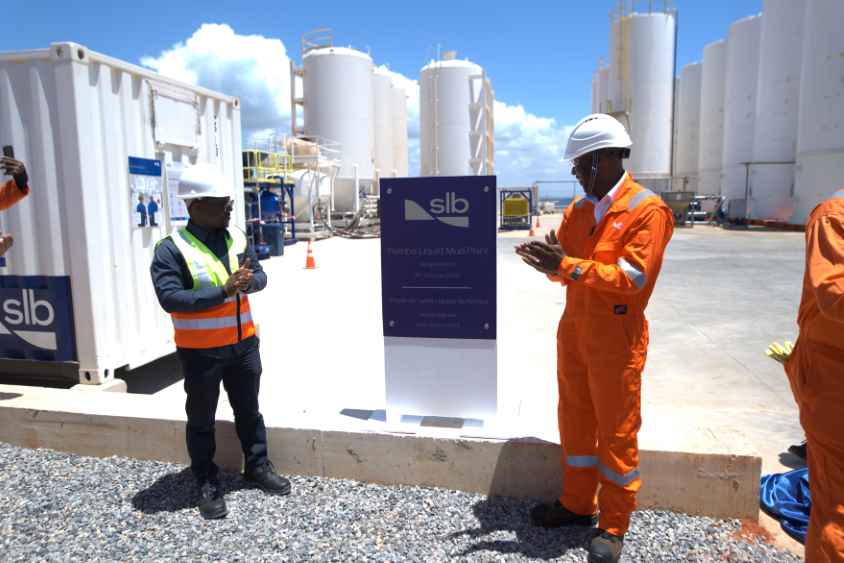
PEMBA, Mozambique, October 9, 2026/APO Group/ –SLB (NYSE: SLB) (www.SLB.com) announced the opening of a new fluids systems plant in Pemba, Mozambique. The new facility strengthens in-country capacity to prepare, store and deliver drilling and completion fluids for offshore operations, reinforcing the infrastructure needed as Mozambique’s offshore activity grows and its role as a strategic energy hub for East Africa continues to expand.
The commissioning of the plant, also known as a liquid mud plant, coincides with SLB marking 70 years of operations in Mozambique. It reflects the company’s long-term commitment to investing in people, infrastructure and capability that support the country’s long-term offshore energy development plans.
With an initial storage capacity of 21,000 barrels, the liquid mud plant provides a scalable platform for future growth, supporting multiple customers and rising offshore activity while improving logistics and enhancing operational flexibility.
As SLB marks 70 years in Mozambique, this investment reflects our confidence in the country’s future and our commitment to supporting its energy ambitions
“As SLB marks 70 years in Mozambique, this investment reflects our confidence in the country’s future and our commitment to supporting its energy ambitions,” said Miguel Baptista, Central, East and Southern Africa, Managing Director, SLB. The new liquid mud plant strengthens local energy infrastructure, expands opportunities for local content development, and enhances our ability to support customers as they deliver some of Africa’s most significant offshore energy resources.”
The liquid mud plant project was delivered with strong local participation and that momentum is expected to continue into operations. During project delivery, more than 100 jobs were created in Pemba with nationals representing 80% of the workforce, reflecting a focus on building local capability.
The project was delivered with a strong focus on safety, operational integrity, and quality, achieving more than 67,000 hours worked without a recordable safety incident.
This key infrastructure strengthens SLB’s ability to support consistent service quality and enhance supply chain readiness for increasing offshore activity across Mozambique, supporting customers execute safely and efficiently while developing local skills and expertise.
Key Points:
SLB has commissioned a new fluids system plant in Pemba, expanding in-country drilling and completion fluids capability for offshore operations.
With an initial storage capacity of 21,000 barrels, the facility provides a scalable platform to support growing offshore activity in Mozambique.
The investment marks the next phase of SLB’s growth in Mozambique, strengthening local capability and supporting long-term offshore energy development.
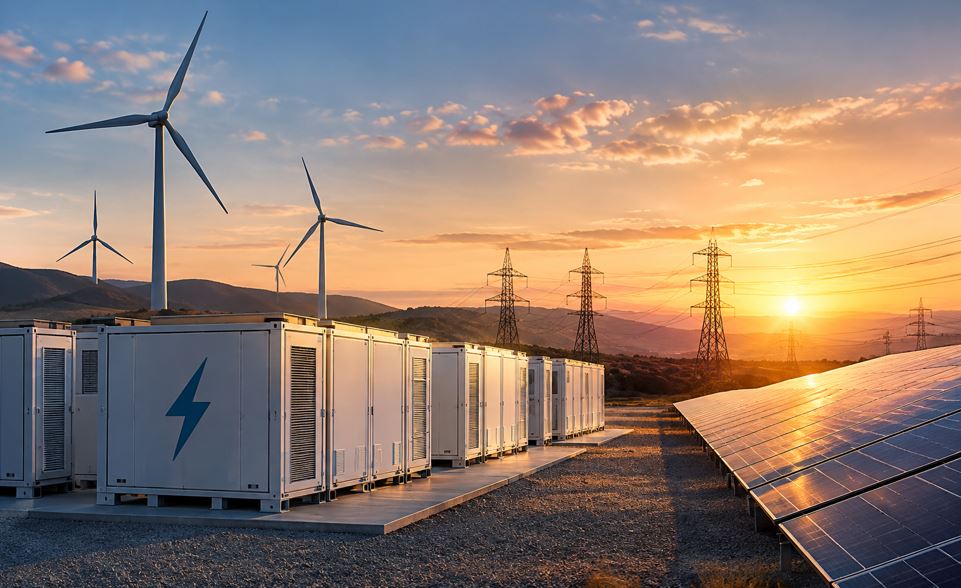
Battery energy storage systems (BESS) are becoming critical system infrastructure, supporting flexibility, reducing avoidable curtailment, shifting energy into periods of demand and strengthening security of supply
JOHANNESBURG, South Africa, October 9, 2026/APO Group/ –The South African Energy Storage Association (SAESA) (www.SAESA.org.za) welcomes the prioritisation of 4,600 MW of battery energy storage under the first Integrated Resource Plan (IRP) 2025 Section 34 determination.
The timing is significant. Recent Integrated Energy Plan (IEP) modelling and assumptions discussions highlighted a fundamental shift that South Africa’s energy planning now needs to capture: we cannot plan the future power system by counting megawatts of generation alone.
We must plan for when energy is available, where it is available, how it moves through a constrained grid and how it is stored and dispatched when the system needs it most.
The announcement reinforces that shift. Battery energy storage systems (BESS) are becoming critical system infrastructure, supporting flexibility, reducing avoidable curtailment, shifting energy into periods of demand and strengthening security of supply.
For SAESA, the message for the IEP is clear: storage, flexibility and system services must be modelled as integral components of South Africa’s future electricity architecture, with their contribution considered from the outset of generation planning.
“The IEP must plan the power system we are becoming, not simply model the power system we have inherited,” says SAESA.
The IEP must plan the power system we are becoming, not simply model the power system we have inherited
Partnership with C&I Energy + Storage Summit
SAESA is an association partner of the C&I Energy + Storage Summit, created by VUKA Group, taking place on 28–29 October 2026 at The Maslow Hotel, Sandton, Johannesburg.
The summit brings together commercial and industrial energy users, project developers, financiers, regulators and solution providers to explore practical approaches to energy security, procurement and storage deployment.
For businesses assessing how storage can support their operations, the event offers an opportunity to meet SAESA and engage with the wider energy community on the decisions shaping South Africa’s evolving electricity system.
Commercial and industrial energy decision-makers are invited to apply to attend as hosted buyers. Qualifying buyers receive complimentary summit access and curated opportunities to engage with industry partners.
Meet SAESA at C&I Energy + Storage Summit: Join the Hosted Buyer Programme
The Hosted Buyer Programme connects commercial and industrial energy decision-makers with solution providers shaping South Africa’s evolving private energy market.
Qualified energy buyers receive complimentary access to the summit and curated engagement with industry partners exploring energy procurement, storage deployment and project development.
Expanding credible rating coverage can improve the information available to investors and support the development of deeper domestic and regional capital markets
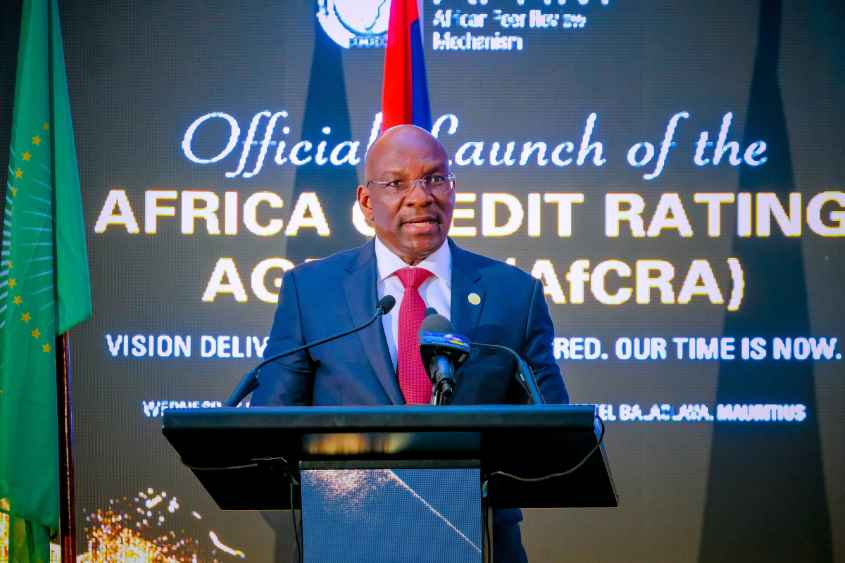
PORT LOUIS, Mauritius, October 8, 2026/APO Group/ –African Export-Import Bank (Afreximbank) (www.Afreximbank.com) welcomes today’s launch of the Africa Credit Rating Agency (AfCRA), an important milestone in strengthening Africa’s financial architecture and expanding the continent’s capacity to generate credible, independent analysis of African credit risk.
Credit ratings play an important role in determining access to capital, influencing investor perceptions and shaping the cost at which governments, institutions and businesses can finance development. It is therefore essential that assessments of African credit risk are independent, rigorous and evidence-based, while reflecting a complete understanding of the structures, institutions and economic realities being assessed.
The establishment of AfCRA adds an important African-led source of credit opinion to the market. Its value will not be measured by whether it produces more favourable ratings, but by the credibility of its analysis, the quality of its data and transparency of its methodology, and its ability to deepen understanding of African sovereigns, sub-sovereigns and corporate credit.
This is particularly important given that many African issuers remain unrated, while local-currency and sub-sovereign markets continue to have limited rating coverage. Expanding credible rating coverage can improve the information available to investors and support the development of deeper domestic and regional capital markets.
AfCRA must set a new benchmark for the continent, maintain its independence, and remain wholly owned and controlled by Africans
Alongside fellow members of the Alliance of African Multilateral Financial Institutions (AAMFI), Afreximbank has consistently maintained that African Multilateral Financial Institutions should be assessed on the basis of their fundamentals, performance, legal frameworks, mandates and operating models. Ensuring that these institutional characteristics are properly understood is essential to achieving informed, balanced and credible assessments of African risk.
Commenting on the uniqueness of the African market, and need for AfCRA’s rating methodology to reflect this, Mr Denys Denya, Senior Executive Vice President, Afreximbank, said: “The rating methodology AfCRA develops must recognise the uniqueness of our environment and its institutional structures. The Agency must set its own standards and not follow those set elsewhere — it must build a unique identity that conforms to an ‘African best practice.”
Highlighting the need for the autonomy of the Africa Credit Rating agency as it takes off, Mr Denya added: “Most importantly, AfCRA must set a new benchmark for the continent, maintain its independence, and remain wholly owned and controlled by Africans. We must all use it, and in return expect a complete assessment of where we (Africa) stand: the strengths the market has ignored, and the weaknesses we still need to fix.”
AfCRA should therefore be seen as complementary to existing international and regional rating agencies, broadening the range of credible analysis available to investors and issuers while strengthening competition, transparency and analytical capacity within Africa’s credit markets.
As Africa seeks to mobilise the scale of capital required for industrialisation, trade, infrastructure and economic transformation, credible African institutions that improve information, strengthen market confidence and deepen the continent’s financial markets will become increasingly important.
Afreximbank congratulates the African Union, the African Peer Review Mechanism (APRM) and all those involved in bringing AfCRA from concept to launch, and looks forward to the contribution the Agency will make to deeper, more transparent and more efficient African capital markets.
Distributed by APO Group on behalf of Afreximbank.
We use cookies on our website to give you the most relevant experience by remembering your preferences and repeat visits. By clicking “Accept”, you consent to the use of ALL the cookies.
This website uses cookies to improve your experience while you navigate through the website. Out of these, the cookies that are categorized as necessary are stored on your browser as they are essential for the working of basic functionalities of the website. We also use third-party cookies that help us analyze and understand how you use this website. These cookies will be stored in your browser only with your consent. You also have the option to opt-out of these cookies. But opting out of some of these cookies may affect your browsing experience.
Necessary cookies are absolutely essential for the website to function properly. These cookies ensure basic functionalities and security features of the website, anonymously.
Cookie
Duration
Description
cookielawinfo-checkbox-analytics
11 months
This cookie is set by GDPR Cookie Consent plugin. The cookie is used to store the user consent for the cookies in the category "Analytics".
cookielawinfo-checkbox-functional
11 months
The cookie is set by GDPR cookie consent to record the user consent for the cookies in the category "Functional".
cookielawinfo-checkbox-necessary
11 months
This cookie is set by GDPR Cookie Consent plugin. The cookies is used to store the user consent for the cookies in the category "Necessary".
cookielawinfo-checkbox-others
11 months
This cookie is set by GDPR Cookie Consent plugin. The cookie is used to store the user consent for the cookies in the category "Other.
cookielawinfo-checkbox-performance
11 months
This cookie is set by GDPR Cookie Consent plugin. The cookie is used to store the user consent for the cookies in the category "Performance".
viewed_cookie_policy
11 months
The cookie is set by the GDPR Cookie Consent plugin and is used to store whether or not user has consented to the use of cookies. It does not store any personal data.
Functional cookies help to perform certain functionalities like sharing the content of the website on social media platforms, collect feedbacks, and other third-party features.
Performance cookies are used to understand and analyze the key performance indexes of the website which helps in delivering a better user experience for the visitors.
Analytical cookies are used to understand how visitors interact with the website. These cookies help provide information on metrics the number of visitors, bounce rate, traffic source, etc.
Advertisement cookies are used to provide visitors with relevant ads and marketing campaigns. These cookies track visitors across websites and collect information to provide customized ads.














 Business4 days ago
 Business4 days ago
 Energy5 days ago
 Business4 days ago
 Events4 days ago