Connect with us

Energy

Staatsolie to Chart Suriname’s Offshore Future at Caribbean Energy Week 2026

Published

on

Energy Capital

The national oil company will showcase its role in shaping offshore investment opportunities, recent exploration milestones and initiatives to prepare Suriname’s private sector for the country’s emerging oil and gas boom

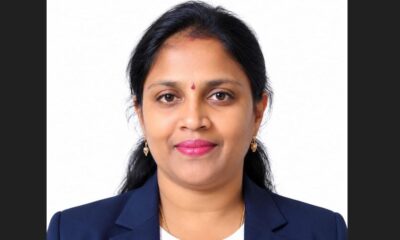
PARAMARIBO, Suriname, March 9, 2026/APO Group/ –Suriname’s national oil company Staatsolie is set to highlight the country’s expanding offshore opportunities at the inaugural Caribbean Energy Week (CEW) 2026, taking place March 30 to April 1 in Paramaribo. Offshore Exploration Manager Sharista Kalapnat-Kisoensingh is expected to speak on Staatsolie’s strategic offshore initiatives, alongside sessions on the company’s Enterprise Development Center (EDC), which aims to strengthen the local private sector and prepare Surinamese businesses for participation in the country’s growing oil and gas industry.

Staatsoilie has been at the center of Suriname’s offshore oil boom. The company’s declaration of the Sloanea field as commercial in November 2025 marked a major milestone, highlighting the basin’s growing hydrocarbon potential. Staatsolie’s seismic survey program with TGS and BGP Offshore, launched late last year, is generating critical geological insights across multiple offshore blocks, while new production sharing agreements for Blocks 9 and 10 are attracting further international investment. Together, these initiatives position Staatsolie not just as a producer, but as a strategic enabler – coordinating development, structuring investment opportunities, and shaping Suriname’s broader offshore growth agenda.

Further supporting the sector’s growth, Staatsolie launched an Open-Door Offering in late 2025, making roughly 60% of Suriname’s offshore acreage available under flexible exploration agreements. Alongside its 20% stake in the $10.5 billion GranMorgu development on Block 58 – which is set to generate over $1 billion in local content expenditure – Staatsolie is driving Suriname’s evolution from a modest onshore producer into a globally relevant offshore player with significant investment, production and local economic potential.

At CEW 2026, Staatsolie’s sessions will also highlight the EDC, a flagship initiative to prepare Suriname’s private sector for offshore participation. As GranMorgu and other developments advance toward production, the EDC will ensure that local companies are equipped to capture opportunities arising from exploration, construction, and supply chain activities.

Staatsolie’s upstream operations already account for roughly 9.5% of Suriname’s GDP and 32% of government revenues, figures expected to rise as offshore production ramps up. Kisoensingh’s participation is expected to outline how the company is managing Suriname’s offshore growth, supporting private sector engagement and positioning the country as an emerging hub in regional energy markets.

Join us in shaping the future of Caribbean energy. To participate in this landmark event, please contact sales@energycapitalpower.com.

Distributed by APO Group on behalf of Energy Capital & Power.


Business

Venezuela’s Deputy Minister Arturo Gil Visits Cape Town to Advance Energy Ties

Published

on

The visit builds on an MoU signed between Venezuelan petroleum authorities and the African Energy Chamber in February 2026, representing the next step in this collaborative initiative

CAPE TOWN, South Africa, March 6, 2026/APO Group/ –Following the historic visit by the African Energy Chamber (AEC) (https://EnergyChamber.org) to Venezuela in February 2026, Venezuela responded by sending its Deputy Minister of Artificial Intelligence and Productive Efficiency on Hydrocarbons Arturo Gil to South Africa to advance energy ties.


A high-level meeting was held in Cape Town, featuring Deputy Minister Gil and Carlos Feo Acevedo, the Venezuelan Ambassador to South Africa, alongside an AEC team led by Executive Chairman NJ Ayuk and a team from Energy Capital & Power, led by CEO James Chester. Discussions centered on strengthening investment flows, leveraging Venezuela’s expertise to support Africa’s energy resilience and identifying avenues for collaboration across the energy value chain.

The meeting follows a high-level visit by the AEC to Caracas in late February, which included meetings with Delcy Rodríguez, Interim President of Venezuela as well as the state-owned oil corporation Petróleos de Venezuela SA and the ministries of Hydrocarbon Geopolitics and Gas. The outcome of these meetings was a signed MoU, aimed at strengthening investment and collaboration across the oil, gas and broader energy sectors. The Cape Town discussion represents the next step in this collaboration, underscoring Venezuela’s commitment to establishing resilient ties with African nations.

Workforce Development and Technical Cooperation

A key outcome of the meeting was a commitment to strengthening workforce development across Africa’s energy sector. Under the initiative, the AEC will engage between 10 and 15 African stakeholders to participate in specialized technical training programs at Venezuela’s University of Hydrocarbons, supporting skills development and knowledge transfer between the two regions.

The Venezuelan delegation emphasized the importance of building long-term technical partnerships, noting that structured training programs would allow African professionals to gain hands-on expertise while fostering deeper institutional cooperation between Africa and Venezuela.

“We believe it would be valuable to organize a working visit to South Africa and bring a Venezuelan delegation to explore cooperation and investment opportunities,” stated Deputy Minister Gil.

Leveraging Venezuelan Oil and Gas Expertise

The meeting also examined how Africa can benefit from Venezuela’s more than 100 years of oil and gas production experience. Ayuk highlighted geological similarities between Venezuela and key African producing countries such as Namibia and Angola, suggesting that knowledge exchange on basin geology and data interpretation could accelerate exploration and production across both regions.

We believe it would be valuable to organize a working visit to South Africa and bring a Venezuelan delegation to explore cooperation and investment opportunities

“We need to strengthen collaboration between Africa and Venezuela. I hope to see more African stakeholders leveraging your cooperation, particularly in the area of data sharing and trade,” stated Ayuk.

He also underscored Venezuela’s unique role as a member of the African Petroleum Producers’ Organization, emphasizing the importance of increased participation in continental initiatives such as the African Energy Bank to address both the continent and the south American nation’s investment challenges.

Unlocking Investment and Market Opportunities

Investment opportunities within Venezuela’s hydrocarbon sector was also a central focus of the meeting. The Venezuelan delegation highlighted the country’s extensive geological database, built over more than a century of exploration and production activity, which provides investors with detailed insights into untapped resources and development opportunities.

With 1,000 wells planned for development and over 20,000 wells already drilled – including many yet to be optimized – the country presents substantial and highly lucrative investment opportunities across its upstream sector.

Gas Development and Energy Access

Venezuela’s vast natural gas resources were also discussed as a potential solution to Africa’s growing energy access challenges. With approximately 600 million people in Africa lacking access to electricity and nearly one billion living without access to clean cooking solutions, Ayuk highlighted the potential role of Venezuela’s flared gas in strengthening the continent’s energy supply while also supporting economic growth for the South American nation.

“Venezuela has significant onshore gas resources that can be further developed, but unlocking this potential will require greater investment to support both national development and the needs of our people,” stated Deputy Minister Gil. “LPG is not only an energy resource but also a social solution with strong economic and societal value. There is substantial potential for expansion in both our onshore and offshore gas sectors.”

Role of African Independents in Upstream Expansion

During the meeting, the parties emphasized the growing influence of African independent oil companies, noting their success in expanding production across the continent after decades of experience working alongside international majors. Drawing parallels with markets such as Nigeria, he suggested that independent operators could also play a role in supporting Venezuela’s efforts to increase oil output through brownfield redevelopment and mature asset optimization.

“Outside the U.S., Africa – especially Nigeria – has one of the largest populations of independent oil producers, with many operators producing from as little as 1,000 barrels per day,” stated Ayuk.

As both regions seek to expand production and address energy access challenges, deeper collaboration between African and Venezuelan stakeholders could unlock new opportunities across the global energy landscape.

Distributed by APO Group on behalf of African Energy Chamber.

Continue Reading

Business

Equatorial Guinea to Showcase 2026 Licensing Round to Global Investors at Invest in African Energy (IAE)

Published

on

Minister of Mines and Hydrocarbons Antonio Oburu Ondo will deliver a keynote at the Invest in African Energy Forum, unveiling strategic licensing opportunities tied to EG Ronda 2026

PARIS, France, March 6, 2026/APO Group/ –Reflecting a renewed drive for growth and upstream revitalization, Equatorial Guinea’s Minister of Mines and Hydrocarbons, Antonio Oburu Ondo, will deliver a keynote address at the Invest in African Energy Forum, scheduled for April 22–23, 2026, in Paris. Designed to connect African energy opportunities with institutional and private capital, the forum provides a strategic platform for governments to present bankable projects directly to global investors.


At the center of Equatorial Guinea’s investor outreach is EG Ronda 2026, an upcoming licensing round expected to offer 24 upstream blocks across offshore and onshore basins. First announced at African Energy Week, the round will run through late 2026 and features updated fiscal terms and a competitive open-door framework aimed at attracting both majors and independents. In preparation, the Ministry has advanced seismic data acquisition and reprocessing programs, strengthening the technical dataset available to bidders and materially reducing exploration risk.


Equatorial Guinea’s strategy extends beyond licensing. In early 2026, the government signed a reconnaissance license agreement with Eni to support renewed upstream evaluation and field revitalization efforts. At the same time, cross-border collaboration on the Yoyo-Yolanda gas fields continues to advance, with a recent unitization agreement between Equatorial Guinea and Cameroon paving the way for joint development. The move reinforces the country’s ambition to deepen regional integration, optimize shared resources and accelerate monetization through coordinated infrastructure planning.


Project-level momentum further supports this positioning. The Aseng Gas Project, backed by Chevron, represents an estimated $690 million investment aligned with Equatorial Guinea’s flagship Gas Mega Hub initiative – a multi-phase strategy to strengthen domestic processing capacity and position the country as a regional gas hub. National oil company GEPetrol recently increased its stake in Aseng to more than 32%, signaling deeper national participation alongside international operators and a clearer pathway to execution.


For capital providers focused on the Gulf of Guinea and broader African energy markets, Minister Ondo’s address in Paris will provide direct insight into fiscal reforms, licensing mechanics, partnership models and infrastructure expansion plans through 2026 and beyond. As global capital becomes more selective, IAE 2026 offers a critical space for engagement, due diligence and deal origination – helping convert announced opportunities into executed transactions.

Distributed by APO Group on behalf of Energy Capital & Power.


Continue Reading

Energy

African Energy Chamber Amplifies Diversity Fight in Africa’s Energy Sector

Published

on

Africa’s energy renaissance, the Chamber argues, must be defined not only by reserves, LNG terminals or licensing rounds — but by who holds influence and who benefits from growth

SANDTON, South Africa, March 5, 2026/APO Group/ –As Africa’s oil and gas sector gathers unprecedented momentum — buoyed by major discoveries, renewed exploration campaigns and intensifying global demand for diversified supply — the African Energy Chamber (AEC) (https://EnergyChamber.org) has sharpened a parallel and increasingly vocal campaign: ensuring that Africa’s energy renaissance is not built on exclusion.

In a firm public statement that has reverberated across industry circles, the Chamber declared that as Africa’s oil and gas sector expands, investment must “guarantee African participation, reject discrimination and uphold local content.” It warned that in the coming weeks it will engage African officials and industry leaders to secure “clear commitments to inclusive hiring and equal opportunity,” adding pointedly that “where progress is absent, we will exercise our lawful right to protest.”

The message marks the latest escalation in what has become a sustained, multi-year advocacy push targeting global conference organizers and industry platforms that derive significant revenue from African markets but, according to the AEC, fail to reflect Africa in their leadership structures.

A Campaign Years in the Making

The current confrontation did not emerge overnight. Over the past several years, the AEC has issued multiple press releases, public letters and statements addressing what it describes as systemic exclusion within certain international energy forums.

Among those most frequently cited are Frontier Energy Network, organizer of the Africa Energies Summit in London, and Hyve Group, a global exhibitions firm with significant exposure to African-focused extractive industry events.

In successive communications dating back several conference cycles, the Chamber has called for structural reform, urging these entities to hire, promote and empower African professionals — including Black women — into senior executive and board-level positions.

The AEC argues that while African ministers, national oil companies, regulators and indigenous firms are prominently featured on stage at major summits, decision-making power within the organizing companies remains largely non-African.

To reinforce its position, the Chamber has publicly circulated graphics highlighting what it says is the near absence of Africans on boards and executive leadership teams of these organizations — despite the fact that a substantial portion of sponsorship revenue, delegate participation and thematic focus centers on Africa.

For the AEC, this disconnect is not symbolic — it is structural.

NJ Ayuk: “Inclusion Is Not Optional”

Executive Chairman NJ Ayuk has been at the forefront of the campaign, framing it as a matter of principle rather than rivalry.

“Africa’s energy future cannot be dictated from boardrooms that do not include Africans,” Ayuk has said in connection with the Chamber’s recent statements. “If you are making substantial revenue from African markets, hosting Africa-focused events and leveraging African participation, then Africans must be part of your leadership and governance structures.”

He has consistently rejected the notion that the campaign is confrontational for its own sake. Instead, he presents it as aligned with the continent’s local content laws and sovereignty agenda.

“We are not asking for favors. We are demanding fairness, merit-based opportunity and respect. Africa cannot champion local content at home while tolerating exclusion abroad.”

Frontier Energy Network in the Spotlight

In its most recent release on exclusion, the Chamber directly cited Frontier Energy Network, reigniting scrutiny around the Africa Energies Summit.

The AEC contends that while the summit convenes high-level African participation — including ministers, regulators and executives — the internal hiring and leadership structure of the organizing body does not adequately reflect African professionals.

“Frontier Energy Network’s hiring practices – widely understood across the industry to exclude Black professionals – are wrong. Full stop,” the AEC said. It further warned that organizations earning substantial revenue from Africans cannot expect to benefit from African markets while denying fair employment to Africans.

Following publication of the Chamber’s latest statement naming Frontier, Pan African Visions reached out via email to Frontier Energy Network seeking comment and reaction. At press time, no formal response had been received.

However, shortly after the AEC’s renewed charge, Frontier’s Founder and CEO, Gayle Meikle, published a detailed LinkedIn essay titled “Frontier CEO Brief: What Is an African?”

While the post did not directly reference the Chamber’s allegations, it addressed themes central to the debate — identity, sovereignty and partnership.

“I am an African woman. I am Zimbabwean. I was born in Zimbabwe. That is who I am,” Meikle wrote, emphasizing Africa’s diversity across 54 sovereign states and more than 2,000 languages. She cautioned against reducing Africa to binary definitions of who is “African enough,” politically or economically.

Meikle underscored Africa’s civilizational depth — from Arab and Amazigh communities in the north to Yoruba, Igbo, Swahili, Shona, Zulu and Xhosa traditions — and argued that Africa’s resources must serve African development first.

“Africa welcomes investment, but it expects partnership,” she wrote. “Sovereignty and collaboration are not in conflict; they are mutually reinforcing.”

She concluded with a personal declaration: “No one grants me that agency. It is inherent. And anyone who attempts to diminish it will discover that it cannot be taken.”

Ayuk’s Direct Rebuttal

The LinkedIn post drew an immediate and sharply worded response from Ayuk.

In a public post visible on and off LinkedIn, Ayuk accused Frontier’s leadership of avoiding the core issue.

“Don’t pee on my leg and tell me it’s raining,” Ayuk wrote, stating that he had received outreach from industry professionals offended by what he described as a “No Blacks employment policy in 2026.”

He called directly on Meikle and Frontier executive Daniel Davidson to commit to hiring Black professionals.

“Don’t just beg them to come to Africa Energies Summit® and give you their money. Your brothers and sisters are qualified and need jobs. Hire them,” Ayuk wrote.

Africa’s energy future cannot be dictated from boardrooms that do not include Africans

He further warned that African professionals were privately indicating they would not attend the summit if the alleged exclusionary hiring practices continued.

“A lot of Africans are already telling me in private they will not attend because of this race-based no blacks hiring policy. Don’t spend your money where you can’t work.”

Ayuk’s post went beyond institutional critique and focused particularly on Black women in the energy sector.

He recounted a conversation with a young woman in the seismic industry who told him that white male executives often pave the way for white women to be hired, while Black women must “fight hard” for similar opportunities — especially within companies profiting from African markets.

“In today’s oil industry, black women are still the last hired and the first fired,” Ayuk wrote. He emphasized that Black women often navigate the intersection of race and gender as dual minorities in senior roles, facing unique mental health and professional pressures.

Quoting Maya Angelou, he concluded: “Do the best you can until you know better. Then when you know better, do better.”

Hyve Group and Boardroom Representation

Similarly, Hyve Group has been the subject of sustained criticism from the African Energy Chamber — most forcefully articulated in 2024 — over what the Chamber described as a persistent absence of African leadership within a company that derives substantial revenue from African markets.

In a strongly worded 2024 statement, the AEC argued that while Hyve plays a pivotal role in Africa’s energy and mining landscape through flagship events such as Mining Indaba and Africa Oil Week, its executive and board-level leadership did not reflect the continent from which it earns significant commercial returns.

“It is disheartening to note that despite being a major beneficiary of Africa’s economic contributions, Hyve Group has yet to usher in a leadership team that reflects the rich diversity and talent pool present on the continent,” the Chamber stated at the time.

The AEC further contended that prevailing hiring practices based on personal networks, trust and familiarity perpetuate exclusionary patterns that leave qualified African professionals — including Black women — outside decision-making circles.

Executive Chairman NJ Ayuk contrasted Hyve’s leadership composition with what he described as the oil and gas industry’s stronger track record in promoting African talent.

“The Oil and Gas industry that I love and champion is the greatest advocate for hiring Africans. It has trained Africans, promoted them, and many have become great entrepreneurs today,” Ayuk said in 2024. “That’s why I love Oil and Gas.”

He expressed disappointment at what he described as a disconnect between Hyve’s commercial success in Africa and its internal leadership structure.

“Hyve Group makes a huge part of its revenue from Africa, yet no African is in its leadership. They hire people they know, they trust and like. We’re not in that circle. I am very disappointed,” Ayuk stated. “People of African heritage are greater participants and sponsors of their programs. I believe they are capable of doing the leadership jobs, but there has not been an adequate commitment to hire and promote them at Hyve Group.”

Ayuk also argued that corporate rebranding and public-facing diversity messaging must translate into measurable structural change.

“Their rebranding and wokeness must lead to some inclusion and vice versa; otherwise, their wokeness is pure self-indulgence.”

The Chamber framed the issue as one of fairness, economic reciprocity and governance consistency, particularly for countries such as South Africa, Nigeria, Kenya, Ghana, Namibia and Tanzania that actively support and host Hyve events.

“We cannot accept that in 2024, companies doing business in Africa and earning huge revenues will not have Blacks in leadership,” Ayuk said. “Africans must not buy where they can’t work.”

He further called for greater transparency around tax contributions linked to African-hosted exhibitions, urging disclosure of VAT collections and payments to relevant revenue authorities.

While the 2024 statement focused squarely on Hyve’s governance structure at that time, the broader principle articulated by the Chamber has since evolved into a wider campaign encompassing multiple global event organizers: diversity must extend beyond speaker lineups and branding to executive authority, hiring pipelines and boardroom representation.

“Inclusion cannot stop at the podium,” Ayuk has repeatedly maintained. “It must extend to governance, strategy and ownership of the narrative.”

As Africa’s energy and mining sectors continue to expand, the Chamber argues that companies profiting from the continent’s markets must align their internal leadership structures with the local content and economic sovereignty principles increasingly enforced across African jurisdictions.

The message — first forcefully delivered in 2024 — remains central to the AEC’s current push: representation is not optional, and economic partnership without leadership inclusion is unsustainable.

A Growing Ripple Effect

What distinguishes the current phase of the campaign is its intensity and visibility.

The public exchange between Frontier’s CEO and the AEC Chairman has transformed what was once a policy dispute into a high-profile industry debate about race, governance and economic sovereignty.

Industry insiders suggest some companies and institutions are quietly reassessing their participation in forums organized by entities facing exclusion allegations. While no major withdrawals have been publicly announced, reputational risk has become part of the calculation.

African state-owned enterprises and regulators — increasingly conscious of domestic local content laws — face growing pressure to align external partnerships with internal policy commitments.

Redefining Global Engagement with Africa

As energy security reshapes geopolitical priorities, Africa is emerging not as a peripheral supplier but as a strategic partner.

The AEC’s campaign seeks to ensure that this partnership reflects equity not only in rhetoric, but in leadership and employment structures.

Africa’s energy renaissance, the Chamber argues, must be defined not only by reserves, LNG terminals or licensing rounds — but by who holds influence and who benefits from growth.

“Africa’s energy renaissance must include Africans at every level,” Ayuk has insisted. “We will continue to fight for that principle — respectfully, lawfully and persistently.”

With the Africa Energies Summit approaching, the pressure shows no sign of easing. What began as a governance question has evolved into a broader reckoning over representation, partnership and the future architecture of Africa’s global energy engagement.

Distributed by APO Group on behalf of African Energy Chamber.

Continue Reading

Trending

Exit mobile version