Connect with us
Anglostratits

Business

Société Nationale des Pétroles du Congo (SNPC) DG to Speak at Angola Oil & Gas (AOG) 2024, Creating Pathways for Collaborative Gas Ventures

Published

on

SNPC

The upcoming Angola Oil & Gas conference will generate opportunities for joint collaboration between Angola and the Republic of Congo in fast-tracking integrated gas projects

LUANDA, Angola, July 9, 2024/APO Group/ — 

Both the Republic of Congo (ROC) and its regional neighbor Angola have set ambitious natural gas objectives. By 2025, the ROC aims to produce 2.4 million tons of LNG, while Angola is set to have natural gas account for 25% of its energy matrix. The countries’ respective national oil companies (NOC) – Société Nationale des Pétroles du Congo (SNPC) and Sonangol – are driving projects forward and engaging with IOCs and regional players to bolster exploration, feedstock and domestic gas consumption. 

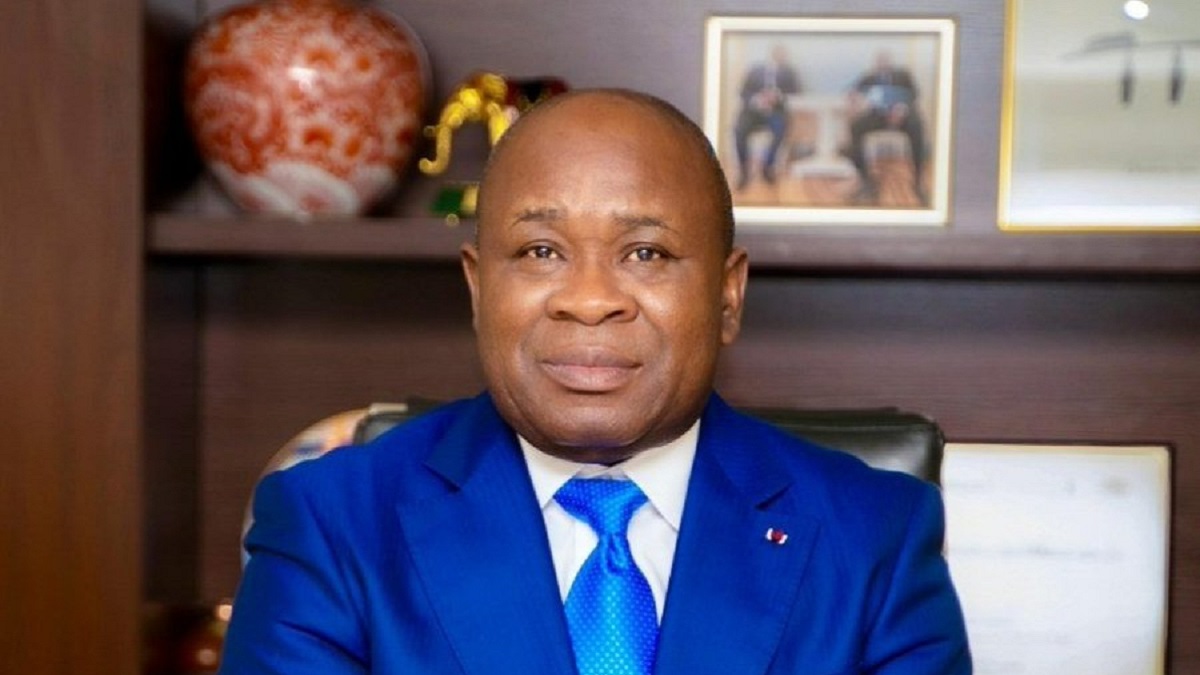
SNPC Managing Director Maixent Raoul Ominga will lead a Congolese delegation at the Angola Oil & Gas (AOG) 2024 conference in Luanda, scheduled for October 2-3. The conference will facilitate cross-border collaboration as Angolan and Congolese oil and gas sectors experience sizable growth. Collaboration between the two major hydrocarbon players will serve as a driving force behind regional energy security, affirming SNPC’s commitment to strengthening ties with Angola.

AOG is the largest oil and gas event in Angola. Taking place with the full support of the Ministry of Mineral Resources, Oil and Gas; national oil company Sonangol; the National Oil, Gas and Biofuels Agency; the African Energy Chamber; and the Petroleum Derivatives Regulatory Institute, the event is a platform to sign deals and advance Angola’s oil and gas industry. To sponsor or participate as a delegate, please contact sales@energycapitalpower.com.

The ROC achieved a milestone in March 2024 with its first LNG cargo delivery to Italy from the Congo LNG project’s Tango FLNG facility, featuring a 1-billion-cubic-meter-per-annum (BCMA) liquefaction capacity. A second FLNG vessel with a 3.5-BCMA capacity is set to start production in 2025. Congo LNG serves as a model for fast-tracked LNG production, with the project coming online just 12 months after FID was announced. The project is supported by a Sales and Purchase Agreement signed between SNPC, energy major Eni and multinational energy corporation Lukoil in September 2023. With the project, the ROC is set to produce an initial 600,000 tons of LNG per annum and up to 2.4 million tons by 2025.

Angola itself celebrated its 400th LNG cargo delivery in 2023, while reaching FID on its first non-associated gas development – the New Gas Consortium’s Quiluma and Maboqueiro gas project – in 2022. The project will supply feedstock gas to the country’s Angola LNG facility, which currently monetizes gas from associated projects across the country. As regional LNG exporters, both Congo LNG and Angola LNG are set to play a dominant role in supporting economic growth with the development of new gas-focused concessions across both countries.

Beyond Congo LNG, SNPC has been streamlining gas for domestic industrial use through projects such as Banga Kayo. Developed in partnership with Chinese energy company Wing Wah, Banga Kayo – a conventional oilfield on the cusp of reaching peak production of 50,000 barrels per day (BPD) – features a phased expansion plan to monetize previously-flared gas resources. Over several phases, the project will progressively increase gas valorization capacity to produce LNG, LPG, butane and propane for the domestic market. Three trains will be developed – the first of which will have a capacity of one million cubic meters per day (MCMD) – while the second and third will each have a capacity of two MCMD. The second and third trains will come online by March 2025 and December 2025, respectively.

SNPC is also committed to leveraging undeveloped oil resources to stimulate economic growth. The ROC has set a target to increase production to 500,000 BPD, with investment in producing fields and the development of available blocks driving additional output. Crude oil production for April 2024 measured 259,000 BPD and ongoing exploration efforts aim to bolster output through new discoveries. In partnership with independent oil producer Perenco, SNPC completed offshore 3D seismic surveys at the Tchibouela II, Tchendo II, Marine XXVIII and Emeraude permits in November 2023, with data from the surveys set to identify future drilling targets.

Similarly, Angola plans to increase its oil production to 1.1 million BPD until 2027 and is inviting investment in exploration to achieve this goal. The country concluded a 12-block oil tender in January 2024 and is preparing to launch a 10-block tender in 2025, offering blocks across the Kwanza and Benguela basins. As such, collaboration between Angola and the ROC would support corresponding production goals, with Ominga’s participation at the AOG 2024 conference reflecting a shared commitment to hydrocarbon development. During the conference, Ominga is expected to discuss opportunities for joint cooperation in the sector, while engaging with a suite of Angolan industry stakeholders and energy leaders.

Distributed by APO Group on behalf of Energy Capital & Power.

Business

Rhino Resources Joins African Energy Week (AEW) as Gold Sponsor as Southern African Exploration Expands

Published

on

African Energy Chamber

Rhino Resources will participate at the 2026 edition of the African Energy Week conference and exhibition – Africa’s premier event for the energy sector – as a gold sponsor

CAPE TOWN, South Africa, May 8, 2026/APO Group/ –Exploration company Rhino Resources has joined the African Energy Week (AEW) 2026 Conference and Exhibition as a Gold Sponsor, reinforcing its role as one of Africa’s emerging independents driving frontier and greenfield exploration across Southern Africa.


Scheduled for October 12–16 in Cape Town, AEW 2026 comes as Rhino Resources accelerates exploration activity across Namibia’s Orange Basin while broadening its footprint into South Africa’s Karoo Basin. The sponsorship reflects the company’s strategy to deepen engagement with investors, service providers and policymakers as it advances multiple assets toward development readiness and future final investment decisions.

At the core of Rhino Resources’ upstream momentum is its multi-well deepwater drilling campaign in Namibia’s Orange Basin – one of the world’s most prolific frontier exploration hotspots. The company is targeting FIDs between late 2026 and early 2027 across operated and partner-led assets, including the co-development of the Volans and Capricornus discoveries in Petroleum Exploration License (PEL) 85.

Rhino Resources represents a new generation of African-focused independents that are willing to take on frontier risk to unlock long-term energy value

Recent drilling results have strengthened the commercial case of these Namibian assets. The Volans-1X well delivered strong gas-condensate flow rates in February 2026, while the earlier Capricornus-1X well confirmed the presence of light oil, positioning Rhino Resources among the key players contributing to Namibia’s ambition of achieving first oil production by 2030.

Beyond Namibia, Rhino Resources is broadening its portfolio through onshore exploration in South Africa’s Karoo Basin. The company is advancing a six-well campaign targeting helium, methane and hydrogen resources in the Free State Province – a move that reflects both geographic diversification and a wider strategy to support a more resilient and diversified regional energy mix.

This expansion comes at a time when Southern African economies face energy security challenges due to ongoing disruptions to global shipping routes, reinforcing the importance of unlocking domestic resource potential to support industrial growth and reduce external vulnerabilities.

Rhino Resources’ role as Gold Sponsor at AEW 2026 therefore comes at a pivotal stage in its growth trajectory. The event provides a platform to showcase its exploration progress, strengthen partnerships and position its projects within the broader African energy investment landscape.

At AEW 2026, Rhino Resources’ executives are expected to participate in high-level panel discussions, offering insights into frontier basin development, cost-efficient exploration strategies and pathways to fast-tracking project commercialization across emerging African markets.

“Rhino Resources represents a new generation of African-focused independents that are willing to take on frontier risk to unlock long-term energy value,” stated NJ Ayuk, Executive Chairman of the African Energy Chamber. “The company’s recent discoveries in Namibia and expanding exploration strategy in South Africa highlight the scale of opportunity across the continent and the critical role independents play in translating resources into production, investment and economic growth.”

Distributed by APO Group on behalf of African Energy Chamber.

Continue Reading

Business

Levene Energy Joins African Energy Week (AEW) as Gold Sponsor Amid Regional Expansion and Market Diversification

Published

on

Levene Energy

Levene Energy is scaling its presence across Africa through strategic investments spanning gas infrastructure, upstream development and renewable energy solutions

CAPE TOWN, South Africa, May 8, 2026/APO Group/ –Nigerian integrated energy company Levene Energy has joined the African Energy Week (AEW) Conference and Exhibition as a Gold Sponsor, reinforcing its position as an emerging pan-African energy platform focused on infrastructure expansion, energy access and long-term market diversification.


Taking place October 12–16 in Cape Town, AEW 2026 comes as Levene Energy accelerates its transition from a project-focused developer into a long-term energy infrastructure investor with interests spanning upstream, midstream, downstream and renewable energy segments.

A key milestone of this strategy was reached in January 2026 when the company secured a $64 million facility from the African Export-Import Bank to acquire a 30% stake in Axxela Limited. The transaction marks the company’s entry into Nigeria’s regulated gas infrastructure space, strengthening its position in gas processing, distribution and industrial energy supply.

Africa’s energy future depends on building integrated, locally anchored energy systems that can withstand global volatility while delivering reliable and affordable power

The investment also aligns with Nigeria’s Decade of Gas initiative, which seeks to monetize the country’s estimated 600 trillion cubic feet of gas reserves while expanding energy access, supporting industrialization and improving access to cleaner cooking solutions nationwide.

Beyond gas infrastructure, Levene Energy continues to strengthen its upstream portfolio. The company holds interests in multiple producing and exploration assets in Equatorial Guinea, including Blocks EG-03, EG-04, EG-19 and Block P, alongside bitumen assets in Nigeria. This upstream footprint supports a broader strategy to increase resource development and supply in response to rising regional demand for hydrocarbons.

At the same time, the company is advancing its renewable energy business as part of a diversified energy mix strategy. Through its subsidiary LPV Technologies, Levene Energy operates a 200 MW solar panel manufacturing facility in Lagos, supporting both rural electrification initiatives and commercial and industrial adoption of solar power. The focus on distributed energy solutions and local manufacturing reflects Levene Energy’s growing emphasis on energy access, grid resilience and local value creation.

“Africa’s energy future depends on building integrated, locally anchored energy systems that can withstand global volatility while delivering reliable and affordable power,” stated NJ Ayuk, Executive Chairman of the African Energy Chamber. “Levene Energy’s expansion across gas, renewables and infrastructure reflect the kind of long-term, value-driven strategy needed to unlock the continent’s full energy potential.”

The company’s participation at AEW 2026 builds on its recognition as a Local Content Champion at AEW 2025, highlighting its commitment to local capacity building, inclusive growth and the development of African-led energy solutions. AEW 2026 provides a platform for the company to engage with policymakers, investors and industry stakeholders to forge new partnerships and advance its regional expansion strategy across Africa’s evolving energy landscape.

Distributed by APO Group on behalf of African Energy Chamber.

Continue Reading

Business

Gas Supply in the Age of Artificial Intelligence (AI): Can Africa’s Natural Gas Power the Continent’s Digital Future?

Published

on

African Energy Chamber

As AI-driven data demand accelerates, Africa’s vast natural gas reserves are emerging as a critical enabler of data center growth – placing gas at the center of discussions at African Energy Week 2026’s AI and Data Center Track

CAPE TOWN, South Africa, May 8, 2026/APO Group/ –As artificial intelligence (AI) drives an unprecedented surge in data processing, one constraint is becoming increasingly clear: power. Data centers – the backbone of AI – require vast, stable and continuous energy supply. For Africa, this challenge intersects with an opportunity. The continent’s abundant natural gas resources could position it as a future hub for AI infrastructure – if supply can be effectively mobilized.


Africa holds over 600 trillion cubic feet of proven natural gas reserves, representing a significant share of global supply. Yet despite this abundance, the continent consumes only a fraction domestically, with much of production historically geared toward exports.


At the same time, Africa’s digital infrastructure remains underdeveloped. The continent accounts for just 0.6% of global data center capacity – despite representing nearly 20% of the world’s population. Total installed capacity stands at roughly 1.2 GW across active, planned and pipeline projects, with only about 360 MW currently operational.


Demand, however, is accelerating rapidly. Africa’s data center needs are expected to increase 3.5 to 5.5 times by 2030, requiring up to $10–20 billion in investment. Power demand is rising in parallel, growing at 20–25% annually and projected to reach 8,000 GWh in the coming years.


This is where natural gas becomes critical. Unlike intermittent renewables, gas-fired power offers dispatchable, baseload energy – making it particularly suited to the always-on requirements of data centers. Globally, data centers already consume around 1.5% of total electricity, with demand growing at roughly 12% annually, far outpacing overall electricity consumption. In emerging markets, where grid reliability is inconsistent, this reliability advantage becomes even more important.

AI data centers require constant, reliable power at scale, and natural gas is the only resource Africa has today that can deliver that immediately


Major gas projects across Africa underscore the scale of potential supply. Mozambique’s offshore developments – among the largest globally – are expected to produce over 13 million tons per year of LNG, while Nigeria continues expanding its gas monetization strategy around its 200+ trillion cubic feet of reserves. Meanwhile, new producers such as Senegal and Mauritania are entering the market with large-scale LNG developments.


The opportunity is not simply about exporting gas, but about using it domestically to power industrialization and digital infrastructure. Today, Africa exports energy while still facing chronic power shortages, creating a disconnect between resource wealth and economic development.


Bridging this gap could redefine the continent’s trajectory. Gas-to-power projects, integrated with data center development, offer a pathway to anchor digital infrastructure in energy-rich regions. Countries such as Nigeria, Egypt and Algeria are particularly well positioned, while emerging producers like Mozambique and Senegal could embed domestic supply into new industrial and digital hubs from the outset.

This convergence is now moving to the forefront of industry discussions. At African Energy Week 2026, the AI and Data Center Track will focus on how power – particularly natural gas – can underpin the continent’s digital expansion. As AI infrastructure scales, the track highlights a central reality: without reliable, scalable energy, Africa risks missing out on the next wave of global digital investment.

“This is not just an energy discussion – it’s an economic strategy,” says NJ Ayuk, Executive Chairman of the African Energy Chamber. “AI data centers require constant, reliable power at scale, and natural gas is the only resource Africa has today that can deliver that immediately. If we align gas development with digital infrastructure, we can industrialize, create jobs and position Africa as a serious player in the global AI economy.”

Still, challenges remain. Infrastructure gaps, pricing constraints and regulatory uncertainty continue to limit domestic gas utilization. Without coordinated investment in pipelines, power plants and digital infrastructure, the continent risks continuing its role as an energy exporter while importing digital services.

As AI drives a new wave of energy demand, natural gas is emerging as a critical enabler of digital infrastructure. For Africa, the challenge – and opportunity – is to turn that advantage into global competitiveness.

Distributed by APO Group on behalf of African Energy Chamber.

Continue Reading

Trending