Connect with us
Anglostratits

Energy

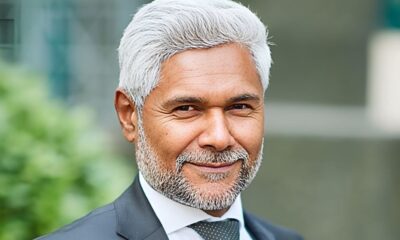
Senegal’s Energy Minister Joins African Energy Week (AEW) 2026 Amid Rapid Oil and Gas Sector Expansion

Published

on

African Energy Chamber

As Senegal builds on record oil production, LNG development and domestic gas infrastructure, Minister of Energy and Petroleum Dr. El Hadji Abdourahmane Diouf will engage investors on the country’s next phase of energy growth

CAPE TOWN, South Africa, July 2, 2026/APO Group/ –Senegal’s Minister of Energy and Petroleum, Dr. El Hadji Abdourahmane Diouf, has been confirmed as a speaker at African Energy Week (AEW) 2026, taking place October 12-16 in Cape Town. His participation comes as Senegal enters a new phase of energy sector development following a cabinet reshuffle that separated the former Ministry of Energy, Petroleum and Mines into standalone Energy and Petroleum and Mines portfolios, placing greater institutional focus on the country’s rapidly expanding hydrocarbons sector.

AEW 2026 will provide a platform for Senegal to engage investors as it builds on recent upstream successes, advances domestic gas utilization and expands the infrastructure needed to support long-term energy security and industrial growth.

Minister Diouf assumed office in June 2026 following the formation of Senegal’s new government. As head of the Ministry of Energy and Petroleum, he is leading efforts to accelerate upstream development, expand domestic gas utilization and strengthen the regulatory framework supporting long-term investment. His appointment comes as Senegal transitions from hydrocarbon explorer to producer, seeking to leverage new oil and gas output to improve energy security, reduce fuel import dependence, lower electricity costs and support industrialization.

Senegal is entering an exciting new phase of energy development, backed by world-class oil and gas resources

The Sangomar offshore oil field exceeded production expectations in 2025, producing 36 million barrels, while exports reached approximately 3.8 million barrels in January 2026 alone. Operator Woodside Energy is evaluating a second phase of development that could further increase production. At the same time, the Greater Tortue Ahmeyim LNG project continues to ramp up operations while supplying 35 million standard cubic feet of gas per day to Senegal’s domestic market. In April, national oil company Petrosen secured full ownership of the Yakaar-Teranga gas field, home to an estimated 25 trillion cubic feet of gas that will underpin the country’s long-term gas monetization and gas-to-power strategy.

Beyond upstream development, Senegal is investing heavily in the infrastructure needed to monetize its gas resources domestically. Earlier this year, Petrosen launched its first independently operated $100 million onshore exploration campaign, while the government continues advancing plans for a proposed 400-km domestic gas pipeline network to connect offshore gas production with industrial consumers. As part of its objective to generate 75% of installed power capacity from natural gas, Senegal is also expanding gas-fired generation through projects including the conversion of the existing 335 MW Bel Air power plant and the construction of a new 366 MW gas-fired power plant.

Alongside these investments, Senegal is strengthening the policy framework underpinning long-term sector growth. This year, the government advanced reforms to its local content regulations aimed at increasing domestic participation across the petroleum value chain while adopting its first national standards for solar photovoltaic equipment. Together, these initiatives reflect Senegal’s strategy of leveraging natural gas development alongside renewable energy expansion to support sustainable economic growth.

“Senegal is entering an exciting new phase of energy development, backed by world-class oil and gas resources, ambitious infrastructure investments and progressive regulatory reforms. Minister Diouf’s participation at AEW 2026 provides investors with a timely opportunity to engage directly with the leadership shaping one of Africa’s most dynamic energy markets,” says NJ Ayuk, Executive Chairman of the African Energy Chamber.

At AEW 2026, Minister Diouf is expected to participate in high-level discussions on upstream investment, gas monetization, energy infrastructure and regional energy cooperation, highlighting Senegal’s growing role as one of West Africa’s leading investment destinations.

Distributed by APO Group on behalf of African Energy Chamber.

Business

South Africa’s Multi-Billion-Dollar Energy Transition Pipeline Takes Shape Ahead of African Energy Week (AEW) 2026

Published

on

African Energy Chamber

From LNG terminals and renewable energy corridors to hydrogen hubs and storage solutions, African Energy Week’s “Invest in South Africa” session will highlight the opportunities driving the country’s transition toward a more diversified and resilient energy future

CAPE TOWN, South Africa, August 11, 2026/APO Group/ –South Africa is undergoing one of the most significant transformations in its energy sector, as the country works to diversify its power mix, reduce reliance on coal and develop a more integrated energy system capable of supporting long-term economic growth. Combining electricity, natural gas, liquid fuels, hydrogen and energy storage, this evolving model is creating new opportunities for infrastructure development, industrial investment and public-private partnerships.

These developments will be explored during the “Invest in South Africa: Developing Integrated Energy Systems for an Inclusive and Resilient Energy Future” session at African Energy Week (AEW) 2026, where policymakers, investors and industry leaders will assess the commercial strategies, policy frameworks and financing models required to build a more flexible and diversified energy system.

The discussion comes as South Africa continues implementing its Just Energy Transition Partnership, a landmark initiative launched in 2021 that has mobilized an initial $8.5 billion commitment from international partners to support the country’s transition through investments in renewable energy, grid infrastructure, electric vehicles and green hydrogen. The program has since expanded discussions around blended finance mechanisms and private sector participation to accelerate project deployment.

South Africa’s energy transition represents one of the continent’s most significant investment opportunities

While renewable energy remains central to South Africa’s future power mix, gas infrastructure is expected to play an important role in providing flexibility as the country integrates increasing volumes of intermittent wind and solar power. The government’s Gas Master Plan and emerging gas policy framework aim to support the development of a domestic gas market while enabling new infrastructure investments.

Several major gas infrastructure projects are advancing as part of this strategy. At Richards Bay, the proposed Zululand Energy Terminal is being developed as South Africa’s first LNG import terminal and is expected to support Eskom’s planned 3,000 MW gas-to-power program, strengthening energy security and grid flexibility. Meanwhile, the Ngqura LNG terminal development at the Coega Special Economic Zone is progressing as a strategic gas import and regasification hub designed to support industrial users, independent power producers and future gas-to-power capacity. Together, these projects could establish critical infrastructure for South Africa’s emerging gas market while supporting industrial growth and the transition toward a more diversified energy system.

At the same time, the country is positioning itself as a potential global player in green hydrogen. Projects such as Sasol’s Boegoebaai green hydrogen development in the Northern Cape and the proposed Boegoebaai Special Economic Zone are targeting large-scale renewable-powered hydrogen production, with ambitions to develop export opportunities and create new industrial value chains.

The “Invest in South Africa” session will examine how the country can integrate gas, renewables, hydrogen and storage into a resilient energy system while managing the transition away from coal. Discussions will focus on investment pathways, infrastructure priorities and the partnerships required to deliver reliable power and inclusive economic growth.

“South Africa’s energy transition represents one of the continent’s most significant investment opportunities, but success will depend on building an energy system that delivers reliability, affordability and growth,” says NJ Ayuk, Executive Chairman of the African Energy Chamber. “By bringing together investors, policymakers and industry leaders, AEW 2026 will help advance the partnerships needed to transform South Africa’s energy ambitions into practical projects that benefit the economy.”

As South Africa reshapes its energy landscape, AEW 2026 will provide a platform for stakeholders to identify opportunities across gas, power, renewables, hydrogen and infrastructure – helping define the next chapter of the country’s energy future.

Distributed by APO Group on behalf of African Energy Chamber.

Continue Reading

Energy

Sonangol’s Sebastião Gaspar Martins Joins Angola Oil & Gas (AOG) 2026 as Angola’s Hydrocarbon Strategy Takes Shape

Published

on

As Angola’s national oil company expands its position across upstream production, refining and infrastructure, Sonangol Chairman Sebastião Gaspar Martins will join AOG 2026 to discuss the company’s role in driving the country’s next phase of investment

LUANDA, Angola, August 11, 2026/APO Group/ –Sebastião Gaspar Martins, Chairman of the Board of Angola’s national oil company (NOC), Sonangol, will speak at the Angola Oil & Gas (AOG) 2026 Conference & Exhibition, taking place in Luanda on September 9-10, with a pre-conference day on September 8. Martins joins the conference as Sonangol advances a portfolio of strategic projects spanning deepwater production, refining and petroleum infrastructure, reinforcing the company’s central role in Angola’s efforts to sustain oil output while strengthening domestic fuel security.

Sonangol is expanding its upstream portfolio through partnerships with leading international operators. In June 2026, the company joined Azule Energy (operator), Equinor and national concessionaire ANPG in reaching a final investment decision on the $5.1 billion Greater PAJ development in Blocks 31 and 31/21. Angola’s first integrated development spanning two blocks, the project will develop an estimated 252 million barrels of reserves through a new FPSO capable of producing 95,000 barrels per day (bpd), with first oil targeted for 2029.

Alongside operator TotalEnergies and Petronas, Sonangol is also advancing the Kaminho project, the first deepwater development in the Kwanza Basin. The project will monetize resources from the Cameia and Golfinho fields through an FPSO with a production capacity of 70,000 bpd, with first oil planned for 2028. In Angola’s shallow waters, Sonangol is leading an infill drilling campaign at Blocks 3/05 and 3/05A. Drilling of the Pacassa SW well is underway, with the Impala-2 development well scheduled to spud shortly thereafter.

Onshore, Sonangol is advancing exploration activities across several blocks. The company operates Blocks KON 11, 12 and 15 in the Kwanza Basin and holds interests in acreage in the Lower Congo Basin. In June 2026, its exploration and production strategy received a significant boost through a $2.65 billion financing package arranged by a syndicate of international lenders.

Sonangol is also playing a leading role in Angola’s downstream expansion. The first phase of the Cabinda Refinery was inaugurated in September 2025, marking an important step toward reducing the country’s dependence on imported petroleum products. The refinery has a planned processing capacity of 60,000 bpd, with Sonangol holding a 10% stake. Attention is also turning to the Lobito Refinery, where the company is engaging international financiers to close a $4.8 billion funding gap. Once completed, the 200,000-bpd facility will be Angola’s largest refinery, with its first phase scheduled to come online in 2027.

Against this backdrop, Martins’ participation at AOG 2026 comes as Sonangol accelerates investment across the upstream and downstream value chain. His participation will provide delegates with insight into the company’s strategic priorities while highlighting opportunities for collaboration with international operators, investors and financiers supporting Angola’s next phase of energy development.

Distributed by APO Group on behalf of Energy Capital & Power.

Continue Reading

Energy

Guyana’s Local Content Push Gains Momentum Ahead of Caribbean Energy Week (CEW) 2027 Launch in Georgetown

Published

on

Etu Energias

Momentum continues to build following the Government of Guyana’s approval of 2026 Local Content Plans for more than 40 operators, contractors and subcontractors, including ExxonMobil Guyana, CNOOC Petroleum Guyana, MODEC and SLB

GEORGETOWN, Guyana, August 11, 2026/APO Group/ —Guyana’s rapidly expanding oil and gas industry is entering a new phase, with local content emerging as a central pillar of long-term sector development. As the country advances toward production targets of 1.3 million barrels per day by 2027 and 1.7 million barrels per day by 2030, strengthening domestic supply chains, workforce capabilities and local procurement is becoming increasingly important to sustaining growth across the energy value chain.

These themes will take center stage at the Caribbean Energy Week (CEW) 2027 In-Country Launch, taking place in Georgetown on September 1, where government officials, operators, investors and service providers will examine how Guyana’s local content strategy is creating new commercial opportunities while supporting the country’s expanding offshore development pipeline.

Momentum continues to build following the Government of Guyana’s approval of 2026 Local Content Plans for more than 40 operators, contractors and subcontractors, including ExxonMobil Guyana, CNOOC Petroleum Guyana, MODEC and SLB. Approved under the country’s Local Content Act, the plans reinforce collaboration between government and industry to expand local procurement, employment and skills development as Guyana enters its next phase of upstream growth.

The approvals come as Guyana advances a new wave of offshore developments beyond the original Stabroek discoveries. Projects including Uaru, Whiptail, Hammerhead and Longtail are expected to underpin production growth through the end of the decade, creating sustained demand for local engineering, fabrication, logistics, marine services and technical expertise. By embedding Guyanese participation across these projects, the country’s local content framework is helping build the workforce and supplier base needed to support one of the world’s fastest-growing petroleum sectors.

The strategy is already delivering measurable results. According to the Ministry of Natural Resources, more than 1,200 Guyanese businesses now participate in the petroleum sector, while over 7,000 Guyanese have received industry training. Since the Local Content Act came into force in December 2021, more than $2 billion in procurement opportunities have been awarded to local companies. ExxonMobil Guyana also reports that 68% of its workforce is Guyanese, including approximately 1,800 offshore personnel, highlighting the growing role of local talent in supporting large-scale offshore operations.

Alongside supplier development, Guyana is investing heavily in workforce training. The opening of the Guyana Technical Training College in February 2026 marked another milestone in building internationally certified expertise in deepwater drilling, offshore operations and petroleum services. Meanwhile, continued investment in the University of Guyana and the Government Technical Institute is helping develop the engineers, technicians and skilled professionals required to support future growth across the energy sector.

These developments come as exploration activity expands beyond the Stabroek Block, with companies including Eco Atlantic, CGX Energy, Frontera Energy, Occidental, Ratio Guyana and Cataleya Energy advancing exploration programs that could further broaden Guyana’s upstream investment pipeline.

As the first official milestone on the road to CEW 2027, the Georgetown launch will bring together government leaders, operators, investors and service providers to highlight Guyana’s evolving energy landscape and build momentum toward the region’s premier energy gathering.

To register for the Caribbean Energy Week 2027 In-Country Launch in Georgetown on September 1, 2026, visit: https://apo-opa.co/4i0YaNR


Distributed by APO Group on behalf of Energy Capital & Power.

Continue Reading

Trending