Connect with us

Business

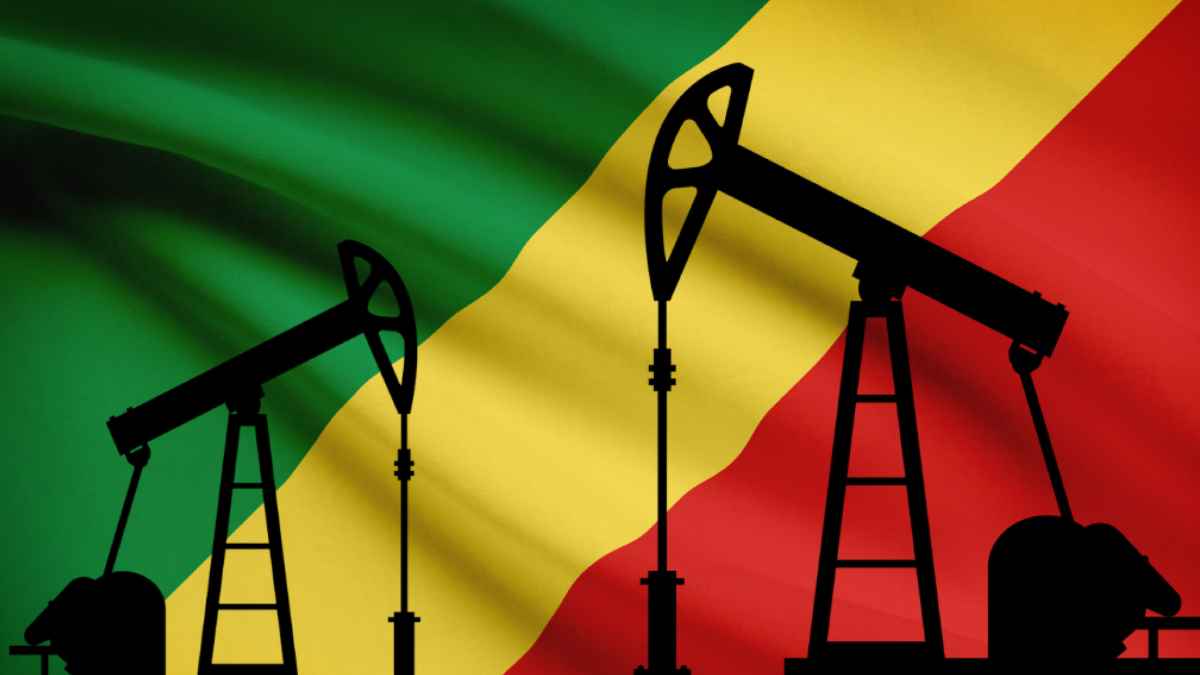
Republic of Congo Lighting the Way for African Oil and Gas (By NJ Ayuk)

Published

on

Congo

The Republic of Congo’s (ROC’s) burgeoning oil and gas success story stems from a recognition of and a willingness to act on multi-faceted opportunities

JOHANNESBURG, South Africa, August 14, 2024/APO Group/ — 

By NJ Ayuk, Executive Chairman, African Energy Chamber (www.EnergyChamber.org).

French oil and gas supermajor TotalEnergies announced in May that the company intends to invest $600 million in the Republic of Congo (ROC) before 2024 is out. The funding will support exploration and improve production in the deep offshore Moho Nord field, which currently produces at a rate of 140,000 barrels per day (bpd), accounting for roughly half of all Congolese oil production. With their added capital, TotalEnergies expects to increase this rate by 40,000 bpd — a welcome boost that will undoubtedly help the ROC get closer to its goal of doubling its total daily rate to 500,000 bpd.

In addition to their operations in the Moho Nord field, TotalEnergies also holds the ROC’s Marine XX permit. The site recently welcomed the arrival of two drilling rigs that TotalEnergies is confident will facilitate new discoveries, which the company also anticipates before the end of the year.

TotalEnergies, of course, has a significant presence on the continent, with a diverse portfolio built over 80 years. Still, this new commitment in Moho Nord is but one of many developments that reflect international confidence in the Congolese hydrocarbon sector and offer justification for the ROC to serve as a model for other African nations to follow.

Getting Out Ahead

The ROC’s burgeoning oil and gas success story stems from a recognition of and a willingness to act on multi-faceted opportunities.

A nation with proven reserves of 1.8 billion barrels (bbl) of oil and 284 billion cubic meters (bcm) of natural gas, the ROC has not fallen victim to the stagnation of red tape and endless deliberation that have plagued other African nations. Instead, the ROC set out to create an enabling business environment within its borders that would attract and retain foreign investment.

Helmed by Bruno Jean-Richard Itoua, the Congolese minister of hydrocarbons, the ROC’s efforts to reinvigorate its hydrocarbon sector have been open and inclusive, incorporating numerous global partnerships and multiple focal points across the industry spectrum.

During remarks at the Invest in African Energy 2024 forum in Paris, Itoua confirmed the ROC’s formation of a gas master plan and a comprehensive gas code. The government will also establish a national gas company in the third quarter of 2024. 

Itoua explained how, going forward, the ROC will steer gas, liquefied natural gas (LNG), and liquefied petroleum gas (LPG) primarily toward their local market with any excess reserved for export to the sub-region to tend to Africa’s energy needs first rather than Europe’s.

He also addressed the importance of public-private cooperation in relation to achieving his ministry’s goals of increasing production by 60% in the next two years while working toward alleviating energy poverty and funding the energy transition.

“Maybe 95% of investment in the oil sector in the Congo comes from the IOCs (international oil companies),” Itoua said. “Our responsibility [as the government] is to create the best business environment, best legal network, and best facilities to attract investors and partners interested in building solutions with us.”

Itoua’s outlook, which reflects his government’s approach to revitalizing the ROC’s hydrocarbon sector, is key to understanding how this small nation is writing its own very big energy success story.

During the leadup to Itoua’s announcement of a new gas master plan, thanks to the existing enabling environment in the ROC, both investor confidence and exploration and production activities were already on the rise.

Upstream and Downstream Projects

As a component of the ROC’s initiative to double its total hydrocarbon output, Pointe-Noire-based oil and gas service Trident OGX Congo commenced its seven-year project to increase production through hydraulic fracturing in the Mengo-Kundji-Bindi II oil fields. With $300 million in financing from the African Export-Import Bank (Afreximbank) kickstarting the program, operators expect the facility to eventually attract $1.5 billion in investments, create new jobs, provide an economic boost to the region, and increase the ROC’s total oil production level by 30%.

Our responsibility [as the government] is to create the best business environment, best legal network, and best facilities to attract investors and partners

Anglo-French oil and gas company Perenco has been active offshore, acquiring 3D seismic data ahead of its exploration schedule planned for the Tchibouela II, Tchendo II, Marine XXVIII, and Emeraude permits the company holds.

Also a testament to the ease of doing business under current ROC leadership, Trident Energy — the London-based international oil and gas company committed to redeveloping mid-life assets — announced in April of this year that it had inked deals with both Chevron and TotalEnergies to acquire interest in ROC fields. Upon final approval, which is expected before the close of Q4 2024, the arrangements will see Trident Energy with an 85% working interest in the Nkossa and Nsoko II fields, a 15.75% working interest in the Lianzi field, and operational control of all three. Trident Energy will also have a 21.5% working interest in the ultra-deepwater Moho–Bilondo field which TotalEnergies will continue to operate.

Commenting on the agreement, Trident Energy Chief Executive Officer Jean-Michel Jacoulot said, “The transaction aligns with our strategy to acquire and operate high quality assets in a safe, efficient and responsible manner.

“Building on our continued successes in Equatorial Guinea and Brazil, we are excited to unlock further value and create opportunities for our partners in the Republic of Congo, host communities and all our stakeholders.”

The ROC also has sought to enhance its refining capabilities, offering potential investors the opportunity to support upgrades to its Congolaise de Raffinage refinery, which currently operates at a rate of 600,000 tons per year.

Construction of an additional refinery, the Atlantique Pétrochimie in Fouta just south of Pointe-Noire, is expected to begin in 2024. With financial backing from the Chinese company Beijing Fortune Dingheng Investment, the refinery will process 2.5 million tons of hydrocarbon products per year, including gasoline and diesel, as well as LPG, kerosene and fuel oil, and raw materials like propylene, propane, hydrogen naphtha, and sulfuric acid.

Turning Up the Gas

With existing natural gas production either stable or in decline over the past decade, another primary drive for the ROC in 2024 is to expand and monetize production with sights on becoming a global LNG exporter in short order.

The ROC sent its first export of LNG to Italy in February 2024 from the first of the two Tango floating liquefied natural gas (FLNG) facilities located 3 kilometers offshore at the Marine XII concession. The Tango FLNG operation is a partnership with Italian multinational energy company Eni with an expected capacity of 4.5 bcm per year once construction of the second FLNG facility wraps up in 2025.

On May 21, 2024, in Brazzaville, Itoua and Algerian Minister of Energy and Mines Mohamed Arkab signed a memorandum of understanding between the two countries covering future cooperation between Algeria’s state-owned oil company, Sonatrach, and Congolese national oil company Société Nationale des Pétroles du Congo (SNPC). Though the memorandum concerns the ROC’s entire hydrocarbon sector, it highlights knowledge-sharing for industry development in LNG, LPG, and petrochemicals as well as carbon footprint reduction.

An associated gas production project at the onshore Banga Kayo block seeks to harness previously flared gas resources for LNG, butane, and propane production for domestic use and regional export in contribution to the ROC’s gas monetization goals.

The conventional oilfield at Banga Kayo, operated by China’s Wing Wah Oil Company, consists of approximately 250 wells currently producing 45,000 bpd with an expected peak of 80,000 bpd. The April 2024 signing of an amended production sharing contract (PSC) between Wing Wah and SNPC that will govern the project marked the start of development for its first phase which aims for a production capacity of one million cubic meters per day (mcm/d). Two subsequent phases slated for March and December of 2025 will up the site’s production to five mcm/d.

The Banga Kayo project design incorporates power generation and environmentally friendly water treatment for each unit of the facility, with provisions of excess power and clean water sources for the surrounding communities. The workforce at the site, currently over 3,000 members strong, is also majority Congolese. By promoting efficiency, scalability, reduced emissions, and local benefits, the Banga Kayo project exemplifies the best approach for maximizing production and progress in the ROC and elsewhere in Africa.

With the assurance of a concrete gas master plan and gas code nearing finalization, promising developments like these are certain to multiply and increase in frequency and substance in the days ahead.

Betting on a Winner

By seeking and securing mutually beneficial relationships with international oil companies of varying sizes, both in and out of Africa, and by working towards defined goals, the ROC will ensure that it remains engaged in sustainable development and on a path toward economic growth.

The ROC’s enabling hydrocarbon policies attract sizeable foreign investment and offer a profitable working environment for operators of any size that is free from the paralyzing delays they often encounter in other countries.

By continuing in this fashion, in the years to come, the ROC will likely enjoy economic benefits widespread throughout its population, and it will surely find itself where it wants to be — in its rightful place alongside the other major energy exporters of the future.

The process by which it got there will also likely serve as a valuable template for other nations seeking to convert their natural wealth into long-term prosperity.

Distributed by APO Group on behalf of African Energy Chamber

Events

As global power structures shift, Invest Africa convenes The Africa Debate 2026 to redefine partnership in a changing world

Published

on

The Africa Debate 2026 will provide a platform for this essential, era-defining discussion, convening leaders to explore how Africa and its partners can build more balanced, resilient and sustainable models of cooperation

LONDON, United Kingdom, February 5, 2026/APO Group/ –As African economies assert greater agency in a rapidly evolving global order, Invest Africa (www.InvestAfrica.com) is delighted to announce The Africa Debate 2026, its flagship investment forum, taking place at the historic Guildhall in London on 3 June 2026.

Now in its 12th year, The Africa Debate has established itself as London’s premier platform for African investment dialogue since launching in 2014, convening over 800 global decision-makers annually to shape the future of trade, finance, investment, and development across the continent.

Under the theme “Redefining Partnership: Navigating a World in Transition”, this year’s forum will focus on Africa’s response to global economic realignment with greater agency, ambition and economic sovereignty.

The Africa Debate puts Africa’s priorities at the centre of the conversation, moving beyond traditional narratives to focus on ownership, resilience and long-term value creation.

“Volatility is not new to Africa. What is changing is the opportunity to respond with greater agency and ambition,” says Invest Africa CEO Chantelé Carrington.

“This year’s edition of The Africa Debate asks how we strengthen economic sovereignty — from access to capital and investment to financial and industrial policy — so African economies can take greater ownership of their growth. Success will be defined by how effectively we turn disruption into leverage and partnership into shared value.”

The Africa Debate 2026 will provide a platform for this essential, era-defining discussion, convening leaders to explore how Africa and its partners can build more balanced, resilient and sustainable models of cooperation.

Key challenges driving the debate

Core focus areas for this year’s edition of The Africa Debate include:

This year’s edition of The Africa Debate asks how we strengthen economic sovereignty — from access to capital and investment to financial and industrial policy

Global Realignment & New Partnerships

How shifting geopolitical and economic power structures are reshaping Africa’s global partnerships, trade dynamics and investment landscape.

Financing Africa’s Future

The growing need to reform the global financial architecture, new approaches to development finance, as well as the strengthening of market access and financial resilience of African economies in a changing global system.

Strategic Value Chains

Moving beyond primary exports to build local value chains in critical minerals for the green economy. Also addressing Africa’s energy access gap and mobilising investment in renewable and transitional energy systems.

Digital Transformation & Technology

Unlocking growth in fintech, AI and digital infrastructure to drive productivity, inclusion, and the next phase of Africa’s economic transformation.

The Africa Debate 2026 offers a unique platform for high-level dialogue, deal-making, and strategic engagement. Attendees will gain actionable insights from leading policymakers, investors and business leaders shaping Africa’s economic future, while building strategic partnerships that define the continent’s next growth phase.

Registration is now open (http://apo-opa.co/46b19gj).

Distributed by APO Group on behalf of Invest Africa.

Continue Reading

Business

Zion Adeoye terminated as Chief Executive Officer (CEO) of CLG due to serious personal and professional conduct violations

Published

on

After a thorough internal and external investigation, along with a disciplinary hearing chaired by Sbongiseni Dube, CLG (https://CLGglobal.com) has made the decision to terminate Zion Adeoye due to serious personal and professional conduct violations. This process adhered to the Code of Good Practice of the Labour Relations Act, ensuring fairness, transparency, and compliance with South African law.

Mr. Adeoye has been held accountable for several serious offenses, including:

  • Making malicious and defamatory statements against colleagues
  • Extortion
  • Intimidation
  • Fraud
  • Misuse of company funds
  • Theft and misappropriation of funds
  • Breach of fiduciary duty
  • Mismanagement

His actions are in direct contradiction to our firm’s core values. We do not approve of attorneys spending time in a Gentleman’s Club. CLG deeply regrets the impact this situation has had on our colleagues and continues to provide full support to those affected.

We want to express our gratitude to those who spoke up and to reassure everyone at the firm of our unwavering commitment to maintaining a respectful workplace. Misconduct of any kind is unacceptable and will be addressed decisively.

We recognize the seriousness of this matter and have referred it to the appropriate law enforcement, regulatory, and legal authorities in Nigeria, Mauritius, and South Africa. We kindly ask that the privacy of the third party involved be respected.

Distributed by APO Group on behalf of CLG.


Continue Reading

Business

The International Islamic Trade Finance Corporation (ITFC) Strengthens Partnership with the Republic of Djibouti through US$35 Million Financing Facility

Published

on

This facility forms part of the US$600 million, three-year Framework Agreement signed in May 2023 between ITFC and the Republic of Djibouti, reflecting the strong and growing partnership between both parties

JEDDAH, Saudi Arabia, February 5, 2026/APO Group/ –The International Islamic Trade Finance Corporation (ITFC) (https://www.ITFC-IDB.org), a member of the Islamic Development Bank (IsDB) Group, has signed a US$35 million sovereign financing facility with the Republic of Djibouti to support the development of the country’s bunkering services sector and strengthen its position as a strategic regional maritime and trade hub.

The facility was signed at the ITFC Headquarters in Jeddah by Eng. Adeeb Yousuf Al-Aama, Chief Executive Officer of ITFC, and H.E. Ilyas Moussa Dawaleh, Minister of Economy and Finance in charge of Industry of the Republic of Djibouti.

The financing facility is expected to contribute to Djibouti’s economic growth and revenue diversification by reinforcing the competitiveness and attractiveness of the Djibouti Port as a “one-stop port” offering comprehensive vessel-related services. With Red Sea Bunkering (RSB) as the Executing Agency, the facility will support the procurement of refined petroleum products, thus boosting RSB’s bunkering operations, enhancing revenue diversification, and consolidating Djibouti’s role as a key logistics and trading hub in the Horn of Africa and the wider region.

We look forward to deepening this partnership, creating new opportunities, and leveraging collaborative programs to advance key sectors and drive sustainable economic growth

Commenting on the signing, Eng. Adeeb Yousuf Al-Aama, CEO of ITFC, stated:

“This financing reflects ITFC’s continued commitment to supporting Djibouti’s strategic development priorities, particularly in strengthening energy security, port competitiveness, and trade facilitation. We are proud to deepen our partnership with the Republic of Djibouti and contribute to sustainable economic growth and regional integration.”

H.E. Ilyas Moussa Dawaleh, Minister of Economy and Finance in charge of Industry of the Republic of Djibouti, commented: “Today’s signing marks an important milestone in the development of Djibouti’s bunkering services and reflects our strong and valued partnership with ITFC, particularly in the oil and gas sector. This collaboration supports our ambition to position Djibouti as a regional hub for integrated maritime and logistics services. We look forward to deepening this partnership, creating new opportunities, and leveraging collaborative programs to advance key sectors and drive sustainable economic growth.”

This facility forms part of the US$600 million, three-year Framework Agreement signed in May 2023 between ITFC and the Republic of Djibouti, reflecting the strong and growing partnership between both parties.

Since its inception in 2008, ITFC and the Republic of Djibouti have maintained a strong partnership, with a total of US$1.8 billion approved primarily supporting the country’s energy sector and trade development objectives.

Distributed by APO Group on behalf of International Islamic Trade Finance Corporation (ITFC).

Continue Reading

Trending

Exit mobile version