Connect with us
Anglostratits

Business

Regional Economic Outlook 2026: Southern Africa Must Mobilise Development Finance at Scale to Close Annual $55 Billion Financing Gap

Published

on

The report reviews the region’s macroeconomic prospects, quantifies its development financing gap, and sets out reforms needed to strengthen financial systems and regional agency in a changing global economy

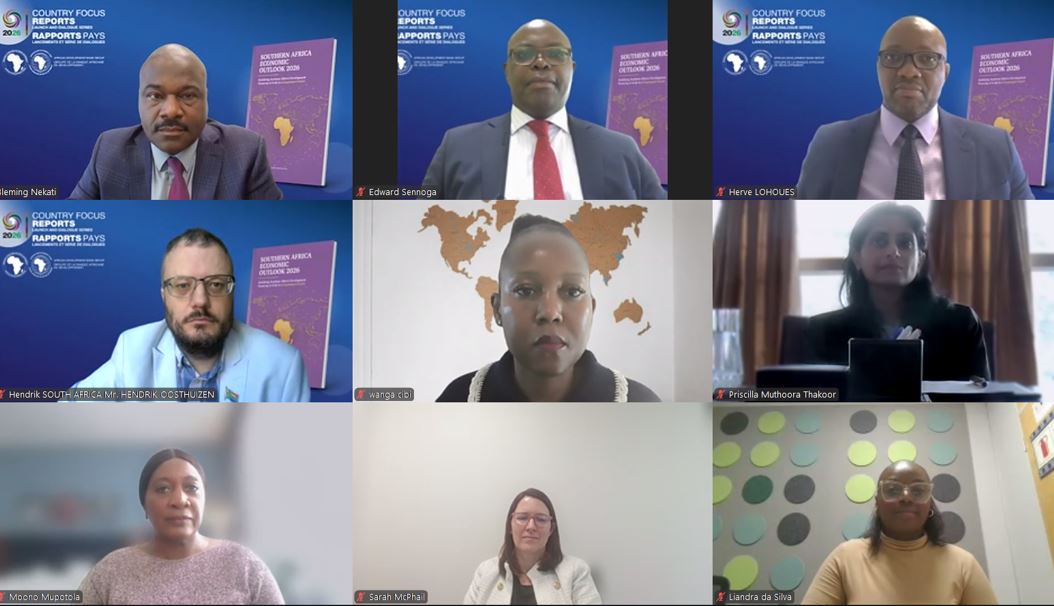
PRETORIA, South Africa, July 29, 2026/APO Group/ –Southern Africa must urgently mobilise development financing at scale to turn a gradual and uneven economic recovery into real gains in living standards, according to the African Development Bank’s (https://www.AfDB.org) 2026 Regional Economic Outlook for Southern Africa: Mobilising Southern Africa’s Development Financing at Scale in a Fragmented World, released on Tuesday.

The report reviews the region’s macroeconomic prospects, quantifies its development financing gap, and sets out reforms needed to strengthen financial systems and regional agency in a changing global economy.

The report projects regional growth rising from 2.1% in 2026 to 2.7% in 2027, supported by stronger household consumption and services. However, limited diversification, weak agricultural productivity, infrastructure gaps, and low domestic resource mobilization continue to constrain long-term growth and resilience, trimming gains in GDP per capita and efforts to tackle entrenched economic disparities.

A Widening Financing Gap

At the heart of the report is a stark diagnosis: Southern Africa’s development challenge is not simply a shortage of resources, but rather persistent constraints in mobilizing, intermediating, and deploying available capital effectively and at scale.

“The challenge is not simply a shortage of money. It is mobilising, intermediating, and deploying the capital that already exists, effectively and at scale, in an increasingly fragmented global economy,” said Kennedy Mbekeani, African Development Bank’s Director General for Southern Africa.

The Bank’s Chief Economist and Vice-President for Economic Governance and Knowledge Management, Kevin Urama, urged regional leaders to swiftly implement the New African Financial Architecture for Development (NAFAD), a continental initiative championed by President Dr Sidi Ould Tah and endorsed by African leaders earlier this year.

”It is only through the effective implementation of the key building blocks of the new financial architecture that the continent can weather the financial storms and increased volatilities and uncertainties that come with the ongoing fragmentation in the global financial markets,” Urama said.

Gross capital formation in the region fell to around 18.6% of GDP by 2025 — below the threshold needed for middle-income economies to achieve structural transformation. With tighter global financial conditions and declining concessional aid compounding the problem, Southern Africa is projected to face an annual financing shortfall of approximately $55 billion by 2030.

“The gap between domestic savings and investment reflects both a dependence on external funding and poor utilisation of local resources,” the report states, citing weak financial intermediation, poor project preparation, and a lack of long-term funding sources as key barriers to converting available capital into productive investment.

 Inflation Eases, but Risks Remain Elevated

It is only through the effective implementation of the key building blocks of the new financial architecture that the continent can weather the financial storms

On the macroeconomic front, the report finds inflation moderating significantly across the region — falling from 26.1% in 2024 to 12.3% in 2025, with a further decline to 8.4% projected for 2026.

Despite a cautiously positive trajectory, the report cautions that fiscal deficits, rising public debt burdens, and external imbalances continue to constrain policy space. Poverty reduction has slowed owing to income losses, inflation, and climate shocks, while persistent inequality, unemployment, and weak service delivery continue to limit welfare gains. Stringent global financial conditions could trigger capital outflows and exchange rate depreciation, adding further pressure to an already fragile recovery.

Untapped Capital

The report identifies a signifcant underutilized financing sources across the region — from diaspora remittances and institutional investors to capital markets and natural resource wealth — though their potential varies widely by country. Remittances play an outsized role in Lesotho and Zimbabwe, while Namibia and South Africa benefit from deeper capital markets and substantial pension assets, pointing to untapped scope for greater institutional investor participation.

To close the financing gap, the report recommends an integrated policy agenda: strengthening fiscal capacity and public financial management; curbing resource leakages and illicit financial flows; de-risking investment through targeted instruments and expanded blended finance; and mobilizing institutional capital — including pension funds, insurance companies, and sovereign funds — through public-private partnerships. It also calls for leveraging digital technologies to formalize economic activity, broaden the tax base, and reinforce the fiscal social contract.

The report argues that Southern Africa must move beyond bank-centric financial models to build deeper, more integrated capital markets capable of channelling long-term assets from pension and insurance funds.

South Africa in Focus

Alongside the regional outlook, the Bank unveiled its South Africa Country Focus Report (CFR) 2026, which applies the development financing theme at country level and shows that even Africa’s most developed capital market faces a significant financing challenge.

“Fragmentation in the global economy is not simply a threat to South Africa. It is also an opening,” said Hendrik Oosthuizen, in a speech on behalf of South Africa’s National Treasury. “As traditional sources of concessional finance contract and become more contested, the countries that prosper will be those that get better at mobilizing their own capital and at making themselves an attractive, well-governed destination for others’ capital.”

South Africa’s GDP growth rose to 1.1% in 2025 from 0.5% in 2024, supported by agriculture and stronger finance, real estate, and trade activity. Growth is projected at 1.2% in 2026 and 1.6% in 2027, aided by improved energy supply and Operation Vulindlela reforms (https://apo-opa.co/3U1q1U8). Electricity and water shortages, freight and port inefficiencies, and vulnerability to global risks continue to weigh on the outlook. Unemployment remains high at 31.4%, while public debt is expected to peak at 78.9% of GDP in 2025/26.

The report notes that South Africa’s October 2025 exit from the Financial Action Task Force (FATF) grey list, after successfully completing 22 anti-money laundering and counter-terrorism financing reforms, helped strengthen investor confidence and supported Moody’s Ratings’ May 2026 outlook upgrade from stable to positive. These developments also underscore that stronger governance, and institutional credibility can lower capital costs.

Both reports were presented by Edward Sennoga, the Bank’s Lead Economist for Southern Africa, ahead of a fireside chat, “Mobilizing development financing at scale: from Regional Trends to Country Perspectives.” moderated by Hervé Lohoues, the Bank’s Acting Director of the Country Economics Department, the discussion drew participants from South Africa’s National Treasury, the South African Reserve Bank, Nedbank, the Southern African Development Community (SADC), officials across the region, and members of the public.

Click here (https://apo-opa.co/3TLKGvr) to download the full report.

Distributed by APO Group on behalf of African Development Bank Group (AfDB).

Business

Canon Central & North Africa Secures Gold at the Brandon Hall Group Human Capital Management (HCM) Excellence Awards for Second Consecutive Year

Published

on

2026 recognition honours CCNA’s Management Team Development Programme for innovation in leadership development

DUBAI, United Arab Emirates, September 9, 2026/APO Group/ –Canon Central & North Africa (CCNA) (www.Canon-CNA.com) has received a Gold Award at the 2026 Brandon Hall Group HCM Excellence Awards for its Management Team Development Programme (MTDP), recognised under the category “Best Unique or Innovative Leadership Development Program”. This achievement marks CCNA’s second consecutive year of winning top honours at these global awards.


The Brandon Hall Group HCM Excellence Awards recognise achievements in human capital management, with entries evaluated by an independent panel of analysts, industry experts and experienced practitioners against criteria including business need, programme design, innovation, adoption and organisational impact.

Gaining competitive advantage and sustainable success in Africa’s dynamic, diverse and ever evolving business landscape, requires leaders who transcend functional boundaries, embrace agility, and lead through a shared organizational perspective, united by a common goal.

Winning this Gold Award for our Management Team Development Programme is a proud moment for CCNA

The award-winning Management Team Development Program (MTDP) was designed to help lay the foundation for this ambition. Anchored in Canon EMEA’s Leadership Principles, the program elevated enterprise leadership capability within the Management Team.

Somesh Adukia, Managing Director, Canon Central & North Africa, said: “Winning this Gold Award for our Management Team Development Programme is a proud moment for CCNA. It reflects the strength of our leaders and the work our HR team has put into creating a programme tailored to our business.

This program played a pivotal role in bringing the Management Team together in a development experience and laid the right foundation for the next decade of CCNA’s growth journey . This recognition reinforces our commitment to the continuous pursuit of leadership excellence.”

Deepali Arora, HR Director, Canon Central & North Africa, added: ” Capability is most powerful when developed within the right business context, aligned to organizational priorities. The MTDP program was intentionally designed and delivered fully in-house with an innovative co-facilitation approach.

The program enabled the Management Team to move beyond Functional excellence and strengthen collective organizational leadership. This what makes the recognition truly special.”

This latest recognition builds on CCNA’s success at the 2025 Brandon Hall Group HCM Excellence Awards, where the organisation received two Gold Awards for its Future Leader Program and CCNA Clubs. Together, these achievements reflect CCNA’s continued focus on creating meaningful, locally relevant development opportunities that strengthen its people and leadership capabilities across the organisation.

Distributed by APO Group on behalf of Canon Central and North Africa (CCNA).


Continue Reading

Business

Shenzhen-Hong Kong-Guangzhou Innovation Cluster in China maintains global lead

Published

on

WIPO

HONG KONG SAR – Media OutReach Newswire – 9 September 2026 – The World Intellectual Property Organization (WIPO) released its Global Innovation Index (GII) 2026 on September 8, revealing that the Shenzhen-Hong Kong-Guangzhou metropolitan cluster, located in Southern China, has once again secured the top position among the world’s 100 leading innovation clusters. This marks another triumph for the Guangdong-Hong Kong-Macao Greater Bay Area (GBA), solidifying its status as a global powerhouse for scientific advancement and technological entrepreneurship.

The annual GII ranking evaluates innovation activity through three core metrics: international patent filings via WIPO’s Patent Cooperation Treaty (PCT), scientific publications and the number of venture capital deals. For this year’s ranking, the Shenzhen-Hong Kong-Guangzhou cluster filed 2,259 PCT applications, published 4,060 scientific articles and had 138 venture capital deals, all per 1 million inhabitants over the past five years.


Welcoming the announcement, a spokesman for the Hong Kong Special Administrative Region (HKSAR) Government said the ranking reaffirms the outstanding innovative capacity and the innovation and technology (I&T)-supporting financing ecosystem of the GBA.

“Expediting I&T development has been a policy priority of this Government,” the spokesman added, highlighting the HKSAR Government’s continuous development of the original grant patent system and introduction of the patent box regime, which offers tax concessions for intellectual property income to promote innovation.

The HKSAR Government’s strategic investments are already yielding tangible results. The number of start-ups in Hong Kong has surged from over 1,500 in 2015 to more than 5,200 in 2025. The city’s two I&T flagships—Hong Kong Science Park and Cyberport—have collectively nurtured around 20 unicorns to date.

A landmark development in this trajectory is the official opening of the Hong Kong Park of the Hetao Shenzhen-Hong Kong Science and Technology Innovation Co-operation Zone (the Loop Hong Kong Park) in December 2025. Over 100 technology enterprises and institutions have already signed leases and begun moving in. The Loop Hong Kong Park is poised to serve as an important platform for basic scientific research, commercialisation, pilot production, and international I&T collaboration within the GBA.

Furthermore, the establishment of the San Tin Technopole Company Limited in June 2026 is set to develop 210 hectares of I&T land in the San Tin Technopole, which is located in Hong Kong’s Northern Metropolis development. It will create a vital node for integrated upstream, midstream and downstream industrial development, alongside the Loop Hong Kong Park.

Hong Kong’s financial machinery remains a cornerstone of its innovation success. The city boasts a vibrant private equity market with assets under management nearing US$250 billion, ranking second in Asia after the Chinese Mainland.

Looking ahead, Hong Kong will proactively align its strategy with the National 15th Five-Year Plan to fortify its position as an international I&T centre. The city will also further deepen collaboration with GBA sister cities, and contribute to the nation’s efforts in building a modern industrial system and achieving high-level scientific and technological self-reliance and strength.


Continue Reading

Business

Sancorp Group Joins African Energy Week (AEW) as Platinum Partner, Deepening Its African Energy Footprint

Published

on

African Energy Chamber

The trading group brings vertical integration, investment and upstream services to AEW 2026, with operations spanning Nigeria, Ghana, the Ivory Coast and Angola

CAPE TOWN, South Africa, August 20, 2026/APO Group/ –Sancorp Group, the Dubai-headquartered energy and commodities trading group with active operations across sub-Saharan Africa, will participate as a Platinum Partner at African Energy Week (AEW) 2026 in Cape Town from October 12-16. The partnership, AEW’s highest tier, reflects the growing commercial engagement between Gulf-based energy groups and African markets.


Sancorp operates across the full energy value chain, from crude oil and refined product trading through upstream asset participation and oilfield services. Its trading counterparties include Trafigura, Mercuria, Dangote Petroleum Refinery, Dangote Fertilizers, Société Ivoirienne de Raffinage (SIR), PETROCI, the Tema Oil Refinery and Ghana’s Bulk Oil Storage and Transportation Company (BOST). To date, Sancorp has structured over $2 billion in oil and gas investments across the continent.

The group’s vast commercial network makes its presence at AEW a prime opportunity for operators, refineries and traders looking to build or expand supply relationships in West Africa. The Ivory Coast is Sancorp’s largest and most active market, with projected annual flows exceeding $600 million across refined products, crude, LPG and fertilizer deliveries into SIR and PETROCI.

Sancorp is built around relationships and execution in markets where both of those things are hard to get right

In July 2026, the group delivered more than 36,000 tons of gasoil into SIR’s Abidjan terminal. Sancorp also holds a government-certified license to import and distribute fertilizers in the country, supplying 500,000 bags of urea and NPK annually through the Ministry of Agriculture.

In Ghana, Sancorp supplied more than 300,000 tons of gasoil and gasoline in 2024, while in Nigeria its subsidiary SCP Energy maintains NIPEX-certified upstream service capabilities and is a certified export trading counterparty to the Dangote Refinery. The group is also expanding into Angola, where it is registered with Sonangol and in advanced discussions on minority interests in two deepwater production blocks and an equity stake in one of the country’s planned grassroots refineries.

For AEW 2026 attendees, Sancorp’s model represents the kind of Gulf-to-Africa commercial bridge that is becoming more prominent across the continent’s energy trading landscape: structured finance, physical trading capacity and on-the-ground presence across multiple West African markets, all housed within a single group. The Platinum Partnership gives Sancorp visibility across the full AEW program as it looks to scale its trading book and deepen its upstream and refining positions.

“Sancorp is built around relationships and execution in markets where both of those things are hard to get right,” says NJ Ayuk, Executive Chairman of the African Energy Chamber. “This is a group that is actively trading, investing and building upstream positions across West Africa, and their presence at the event creates real opportunities for the operators and governments in the room.”

As a Platinum Partner at AEW 2026, Sancorp is expected to engage operators, refineries, NOCs and investors on trading partnerships, upstream investment and supply-chain development across West and Southern Africa.


Distributed by APO Group on behalf of African Energy Chamber.


Continue Reading

Trending