Connect with us
Anglostratits

Business

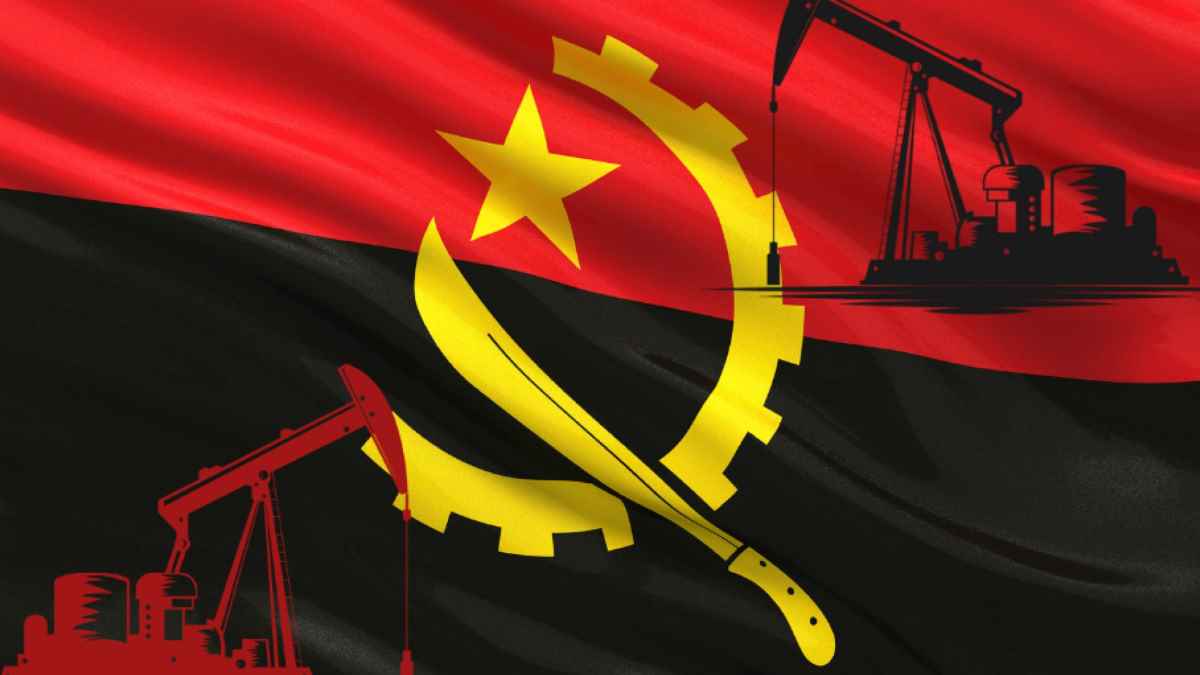
Reform has Benefited Angola’s Oil and Gas Industry – and there Should be More of it (By NJ Ayuk)

Published

on

AOG

Despite the progress made so far, Angola’s government has yet to proceed with plans to sell up to 30% of Sonangol

JOHANNESBURG, South Africa, August 20, 2024/APO Group/ — 

By NJ Ayuk, Executive Chairman, African Energy Chamber (https://EnergyChamber.org).

Chevron is already a major player in Angola’s oil sector, where it holds a market share of 26%. However, the U.S.-based major recently took a step that promises to expand its footprint further. Specifically, it announced in mid-June that it had signed contracts for two license areas off the coast of Angola – Blocks 49 and 50, both located in an ultra-deepwater section of the Lower Congo Basin.

Just a few years ago, this deal wouldn’t have been possible.

First, the other party to the contracts — the National Oil, Gas and Biofuels Agency (ANPG) — didn’t even come into existence until 2021. That’s when the Angolan government, led by President João Lourenço, created the agency to serve as the state oil and gas concessionaire — that is, the government body responsible for negotiating petroleum agreements, a role previously assigned to the national oil company (NOC) Sonangol. Diamantino Pedro Azevedo, Minister of Mineral Resources and Petroleum has made it a point that Angola must not choose between economic growth and environmental protection. He crafted solutions to energy transition, reforming the energy sector, while simultaneously increasing market certainties and creating opportunities. For the energy companies, certainty translates into confidence, and confidence leads to more investment, more jobs and more robust growth for Angola.

Second, the type of contracts Chevron signed for Blocks 49 and 50 wasn’t available in Angola until 2020, when they were launched as part of the Angolan plan to reform and incentive investment in its oil and gas industry, an initiative that dates to 2017.

These risk service contracts (RSC), as they’re known, are designed specifically for high-risk projects that are anticipated to have trouble securing investment commitments through the usual channels — that is, competitive bidding processes and the signing of production-sharing agreements (PSA).

Under RSCs, investors provide exploration and development services in exchange for guaranteed payments. This is in contrast to PSAs, under which investors are entitled to claim a share of production, assuming that exploration leads to commercial development.

In other words, the Angolan government’s reform program made Chevron’s deal for Blocks 49 and 50 possible. (It has also made other deals possible, including the RSCs signed in 2020 by ExxonMobil, another U.S.-based giant.)

A New Frontier

Chevron has not yet made many details of its new contracts public. It has not, for instance, revealed the value of the deals.

However, the company certainly seems to view these projects as significant. As William Lacobie, the managing director of the company’s Southern Africa Strategic Business Unit, pointed out last month, Blocks 49 and 50 represent a new frontier for Chevron subsidiary Cabinda Gulf Oil Co. Ltd (CABGOC). Thus far, he noted, CABGOC has focused on Blocks 0 and 14, both located in well-explored sections of the Angolan offshore zone. Blocks 49 and 50 will be “CABGOC’s first operated assets outside of our existing Cabinda concession area,” he said.

But Chevron will not be the only party to benefit. Angola also stands to gain from the new contracts, which will add value to the national economy. This value will come partly in the form of investment and partly in access to the sophisticated new technologies needed to explore (and possibly develop) the ultra-deepwater blocks.

A Sign of Reform

The benefits aren’t limited to money and technology, however. The RSCs for Blocks 49 and 50 also show that the reforms driven by Diamantino Pedro Azevedo are opening up new opportunities for the oil and gas industry.

Let me explain.

Angola has made a number of other changes since 2017 in a bid to encourage IOCs to do business there

The RSCs are attractive to Chevron because they give the company an opportunity to earn money even though Blocks 49 and 50 lie within the ultra-deepwater section of the offshore zone. These areas have yet to be fully explored, and they lack the extensive production infrastructure that supports the U.S. major’s upstream operations at Blocks 0 and 14. In other words, the new contracts allow the company to enter a frontier province and expand its footprint in Angola without incurring too much risk.

At the same time, the deals benefit the country, as they will bring Chevron’s expertise, equipment, and technology to these ultra-deepwater sites, hopefully as a prelude to further investment in the area by other international oil companies (IOCs). This is not something Angola could have accomplished in other ways, as Sonangol does not have the resources needed to explore and develop the blocks on its own, and a competitive bidding process might have failed to attract other investors.

The same is true of ExxonMobil’s deals for Blocks 30, 44, and 45. Without RSCs, these sites, all of which are located within another frontier province known as the Namibe Basin, might never have been able to secure investment commitments.

Other Changes for The Better

The availability of RSCs aside, Angola has made a number of other changes since 2017 in a bid to encourage IOCs to do business there.

For example, it has formulated plans for partial privatization of Sonangol. The NOC had previously functioned more as an arm of the government than as an oil company, serving as the main point of contact for all potential partners, enforcing industry laws and regulations, and operating multiple non-core subsidiaries at the behest of officials in Luanda. Now, though, it has hived off many of its daughter companies and is preparing for an initial public offering on local and international exchanges.

Meanwhile, Angolan authorities have also established a permanent offer scheme that allows ANPG to accelerate the pace of signing contracts by negotiating directly with IOCs on certain projects rather than carrying out competitive bidding rounds. Additionally, it has revised the tax code to offer additional incentives to investors in the petroleum sector and has reformed local content policies in ways that are designed to help IOCs work with local contractors.

Moreover, Angola has taken steps to assist the oil and gas sector less directly. For example, it now permits citizens of 98 countries to visit Angola without a visa, up from 62 previously. This measure was ostensibly designed to facilitate tourism, but it also promises to benefit IOCs since some of the new entries on the list are countries that host the world’s biggest oil and gas operators, such as the U.S., the UK, South Korea, Japan, and India.

Altogether, these measures seem to have helped Angola weather the coronavirus (COVID-19) pandemic in 2020 and other events that disrupted global energy markets in subsequent years. They have also allowed the country to attract investments for new projects. These include deals for construction of the Cabinda and Lobito refineries and for the expansion of liquefied natural gas (LNG) exports to Italy by 1.5 billion cubic meters (bcm) per year.

More Reform Needed

Even so, Angola has more work to do. Reform must continue.

Despite the progress made so far, Angola’s government has yet to proceed with plans to sell up to 30% of Sonangol. It has set a deadline of 2026 for the company’s IPO, but it has also said it will only move forward after taking certain steps to establish the NOC as a vertically integrated oil and gas company that has a substantial upstream footprint and more capacity to meet domestic fuel demand, as the AEC discussed in greater detail in July 2023.

Moving forward, the government will need to ensure that these steps do not falter.

If Luanda fails to take these steps and enact further reforms, it risks losing some of the ground it has gained. It will have a harder time staving off a long-term decline in crude oil output, boosting natural gas production, attracting funding for refining and petrochemical projects that can supply the local market with cleaner fuels, and laying the groundwork for its eventual transition to renewable energy.

Therefore, it must work to make the country more competitive, more business-friendly, and more transparent. It should clamp down on corruption and improve oversight of its sovereign wealth fund, which handles the state’s earnings from oil and gas sales. It ought to team up with investors to look for ways to maximize local content, and it should consider additional tax breaks for IOCs.

Moreover, it should establish a domestic value chain for the country’s natural gas production by encouraging consumption of liquid petroleum gas (LPG). This would allow many more Angolans to gain access to clean-burning fuels and phase out the use of biofuels that contribute to deforestation such as charcoal and wood.

It’s true that Angola’s oil and gas sector has made progress since 2017, thanks to the reforms enacted by the Lourenço administration. But the reform process should not stop here, with the signing of Chevron’s new RSCs. It should move forward so that the country has a better chance to aim for a brighter future.

Distributed by APO Group on behalf of African Energy Chamber.

Business

Aurionpro expands its multi-country transaction banking engagement with Diamond Trust Bank (DTB)

Published

on

Aurionpro

Aurionpro’s upgraded iCashpro platform for DTB delivers a unified digital experience across payments, trade, virtual accounts, and real-time reporting, enhancing straight-through processing, visibility, and control for both the bank and its corporate customers

MUMBAI, India, April 30, 2026/APO Group/ –Aurionpro Solutions Limited (www.AurionPro.com) (BSE: 532668 | NSE: AURIONPRO)a global leader in banking technology, announced the expansion and upgrade of its transaction banking engagement with Diamond Trust Bank (DTB), to modernize and enhance the bank’s corporate transaction banking capabilities across multiple countries.

Download Document: https://apo-opa.co/4edHUaC

This multi-country transaction banking upgrade covering Kenya, Uganda, and Tanzania aligns with DTB’s intent to enhance customer experience, streamline operations, and support growing transaction volumes as it expands its regional corporate banking footprint. DTB continues to focus on building a more agile, ‘digital-first’ banking experience, particularly around payments for its corporate customers across Africa, and is now well positioned to scale these capabilities. As part of its broader transformation agenda, the bank has been steadily investing in platforms that enhance scale, reliability, and service consistency across markets.

Through this partnership, we are proud to lead the next era of transformation in transaction banking, helping DTB enhance operational agility

Aurionpro’s upgraded iCashpro platform for DTB delivers a unified digital experience across payments, trade, virtual accounts, and real-time reporting, enhancing straight-through processing, visibility, and control for both the bank and its corporate customers. By enabling DTB to standardize and scale its transaction banking operations across countries, the platform ensures consistent service levels, stronger control, and improved efficiency. It also supports enhanced user experience, advanced security, and the flexibility to introduce new features as DTB expands its regional transaction banking footprint.

Murali Natarajan (https://apo-opa.co/48trPdk), Managing Director & CEO, DTB Kenya   commented: “We are delighted to strengthen and broaden our partnership with Aurionpro Solutions as part of DTB’s ongoing digital transformation journey across multiple markets. Our focus on innovation, operational excellence, and customer-centricity continues to guide our technology investments. This upgrade strengthens our transaction banking capabilities, enabling us to deliver greater value to our customers through robust digital channels and seamlessly integrated experiences.”

Ashish Rai, Group CEO, Aurionpro Solutions, commented: “We are pleased to deepen our multi-country engagement with Diamond Trust Bank and support the next phase of its transaction banking modernization. As DTB continues to scale across markets, platform resilience and consistency become paramount. Through this partnership, we are proud to lead the next era of transformation in transaction banking, helping DTB enhance operational agility, deliver superior experiences to corporate customers, and create long-term value across geographies.”

He added, “Aurionpro’s iCashpro lays a strong digital foundation for transaction & wholesale banks across the globe to grow their corporate and SME client portfolio today, while creating a clear roadmap for next- generation capabilities in AI-driven insights, advanced automation and API-led connectivity for businesses in Kenya and across Africa.”

Distributed by APO Group on behalf of Aurionpro Solutions Ltd.


Continue Reading

Business

Minerals Council Chief Executive Officer (CEO) Joins African Mining Week (AMW) as South Africa Improves Sectorial Investment Climate

Published

on

Energy Capital

Minerals Council CEO to share insights on policy, infrastructure and investment trends shaping South Africa’s mining industry

CAPE TOWN, South Africa, April 30, 2026/APO Group/ –The upcoming African Mining Week (AMW) conference will feature Mzila Mthenjane, CEO of the Minerals Council of South Africa, as a speaker. Scheduled for October 14 – 16, 2026 in Cape Town, the event will bring together global investors, policymakers and industry leaders, with Mthenjane’s participation highlighting the council’s commitment to engaging international stakeholders and promoting investment across South Africa’s mining sector.

His participation comes at a critical moment as the Minerals Council works closely with government on finalizing the Mineral Resources Development Bill 2025, a policy framework aimed at strengthening the country’s mining investment climate and the sector’s contribution to GDP. According to the council, the revised legislation will support new investment across the value chain as South Africa seeks to mobilize R2 trillion over the next five years to unlock its critical minerals potential.

The policy reforms come amid shifting production trends in the sector. In 2025, South Africa recorded declines in gold and platinum group metals output of 1.9% and 4.1%, respectively. The new regulatory framework is expected to strengthen public-private partnerships and stimulate investment, enabling South Africa to increase production and capitalize on strong global commodity prices. Increased private sector investments is crucial with South Africa seeking targeting to unlock an estimated R40 trillion in untapped iron ore potential as well as maintain its position as the world’s leading producer of chrome and manganese.

At AMW 2026, Mthenjane is expected to outline these trends, providing insights into how the council is contributing to addressing challenges disrupting the sector. Infrastructure and energy costs remain key concerns for industry players. To support the energy-intensive sector, South Africa approved a 35% reduction in electricity tariffs for major ferrochrome producers, helping stabilize an industry that has faced significant cost pressures after electricity prices surged by roughly 900% since 2008.

Logistics constraints are also a priority area for reform. South Africa’s economy is losing an estimated R1 billion per day due to inefficiencies across rail and port infrastructure. As a result, the government is considering measures supported by the Minerals Council to increase private sector participation in logistics. Planned reforms include rail modernization initiatives targeting 250 million tons of freight capacity by 2029, alongside port upgrades and private operator participation aimed at strengthening mineral exports and improving supply chain efficiency.

Beyond infrastructure and policy reforms, the Minerals Council is advocating for stronger exploration investment to support long-term industry growth.

At AMW, Mthenjane is expected to highlight these developments and outline the steps required to reinforce South Africa’s position in the global minerals supply chain. His insights will offer investors and stakeholders a timely perspective on opportunities within the country’s mining sector.

Distributed by APO Group on behalf of Energy Capital & Power.

Continue Reading

Energy

Seychelles Targets Energy Investment Push as Minister Jérémie Joins African Energy Week (AEW) 2026 as a Speaker

Published

on

African Energy Chamber

Seychelles energy minister will speak at AEW 2026, positioning her to highlight reforms, renewable projects and investment opportunities as the island nation advances its transition toward a diversified energy system

CAPE TOWN, South Africa, April 29, 2026/APO Group/ –Marie-May Jérémie, Minister of Environment, Climate, Energy and Natural Resources for Seychelles will participate as a speaker at this year’s African Energy Week (AEW) 2026, taking place from October 12–16 in Cape Town. Her participation underscores the country’s growing role in shaping Africa’s small-island energy transition agenda.

Minister Jérémie’s presence at AEW 2026 comes at a critical time as Seychelles accelerates efforts to reduce its heavy reliance on imported fossil fuels. The event provides a platform to attract investment, strengthen policy alignment and showcase bankable projects, positioning the country as a viable destination for private-sector participation in island energy systems.

Seychelles is demonstrating how policy reform and innovation can unlock investment in constrained environments

In May last year, international finance institution the World Bank approved the Renewable Energy Acceleration Program, a seven-year initiative aimed at modernizing the grid and increasing renewable energy penetration to 15% by 2030. The program focuses on unlocking private capital while strengthening transmission infrastructure to accommodate variable renewable energy sources.

Project development is gaining traction in the country, particularly in innovative technologies suited to Seychelles’ land constraints. The 5.8 MW Seysun Lagoon floating solar PV project, developed by independent renewable power producer Qair, is under construction and expected online in 2026.

Alongside renewables, Seychelles continues to pursue upstream opportunities to diversify its economy. The government approved new exploration entrants in 2025 and extended exiting petroleum agreements, while securing an infrastructure partnership with China. Multilateral estimates suggest over $800 million in investment will be required over the next 25 years.

Regulatory reform is central to this transition, with Seychelles introducing an independent power producer framework to open the market to private developers. Standardized power purchase agreements, grid access reforms and strengthened public-private partnership structures are being implemented to improve transparency, reduce risk and accelerate project bankability across solar, storage and emerging wind opportunities.

“Minister Jérémie’s participation highlights the strategic importance of island nations in Africa’s broader energy transition,” says NJ Ayuk, Executive Chairman, African Energy Chamber. “Seychelles is demonstrating how policy reform and innovation can unlock investment in constrained environments. Her insights will be critical to advancing dialogue on resilient, low-carbon energy systems across the continent.”

Distributed by APO Group on behalf of African Energy Chamber.

Continue Reading

Trending