



Business
Ransomware attacks in Nigeria increased by 7% in H1 2023 compared to H1 2022

While ransomware numbers may fluctuate by season and region, it cannot be overstated that ransomware is becoming more sophisticated and targeted
LAGOS, Nigeria, July 26, 2023/APO Group/ —
Ransomware remains one of the main threats to information security globally and in the META region. In 2022, the average cost of a ransomware attack was US$4.54 million (according to IBM’s data breach report), and Kaspersky (www.Kaspersky.co.za) solutions detected over 74.2M attempted ransomware attacks (20% increase to 2021). While the beginning of 2023 saw a decline in the number of ransomware attacks, in Q2 some regions saw an upward trend and even when compared to the same period in 2022. According to Kaspersky Security Network data, in H1 2023 Nigeria saw a 7% increase in ransomware attack attempts on individual and corporate users compared to H1 2022. In Kenya, although there was a 3% decrease when comparing H1 2023 to H1 2022, there has been a 2% increase when comparing Q2 2023 to Q2 2022. All these attempts were blocked by Kaspersky solutions.
While ransomware numbers may fluctuate by season and region, it cannot be overstated that ransomware is becoming more sophisticated and targeted (https://apo-opa.info/3Ovy2eY). Ransomware attackers target all types of organisations, from healthcare (https://apo-opa.info/473nWJA) and educational (https://apo-opa.info/3KgWAWu) institutions to service providers (https://apo-opa.info/3Kghd59) and industrial enterprises.
At the beginning of 2023 LockBit, one of the world’s most prolific ransomware groups, remained (https://apo-opa.info/3q6MHUC) in the first place among the top five most influential and prolific ransomware groups. REvil and Conti were replaced by Vice Society and BlackCat. The remaining ransomware groups that formed the top five at the beginning of 2023 were Clop and Royal.
Installing effective security solutions will likely draw ransomware groups away from an organisation


“Ransomware groups around the world continue to improve their techniques. They are driven by three main factors. First, it is the chances of getting caught when attacking a certain organisation. The second factor is the size of ransom they can potentially receive. Finally, they always estimate the technical difficulty of the attack. If any one of these parameters goes out of line with the plans of the attackers, they reconsider,” comments Dmitry Galov, Head of Kaspersky Global Research and Analysis Team (GReAT), Russia. “Installing effective security solutions will likely draw ransomware groups away from an organisation. It is a necessary investment, as ransomware attacks can result in disastrous consequences such as permanent loss of information, disruption of business processes, loss of time, harm to reputation, and huge financial losses.”
Kaspersky Endpoint Security for Business, Kaspersky Small Office Security and Kaspersky Internet Security have demonstrated (https://apo-opa.info/3Y7PzNu) 100% effectiveness against ransomware attacks in Advanced Threat Protection Test assessments by AV-TEST. In 10 different full-chain attacks, the products did not lose a single user file.
To combat ransomware and assist those affected, the National High Tech Crime Unit of the Dutch National Police, Europol’s European Cybercrime Centre, Kaspersky, and other partners jointly launched (https://apo-opa.info/3OuXz8d) the No More Ransom initiative in 2016. On the official website, participants provide decryption tools, guidelines, and instructions to report cybercrimes, irrespective of the location of the incident. These invaluable resources have helped victims of 173 ransomware families retrieve their data without making any payments. Additionally, the initiative aims to raise awareness about ransomware and preventive measures to avoid infections. As a founding member of No More Ransom, Kaspersky has been a key contributor since the initiative’s inception.
To protect yourself and your business from ransomware attacks, consider following the rules proposed by Kaspersky:
- Do not expose remote desktop/management services (such as RDP, MSSQL, etc.) to public networks unless absolutely necessary and always use strong passwords, two-factor authentication and firewall rules for them.
- Promptly install available patches for commercial VPN solutions providing access for remote employees and acting as gateways in your network.
- Always keep software updated on all the devices you use to prevent ransomware from exploiting vulnerabilities.
- Focus your defense strategy on detecting lateral movements and data exfiltration to the Internet. Pay special attention to the outgoing traffic to detect cybercriminals’ connections.
- Back up data regularly with special attention to offline backup strategies. Make sure you can quickly access it in an emergency when needed.
- Avoid downloading and installing pirated software or software from unknown sources.
- Assess and audit your supply chain and managed services’ access to your environment.
- Prepare an action plan for reputational risk of your data exposure in the unfortunate event of data theft.
- Use solutions like Kaspersky Endpoint Detection and Response Expert (https://apo-opa.info/3OsQQvs) and Kaspersky Managed Detection and Response (https://apo-opa.info/3DvXkDx) service which help to identify and stop the attack on early stages, before attackers reach their final goals.
- To protect the corporate environment, educate your employees. Dedicated training courses can help, such as the ones provided in the Kaspersky Automated Security Awareness Platform (https://apo-opa.info/3X1m0wN).
- Use a reliable endpoint security solution, such as Kaspersky Endpoint Security for Business that is powered by exploit prevention, behaviour detection and a remediation engine that is able to roll back malicious actions. KESB also has self-defense mechanisms which can prevent its removal by cybercriminals.
- Use the latest Threat Intelligence (https://apo-opa.info/43V1DnQ) information to stay aware of actual TTPs used by threat actors. The Kaspersky Threat Intelligence Portal is a single point of access for Kaspersky’s TI, providing cyberattack data and insights gathered by our team for over 25 years.
Distributed by APO Group on behalf of Kaspersky.












Business
AFRICLOUD Opens Lagos Region and Local-Currency Payments in African Markets

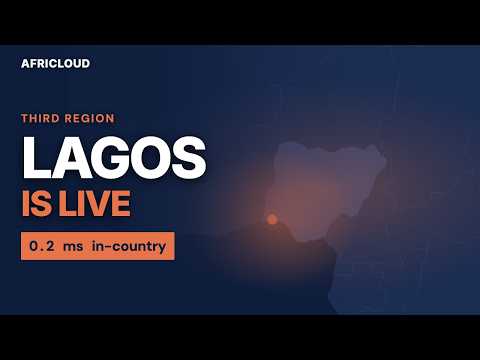
The company’s third African region keeps Nigerian workloads in Nigeria, and customers from Abidjan to Nairobi can now pay in the currency they earn, without an international card

Download document (1): https://apo-opa.co/4Ardfz9
Download document (2): https://apo-opa.co/46FWH8Y
Buying cloud infrastructure in Africa has meant living with three compromises: traffic that leaves the continent and comes back, payment in dollars behind a card many businesses do not hold, and data sitting under somebody else’s law.
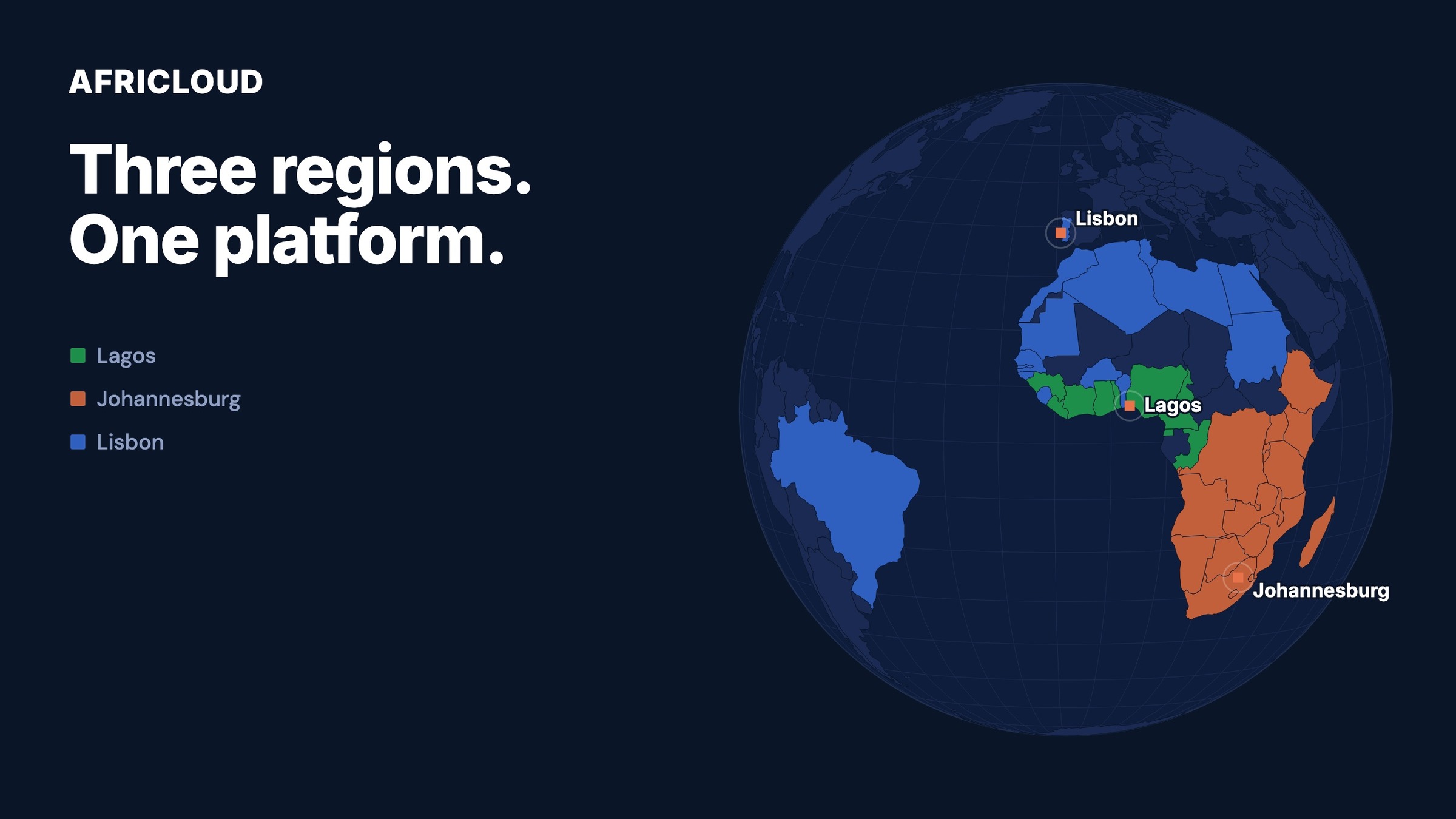
Lagos answers the first. Compute and storage for Nigerian customers stay in Nigeria, and the region also serves Accra, Abidjan, Lome, Douala and Ouagadougou. Traffic from landlocked West Africa that once reached comparable infrastructure by way of Europe now stays on terrestrial West African fibre. Johannesburg serves Southern and East Africa. Lisbon serves North Africa and Europe, and reaches Brazil over a direct subsea route. Across the three regions, AFRICLOUD’s own continent-wide measurements place 42 of the 53 African countries measured within a best-case round trip of 70 milliseconds, countries home to about 1.28 billion people.
A company in Accra or Abidjan now reaches West African infrastructure without leaving the region, and pays for it in the currency it earns
Payment answers the second. Customers across West, Central, East and Southern Africa pay in their own currency, including the naira, the cedi, the shilling and the CFA francs, by local card, bank transfer, USSD or mobile money, with no international card needed. Mobile money is live in twelve African countries, and cards, PayPal and more than 300 cryptocurrencies are accepted everywhere. The GSMA reports that 74 per cent of the world’s mobile money activity by transaction count took place in Africa in 2024.
Residency answers the third. Nigerian data runs under the Nigeria Data Protection Act, South African data under POPIA and European workloads under EU law, chosen server by server from the same dashboard.
“African businesses have been asked to choose between infrastructure that is close, infrastructure they can actually pay for, and infrastructure that keeps their data under their own law,” said Oluniyi Ajao, Founder of AFRICLOUD. “Removing that choice is the reason we built this.”
“Lagos is the piece that completes the map,” he said. “A company in Accra or Abidjan now reaches West African infrastructure without leaving the region, and pays for it in the currency it earns.”
All three regions run the same platform: AMD EPYC processors with all-NVMe storage, IPv4 and IPv6 on every server, and a new server online in about two minutes. Dedicated Servers are built to order in all three regions. Support is available around the clock by chat and email.
Cloud Servers are available now at https://AFRICLOUD.com.
Distributed by APO Group on behalf of AFRICLOUD LLC.
Business
Hong Kong outlines strategies for deepening development of the Guangdong-Hong Kong-Macao Greater Bay Area and enhancing green transformation


Business
Alamein Africa Forum to bring together key political and business leaders


-

 Business2 days ago
Afreximbank, Ghana Infrastructure Investment Fund (GIIF) and Ghana’s 24-Hour Economy Authority launch project preparation partnership to accelerate 24H+ projects
-

 Events2 days ago
Huawei Cloud Rolls Out Enterprise AI Products Across the Board, Building an Open Agentic Cloud
-

 Business2 days ago
Hong Kong sets out strategies to enhance the appeal and add value to the city’s tourism industry
-

 Business2 days ago
Former DAMAC Senior Vice President Paulo J. Cruz Appointed Founding CEO of African Collaboration Group (ACG) to Spearhead Sports and Entertainment District Development Across Africa
-

 Energy2 days ago
Deals, Drilling and New Entrants Define Angola Oil & Gas 2026
-

 Business2 days ago
Hong Kong sets out initiatives to secure long-term development of pillar industries
-

 Business2 days ago
Africa Makes its Case for a Bigger Role on the Global Stage
-
 Business2 days ago
South Africa’s water challenges are reshaping how businesses plan for resilience