Connect with us
Anglostratits

Business

Nigeria set to become the first West African manufacturing hub for insecticide-treated nets in the battle against malaria

Published

on

malaria

The African continent accounts for almost 95% of the world’s malaria cases – one quarter of these are in Nigeria

ABUJA, Nigeria, September 24, 2024/APO Group/ — 

Vestergaard Sàrl (https://Vestergaard.com/) announced today that the Government of the Federal Republic of Nigeria, acting through the Presidential Initiative for Unlocking the Healthcare Value Chain (PVAC), has signed a Memorandum of Understanding (MoU) with the company, as an initial step to establish the country as the first West African manufacturing hub for insecticide-treated nets (ITNs) to combat malaria – and the first on the continent to produce dual active-ingredient nets to help combat insecticide resistance.

Nearly every minute (https://apo-opa.co/4eqUoIY), a child under 5 years old dies from malaria. The African continent accounts for almost 95% (https://apo-opa.co/4ecJ8jD) of the world’s malaria cases – one quarter of these are in Nigeria. New approaches are needed to boost access to tried-and-tested, cost-effective tools to combat the disease, and local manufacturing of nets, medicines and vaccines is a priority for the continent (https://apo-opa.co/47HfNLM).

The MoU announced today lays the foundation for Vestergaard to establish a joint venture with a local manufacturing partner in Nigeria, potentially supported by MedAccess, a social investor founded by British International Investment, the UK’s development finance institution and impact investor. Selection of an appropriate partner is currently underway and will be subject to the satisfactory conclusion of a due diligence process. Vestergaard is also discussing opportunities for financing with the U.S. International Development Finance Corporation (DFC).

If successful, the joint venture will result in a state-of-the-art manufacturing facility that is expected to function as a flagship on ITN quality and bioefficacy performance, as well as industrial health, safety and sustainability practices. At scale, the planned facility would produce 10 million PermaNet® Dual long-lasting insecticidal nets every year, for both domestic use in Nigeria and international export. It would create around 600 jobs in Nigeria.

We cannot afford to underestimate the power of prevention in our fight against malaria

Dr Muhammad Ali Pate, Hon. Minister of Health for Nigeria, said: “Increasing access to long-lasting insecticide-treated nets is crucial. We cannot afford to underestimate the power of prevention in our fight against malaria. Collaborative efforts, such as this, are essential to mobilizing the resources and expertise needed to combat malaria effectively.”

Dr Abdu Mukhtar, National Coordinator of PVAC, said: “High standards in local production are non-negotiable. By investing in local bed net production, we are not only improving health outcomes but also paving the way for a self-sufficient healthcare system that can withstand global challenges. This partnership with Vestergaard is a significant step towards attaining this for Nigerians and the broader West African population. ”

Michael Anderson, CEO of MedAccess, said: “Next generation mosquito nets are powerful tools to save lives and prevent debilitating disease. Regional manufacturing is in turn a critical tool to ensure that the nets are available quickly, reliably, and sustainably. This agreement between the Government of Nigeria and Vestergaard underlines an important commitment to protecting people from malaria while strengthening supply chain resilience in the region. MedAccess is looking forward to working in partnership to explore how innovative finance can support this initiative.”

Jim Polan, Vice President, Office of Health & Agribusiness at the U.S. International Development Finance Corporation (DFC), said: “DFC’s investments in regional manufacturing, particularly in Africa, aim to strengthen health system resilience and diversify supply chains. We are exploring a variety of opportunities to expand access to critical health products, including bed nets, to ensure the region is better prepared to respond to malaria and other vector-borne transmission due to changing climate patterns.”

Amar Ali, CEO of Vestergaard, said: “This partnership exemplifies the leadership and commitment of the Nigerian government in the fight against malaria. We are very grateful for their engagement and support as we work together with partners to create a cutting-edge facility that will set a global benchmark in the manufacturing of dual-insecticide nets.”

Distributed by APO Group on behalf of Vestergaard Sàrl.

Business

Afreximbank supports Veenocks’ US$145 million project for industrial expansion and regional growth

Published

on

Afreximbank

PPF-funded studies enabled Veenocks to broaden its medium-term regional growth plans, while a US$81.9 million senior loan supports an expansion expected to triple annual production capacity

CAIRO, Egypt, November 2, 2026/APO Group/ –African Export-Import Bank (Afreximbank) (www.Afreximbank.com) has supported the development and expansion of Veenocks Limited’s porcelain tile manufacturing plant in Sagamu, Ogun State, Nigeria, through its Project Preparation Facility (PPF) and a US$81.9 million senior term loan. The project has a total estimated cost of US$145 million.


Afreximbank and Veenocks signed a US$2 million project preparation facility agreement in August 2024 to finance technical, commercial, financial, legal, environmental and social studies needed to establish the project’s bankability.

The studies financed through the PPF, complemented by Afreximbank’s pan-African experience, enabled Veenocks to broaden its growth ambitions beyond its primary focus on the Nigerian market. This support informed the company’s plans to pursue regional opportunities over the medium term, with target markets including Togo, Benin, Burkina Faso, Niger, Cameroon, Ghana, Mauritania and Senegal.

The Bank’s US$81.9 million senior term loan supports implementation of the plant’s expansion, providing financing for investment in additional manufacturing capacity. The expansion is expected to increase the plant’s total annual production capacity from 3.3 million to 9.9 million square metres, creating a stronger production base to meet domestic demand and pursue regional opportunities.

Veenocks demonstrates how project preparation, commercial expertise and senior debt financing can support African industrial investment

The existing plant employs more than 200 people directly. The expansion is expected to create an additional 300 direct jobs, alongside indirect employment across raw material supply, logistics and distribution.

The preparation financing has been fully repaid from senior debt, completing the PPF’s funding cycle for Veenocks and replenishing capital to support further projects.

Mrs. Kanayo Awani, Executive Vice President, Intra-African Trade and Export Development, Afreximbank, said:

“Veenocks demonstrates how project preparation, commercial expertise and senior debt financing can support African industrial investment. The studies financed through Afreximbank’s Project Preparation Facility have helped strengthen the project’s bankability and broaden the company’s regional growth ambitions. Our senior debt financing supports the plant expansion needed to convert those ambitions into increased productive capacity, and stronger foundations for intra-African trade.”

Mrs. Awani added: “Full repayment of the preparation financing ensures capital is available to support more indigenous African investors and projects. This is the PPF’s revolving model in practice: the funds that have been repaid are used to support initiatives that add value to local resources and expand manufacturing.”

Mr. Adebisi Abidemi Adebutu, Group President of R28 Holdings, the parent company of Veenocks Limited, said:

“This investment represents an important step towards our ambition of building a globally competitive manufacturing business in Nigeria, producing world-class tiles to European quality standards and reducing Nigeria’s dependence on imported tiles. The PPF was instrumental in broadening our growth plans and positioning us to penetrate regional markets over the medium term. With Afreximbank’s financing, we can now deliver the expansion phase of this project. The facility will allow us to add value to Nigeria’s raw materials, create quality jobs and increase the supply of our porcelain tiles, manufactured here in Nigeria, to customers at home and across the region. Our vision is to set the global benchmark for quality in tile manufacturing and to become Africa’s first choice for porcelain tiles.”

Distributed by APO Group on behalf of Afreximbank.


Continue Reading

Energy

Energy costs, storage value and industrial competitiveness led Day 2 of C&I Energy + Storage Summit

Published

on

Energy

Energy security, industrial competitiveness and infrastructure readiness emerged as closely connected priorities, with discussions highlighting what businesses need to turn investment plans into operational gains

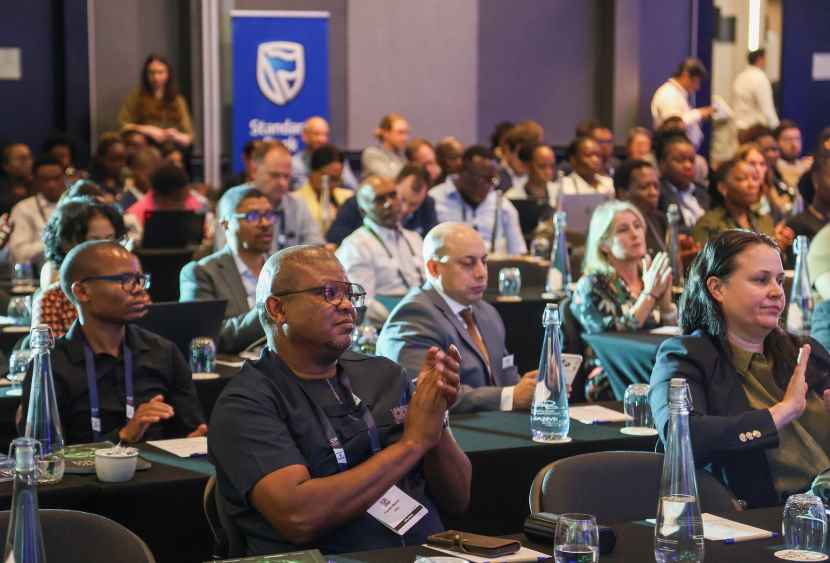
JOHANNESBURG, South Africa, November 2, 2026/APO Group/ –How can South African businesses turn energy investment into lower operating costs, stronger resilience and long-term competitiveness? This question drove the second day of VUKA Group’s (https://WeAreVUKA.com/) C&I Energy + Storage Summit in Johannesburg, with discussions examining the commercial value of storage, industrial energy strategies and the infrastructure needed to support Africa’s growing digital economy.


The programme brought together business leaders, energy specialists, financiers and public-sector representatives to address practical decisions facing commercial and industrial users, alongside the EIUG Conference, Water Security Africa and Data Centre Summit.

Energy security, industrial competitiveness and infrastructure readiness emerged as closely connected priorities, with discussions highlighting what businesses need to turn investment plans into operational gains.

Energy storage featured prominently, with panellists examining how tariff optimisation, peak shaving and renewable energy integration can strengthen its value beyond backup power. The investment case, however, needs to account for battery degradation, warranties and operational risk.

Addressing the attendees, Junaid Munshi, Group Executive: Distribution for Eskom told the audience: “For an industrial business, solar and storage can improve the energy cost position. But the opportunity extends beyond the customer’s electricity bill. Where network capacity is constrained, coordinated battery use may relieve pressure on the infrastructure serving that business and, where proven technically dependable, could defer or reduce grid investment. The asset behind your meter can therefore also become a resource beyond it.”

The asset behind your meter can therefore also become a resource beyond it

The EIUG session “Industrialisation under threat?” put changing electricity consumption under scrutiny, asking whether lower demand reflected efficiency gains or weakening industrial output. Tariffs, investment conditions and industrial growth remained central to the discussion, highlighting the need to assess energy trends against the health of the wider economy.

At the Data Centre Summit, Africa’s AI ambitions brought power availability and infrastructure readiness into focus. Discussions on grid access, wheeling and network investment highlighted the importance of planning digital growth alongside the electricity infrastructure needed to sustain it.

For businesses developing energy projects, public-private engagement sessions explored infrastructure co-investment, municipal coordination and workable wheeling agreements.

Water Security Africa reinforced the wider resource-security challenge through industrial resilience case studies, digital water technologies and lessons from case studies.

Across the discussions, the practical message was consistent: competitive businesses need more than access to technology and capital. They also need reliable infrastructure, workable commercial arrangements and coordinated delivery.

The afternoon programme translated these themes into business decisions. “The C&I energy playbook” drew together insights from across the summit, while the closing “decision clinic” addressed real project challenges, from choosing between onsite solar and wheeled power to sizing batteries and preparing projects for financing. Experts from DBSA, Standard Bank, SustainableDNA and the City of Tshwane contributed practical guidance.

Download the programme to review the full Day 2 agenda and participating speakers: https://apo-opa.co/4eEKq9a

Distributed by APO Group on behalf of VUKA Group.


Continue Reading

Business

Smarter power systems bring new demands for integration, security and infrastructure

Published

on

Digitalisation

CAPE TOWN, South Africa, November 2, 2026/APO Group/ —

Digital technologies are changing how power systems are monitored and developed, but their value depends on how effectively they can be integrated into existing infrastructure.

Utilities and energy organisations are working with a growing range of connected technologies, including smart meters, Internet of Things (IoT) devices and artificial intelligence (AI). These tools create opportunities to improve access to system data and support more informed operational decisions.


Introducing them into established power environments, however, raises questions around legacy integration, system security and the infrastructure required to support greater connectivity. Organisations must consider how new digital capabilities will interact with existing assets, processes and technology platforms.

The expansion of data centres adds another dimension to this discussion. As AI and digital services develop, the energy and infrastructure requirements associated with processing and storing data are becoming part of the wider conversation about Africa’s digital ambitions.

These interconnected issues are explored in the Industry Insights Smart Solutions Volume, published by ESI Africa as created by VUKA Group. The volume examines the opportunities and challenges associated with digitalisation, IoT, AI and smart metering in power and energy systems, alongside the industry implications of data centre growth.

Download the Industry Insights Smart Solutions Volume (https://apo-opa.co/4eePfWx)

Connecting established infrastructure with smart technology

For many utilities and infrastructure operators, digital transformation must take place alongside systems and assets already in operation. The challenge is to introduce smarter capabilities without overlooking the security, compatibility and operational considerations associated with established infrastructure.

The ESI Africa on-demand webinar Securing the bridge between legacy and smart extends this discussion by considering the relationship between legacy environments and emerging smart systems.

Watch Securing the bridge between legacy and smart on-demand (https://apo-opa.co/4ktnFsn)

Digital infrastructure also influences the extent to which African organisations can develop and deploy artificial intelligence. Data centres form part of the physical foundation required to support that ambition, connecting questions about technology development with those concerning power and infrastructure.

The webinar The digital infrastructure Gold Rush: What Africa needs to turn its AI ambition into reality considers what the continent requires to develop the infrastructure supporting its AI ambitions.

Watch The digital infrastructure Gold Rush on-demand (https://apo-opa.co/4eePbWN)

Digitalisation becomes part of the wider energy agenda

The practical impact of smart technologies reaches beyond individual devices or software platforms. Digitalisation influences how infrastructure is planned, financed, operated and secured, making it part of the broader conversation about the future of African power systems.

That conversation will continue at Enlit Africa 2027, taking place at the CTICC, Cape Town from 11 to 13 May 2027. The event provides a platform for stakeholders across the energy sector to engage with the technologies, infrastructure priorities and investment considerations affecting the industry.

Pre-register for Enlit Africa 2027 (https://apo-opa.co/4sJQbs8)

Developing investable infrastructure

Africa’s digital and energy ambitions also depend on projects moving from concept towards implementation. This requires project preparation, credible development pathways and connections between project owners and the organisations able to finance or support delivery.

The Project & Investment Network connects African infrastructure projects with investors, financiers and solution providers. ESI Africa’s African Infrastructure Elites is the Host Media Partner of the network, which invites organisations to submit projects and investors to register their interest.

Submit a project or become an investor (https://apo-opa.co/4e6vtN2)

The infrastructure discussion continues

As digital technologies develop, the relationship between smart systems, data centres and energy infrastructure will require continued industry attention. Integration, security, investment and infrastructure capacity will remain central considerations for organisations adopting connected technologies.

The forthcoming Smart Solutions & Data Centres Volume 2027 will continue examining the developments affecting smart technology and the infrastructure supporting Africa’s digital growth.

Join the Smart Solutions & Data Centres Volume 2027 waiting list (https://apo-opa.co/4ziADhn)

Distributed by APO Group on behalf of VUKA Group.


Continue Reading

Trending