Connect with us
Anglostratits

Business

New gas projects booming in Africa, but can the continent secure its future in a changing energy landscape?

Published

on

Sinclair

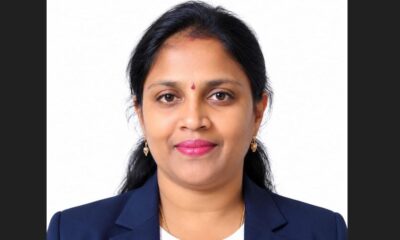
Equinor’s Senior Vice President for Africa, Nina Birgitte Koch, stressed the importance of a stable investment climate to attract international capital

CAPE TOWN, South Africa, October 9, 2024/APO Group/ — 

The pipeline of gas projects being developed in Africa has never been stronger. However, if the continent is to be competitive in an extremely dynamic international gas market, it must ensure that it offers value. 

This means shaping an offer that meets the financial and environmental sustainability needs of stakeholders. Africa’s gas investment proposition must be relevant and future-proof, if it is to continue to attract global capital. 

This was the consensus at a panel discussion on Day 1 of AOW: Investing in African Energy – Africa’s leading oil, gas and energy event. 

Over the past few years, gas development ambitions have grown – in the public and private sector – supported by renewed exploration and production activity and pragmatic energy transition plans. This is especially true now, with gas increasingly accepted as the ideal bridging fuel, balancing the continent’s growing energy needs with its decarbonisation commitments. 

“Natural gas is at the centre of what we are doing in Africa,” said Mario Bello, Head of Sub-Saharan Africa Region at Eni. “It’s the cleanest fossil fuel, producing fewer emissions than coal, so it plays an important role as we transition to renewables.” 

Eni enables this through its Floating Liquified Natural Gas (FLNG) projects, particularly in Mozambique and the Republic of Congo. Bello emphasised the technology’s ability to unlock stranded offshore gas resources, accelerate project timelines, and contribute to both domestic energy security and export revenue. “Floating LNG is the key to unlocking the region’s gas potential, making it easier and faster to develop offshore resources,” Bello explained.  

Floating LNG is the key to unlocking the region’s gas potential, making it easier and faster to develop offshore resources

However, financing these ambitious projects remains a significant hurdle. Paul Eardley-Taylor, Head of Oil & Gas, Southern Africa, at Standard Bank, emphasised the need for bankable projects that address investor concerns, particularly around sovereign risk. He highlighted the transformative potential of both large-scale LNG projects and smaller, domestically focused gas ventures.  

“The impact of these projects in African markets is incalculable,” Eardley-Taylor said, citing the potential for job creation, economic growth, and improved energy access. He further emphasised the importance of small-scale LNG and helium projects, particularly in markets like South Africa and Namibia.  

Equinor’s Senior Vice President for Africa, Nina Birgitte Koch, stressed the importance of a stable investment climate to attract international capital. She highlighted the need for competitive projects with strong environmental credentials, particularly in reducing carbon emissions. “CO2 is the key criteria,” Koch said. “It’s not just a ‘nice to have’ any more. I don’t think it’s possible to get capital to a big LNG project unless it’s highly competitive when it comes to CO2.”  

The panel also discussed the critical role of technology and regional cooperation in maximising the benefits of Africa’s gas resources. Gianluca Ciricugno, Africa Director, Enterprise Customer Solution at Baker Hughes, emphasised the need for a long-term vision and collaboration between governments, investors, and technology providers.  

“It requires a broader vision, probably government and all the people around the table, with a long-term approach… and not just four-year terms,” Ciricugno urged, highlighting the need for stable regulatory frameworks and a commitment to infrastructure development.  

Dr Tshepo Mokoka, Group COO of South Africa’s Central Energy Fund (CEF), echoed the call for government intervention to address market failures and unlock investment. He outlined CEF’s role in enabling critical gas infrastructure projects, such as the Romp pipeline and LNG import terminals. “We need to solve the market failure,” Dr Mokoka said, highlighting the need for government-backed gas offtake agreements and risk-sharing mechanisms to attract private capital.  

ExxonMobil’s Executive Director Global, LNG Marketing, Deri Irawan, emphasised the importance of a holistic approach to project development, considering not just the technical and economic aspects but also the social and political landscape. He highlighted the need for strong partnerships and stakeholder engagement to ensure long-term project success. “It is insufficient to just bring a commodity to the doorstep,” Irawan explained. “You also need to unlock that value chain.” 

With Africa on the cusp of a gas revolution, the panel’s message was clear: the continent has the resources, the ambition, and the opportunity to become a major player in the global gas market. 

However, success hinges on creating a stable and attractive investment climate, embracing technological innovation, and fostering regional collaboration to ensure that Africa’s gas resources benefit both its people and the planet.  

Distributed by APO Group on behalf of AOW: Investing in African Energy.

Business

Aurionpro expands its multi-country transaction banking engagement with Diamond Trust Bank (DTB)

Published

on

Aurionpro

Aurionpro’s upgraded iCashpro platform for DTB delivers a unified digital experience across payments, trade, virtual accounts, and real-time reporting, enhancing straight-through processing, visibility, and control for both the bank and its corporate customers

MUMBAI, India, April 30, 2026/APO Group/ –Aurionpro Solutions Limited (www.AurionPro.com) (BSE: 532668 | NSE: AURIONPRO)a global leader in banking technology, announced the expansion and upgrade of its transaction banking engagement with Diamond Trust Bank (DTB), to modernize and enhance the bank’s corporate transaction banking capabilities across multiple countries.

Download Document: https://apo-opa.co/4edHUaC

This multi-country transaction banking upgrade covering Kenya, Uganda, and Tanzania aligns with DTB’s intent to enhance customer experience, streamline operations, and support growing transaction volumes as it expands its regional corporate banking footprint. DTB continues to focus on building a more agile, ‘digital-first’ banking experience, particularly around payments for its corporate customers across Africa, and is now well positioned to scale these capabilities. As part of its broader transformation agenda, the bank has been steadily investing in platforms that enhance scale, reliability, and service consistency across markets.

Through this partnership, we are proud to lead the next era of transformation in transaction banking, helping DTB enhance operational agility

Aurionpro’s upgraded iCashpro platform for DTB delivers a unified digital experience across payments, trade, virtual accounts, and real-time reporting, enhancing straight-through processing, visibility, and control for both the bank and its corporate customers. By enabling DTB to standardize and scale its transaction banking operations across countries, the platform ensures consistent service levels, stronger control, and improved efficiency. It also supports enhanced user experience, advanced security, and the flexibility to introduce new features as DTB expands its regional transaction banking footprint.

Murali Natarajan (https://apo-opa.co/48trPdk), Managing Director & CEO, DTB Kenya   commented: “We are delighted to strengthen and broaden our partnership with Aurionpro Solutions as part of DTB’s ongoing digital transformation journey across multiple markets. Our focus on innovation, operational excellence, and customer-centricity continues to guide our technology investments. This upgrade strengthens our transaction banking capabilities, enabling us to deliver greater value to our customers through robust digital channels and seamlessly integrated experiences.”

Ashish Rai, Group CEO, Aurionpro Solutions, commented: “We are pleased to deepen our multi-country engagement with Diamond Trust Bank and support the next phase of its transaction banking modernization. As DTB continues to scale across markets, platform resilience and consistency become paramount. Through this partnership, we are proud to lead the next era of transformation in transaction banking, helping DTB enhance operational agility, deliver superior experiences to corporate customers, and create long-term value across geographies.”

He added, “Aurionpro’s iCashpro lays a strong digital foundation for transaction & wholesale banks across the globe to grow their corporate and SME client portfolio today, while creating a clear roadmap for next- generation capabilities in AI-driven insights, advanced automation and API-led connectivity for businesses in Kenya and across Africa.”

Distributed by APO Group on behalf of Aurionpro Solutions Ltd.


Continue Reading

Business

Minerals Council Chief Executive Officer (CEO) Joins African Mining Week (AMW) as South Africa Improves Sectorial Investment Climate

Published

on

Energy Capital

Minerals Council CEO to share insights on policy, infrastructure and investment trends shaping South Africa’s mining industry

CAPE TOWN, South Africa, April 30, 2026/APO Group/ –The upcoming African Mining Week (AMW) conference will feature Mzila Mthenjane, CEO of the Minerals Council of South Africa, as a speaker. Scheduled for October 14 – 16, 2026 in Cape Town, the event will bring together global investors, policymakers and industry leaders, with Mthenjane’s participation highlighting the council’s commitment to engaging international stakeholders and promoting investment across South Africa’s mining sector.

His participation comes at a critical moment as the Minerals Council works closely with government on finalizing the Mineral Resources Development Bill 2025, a policy framework aimed at strengthening the country’s mining investment climate and the sector’s contribution to GDP. According to the council, the revised legislation will support new investment across the value chain as South Africa seeks to mobilize R2 trillion over the next five years to unlock its critical minerals potential.

The policy reforms come amid shifting production trends in the sector. In 2025, South Africa recorded declines in gold and platinum group metals output of 1.9% and 4.1%, respectively. The new regulatory framework is expected to strengthen public-private partnerships and stimulate investment, enabling South Africa to increase production and capitalize on strong global commodity prices. Increased private sector investments is crucial with South Africa seeking targeting to unlock an estimated R40 trillion in untapped iron ore potential as well as maintain its position as the world’s leading producer of chrome and manganese.

At AMW 2026, Mthenjane is expected to outline these trends, providing insights into how the council is contributing to addressing challenges disrupting the sector. Infrastructure and energy costs remain key concerns for industry players. To support the energy-intensive sector, South Africa approved a 35% reduction in electricity tariffs for major ferrochrome producers, helping stabilize an industry that has faced significant cost pressures after electricity prices surged by roughly 900% since 2008.

Logistics constraints are also a priority area for reform. South Africa’s economy is losing an estimated R1 billion per day due to inefficiencies across rail and port infrastructure. As a result, the government is considering measures supported by the Minerals Council to increase private sector participation in logistics. Planned reforms include rail modernization initiatives targeting 250 million tons of freight capacity by 2029, alongside port upgrades and private operator participation aimed at strengthening mineral exports and improving supply chain efficiency.

Beyond infrastructure and policy reforms, the Minerals Council is advocating for stronger exploration investment to support long-term industry growth.

At AMW, Mthenjane is expected to highlight these developments and outline the steps required to reinforce South Africa’s position in the global minerals supply chain. His insights will offer investors and stakeholders a timely perspective on opportunities within the country’s mining sector.

Distributed by APO Group on behalf of Energy Capital & Power.

Continue Reading

Energy

Seychelles Targets Energy Investment Push as Minister Jérémie Joins African Energy Week (AEW) 2026 as a Speaker

Published

on

African Energy Chamber

Seychelles energy minister will speak at AEW 2026, positioning her to highlight reforms, renewable projects and investment opportunities as the island nation advances its transition toward a diversified energy system

CAPE TOWN, South Africa, April 29, 2026/APO Group/ –Marie-May Jérémie, Minister of Environment, Climate, Energy and Natural Resources for Seychelles will participate as a speaker at this year’s African Energy Week (AEW) 2026, taking place from October 12–16 in Cape Town. Her participation underscores the country’s growing role in shaping Africa’s small-island energy transition agenda.

Minister Jérémie’s presence at AEW 2026 comes at a critical time as Seychelles accelerates efforts to reduce its heavy reliance on imported fossil fuels. The event provides a platform to attract investment, strengthen policy alignment and showcase bankable projects, positioning the country as a viable destination for private-sector participation in island energy systems.

Seychelles is demonstrating how policy reform and innovation can unlock investment in constrained environments

In May last year, international finance institution the World Bank approved the Renewable Energy Acceleration Program, a seven-year initiative aimed at modernizing the grid and increasing renewable energy penetration to 15% by 2030. The program focuses on unlocking private capital while strengthening transmission infrastructure to accommodate variable renewable energy sources.

Project development is gaining traction in the country, particularly in innovative technologies suited to Seychelles’ land constraints. The 5.8 MW Seysun Lagoon floating solar PV project, developed by independent renewable power producer Qair, is under construction and expected online in 2026.

Alongside renewables, Seychelles continues to pursue upstream opportunities to diversify its economy. The government approved new exploration entrants in 2025 and extended exiting petroleum agreements, while securing an infrastructure partnership with China. Multilateral estimates suggest over $800 million in investment will be required over the next 25 years.

Regulatory reform is central to this transition, with Seychelles introducing an independent power producer framework to open the market to private developers. Standardized power purchase agreements, grid access reforms and strengthened public-private partnership structures are being implemented to improve transparency, reduce risk and accelerate project bankability across solar, storage and emerging wind opportunities.

“Minister Jérémie’s participation highlights the strategic importance of island nations in Africa’s broader energy transition,” says NJ Ayuk, Executive Chairman, African Energy Chamber. “Seychelles is demonstrating how policy reform and innovation can unlock investment in constrained environments. Her insights will be critical to advancing dialogue on resilient, low-carbon energy systems across the continent.”

Distributed by APO Group on behalf of African Energy Chamber.

Continue Reading

Trending