

Business
Nestlé Launches NESCAFÉ Plan 2030 to Help Drive Regenerative Agriculture and Reduce Greenhouse Gas Emissions
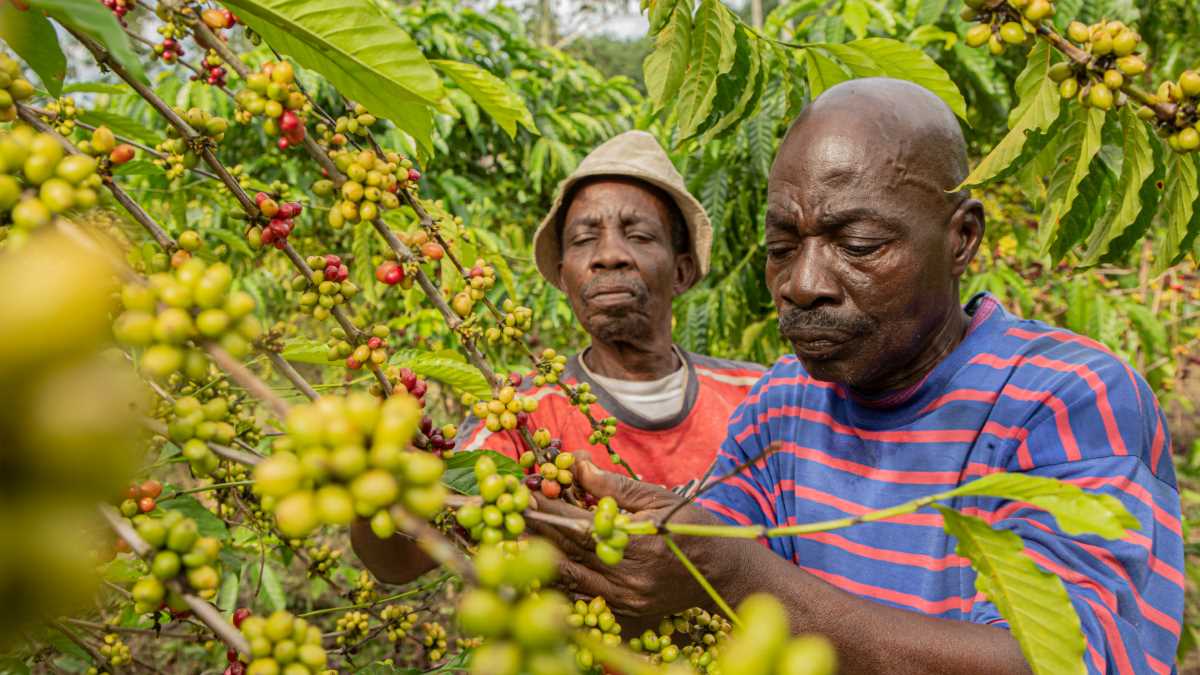
The brand is investing over one billion Swiss francs by 2030 in the NESCAFÉ Plan 2030
ACCRA, Ghana, October 4, 2022/APO Group/ —
NESCAFÉ, Nestlé’s (www.Nestle.com) largest coffee brand and one of the world’s favorite coffees, outlined today its extensive plan to help make coffee farming more sustainable: the NESCAFÉ Plan 2030. The brand is working with coffee farmers to help them transition to regenerative agriculture while accelerating its decade of work (https://bit.ly/3E9QCol) under the NESCAFÉ Plan.
The brand is investing over one billion Swiss francs by 2030 in the NESCAFÉ Plan 2030. This investment builds on the existing NESCAFÉ Plan as the brand expands its sustainability work (https://bit.ly/3yeQBf4). It is supported by Nestlé’s regenerative agriculture financing following the Group’s commitment to accelerate the transition to a regenerative food system (https://bit.ly/3fzWVqW) and ambition to achieve zero net greenhouse gas emissions (https://bit.ly/2kiYa1y).
“Climate change is putting coffee-growing areas under pressure,” said David Rennie, Head of Nestlé Coffee Brands. “Building on 10 years’ experience of the NESCAFÉ Plan, we’re accelerating our work to help tackle climate change and address social and economic challenges in the NESCAFÉ value chains.”
Rising temperatures will reduce the area suitable for growing coffee by up to 50% by 2050[1]. At the same time, around 125 million people depend on coffee for their livelihoods[2] and an estimated 80% of coffee-farming families live at or below the poverty line[3]. Action is needed to ensure the long-term sustainability of coffee.
“As the world’s leading coffee brand, NESCAFÉ aims to have a real impact on coffee farming globally,” said Philipp Navratil, Head of Nestlé’s Coffee Strategic Business Unit. “We want coffee farmers to thrive as much as we want coffee to have a positive impact on the environment. Our actions can help drive change throughout the coffee industry.”
Supporting farmers’ transition to regenerative coffee farming
Regenerative agriculture is an approach to farming that aims to improve soil health and fertility – as well as protect water resources and biodiversity. Healthier soils are more resilient to the impacts of climate change and can increase yields, helping improve farmers’ livelihoods.
NESCAFÉ will provide farmers with training, technical assistance and high-yielding coffee plantlets to help them transition to regenerative coffee farming practices. Some examples of regenerative agriculture practices include the following:
- Planting cover crops helps to protect the soil. It also helps add biomass to the soil, which can increase soil organic matter and thus soil carbon sequestration.
- Incorporating organic fertilizers contributes to soil fertility, which is essential for good soil health.
- Increasing the use of agroforestry and intercropping contributes to biodiversity preservation.
- Pruning existing coffee trees or replacing them with disease and climate-change resistant varieties, will help rejuvenate coffee plots and increase yields for farmers.
Focusing on origins from where NESCAFÉ sources 90% of its coffee
NESCAFÉ will be working with coffee farmers to test, learn and assess the effectiveness of multiple regenerative agriculture practices. This will be done with a focus on seven key origins, from where the brand sources 90% of its coffee: Brazil, Vietnam, Mexico, Colombia, Côte d’Ivoire, Indonesia and Honduras.
NESCAFÉ aims to achieve:
As the world’s leading coffee brand, NESCAFÉ aims to have a real impact on coffee farming globally
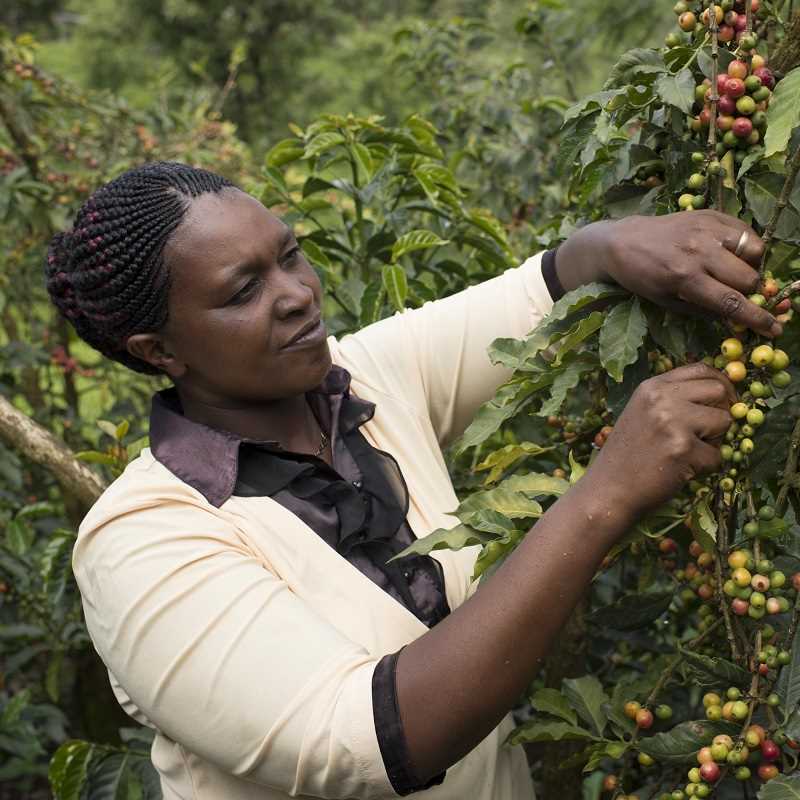
- 100% responsibly sourced coffee by 2025 (https://bit.ly/3SV3Lpw)
- 20% of coffee sourced from regenerative agricultural methods by 2025 and 50% by 2030 as part of Nestlé’s ambition for its key ingredients (https://bit.ly/3CoEKfN)
Piloting a financial support scheme in Mexico, Côte d’Ivoire and Indonesia to accelerate the transition to regenerative agriculture
NESCAFÉ is committed to supporting farmers who take on the risks and costs associated with the move to regenerative agriculture. It will provide programs that aim to help farmers improve their income as a result of that transition. In Mexico, Côte d’Ivoire and Indonesia, NESCAFÉ will pilot a financial support scheme to help farmers accelerate the transition to regenerative agriculture. Through this scheme, NESCAFÉ, together with coffee farmers, will test and learn the best approach in each country. These could include measures such as:
- conditional cash incentives for adopting regenerative agriculture practices
- income protection using weather insurance
- greater access to credit lines for farmers
NESCAFÉ will track the progress and assess the results of its field programs with coffee farmers through its Monitoring and Evaluation partnership with the Rainforest Alliance. Its efforts will be complemented by new and expertise-focused partnerships, like the one with Sustainable Food Lab for topics related to coffee farmers’ income assessment, strategy and progress tracking.
Reducing greenhouse gas emissions also by capturing and storing more carbon in the soil
Regenerative agriculture also contributes to drawing down carbon dioxide from the atmosphere and reducing greenhouse gas emissions. That’s why regenerative agriculture is a key part of Nestlé’s Zero Net roadmap. NESCAFÉ aims to contribute to Nestlé’s Zero Net commitment (https://bit.ly/2kiYa1y) to halve greenhouse gas emissions by 2030 and reach zero net greenhouse gas emissions by 2050. It will work with farmers, suppliers and partners to help protect agricultural lands, enhance biodiversity and help prevent deforestation. The brand intends to help farmers plant more than 20 million trees at or near their coffee farms.
In Central and West Africa Region, Nestlé is the leader in pure soluble coffee. Over the last 10 years, the NESCAFÉ plan has been developing a coffee industry where everyone can thrive. We have supported over 22,000 coffee farmers with capacity building and technical assistance. We have also promoted youth employment through our entrepreneurship program, MYOWBU which currently benefits over 5,000 young people with pushcarts and shoulder kits.
What does the NESCAFÉ Plan 2030 mean for coffee farmers in our region for the future? For Mauricio Alarcón, Chief Executive Officer of Nestlé Central & West Africa, the NESCAFÉ Plan will continue to help improve livelihoods and make coffee farming more sustainable. “With income diversification, human rights and child protection among others, we will work closely with farmers more than ever to improve livelihoods in communities, while advancing efforts to safeguard the environment for generations to come”.
Going forward by building on a strong foundation
Today’s announcement builds on NESCAFÉ’s sustainability efforts in coffee production. Since 2010, the brand has invested in sustainability through the NESCAFÉ Plan (https://bit.ly/3ybFvXU) and has made significant progress:
- Responsibly sourced coffee: 82% of NESCAFÉ’s coffee was responsibly sourced in 2021
- Coffee plantlets: 250 million new coffee plantlets distributed to farmers since 2010
- Monitoring and evaluation: impact assessment in partnership with the Rainforest Alliance across 14 countries
- Greenhouse gas emissions: 46% reduction in greenhouse gas emissions in our soluble coffee factories (2020 vs. 2010, per tonne of product)
- Water usage: 53% less water withdrawal in our soluble coffee factories (2020 vs 2010, per tonne of product)
[1] Inter-American Development Bank (https://bit.ly/3SF9srW)
[2] Fairtrade Foundation (https://bit.ly/3SwhzHd)
[3] TechnoServe (https://bit.ly/3rpaaxi)
Distributed by APO Group on behalf of Nestlé.









Business
AFRICLOUD Opens Lagos Region and Local-Currency Payments in African Markets
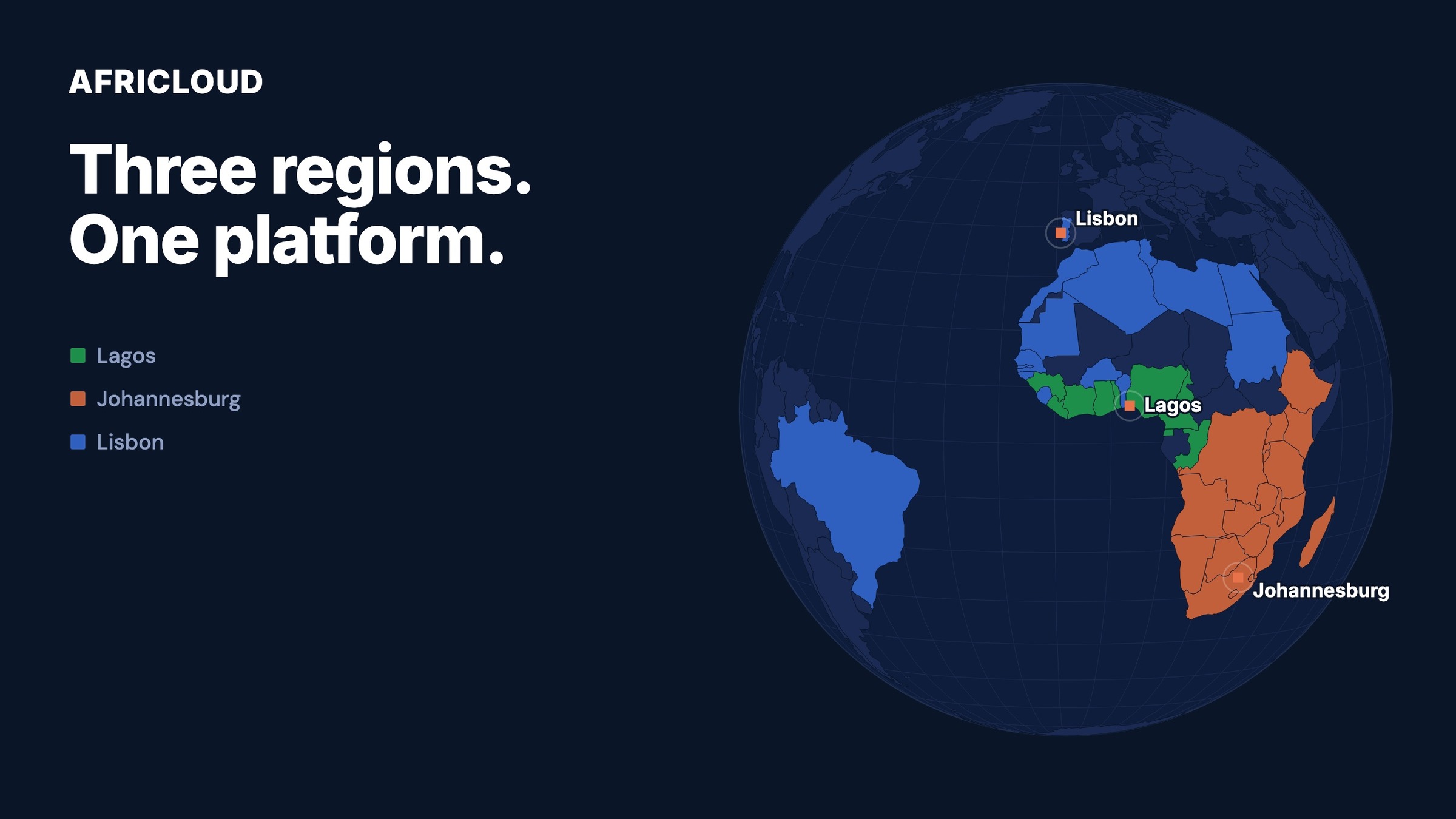
The company’s third African region keeps Nigerian workloads in Nigeria, and customers from Abidjan to Nairobi can now pay in the currency they earn, without an international card

Download document (1): https://apo-opa.co/4Ardfz9
Download document (2): https://apo-opa.co/46FWH8Y
Buying cloud infrastructure in Africa has meant living with three compromises: traffic that leaves the continent and comes back, payment in dollars behind a card many businesses do not hold, and data sitting under somebody else’s law.
Lagos answers the first. Compute and storage for Nigerian customers stay in Nigeria, and the region also serves Accra, Abidjan, Lome, Douala and Ouagadougou. Traffic from landlocked West Africa that once reached comparable infrastructure by way of Europe now stays on terrestrial West African fibre. Johannesburg serves Southern and East Africa. Lisbon serves North Africa and Europe, and reaches Brazil over a direct subsea route. Across the three regions, AFRICLOUD’s own continent-wide measurements place 42 of the 53 African countries measured within a best-case round trip of 70 milliseconds, countries home to about 1.28 billion people.
A company in Accra or Abidjan now reaches West African infrastructure without leaving the region, and pays for it in the currency it earns
Payment answers the second. Customers across West, Central, East and Southern Africa pay in their own currency, including the naira, the cedi, the shilling and the CFA francs, by local card, bank transfer, USSD or mobile money, with no international card needed. Mobile money is live in twelve African countries, and cards, PayPal and more than 300 cryptocurrencies are accepted everywhere. The GSMA reports that 74 per cent of the world’s mobile money activity by transaction count took place in Africa in 2024.
Residency answers the third. Nigerian data runs under the Nigeria Data Protection Act, South African data under POPIA and European workloads under EU law, chosen server by server from the same dashboard.
“African businesses have been asked to choose between infrastructure that is close, infrastructure they can actually pay for, and infrastructure that keeps their data under their own law,” said Oluniyi Ajao, Founder of AFRICLOUD. “Removing that choice is the reason we built this.”
“Lagos is the piece that completes the map,” he said. “A company in Accra or Abidjan now reaches West African infrastructure without leaving the region, and pays for it in the currency it earns.”
All three regions run the same platform: AMD EPYC processors with all-NVMe storage, IPv4 and IPv6 on every server, and a new server online in about two minutes. Dedicated Servers are built to order in all three regions. Support is available around the clock by chat and email.
Cloud Servers are available now at https://AFRICLOUD.com.
Distributed by APO Group on behalf of AFRICLOUD LLC.
Business
Hong Kong outlines strategies for deepening development of the Guangdong-Hong Kong-Macao Greater Bay Area and enhancing green transformation

Business
Alamein Africa Forum to bring together key political and business leaders

-

 Business2 days ago
Afreximbank, Ghana Infrastructure Investment Fund (GIIF) and Ghana’s 24-Hour Economy Authority launch project preparation partnership to accelerate 24H+ projects
-

 Events2 days ago
Huawei Cloud Rolls Out Enterprise AI Products Across the Board, Building an Open Agentic Cloud
-

 Business2 days ago
Hong Kong sets out strategies to enhance the appeal and add value to the city’s tourism industry
-

 Energy2 days ago
Deals, Drilling and New Entrants Define Angola Oil & Gas 2026
-

 Business2 days ago
Former DAMAC Senior Vice President Paulo J. Cruz Appointed Founding CEO of African Collaboration Group (ACG) to Spearhead Sports and Entertainment District Development Across Africa
-

 Business2 days ago
Hong Kong sets out initiatives to secure long-term development of pillar industries
-

 Business2 days ago
Africa Makes its Case for a Bigger Role on the Global Stage
-

 Business2 days ago
South Africa’s water challenges are reshaping how businesses plan for resilience