Connect with us

Energy

Mozambique Oil Industry Withdraws from London Africa Energies Summit Over Local Content Concerns

Published

on

African Energy Chamber

Home to come of the continent’s largest gas discoveries, Mozambique is emerging as an increasingly more prominent voice on the global gas stage

LONDON, United Kingdom, March 17, 2026/APO Group/ –Mozambique’s oil and gas industry has announced that it will withdraw from participating at the Africa Energies Summit – hosted by Frontier Energy Network in London this May – citing concerns over the treatment of Black professionals and broader local content issues linked to the event’s organizers. The decision reflects mounting frustration among Mozambican and African industry stakeholders who argue that platforms claiming to represent Africa’s energy sector must reflect the values of inclusion, fairness and local participation that increasingly shape the continent’s energy agenda.


The decision to withdraw was driven by concerns that the Summit’s leadership has failed to address repeated calls to improve diversity and transparency around hiring practices. African Energies Summit earns most of its revenues from Africa, yet its pattern of discrimination amounts to an intentional lock-out of Black professionals. Gayle Meikle from Ireland and Daniel Davidson from Scotland have resisted calls to disclose workforce diversity data and have also refused to end the policy of not hiring Black professionals and set out a plan for diversity.

“In 2026, this is not the behavior that we expect from anyone who uses the name Africa and our oil and gas sector. The behavior of Gayle Meikle and Daniel Davidson towards the hiring of Black professionals is something that many Mozambicans and Africans find offensive. Our members will not be going to London,” stated Florival Mucave, President of the Mozambique Energy Chamber.

The withdrawal carries particular weight given Mozambique’s rising influence in the global gas market. The country is home to some of the largest natural gas discoveries in recent decades and is rapidly emerging as one of Africa’s most prominent voices in the LNG industry. Despite delays, Mozambique’s biggest projects are now returning to the development pipeline.

We don’t want environments where young Mozambicans will be discriminated upon solely based on their skin color and not on their qualifications or merits from experience

The TotalEnergies-led Mozambique LNG project achieved a full restart across its onshore and offshore activities in January 2026, following the lifting of force majeure in 2025. Construction activities has now resumed, with over 4,000 workers – 3,000 of which are Mozambican – mobilized. First LNG production is on track for 2029, with $4 billion contracts awarded to Mozambican companies. Force majeure for the ExxonMobil-led Rovuma LNG project was also lifted in 2025. The 18-million-ton-per-annum (mtpa) project is now advancing toward FID in 2026.

“Mozambique understands all too well what it means when citizens are not happy with the oil and gas sector. We saw a response with the uprising in the north that stalled major gas projects. Our country is experiencing big debates around local content and community involvement,” stated Mucave.

These milestones come as major offshore projects make headway. Following the start of operations at the Eni-led Coral Sul FLNG facility in 2022, the company is now advancing the Coral Norte FLNG project. In 2025, Coral Norte reached FID, with the 3.4 mtpa facility on track to begin operations in 2028. Project advancements reflect the country’s commitment to addressing the challenges that delayed projects.

“At a time when we are restarting mega gas projects and pushing for drilling and action from our politicians, the message about the oil industry should not be about regression on local content – it should be about addressing the unfortunate ideology of African energy events that Black professionals are seemingly not good enough for. We have worked with the oil and gas industry to promote STEM education and it is working. We don’t want environments where young Mozambicans will be discriminated upon solely based on their skin color and not on their qualifications or merits from experience,” Mucave added.

Mozambique’s gas sector is entering a decisive period as LNG projects return to the development pipeline and exploration activity gains momentum across the Rovuma Basin. For industry leaders, ensuring that the sector remains inclusive and supportive of African professionals will be critical not only for Mozambique’s success but also for the credibility of Africa’s broader energy narrative.

“Failure to maintain an oil and gas industry culture that fosters innovation, collaboration and inclusion in Africa will only disrupt gas operations, create doubts about the industry and adversely affect our industry as well as our future success both for Mozambicans and Africans. The oil industry should not destroy the goodwill Africans have shown to them over the last few years by supporting platforms that Africans see as insulting to their children,” concluded Mucave

Distributed by APO Group on behalf of African Energy Chamber.

Business

Minerals Council Chief Executive Officer (CEO) Joins African Mining Week (AMW) as South Africa Improves Sectorial Investment Climate

Published

on

Minerals Council CEO to share insights on policy, infrastructure and investment trends shaping South Africa’s mining industry

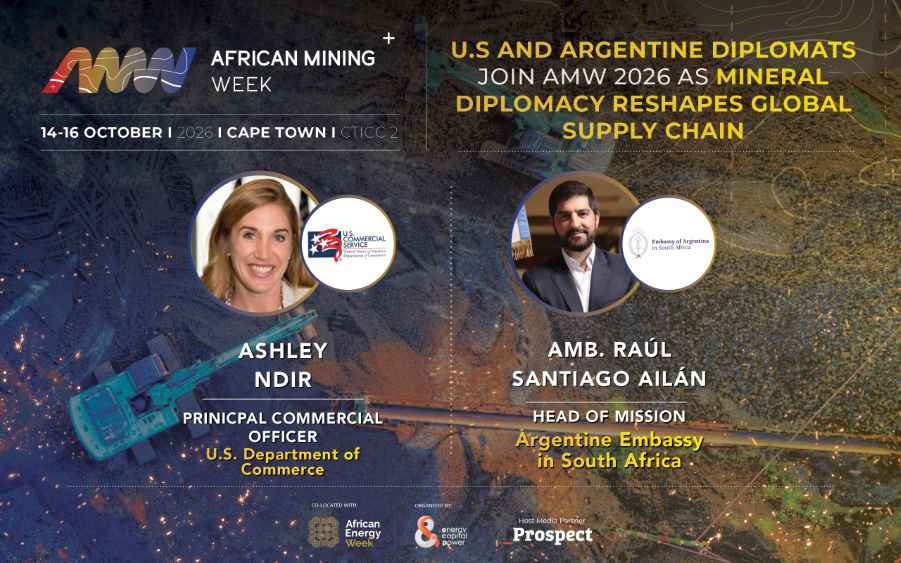
CAPE TOWN, South Africa, April 30, 2026/APO Group/ –The upcoming African Mining Week (AMW) conference will feature Mzila Mthenjane, CEO of the Minerals Council of South Africa, as a speaker. Scheduled for October 14 – 16, 2026 in Cape Town, the event will bring together global investors, policymakers and industry leaders, with Mthenjane’s participation highlighting the council’s commitment to engaging international stakeholders and promoting investment across South Africa’s mining sector.

His participation comes at a critical moment as the Minerals Council works closely with government on finalizing the Mineral Resources Development Bill 2025, a policy framework aimed at strengthening the country’s mining investment climate and the sector’s contribution to GDP. According to the council, the revised legislation will support new investment across the value chain as South Africa seeks to mobilize R2 trillion over the next five years to unlock its critical minerals potential.

The policy reforms come amid shifting production trends in the sector. In 2025, South Africa recorded declines in gold and platinum group metals output of 1.9% and 4.1%, respectively. The new regulatory framework is expected to strengthen public-private partnerships and stimulate investment, enabling South Africa to increase production and capitalize on strong global commodity prices. Increased private sector investments is crucial with South Africa seeking targeting to unlock an estimated R40 trillion in untapped iron ore potential as well as maintain its position as the world’s leading producer of chrome and manganese.

At AMW 2026, Mthenjane is expected to outline these trends, providing insights into how the council is contributing to addressing challenges disrupting the sector. Infrastructure and energy costs remain key concerns for industry players. To support the energy-intensive sector, South Africa approved a 35% reduction in electricity tariffs for major ferrochrome producers, helping stabilize an industry that has faced significant cost pressures after electricity prices surged by roughly 900% since 2008.

Logistics constraints are also a priority area for reform. South Africa’s economy is losing an estimated R1 billion per day due to inefficiencies across rail and port infrastructure. As a result, the government is considering measures supported by the Minerals Council to increase private sector participation in logistics. Planned reforms include rail modernization initiatives targeting 250 million tons of freight capacity by 2029, alongside port upgrades and private operator participation aimed at strengthening mineral exports and improving supply chain efficiency.

Beyond infrastructure and policy reforms, the Minerals Council is advocating for stronger exploration investment to support long-term industry growth.

At AMW, Mthenjane is expected to highlight these developments and outline the steps required to reinforce South Africa’s position in the global minerals supply chain. His insights will offer investors and stakeholders a timely perspective on opportunities within the country’s mining sector.

Distributed by APO Group on behalf of Energy Capital & Power.

Continue Reading

Energy

Seychelles Targets Energy Investment Push as Minister Jérémie Joins African Energy Week (AEW) 2026 as a Speaker

Published

on

Seychelles energy minister will speak at AEW 2026, positioning her to highlight reforms, renewable projects and investment opportunities as the island nation advances its transition toward a diversified energy system

CAPE TOWN, South Africa, April 29, 2026/APO Group/ –Marie-May Jérémie, Minister of Environment, Climate, Energy and Natural Resources for Seychelles will participate as a speaker at this year’s African Energy Week (AEW) 2026, taking place from October 12–16 in Cape Town. Her participation underscores the country’s growing role in shaping Africa’s small-island energy transition agenda.

Minister Jérémie’s presence at AEW 2026 comes at a critical time as Seychelles accelerates efforts to reduce its heavy reliance on imported fossil fuels. The event provides a platform to attract investment, strengthen policy alignment and showcase bankable projects, positioning the country as a viable destination for private-sector participation in island energy systems.

Seychelles is demonstrating how policy reform and innovation can unlock investment in constrained environments

In May last year, international finance institution the World Bank approved the Renewable Energy Acceleration Program, a seven-year initiative aimed at modernizing the grid and increasing renewable energy penetration to 15% by 2030. The program focuses on unlocking private capital while strengthening transmission infrastructure to accommodate variable renewable energy sources.

Project development is gaining traction in the country, particularly in innovative technologies suited to Seychelles’ land constraints. The 5.8 MW Seysun Lagoon floating solar PV project, developed by independent renewable power producer Qair, is under construction and expected online in 2026.

Alongside renewables, Seychelles continues to pursue upstream opportunities to diversify its economy. The government approved new exploration entrants in 2025 and extended exiting petroleum agreements, while securing an infrastructure partnership with China. Multilateral estimates suggest over $800 million in investment will be required over the next 25 years.

Regulatory reform is central to this transition, with Seychelles introducing an independent power producer framework to open the market to private developers. Standardized power purchase agreements, grid access reforms and strengthened public-private partnership structures are being implemented to improve transparency, reduce risk and accelerate project bankability across solar, storage and emerging wind opportunities.

“Minister Jérémie’s participation highlights the strategic importance of island nations in Africa’s broader energy transition,” says NJ Ayuk, Executive Chairman, African Energy Chamber. “Seychelles is demonstrating how policy reform and innovation can unlock investment in constrained environments. Her insights will be critical to advancing dialogue on resilient, low-carbon energy systems across the continent.”

Distributed by APO Group on behalf of African Energy Chamber.

Continue Reading

Energy

Siemens Energy Expands Angola Footprint as Senior Vice President (SVP) Waheed Abbasi Joins Angola Oil & Gas (AOG) 2026

Published

on

From FPSO power solutions to local service capacity, Siemens Energy is scaling its role in Angola at a time when the country is pursuing gas expansion

LUANDA, Angola, April 28, 2026/APO Group/ –Waheed Abbasi, Senior Vice President, Gas Services: Europe and Africa at Siemens Energy, has joined the Angola Oil & Gas (AOG) Conference and Exhibition as a speaker. Abbasi’s participation comes at a time when Siemens Energy is deepening its footprint in Angola through major power infrastructure and local capacity investments, positioning itself as a key enabler of the country’s evolving oil and gas market. At the event this September (9-10), Abbasi is expected to bring insights into how power technology and gas infrastructure are converging to support Angola’s next phase of industry growth.

With a long-standing presence in Angola, Siemens Energy has played a central role in strengthening power and infrastructure systems through projects in the oil, gas and renewable energy sectors. The company is currently developing an 80 MW power generation plant for the Kaminho FPSO – part of the first large deepwater development in the Kwanza Basin. The FPSO, currently 50% complete, will be installed in 2027 with first oil produced from the Cameia field in 2028. By integrating advanced power generation systems into offshore infrastructure, Siemens Energy is supporting more efficient, lower-emission production while ensuring reliable operations in deepwater environments.

At the same time, Siemens Energy has strengthened its on-the-ground presence with the launch of its Angola Service Shop in 2026. The facility brings service execution, project support, training and critical spare parts closer to customers, enabling faster response times and improving operational reliability across Angola’s oil and gas sector. By anchoring its services locally, Siemens Energy is not only supporting existing projects but also building the infrastructure needed to sustain long-term industry growth, reinforcing supply chain resilience and technical capacity within the country.

Siemens Energy’s activities in Angola form part of a broader continental strategy, with the company active in more than 50 African countries and leading initiatives across power generation, renewable energy and hydrogen development. This pan-African footprint positions Siemens Energy as a key partner for governments seeking to balance industrial growth with energy transition goals. In Angola, this is particularly relevant as the country looks to diversify its energy mix while leveraging its hydrocarbon resources to drive economic development.

Angola’s strategy to increase the share of gas in its energy mix to 25% is creating new opportunities for companies like Siemens Energy to deploy gas-to-power solutions. The start of key projects, including the country’s first non-associated gas project – led by the New Gas Consortium –, is expected to unlock greater gas flows, supporting both LNG exports and domestic power generation. As gas availability increases, the need for efficient power generation, grid infrastructure and industrial energy solutions will become more critical. Siemens Energy’s technology portfolio, spanning gas turbines, power systems and integrated energy solutions, positions the company to play a central role in enabling this transition.

Stepping into this picture, Abbasi’s participation at AOG 2026 comes at a time when Angola is aligning upstream growth with downstream and power sector expansion, creating a more integrated energy ecosystem. The event will provide a platform for discussions around gas monetization, power infrastructure and industrial development, areas where Siemens Energy is actively contributing.

Distributed by APO Group on behalf of Energy Capital & Power.

Continue Reading

Trending

Exit mobile version